Bathing a newborn safely comes down to three things: a warm, draught-free room, water at about 37°C, and a quick 5–10 minute wash in a clean-to-dirty order — face, eyes, head, body and finally the nappy area — with one hand always supporting the baby's head and neck. While the umbilical cord stump is still attached, many guidelines recommend a sponge bath instead of a tub bath, and keeping the cord clean and dry with nothing applied to it. This lesson is written for paid postnatal carers and follows widely shared guidance from the World Health Organization (WHO), Vietnam's Ministry of Health and agencies such as the CDC (United States) and the NHS (United Kingdom). It does not replace the instructions of the doctor or midwife looking after the baby.
By the end of this lesson, you will be able to:
- Prepare the room, water and supplies in 10 minutes, and check the water with your elbow or a thermometer.
- Choose the right method: a sponge bath while the cord is attached, a tub bath once it has fallen off and dried.
- Wash in the order face – eyes – head – body – genital area within 5–10 minutes, holding the head and neck securely.
- Give dry, clean cord care as currently recommended and explain to the family why leaves or folk remedies should not be applied.
- Recognise danger signs in the cord, temperature and jaundice, and know when to seek a doctor or call 115 (Vietnam's ambulance number).
Want to learn postnatal care properly? See the 8-step Postnatal mother & baby carer learning path on NAMBIN — from hygiene and bathing to breastfeeding support, safe sleep and danger signs.
Before the bath: why newborns need a different approach
Newborns lose heat very quickly because their skin is thin, they have little fat under it and a large skin surface for their weight; a long bath in a draughty room can leave a baby cold and unwilling to feed. Their skin also dries out and becomes irritated if bathed too often or with strong soap. The goal is just clean enough, warm and safe.
The first bath after birth
WHO recommends delaying the first bath until at least 24 hours after birth; if that is not possible for cultural reasons, at least 6 hours. The white coating on the skin (vernix) helps keep the baby warm and moisturised and does not need to be scrubbed off. If you start work as soon as the mother comes home from hospital, ask whether the baby has had a first bath there and whether the doctor gave any special instructions.
Your own hygiene
Wash your hands with soap before and after bathing the baby, keep your nails short, and remove rings and watches. If you have a cough, fever, diarrhoea or an infected cut on your hand, tell the family and do not bathe the baby yourself.
Preparing the room, water and supplies
Having everything ready before you undress the baby matters most, because once the baby is in the water you must not let go to fetch something. Lay items out in the order you will use them, on the side of your dominant hand.
The room: warm and draught-free
Choose a closed room, shut the windows, turn off the fan and do not let the air conditioner blow onto the bathing area. A room temperature of around 26–28°C is commonly advised; in a northern Vietnamese winter you can run a heater for 10–15 minutes beforehand, then switch it off or keep it well away from the baby. Pick a time when the baby is awake, not very hungry and not just fed — usually 30–60 minutes after a feed.
Water at about 37°C and about 5–8 cm deep
Put cold water in the tub first, then add hot water and stir well so there are no hot spots. Aim for about 37°C, close to body temperature. Check with a bath thermometer (Figure 2) or dip your elbow in: it should feel comfortably warm, not hot. Your hand tolerates heat better than your elbow, so it is not a reliable test. A depth of about 5–8 cm is enough. Never add hot water while the baby is in the tub.
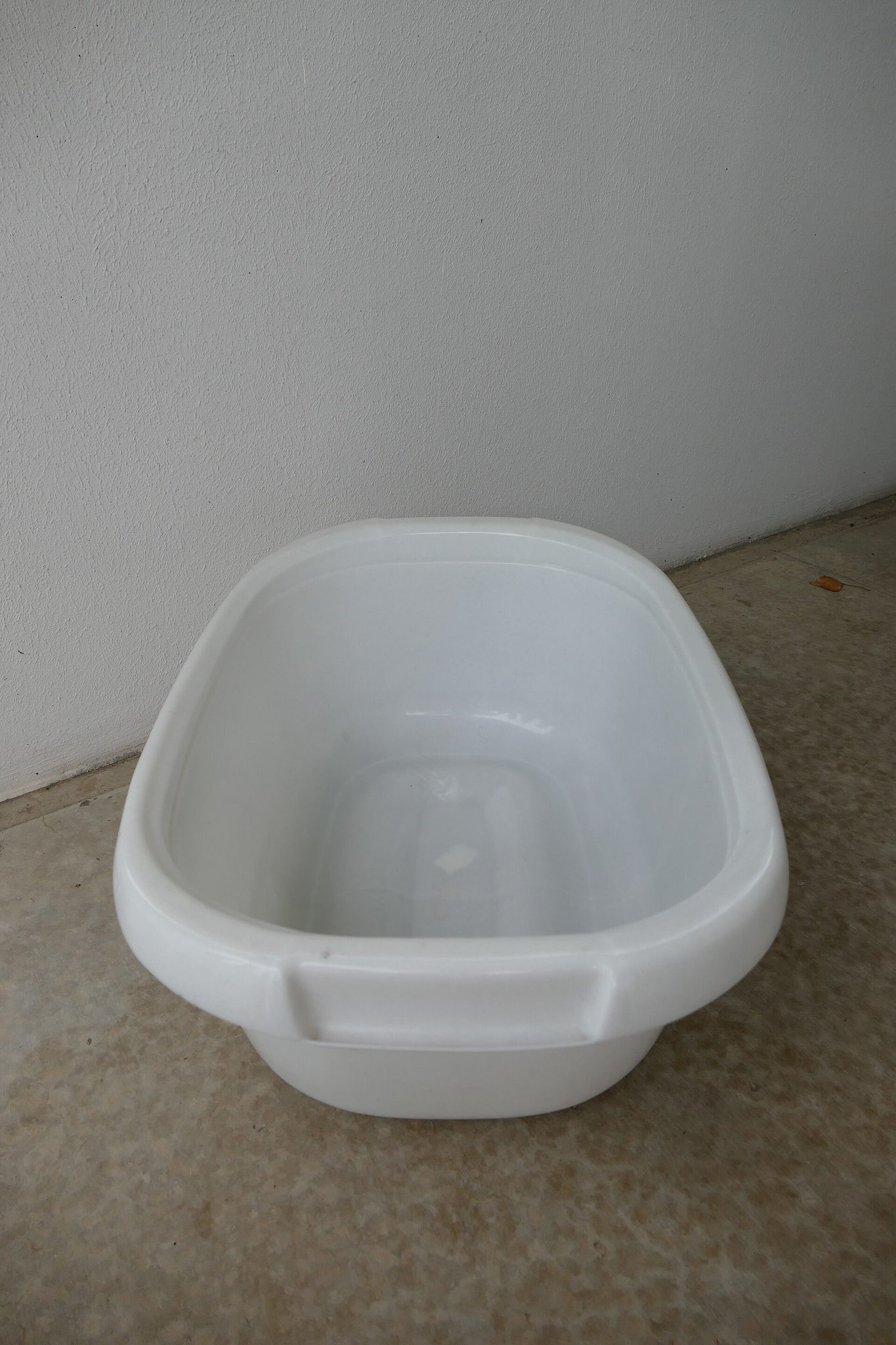
Photo: Kritzolina / Wikimedia Commons, CC BY-SA 4.0

Supplies checklist
| Item | Used for | Notes |
|---|---|---|
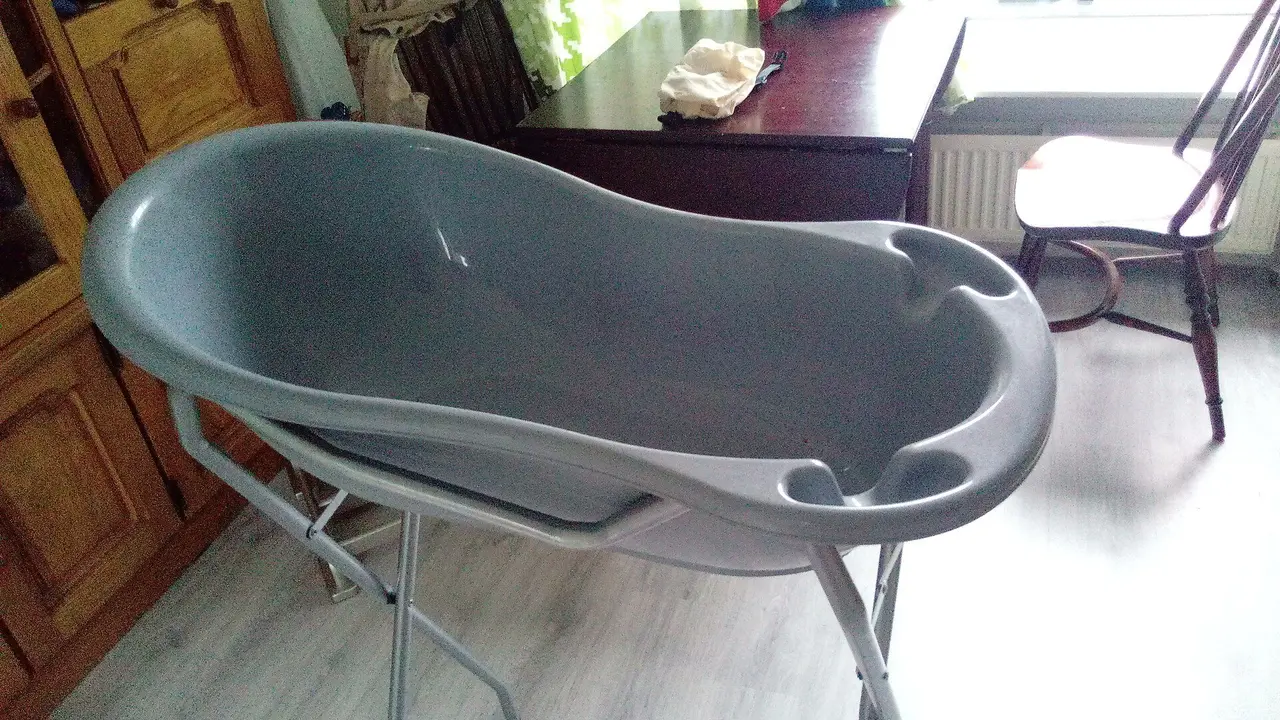
| Clean baby bath (Figure 1) | Tub baths once the cord has fallen off | Wash it, set it on a stable surface, never on a table edge |
| Water thermometer | Checking about 37°C | Prefer a digital one; do not use a glass mercury thermometer |
| Clean cotton pads or gauze + a bowl of boiled, cooled water | Eyes and face | A separate pad for each eye |
| 2–3 soft muslin cloths | Face, body, keeping the baby covered | Washed separately, dried in the sun |
| Large towel, ideally hooded (Figure 3) | Wrapping and drying straight after the bath | Spread out ready next to the tub |
| Mild, unscented baby wash (optional) | Hair and body when needed | In the first week plain warm water is usually enough; use very little |
| Clean nappy, clothes, hat, mittens and socks | Dressing right after the bath | Stack them in the order you will put them on |
Do not use talcum powder: the baby can inhale it. Do not put cotton buds into the ears or nose; clean only the outside.
Sponge bath or tub bath? Decide by the cord
The cord stump left after birth dries, darkens and falls off on its own, usually within about 5–15 days. Many guidelines, including those of US health agencies, recommend sponge baths until the cord falls off and the navel heals, so it dries faster. Others allow a quick tub bath followed by thorough drying of the cord. Follow whatever the doctor or midwife told the family; if there are no specific instructions, a sponge bath is the safe choice.
Sponge bath while the cord is attached
- Lay the baby on their back on a towel on a warm, flat surface, keeping one hand on the baby.
- Uncover only the part you are washing; keep the rest covered to stay warm.
- Wash in the order below: face, eyes, head, neck, armpits, arms, chest and tummy (avoiding the cord), back, legs, and the nappy area last.
- Pat each part dry as soon as it is clean, especially the folds of the neck, armpits and groin.
Tub bath once the cord has fallen off and dried
When the navel is dry with no oozing, the baby can go in the tub. How to hold them: slide your non-dominant arm behind the baby's shoulders so the neck and head rest on your forearm, with your hand holding the baby's far armpit and upper arm. Lower the baby in slowly, feet first, talking gently. Your dominant hand does the washing.
Bathing frequency by age in weeks
| Baby's age | How to clean | Suggested frequency |
|---|---|---|
| First 24 hours | No bath; dry, keep warm, skin-to-skin with mother | As directed by the health facility |
| Weeks 1–2 (cord usually still attached) | Sponge bath with a warm cloth | Full sponge bath 2–3 times a week; face, neck, armpits and nappy area daily |
| Weeks 3–4 (cord off and dry) | Tub bath, 5–10 minutes | 2–3 times a week; on hot days a quick daily bath is fine if the skin is not dry |
| Weeks 5–12 | Tub bath, 5–10 minutes | 3–4 times a week or daily as the family prefers, keeping baths short |
Many Vietnamese families are used to bathing babies every day, especially in summer; that is acceptable if baths are short, use little soap and the skin does not dry out. If the skin peels a lot or develops a rash, bathe less often and ask the family to consult the doctor.
The order of washing: face – eyes – head – body – genital area
The principle is to go from the cleanest area to the dirtiest, so germs from the nappy area are not carried to the face and eyes. Wash the hair and face while the baby is still wrapped in a towel to keep them warm, and only then undress them and put them in the tub.
Face and eyes: wipe from the inside out
- The baby stays wrapped, lying on your lap or a flat surface.
- Moisten a cotton pad in boiled, cooled water, squeeze out the excess and wipe the eye from the inner corner (by the nose) to the outer corner. Throw that pad away and use a new one for the other eye.
- Wipe the forehead, cheeks, around the mouth and chin; clean the outer ear and behind the ears with a muslin cloth. Never poke inside the ear or nose.
Head and hair: the football hold
Tuck the baby's body along your forearm with your hand supporting the neck and head, the head slightly lower than the body and towards the tub. With your other hand scoop water to wet the hair, rub gently (a drop of baby wash if needed), then rinse, keeping water out of the eyes. The soft spot on top of the head can be washed gently as normal. Pat the hair dry straight away.
Body, arms and legs
Undress the baby, remove the nappy and lower them into the tub as described above. Wash the neck and the folds under the chin, the armpits, elbows, palms (babies often keep their fists closed, so dirt collects there), chest and tummy, then the legs and between the toes. To wash the back, change position: support the baby's chest on your forearm with your hand holding the armpit, the baby leaning slightly forward with the chin clear of the water.
Genital area: always last
Girls: wipe from front to back, from the vulva towards the anus, so germs are not carried forward. A little white or slightly pink discharge can occur in the first days; if there is a lot or an unusual smell, ask the family to check with the doctor. Boys: wash gently on the outside and do not pull back the foreskin. Wash the anus and buttock folds last.
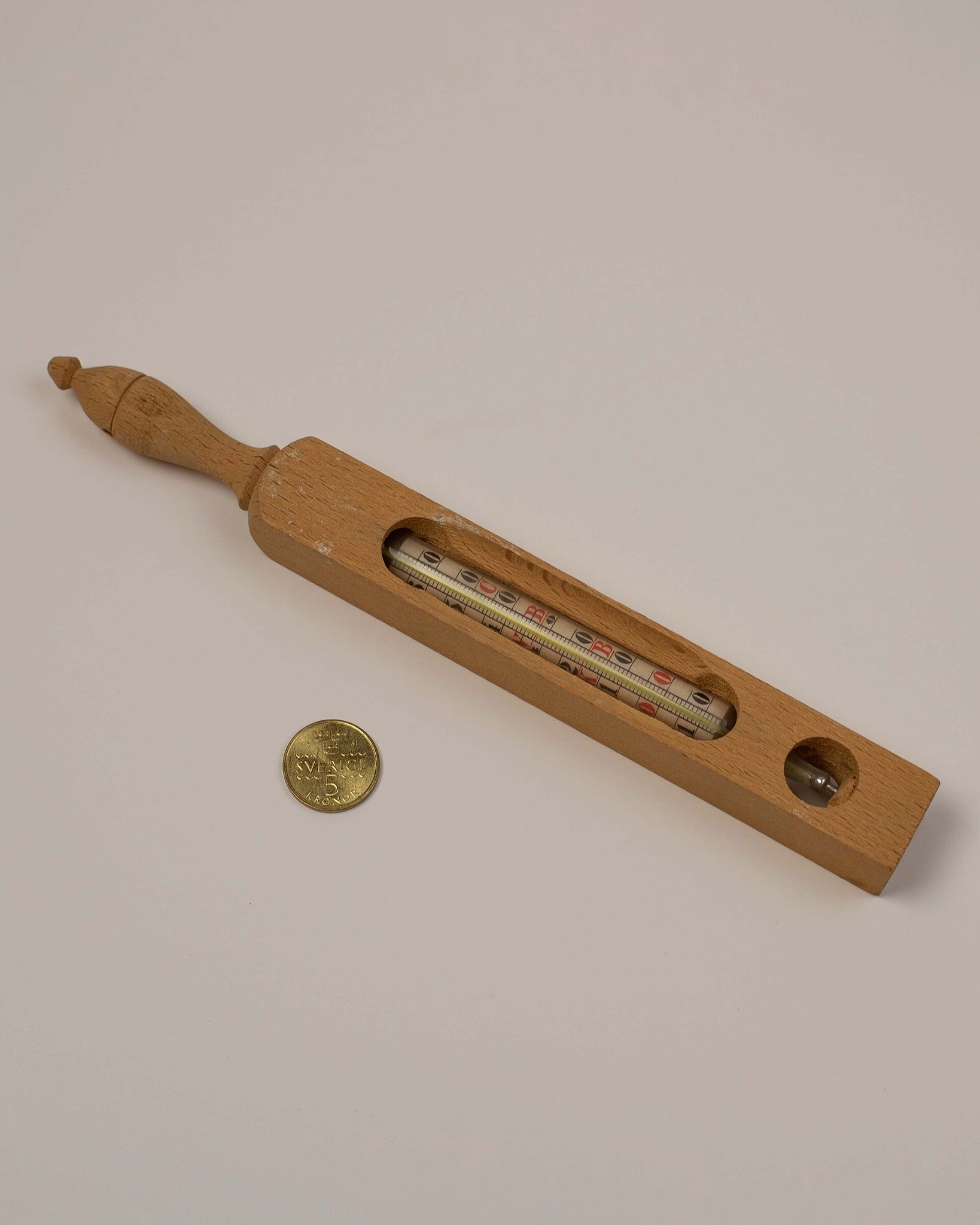
Photo: Anna Stow, Medicinhistoriska museet, VGR / Wikimedia Commons, CC BY-SA 4.0

Never take your hands off a baby in the bath
Young babies can drown in just a few centimetres of water, very quickly and usually without a sound. This is a rule with no exceptions: from the moment the baby touches the water until they are lifted onto the towel, at least one of your hands is always holding the baby.
Safety warning: do not let go, do not turn away to fetch anything, and do not answer the phone while the baby is in the tub. If the doorbell rings or an important call comes, lift the baby out, wrap them in a towel and take them with you. Bath seats and bath rings do not replace an adult's hands. Never ask a young sibling to watch the baby in the bath. Do not add hot water while the baby is in it; empty the tub as soon as the bath is over.
Support the head and neck throughout
A newborn's neck is not yet strong enough to hold up the head. When lifting, lowering or changing position, always have a hand or forearm behind the neck. Wet skin is very slippery, so your hand holding the far armpit is the "lock" that stops the baby sliding.
Position the tub safely for the baby and your back
Put the tub on a stable surface, away from the table edge, at about waist height so you do not bend double. A standing baby bath (Figure 4) is one option; if you bathe on the floor, sit down fully.
Clean, dry cord care as currently recommended
For babies born in a health facility and cared for in a clean home, the current recommendation of WHO and many health agencies is dry cord care: keep the cord clean, dry and uncovered, and apply nothing to it unless a health worker tells you to. A dry cord falls off sooner and is less likely to become infected.
Daily routine
- Wash your hands before touching the cord area.
- If the cord gets dirty (urine or stool), wipe it gently with gauze moistened in clean water, then pat it completely dry.
- Leave the cord uncovered; fold the top of the nappy down below it so air can reach it and the nappy does not rub.
- Never pull or tug the cord, even when it is dangling; let it fall off naturally.
Things not to do
Do not put betel leaves, turmeric, ash, tobacco, toothpaste, powders, oils or ointments on the cord — these can introduce germs and hide signs of infection. Do not bind the baby's tummy tightly. When the family wants to follow a folk remedy, explain gently that the current recommendation is to keep the cord clean and dry, and suggest asking the doctor; the final decision belongs to the family and the doctor, not to you.
After the cord falls off
The navel may ooze a few drops of fluid or show small streaks of blood for 1–2 days; wipe it clean and pat dry. If oozing continues, a small moist red lump appears at the navel, or there is heavy bleeding, ask the family to take the baby to a doctor.
Worked example: a tub bath for a 3-week-old
Ms Mai, a postnatal carer, looks after baby Su, 3 weeks old, in an apartment in Hanoi in December. The cord fell off 6 days ago and the navel is fully dry; the family wants tub baths 3 times a week at around 9 a.m. She plans one bath like this.
| Task | Time | Notes |
|---|---|---|
| Preparation: heater on beforehand, door shut, mix water, check 37°C, lay out supplies | 10 minutes | Baby fed at 8 a.m.; bath starts around 9 a.m. |
| Face and eyes (still wrapped) | 1 minute | A separate pad for each eye |
| Hair wash in the football hold | 1.5 minutes | Pat hair dry immediately |
| Body, arms and back in the tub | 2 minutes | One hand always on the baby |
| Legs | 1 minute | Between the toes |
| Genital area | 1 minute | Always last |
| Wrap, pat dry, nappy, clothes, hat | 5 minutes | Check the navel is dry |
| Empty and wash the tub, hang towels | 5 minutes | After the mother has the baby |
| Total | 26.5 minutes |
The actual washing (face to genital area) takes 1 + 1.5 + 2 + 1 + 1 = 6.5 minutes, within the 5–10 minute range. The whole session: 10 + 6.5 + 5 + 5 = 26.5 minutes. Because a Hanoi room in December is cold, Ms Mai runs the heater for 15 minutes beforehand, switches it off when the bath starts, and records the water temperature, skin and cord condition in the baby log. Afterwards, she has the father repeat the football-hold hair wash on a doll, so next week he can bathe the baby himself with her standing by.

Photo: Ата / Wikimedia Commons, CC0

After the bath: keep warm and observe
Lift the baby out and wrap them in the towel at once, patting (not rubbing) dry from head to toe, paying attention to the folds of the neck, armpits, groin and behind the ears. Put on the nappy folded below the navel, dress the baby and add a thin hat if it is cold. Babies are often hungry after a bath; hand the baby to the mother to feed.
Danger signs: when to see a doctor, when to call 115
Bath time is when you see the baby's whole body, so it is when you are most likely to notice something wrong. You do not diagnose; you observe, write it down and tell the family straight away.
Ask the family to take the baby to a doctor the same day
- Cord: redness spreading onto the skin around the navel, swelling, warmth; pus or a bad smell; bleeding that does not stop.
- Fever: a temperature of 38°C or above. A baby under 3 months with a fever needs to be seen immediately; do not try to bring the fever down at home.
- Jaundice: appearing in the first 24 hours, spreading to the tummy, arms and legs, palms or soles, or lasting more than 2 weeks.
- Poor feeding or refusing feeds, frequent vomiting, far fewer wet nappies than usual.
- Many pus spots or blisters on the skin, or raw, broken skin in the nappy area.
Call 115 immediately if: the baby has difficulty breathing, the chest pulls in with each breath, or breathing pauses; the lips or skin turn blue; the baby has a seizure; the baby is floppy, very drowsy or hard to wake; the baby feels cold and does not warm up when wrapped; or the baby chokes on water or milk and does not recover by themselves. While waiting, follow the dispatcher's instructions and tell the family.
Keep a log after every bath
Note briefly: bath time, water temperature, the state of the cord and skin, and how far any yellowing extends. The log helps the family and doctor see trends, for example whether jaundice is increasing or fading.
Common mistakes when bathing a newborn
Bathing for too long
Sign: the baby shivers, the lips turn slightly blue, the baby screams and refuses to feed afterwards. Cause: scrubbing too thoroughly, or missing supplies and having to wait. Fix: prepare everything first and keep the time in the water to 5–10 minutes.
Covering or binding the cord
Sign: the cord stays damp, falls off late or smells. Cause: following folk advice or fear of the navel "catching wind". Fix: leave it uncovered and dry, with the nappy folded below it.
Testing the water with your hand
Sign: the baby screams on touching the water and the skin turns red. Cause: your hand tolerates heat better than a baby's skin. Fix: use a thermometer or your elbow, and stir well.
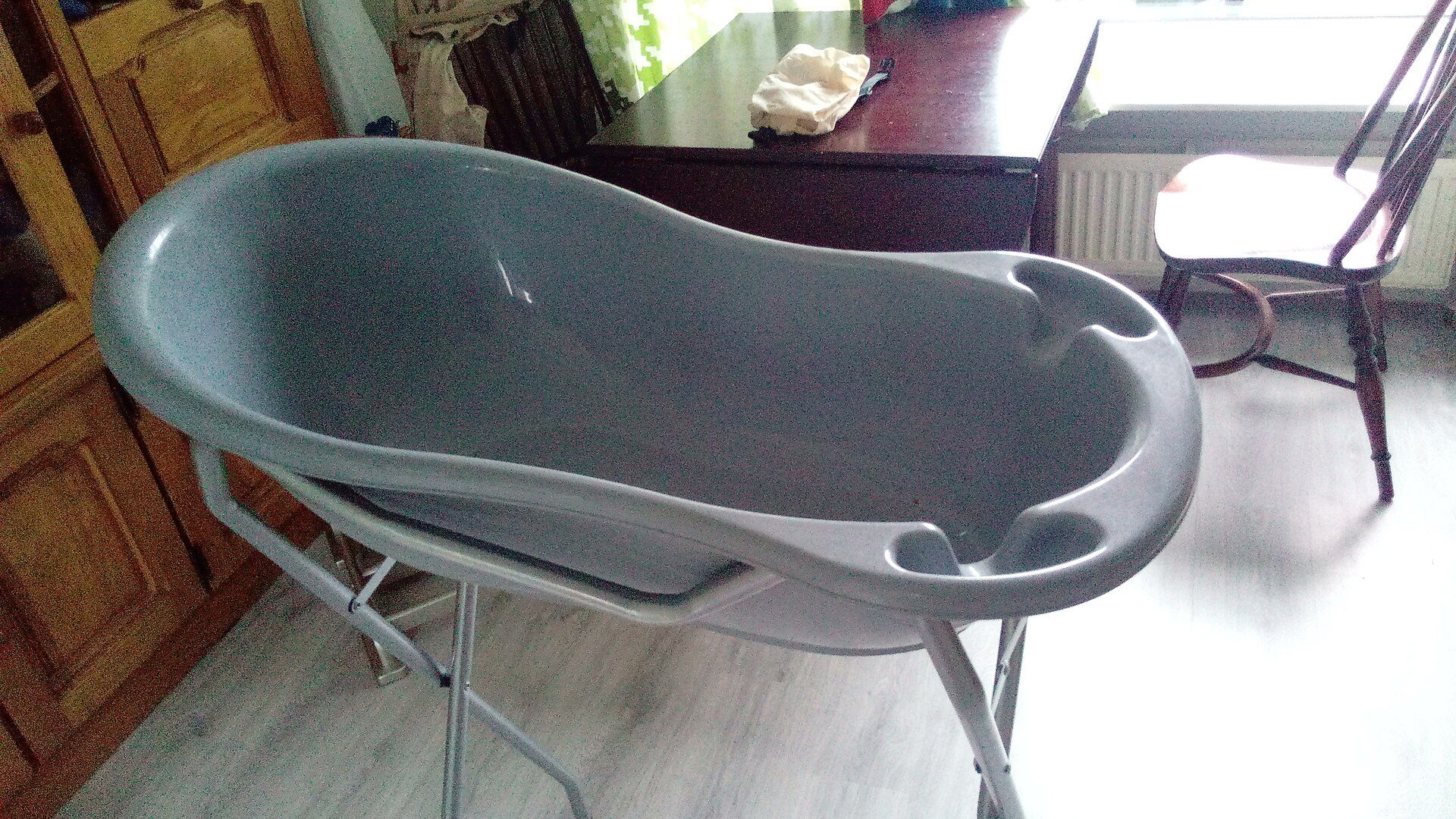
Photo: Donald Trung Quoc Don (Chữ Hán: 徵國單) - Wikimedia Commons - © CC BY-SA 4.0 International . ( Want to use this image? ) Original publication 📤: -- Donald Trung 『徵國單』 ( No Fake News 💬 ) ( WikiProject N / Wikimedia Commons, CC BY-SA 4.0

Frequently asked questions
Does a newborn need a bath every day?
No. Many guidelines say 2–3 times a week is enough in the first weeks, as long as the face, neck, armpits and nappy area are cleaned every day. On hot days a quick daily bath is fine if the baby's skin is not dry.
Should I use baby wash or shampoo?
In the first week plain warm water is usually enough. After that, if needed, use a very small amount of mild, unscented newborn wash. Do not use adult soap, and do not add essential oils or leaves to the bath water without asking the doctor.
Are herbal leaf baths good for babies?
There is no need to bathe a healthy newborn in leaf water, and it can cause irritation or allergy or simply be unclean. If the family wants one, suggest asking the doctor first; do not prepare it on your own initiative.
What if the baby cries throughout the bath?
Recheck the room and water temperature, keep the baby wrapped for as long as possible and shorten the bath; many babies settle after a few baths. If unusual crying comes with fever or refusing feeds, ask the family to see a doctor.
How long until the cord falls off?
Usually within about 5–15 days. If it has not fallen off after 3 weeks, or there is redness, pus or a bad smell, ask the family to take the baby to a doctor.
Practice exercise and self-assessment
- Gather all the supplies in the table within 10 minutes, mix the water and measure about 37°C.
- Practise a sponge bath and a tub bath on a newborn-sized doll, in the order face – eyes – head – body – genital area.
- Time the part in the water and aim to keep it within 5–10 minutes.
- Role-play explaining to a grandmother, respectfully and within 1 minute, why betel leaves should not go on the cord.
- Recite the signs that mean seeing a doctor and those that mean calling 115 without looking at the lesson.
Self-assessment criteria
- Pass: you never let go of the doll in the tub; the head and neck are always supported; eyes are wiped inside-out with a separate pad each; the genital area is done last.
- Pass: time in the water is 5–10 minutes; you can name at least 4 signs for seeing a doctor and 4 signs for calling 115.
- Not yet: you let go to fetch something, test the water with your hand, add hot water with the doll in the tub, or put anything on the cord.
The next step on the path is Breastfeeding support, pumping & milk storage — babies are often hungry after a bath, and that is when you learn to help the mother with positioning and a good latch.
Keep learning along the path: see all 8 steps in the Postnatal mother & baby carer learning path on NAMBIN. This lesson is vocational guidance for carers and does not replace a doctor's diagnosis or instructions.