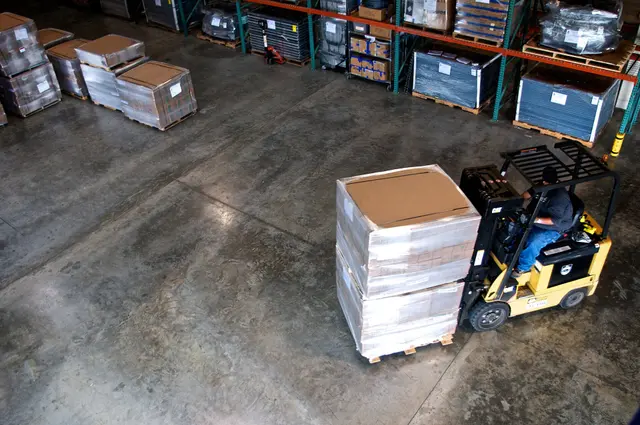
Staying safe when pruning trees and using garden machinery means: wearing glasses, ear protection, closed boots and gloves every time you start an engine; keeping other people out of the throw zone of a brush cutter; holding a chainsaw with both hands and never using it on a ladder; climbing ladders only with someone footing them, and calling in a professional crew for high branches or anything near power lines; and checking for wasp nests and resting out of the sun when working outdoors. Most gardener injuries do not come from difficult jobs but from routine ones: cutting "one last branch" from the top rung, or clearing tangled grass before the engine has stopped. This is the first step of the roadmap, with a protective equipment checklist and procedures you can use from your first day.
By the end of this lesson, you will be able to:
- Choose the right protective equipment for a brush cutter, a hedge trimmer and a chainsaw.
- Explain chainsaw kickback and five ways to prevent it.
- Set up a ladder, assign someone to foot it, and know when to stop and call a crew with climbing ropes or a lift.
- Recognise trees near power lines, wasp nests and signs of heat illness, and give the right first response.
- Plan a 4-hour gardening shift with rest breaks and work out the cost of a protective kit.
Just starting out in gardening and landscaping? Safety with mowers, saws and work at height is step 1 of the roadmap, before plant identification and soil mixing. See the 8-step gardening and landscaping roadmap.
The main hazards of garden work
Gardeners work with blades spinning thousands of times a minute, with petrol, electricity, on ladders and under the sun. Knowing the hazards helps you understand why no piece of protective equipment can be skipped.
Blades and flying objects
Brush cutters, hedge trimmers and chainsaws can cut into a hand or leg in an instant. Stones, gravel, broken pottery and wire are thrown by the blade with enough force to injure the eye of someone nearby or break a window.
Falls, falling branches, electric shock
Pruning tall trees often means standing on a ladder or climbing the tree. A fall of a few metres can cause serious injury, and cut branches can hit people below. A branch touching a power line can conduct electricity into shears, pole pruners and the person holding them.
Stings, heat and noise
Wasp nests often hide in dense hedges, tree canopies and under eaves. Working outdoors all morning in summer easily leads to heat exhaustion or heatstroke. The noise of brush cutters and chainsaws is loud enough to damage hearing over time without ear protection.
Protective equipment for each machine
The general rule: do not start an engine until you are fully equipped. The table summarises the minimum for each machine; prices are a 2026 reference in Vietnam and vary by region and quality.
| Equipment | Brush cutter | Hedge trimmer | Chainsaw | Reference price 2026 |
|---|---|---|---|---|
| Safety glasses or mesh visor | Required | Required | Required | 40,000–150,000 VND |
| Earplugs or ear defenders | Required | Recommended | Required | 50,000–250,000 VND |
| Hard hat | When working under trees | When cutting tall hedges | Required | 80,000–200,000 VND |
| Non-slip gloves | Required | Required | Required (cut-resistant preferred) | 30,000–300,000 VND/pair |
| Toe-cap boots with non-slip soles | Required | Required | Required | 300,000–800,000 VND |
| Long trousers, chainsaw trousers | Heavy long trousers | Long trousers | Chainsaw protective trousers | 800,000–2,500,000 VND (chainsaw trousers) |
Helmet, visor and ear defender set for chainsaws
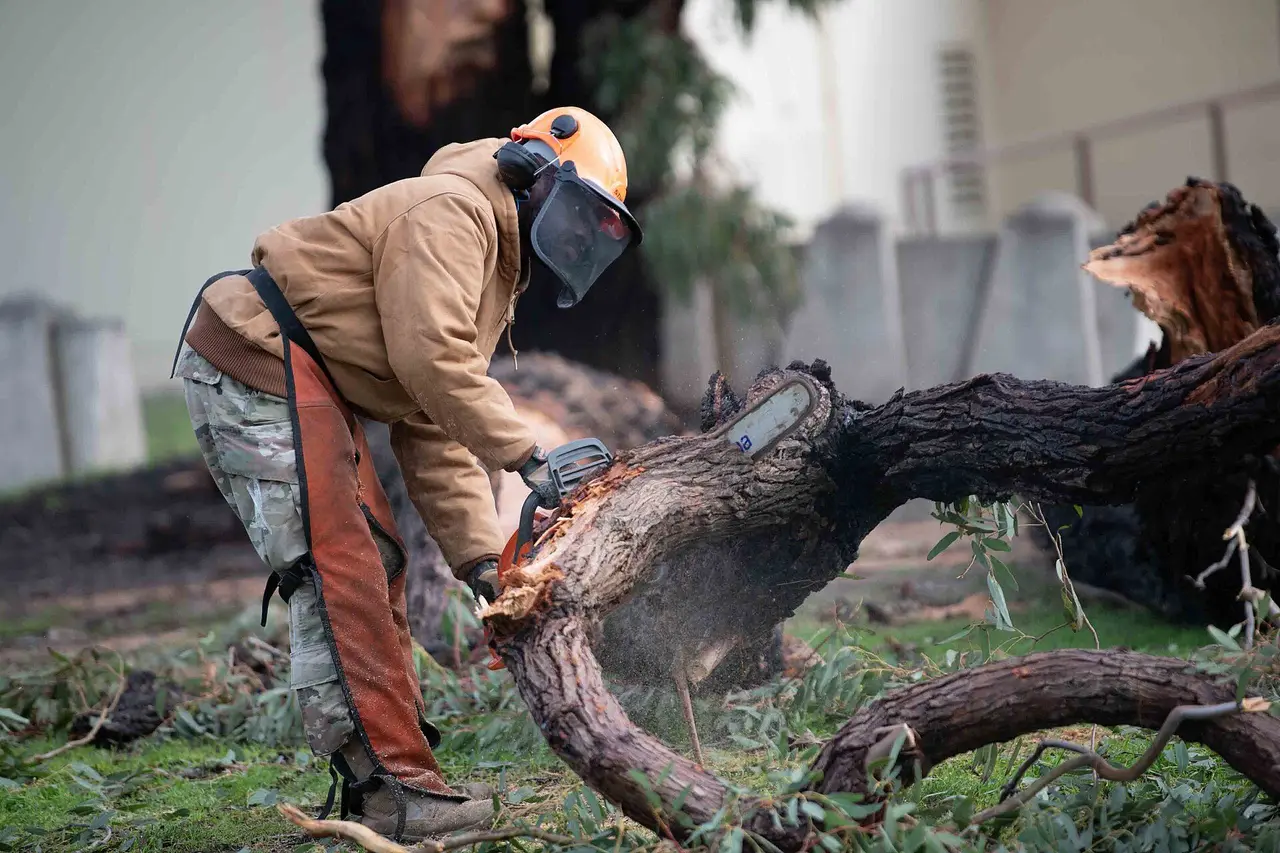
Professional chainsaw users usually wear a helmet with a built-in mesh visor and ear defenders, and protective trousers with layers of long fibres that pull out and jam the chain sprocket when the chain touches them (Figure 1). The visor stops sawdust and twigs; still wear glasses underneath, as fine dust gets through the mesh.
Clothing for garden work
Wear long sleeves in breathable, light-coloured fabric that fits closely; no loose clothes, no scarves, and tie long hair back so it cannot be caught in a machine. Never work in flip-flops, even "just for a quick mow".
Brush cutters and hedge trimmers
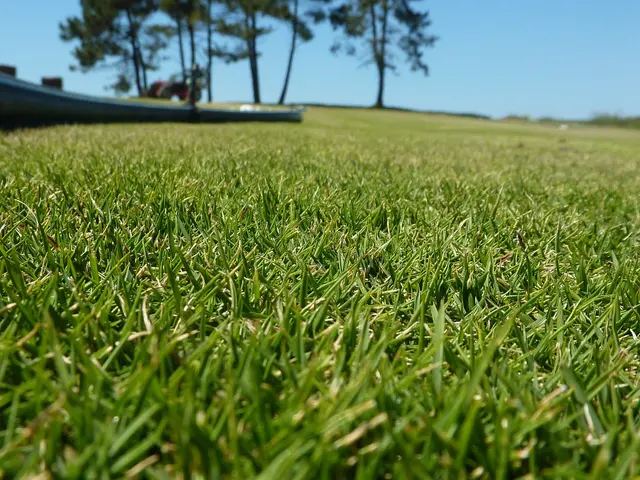
In Vietnam, the shoulder-strap brush cutter with a 2-stroke or 4-stroke petrol engine is the most common machine for gardens, lawns and verges (Figure 2). How to use a push mower is covered in how to plant a garden lawn; this section focuses on brush cutters and hedge trimmers.
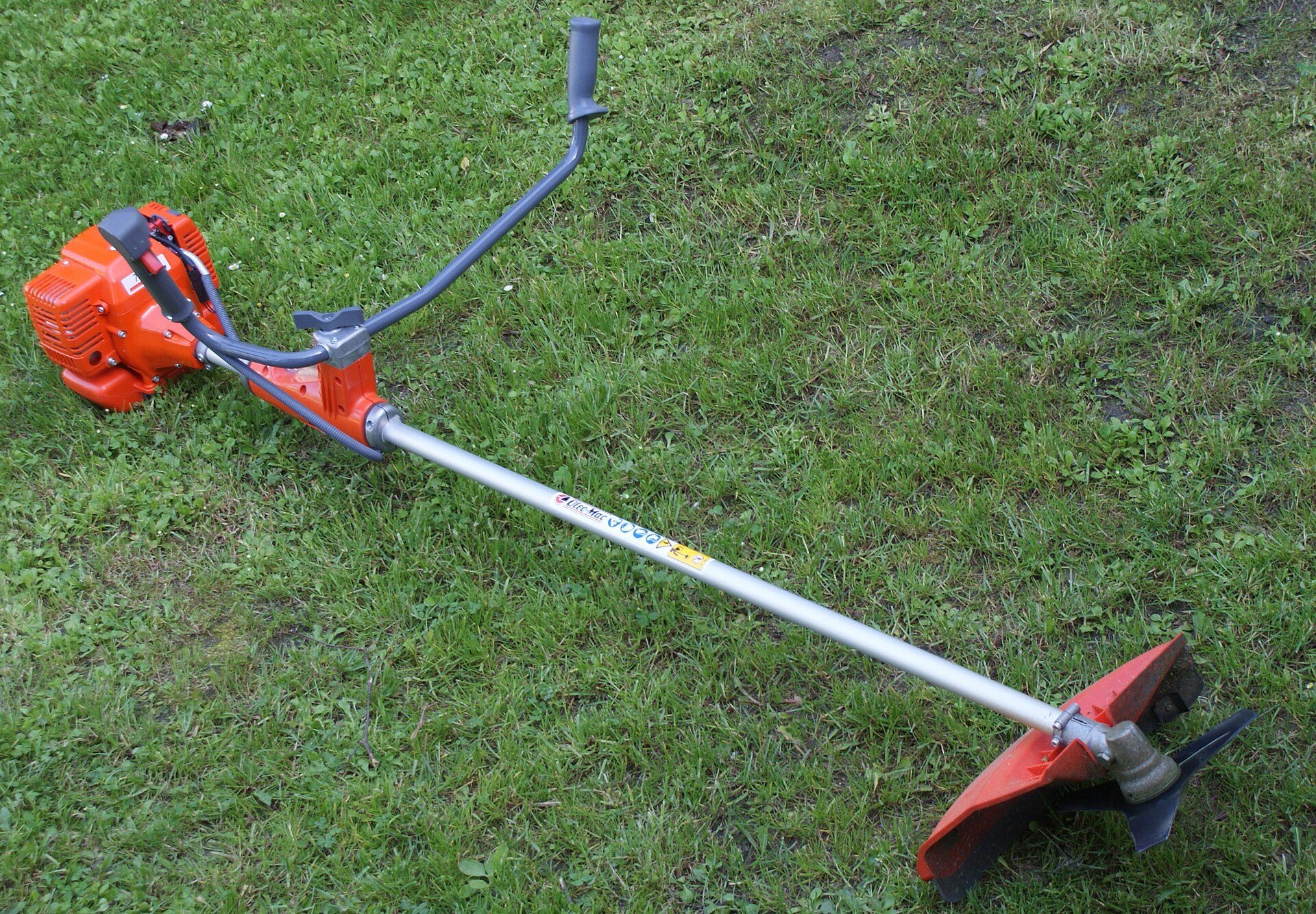
Photo: Feťour / Wikimedia Commons, Public domain
Before starting the engine
- Walk the area and pick up stones, broken bricks, wire, bottles and children's toys.
- Check that the blade is not cracked or chipped, the blade nut is tight, the guard is intact and the harness is adjusted.
- Refuel only when the engine is cool, away from flames, wipe up spills, then carry the machine a few metres away before starting.
- Ask family members, children and pets to move away. Many manufacturers recommend keeping other people about 15 m away while the machine runs; read the manual for your machine.
While cutting
- Hold the machine with both hands, stand firmly, and keep the cutting head below waist height; never lift the blade to body height.
- When cutting near walls, glass or cars, let the blade throw debris away from them, or switch from a metal blade to nylon line.
- If someone enters the cutting area, release the throttle and wait for the blade to stop.
- To clear wrapped grass, change line or adjust the blade: stop the engine, wait for the blade to stop completely, and remove the spark plug cap before removing the blade.
Electric hedge trimmers
A hedge trimmer has two toothed blades moving back and forth and must be held with both hands on two switches. With an electric model, the biggest risk is cutting through its own power cable (Figure 3). Drape the cable over your shoulder and always keep it behind you, plug in through an RCD (residual current device), use an undamaged extension lead, and do not cut wet hedges or in the rain. Before trimming a dense hedge, walk along it and look closely for wasp nests, cables or decorative lights inside.
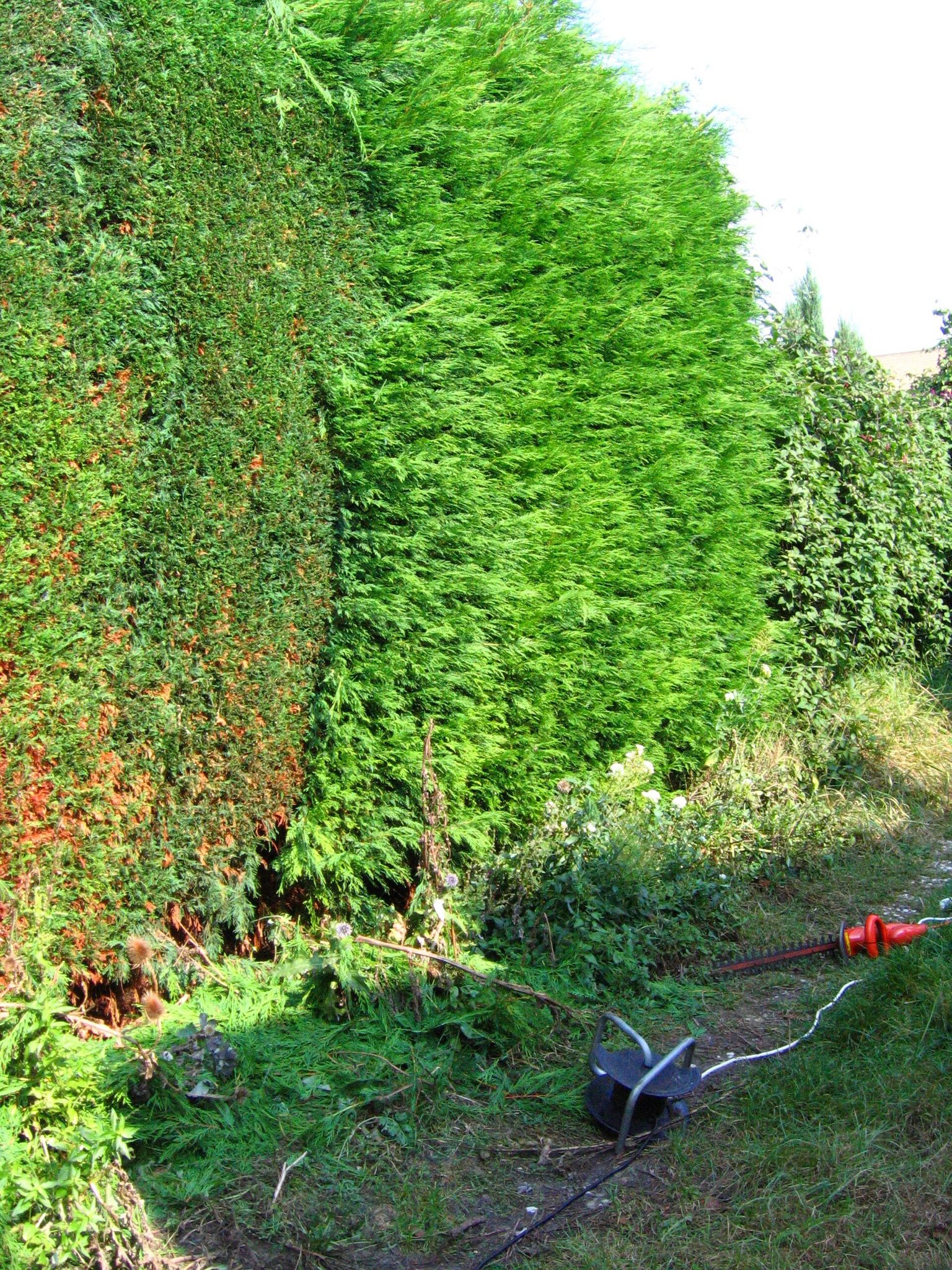
Photo: wim harwig / Wikimedia Commons, CC BY 2.0
Chainsaws: understand kickback to avoid injury
The chainsaw is the most dangerous tool in garden work. Beginners should only use one after hands-on instruction and while cutting under the eye of an experienced person.
What kickback is
Kickback happens when the upper part of the bar nose (roughly the top quarter of the tip) touches wood or a hard object: the chain is suddenly stopped and the whole bar is thrown up and back towards the operator in a fraction of a second. Most chainsaw injuries to the face, neck and left hand are linked to kickback.
Five ways to prevent kickback
- Always hold the saw with both hands, thumb wrapped around the front handle.
- Never cut with the nose of the bar; do not let the nose touch other branches, soil or stones.
- Never cut above shoulder height or reach out to cut far from your body.
- Check the chain brake works before every session; the chain must be sharp and correctly tensioned.
- Stand to one side of the cutting line, never directly behind the bar.
Never use a chainsaw on a ladder
On a ladder you have only one hand free to hold the saw, you cannot step back if it kicks, and you cannot escape when a branch falls. Cut high branches with a pole saw or long-handled loppers from the ground; leave large branches and tall trees to a crew with climbing ropes or a lift.
Working at height when pruning
Pruning at height is where people get most complacent: "I can reach that branch". The principle is to work from the ground when possible, use a ladder when necessary, and climb trees only when trained and roped in.
Using a ladder safely for pruning
- Use an A-frame or a tripod orchard ladder made for garden work, on firm ground; on soft soil put a board under the feet.
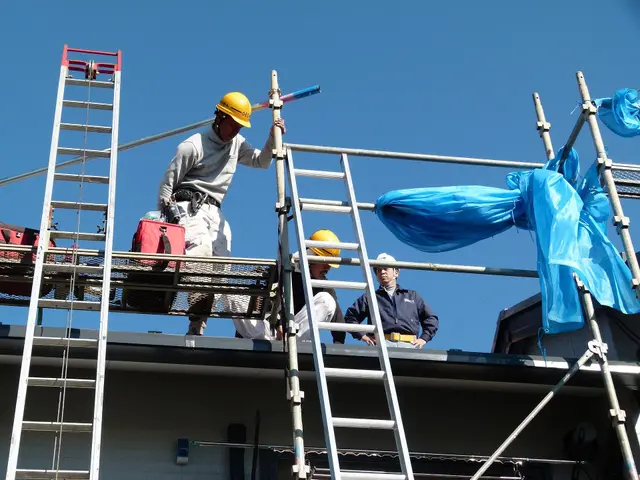
- Always have someone footing the ladder and watching for falling branches (Figure 4).
- Never stand on the top two rungs; keep your belt buckle between the rails and do not lean out.
- Never rest the ladder against the branch you are about to cut; once it is cut, the ladder may lose its support.
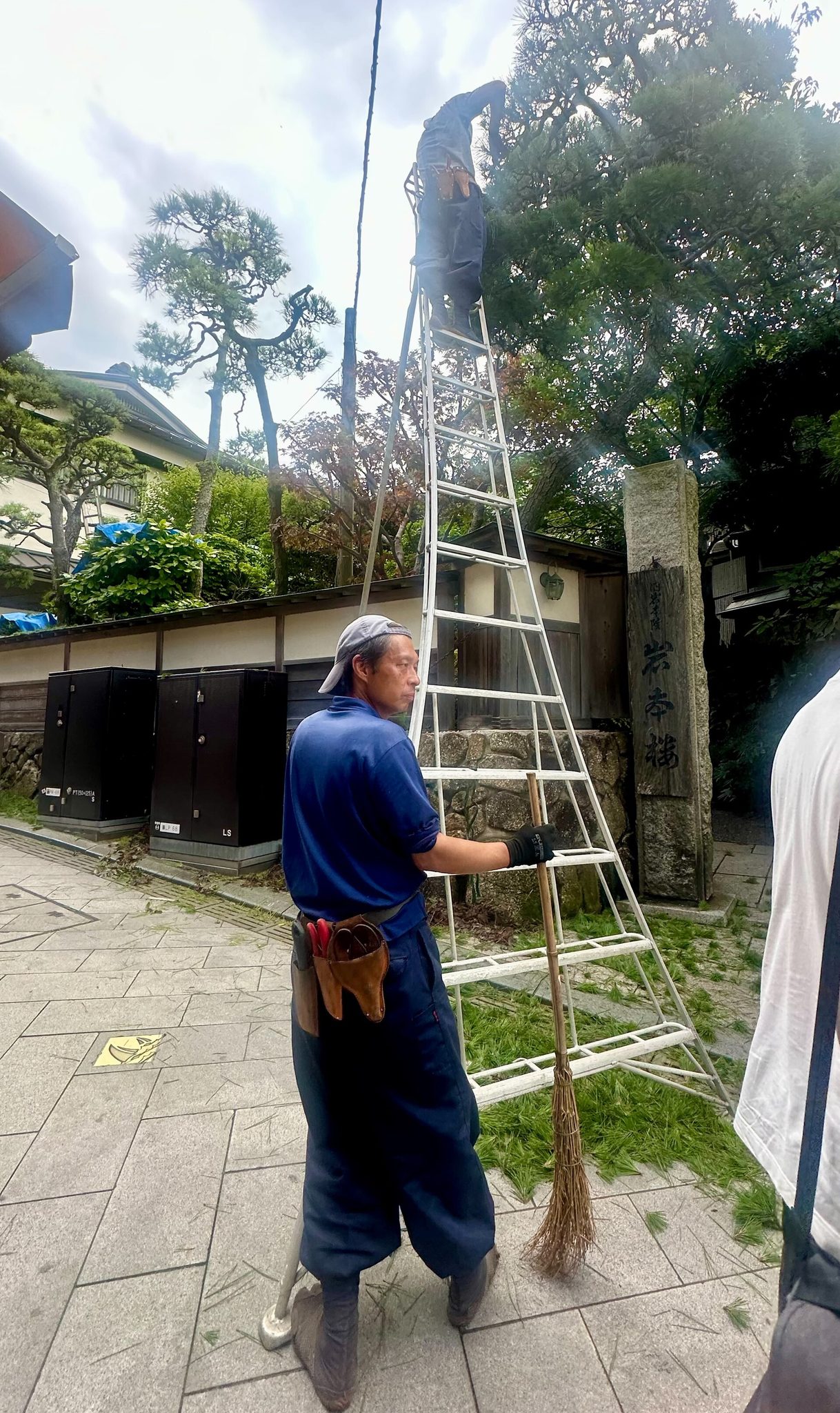
Photo: Nesnad / Wikimedia Commons, CC BY 4.0
Tree climbing needs ropes and training
Professional tree workers climb with ropes, a sit harness and a helmet, always keeping at least one anchor point while moving through the canopy (Figure 5). This is a separate skill that needs proper training. Apprentices do not climb trees without ropes and never climb onto dead or rotten branches.
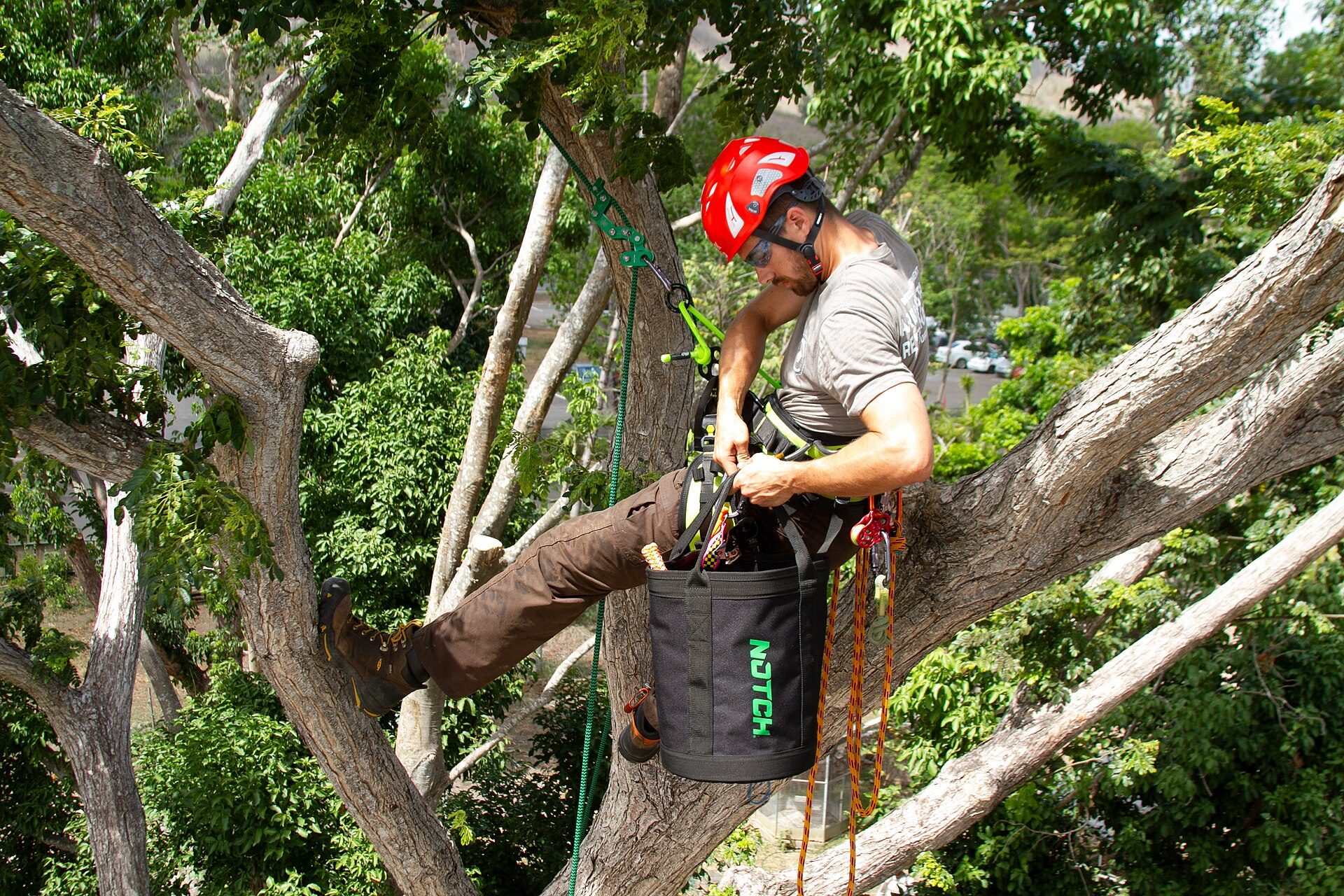
Photo: TreeMinion15 / Wikimedia Commons, CC BY-SA 4.0
When to stop and call a professional crew
- The branch or tree is near a power line.
- The tree is tall and large branches must be cut in sections and lowered on ropes.
- The tree is rotten, leaning or hollow, or right next to a house, metal roof or path.
- You have never done that job under the guidance of an experienced person.
Power lines, stings and heat illness
These three hazards come from the surroundings rather than the machine, so beginners often forget them.
Trees near power lines
Do not prune or cut branches that touch or are close to power lines, even with a plastic-handled pole pruner or a wet wooden pole. Ask the owner to contact the local power company. Even the service drop to a house can have damaged insulation, and a cut branch falling on a line can bring it down.
Wasps, ants and snakes
Before cutting a hedge or dense shrub, stand back for a few minutes and watch for wasps flying in and out of one spot. If you see a hornet or paper wasp nest, do not poke or burn it; back away and ask the owner to call a pest control service. If someone is stung many times, or has a swollen face, difficulty breathing, dizziness or a rash all over: call 115 (Vietnam's ambulance number) immediately, as this may be anaphylaxis. Snakes can hide in dense bushes, so part them with a stick before reaching in.
Heat exhaustion and heatstroke
Drink water regularly before you feel thirsty, wear a wide-brimmed hat when a hard hat is not needed, rest in the shade and avoid heavy work at midday. Stop immediately at these signs: headache, dizziness, nausea, cramps, heavy sweating or no sweating, hot red skin, confusion. Move the person into the shade, loosen clothing and cool them; if they are confused, faint or not improving, call 115. This lesson does not replace medical advice.
Safety warning: Never start an engine without glasses, ear protection, closed boots and gloves. Stop the engine and wait for the blade to stop before clearing grass or adjusting the blade; remove the spark plug cap or unplug before changing blades. Refuel only when cool and away from flames. Hold a chainsaw with both hands, never cut with the nose, never above shoulder height and never on a ladder. Electric tools must go through an RCD and must not be used in rain. Never prune near power lines; call the power company. Ladders need someone footing them; tree climbing needs ropes and training. For heavy bleeding, stings with breathing difficulty or confused heat illness, call 115 immediately.
Worked example: a 4-hour care visit to a villa garden
Situation: you go with a lead gardener to look after a villa garden on the edge of the city on a summer morning. The tasks: cut about 300 m² of grass with a brush cutter, trim 30 m of duranta hedge with an electric hedge trimmer, and prune a few branches of a shade tree about 4 m high. The family has 2 small children and a dog.
Shift plan
| Step | Task | Safety note | Time |
|---|---|---|---|
| 1 | Survey the garden: stones, power lines, nests; ask the owner to keep children and dog inside | Remove hard objects, mark nests | 15 min |
| 2 | Check machines, refuel when cool, put on PPE | Away from flames, wipe spills | 15 min |
| 3 | Cut 300 m² of grass with the brush cutter | Keep people out of the throw zone | 60 min |
| 4 | Rest in the shade, drink water | - | 15 min |
| 5 | Trim 30 m of hedge with the electric trimmer | Cable over shoulder, RCD | 45 min |
| 6 | Prune 4 m branches from a ladder with a pole saw | Someone footing the ladder, hard hats for both | 40 min |
| 7 | Rest in the shade, drink water | - | 15 min |
| 8 | Gather cuttings, sweep, clean machines | Store machines only when cool | 35 min |
| Total | 240 min | ||
Check: 15 + 15 + 60 + 15 + 45 + 40 + 15 + 35 = 240 minutes, exactly 4 hours. Rest time is 15 + 15 = 30 minutes, or 30 ÷ 240 = 12.5% of the shift. Starting at 6:30 means finishing at 10:30, avoiding the harshest midday sun.
Stop points in the example
At step 1, if you find a hornet nest in the hedge, skip that section, tell the owner and do other work first. At step 6, one branch reaches the power drop into the house: do not cut it, note it on the job sheet and advise the owner to contact the power company.
Cost of a personal protective kit
A basic kit bought yourself (2026 reference, varies by region): glasses 60,000 VND, ear defenders 150,000 VND, chainsaw helmet with visor and ear defenders 350,000 VND, gloves 2 pairs × 40,000 = 80,000 VND, toe-cap boots 450,000 VND, chainsaw trousers 1,200,000 VND. Total: 60,000 + 150,000 + 350,000 + 80,000 + 450,000 + 1,200,000 = 2,290,000 VND (about 90 USD). If you do not use a chainsaw yet, you can skip the chainsaw helmet and trousers, bringing the total to 60,000 + 150,000 + 80,000 + 450,000 = 740,000 VND.
Common beginner mistakes
Clearing wrapped grass with the engine running
Sign: reaching in with a hand or foot to clear grass around the blade while the engine is still on. Cause: hurry, thinking the blade has slowed. Fix: stop the engine, wait for the blade to stop completely, put on gloves, then clear it.
Standing on the top rung to reach a branch
Sign: on tiptoe at the top of the ladder, leaning out. Cause: not wanting to climb down and move the ladder. Fix: come down, move the ladder closer or use long-handled loppers.
Cutting the trimmer's own cable
Sign: the machine stops suddenly and the RCD trips. Cause: the cable was in front, mixed in with the cuttings. Fix: unplug before touching the cable, replace it, and always keep the cable over your shoulder behind you.
Frequently asked questions
What protective equipment do I need for a brush cutter?
At minimum: safety glasses or a mesh visor, ear protection, gloves, toe-cap boots and heavy long trousers. Add a hard hat when cutting under trees.
Why does a chainsaw kick back?
Because the upper part of the bar nose touches wood or a hard object, the chain is stopped and throws the bar up towards the operator. Holding with both hands, never cutting with the nose, not cutting above shoulder height and keeping the chain brake working are the main ways to prevent it.
What should I do if I am stung while pruning?
Leave the area at once, scrape out any sting, wash and apply a cold pack. If there are many stings, a swollen face, difficulty breathing, dizziness or a rash all over, call 115 immediately.
Should I cut a tree near power lines myself?
No. Trees and branches near power lines must be dealt with by the power company or a professional crew with suitable equipment. A gardener only records it and informs the owner.
Practice exercises and self-assessment
- Check a brush cutter using the 4 steps before starting, noting the condition of the blade, guard and harness.
- Survey a garden and sketch a plan marking stones, power lines, wasp nests and places that need a ladder.
- Plan a 3-hour shift using the table above, with at least 2 rest breaks.
Self-assessment criteria
- Pass: you can list the protective equipment for each machine and only start the engine when fully equipped.
- Pass: the garden plan marks every hazard with a way to deal with it.
- Pass: the shift plan adds up, includes breaks and avoids the hottest hours.
- Not yet: clearing grass with the engine running, standing on the top rung, or planning to prune near power lines.
Once you can garden safely, move on to the next step of the roadmap: Plant identification & right plant, right place, where you learn the common shade trees, shrubs and border plants in Vietnam and how to choose plants for sun, shade and water, including plants that are safe for homes with small children and pets.
Keep learning gardening and landscaping: after safety come plant identification, soil and fertiliser, lawns and shrubs, automatic irrigation, shaping and pruning, and building a small garden feature. See the 8-step gardening and landscaping roadmap.