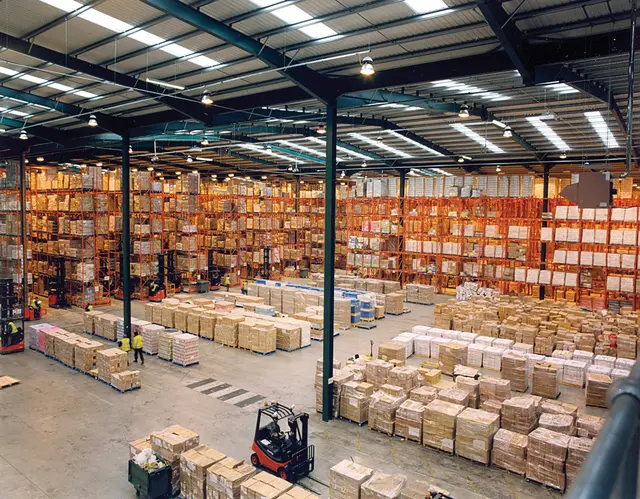
A sound warehouse receiving process has six steps in a fixed order: prepare the documents and the unloading area, check the truck and its seal, unload and count the handling units, check every item in detail (quantity, specification, batch number, expiry date, carton condition) against the delivery note and the purchase order (PO), handle any discrepancy with photos and a report signed by the driver, and finally sign for the quantity actually received, label the goods and move them to the put-away staging area. The receiver is the warehouse's only checkpoint: sign one wrong number here and every stock report after it is wrong, and damaged goods you have signed for are very hard to claim back. This lesson is written like a team leader coaching a new hire through a first shift at the receiving dock, with a checklist table, the contents of a discrepancy report and a worked example of receiving a 380-carton truck whose numbers add up.
By the end of this lesson, you will be able to:
- Match the PO, the delivery note and the goods receipt note before you sign.
- Count a truckload in two layers: handling units while unloading, then each item on each pallet.
- Check specification, batch, remaining shelf life and carton condition, and decide whether to accept, quarantine or return.
- Photograph damage and write a delivery discrepancy report with full details and both signatures.
- Label pallets, move goods to the staging area and keep goods awaiting a decision separate.
Learning warehouse work? Receiving and counting is step 2 of the roadmap, right after warehouse safety and lifting. See the 8-step warehouse operative roadmap to learn in the right order.
What is receiving and which documents do you need?
Receiving (goods-in) means taking in goods from a supplier, a factory or another warehouse: checking the real goods, recording the real numbers and moving the goods into place. On paper, it is the moment responsibility for the shipment passes from the sender to the warehouse. From your signature onward, any shortage or damage is the warehouse's problem unless it is clearly written on the documents.
Three documents to have in hand
- Purchase order (PO): created by your company's purchasing team; it says which items, which specification and how many were ordered. This is the "truth" you compare against.
- Delivery note: created by the sender and carried by the driver; it says what the sender claims to have shipped.
- Goods receipt note: created by the warehouse or accounting after checking, recording the quantity actually received. In Vietnam the form is set by the company's accountants under the accounting regime in force; many warehouses use a confirmation screen in software instead of paper.
Large suppliers often send an advance shipping notice (ASN) listing items, batches and pallets on the truck. The invoice is usually an electronic invoice sent to accounting; the receiver does not check tax or prices, only passes documents to the right place.
Document matching table
| Document | Created by | What you check with it |
|---|---|---|
| PO | Purchasing (your side) | Item, specification, quantity ordered, minimum shelf life |
| Delivery note | Sender | Units and cartons the sender declares |
| Discrepancy report | Warehouse, signed by both sides | Short, over, damaged, wrong item; written before the truck leaves |
| Goods receipt note | Warehouse or accounting | Quantity actually received in good condition, never copied from the delivery note |
Why compare with the PO, not just the delivery note
A delivery note can match the truck 100% and still be wrong compared with what your company ordered: the wrong flavour, too many cartons, a short-dated batch. If you only compare goods with the delivery note, every sender mistake gets into the warehouse. The right habit is to put the PO and the delivery note side by side and mark the differences before the truck doors open.
Preparing before the truck arrives
Whether a receiving shift runs smoothly is mostly decided in the 15 minutes before the truck backs in. New staff often wait for the truck before looking for the PO, finding a cutter or clearing space, while the driver is already pushing for a signature.
Booking schedule and paperwork for each truck
- Check the day's receiving schedule: which truck, what time, which dock door.
- Have the PO and ASN ready; mark items with expiry dates, chilled goods and fragile goods.
- Ask your team leader for the minimum remaining shelf life required for food and cosmetics (each company sets its own).
Unloading area and tools
- A clear unloading area with floor markings for "being checked", "accepted" and "awaiting decision".
- A hand pallet truck, or a certified forklift driver assigned to the dock.
- A retractable-blade cutter, pens, a scanner or a phone with the warehouse app, label paper.
- Chilled goods: a thermometer and the accepted temperature range for each item.
Even with few staff, keep one rule: the person writing never reads the delivery note numbers out to the person counting, because the counter will then "count to match".
Checking the truck and unloading safely
Before unloading a single carton, check the truck. If goods were damaged by a leaking trailer or a seal broken on the road, the evidence is in the truck, not in the cartons.
Check the plate, the seal and the trailer
- Match the licence plate and the container number (if any) with the delivery note or ASN.
- Check the seal is intact and its number matches the paperwork. Photograph the seal before cutting it.
- Open the doors and take one overall photo: has the load fallen, is the floor wet, is there an odd smell?
- Chilled goods: record the trailer temperature and probe a few cartons as soon as the doors open.
Unloading: count handling units first
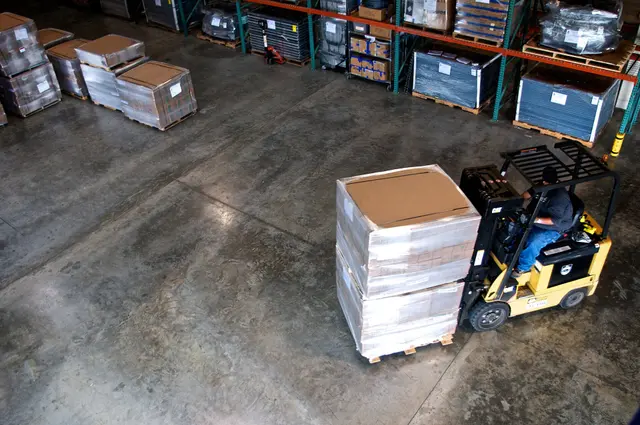
While unloading you count the first layer: the number of pallets or large units. If the note says 7 pallets, you must see 7 pallets in the checking area. Mark each pallet "1/7", "2/7" and so on as it comes off so nothing is counted twice. Loose cartons stacked on the trailer floor are re-stacked onto pallets by item, with the same number of cartons per layer to make counting easy (see Figure 1).
Safety warning when unloading: The dock is where pedestrians, forklifts and trucks meet, so apply the rules from the lesson on warehouse safety basics strictly here. Only start unloading once the truck engine is off, the handbrake is on and the wheels are chocked or the truck is locked to the dock as the warehouse requires. Only trained staff holding an operator certificate drive forklifts; the counter never stands in the trailer while a forklift is entering and never stands under a raised pallet. If the load has shifted, do not pull cartons from the bottom; call your team leader and unload from the top down. Cut away from your body and never cut deep into the carton. Always wear steel-toe boots and a high-visibility vest at the dock.
Detailed checks: quantity, specification, expiry, carton condition
The second layer of checking happens in the checking area, one pallet at a time. For each item you answer four questions: is the quantity right, is it the right product, is the shelf life long enough, are the cartons in good condition?
Quantity: count by layer and open sample cartons
Cartons on a pallet are usually stacked in a regular pattern. Count the cartons in one layer, count the layers, multiply, then check the top layer because that is where cartons go missing. A pallet of 5 layers × 12 cartons holds 60, but if the top layer has only 11, the pallet holds 59. For goods with inner packs (24 bottles per carton, 12 boxes per case), open a few cartons at random and count, especially any carton whose tape has been re-sealed. Work as in Figure 2: one person counts, another writes.
Blind counting and counting against the note
Blind counting means the counter does not see the delivery note quantities, records only what they see, and someone else compares afterwards; slower but better at catching errors. Counting against the note means ticking off each line on the note; faster, but easy to "see enough" because your eyes already know the expected number. Many warehouses blind-count high-value goods and suppliers with a record of mistakes.
Specification, batch and remaining shelf life
Scan or read the item code (SKU) and compare with the PO; check the name, volume, flavour, colour and size. A "24 x 500 ml" carton is not a "24 x 350 ml" carton even if the outer boxes look alike. Record the batch number and expiry date for each item; if a pallet carries two batches, record each one separately. Work out the remaining shelf life on the receiving date and compare it with the minimum: many companies set it as a share of total shelf life (for example at least two thirds) or as a number of days, and the correct figure is the one in your own company's receiving rules.
Carton and pallet condition
Look at the four sides and the top of every pallet. Stretch wrap that is intact and tight is a sign the pallet was not opened on the road (see Figure 2). Check closely when you see crushed corners, wet or water-stained cartons, tears, tape cut and re-applied, odd smells, broken pallets or leaning loads. Read the handling marks too: fragile, keep refrigerated, maximum stacking height (see Figure 3).
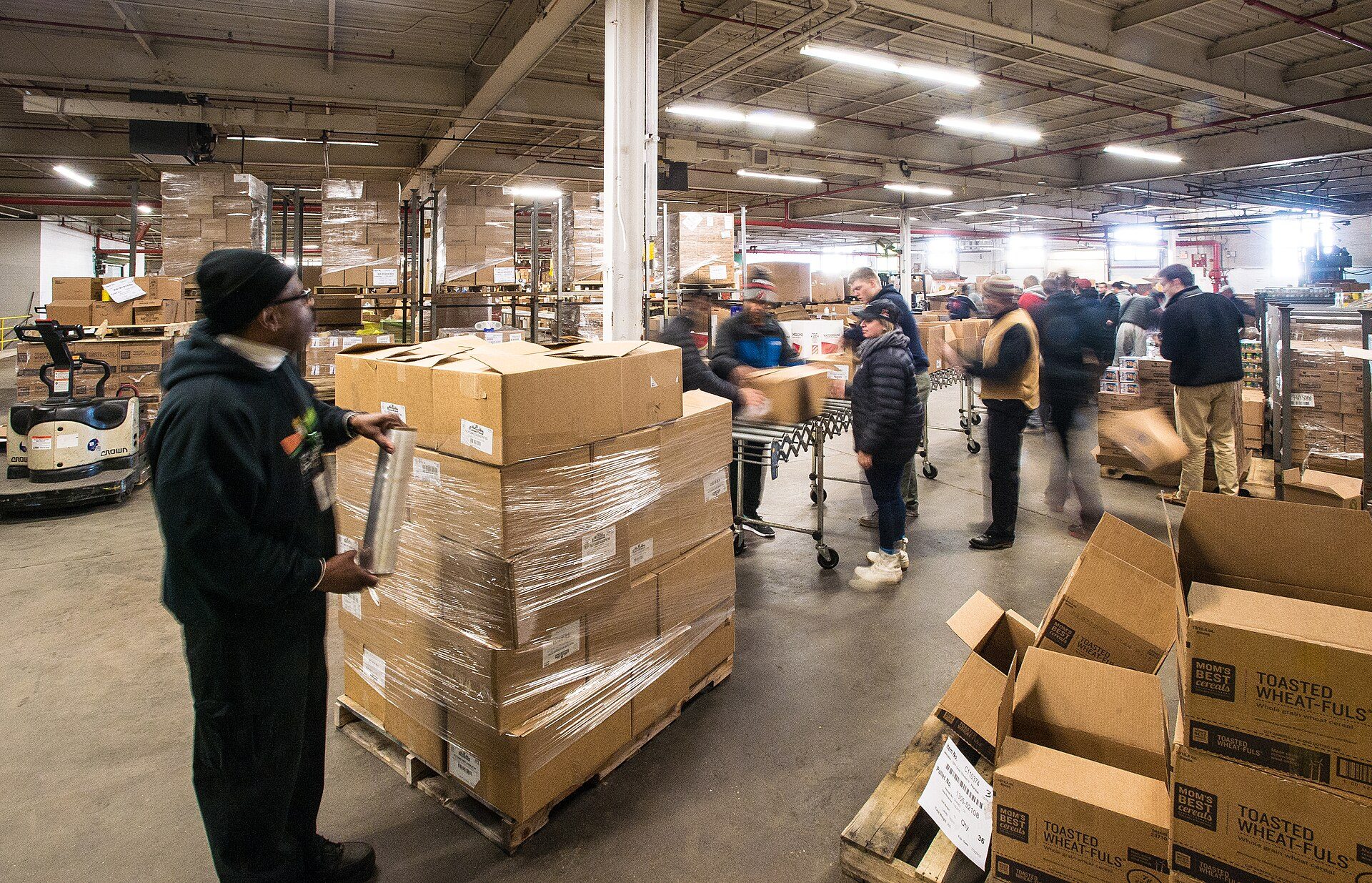
Photo: USDAgov / Wikimedia Commons, Public domain
Receiving checklist table
| Criterion | How to check | Fails when | Usual action |
|---|---|---|---|
| Quantity | Count pallets, layers × cartons, open samples | Short or over versus the note or PO | Record the actual count, write it in the report |
| Specification | Scan the code, read name, volume, colour, size | Wrong item, flavour or packing | Set aside, ask purchasing to accept or return |
| Batch, expiry | Read batch and expiry, calculate remaining life | Below the minimum or already expired | Do not receive, inform the team leader |
| Carton condition | Look at 5 sides, press the corners | Crushed, wet, torn, re-taped, leaking | Photograph, open and check the contents |
| Temperature (chilled) | Probe product, read trailer display | Outside the allowed range | Wait for the quality manager's decision |
Handling discrepancies: photos and a report signed with the driver
Discrepancies are normal at the dock: short, over, wrong item, short-dated, damaged. What is not normal is seeing them and not writing them down, then reporting after the driver has gone; by then the sender almost always replies "everything was complete and fine, you signed for it". With overages, do not think extra means profit: goods not on the PO are goods nobody has paid for, and receiving them unrecorded creates a stocktake difference later.
Photos that work as evidence
- An overall shot: the damaged carton next to the truck, with the plate or dock door visible.
- The carton label: item code and batch clearly readable.
- Two or three close-ups of the damage.
- The contents after opening: squashed packs, broken bottles, wet product.
- Send the photos to the team chat under the PO number on the spot; do not leave it until the end of the shift.
What a discrepancy report contains
- Date, time, warehouse, dock number; sender's name, driver's name and phone number, plate, seal number.
- PO number and delivery note number.
- One line per discrepancy: item, batch, quantity on the note, actual count, type of discrepancy, short description.
- Action taken: returned on the truck, received into quarantine, or awaiting a decision.
- Names and signatures of the driver and the receiver; the team leader signs too if the rules require it.
Also write a short summary on the copy of the delivery note the driver takes back, for example "1 carton of milk short, 2 crushed cartons returned, see report". Who pays compensation, and how, is decided by the sales contract and the transport contract; your job is to record it correctly and completely.
When the driver refuses to sign
Do not argue at the dock. Write "driver refused to sign" in the report, photograph the goods with the truck plate visible, call your team leader and ask purchasing to contact the supplier. Never sign "complete and in good condition" just to get it over with.
Signing, labelling and moving goods to staging
Check first, sign second, even if the driver is in a hurry or three trucks are queuing.
Sign for the actual quantity
On the delivery note, write the quantity actually accepted next to the sender's figure, then sign and print your name. The goods receipt note records the accepted quantity, batch and expiry for each line. Booking receipts in WMS software with a scanner is covered in step 5 of the roadmap; at this step you need to be sure the number entered is the number you counted.
Labelling pallets
Each accepted pallet gets a label on two opposite sides, high enough for a forklift driver to read, showing the item code, short name, batch, expiry date, quantity on the pallet, receiving date, PO number and pallet ID if the warehouse uses software. Split a two-batch pallet into two pallets before labelling; one batch per pallet makes put-away and issuing by expiry much simpler later.
Staging and quarantine areas
Accepted goods go to the put-away staging area, lined up in the order they will be stored and never blocking walkways. Goods awaiting a decision go to a separate quarantine area with a red "On hold" label showing the report number, never mixed with accepted stock. Chilled goods must not sit in staging longer than the warehouse allows: once checked, they go into the cold room first and the data entry follows (see Figure 3).
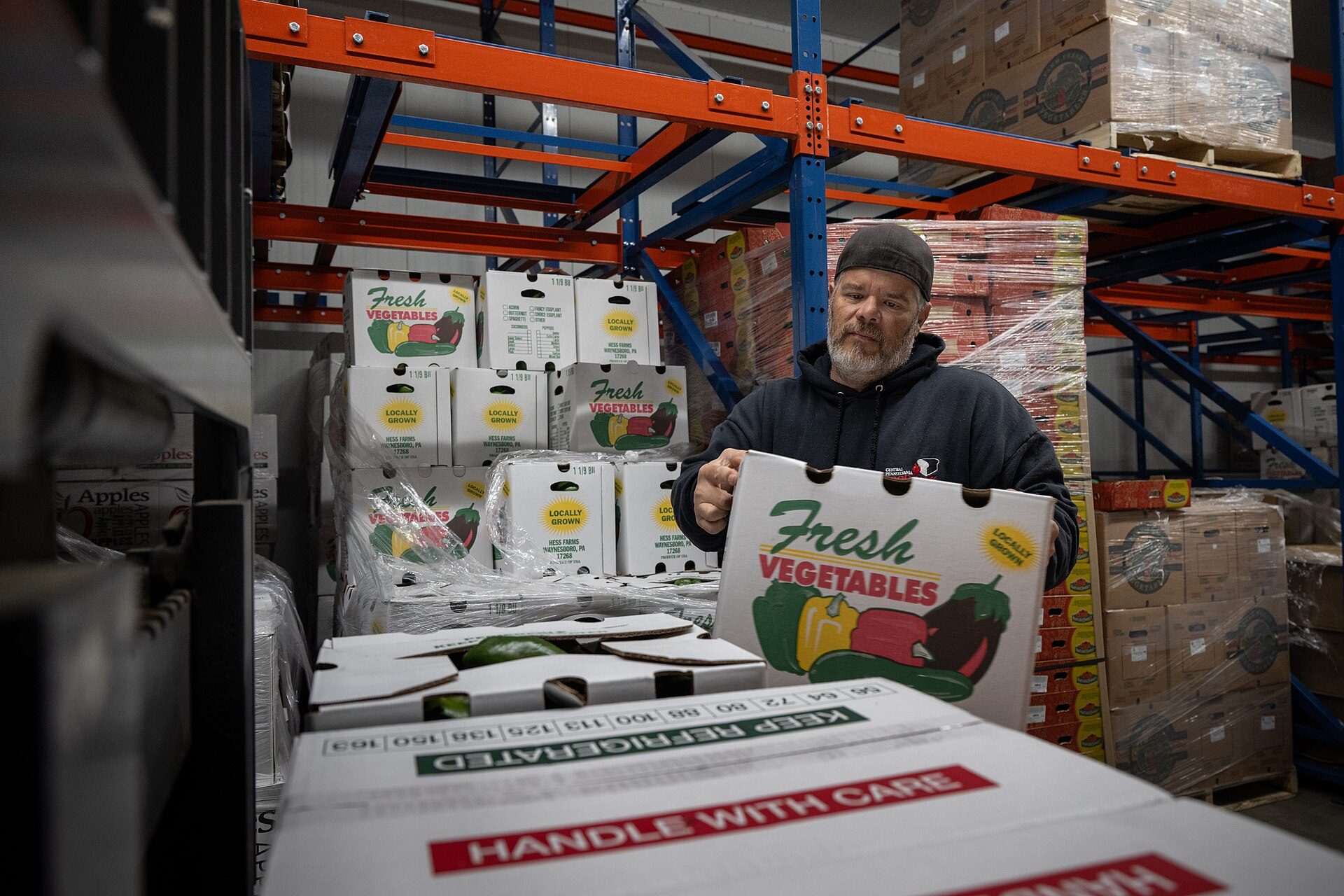
Photo: USDAgov / Wikimedia Commons, Public domain
Worked example: receiving a 380-carton truck
Linh is a new operative at a consumer goods distribution warehouse in Binh Duong, Vietnam. On 10 December 2026 a truck arrives at dock 2 at 8:00 with a delivery note for 7 pallets, 380 cartons, against PO-1125. The warehouse rule: remaining shelf life at receipt must be at least two thirds of total shelf life.
PO and delivery note
| Item | Specification | PO (cartons) | Delivery note (cartons) | Pallets |
|---|---|---|---|---|
| UHT milk 180 ml | 48 packs/carton, 6-month shelf life | 120 | 120 | 2 (5 layers × 12) |
| Bottled water 500 ml | 24 bottles/carton | 200 | 200 | 4 (5 layers × 10) |
| Butter biscuits | 12 boxes/carton | 60 | 60 | 1 (6 layers × 10) |
| Total | 380 | 380 | 7 |
The PO and the delivery note match. Linh photographs the seal, checks the plate, sees the load upright and the floor dry, unloads all 7 pallets and numbers them 1/7 to 7/7.
Detailed check results
- Milk: pallet 1 holds a full 60 cartons; pallet 2 has only 11 on the top layer, so 59. Actual count 60 + 59 = 119, one short. Two corner cartons on pallet 2 are crushed and wet, and packs inside are leaking. Expiry 15 May 2027, remaining life 21 + 31 + 28 + 31 + 30 + 15 = 156 days; minimum 180 × 2/3 = 120 days; 156 ≥ 120, so the batch passes.
- Water: 4 × 50 = 200 cartons, complete. Two batches: batch A on 3 pallets (150 cartons), batch B on 1 pallet (50 cartons); 150 + 50 = 200.
- Biscuits: 60 cartons, but 10 are strawberry flavour. Purchasing replies: do not accept strawberry, return it on the truck.
Summary table and signing
| Item | Delivery note | Actual count | Received | Returned on truck | Short |
|---|---|---|---|---|---|
| UHT milk | 120 | 119 | 117 | 2 (crushed, wet) | 1 |
| Bottled water | 200 | 200 | 200 | 0 | 0 |
| Biscuits | 60 | 60 | 50 | 10 (wrong flavour) | 0 |
| Total | 380 | 379 | 367 | 12 | 1 |
Across: milk 117 + 2 + 1 = 120; biscuits 50 + 10 = 60. Down: 117 + 200 + 50 = 367 received; 367 + 12 = 379 counted; 379 + 1 = 380 on the delivery note. Linh writes a three-line report (milk 1 short, 2 crushed milk cartons returned, 10 wrong-flavour biscuit cartons returned), attaches the photos and the driver signs. On the delivery note Linh writes "Received 367/380 cartons, see report". Milk pallet 2 now holds 57 cartons, so the two milk pallet labels read 60 and 57, which add up to 117, matching the goods receipt note.
Time: truck check 10 minutes, unloading 25, detailed check 30, report and call to purchasing 15, labelling and staging 20; 10 + 25 + 30 + 15 + 20 = 100 minutes, and the truck leaves at 9:40.
Common mistakes at the receiving dock
Signing the delivery note before counting
Sign: the driver says "just sign first, it's all there". Cause: politeness, pressure. Fix: sign only after counting; if the truck truly must leave, write "not checked in detail" and tell your team leader.
Copying the delivery note into the receipt
Sign: receipts always match delivery notes but the month-end stocktake comes up short. Cause: copying to save time. Fix: write your actual count first, compare afterwards.
Skipping batch and expiry
Sign: short-dated batches appear in stock and nobody knows where from. Cause: counting cartons without reading labels. Fix: every receipt line needs a batch and expiry, with remaining life calculated at the dock.
Mixing goods on hold with accepted goods
Sign: a crushed carton already in a report gets picked for a customer. Fix: a separate quarantine area and a red label with the report number.
Frequently asked questions
What are the steps of the warehouse receiving process?
Prepare documents and the unloading area, check the truck and seal, unload and count units, check quantity, specification, batch, expiry and carton condition, handle discrepancies with photos and a report, sign for the actual quantity, then label and move goods to staging.
How is a goods receipt note different from a delivery note?
The delivery note is written by the sender and states what they say they shipped. The goods receipt note is written by your side and states what was actually accepted after checking. The difference between the two is explained by the discrepancy report.
Should you blind count or count against the delivery note?
Blind counting is more accurate; counting against the note is faster. Warehouses usually blind-count high-value goods and suppliers that often ship wrong.
How do you write a report for goods damaged on arrival?
Photograph the overall scene, the label, the damage and the contents; record the item, batch, damaged quantity, description and action; the driver and the receiver both sign before the truck leaves.
Can a warehouse operative refuse a delivery?
It depends on company rules. Usually the receiver records and sets aside non-conforming goods, while the decision to return them belongs to the team leader, purchasing or quality. Ask what you are allowed to do in your first week.
Practice exercises and self-assessment
- Make up a 3-item PO and a delivery note with 3 errors (short, wrong item, short-dated); build a summary table as in the example.
- Write a discrepancy report for 2 discrepancy lines.
- Calculate the remaining shelf life of 3 products in your kitchen today and compare it with two thirds of total shelf life.
Self-assessment criteria
- Pass: on every line, received + returned + short equals the delivery note, and the totals match too.
- Pass: the report includes the plate, PO number, item, batch, quantities, action taken and space for both signatures.
- Not yet: the receipt copies the delivery note, batch or expiry is missing, or you signed before checking.
Once you receive goods confidently, the cartons in staging need an "address". The next step in the roadmap is Location codes, slotting & FIFO/FEFO: reading aisle, level and bin codes and putting each batch in the right place, so the batch and expiry you just recorded are used correctly when goods go out. You can read ahead in FIFO vs FEFO: the difference, slotting a warehouse, picking by batch.
Keep learning warehouse work: after receiving and counting come location codes and FIFO/FEFO, picking and packing e-commerce orders, and WMS software with scanners. See the 8-step warehouse operative roadmap.