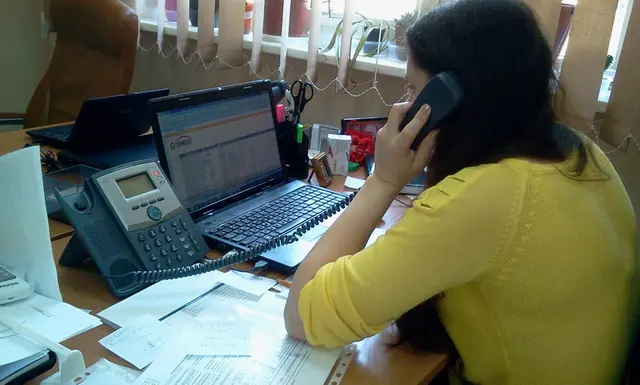
Finding prospects well comes down to three jobs done in order: describe your target customer, collect names from lawful sources (referrals, groups, LinkedIn, Google Maps, events), then put them into a scored list so you know whom to contact first. Beginners often do it backwards: they buy a "data" file of a few thousand phone numbers, call from top to bottom, get rejected all day and give up within two weeks. This lesson is written the way a sales team lead coaches a new hire in Vietnam, including the limits on personal data.
By the end of this lesson, you will be able to:
- Write a one-page customer profile for individual buyers (B2C) or business buyers (B2B), including "not our customer" criteria.
- Find prospects from 6 sources: past customers, referrals, groups, LinkedIn, Google Maps and events, properly and lawfully.
- Build a prospect list in Google Sheets or a CRM with the key columns: source, basis for contact, score and next step.
- Score priority on 4 criteria out of 100 and rank prospects A, B or C.
- Work backwards from a sales target to the number of names you need each week, with figures that add up.
Learning sales properly? Customer profiling and prospecting is step 2 of the roadmap, right after the sales process, product knowledge and ethics. See the 8-step sales executive roadmap to learn in the right order.
Who is a prospect, and why choose before you call?
A prospect is a person or business that may need your product, can afford it, and can be contacted through a legitimate channel. Missing any of the three, they are just a name. A carefully chosen list of 50 names usually produces more meetings than 500 phone numbers of unknown origin.
Lead versus prospect
A lead is a new name on the list that has not been checked yet. A prospect is a lead that has been compared with your customer profile and looks like a fit. Many Vietnamese companies call both "khach tiem nang" (potential customers); just agree on the terms with your team lead.
Why beginners burn through lists
New sellers call anyone with a number because they are afraid of running out of work, so they get harsh rejections and are sometimes reported as spam callers. A good-fit customer who receives a rushed, unprepared call is also less likely to pick up next time. Choosing carefully protects both your morale and your source of customers.
Daily time for prospecting
Many sales teams give new hires a fixed 60–90 minute block every morning to find and screen new names. Skip it for a few weeks and the list runs dry, and next month's sales drop with it.
Drawing the customer profile: B2C and B2B
A customer profile is a short description of the kind of customer who buys the most, buys regularly and complains the least. For individuals (B2C) it is usually called a persona; for businesses (B2B) it is often called an ideal customer profile (ICP). Do not imagine it: start from the company's real customer data.
Start from your 10–20 best existing customers
- Review the 10–20 biggest and most consistent customers with your team lead, inside the company system.
- Note what they share: industry, size, area, why they first bought, who decides.
- Ask experienced colleagues: "Which customers bought fastest? Which ones were the most draining after the sale?"
- Write it up on one page, with a "not our customer" section.
The B2C persona: 7 boxes to fill
Take an English centre for children: the real customer is the parent. The persona fills 7 boxes: age and occupation, where they live, estimated income, what worries them (a child facing a school transfer exam), where they look for information (parent groups, friends), who decides (often both parents) and barriers (fees, school-run times).
The B2B profile: add decision-makers and buying signals
A B2B profile also needs size (staff, branches), the decision-maker, influencers (the accountant, the head of the team that uses the product) and the buying cycle. Most important are buying signals: events that suggest they will need you soon, such as opening a new branch, hiring heavily, opening a shop, winning a new construction job or changing suppliers.
| Item | Individual customers (B2C) | Business customers (B2B) |
|---|---|---|
| Who decides | Usually 1–2 people in the family | Owner, director, purchasing manager; plus influencers |
| What to record | Age, job, area, current worry, barriers | Industry, size, area, decision-maker, buying cycle |
| Buying signals | Buying a home, a new baby, a wedding, a child facing exams | New branch, heavy hiring, new construction job, shop opening |
| Good sources | Referrals, community groups, local events | Referrals, LinkedIn, Google Maps, trade fairs, industry associations |
| Decision time | Days to weeks | Weeks to months |
"Not our customer" criteria
Write down 3–5 signs that rule a name out immediately, for example: outside the delivery area, too small for the minimum order, overdue debt with the company, or has already said they do not want to be contacted.
6 lawful sources of prospects
Beginners should pick the 2–3 sources that best fit the customer profile and work them every day. The order below goes from "warm" sources (people who already know the company) to "cold" ones.
1. Past and lapsed customers of the company
This is the easiest source and the one beginners most often ignore: customers who bought 6–12 months ago may need to buy again, or stopped for a reason you can fix. Work on this list only inside the company system and as assigned by your team lead, so you do not take colleagues' customers.
2. Referrals
Referred customers trust you faster because someone has vouched for you. Ask for referrals right after a customer is satisfied. Sample line: "If you are happy with the service, do you know anyone else who might need it? Could you check with them first whether they would like me to get in touch, and if so, share their number?" The "check with them first" part matters: the referred person knows and agrees before you call.
3. Facebook groups, Zalo communities and local groups
Groups are where customers talk honestly about their problems, such as a cafe owner complaining that the espresso machine keeps breaking. Zalo is Vietnam's most widely used messaging app. The right approach: join groups that match your profile, follow the rules, and post useful answers so customers message you first. Do not advertise where the group forbids it, do not send mass private messages to members, and do not copy phone numbers that people leave in comments into your call list.
4. LinkedIn for business customers
For B2B (software, logistics, office equipment, recruitment), LinkedIn helps you find the right job titles: purchasing manager, operations director, business owner. Complete your own profile first, search by title and location, and send each connection request with a personal line. Do not use automated tools to scrape data or send mass connection requests: LinkedIn's terms do not allow it and your account can be restricted.
5. Google Maps for shops, dealers, restaurants and workshops
If your customers are shops, restaurants, clinics, workshops or dealers, Google Maps is a living directory. Search by business type plus ward name (for example "building materials shop" in a given ward), and look at shopfront photos and review counts to estimate size; reviews complaining about "out of stock" or "slow delivery" are buying signals. Use only the contact details the business publishes itself, look each one up by hand and never use scraping tools. For local customers, dropping by in a quiet hour often works better than calling (see Figure 4).
6. Events, trade fairs and industry seminars
Trade fairs, seminars and business clubs let you meet many customers in the right industry in one day (see Figure 2). Before the event, pick 10–15 exhibitors or attendees you want to meet. At the event, ask more than you talk, collect business cards and ask whether the person would like you to follow up (see Figure 1). The same day, note where you met and what they are worried about.

Photo: NZCoaster / Wikimedia Commons, CC0
Legal limits: customer data must come from a legitimate source
Every row on your list must answer one question: "Where did this name and number come from, and am I allowed to contact them?"
Legal note on personal data: Vietnam has laws and regulations on personal data protection. A person's name, phone number, address and workplace are all personal data. Buying, selling or swapping customer lists of unknown origin, or using software to scrape user information, is unlawful and can lead to fines or, in serious cases, criminal prosecution. This lesson only gives general principles; the specific rules can change, so ask your company's legal or HR team and read the current official texts on government portals.
Safe bases for contact
- The customer left their details to get advice (filled in a form, sent an enquiry, handed you a card and agreed to be contacted).
- Past customers of the company, within the purpose they agreed to when buying.
- Referred people who agreed to be contacted.
- Contact details a business publishes for trading (switchboard, general email, number on the shop sign, the company's information page), used only for business.
What not to do
- Buy "customer data" from anyone, even when it is sold as "clean, freshly filtered data".
- Take your previous employer's customer list to a new company.
- Use automated tools to collect phone numbers or emails from groups, social networks or maps.
- Keep contacting someone who has said they do not want sales calls or messages.
Phone numbers of household business owners
A shop owner's mobile number on the sign is still personal information: use it only to contact them about their business, do not pass it to others, stop as soon as they decline, and mark "Do not contact" so the whole team knows.
Building the prospect list in Google Sheets or a CRM
If the company already has a CRM (customer relationship management software such as HubSpot, Bitrix24 or Getfly), enter prospects straight into it instead of keeping a separate spreadsheet. If not, Google Sheets on a company account is enough for a beginner (see Figure 3).

Photo: Shixart1985 / Wikimedia Commons, CC BY 2.0
Columns to include
| Column | What to record |
|---|---|
| ID; customer or business name | Unique number; full name with area |
| Contact person, role | Who decides, who influences |
| Contact channel | Switchboard, general email, address |
| Source; basis for contact | Where it came from; why you may contact them (e.g. "referrer asked first") |
| Date collected | Date added to the list |
| 4 score columns, total, grade | Fit, need, size, access; calculated by formula |
| Next step and date; status; notes | A concrete task with a deadline; new, contacted, meeting booked, do not contact; what the customer is worried about |
Google Sheets tips for beginners
- Use drop-down lists for "Source" and "Status" (Data → Data validation) so the whole team records them the same way.
- Total score: if the 4 score columns are H, I, J and K, the total cell is
=SUM(H2:K2). - Grade: with the total in column L, the grade cell is
=IF(L2>=70,"A",IF(L2>=50,"B","C"))(a sheet set to the United States locale uses commas between arguments; a sheet set to the Vietnam locale uses semicolons). - Colour rows by grade with conditional formatting, and filter by "Next step" to see whom to contact today.
- Share only with team members through company accounts, and turn off "anyone with the link".
Clean the list every week
Spend 20 minutes at the end of the week: delete duplicates, update statuses, mark "Do not contact" for anyone who declined and remove rows with no source.
Lead scoring: whom to contact first
Lead scoring gives each prospect a number that decides the order of contact, instead of choosing by gut feeling. Beginners can use a 100-point scale with 4 criteria agreed with the team lead.
Four criteria out of 100
| Criterion | Maximum points | Score high when |
|---|---|---|
| Profile fit | 30 | Right industry, right area, right size |
| Buying signals | 30 | Expanding, unhappy with current supplier, new project coming |
| Size and ability to pay | 20 | Large expected order, pays reliably |
| Access to the decision-maker | 20 | Referred, met at an event, you know the right person |
| Total | 100 | Grade A from 70, grade B 50 to 69, grade C below 50 |
Acting on the grade
- Grade A (70–100): contact this week, prepare thoroughly before calling.
- Grade B (50–69): contact within 2 weeks, gather more information to move them up or down.
- Grade C (below 50): do not call yet; watch for buying signals, or drop them if they match a "not our customer" criterion.
After 4 weeks, compare scores with real results: are grade A prospects actually easier to book? If referred prospects always book a meeting despite low scores, increase the weight of "access".
Worked example: a paint sales rep looking for building materials shops
Lan is a new sales executive at a wall paint distributor on the outskirts of Ho Chi Minh City. Her target customers are building materials shops and painting crews within 20 km of the warehouse. Her target: 2 new regular customers each month.
Step 1: work backwards to the number of names
According to the team's past figures (every company is different), 1 in 2 names on the list can be reached and talked to (50%), 1 in 4 conversations leads to a meeting (25%), and 1 in 4 meetings leads to an order (25%).
- 2 new customers → 2 ÷ 25% = 8 meetings.
- 8 meetings → 8 ÷ 25% = 32 conversations.
- 32 conversations → 32 ÷ 50% = 64 names on the list per month.
- 64 names ÷ 4 weeks = 16 names per week, about 3 per working day (16 ÷ 5 = 3.2).
Step 2: find names from 3 sources
Lan picks 3 sources that suit shop customers: referrals from existing customers, Google Maps (searching "building materials shop" ward by ward, then riding past to look in person, as in Figure 4) and a local painters' group where she answers technical questions. In week one she has 16 names, each with a source and a basis for contact.

Photo: Arabsalam / Wikimedia Commons, CC BY 3.0
Step 3: score the first 6 names
| Prospect | Fit (30) | Need (30) | Size (20) | Access (20) | Total | Grade |
|---|---|---|---|---|---|---|
| Building materials shop A (referred by a customer) | 30 | 20 | 15 | 20 | 85 | A |
| Building materials shop B (Google Maps, reviews mention stock-outs) | 25 | 25 | 10 | 10 | 70 | A |
| Painting crew C (group, messaged first) | 20 | 20 | 5 | 15 | 60 | B |
| Building materials shop D (Google Maps, already has a supplier) | 30 | 5 | 15 | 5 | 55 | B |
| Construction company E (decision-maker unknown) | 10 | 15 | 20 | 0 | 45 | C |
| Grocery store F (does not sell building materials) | 5 | 0 | 5 | 10 | 20 | C |
Check the sums: A = 30 + 20 + 15 + 20 = 85; B = 25 + 25 + 10 + 10 = 70; C = 20 + 20 + 5 + 15 = 60; D = 30 + 5 + 15 + 5 = 55; E = 10 + 15 + 20 + 0 = 45; F = 5 + 0 + 5 + 10 = 20.
Step 4: decide the actions
A and B are contacted this week (A through the referrer, B with a visit in person). C messaged first, so Lan replies the same day; D gets more research over 2 weeks. For E, she first finds out who handles purchasing; F is dropped because it does not sell building materials.
Common prospecting mistakes
A profile that is too broad
Sign: the profile says "anyone who needs it" and the list is full of irrelevant names. Cause: fear of missing customers. Fix: add area and size criteria and 3–5 rule-out criteria.
Using "data" of unknown origin
Sign: out of 10 calls, 8 people ask "where did you get my number", and a few threaten to report you. Cause: a bought or borrowed list. Fix: discard every list without a source column and go back to the 6 lawful sources above.
No source and no next step recorded
Sign: after a month you cannot remember who referred whom or whether you called. Cause: only the name and number were recorded. Fix: do not add a row until "Source", "Basis for contact" and "Next step" are filled in.
Frequently asked questions
How should a beginner find prospects?
Start with the company's past customers and referrals, because they are warm sources and the easiest to book. In parallel, add 1–2 sources that fit your profile (Google Maps for shops, LinkedIn for businesses) and keep a 60–90 minute prospecting block every day.
Should I buy customer data to call faster?
No. A bought list of unknown origin breaches personal data protection rules, can get you and your company into legal trouble, and books very few meetings because the people on it do not know you.
Does finding B2B customers on LinkedIn work in Vietnam?
It works for software, logistics and recruitment, where decision-makers use LinkedIn regularly. For shops and small workshops, Google Maps, referrals and visits in person work better.
Do I need software for lead scoring?
Not necessarily. Google Sheets with 4 score columns and two formulas is enough for a beginner; CRMs usually have score fields built in.
Practice and self-assessment
- Write a one-page customer profile for the product you sell (or a familiar one such as wall paint or an English course), including 3–5 rule-out criteria.
- Build a Google Sheet with the columns above, with drop-down lists for "Source" and "Status" and formulas for total score and grade.
- Find 15 names from at least 2 different sources, each row with a source and a basis for contact.
- Score all 15 names and pick the first 5 to contact, with reasons.
- Redo the backwards calculation for a target of 3 new customers per month, keeping the example's rates.
Self-assessment criteria
- Pass: the profile covers industry or customer group, area, decision-maker, buying signals and rule-out criteria.
- Pass: 15 of 15 rows have a source and a basis for contact, and none come from a bought list.
- Pass: for a target of 3 new customers you get 12 meetings, 48 conversations and 96 names per month (24 names per week).
- Not yet: the list contains numbers of unknown origin, or the sheet is shared with "anyone with the link".
With a scored list in hand, move on to the next step of the roadmap: Cold calls, Zalo outreach & booking meetings, where you learn a 30-second opener and how to book meetings with grade A prospects. Revisit the big picture in the 7-step sales process for new sales executives, and see where a good list leads in how to close a sale without pressure.
Keep learning sales: after prospecting come cold calls, consultative selling, handling objections and closing. See the sales executive roadmap.