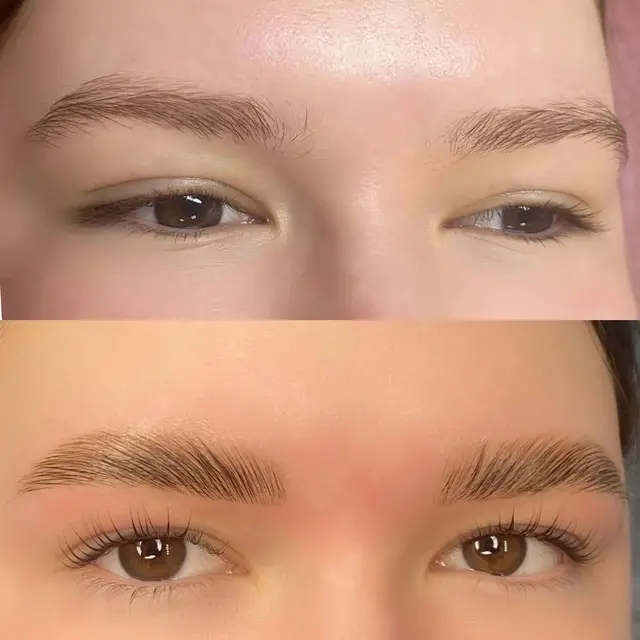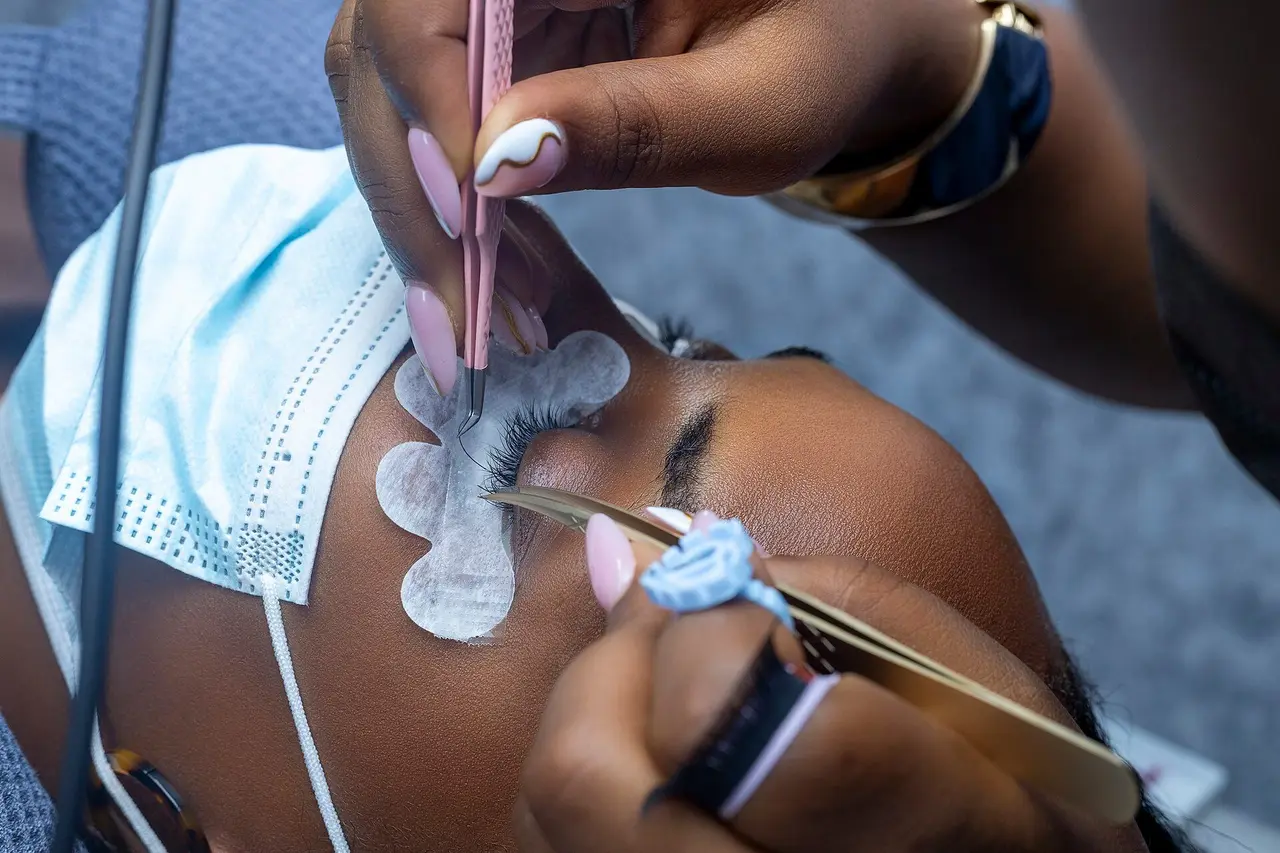
Eyelash extension safety comes down to four things you do for every client: tweezers are cleaned and disinfected after each use, under-eye pads, lash wands and micro brushes are used once and thrown away, the client keeps her eyes closed the whole time in a well-ventilated room, and you spot the early signs of irritation or glue allergy so you can remove the lashes and advise the client to see a doctor. The eye area has the thinnest skin on the body and sits right next to the cornea, so one small hygiene slip or a whiff of glue fumes in the eye is enough to leave a client with red eyes or swollen lids. This is the first lesson a new lash technician should read, before picking up a single lash.
By the end of this lesson, you will be able to:
- Sort lash tools into reusable items (clean + disinfect) and single-use items, and handle each correctly after every client.
- Clean tweezers and the workstation with a 6-step routine in about 10 minutes between clients.
- Take a client through a consultation form and recognise when to postpone or refuse a lash service.
- Place under-eye pads correctly, keep the client's eyes closed and reduce glue fumes while you work.
- Tell irritation from glue allergy, and know when to remove lashes, when to advise a doctor's visit and when to call emergency services (115 in Vietnam).
Just starting out in lash extensions? Hygiene, eye-area safety and glue allergy are step 1 of the roadmap, before choosing lash fibres, isolation or classic sets. See the 8-step eyelash extension technician roadmap to learn in the right order.
Why eye-area safety is the first step in lash work
Lash extensions mean gluing one synthetic lash onto one natural lash, about 0.5–1 mm from the eyelid. You work with sharp tweezers, liquid adhesive and its fumes, right above a client's closed eyes for 1.5–2.5 hours. The client sees nothing during that time, so she relies completely on your skill and care.
The main risks in lash extensions
- Infection: shared tweezers, lash wands and towels can carry bacteria from one client to the next and cause blepharitis, styes or conjunctivitis.
- Fumes and irritation: lash glue is usually cyanoacrylate based and gives off fumes while it cures. A client who opens her eyes slightly, or a fan blowing fumes into the eye, leads to stinging, redness and watering.
- Glue allergy: the body reacts to ingredients in the glue; lids swell, itch and redden, and it can happen even to clients who have had many sets without problems.
- Mechanical injury: an eye pad placed too high rubs the eyeball, tweezers poke the lid, or extensions glued in clumps pull on natural lashes.
Beginners tend to focus on holding the tweezers and forget the jobs "nobody sees": washing hands, replacing single-use items, filling in client records. Treat safety as part of the service, with its own time in the appointment.
Sorting lash tools: reusable or single use
Before learning the cleaning routine, you need to know which group each item belongs to. The general rule: anything that can be cleaned and disinfected is processed properly after every client; anything that cannot be cleaned thoroughly (paper, cotton, foam, small plastic bristles) is used once and thrown away.
| Item | Group | How to handle it | When |
|---|---|---|---|
| Isolation and pick-up tweezers | Reusable | Remove glue, wash with soap, disinfect per label, let dry | After every client |
| Under-eye pads | Single use | Into a lidded bin | After every client |
| Lash wands, micro brushes, cotton swabs | Single use | Throw away, never dip back into a shared pot | After every use |
| Medical tape for lashes | Single use | Cut fresh for each client | Each client |
| Lash tray, glue stone or glue paper | Reusable / single use | Wipe the tray with alcohol; throw glue paper away | After every client |
| Bed, pillow, lamp, trolley | Surfaces | Clean, then wipe with surface disinfectant; change the towel or paper sheet | After every client |
Tweezers: your most important tool
Lash tweezers are stainless steel with fine tips, used to separate natural lashes and pick up extensions (Figure 1). They touch the client's lashes directly, so every client needs a disinfected set. Busy technicians keep 2–3 sets and rotate them: one set soaks in disinfectant while the other is in use.
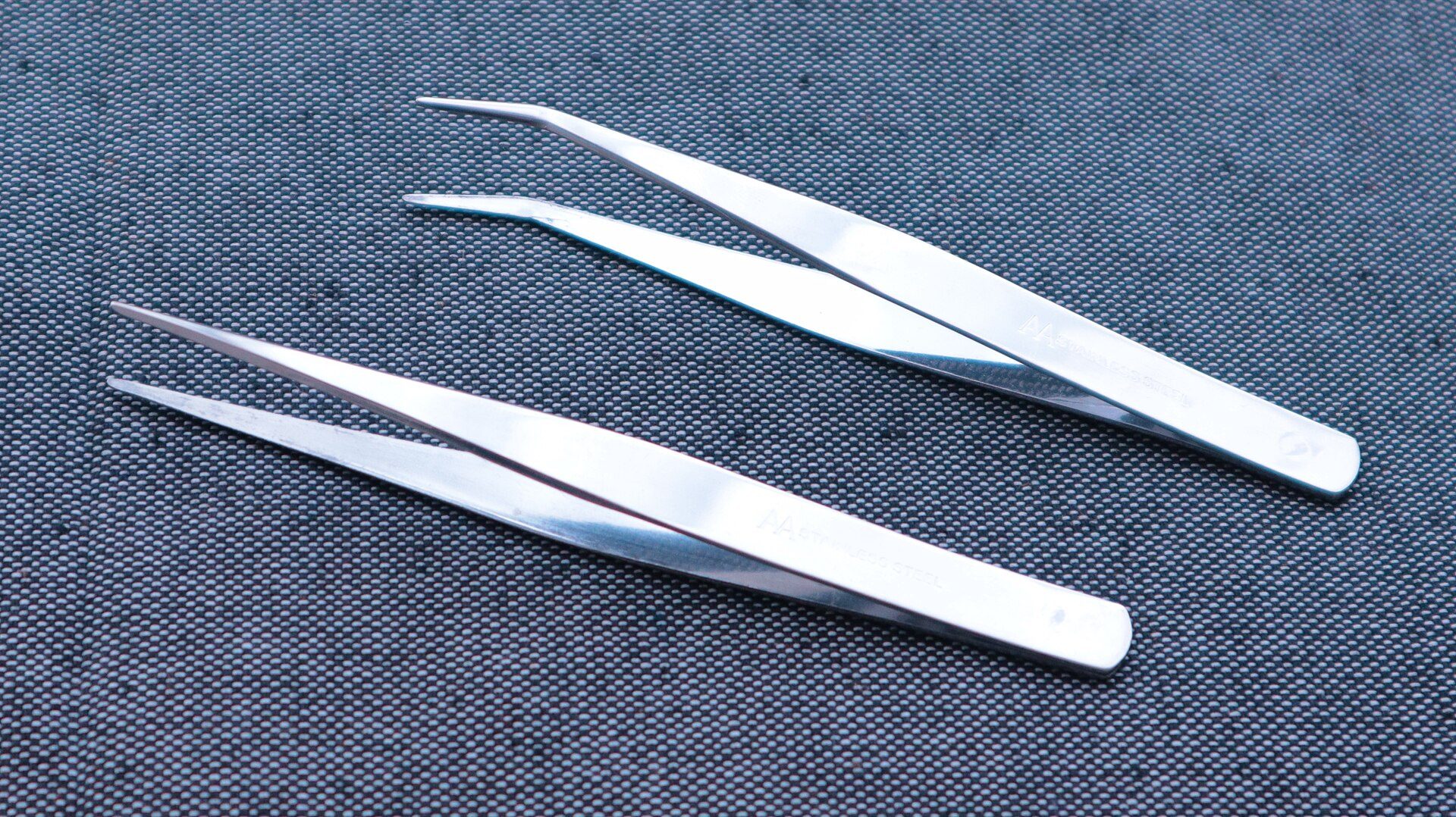
Photo: Yapparina / Wikimedia Commons, CC0
Single-use items are not for saving money on
A lash wand that has touched a client's eye never goes back into the clean wand pot or onto the next client. A used eye pad goes in the bin even if it looks clean. Shared glue should only be dispensed as a small drop onto paper or a stone, and an applicator that has touched the eye must never touch the bottle opening.
Cleaning tweezers and the workstation between clients
Cleaning removes dried glue, dust and oil with water and soap. Disinfecting uses a tool disinfectant or alcohol to sharply reduce microorganisms on a surface that is already clean. Disinfectant works poorly on tweezers still coated in glue, so always clean first.
The 6-step routine
- Wash your hands with soap and water for at least 20 seconds (Figure 2), or use hand sanitiser when your hands are not visibly dirty. Put on fresh gloves if your studio requires it.
- Discard the previous client's single-use items into a lidded bin: eye pads, wands, micro brushes, tape, glue paper.
- Wipe the glue off the tweezers with cotton or tissue, wash them with soap and water, and gently brush the tips with a small brush.
- Disinfect the tweezers: soak or wipe with a tool disinfectant at the concentration and contact time on the label; if you use alcohol, let it evaporate completely.
- Wipe surfaces: clean the bed, pillow, lamp and trolley, then wipe with surface disinfectant; change the towel or paper sheet and pillow cover.
- Store clean and dry: let the tweezers dry in a lidded box or clean tray, not on the bare work surface.
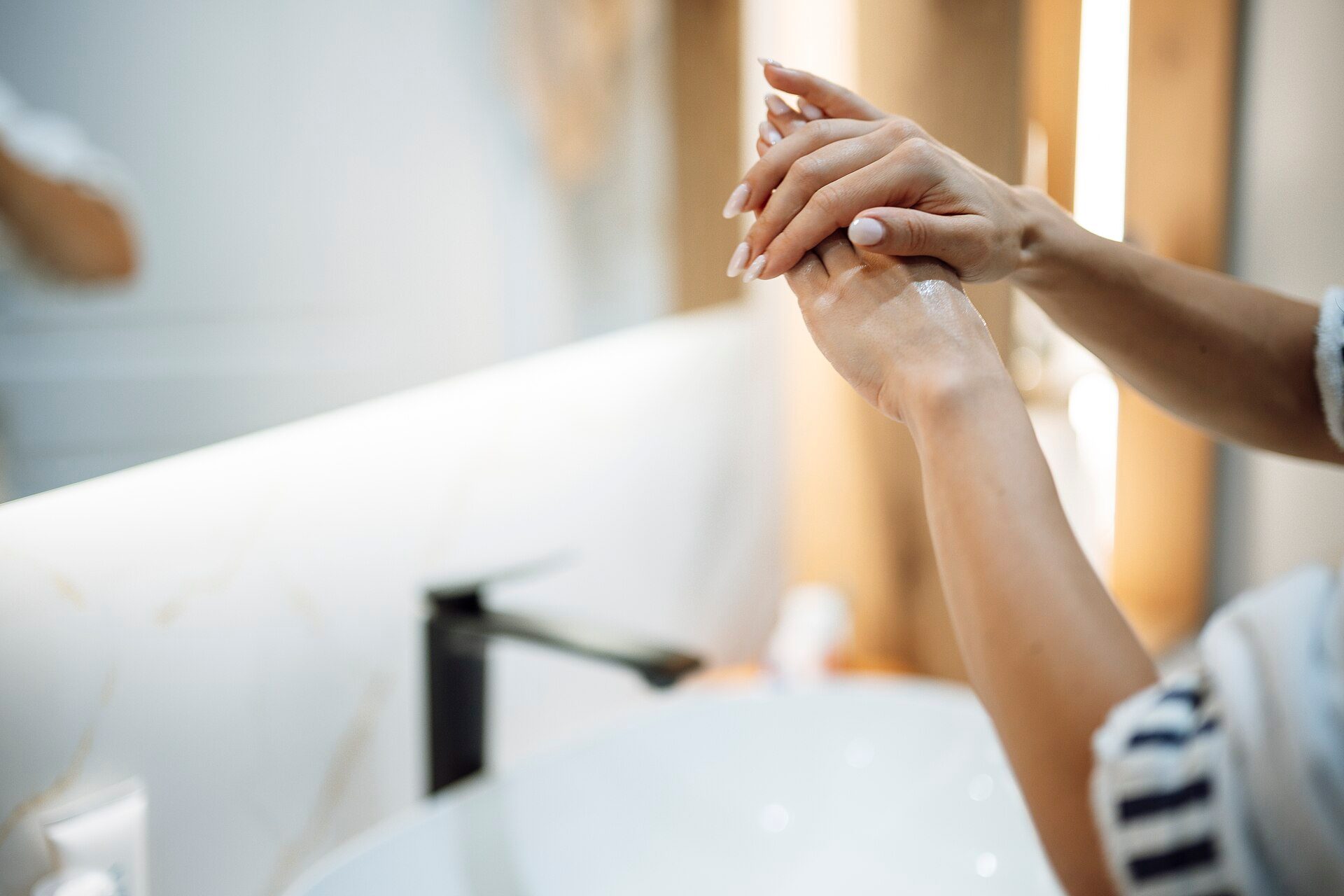
Photo: Shixart1985 / Wikimedia Commons, CC BY 2.0
Choosing a disinfectant
Use a tool disinfectant with a clear label, expiry date, mixing instructions and contact time, bought from a reputable spa or medical supplier. Do not mix your own chemicals from word-of-mouth recipes, and do not soak tweezers in cloudy solution or solution mixed days ago. Replace soaking solution as the label instructs and write the mixing date on the container.
Checking tweezers before a shift
Look at the tips under a lamp: they must close fully, with no bending, rust or scratches. Tweezers with gaping tips make you squeeze harder, which makes slips and pokes into the lid more likely. Replace rusty tweezers instead of trying to keep using them.
Client questions and contraindications before a lash service
Every new client needs a short consultation form that she reads and signs. The form helps you spot clients who should not have extensions, and it is evidence that you explained the risks if a problem comes up later.
Questions to ask
- Have you had lash extensions before? Any red eyes, swollen lids or itching after extensions or after using strip-lash glue?
- Are you allergic to any cosmetics, adhesives, latex or medicines?
- Are your eyes currently red, discharging or itchy, do you have a stye or blepharitis, or have you had eye surgery or treatment recently?
- Do you wear contact lenses? (They should come out before the service.)
- Do you have any condition or take any medicine for which a doctor told you to be careful around the eyes?
When to postpone or refuse
Postpone or refuse when the client's eyes are red, inflamed or discharging, she has a stye, has just had eye surgery, or has had a reaction to lash glue before. Clients being treated for eye or facial skin conditions, pregnant clients, or anyone with a health condition who is unsure whether extensions are suitable should check with a doctor first. You are a beauty technician, not a doctor: when in doubt, do not proceed.
Patch testing
Many studios patch test before a first full set: a few lashes are applied with the glue you plan to use, and the client watches for a reaction for about 24–48 hours before booking the full set. The exact method follows your studio's procedure and the glue maker's instructions. A patch test catches some reactions early but does not rule out an allergy developing later, so you still brief the client on what to watch for after every set.
Safety during the service: closed eyes, eye pads and fumes
Most cases of red eyes straight after a set come from three mistakes: a badly placed eye pad, a client opening her eyes, and fumes building up in the room. All three can be prevented if you set up properly from the start.
Placing the under-eye pad correctly
With the client's eyes gently closed, lay the pad snugly against the lower lashes, with its top edge about 1–2 mm below the lower lash line, not touching the eyeball and not pressing on the wet inner rim. Ask "does it scratch or sting?" right after placing it; if the client feels it, take it off and reposition it. A pad rubbing the eyeball for two hours can scratch and redden the eye.
Eyes closed the whole time
Brief the client first: close the eyes gently, do not try to open them, and say so if she needs to talk or sneeze so you can pause. Never let a client open her eyes while the glue is still curing. Before she opens them, dry the glue with a handheld fan blowing from the forehead downward, never straight into the eye opening, wait as the glue maker advises, and only then remove the pads (Figure 3).
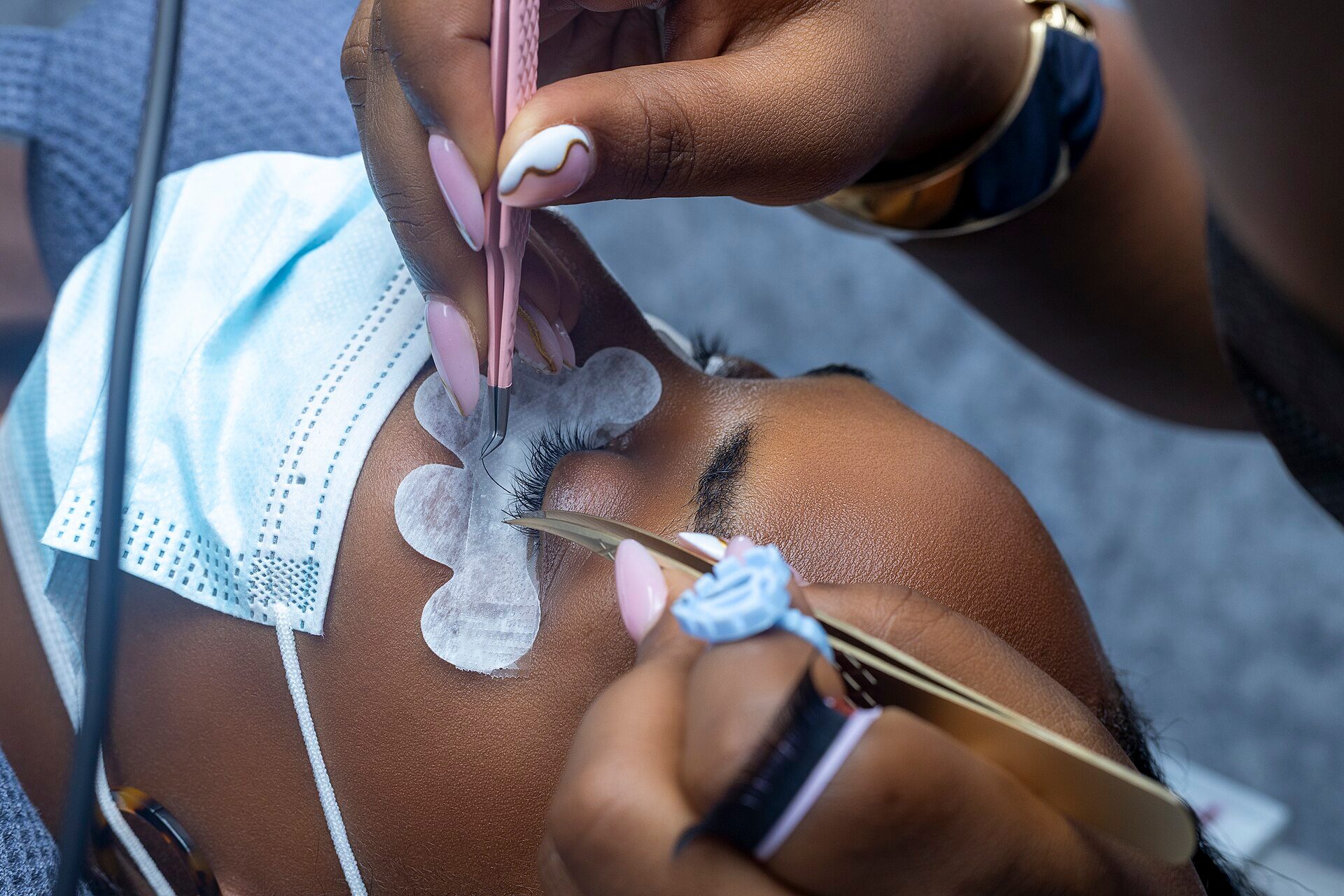
Photo: Jameswasswa / Wikimedia Commons, CC BY-SA 4.0
Cutting glue fumes in the room
- Keep the room well ventilated with an extractor fan or air purifier; do not work in a closed, stuffy room.
- Dispense only a small drop of glue and replace it as the maker advises; keep the drop away from the client's face and never pass it over the eyes.
- Close the glue bottle tightly straight after dispensing, and store glue at the temperature on the bottle.
- Wear a mask yourself; if you cough or your eyes water for long periods, talk to a doctor.
Room temperature and humidity affect how fast the glue cures and how long lashes last; you will learn this in later steps and in the article How long do eyelash extensions last? Infills, removal, aftercare.
Eye-area safety warning: If glue, cleanser or remover gets into the eye, stop at once, rinse the eye with plenty of clean water or saline, then take the client to an eye doctor. Do not put eye drops or ointments on the client yourself. If the client has difficulty breathing, rapid swelling of the face or lips, or feels faint, call emergency services (115 in Vietnam) immediately. Do not use lash glue or remover that is expired, of unknown origin, or without a Vietnamese label or clear instructions. Never use nail glue or general-purpose glue instead of lash adhesive.
Recognising irritation and glue allergy, and what to do
Lash glue allergy and irritation from glue fumes differ in when they appear and how severe they are. You need to tell them apart so you know what you can handle in the studio and what a doctor must decide.
| Sign | Usually appears | Likely cause | What you do |
|---|---|---|---|
| Stinging, mild redness of the white, watering | On opening the eyes or a few hours later | Irritation from fumes | Ask the client to monitor; if it has not eased after about 24–48 hours or gets worse, remove the lashes and advise a doctor's visit |
| Swollen, itchy lids, red skin around the eye, rash | Often after 24–48 hours | Glue allergy | Book an early removal with professional remover and advise seeing an eye doctor or dermatologist |
| Eye pain, blurred vision, light sensitivity, yellow discharge | At any time | Eye injury or infection | Advise seeing an eye doctor straight away; do not treat it yourself |
| Difficulty breathing, swelling of lips or face | Rare, very fast | Severe allergic reaction | Call 115 immediately |
Red eyes after extensions: when to worry
Mild redness of the white and slight stinging for a few hours usually comes from fumes and fades. A clearly red, bloodshot eye with pain or blurred vision (Figure 4) is not something to wait out: advise the client to see an eye doctor. You do not diagnose and you do not promise "it will be gone tomorrow"; you record what happened, remove the lashes when needed and refer her to a doctor.
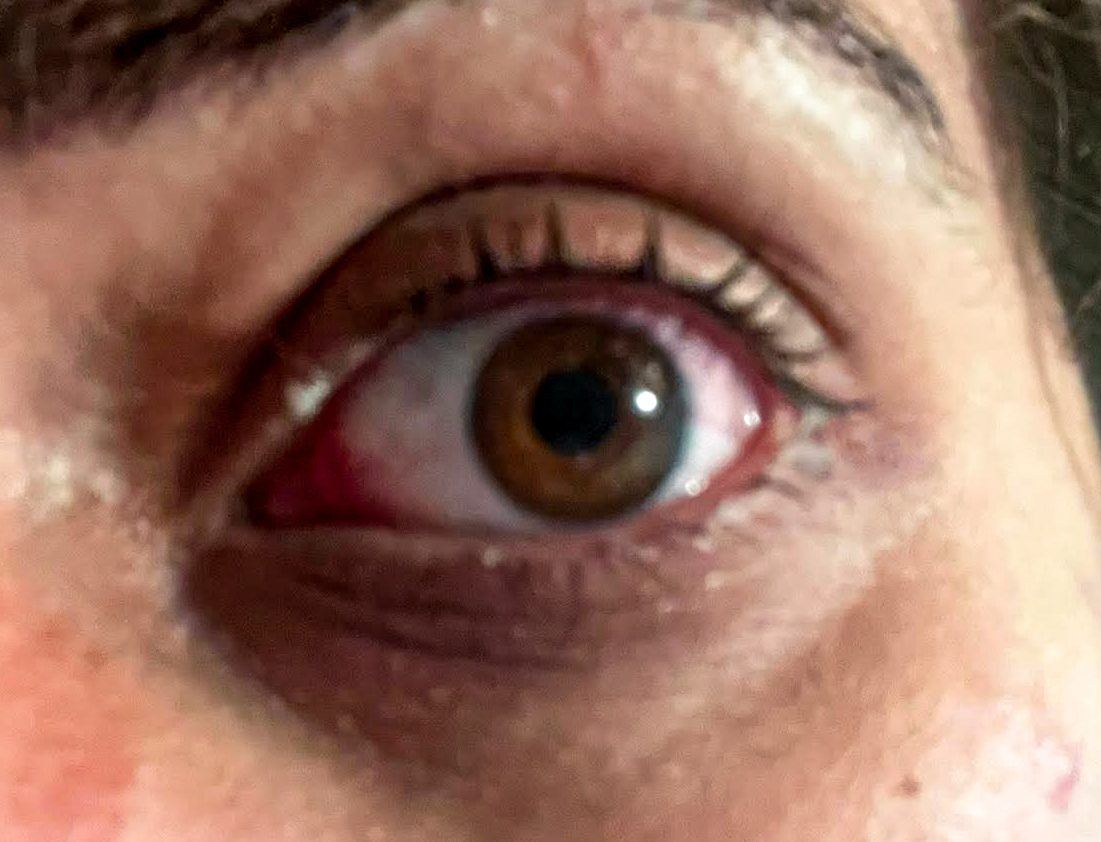
Photo: Aykhan Zayedzadeh / Wikimedia Commons, CC BY-SA 4.0
What to do when a client reports a reaction
- Ask clearly: when did it start, where is the swelling, is there pain, blurred vision or difficulty breathing?
- Serious signs (pain, blurred vision, breathing trouble): advise an immediate doctor's visit or call 115.
- Mild to moderate allergy signs: book the earliest removal with professional remover; no pulling, no home removal with oil.
- Record on the client card: date, glue type, batch number, signs and action taken. Never use that glue on this client again.
Worked example: safety supply cost per client and per month
You work in a small lash studio averaging 6 clients a day, 26 working days a month. The studio wants to know the cost of hygiene and safety supplies per client so it can be built into the price.
Supplies for one client (2026 reference prices in Vietnam, varying by area and supplier)
| Item | Quantity × unit price | Cost |
|---|---|---|
| Under-eye pads | 1 pair × 2,000 VND | 2,000 VND |
| Disposable lash wands | 2 × 1,000 VND | 2,000 VND |
| Micro brushes | 4 × 300 VND | 1,200 VND |
| Glue paper, medical tape | 1 service | 500 VND |
| Gloves | 1 pair × 2,000 VND | 2,000 VND |
| Tweezer and surface disinfectant, hand sanitiser | 1 service | 1,000 VND |
| Disposable bed sheet and pillow cover | 1 set × 3,000 VND | 3,000 VND |
| Total per client | 11,700 VND | |
Working out a month
- Check the total: 2,000 + 2,000 + 1,200 + 500 + 2,000 + 1,000 + 3,000 = 11,700 VND per client (about 0.45 USD).
- Clients per month: 6 × 26 = 156 clients.
- Safety supplies per month: 156 × 11,700 = 1,825,200 VND.
- About 10 minutes of cleaning between clients: 156 × 10 = 1,560 minutes, or 26 hours a month, about 1 hour a day.
Around 11,700 VND per client is small next to the price of a lash set, but cutting it (reusing wands, skipping tweezer disinfection) is paid for in red eyes and lost reputation. When booking, add 10 minutes of cleaning to every appointment instead of squeezing the next client in straight away.
Common hygiene and safety mistakes in lash work
One set of tweezers for the whole day
Sign: tweezers only wiped with tissue between clients. Cause: no spare set, not wanting to lose time. Fix: own at least 2 sets and disinfect the used set while you work on the next client with the other.
Client opens her eyes and they sting during the service
Sign: the client's eyes water, the lower lashes get wet, the pad lifts. Cause: no briefing, a scratchy pad, too much glue vapour. Fix: stop, blot dry with clean cotton, reposition the pad, use smaller glue drops and more ventilation; if stinging stays strong, end the session.
No client records
Sign: a client comes back with swollen lids and you do not know which glue you used last time. Cause: no consultation form, glue type not recorded. Fix: record the date, glue type, batch number and any reaction at every visit.
Opening, per-client and closing checklist
Opening
- Check tweezers: tips close, no rust; at least 2 disinfected sets ready.
- Check expiry of glue, remover and disinfectant; write the opening date on the glue.
- Turn on the extractor or air purifier and check room temperature and humidity.
- Enough single-use items for the day's bookings.
Every client
- Wash hands, consultation form, ask about eyes and contact lenses.
- Place eye pads correctly, ask if they scratch, brief the client to keep eyes closed throughout.
- Dry the glue before the client opens her eyes, and tell her which signs to report.
- Discard single-use items, clean and disinfect tweezers, wipe surfaces.
Closing
- Close the glue tightly and store it at the right temperature; discard expired soaking solution.
- Clean all tweezers thoroughly and let them dry in a lidded box.
- Empty the lidded bin, wipe the bed, trolley and lamp.
- Review the day's client cards and note anyone to follow up with.
Frequently asked questions
How long does a lash glue allergy last?
There is no single answer. Mild irritation from fumes usually eases within about 24–48 hours; a glue allergy may continue while the lashes stay on. A client with allergy signs should have the lashes removed with professional remover and see a doctor for treatment advice.
Are eyelash extensions bad for your eyes?
Done with correct technique, good hygiene and suitable clients, the risk is low but not zero: irritation, allergy, infection or lash loss from heavy fibres can still happen. That is why safety is the first step of the roadmap.
Is a patch test mandatory?
It depends on your studio's rules and the glue maker's instructions. For new clients and anyone with a history of cosmetic allergies, a patch test with an observation period before the full set is a good idea. It does not guarantee the client will never react later.
Can someone with a lash glue allergy get extensions again?
A client who reacted to a lash glue should not have extensions with that glue again. Whether another product is safe is a question for her doctor; many studios simply decline to be safe.
Practice tasks and self-assessment
- List your tools and put each into "reusable" or "single use" using the table above.
- Time the 6-step cleaning routine between clients, three times in a row.
- Write a one-page consultation form covering allergies, eye conditions, contact lenses and the client's signature.
- Practise placing under-eye pads on a mannequin or a family member (pads only, no glue) and ask whether they scratch.
Self-assessment criteria
- Pass: the 6-step routine is done in about 10 minutes with no step skipped.
- Pass: every tool is sorted correctly and no single-use item is reused.
- Pass: you can explain the 4 groups of signs in the allergy table and the action for each.
- Not yet: the pad scratches your model's eye, you forget to wash your hands, or you suggest eye drops for red eyes.
Once hygiene and eye-area safety are second nature, move on to the next roadmap step: Natural lashes, growth cycles & materials, where you learn how a natural lash is built, the grow-and-shed cycle, and how to choose fibre, curl and glue for each client.
Keep learning lash extensions: after eye-area safety come natural lashes and materials, isolation, classic 1:1 sets, hand-made volume fans, lash mapping, and safe infills and removals. See the 8-step eyelash extension technician roadmap.