A female client books a 60-minute body massage for the first time. In the room she asks quietly: “Do I have to take everything off? I feel a bit shy.” When you fold the towel down to work on her lower back, she curls up and pulls the towel back up with her hand. The massage still goes ahead, but the client cannot relax. The problem is not your hand technique; it is how you explained things beforehand and how you draped her.
The short answer: draping is the technique of using towels or sheets to cover the client's body throughout the massage. The core principle fits in one sentence: uncover only the area you are working on, cover it again as soon as you finish; intimate areas are always covered. The client has the right to keep their underwear on, the right to refuse any area they do not want worked on, and the right to know in advance what you are going to do. When the client turns over, you hold the drape so they can turn underneath it; never leave the client lying without a drape.
By the end of this lesson, you will be able to explain undressing and draping to a client, prepare the table with a full set of towels, uncover and re-cover each body area, hold the drape safely while the client turns over, and keep clear professional boundaries. This lesson focuses specifically on draping and protecting the client's privacy. The 60-minute body massage sequence, towel laundering and room disinfection, and the health intake form are covered in separate lessons on NAMBIN.
What draping is and why it is a safety skill
In a relaxing body massage, the client usually removes some clothing so the therapist can work directly on the skin with oil. The drape helps to:
Protect the client's privacy and dignity. The client knows for sure that only the area being worked on is uncovered. This is what allows them to relax.
Keep the client warm. Lying still for a long time, especially in an air-conditioned room, the client easily gets cold. Areas not yet worked on, or already finished, are covered to keep them warm.
Create a clear boundary. The edge of the towel is a “border line” for both client and therapist: your hands work in the uncovered area and do not slide into the covered area.
Avoid misunderstandings. Correct draping, clear explanations and recording what the client has agreed to help prevent complaints against both the therapist and the spa.
Agreeing with the client before entering the room
Most of a client's shyness comes from not knowing what is going to happen. So draping starts with your explanation at the front desk or as soon as you take the client into the room.
Explaining how to undress
Speak clearly, briefly, in a normal tone:
“This body massage is done with oil, so please undress to the level you feel comfortable with. You can keep your underwear on, or use the disposable underwear the spa has ready. You will be covered with a towel the whole time; I only uncover the area I'm working on.”
If the spa provides disposable underwear, a robe or a wrap towel, show the client where they are. Never ask a client to remove more than they want to. If the client keeps a top or thin trousers on, that is fine too; you adapt your technique (for example, massaging over the towel or skipping oil on that area).
Asking which areas the client does not want worked on
Before starting, ask:
“Is there any area you'd prefer I don't work on, for example the abdomen, thighs or glutes?”
Record this on the client card. The abdomen, upper chest, inner thighs and buttocks are sensitive areas: work on them only with the client's clear consent and according to the spa's rules. Many spas require the gluteal area to be worked over the towel, or not at all in a standard relaxation package. A female client's breasts and the genital area are not part of relaxation massage and are always fully covered.
Guiding the client onto the table
Tell the client specifically how to lie down and how to get under the towel:
“I'll step out so you can change. Please lie face down with your face in the hole at the head of the table, then pull this towel over yourself. Then just lie back and relax; I'll knock and check with you before I come in.”
The therapist always leaves the room while the client changes, even if the client says “it's fine”. When you return, knock, ask “Are you ready? May I come in?” and wait for an answer. If the client is not ready, wait longer and do not hurry them.
Preparing the table and towels
Preparing enough towels before the client comes in means you do not have to leave the room mid-session or improvise with a small towel that does not cover enough.
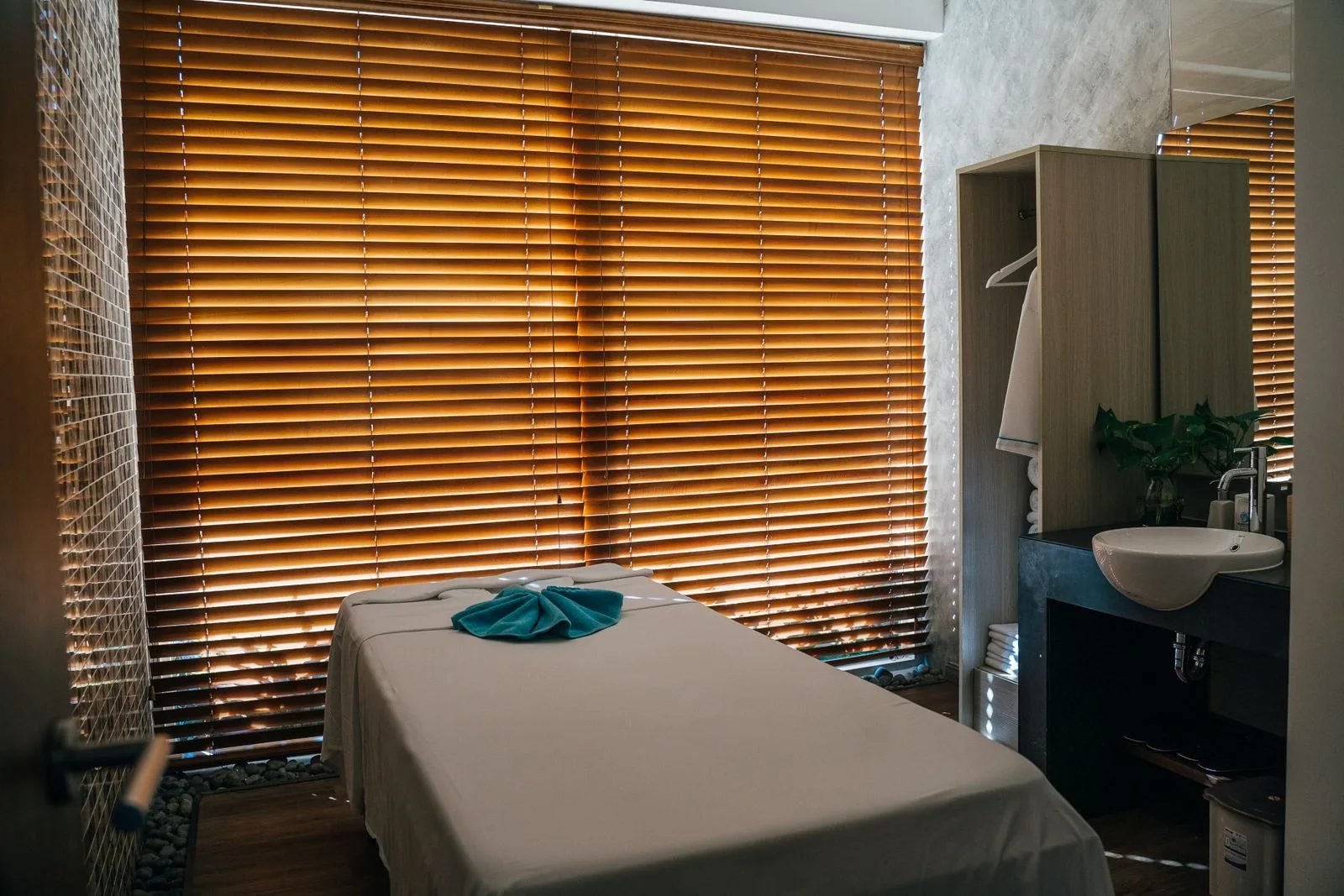
Figure 1. A massage table with the sheet laid and towels ready on it; the room has somewhere for the client to hang clothes when changing and a hand basin for the therapist (Photo: Anna Tarazevich, Pexels)
Towel set for one client (reference)
Table liner: a sheet or large towel spread flat over the table surface, covering the edges.
Main drape: a large bath towel or thin sheet, long enough to cover from the shoulders to past the feet and wide enough to hang down over both sides of the table. A drape that is too short or too narrow is the leading cause of clients being exposed when they turn over.
Chest towel: a medium towel, used when working the abdomen (if the client agrees) or when the client is face up and you need to fold the main drape down.
Small rolled towels or bolsters: placed under the ankles when face down and under the knees when face up, according to the spa's rules.
Face cradle cover: a thin towel or disposable cover for the face hole at the head of the table.
Spare towel: at least one clean towel to swap in immediately if a towel falls on the floor, gets dirty or the client feels cold.
Arranging the towels on the table
Spread the liner flat, without wrinkles. Place the main drape on top, with the top edge folded down a little so the client can easily slide in underneath. Put the chest towel, spare towel and bolsters on a shelf near the table, within your reach. Replace any towel that smells or has oil stains.
Reference table: uncovering each area
The table below shows common practice in relaxation body massage. Each spa may have its own rules; where they differ, follow the spa's rules and your agreement with the client.
Area worked | Client position | How to uncover (reference) | Where the towel edge stops |
|---|---|---|---|
Back, shoulders | Face down | Fold the main drape down from the shoulders | Across the lower waist, fully covering the buttocks |
Back of one leg | Face down | Uncover one leg from the bottom up while the other stays covered; tuck the towel under the inner thigh to secure it | Below the gluteal fold; the inner thigh always covered |
Front of one leg | Face up | As above; tuck the towel under the inner thigh | Level with the hip on that side, never up to the groin |
Arm, hand | Face up | Bring the client's arm out from under the towel and rest it on top of the towel or on a small towel | The towel still covers the chest and armpit |
Neck, front of shoulders, upper chest | Face up | Fold the towel edge down slightly | At collarbone level, not lower than the top of the chest |
Abdomen (only with the client's consent) | Face up | Place the chest towel first and hold it, then fold the main drape down from beneath the chest towel | Top: below the breasts, already covered by the chest towel. Bottom: above the underwear waistband |
Feet | Face down or face up | Uncover from the ankle down | Ankle |
The general principle in the table: uncover one area, finish it, cover it, and only then uncover the next. Do not uncover both legs at once, and do not uncover the back and legs at the same time.
Basic techniques for uncovering and covering
Anchor the towel before folding it
Towels slip because they are not “anchored”. Before folding the towel, you need a holding point:
Tucking the edge: tuck the towel edge under the client's body on the side you want to secure, for example under the inner thigh when uncovering one leg. When tucking, keep your hand flat, press the towel close to the skin and push it in under the client's leg; ask the client to lift the leg slightly if needed. Your hand always stays on top of the towel; never slide your hand under the towel in a covered area.
Anchoring by weight: for the back, the folded edge stays neat and stable thanks to the towel's weight; if the towel is slippery, fold it once more to make the edge thicker.
Do not tuck the towel into the client's underwear. If the client wears disposable underwear, place the towel edge just above it; do not tuck it into the waistband.
Uncover neatly, cover again immediately
One hand holds the anchor point while the other folds the towel. Fold diagonally or in half neatly; do not bunch the towel up.
Tell the client first: “I'll work on your left leg now.” That way the client is not surprised when the towel moves.
Draw the towel close to the body, slowly and evenly. Pulling hard or flicking the towel high easily exposes the client and startles them.
When you finish that area, wipe off excess oil if needed, then cover it again immediately before moving to another area.
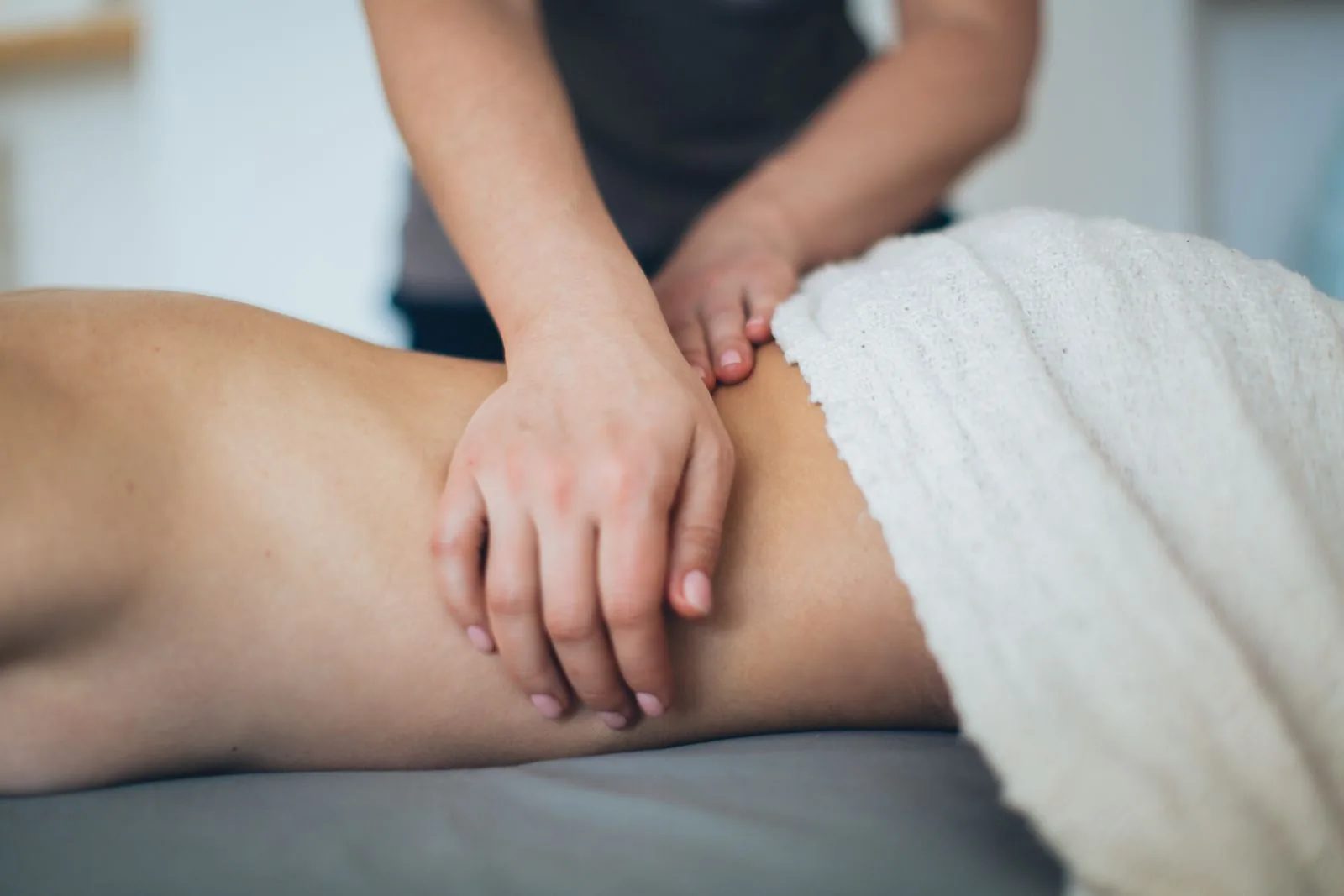
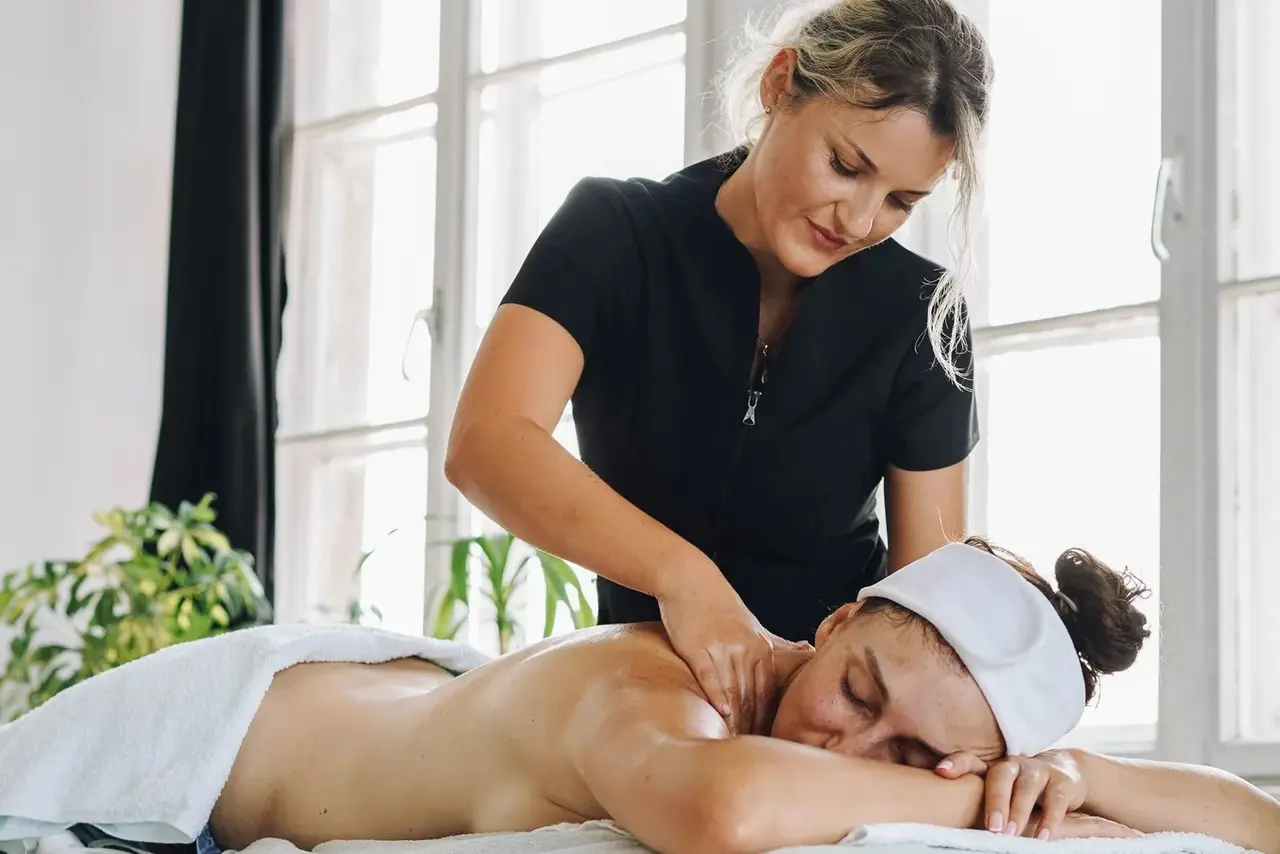
Figure 2. When working on the lower back and hips, the towel covers the lower part of the body and its neatly folded edge acts as a “border” for the working area (Photo: Elina Fairytale, Pexels)
Uncovering one leg when the client is face down
Tell the client: “I'll work on your right leg now.”
Stand at the client's legs. With one hand, hold the towel at the inner side of the right thigh, close to the inner edge.
With the other hand, lift the towel edge on the outer side of the right leg and fold it diagonally towards the middle of the body, creating a diagonal fold that covers the buttocks and inner thigh.
Tuck the towel edge under the inner thigh so it does not slip during long gliding strokes.
Check: the left leg is still fully covered, and the buttocks and inner thigh are covered.
When finished, spread the towel back, flat, fully covering the leg.
Long strokes up towards the hip stop before the towel edge; never push your hand under the towel.
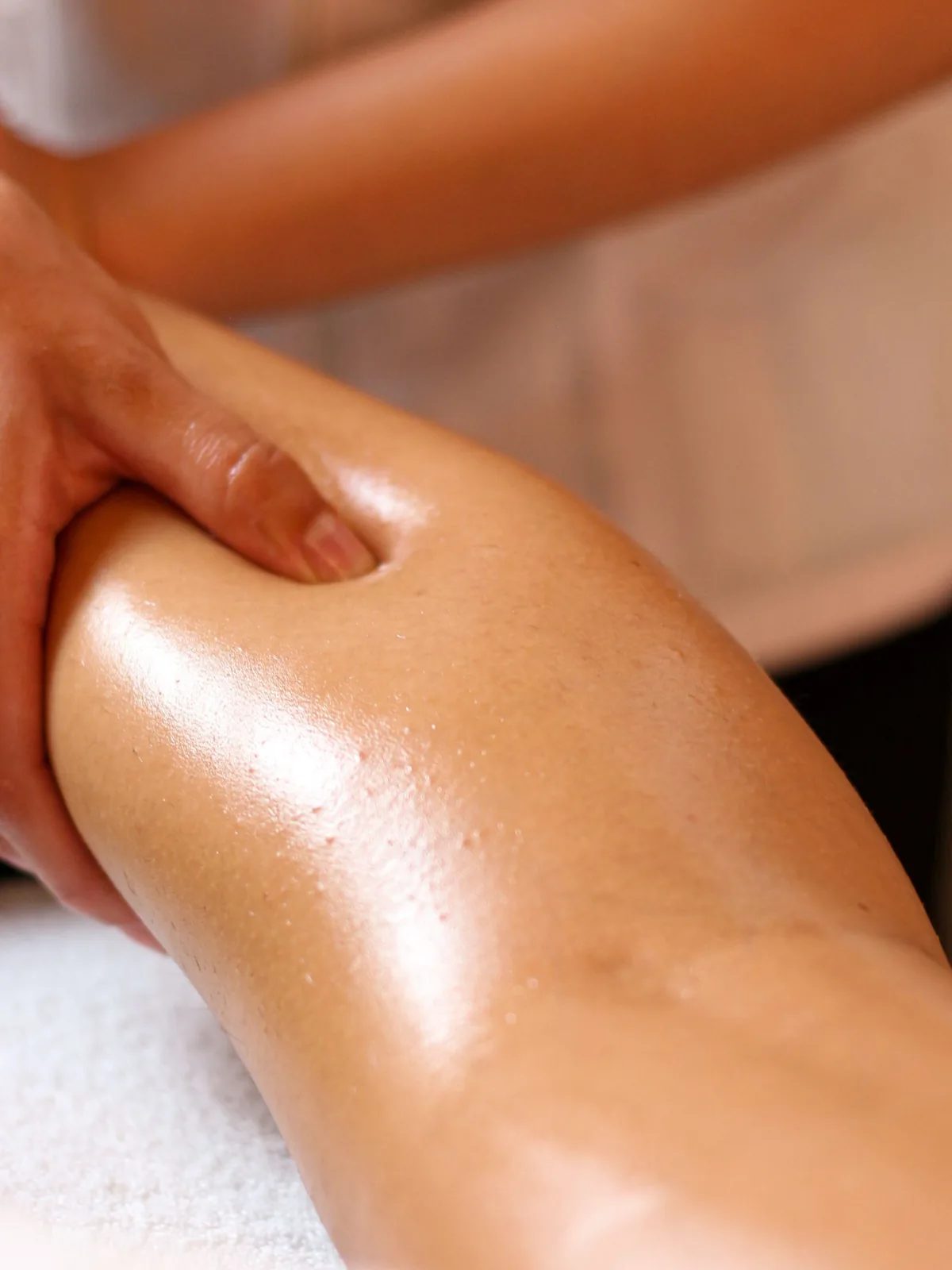
Figure 3. Only the leg being worked on is exposed and oiled; the rest of the client's body stays covered by the towel (Photo: Paolo ortega, Pexels)
Holding the drape while the client turns over
Turning from face down to face up is when the client is most likely to be exposed. Done correctly, the client turns completely underneath the towel and you see nothing but the towel.
Steps (reference)
Tell the client and prepare: “Now please turn over onto your back; I'll hold the towel for you.” Remove the ankle bolster. If the client is lying in the face cradle, remind them to lift their head slowly.
Stand at one side of the table, roughly level with the client's hips. Press your thigh or hip against the edge of the table to pin the near edge of the towel down onto the table. This edge is the anchor point, so the towel cannot slide towards you.
Lift the far edge of the towel just enough: holding the far edge with both hands, lift it just high enough to give the client room to turn. The towel forms a low “tent”. Do not lift it higher than necessary.
Guide the client to turn slowly: “Turn over slowly, and slide down under the towel a little if you need to.” While the client turns, look at the towel or towards the head of the table, never into the space under the towel.
Lower the towel and adjust: once the client is settled face up, lower the towel, smooth it out and check that it covers from the shoulders to the feet. Place a bolster under the knees if the spa uses one.
Ask the client: “Are you comfortable like this? Are you cold?”
With elderly clients, overweight clients, or clients who have just woken up and may feel dizzy: turn more slowly and let them rest for a few breaths before turning. Do not pull or rotate the client's body with your hands.
When the client needs to sit up or use the toilet mid-session
Hand the client a wrap towel or robe and say “Please wrap this around you; I'll turn away.” Turn your back or step out while the client sits up and wraps up. When the client returns to the table, repeat the starting routine: you step out, the client lies down under the towel, and you knock before coming in. The same applies at the end of the session: remind the client to sit up slowly, then step out so they can get dressed.
Professional boundaries
Draping is the visible part of a bigger principle: the client's body belongs to the client. Some rules never change, whoever the client is:
Never uncover intimate areas. The genital area, the gluteal cleft and a female client's breasts are not uncovered in relaxation massage.
The client can change their mind at any time. If a client agreed to abdominal work but feels uncomfortable when the time comes, skip that area without questioning them or showing displeasure.
Ask before moving to a sensitive area, even if the client card says they agreed: “I'll work on your abdomen now, are you still comfortable with that?”
Do not comment on the client's body (fat, thin, scars, stretch marks, body hair). If you notice an unusual sign on the skin worth mentioning, say so gently and objectively and advise the client to see a doctor if needed; do not guess at a diagnosis.
Do not fold the towel wider on your own just to “make it easier to work”.
Therapist of a different gender: follow the spa's rules. Many spas ask whether the client prefers a male or female therapist at booking; respect that choice.
When a client says or does something inappropriate
If a client asks for a “sensitive” service, pulls the towel off to expose intimate areas, or makes indecent remarks or gestures: stop, say one clear, calm sentence such as “The spa only offers relaxation massage, so I'm going to stop here”, leave the room and report to the manager immediately. Record the incident according to the spa's rules. You do not have to continue the session if you feel unsafe.
On the other hand, sometimes a client pushes the towel off simply because they are hot. In that case, gently ask if they are too warm, adjust the room temperature or switch to a thinner towel, then cover the intimate areas again.
Keeping the client warm and monitoring them
Set the room temperature to a level where a lightly dressed client feels comfortable before they come in; ask the client once they have lain down.
When the client lies still for a long time, their body temperature drops. Cover finished areas immediately; if the client is cold, add the spare towel over the legs or back.
If the spa uses a heated pad or hot towels, follow the manufacturer's instructions and spa rules; always check the temperature before placing anything on the client, and never put a hot item directly on the skin.
Towel hygiene: a clean set for every client
Each client gets a clean set of towels: liner, drape, chest towel and face cradle cover.
If a towel falls on the floor during the session, replace it with a clean one; do not pick it up and use it again.
After the session, roll up used towels with the dirty side inward and put them in a lidded laundry basket; do not let dirty towels touch clean ones, and do not drape dirty towels over chairs or shelves.
Towels soaked with massage oil must be washed thoroughly to remove the oil. Oil left in towels after drying can make a pile of towels heat up on its own, with a risk of fire. Wash and dry according to the machine and detergent instructions; spread freshly dried towels out to cool and do not pile them up while still hot.
Common beginner mistakes
Not explaining in advance. The client does not know how much to undress or how to lie down, so they feel embarrassed and tense the whole session.
Towel too small. Using a small bath towel for a tall client means the towel does not cover enough when they turn over.
Uncovering several areas at once to work faster, leaving the client both cold and feeling exposed.
Sliding your hand under the towel edge during long strokes up to the hip or shoulder.
Pulling the towel hard or lifting it high when the client turns, making it slip or startling the client.
Real-life situations
Situation 1: A female client agreed to abdominal work, but when you place the chest towel she says “actually, please skip the abdomen”. Remove the chest towel, cover her again with the main drape, say “Of course, I'll move on to your arms”, and note it on the client card so that next time you do not ask about this area again without a reason.
Situation 2: An elderly client has difficulty turning over. Suggest that the client turns in stages: first onto their side, rest a moment, then onto their back. Hold the towel in the “tent” style both times. If the client still finds it difficult, you may skip the face-up part, according to the spa's rules.
Draping safety checklist
I explained undressing, underwear and draping to the client before entering the room.
I asked about and recorded the areas the client does not want worked on.
I left the room while the client changed; I knocked and waited for an answer before coming in.
The drape is long and wide enough; a chest towel and spare towel are within reach.
Only one area is uncovered at a time; it is covered again as soon as I finish.
Intimate areas are always covered; I never slide my hand under the towel.
I hold the drape correctly when the client turns, and my eyes do not look into the space under the towel.
I ask the client about temperature and comfort, at least when they first lie down and after they turn over.
I stop and report to the manager when a client behaves inappropriately.
Dirty towels go into a lidded basket; oily towels are washed thoroughly and not piled up while hot.
Frequently asked questions
Does the client have to remove their underwear for a body massage?
No. The client undresses to the level they feel comfortable with. Many spas offer disposable underwear as an option. You adapt your technique so you can still work even if the client keeps more clothing on, for example by working over the towel in that area.
What if the client is fast asleep when it is time to turn over?
Call the client softly and place your hand lightly on their shoulder over the towel: “Excuse me, it's time to turn over.” Wait until the client is fully awake before starting to turn.
Can I massage the gluteal area?
It depends on the spa's rules and the client's consent. Many spas only work the gluteal muscles over the towel and do not uncover this area in a standard relaxation package. Whichever way you work, the gluteal cleft and genital area are always fully covered, and you ask the client before you begin.
What should I do if the towel slips and exposes the client's body?
Cover the client again immediately, stay calm and apologise briefly: “I'm sorry, let me adjust the towel.” Do not joke and do not give a long explanation. After the session, think about why the towel slipped (towel too small, edge not tucked, pulled too hard) so you can fix it. If the client is unhappy, report to the manager and follow the spa's complaint-handling procedure.
Practice exercises
Work in pairs (one person plays the “client”, wearing exercise clothes or a modest swimsuit), with an instructor supervising.
Deliver the explanation: each person practises explaining undressing, underwear and draping and asking about areas to avoid, in about one minute, clearly and without hesitation.
Prepare the table: within 5 minutes, lay the liner and drape and place the chest towel, bolsters and spare towel. The instructor checks whether the drape is long enough to cover the “client” from the shoulders to past the feet.
Uncover and cover each area: uncover the back, the back of each leg and the arms in turn, following the reference table. The assessor checks: only one area uncovered at a time, the towel edge in the right place, the edge tucked when uncovering a leg, and hands never sliding under the towel.
Turning over: the “client” turns from face down to face up three times. The assessor watches whether the towel slips or is lifted too high, and whether the therapist is looking in the right direction.
Scenarios: the instructor hands out three cards: “client changes their mind about abdominal work”, “towel slips off the leg”, “client says they are cold”. Respond with words and actions within 30 seconds for each card.
You pass when: your explanation covers all the points, the client turns three times without the towel slipping, you never uncover two areas at once, and you handle all three scenario cards correctly.
This lesson belongs to the “60-minute relaxation body massage” step, because draping goes with every body massage session; the communication, asking permission and client-card skills carry on into the “Serving a client through a full treatment course” step.