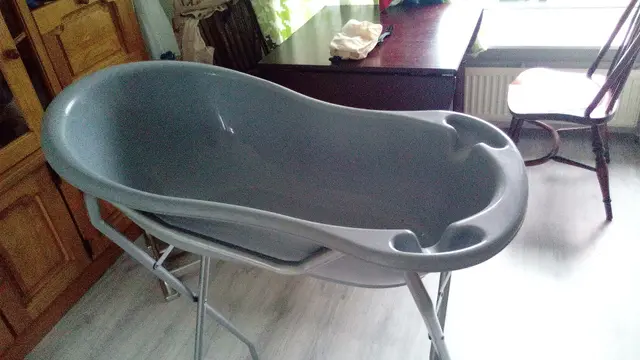
To burp a newborn, hold the baby upright or leaning slightly forward with the tummy resting against your shoulder or lap, support the head and neck (or the chin) firmly with one hand, and gently pat with a cupped palm or rub the baby's back with the other for a few minutes; do it during a feed (when switching breasts, or after every 60–90 ml or so from a bottle) and after the feed. Babies do not burp every time: if there is no burp after a few minutes and the baby is comfortable, there is no need to keep trying. This lesson covers three burping positions, how to help a baby swallow less air, how to tell normal spit-up from vomiting that needs a doctor, and the limits of a caregiver's role: you do not replace a doctor and you do not give the baby medicine on your own.
By the end of this lesson, you will be able to:
- Explain why newborns need burping and recognise signs of trapped wind during a feed.
- Burp a baby correctly in 3 positions: over the shoulder, sitting on your lap, and face down across your lap while awake.
- Time burping for breastfed and bottle-fed babies and keep a feeding log.
- Reduce the air a baby swallows through the latch, bottle angle, teat size and feeding before the baby cries hard.
- Tell normal spit-up from signs that mean the family must take the baby to a doctor or call 115 (the emergency number in Vietnam).
Learning postnatal mother and baby care properly? Feeding support, including burping, is step 3 of the roadmap, after hygiene and the limits of the role, and holding and bathing the baby. See the 8-step postnatal mother and baby care roadmap to learn in the right order.
Why newborns need burping
While feeding, a baby swallows milk along with some air. A bubble of air in a newborn's small stomach can make the baby feel full and uncomfortable, stop feeding halfway, fuss, or push milk back up with the burp. Burping lets the bubble rise and escape before the baby feeds again or is laid down.
Babies who swallow more air
- Bottle-fed babies, especially when the teat hole is too big or the bottle is held flat so the teat is only half full of milk.
- Breastfed babies with a shallow latch who only hold the nipple and make clicking sounds while feeding.
- Babies who cry hard before being fed; crying swallows a lot of air.
- Babies whose mothers have a fast, forceful milk flow, so they gulp.
Signs of trapped wind during a feed
The baby lets go of the nipple, squirms, arches the back, pulls the legs up to the tummy, grimaces or fusses mid-feed before having had enough, and the tummy looks tighter than before. When you see these signs, pause for a burp and then continue the feed. A baby who falls asleep while feeding should still get a gentle burping attempt before being laid down.
Burping is not required at every feed
Breastfed babies with a good latch often swallow little air and some feeds bring no burp. From around 4–6 months, many babies burp on their own when held upright. The goal is a comfortable baby, not "keep going until you hear a burp".
3 positions for burping a newborn
The rules for all three positions: the baby's head is higher than the tummy, the tummy rests gently against something (shoulder, hand, thigh) to push the air up, the head and neck are always supported, and the nose and mouth are clear. Always put a muslin cloth under the baby's chin because milk can come up with the air.
Position 1: over the shoulder
- Lay a muslin cloth over your shoulder and the front of your top.
- Hold the baby upright with the chin resting on your shoulder and the face turned to one side so the nose and mouth are not pressed into your clothes (Figure 1).
- Support the bottom and lower back with one hand and the back of the head and neck with the other if the baby is very young.
- Once the baby is secure, move the hand from the head to pat or rub the back, keeping the other hand firmly on the baby.
This is the easiest position for beginners and suits a sleepy baby. You can walk slowly while patting to soothe the baby, but do not bounce or shake.
Position 2: sitting on your lap
- Sit the baby on your lap, leaning the body slightly forward.
- Support the chest with one hand, with your thumb and index finger under the chin and jaw (never on the throat, never squeezing the neck).
- Pat gently or rub the back upwards with the other hand.
This position lets you see the baby's face and know immediately when spit-up is coming. It suits an awake baby who needs to burp mid-feed.
Position 3: face down across your lap (only while awake)
- Sit steadily with your thighs together and lay a cloth across them.
- Lay the baby face down across your lap, tummy on one thigh, head on the other thigh and higher than the chest, face turned to the side.
- Hold the baby securely with one hand and pat or rub the back with the other.
The gentle pressure of the thigh on the tummy helps push the air out, and many fussy babies settle in this position. Only do it while the baby is awake and you are watching; afterwards pick the baby up and never let the baby sleep face down.
Comparing the 3 positions
| Position | Best when | What to keep | Common mistake |
|---|---|---|---|
| Over the shoulder | Beginners, sleepy baby, after a feed | Face turned sideways, nose and mouth clear | Baby slides down, face pressed into clothes |
| Sitting on the lap | Mid-feed burps, when you need to see the face | Support chin and jaw, never touch the throat | Letting the head flop forward or back |
| Face down across the lap | Awake baby fussing with wind | Head higher than chest, firm hold, always watched | Letting the baby fall asleep face down |
Patting technique and timing
How to pat correctly
- Cup your palm as if scooping water and pat gently and steadily on the middle to lower back, avoiding the lower spine and the nape.
- Or rub in slow circles, or stroke upwards from the lower back to the middle of the back.
- Use the gentle force you would use to pat a baby to sleep, not a hard "push the air out" pat.
- Try for about 2–5 minutes. If nothing comes, change position and try a few more minutes. There is no need to go beyond 10 minutes if the baby is comfortable.
Timing for breastfed and bottle-fed babies
| Feeding | Mid-feed burp | After the feed | Notes |
|---|---|---|---|
| Breastfeeding | When switching breasts, or when the baby lets go and fusses | Yes | A good latch may mean fewer burps |
| Bottle feeding | After about every 60–90 ml; for windy babies about every 30 ml | Yes | Stop as soon as the baby squirms or lets go of the teat |
| Baby who spits up often | More often, briefly each time | Yes, then keep upright longer | Note the amount of spit-up to tell the family |
After burping
Keep the baby upright or with the head raised in your arms for about 10–15 more minutes (Figure 2) before laying them down, especially if they spit up often. When putting the baby to sleep, always lay them on their back on a firm, flat surface with no pillow and no thick blanket. Do not put the baby on the tummy or side "to prevent spit-up": back sleeping is the recommended safe sleep position for young babies, including those who spit up, unless a doctor has given different advice for that particular baby.
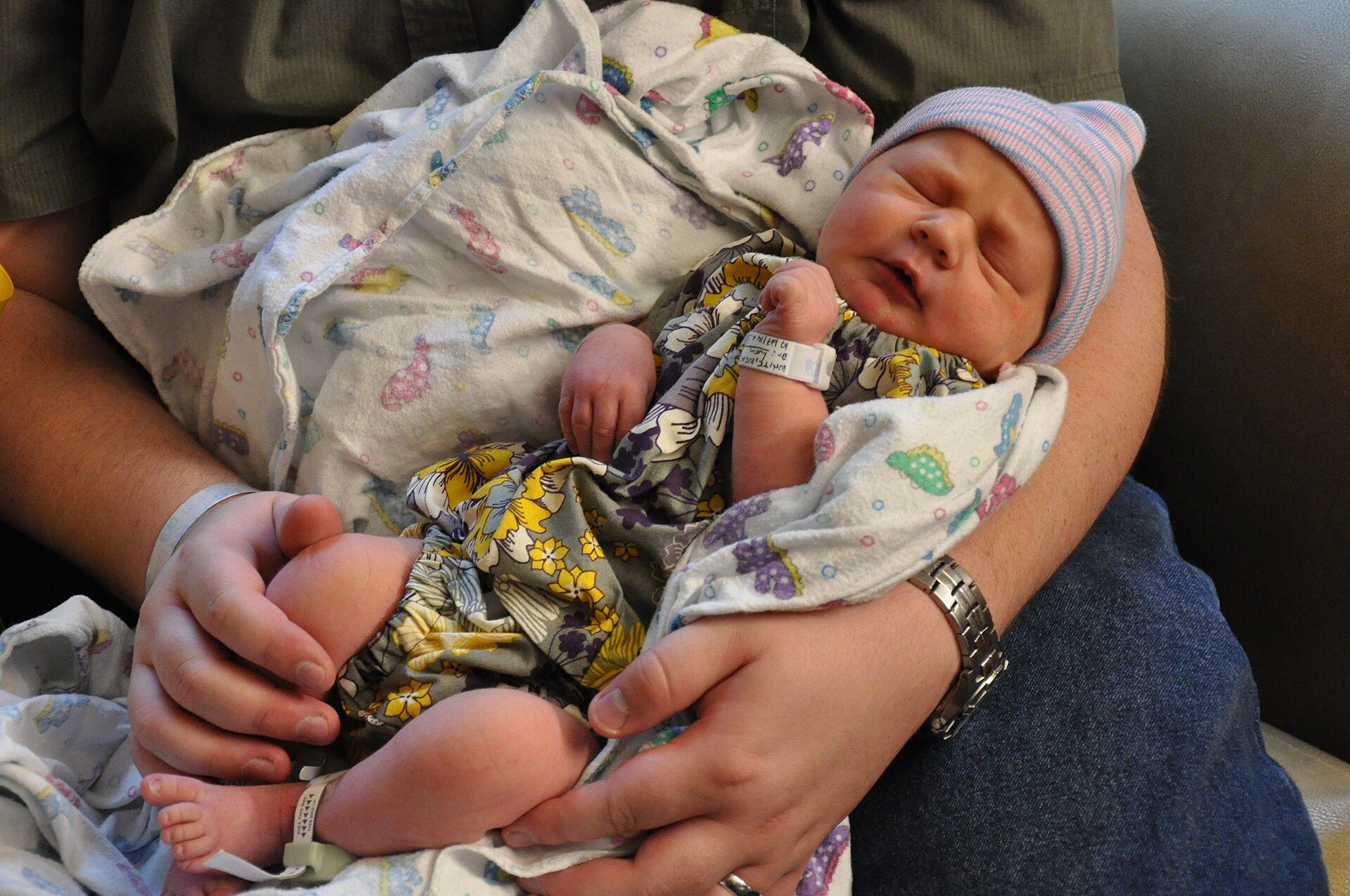
Photo: Kimberly Vardeman / Wikimedia Commons, CC BY 2.0
Reducing air from the start of the feed
Burping treats the symptom; feeding well so the baby swallows less air treats the cause. A caregiver supports mother and baby on these points.
Breastfed babies: a deep latch
The baby opens wide and takes the nipple plus most of the lower areola, the lower lip turned out, the chin touching the breast, with steady swallowing sounds rather than clicking. If the mother has ongoing nipple pain, cracked nipples, or the baby feeds for a long time without seeming full, tell the family to have a health worker or lactation consultant check the feeding.
Bottle-fed babies: bottle angle and teat size
- Hold the baby semi-upright with the head above the tummy (Figure 3); never bottle-feed a baby lying flat on the back.
- Tilt the bottle just enough to keep the teat full of milk, never half milk and half air.
- Use the right teat size for the age, usually a slow-flow teat for newborns (Figure 4). Turned upside down, the bottle should drip, not stream.
- Use paced feeding: every few minutes lower the bottle to let the baby rest and set the pace; never force the baby to finish the bottle.
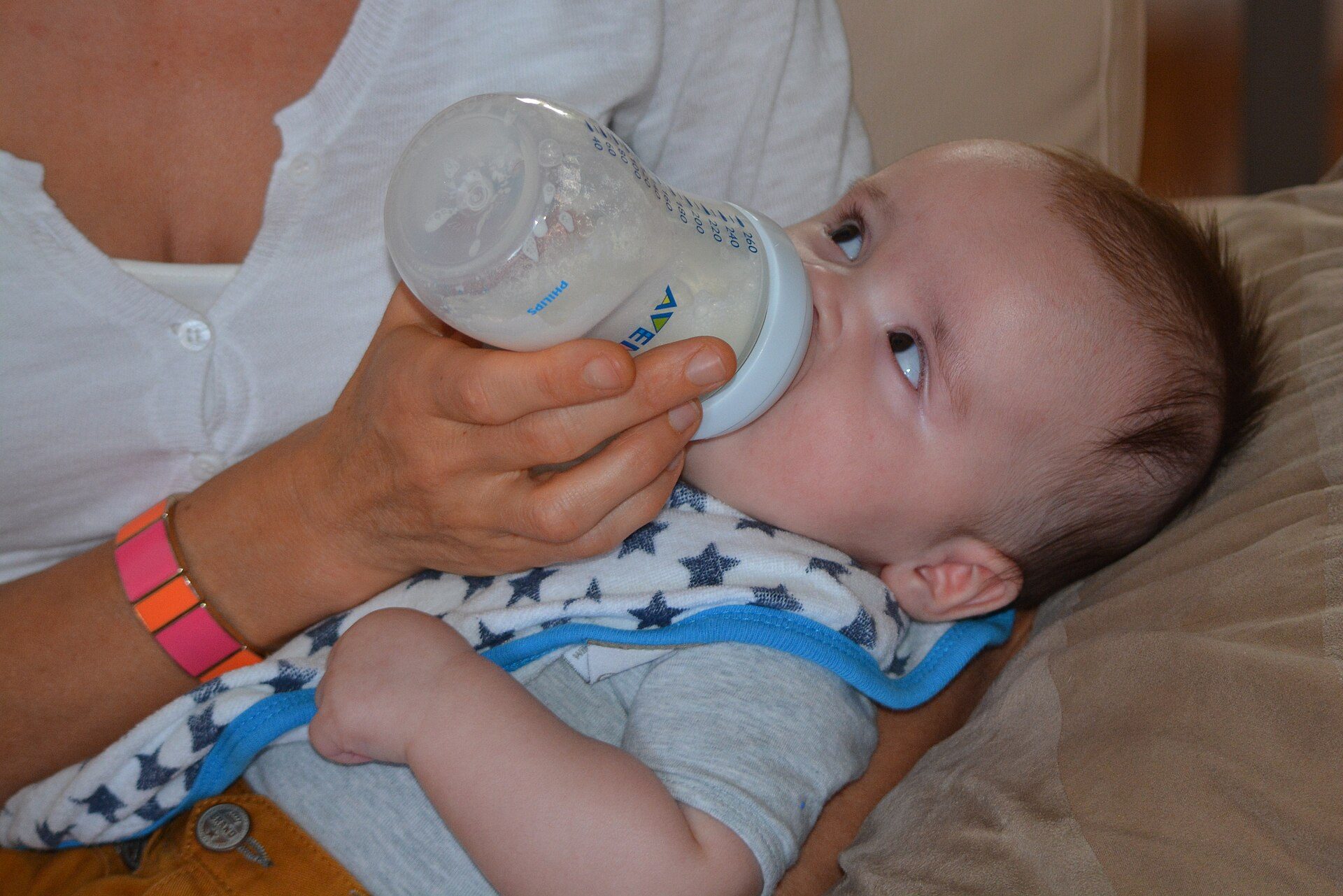
Photo: Ben Kerckx / Wikimedia Commons, CC0
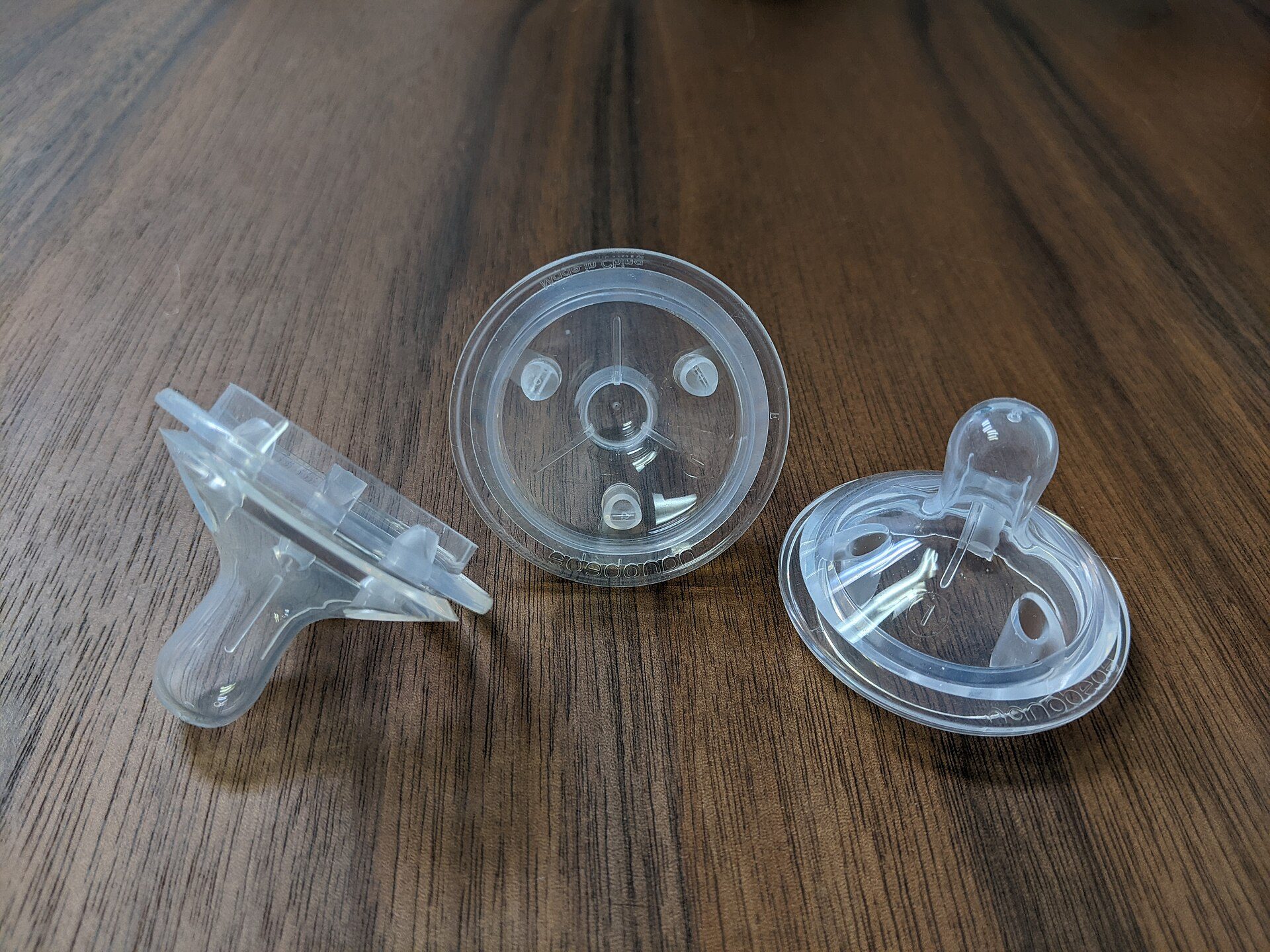
Photo: TheUnaverageJoe / Wikimedia Commons, CC BY-SA 4.0
Feed before the baby cries hard
Early hunger cues: sucking on hands, lip smacking, turning the head to root, stirring. Crying is a late hunger cue; a baby fed while crying hard swallows much more air. If the baby is already crying, calm them first, then feed.
Cleaning bottles, teats and cloths
Wash your hands before preparing milk and feeding. Wash bottles and teats right after each feed, sterilise them the way the family's equipment requires, and replace teats that are torn, sticky or discoloured. Muslin cloths soaked with spit-up are changed and washed, never reused for the next feed.
Normal spit-up and signs to see a doctor
Many newborns spit up a little milk after feeding or while burping, and it usually decreases as they grow. Caregivers do not diagnose illness, but they must tell the difference so they can alert the family in time.
Common, normal spit-up
Milk flows gently out of the mouth in small amounts (usually just a few teaspoons), and the baby stays happy, feeds well, has enough wet nappies and gains weight steadily at check-ups. Note it so the family can mention it at the next routine visit.
Tell the family to take the baby to a doctor soon if
- The baby vomits forcefully in a projectile stream, repeatedly over several feeds.
- The vomit is green (bile), contains blood or looks like coffee grounds.
- The baby refuses or feeds poorly, cries inconsolably, or the tummy is swollen and tight.
- The baby has a fever, or far fewer wet nappies than usual, dry lips or a sunken soft spot.
- Frequent spit-up comes with no weight gain, or coughing and wheezing after every feed.
Call 115 immediately if: the baby chokes on milk and cannot cough it out, has trouble breathing, the chest sucks in with each breath, or stops breathing; the lips or skin turn blue; the baby is floppy, very drowsy or hard to wake; or has a seizure. If the baby is coughing after choking, let them cough, hold them with the head lower than the chest, wipe milk from the mouth and nose, and do not continue feeding until breathing is steady. First aid for a choking baby under 1 year (back blows, chest thrusts) is a skill you must learn in person from a qualified instructor; when you call 115, follow the dispatcher's instructions. Never pat hard, never shake the baby and never hold the baby upside down "to get the milk out".
What caregivers do not do
Do not give the baby anti-gas drops, probiotics, sugar water, herbal water or any medicine unless the family has asked a doctor. Do not stimulate the bottom with sticks, leaves or spring onion stems "to release wind", and do not rub hot oils on the baby's tummy. If the family wants to follow folk remedies, gently explain the risks and suggest asking the paediatrician.
Worked example: a bottle feed for a 3-week-old
Baby Na, 3 weeks old, is bottle-fed expressed breast milk; the family and the paediatrician have set 90 ml per feed, about 8 feeds a day. She often squirms and spits up after feeds, so the caregiver burps her after every 30 ml.
Order of one feed
| Step | Task | Milk | Time |
|---|---|---|---|
| 1 | Wash hands, prepare the bottle, lay a cloth, hold the baby semi-upright | 0 ml | 3 minutes |
| 2 | First part of the feed | 30 ml | 6 minutes |
| 3 | Burp, sitting on the lap | 0 ml | 3 minutes |
| 4 | Second part of the feed | 30 ml | 6 minutes |
| 5 | Burp, sitting on the lap | 0 ml | 3 minutes |
| 6 | Third part of the feed | 30 ml | 6 minutes |
| 7 | Burp over the shoulder, keep upright in the arms | 0 ml | 15 minutes |
| Total | 90 ml | 42 minutes | |
Check: 30 + 30 + 30 = 90 ml; 3 + 6 + 3 + 6 + 3 + 6 + 15 = 42 minutes. For the whole day, 8 feeds × 90 ml = 720 ml. If the baby will not finish, do not force it; record the amount actually taken.
Keeping a feeding log
For each feed, write: the time, amount taken, number of burps, any spit-up with an estimate (1 teaspoon is about 5 ml), wet and dirty nappies. That day the baby spat up after 2 feeds, about 1 teaspoon each, 2 × 5 = 10 ml in total, and stayed happy with enough wet nappies: normal spit-up, reported to the family to mention at the next check-up. If spit-up increases or any sign from the list above appears, tell the family to take the baby to a doctor straight away.
Common burping mistakes
Patting too hard or too long
Sign: the baby startles, cries louder and spits up more. Cause: believing you must pat hard to get the air out, or patting until you hear a burp. Fix: pat gently with a cupped palm, change position instead of patting harder, and stop once the baby is comfortable.
Not supporting the head and neck
Sign: the baby's head flops back or forward when sitting on the lap. Cause: supporting only the chest and forgetting the chin and jaw. Fix: thumb and index finger under the chin, wrist supporting the chest, always watching the face.
The baby's face pressed into clothes
Sign: over the shoulder, the baby's nose and mouth touch your top or the cloth. Cause: the baby has slid down, or the cloth is pulled up over the face. Fix: hold the baby higher so the chin rests on your shoulder with the face turned sideways, and keep the cloth only under the chin.
Laying the baby face down or on a pillow to reduce spit-up
Sign: the baby sleeps on the tummy or propped on a high pillow after feeds. Cause: following word-of-mouth tips. Fix: hold the baby upright for 10–15 minutes after feeding, then lay them on their back on a flat surface, and explain to the family that this is the recommended safe way to sleep.
Frequently asked questions
How long should I burp a newborn?
Usually 2–5 minutes each time. If nothing comes, change position and try a few more minutes. If the baby is comfortable and not fussing, you can stop; there is no need to wait for a burp.
Should I wake a baby who falls asleep after feeding to burp them?
No need to fully wake them. Lift the baby gently onto your shoulder and pat or rub the back for a few minutes; many babies burp while still asleep. Then lay the baby on their back in the cot.
Until what age do babies need burping?
It is needed most in the first few months. Around 4–6 months, as babies sit more steadily and feed more skilfully, many burp on their own and no longer need patting. Every baby is different, so watch for signs of discomfort.
Do breastfed babies need burping?
Yes, but usually less than bottle-fed babies. Try a burp when switching breasts and after the feed; if the baby burps little but is comfortable, that is fine.
Is it a problem if the baby spits up after burping?
A little milk coming up with a burp is common. Be concerned only with forceful vomiting, green or bloody vomit, refusal to feed, fever, fewer wet nappies or no weight gain; in those cases tell the family to take the baby to a doctor.
Practice tasks and self-assessment
- Practise the 3 positions on a weighted doll close to a newborn's weight, 5 times each, with an experienced person watching how you support the head and neck.
- Make a feeding log template (time, ml, burps, spit-up, nappies) and fill it in for one day with the baby you care for, under supervision.
- Turn 3 bottles with different teats upside down, watch how fast the milk flows and note which teat suits a newborn.
- Write down 5 signs that mean a doctor's visit and 4 signs that mean calling 115, and go over them with your supervisor.
Self-assessment criteria
- Pass: in all 3 positions the head and neck are supported, the nose and mouth are clear and the head is above the tummy.
- Pass: you pat gently with a cupped palm and change position instead of patting harder.
- Pass: the feeding log adds up for milk and time; spit-up is estimated and recorded.
- Pass: you name the signs for a doctor's visit and for calling 115 correctly; after feeds the baby is laid on the back.
- Not yet: letting the baby sleep face down after feeds, giving medicine or herbal water on your own, or shaking or patting the baby hard.
Once you can burp a baby confidently and track feeds, move on to the next roadmap step: Safe sleep and the baby's daily routine, where you learn to lay the baby on the back correctly, swaddle safely and build an eat, sleep, play routine. If you have not read it yet, see the lesson on how to bathe a newborn from the previous step.
Keep learning postnatal mother and baby care: after feeding support come safe sleep, postnatal care for the mother, nutrition and danger signs, and a supervised placement. See the 8-step postnatal mother and baby care roadmap.