Safety for a housekeeper comes down to five habits from day one: read the label before using any cleaning product and never mix bleach with acidic or ammonia-based cleaners; wear gloves and a mask and open a window when using chemicals; dry your hands and unplug appliances before wiping them; check for a gas smell and the hose, and stay with the stove while cooking; and climb a ladder properly when cleaning windows, ceiling fans and high cupboards. A sixth habit has nothing to do with chemicals but decides whether you keep the job: honesty and protecting the family's privacy. This is the first lesson of the professional housekeeper roadmap, written for newcomers to the trade, with a checklist you can use on your first day in a new home.
By the end of this lesson, you will be able to:
- Read a cleaning product label: hazard symbols, suitable surfaces, dilution, protective equipment and first aid.
- Sort the bottles in a home into 5 groups and know which groups must never be used together.
- Follow the safety steps for sockets, appliances, the gas stove and a gas smell.
- Use an A-frame ladder safely when cleaning windows, ceiling fans and high cupboards.
- Keep to the principles of work ethics: honesty, reporting damage straight away, and protecting the family's privacy.
Starting out as a housekeeper? Chemical, electrical and gas safety and work ethics is step 1 of the 8-step roadmap, before systematic cleaning, laundry, cooking and caring for children and elderly people. See the 8-step professional housekeeper roadmap to learn in the right order.
Why safety is the first lesson for housekeepers
A home looks safe, but it is where many accidents happen: slips in the bathroom, falls from ladders, kitchen burns, electric shocks, breathing in chemical fumes. A housekeeper deals with all of these every day, often working alone.
You are responsible for others too
Homes have small children, elderly people and pets. A bottle of cleaner left on the floor or a pot of soup left on the stove can hurt them, not just you. A professional housekeeper looks at a home asking "who could get hurt here?"
Walk a safety round with the employer on day one
- Where the main breaker, floor breakers and the water heater switch are.
- The gas cylinder valve or main gas valve, and the fire extinguisher if there is one.
- The chemical shelf and the medicine cabinet (just to know where it is, never to give anyone medicine yourself).
- The ladder and window-cleaning tools; which jobs the family does not want you to do alone.
- Phone numbers for the employer, relatives and building management; emergency numbers 115 (ambulance in Vietnam) and 114 (fire).
Reading cleaning product labels
A home may hold dozens of different cleaning products. You cannot remember them all, so the right habit is to read the label whenever you meet an unfamiliar bottle, not to treat every bottle as "just cleaner".
Hazard symbols
Chemical labels often carry red-bordered diamonds (Figure 1). The four you will see most at home:
- Corrosive (liquid eating into a surface and a hand): strong toilet cleaners and drain cleaners. They burn skin and eyes.
- Exclamation mark: irritates skin, eyes or airways.
- Flame: flammable, such as alcohol, some aerosols and nail polish remover.
- Environment (dead fish and tree): do not pour leftovers into drains or onto soil.
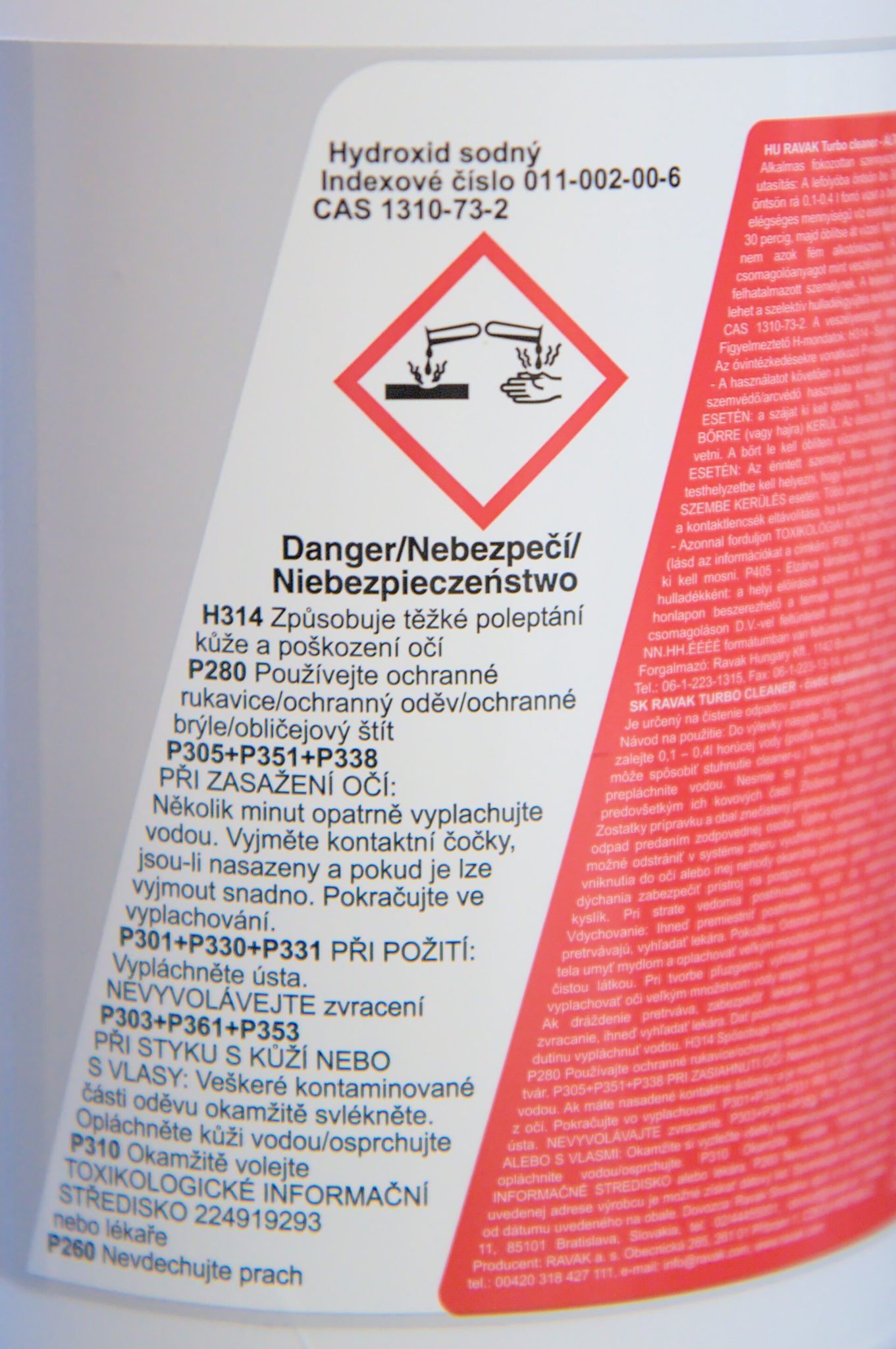
Photo: Petr Kadlec / Wikimedia Commons, CC BY-SA 4.0
Four lines to read before use
- Which surfaces: acidic descalers dull natural stone such as marble; strong cleaners damage wood and lower-grade stainless steel.
- How much to dilute: stronger is not cleaner, just more toxic and more wasteful.
- Protective equipment: gloves, mask, ventilation.
- First aid: what to do for eyes, skin or swallowing.
Five groups of household chemicals
| Group | Common examples | Never use with | Minimum protection |
|---|---|---|---|
| Chlorine bleach | Bleach, whitening liquid, some chlorine bathroom cleaners | Acidic products, ammonia products, alcohol, other cleaners | Gloves, mask, open window |
| Acidic cleaners | Toilet cleaner, shower descaler, vinegar | Chlorine bleach | Gloves, avoid splashes to the eyes |
| Ammonia-based | Some glass cleaners and multi-purpose sprays (check ingredients on the label) | Chlorine bleach | Ventilation |
| Strong alkalis | Liquid or powder drain cleaner, oven degreaser | Acidic products; do not pour hot water straight after the powder | Long gloves, goggles |
| Neutral, mild | Dishwashing liquid, ordinary floor cleaner | Low risk, but still never mix your own | Gloves for long jobs |
Using and storing chemicals properly
Most household chemical accidents are not caused by one very toxic bottle, but by using two bottles together, diluting wrongly or storing in the wrong place.
No mixing: one surface, one product
Bleach plus an acidic product (toilet cleaner, descaler, vinegar) releases chlorine gas; bleach plus ammonia releases chloramine gas. Both are toxic to breathe, especially in a small bathroom. The rule: use only one cleaner on each surface, and rinse thoroughly with water before switching to another. Never pour bleach into a toilet just treated with toilet cleaner "to make it cleaner". Laundry stain removal with bleach, hydrogen peroxide and oxygen bleach is covered in the lesson on removing yellow stains from white shirts.
Gloves, mask, ventilation
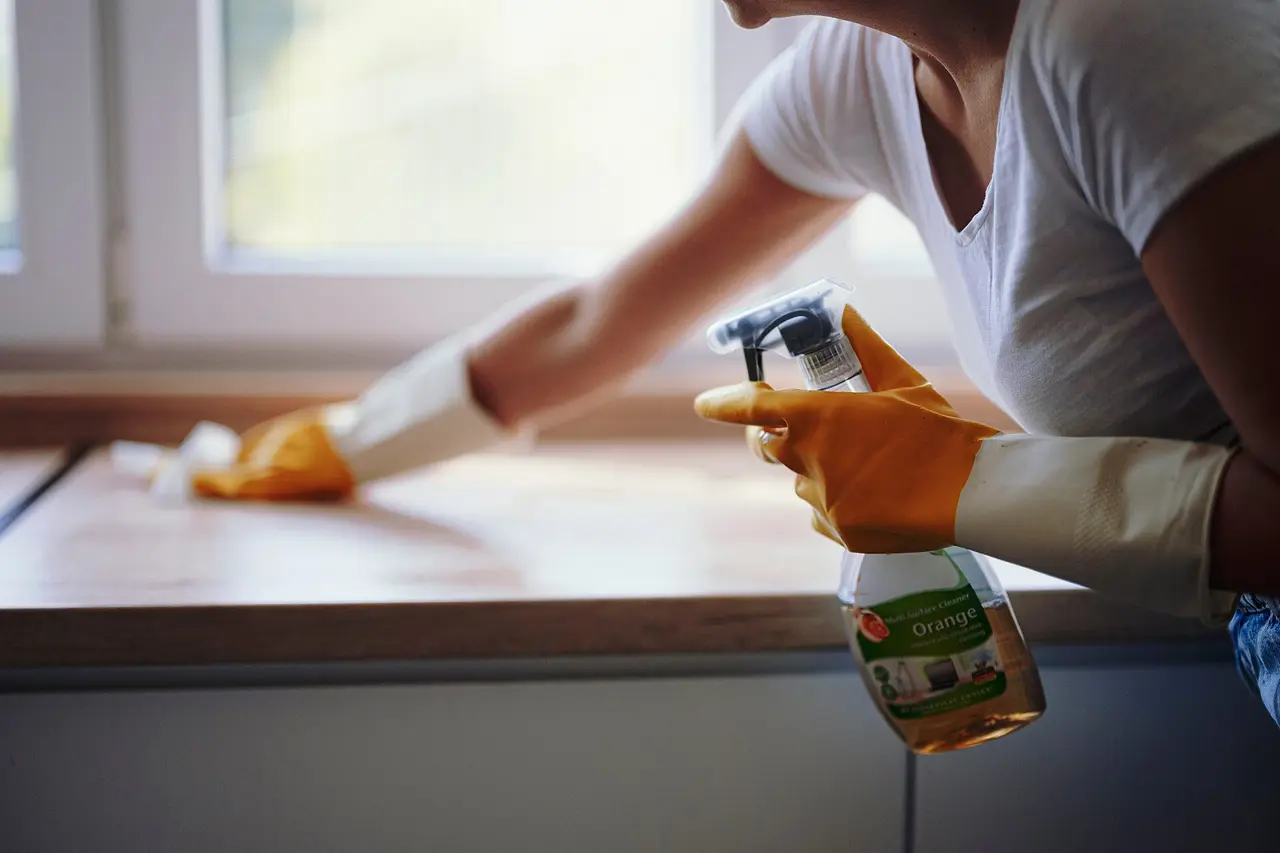
Wear long-cuffed rubber gloves whenever you use any cleaner other than dishwashing liquid (Figure 2). Open windows and turn on the extractor fan when cleaning bathrooms and kitchens. Spray the cleaner onto the cloth and then wipe, rather than spraying straight at the wall in front of your face, so you do not breathe in the mist.
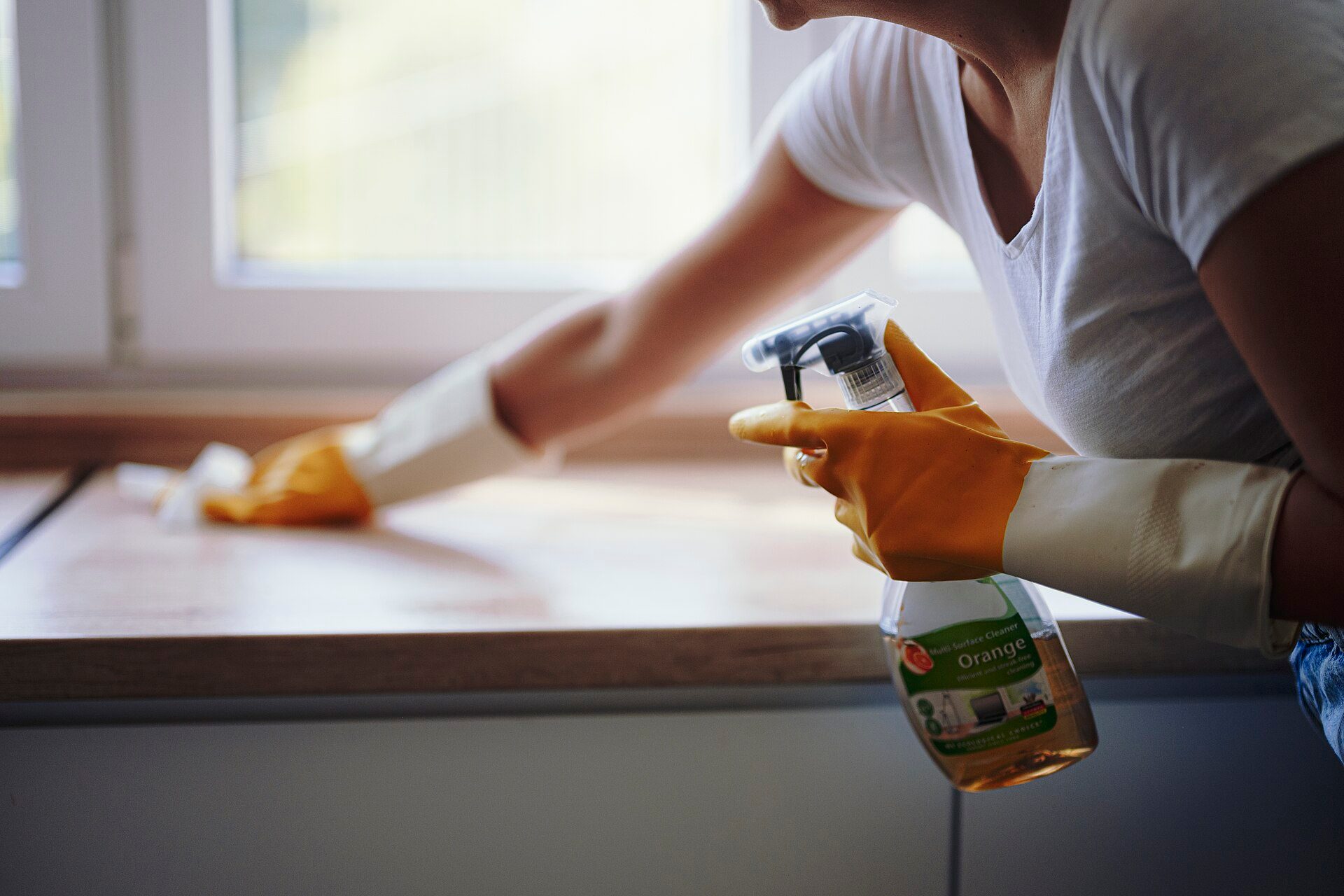
Photo: Shixart1985 / Wikimedia Commons, CC BY 2.0
Storage
- Keep products in their original bottles with labels; never decant into water or soft drink bottles.
- Store high up or in a locked cupboard if there are small children; not under an unlocked kitchen sink.
- Away from food and the stove; chlorine and acidic bottles in two separate trays.
- Put the cap back on straight after use; never leave an open bottle on the bathroom floor.
First aid when something goes wrong
- Splash in the eyes: rinse with clean running water for at least 15 minutes, then see a doctor.
- On the skin: remove the glove or contaminated clothing and rinse with plenty of water.
- Breathed in with coughing or chest tightness: get to fresh air at once; if breathing does not improve, call 115.
- A child swallows some: do not make them vomit; call 115 or go to the emergency department immediately and bring the bottle.
Electrical safety at home
A housekeeper touches sockets, plugs and appliances dozens of times a day, often with wet hands. You do not need to know electrical repair, but you must know what not to do.
Basic habits
- Dry your hands before plugging in or unplugging; pull the plug by its body, never by the cable.
- Unplug the kettle, rice cooker, fan or vacuum cleaner before wiping it; wring the cloth out well.
- Do not run several high-power appliances at once from one extension lead (iron, kettle, hairdryer).
- Never wipe or spray water on live sockets or switches.
Signs to report to the employer
A hot socket or plug, or one with black scorch marks, frayed cable with bare wire, crackling sounds, or a tingle when touching the washing machine casing or the shower. If you notice any of these, stop using that appliance, unplug it if you can do so safely, and ask the family to call an electrician. Never open it up yourself.
If someone gets an electric shock
Do not touch the person with bare hands. Switch off the breaker straight away; if you cannot, use a dry non-conducting object (a plastic broom handle, dry wood) to separate the person from the source. Call 115.
Gas stoves: checks, cooking and gas leaks
Cylinder gas stoves in townhouses and built-in gas hobs in apartments need the same habits: check before, watch while cooking, shut off when done.
Before lighting the stove
- Sniff around the cooking area: gas has a distinctive bad smell because an odorant is added.
- Look at the gas hose: no cracks or kinks, clamps tight, hose not touching hot surfaces.
- When lit, the flame should be blue and even around the burner (Figure 3). Yellow or red flames, flames burning to one side, or soot usually mean a dirty or misaligned burner; tell the family and clean the burner once it is cool.
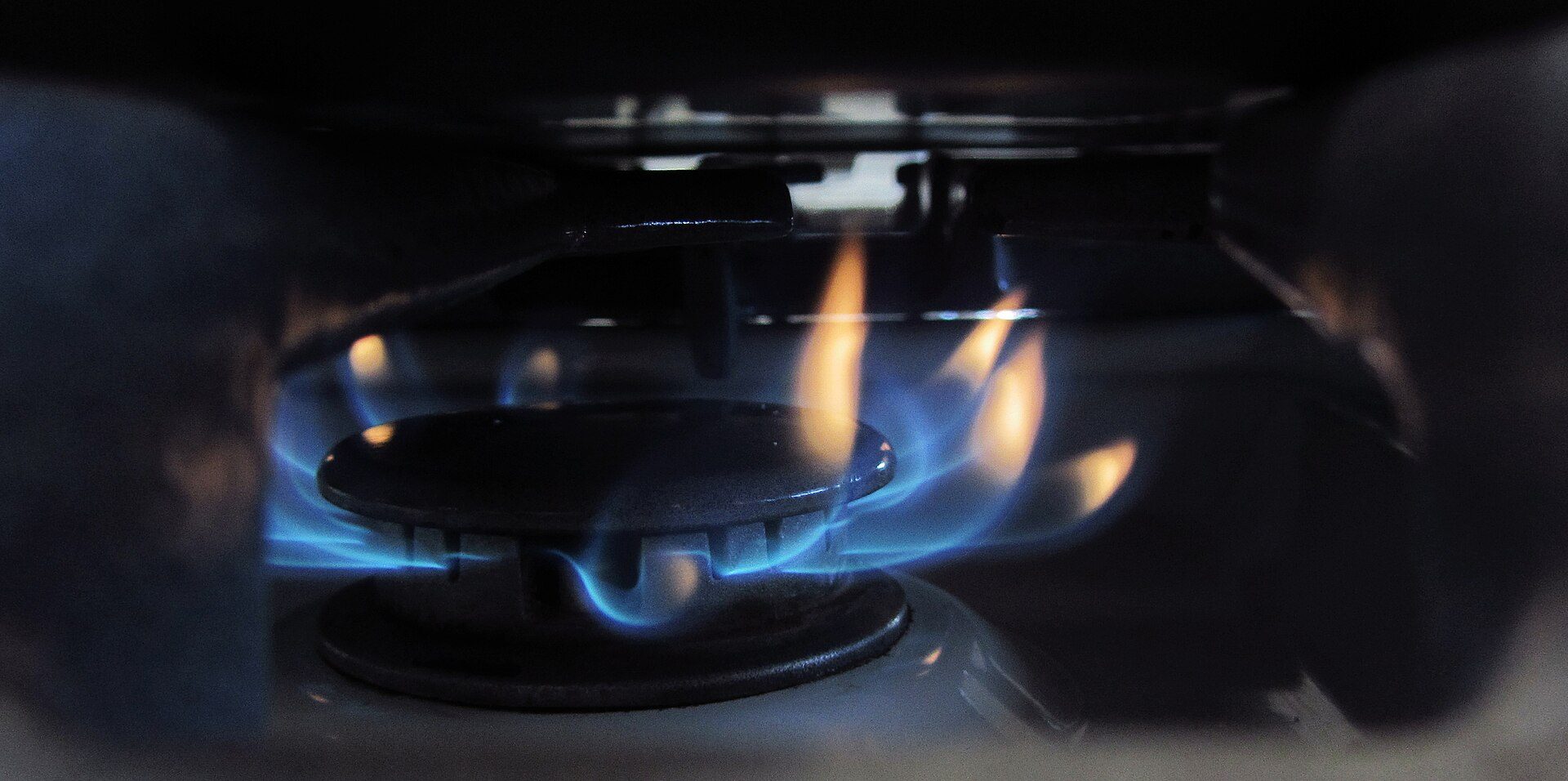
Photo: Lisafern / Wikimedia Commons, CC0
While cooking
Never walk away while frying or heating oil. Turn pan handles inwards, not over the edge where a child could pull them. If a pan of oil catches fire: turn off the stove, cover it with a lid or tight metal cover, never pour water on it and never carry the pan away.
If you smell gas
- Do not switch any light or appliance on or off, do not unplug anything, do not strike a flame and do not make phone calls in the area with the smell.
- Close the cylinder valve or main gas valve.
- Open windows and doors to ventilate.
- Take small children and elderly people out of the home; only once outside, call the family and the gas supplier; if there is a fire, call 114.
Ladders for windows, ceiling fans and high cupboards
Falling off a plastic chair or swivel chair while cleaning a ceiling fan or the top of a wardrobe is one of the most common housekeeper accidents. A chair is not a ladder.
Using an A-frame ladder properly
- Use a household aluminium step ladder with a handrail, non-slip rubber feet and straps or locks that limit how far it opens (Figure 4).
- Open it fully, lock it, and stand it on a flat, dry floor; never on a rug or a floor you have just mopped.
- Never stand on the top step; always keep 3 points of contact (2 feet and 1 hand, or 2 hands and 1 foot).
- Never lean out; if you cannot reach, climb down and move the ladder.
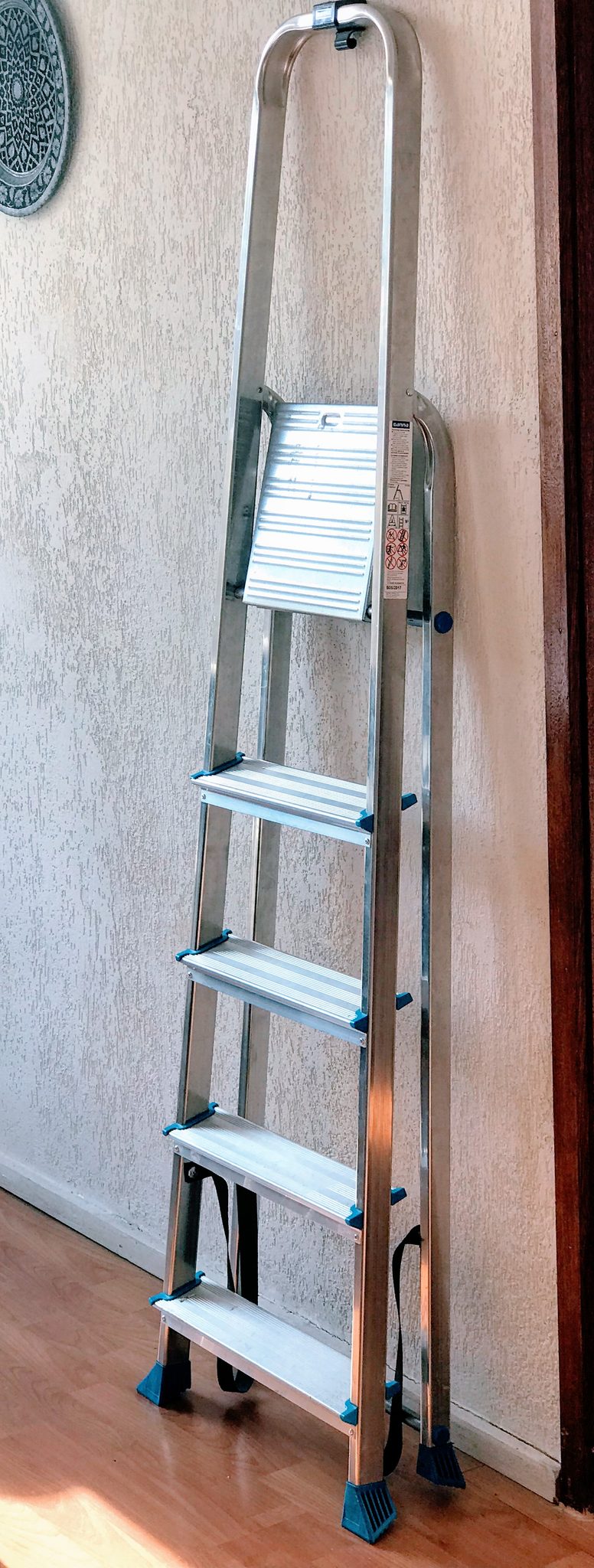
Photo: Amin / Wikimedia Commons, CC BY-SA 4.0
Cleaning windows and balconies
Never stand on a window sill, climb over a balcony railing or lean out to clean the outside of the glass, especially in high-rise apartments. Use a long-handled window cleaner from inside. Outer glass that cannot be reached safely is a job for professional window cleaners with rope access; tell the family clearly.
Ceiling fans and lights
Switch off and wait for the fan to stop completely and the bulb to cool before cleaning. Ask someone to hold the ladder if possible.
Safety warning: Never mix bleach with toilet cleaner, descaler, vinegar or ammonia-based glass cleaner; never use two different cleaners one after the other on the same surface without rinsing. Never decant chemicals into drink bottles. Never touch sockets or switches with wet hands, and never repair electrics yourself. If you smell gas, do not switch anything on or off or strike a flame; close the valve, open the windows, get outside, then call. Never stand on a chair to clean high up, and never climb out of windows or over railings. If someone has trouble breathing after inhaling chemicals, gets an electric shock, is badly burned or falls and hits their head, call 115; for a fire, call 114.
Work ethics: honesty and protecting privacy
The family gives you their keys, door codes, their children and their private lives. Great cleaning skills without trust will not keep you in a job for long.
Honesty
- If you break or damage something, report it the same day with a photo; never hide it or swap in something else.
- Money or jewellery found in pockets or under beds: put it aside in one place and tell the family.
- Do not use the family's things (cosmetics, food, equipment) without permission.
- When shopping for them, keep receipts and a clear spending log.
Protecting privacy
- Do not talk about the family's affairs with others, including the housekeeper next door.
- Do not take photos or videos inside the home, or of the family's children, to post on social media.
- Never share the door code, the wifi password or when the family is away.
- Do not read letters or papers, or open drawers and private cupboards beyond your assigned work.
Boundaries and your own rights
Never give children or elderly people medicine without clear instructions from the family or a doctor. In return, you have the right to be treated with respect. Vietnamese labour law has specific provisions for domestic workers; you should have a contract setting out duties, working hours, pay and days off. To know your exact rights, read the current regulations or ask your placement agency or the local labour office.
Worked example: the first session in a new apartment
Hoa, 38, starts part-time work for a 3-bedroom apartment in Hanoi; the family has a 3-year-old child. Her first session lasts 3 hours (180 minutes). She does safety first and cleaning second.
Time plan
| Task | Time |
|---|---|
| Safety round with the employer (breakers, gas valve, chemical shelf, ladder, phone numbers) | 20 minutes |
| Sorting and reorganising the chemical shelf | 15 minutes |
| Cleaning the kitchen | 40 minutes |
| Cleaning 2 bathrooms | 50 minutes |
| Cleaning the inside of 2 windows using the A-frame ladder | 25 minutes |
| Mopping floors | 25 minutes |
| Handover notes for the employer | 5 minutes |
| Total | 180 minutes |
Check: 20 + 15 + 40 + 50 + 25 + 25 + 5 = 180 minutes, exactly 3 hours.
Sorting the chemical shelf
Under the kitchen sink there are 9 bottles: 2 chlorine bleaches, 2 acidic cleaners (toilet and shower descaler), 1 glass cleaner listing ammonia, 1 strong alkaline drain cleaner and 3 neutral cleaners. Total: 2 + 2 + 1 + 1 + 3 = 9 bottles. Hoa finds two problems: the bleach and the toilet cleaner sit in the same tray, in an unlocked cupboard the 3-year-old can open; and drain cleaner has been decanted into an unlabelled water bottle. She suggests to the family: move the 4 chlorine and acidic bottles and the drain cleaner to a high shelf in the bathroom, in two separate trays; label the water bottle "DRAIN CLEANER – POISON" and ask permission to buy a proper container; and buy a child lock for the cupboard under the sink.
Protective kit she brings herself (2026 reference prices, varying by area)
Long-cuffed rubber gloves, 2 pairs × 30,000 VND = 60,000 VND; one box of masks 50,000 VND; safety glasses 60,000 VND; non-slip bathroom sandals 80,000 VND. Total: 60,000 + 50,000 + 60,000 + 80,000 = 250,000 VND (about USD 10), lasting many months.
Common beginner mistakes
Mixing two cleaners to make them "stronger"
Sign: a sharp, stinging smell and coughing while cleaning the bathroom. Cause: pouring bleach where toilet cleaner was just used. Fix: leave the room at once, open the door and turn on the extractor fan; next time, one product per surface and rinse before switching.
Standing on a chair to clean the ceiling fan
Sign: a wobbling plastic chair or a sliding swivel chair. Cause: not wanting to fetch the ladder. Fix: only use an A-frame ladder, fully opened and locked.
Gossiping about the family
Sign: news from inside the home spreads around the building. Cause: thinking it was harmless chat. Fix: treat everything you see and hear in the employer's home as a professional secret.
Frequently asked questions
Is it dangerous to mix bleach with toilet cleaner?
Yes, very. Many toilet cleaners contain acid; with bleach they release toxic chlorine gas, causing coughing, chest tightness and breathlessness. Never mix them, and rinse with water between different products.
Should a housekeeper clean the outside of windows in a high-rise apartment?
No. Only clean what you can reach safely from inside with a long-handled tool. The outside needs professionals with fall-protection equipment.
What should I do if I break something in the home?
Clean up the pieces safely (gloves, a broom, never with bare hands), take a photo and tell the family the same day. Compensation should be agreed clearly in the contract from the start.
Do housekeepers need a separate safety course?
It is not mandatory for everyone, but basic first aid training plus this lesson and the rest of the roadmap will make you more confident and more trusted. Many placement agencies run briefings for newcomers.
Practice tasks and self-assessment
- Take 5 cleaning bottles in your home, read the labels, sort them into the 5 groups in the table and note which bottles must not be used with which.
- Find and point to the main breaker and gas valve in your home within 2 minutes.
- Say the gas-smell steps out loud without looking at notes.
- Open and lock an A-frame ladder, climb to the third step and keep 3 points of contact while cleaning one pane of glass.
Self-assessment criteria
- Pass: correct grouping, and you can say bleach is never used with acidic or ammonia products.
- Pass: you give the gas-smell steps in the right order, including "do not switch anything on or off".
- Pass: you can name at least 4 ways of protecting the family's privacy.
- Not yet: you still decant chemicals into drink bottles, stand on chairs to clean high up, or post photos from inside the employer's home.
With safety and work ethics in hand, move on to the next step of the roadmap: Systematic room-by-room cleaning, where you learn to clean top to bottom and inside out, with colour-coded cloths for each area so dirt from the bathroom never reaches the kitchen.
Keep learning professional housekeeping: after safety come systematic cleaning, laundry, family cooking, childcare, elder care and household management. See the 8-step professional housekeeper roadmap.