A Vietnamese head spa usually brews its herbal hair wash from dried honey locust pods (bo ket) as the cleanser, with huong nhu basil, pomelo peel and lemongrass for scent; it simmers for about 30 minutes, is strained carefully, cooled to a comfortable warmth, used the same day and any leftover is thrown away at closing time. Before the first scoop goes on a client's head, though, the therapist must read the scalp: oily, dry, mild dandruff, or showing warning signs that call for a doctor. This lesson is step 2 of the roadmap and includes a worked example of brewing for a 14-client day, with figures that add up.
By the end of this lesson, you will be able to:
- Sort a client's scalp into normal, oily, dry or mild dandruff in about 2 minutes by looking, touching and asking.
- Recognise 6 signs of hair loss or scalp problems that mean you should refer the client to a dermatologist.
- Explain the part used, the role and the safety notes for honey locust pods, huong nhu basil, pomelo peel and lemongrass, and adjust the mix to the scalp type.
- Brew, strain, label and store hair wash for a 14-client day and work out the herb cost per client.
- Run a quick irritation check and respond correctly when a client gets stinging eyes, itching or redness.
Learning head spa work properly? Scalp, hair and herbs is step 2 of the roadmap, right after hygiene, water and electrical safety and contraindications. See the 8-step head spa therapist roadmap to learn in the right order.
Scalp and hair: the basics a head spa therapist needs
You do not need to study like a dermatologist, but you must understand enough to know what you are washing. The scalp is packed with hair follicles, and each follicle has an oil gland. The visible hair is dead fibre; you can only care for its surface.
How the scalp differs from facial skin
- Many oil glands: oil spreads along the hair, so an oily scalp looks greasy at the roots one or two days after washing.
- Hidden by hair: clients rarely see their own scalp. You are often the first person to notice a red patch, thick scale or a thinning area.
- Sensitive to heat and pressure: water that is too hot, scratching with nails and hard brushing leave the scalp sore, red and itchier after the wash.
How much hair loss is normal
Hair grows in cycles: growing, resting, then shedding so a new hair can replace it. Losing a few dozen hairs a day is normal; dermatology sources often quote about 50–100 hairs. So when you see hair in the basin, do not rush to tell the client they are "losing a lot". What matters is change: hair thinning quickly, or falling out in patches.
Coloured and bleached hair
Colouring, bleaching and perming leave hair dry, tangled and easy to break. Wash mainly at the scalp, do not rub the lengths against each other, and condition the mid-lengths and ends.
Recognising the 4 common scalp types in the shop
Read the scalp while the hair is still dry, straight after the health questions from step 1. Wet hair dissolves flakes and hides the true skin colour.
A 2-minute scalp check
- Wash your hands and tell the client: "Let me look at your scalp so I can choose the right wash."
- Use the pads of your fingers or a clean comb to part the hair in 4 places: crown, both temples and the nape.
- Look under good light: skin colour, type of flakes, how shiny the roots are.
- Touch the roots lightly: greasy and sticky, or dry.
- Ask 3 questions: when they last washed, whether it itches, and whether they use any medicine on the scalp.
Recognition table and suggested approach
| Scalp type | What you see and feel | Suggested approach | Avoid |
|---|---|---|---|
| Normal | Even pale pink skin, clean roots, no flakes | Standard herbal wash, wash twice | Adding extra herbs "to make it stronger" |
| Oily | Shiny roots, greasy after 1–2 days, oily smell | First wash thorough at the roots, extra lemongrass for a fresh scent if liked | Very hot water, hard rubbing |
| Dry | Tight skin, very fine powdery flakes, coarse hair | Diluted wash, short second wash, conditioner | Over-washing, hot water |
| Mild dandruff | Small loose white flakes on the shoulders; skin not red | Even washing with finger pads, rinse very well | Scratching with nails, picking flakes |
One client can be "oily at the roots, dry at the ends". Then you wash for the scalp and condition for the lengths.
Mild dandruff, and when it is more than dandruff
Mild dandruff is small, dry white flakes that come off easily, with no redness underneath (Figure 1). If the scale is yellow, thick and greasy on red skin, spreads to the hairline, behind the ears or the eyebrows, or forms thick silvery plaques, it is no longer a job for a hair wash. It may be dermatitis, psoriasis or a fungal infection, and only a doctor can tell them apart. Wash the healthy areas gently, do not rub the affected skin, note it down and advise the client to see a doctor.
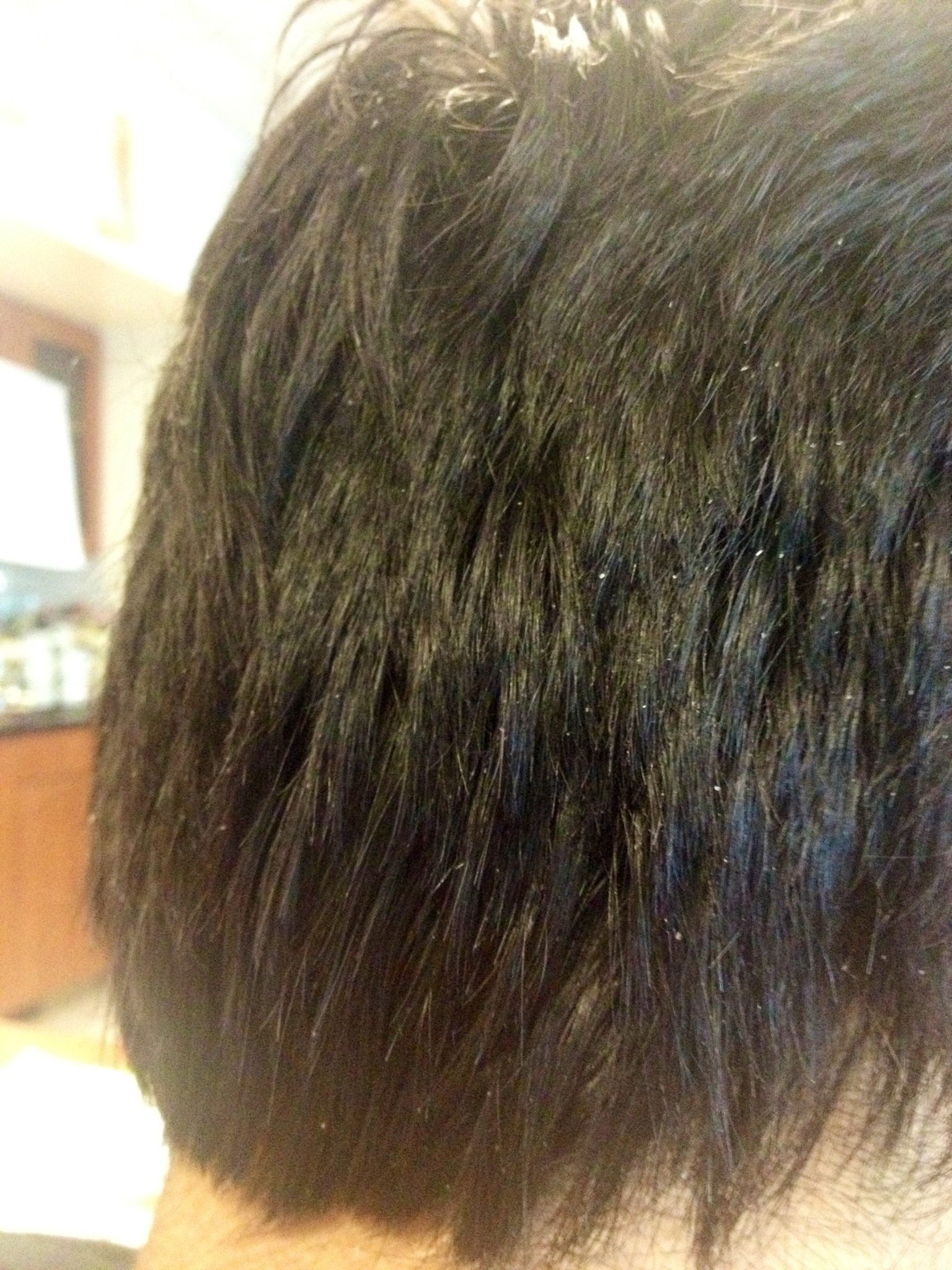
Photo: Hmochoa95 / Wikimedia Commons, CC BY-SA 3.0
Heavy hair loss: when to advise a doctor's visit
Clients often ask: "I'm losing so much hair, what wash will help?" The professional answer is that an herbal wash cleans, smells good and relaxes; it does not treat hair loss. Heavy shedding has many possible causes, such as recovery from a fever, childbirth, stress, poor nutrition, a change of medicine, thyroid disease or a scalp condition, and only a doctor can find the cause.
6 signs that call for a doctor
- Hair lost in round or smooth patches with clear edges.
- Hair thinning fast over a few weeks, coming out in handfuls.
- Hair loss with red skin, thick scale, pus spots, pain or oozing.
- Strong itching lasting several weeks despite changing shampoo.
- Scaly patches with hairs broken off at the root, especially if family members have it too (possibly fungal, which spreads through combs and towels).
- Hair loss with tiredness, weight loss or fever, or a client being treated for a serious illness.
How to say it respectfully
Do not diagnose and do not scare. A sample line: "This area looks a little red and the hair is thinner than elsewhere. I can't assess that, so it's worth seeing a dermatologist to be sure. Today I'll wash gently and avoid rubbing here." Record the date, location and your referral in the client log. Next visit, ask how it went and follow the doctor's advice; if the doctor prescribed a medicated shampoo, do not wash over it with herbal water.
Limits of the job: A head spa therapist does not diagnose, prescribe or sell "hair loss, dandruff or fungus treatment courses". An herbal wash is a cleansing and relaxation service and does not replace a doctor. Advertising cures is untrue and may break advertising rules; if in doubt, ask the local authorities in Vietnam.
Four common herbs: honey locust, huong nhu basil, pomelo peel, lemongrass
Once you know what each herb does, you can mix them, and you know which one stings the eyes and which may irritate skin.
Honey locust pods: the main cleanser
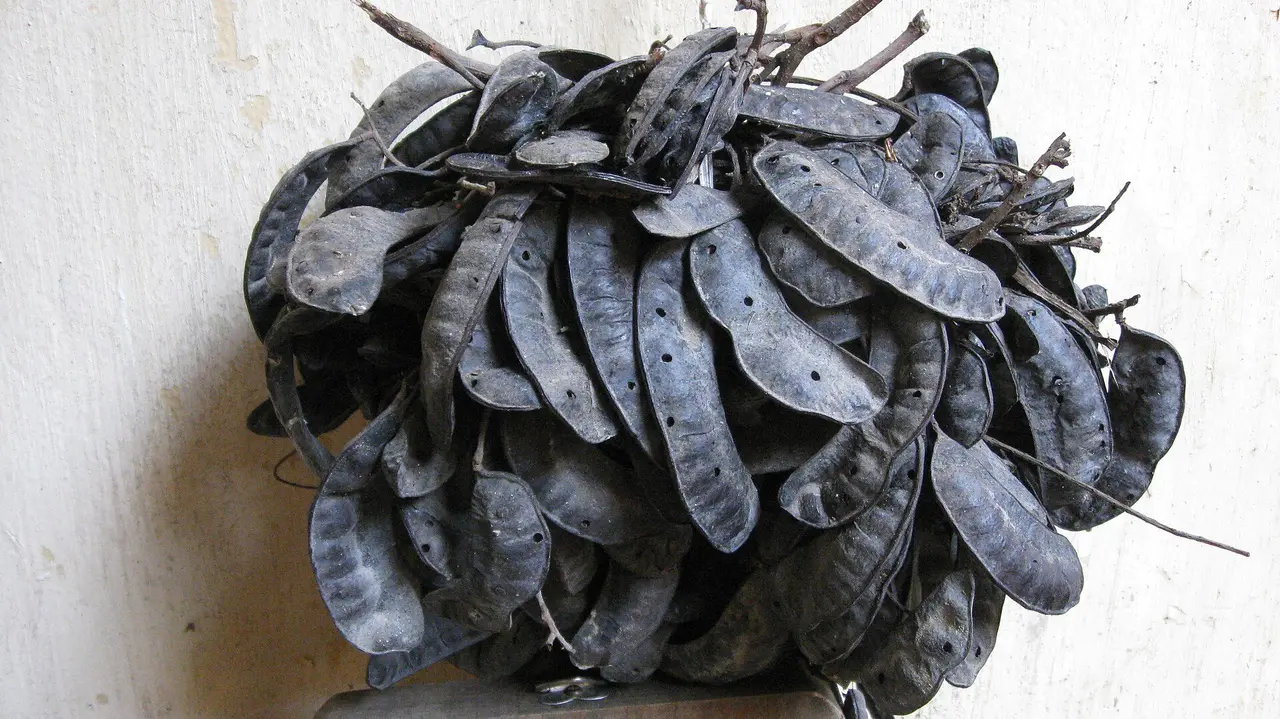
Dried bo ket pods (Figure 2), from a Gleditsia tree in the honey locust family, contain saponins, which foam lightly when boiled and stirred in water and help lift oil. The lather is thinner and finer than commercial shampoo; less foam does not mean less clean. Choose pods that are dry, brittle and evenly coloured, with no mould spots. Many shops toast the pods briefly over a low flame to bring out the aroma, then snap them into pieces; toast until fragrant, never until charred. Bo ket water stings badly in the eyes, so always cover the client's eyes with a towel and rinse towards the nape.
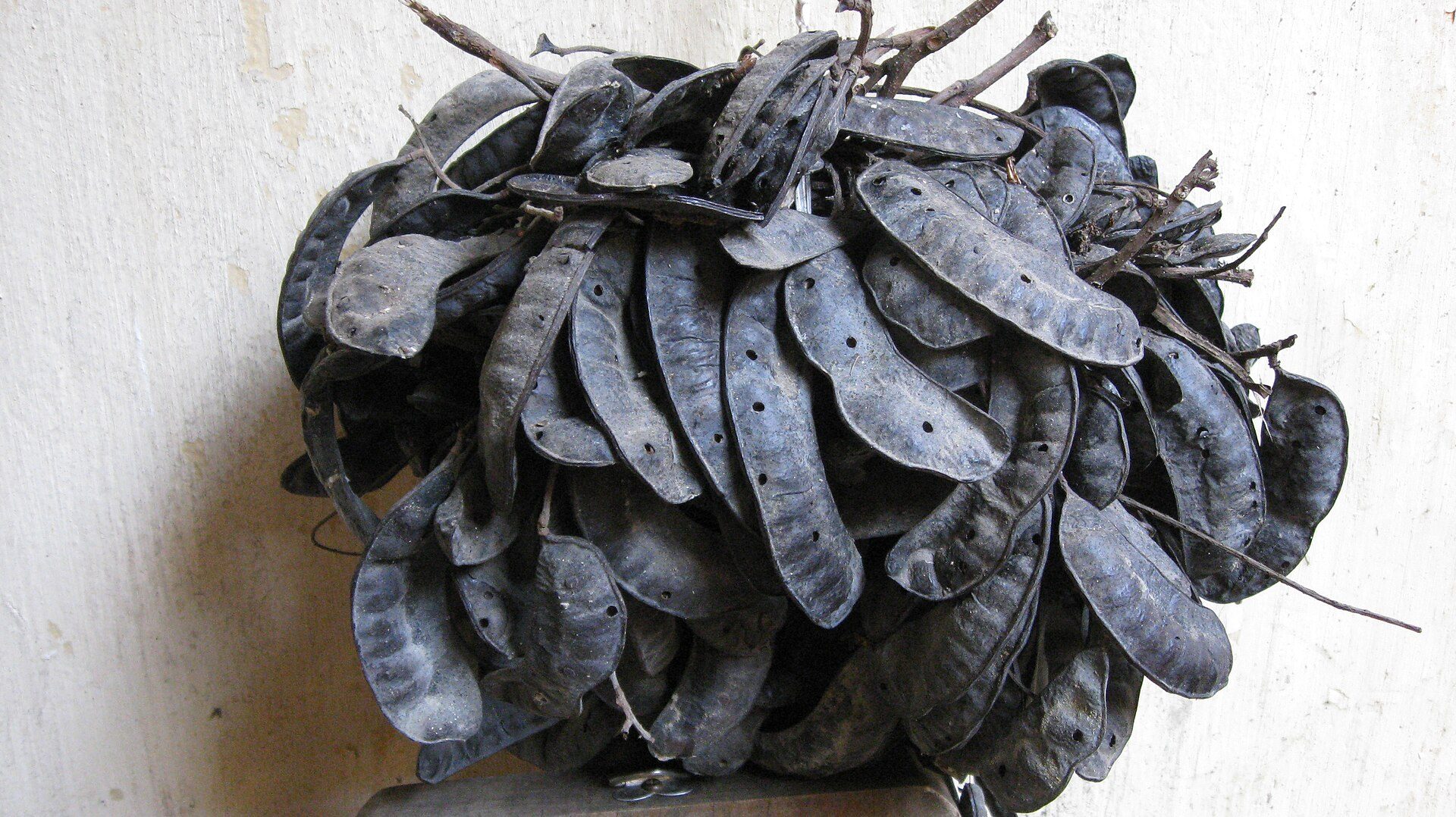
Photo: taylorandayumi / Wikimedia Commons, CC BY 2.0
Huong nhu basil: a pleasant scent
In Vietnam, "huong nhu" covers a white and a purple type, both in the basil genus (Ocimum). The leaves and tips carry an essential oil with a clove-like smell; its main component is usually given as eugenol (Figure 3). In a hair wash, huong nhu is mostly there for the scent. Wash fresh leaves well and discard wilted ones. Eugenol can irritate sensitive skin, so do not overdo it.
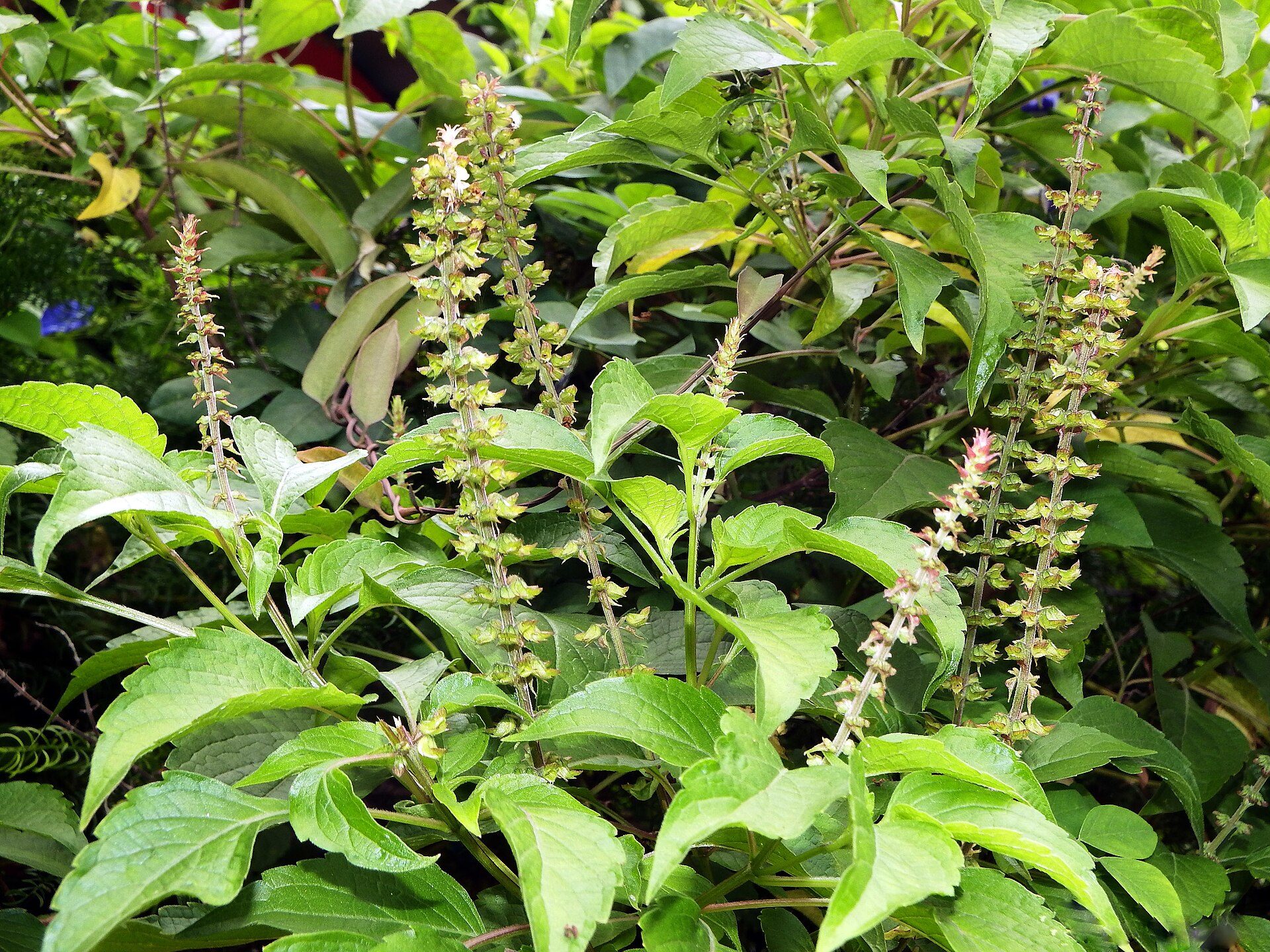
Photo: Rison Thumboor from Thrissur, India / Wikimedia Commons, CC BY 2.0
Pomelo peel: the outer layer holds the oil
A cut pomelo (Figure 4) shows two layers: a thin green-yellow outer rind with oil glands, and a thick white pith inside. The scent is in the outer rind, so many people trim off most of the pith so the peel dries faster and moulds less. Wash the fruit before peeling, since the skin may carry dust or pesticide. The folk claim that pomelo peel "makes hair grow" is not something a shop can promise; say only what is certain: pomelo peel gives a fresh scent.
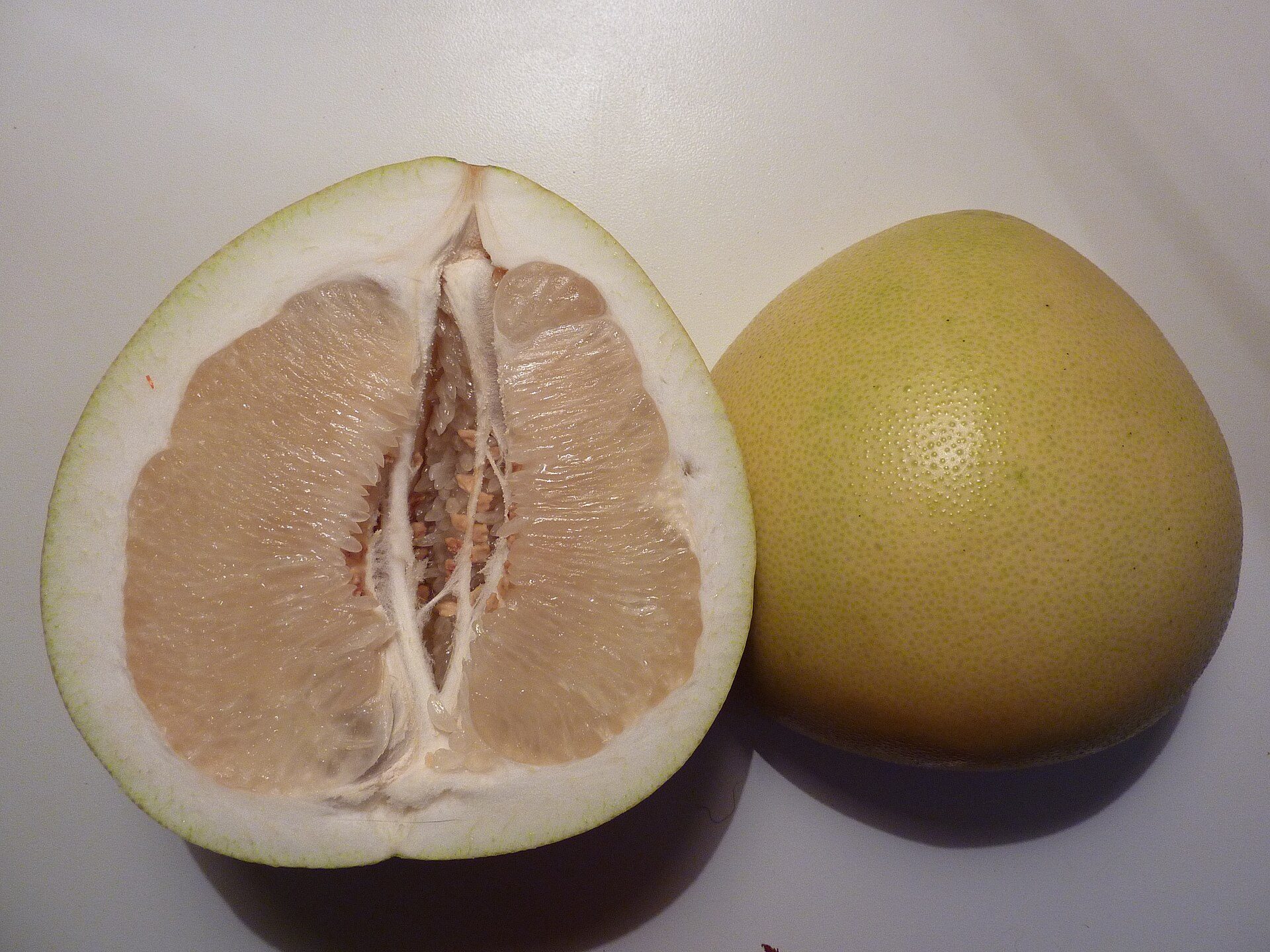
Photo: Salix / Wikimedia Commons, CC BY-SA 3.0
Lemongrass: a fresh lemon scent
Lemongrass (Figure 5) smells of lemon thanks to its essential oil, whose main component is usually given as citral. Use the stalks and a few leaves, wash them and bruise them so the oil comes out when boiled. It suits oily-scalp clients who like a cool, fresh feel. Citral can also irritate sensitive skin, so keep the amount moderate.
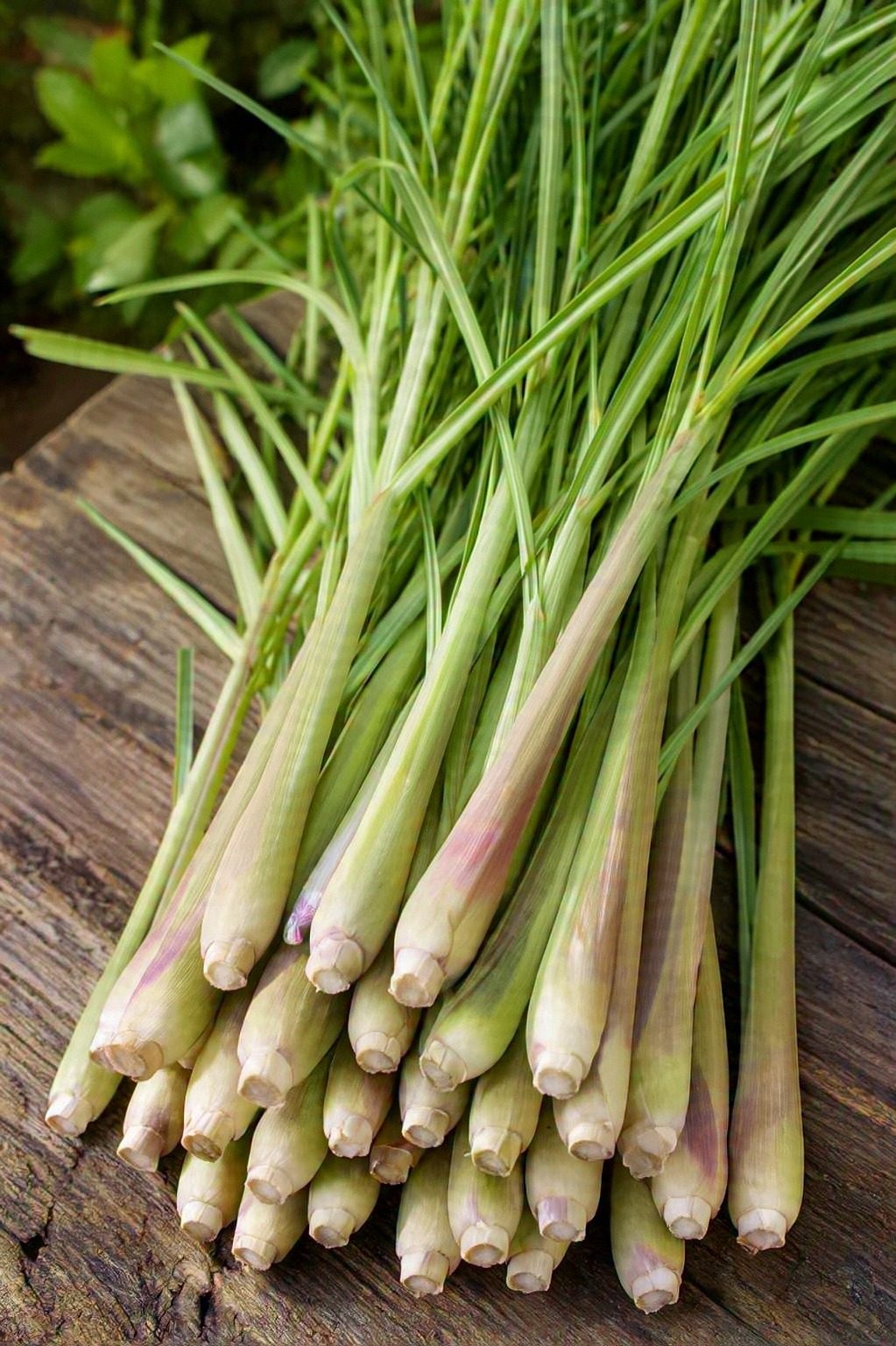
Photo: Steffen Bauer ( www.saatpilot.de ) / Wikimedia Commons, CC BY 4.0
Summary table and mixing by scalp type
| Herb | Part used | Role | Safety note |
|---|---|---|---|
| Honey locust (bo ket) | Dried pods | Cleansing, light foam | Stings eyes; discard mouldy pods |
| Huong nhu basil | Leaves, tips | Scent | May irritate sensitive skin |
| Pomelo peel | Outer rind, dried | Fresh scent | Wash fruit before peeling; discard mouldy peel |
| Lemongrass | Stalks, a few leaves | Lemon scent, cool feel | May irritate sensitive skin |
- Normal or mild dandruff: the standard recipe below; for dandruff, the key is a thorough rinse and no scratching with nails.
- Oily: standard recipe, first wash thorough at the roots; if the client likes a fresh scent, brew a separate jug with extra lemongrass.
- Dry: mix 1 part hair wash with 1 part clean warm water, keep the second wash light and short, then condition.
- Sensitive skin or a history of reactions to cosmetics or plants: no herbs; use a mild, fragrance-free shampoo.
How to brew herbal hair wash safely for a shop
Brewing in a shop must be consistent every day, kitchen-clean and recorded. The recipe below is a reference for 3 litres of finished wash; each shop adjusts for its herb supply and client feedback, but test on yourself before changing it.
Equipment and ingredients for one 3-litre batch
- A lidded stainless steel pot used only for herbs, a stainless sieve, clean straining cloth, ladle, thermometer and measuring jug.
- A heat-resistant lidded container, labels for the time, heat-resistant gloves.
- About 3.5 litres of clean water (about 3 litres remain after simmering and straining).
- 50 g honey locust pods (about 7–8 pods), 20 g dried huong nhu, 20 g dried pomelo peel, 4 stalks of lemongrass.
Brewing steps
- Prepare (about 10 minutes): discard any mouldy pods, leaves or peel; wash everything; toast the pods briefly and snap them; bruise the lemongrass.
- Simmer the pods (about 20 minutes): bring to the boil, turn the heat down to a gentle simmer, lid slightly open.
- Add leaves and peel (about 10 minutes): add the huong nhu, pomelo peel and lemongrass, simmer, then turn off the heat and cover. Adding them late keeps the scent.
- Strain (about 10 minutes): strain through the sieve, then again through cloth. Bits of herb will stick in the client's roots.
- Cool (about 20 minutes): leave in the covered container to cool down.
- Label: "Herbal hair wash, brewed at …, discard by …".
One batch takes about 10 + 20 + 10 + 10 + 20 = 70 minutes, mostly waiting, so whoever opens the shop starts brewing on arrival, while doing the start-of-shift checklist.
Checks before using it on a client
- Clear yellow-brown to brown, no floating bits; herbal smell, not sour.
- A light foam when worked by hand.
- About 37–40°C on the client's head, as in step 1; test on the inside of your wrist and check with a thermometer.
Safety warning when brewing: Boiling water and gas stoves mean burns and fire risk. Keep the pot away from walkways and the client area, turn the handle inwards and never carry a large pot while it is boiling. Do not pour boiling water into plastic containers that are not heat-resistant. Toast pods with tongs, away from curtains and towels. Turn off the flame and the gas valve before leaving the stove. Never use freshly strained, still-hot wash on a client's scalp.
Storing brewed hair wash and dried herbs
Home-brewed herbal water has no preservatives. In Vietnam's hot, humid climate, bacteria and yeasts grow quickly, especially when hands or dirty jugs go into the container. Spoiled wash can cause itching and rashes, and a sour smell instantly ruins the relaxing feel.
Rules for brewed hair wash
- Brew it today, use it today; never keep it overnight and reheat it. Busy shops brew a morning and an afternoon batch.
- Scoop with a clean dedicated jug; no hands in the container, and never pour what is left in a client's bowl back in.
- Keep the container closed in a cool place. If you have a fridge not shared with food, keep the unused part there during the shift, but still discard it at closing.
- Throw it away at once if it smells sour, has a film, turns slimy, looks unusually cloudy or fizzes by itself.
Storing dried herbs
| Item | How to store | Discard when |
|---|---|---|
| Dried honey locust pods | Sealed bag or jar, dry place, off the floor | Mould spots, soft and damp, insects |
| Dried huong nhu | Sealed jar, out of the sun | No scent left, mould, blackened leaves |
| Dried pomelo peel | Dry completely before sealing in a jar | Softens again, mould spots |
| Fresh lemongrass | Cool, airy place, use within a few days | Soggy, mushy, bad smell |
Date every bag and jar; buy from traceable sellers, a few weeks' supply at a time. Do not bottle your brew to sell for home use: it spoils quickly, and making and selling cosmetics usually has its own regulations in Vietnam; check the current rules with the local health authorities first.
Irritation checks and what to do when a client reacts
"Natural" does not mean allergy-free. New clients and clients with a history of allergies should be asked and tested first.
Ask and do a quick test
- Ask: "Have you ever had itching or a rash from a shampoo, essential oil or plant?"
- If unsure: dab a little cooled wash on the skin behind the ear and wait about 15 minutes while you check the scalp.
- Redness, itching or burning at the test spot: no herbs, switch to a mild fragrance-free shampoo.
- Record it in the client log and explain: a quick test only shows immediate reactions; an allergy can appear 1–2 days later, and the client should then see a doctor.
Wash in the eyes, or a red, itchy scalp
Wash in the eyes: stop, rinse the eye with plenty of clean, cool, gently running water from the inner to the outer corner for several minutes, no rubbing. If it is still red, painful or blurry after rinsing, advise the client to see an eye doctor straight away. Red, itchy scalp during the wash: stop, rinse thoroughly with lukewarm water and apply nothing else. A spreading rash, swelling or lasting burning means a doctor's visit. If the client has trouble breathing, swollen lips or face, or feels faint: call 115 (Vietnam's emergency number) at once and stay with them.
Worked example: hair wash for a 14-client day
Ms Hanh's 2-bed shop sees 14 clients a day on average, the same shop as in the lesson on head spa safety. Each client is washed twice with about 0.4 litres of herbal wash each time, then rinsed with clean tap water.
Working out the volume
- Per client: 0.4 + 0.4 = 0.8 litres. Per day: 14 × 0.8 = 11.2 litres.
- Two batches of 6 litres (double the recipe): the morning batch serves 7 clients, using 7 × 0.8 = 5.6 litres, with 0.4 litres left; the afternoon batch is the same.
- Total brewed 6 + 6 = 12 litres; 11.2 litres used; 0.8 litres discarded at closing.
Herbs and cost (assumed 2026 reference prices, varying by region and supplier)
12 litres is 4 times the 3-litre recipe, so the herbs are multiplied by 4.
| Ingredient | Per 3-litre batch | Per day (× 4) | Assumed unit price | Cost |
|---|---|---|---|---|
| Dried honey locust pods | 50 g | 200 g | 200,000 VND/kg | 40,000 VND |
| Dried huong nhu | 20 g | 80 g | 150,000 VND/kg | 12,000 VND |
| Dried pomelo peel | 20 g | 80 g | 100,000 VND/kg | 8,000 VND |
| Fresh lemongrass | 4 stalks | 16 stalks (about 0.5 kg) | 30,000 VND/kg | 15,000 VND |
| Gas for 2 batches | 10,000 VND | |||
| Total | 85,000 VND |
Check: 40,000 + 12,000 + 8,000 + 15,000 + 10,000 = 85,000 VND (about 3.4 USD); divided by 14 clients, 85,000 ÷ 14 ≈ 6,100 VND per client. Dried herb prices swing with the season and the seller, so replace these with your shop's real receipts. You will use this number when pricing services in the last step, as the lesson on opening a head spa shop does with direct cost per client.
Applying it: Mr Tuan, 45, has shiny roots, a few small white flakes and no redness, so an oily scalp with mild dandruff: standard recipe, first wash thorough at the roots. Ms Mai, 52, has coloured hair, tight skin and coarse ends, so a dry scalp: dilute 1 : 1 with warm water and condition. Both use the afternoon batch, so the volume stays within the 6 litres planned.
Common mistakes and how to avoid them
Sour hair wash by the afternoon
Sign: afternoon clients notice an odd smell, the wash has a film. Cause: one batch for the whole day, an open container near the sun, a dirty jug dipped in. Fix: morning and afternoon batches, a closed container in a cool spot, a dedicated jug.
Clients with stinging eyes
Sign: the client squeezes their eyes shut, tears running. Cause: eyes not covered, rinsing towards the forehead, wash too strong in honey locust. Fix: always place a towel over the eyes, rinse towards the nape, keep the pod ratio correct.
Promising to cure hair loss or dandruff
Sign: telling clients "10 sessions and your hair loss is gone". Cause: wanting to sell packages. Fix: promise only clean, fragrant and relaxing; refer clients with warning signs to a doctor.
Frequently asked questions
How do you brew honey locust hair wash so it smells good?
Toast the pods briefly, snap them, simmer for about 20 minutes, then add huong nhu, pomelo peel and lemongrass for about 10 more minutes and cover. Adding leaves and peel late keeps the scent better than boiling everything from the start.
How long does herbal hair wash keep?
In a shop, use it the same day and discard leftovers at closing, even if refrigerated. If it smells sour, has a film or turns slimy, throw it out at once.
Does washing with honey locust cure hair loss?
A shop should not promise that. Honey locust cleans and the other herbs add scent. Heavy hair loss needs a doctor to find the cause; the therapist's job is to refer.
Should I add bought essential oils to the wash?
Not on your own initiative. Concentrated essential oils irritate far more easily than the small amount released when herbs are simmered, and they are hard to dose evenly per jug. If you want to use them, choose a labelled product with clear dilution instructions and skin-test first.
Practice tasks and self-assessment
- Check the scalps of 5 friends using the 5 steps; record the scalp type and any signs that need a referral.
- Brew one 3-litre batch, timing each step and noting colour, smell and foam; leave a small cup at room temperature until the next morning to see how it changes (for observation only, do not use it).
- Work out the volume and herb cost for a 10-client day using prices you actually paid.
Self-assessment criteria
- Pass: correct scalp type for at least 4 of 5 people, with reasons based on what you saw, felt and heard.
- Pass: the wash is clear, free of herb bits and labelled with the brewing time; your timings match step by step.
- Pass: every line of the cost calculation adds up and the price source is noted.
- Not yet: using wash kept overnight, putting mouldy herbs in the pot, or telling a client it "treats hair loss".
Once you can read a scalp and brew a wash that meets the standard, move on to the next roadmap step: Standard head spa wash routine, where you learn to greet clients, wash twice, condition and rinse without water getting into ears or eyes.
Keep learning head spa work: after scalp and herbs come the standard wash routine, head, neck and shoulder massage, relaxing acupressure, add-on services and opening a shop. See the 8-step head spa therapist roadmap.