Opening a small two-bed head spa shop (a "goi dau duong sinh" herbal hair-wash and massage shop) in Vietnam usually takes about 110–230 million VND in capital (2026 reference, depending on area and premises), most of it going on wash beds, hot water, safe electrical and plumbing work, the rent deposit and a two-month cash reserve. A one-bed setup at home can start from about 30–70 million VND. Whether the shop survives comes down to three numbers: the average price per client, the fixed cost per month, and the number of clients per day needed to break even. This lesson walks through each of those numbers with a two-bed shop example where every line adds up.
By the end of this lesson, you will be able to:
- Estimate start-up capital at three sizes: one bed at home, a two-bed shop, a four-bed shop.
- Set up a wash room properly: floor area, bed layout, hot water, drainage and shock protection.
- Build a three-package price list for herbal head spa services from real costs, not just by copying the shop next door.
- Work out fixed costs, cost per client and the number of clients per day to break even.
- Prepare a checklist of paperwork, hygiene and booking channels before opening day.
Learning head spa therapy properly? Opening a shop is step 8, the last step of the roadmap, after hygiene and safety, scalp and herbs, the wash routine, massage, acupressure, add-on services and a 20-client project. See the 8-step head spa therapist roadmap to learn in the right order.
Before you open: are you ready?
A head spa shop sells relaxation. Clients come back because the hands are consistent, the water is the right warmth, the room is clean and appointments run on time, not because the sign looks nice. So check three things before you sign a lease.
Is your technique good enough?
You need to deliver a full 60-minute routine without the client having to remind you about pressure, water temperature or water in the ears. This lesson does not repeat the wash techniques; to revise them, see Vietnamese head spa: a 10-session practice plan. Feedback cards from the 20 model clients in the project step are your best evidence: if the average score is low, practise more before investing.
Survey the area
- Target clients: office workers near buildings, students, busy residential streets, markets, areas with many women who finish work late.
- Competitors: try 3–5 shops within about 2 km, noting prices, duration, cleanliness and busy hours.
- Peak hours: lunchtime, after 5 pm and weekends. Premises that clients pass at those times fill up more easily.
Choose a model
There are three common models. At home: use an existing room, low capital, good for testing the market but hard to create a "going to the spa" feeling. Renting small premises: you control the brand, but fixed costs are higher. Renting a bed inside a hair salon or spa: revenue share or bed rent, low risk but dependent on the owner. Beginners should start small and add beds only once clients are steady.
How much capital does a head spa shop need?
Start-up capital has two parts: one-off investment (beds, equipment, renovation) and working capital (rent deposit, a reserve for the first months while clients are still irregular). Many shops close not because the work is poor but because the money runs out in month three, before a regular clientele forms.
Reference capital at three sizes
| Item | At home, 1 bed | Shop, 2 beds | Shop, 4 beds |
|---|---|---|---|
| Wash beds with basin | 6–15 million | 12–30 million | 24–60 million |
| Hot water | 3–6 million | 6–12 million | 15–40 million |
| Electrical, plumbing and drainage work | 3–10 million | 10–25 million | 20–50 million |
| Air conditioner, washer, dryer, towel steamer | 5–15 million | 20–35 million | 35–60 million |
| Furniture, towels, herbs, signage | 5–10 million | 15–30 million | 30–60 million |
| Deposit + first month's rent | 0 | 15–45 million | 30–90 million |
| Reserve for 2 months of costs | 8–15 million | 30–50 million | 60–120 million |
All figures are VND, 2026 reference ranges that vary with area, equipment quality and premises (1 million VND is roughly 40 USD); rents in big-city centres can be far above these ranges. Get 2–3 real quotes for each item before committing.
Where to save and where not to
- Do not skimp on: wash beds (clients lie on them for 60–90 minutes), steady hot water, residual current breakers, drainage, enough towels.
- You can save on: elaborate decor, a large sign, foot massage machines, a dozen essential oils before you know what clients like.
Setting up the wash room: space, beds, hot water and power
The wash room setup decides both the experience and the safety. Fixing mistakes after the tiles and beds are in costs many times more than getting it right first.
Floor area and layout
- A wash bed is about 1.9–2.1 m long and 0.7–0.8 m wide. The head end needs about 0.8–1 m for the therapist to sit and turn.
- Leave at least about 0.6 m between two beds, with a curtain or light partition for privacy.
- A two-bed shop needs about 12–15 m² for the wash area, plus a reception counter, a towel laundry area and herb storage; about 20–30 m² in total.
- Keep the laundry area and clean towels separate; dirty towels should never pass over clean ones.
Choosing wash beds
Look for a solid basin, a soft neck rest on the rim, a mattress thick enough for long sessions, and a hand shower with an easy lever control. Lie on it for at least 15 minutes and do a trial wash on the display bed: does the client's neck dig in, does the therapist have to hunch over? Check the joint between basin and drain carefully, and ask about the warranty and spare parts (Figure 1).
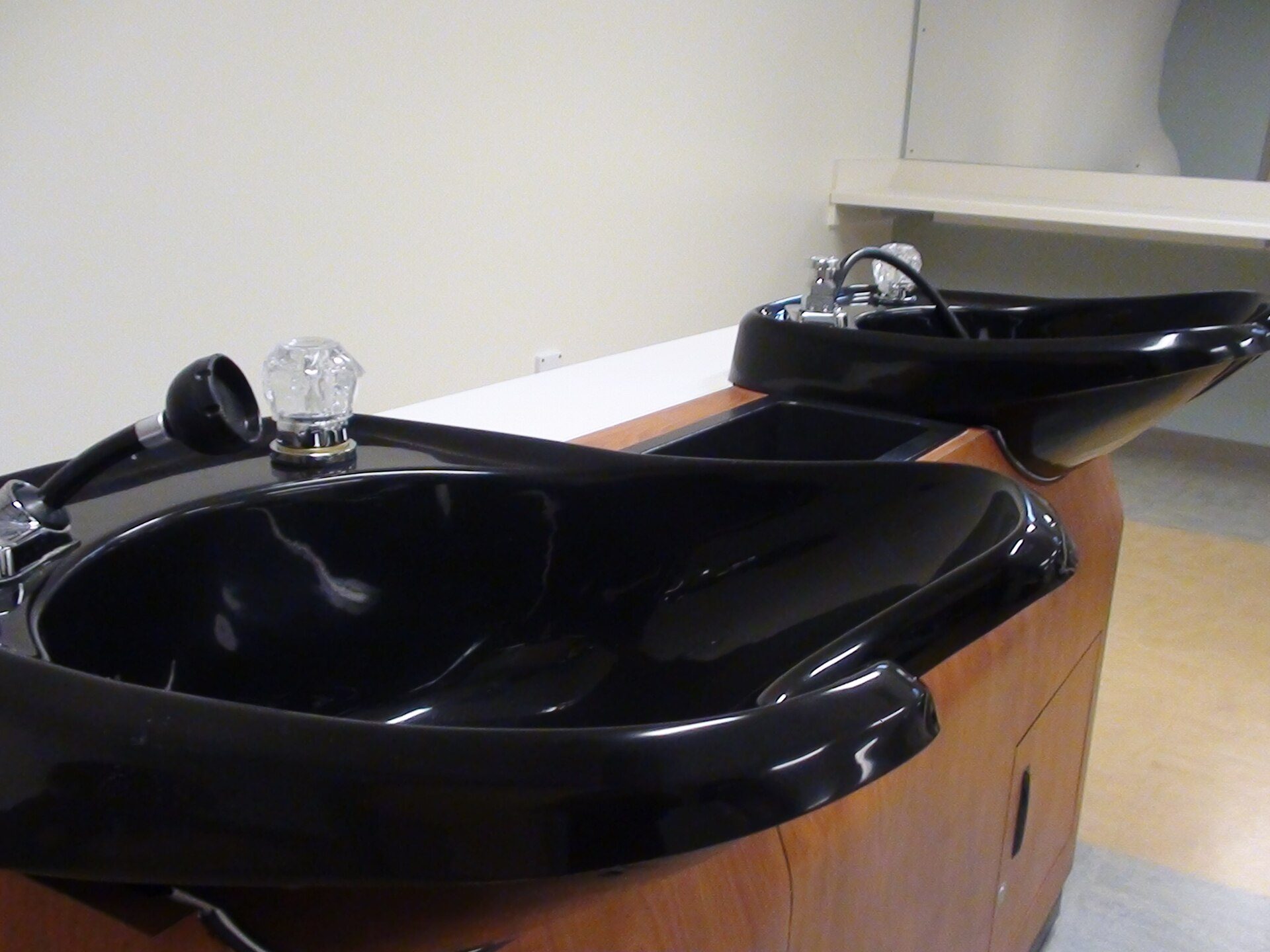
Photo: johnrosman / Wikimedia Commons, CC BY 2.0
Hot water and drainage
Each session (two washes, rinsing and conditioner) uses quite a lot of warm water continuously. A storage water heater of about 30 litres per bed is usually enough for back-to-back clients if there is time for the tank to reheat; for four beds or more, ask a plumber about a central system or a heat pump. Set the water at a comfortable warmth, and the therapist always tests it on their own wrist before rinsing the client's head. Drains need a hair trap, enough fall and an easy-to-clean inspection pit; hair building up in the pipe is the most common cause of blockages and smells.
Electrical safety in a wet area
The wash area is a wet area, with water and electricity very close together. The water heater circuit and wash-area sockets must be protected by a 30 mA residual current device (RCBO or RCCB) and earthed, with sockets mounted high and away from taps. This is work for a qualified electrician; read the principles in How to wire an RCD at home so you know what to ask for.
Safety warning: Do not wire water heaters, sockets or dryers in the wash area yourself unless you are an electrician. Wet-area circuits must have a 30 mA residual current device and earthing; press the test button regularly as the maker instructs. Never put extension leads on a wet floor or use a hair dryer near a basin full of water. If you smell burning, see water leaking from the heater casing or feel a tingle on touch, switch off the breaker, stop serving and call an electrician. Always test the water temperature on your own wrist before rinsing a client's head to avoid scalds.
Light, music, scent and temperature
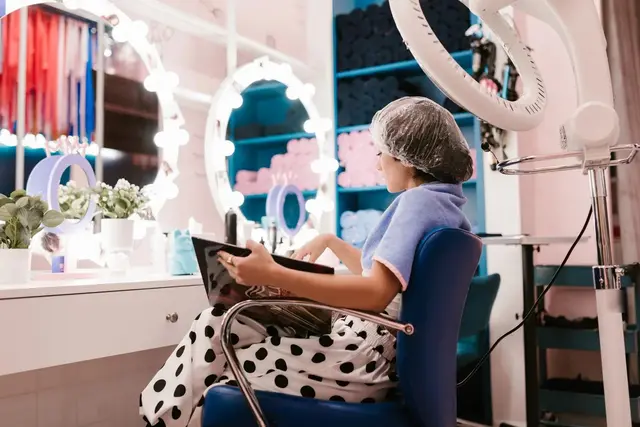
Soft light that does not shine into the eyes of a client lying face up. Quiet, steady music. A light herbal scent, no strong room spray. Keep the air conditioning comfortably warm: clients with wet hair lying still get cold easily, especially during rinsing. Have warm towels for the shoulders and a light blanket ready (Figure 2 shows a neat, bright salon with easy-to-clean floors).
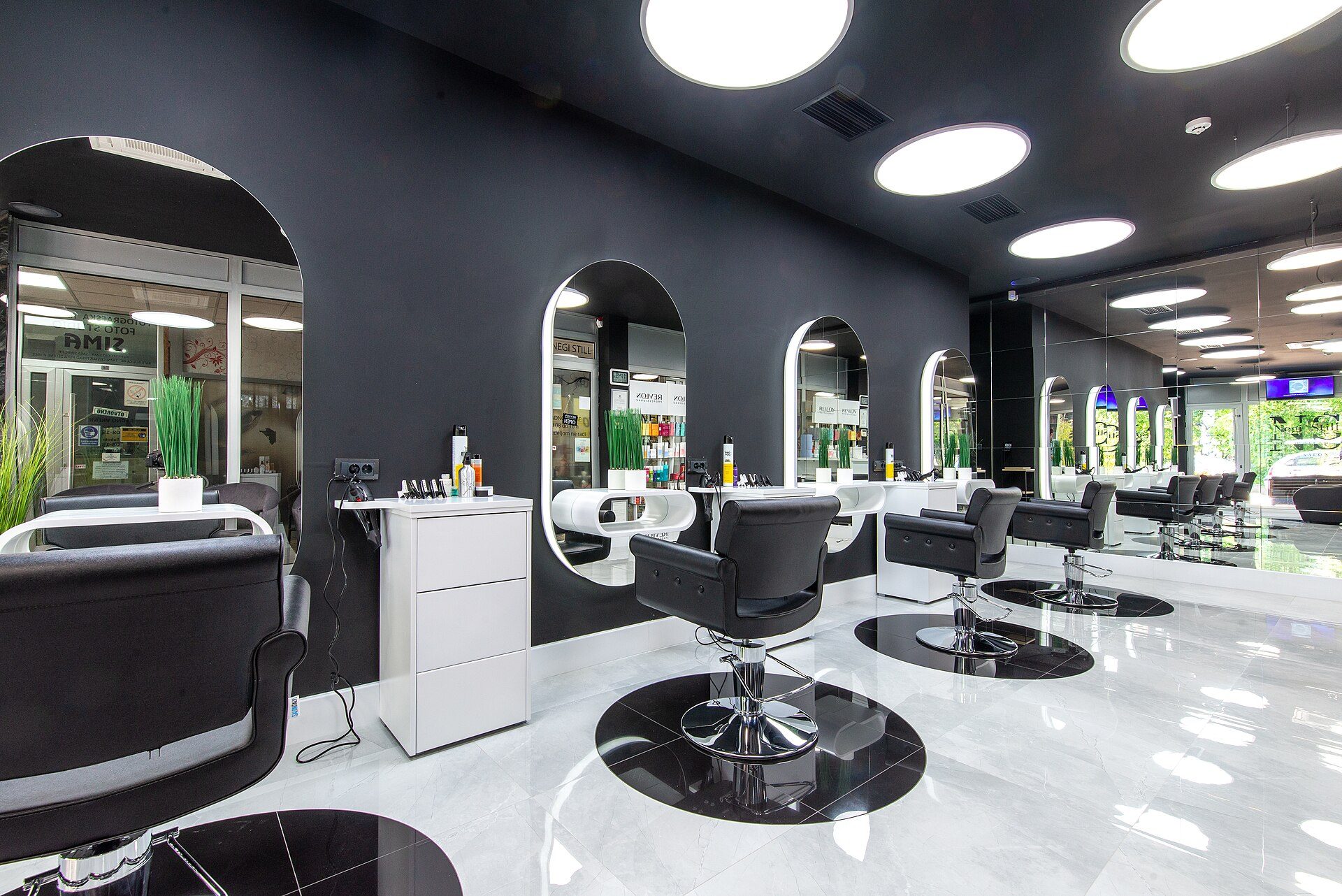
Photo: Shixart1985 / Wikimedia Commons, CC BY 2.0
A head spa price list built from real costs
The price list should have three clear packages that differ in duration and add-ons, as you designed in the project step. Clients choose easily and therapists schedule easily.
Reference price list
| Package | Duration | Main content | 2026 reference price |
|---|---|---|---|
| Basic | 40–45 min | Two herbal washes, short head massage, blow-dry | 70,000–150,000 VND |
| Relax | 60 min | Wash, head, neck and shoulder massage, face wash, hot towel | 150,000–250,000 VND |
| Premium | 90 min | Relax package + face mask, hot stones, herbal foot soak | 250,000–450,000 VND |
Prices depend on the area: provincial towns and residential streets sit at the low end, central districts of big cities at the high end. These are only references; your prices have to come from your own shop's costs.
Working out a minimum price
The price of a package must cover three parts: the direct cost per client (herbs, shampoo, towel laundry, hot water), a share of fixed costs per client (rent, wages, base utilities), and profit. A longer package occupies a bed for longer, so the price must rise with time, not just with the number of services.
Prepaid cards, combos and opening offers
A 10-visit card at about 10–15% off keeps regulars and brings cash in advance. Opening offers should have a clear end date and a modest discount, or add a short extra (foot soak, hot towel) instead of cutting the base price hard. Deep discounts at the start attract clients who only come because it is cheap, and make it hard to raise prices later.
Worked example: a two-bed shop in 25 m²
Hanh, 29, has worked as a head spa therapist for two years. She rents a 25 m² alley-front unit in a suburban district for 8 million VND a month with a two-month deposit. She works one bed herself and hires one more therapist. The shop opens 10 hours a day, 26 days a month.
Start-up capital
| Item | Calculation | Amount |
|---|---|---|
| Wash beds with basin | 2 × 12,000,000 VND | 24,000,000 VND |
| 30-litre water heaters | 2 × 4,000,000 VND | 8,000,000 VND |
| Electrical work (RCD, earthing), plumbing, drainage | Package | 15,000,000 VND |
| Air conditioner | 1 unit | 9,000,000 VND |
| Washer + dryer | 1 set | 14,000,000 VND |
| Towels | 60 × 50,000 VND | 3,000,000 VND |
| Towel steamer, comb disinfection tray | Set | 4,000,000 VND |
| Furniture, lights, curtains, shelves, waiting chairs | Set | 10,000,000 VND |
| First stock of herbs, shampoo, conditioner | First batch | 5,000,000 VND |
| Sign, printed price list, photos, social page | Package | 4,000,000 VND |
| 2-month deposit + first month's rent | 3 × 8,000,000 VND | 24,000,000 VND |
| Reserve for 2 months of fixed costs | 2 × 20,000,000 VND | 40,000,000 VND |
| Total capital | 160,000,000 VND | |
Check: 24 + 8 + 15 + 9 + 14 + 3 + 4 + 10 + 5 + 4 = 96 million for equipment and renovation; plus 24 million deposit and first rent makes 120 million; plus the 40 million reserve makes 160 million VND (about 6,400 USD).
Monthly fixed costs and cost per client
- Fixed: rent 8 million + base utilities 3.5 million + one therapist's wage 7 million + booking software and advertising 1.5 million = 20 million VND per month (not counting Hanh's own pay).
- Direct cost per client: herbs and shampoo 12,000 VND + towel laundry 6,000 VND + hot water 5,000 VND + drinks and tissues 2,000 VND = 25,000 VND.
Average price, break-even and payback
Package prices: 100,000, 180,000 and 300,000 VND. Assuming 30% of clients take the basic package, 50% the relax package and 20% the premium package: average price = 0.3 × 100,000 + 0.5 × 180,000 + 0.2 × 300,000 = 30,000 + 90,000 + 60,000 = 180,000 VND per client. Each client leaves 180,000 − 25,000 = 155,000 VND towards fixed costs.
- Break-even: 20,000,000 ÷ 155,000 ≈ 129 clients a month, or about 129 ÷ 26 ≈ 5 clients a day for the whole shop.
- At 8 clients a day: 8 × 26 = 208 clients. Revenue 208 × 180,000 = 37,440,000 VND; direct costs 208 × 25,000 = 5,200,000 VND; leaving 37,440,000 − 5,200,000 − 20,000,000 = 12,240,000 VND a month as the owner's income before tax.
- Paying back the 120 million spent (if the reserve is not touched): 120,000,000 ÷ 12,240,000 ≈ 9.8 months.
With two beds, an average 60-minute session plus 15 minutes to reset, each bed can take about 8 clients in 10 hours. Eight clients a day for the whole shop uses only about half the capacity, leaving room to grow at peak times.
Paperwork, hygiene and daily operations
Paperwork and legal matters
A small shop in Vietnam usually registers as a household business with the local business registration office under current rules, declares and pays tax with the tax office in charge, and meets local fire safety and hygiene requirements. Services should stay at washing and relaxation massage; adding anything with a medical element brings very different requirements. Rules and procedures change over time and by locality, so ask the competent authority directly, and read Opening a spa in Vietnam: licences, procedures and costs for a list of questions to bring.
Hygiene for every client
- Fresh towels and pillow cover for every client; dirty towels go into a lidded basket, are washed hot and dried completely.
- Combs, clips and herb bowls are washed then disinfected; beds and basins are wiped after every client; hair traps are cleared daily.
- Herbal wash water is brewed the same day, cooled and covered, and thrown away if it smells sour or forms a film (Figure 3 shows dried soap pods, a familiar ingredient).
- Ask about health before massage: for high blood pressure, recent surgery or scalp wounds, reduce pressure or skip the massage.
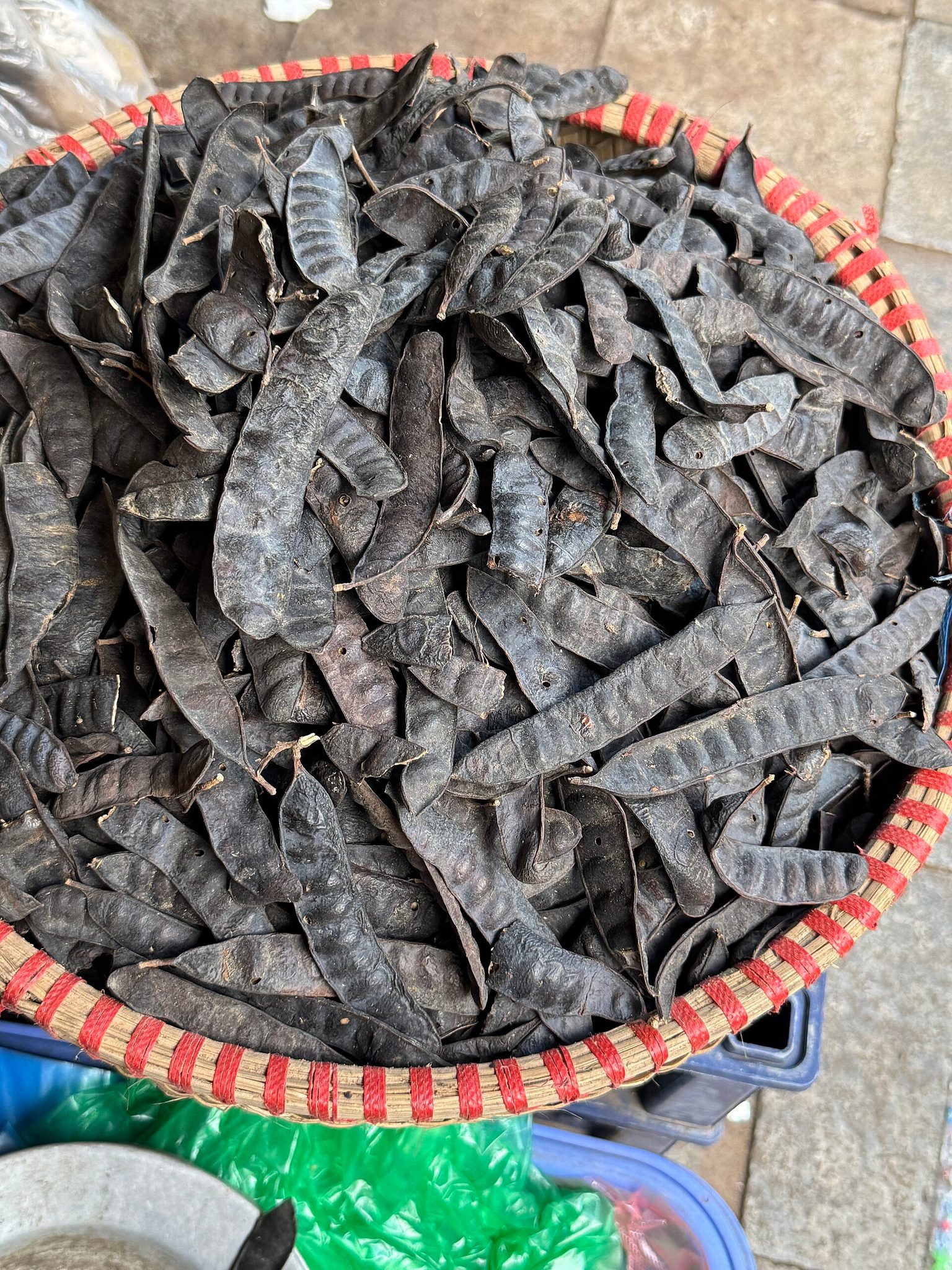
Photo: Newone / Wikimedia Commons, CC BY-SA 4.0
Bookings and booking channels
Use one main booking channel (messaging, a social page or a booking app) and one shared schedule for the whole shop. Leave a 15-minute buffer between clients on the same bed. Pin the shop on online maps and ask clients for reviews after their session; real photos of a clean wash room persuade more than stock images.
Staff
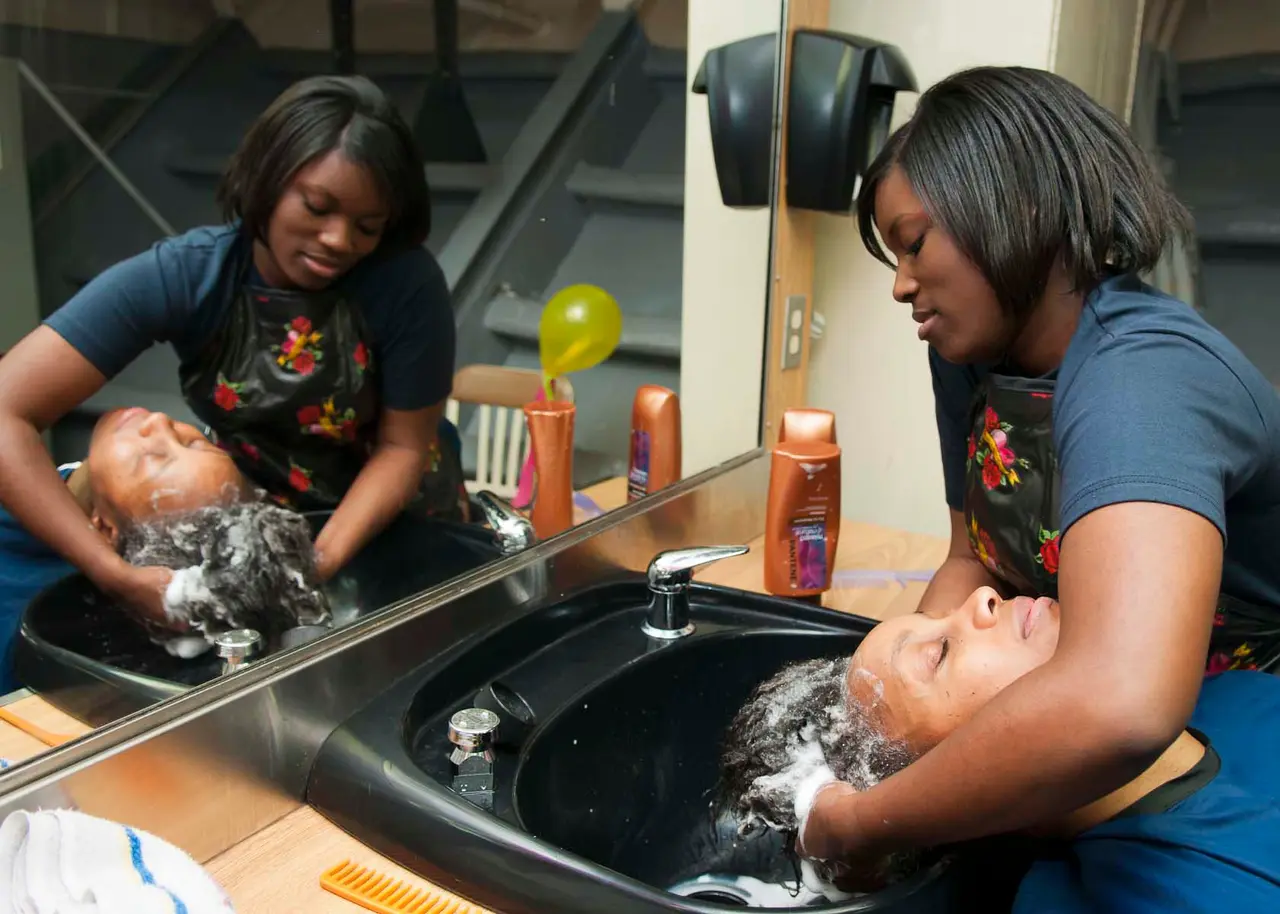
New therapists should do a trial session on the owner, who rates their pressure and water temperature. Make shift duties clear: who washes towels, who brews the herbs, who switches off the water heaters at closing (Figure 4).
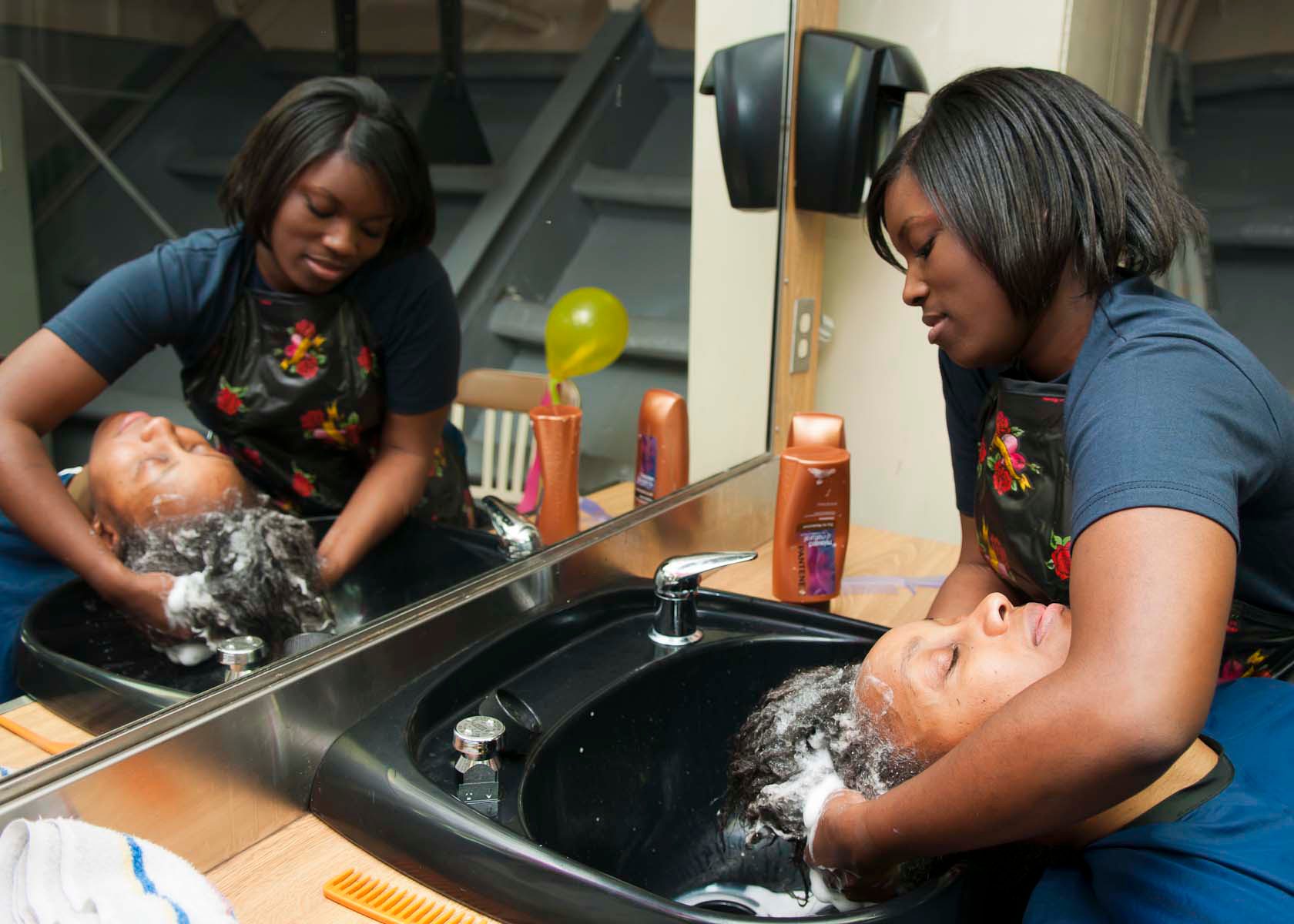
Photo: Official Navy Page from United States of America Mass Communication Specialist Seaman/U.S. Navy / Wikimedia Commons, Public domain
Common mistakes when opening a head spa shop
Spending everything on decor
Sign: a beautiful shop that cannot pay rent by month two. Cause: no cash reserve. Fix: keep at least two months of fixed costs in reserve before spending on decoration.
Not enough hot water at peak times
Sign: the third client in a row gets rinsed with lukewarm water. Cause: the tank is too small or shared by several beds. Fix: size hot water for the number of sessions at peak hours, stagger bookings, and ask a plumber to upgrade the system.
Copying the shop next door's prices
Sign: busy every day but no profit at the end of the month. Cause: prices not based on your own costs. Fix: recalculate the direct cost and the fixed-cost share per client as in the example, then adjust prices or package durations.
Promising cures
Sign: adverts saying "cures insomnia, ends headaches, treats hair loss". Cause: trying to attract clients. Fix: advertise relaxation, cleanliness and fragrance only; advise clients with heavy hair loss or long-lasting headaches to see a doctor.
Frequently asked questions
How much capital do I need to open a head spa shop?
For 2026 in Vietnam, roughly: one bed at home about 30–70 million VND; a two-bed shop about 110–230 million VND including the deposit and reserve; a four-bed shop about 210–480 million VND. The real figure depends on the rent and how much renovation the premises need.
What is a reasonable head spa price list?
Common ranges are about 70,000–150,000 VND for a basic package, 150,000–250,000 VND for 60 minutes and 250,000–450,000 VND for 90 minutes (2026 reference, by area). A reasonable price covers the direct cost per client and its share of fixed costs, and still leaves a profit.
How much space does a wash room need?
Each bed needs about 4–6 m² including the therapist's seat and walkway; a two-bed shop needs about 20–30 m² in total, including reception and the laundry area.
Do I need a vocational certificate to open a shop?
A certificate builds client trust and gives staff a common standard; mandatory paperwork depends on the type of service and current rules, so ask the local business registration office.
How long does it take to pay back?
In the two-bed example, at 8 clients a day the money spent comes back in about 10 months. Fewer clients or higher rent means longer; redo the calculation with your own figures.
Practice and self-assessment
- Survey 3 head spa shops in the area where you plan to open: prices, duration, busy hours, strengths and weaknesses.
- Draw up a start-up budget for your shop using the example, with at least 2 real quotes for wash beds and water heaters.
- Calculate your average price, clients per day to break even and months to pay back.
- Draw a dimensioned floor plan: beds, sockets, water heaters, drains, laundry area.
Self-assessment criteria
- Pass: the budget includes a reserve of at least two months of fixed costs, and the lines add up to the total.
- Pass: every package price is higher than the direct cost plus the fixed-cost share per client.
- Pass: the plan clearly shows residual current protection for the wet area and sockets placed away from taps.
- Not yet: no reserve, prices copied from another shop, or adverts promising cures.
This is the last step of the roadmap. To keep growing, run through the full 60-minute routine every week, collect client feedback cards to fine-tune pressure and water temperature, track monthly revenue by package, and only then think about adding beds or services such as basic facial care.
Review the head spa trade: from hygiene and electrical-water safety, herbs, the wash routine and head, neck and shoulder massage to designing service packages and opening a shop. See the 8-step head spa therapist roadmap.