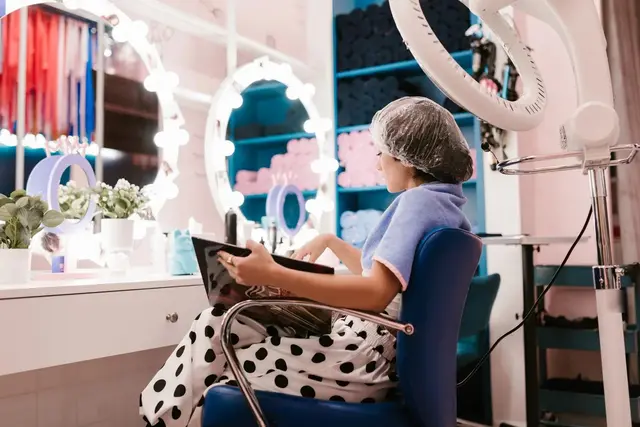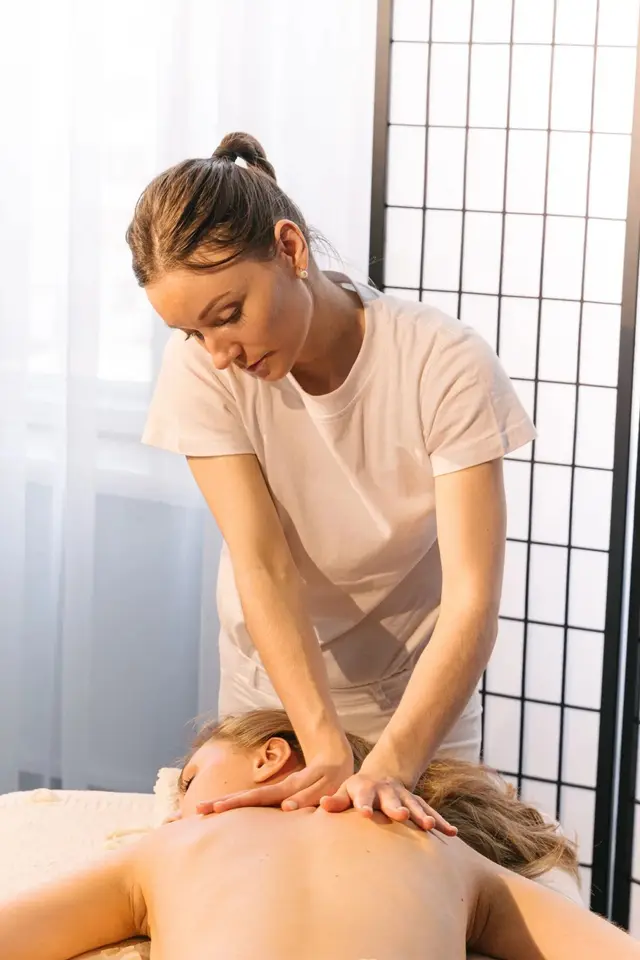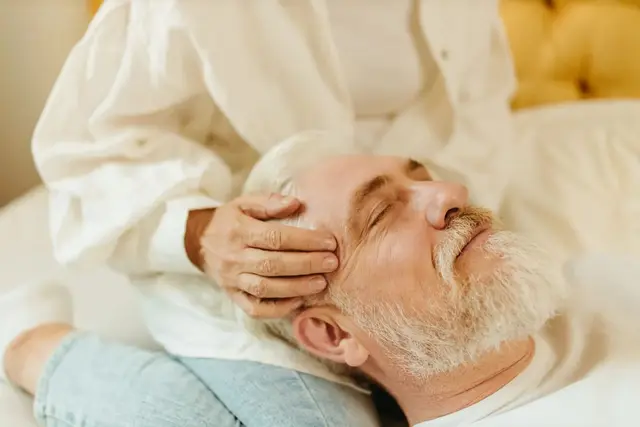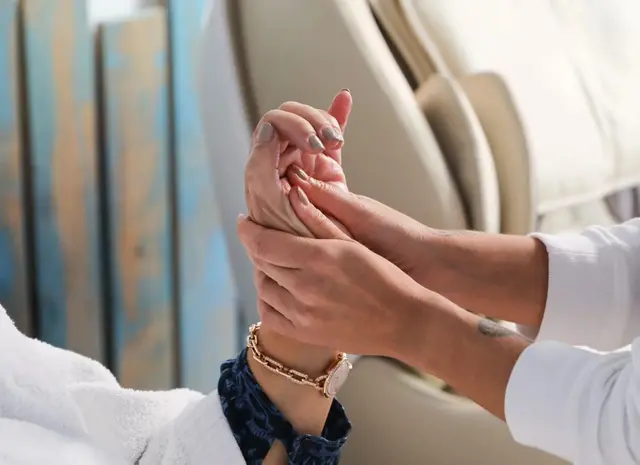
A Vietnamese head spa (goi dau duong sinh) is a roughly 60-minute service that combines a light face cleanse, scalp, neck and shoulder massage, a hair wash, a conditioning treatment and a blow-dry; a beginner usually needs about 10 timed practice sessions on a model before working on real clients under a senior therapist's supervision. The hard part is not remembering the order of the steps. It is turning three things into reflexes: testing for warm 37–39°C water on the inside of your wrist, keeping your hand pressure even, and pacing yourself so the steps add up to exactly 60 minutes. This lesson gives you a 10-session practice schedule, a timing sheet, a way to train hand pressure with a kitchen scale and a 100-point scoring sheet.
By the end of this lesson, you will be able to:
- Set up the shampoo bed, towels and water in 10 minutes or less, and judge water temperature with your wrist to within 1°C of a thermometer.
- Deliver the full 60-minute head spa routine in 10 steps, with each step no more than 2 minutes off the timing sheet.
- Hold three pressure levels (light, medium, firm) steadily, checked on a digital scale and on the client's 0–10 scale.
- Recognise 7 situations in which the session must be postponed or adjusted, and give the right aftercare advice.
- Score a practice session with a 100-point sheet and know which mistakes are automatic fails.
Want to learn head spa with a mentor and a certificate? The NAMBIN course Spa Therapist Level 1 – Trainee covers infection control, contraindications, working posture and core techniques such as massage, head spa and basic facials, with a quiz for every module.
Why beginners need their own practice plan
Trainees who memorise the steps and go straight to clients tend to make the same mistakes: water that swings from hot to cold, foam running into ears, shoulder massage that is too hard, and a session that drags on to 75 minutes and throws the whole shift off schedule. The full procedure is described in 60-minute therapeutic head wash: a 9-step procedure and contraindications; this lesson focuses on how to practise until your hands are consistent.
Head spa is care, not treatment
The service is about cleansing, relaxation and care. Do not tell clients that a head spa cures insomnia, headaches or neck degeneration. If a client has frequent headaches or long-term sleep problems, the right answer is: "A head spa will help you relax, but for headaches or poor sleep that go on for a long time, please see a doctor to find the cause." Holding this line while you are still learning means you will never accidentally make false claims later.
Practise with numbers
Water, pressure and timing cannot be learned by reading. They only become reflexes when you repeat them and measure the result, so every practice session below has a number to check.
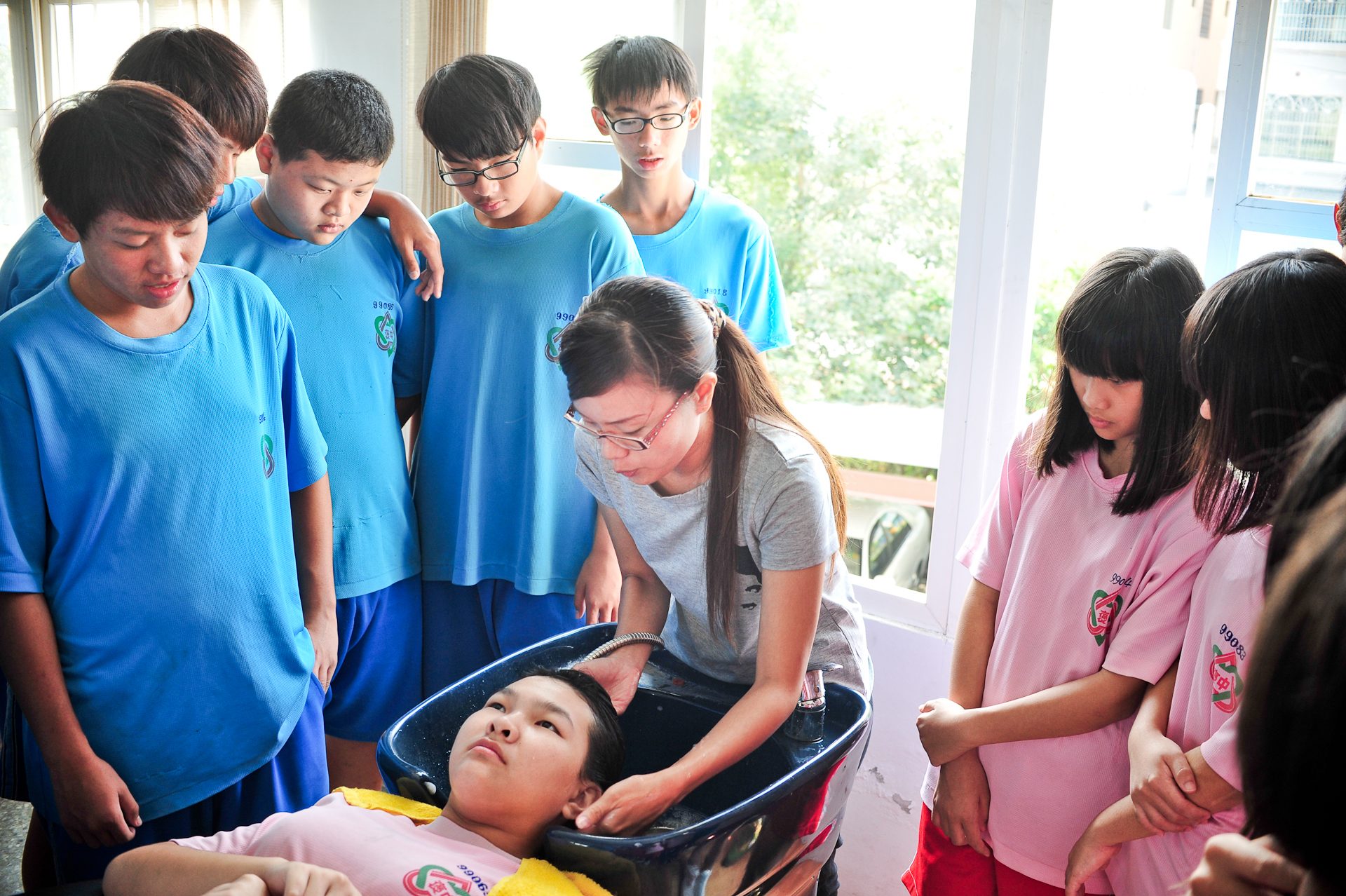
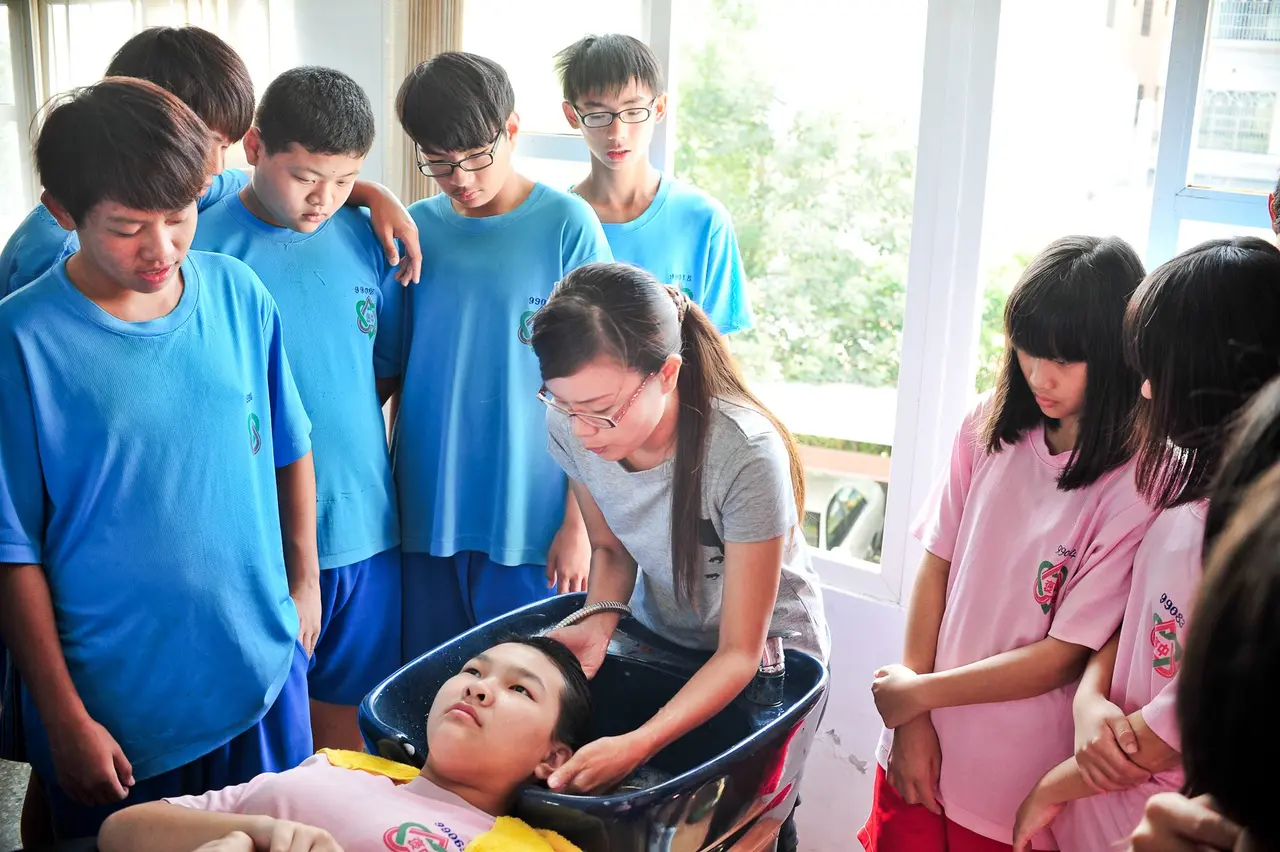
Photo: 褒忠國中 雲端網 / Wikimedia Commons, CC BY 2.0
Preparing the practice station, model and tools
Practise on a real shampoo bed at the spa outside client hours, with an instructor present. As in Figure 1, your model is a classmate or a family member lying in the same position as a client. Never practise on a paying client.
Shampoo bed and water supply
- The basin is clean, the hair trap is emptied, the neck rest has a silicone pad or a thick folded towel so the neck does not press on the ceramic edge, and there is a cushion under the knees.
- The water heater and hair dryer are plugged into sockets protected by a residual current device (RCD); no cable runs through the splash zone; the floor is dry with a non-slip mat.
Tools just for practice
- A water thermometer (stick or digital type), around 50,000–150,000 VND (roughly USD 2–6), 2026 reference prices that vary by area.
- A 5 kg digital kitchen scale, around 150,000–250,000 VND, for pressure training.
- A stopwatch kept away from the splash zone, and a printed timing sheet with the 10 steps.
- For each round: 1 neck towel, 2 hair towels, 1 face towel and 1 spare warm towel; face cleanser, massage cream, shampoo and conditioner within their expiry date; a disinfected comb.
Your hands
Keep nails cut short, remove rings and bracelets, and wash your hands in 6 steps before touching the model. Hygiene for hands, towels and the shampoo bed must be exactly the same as with real clients; review cleaning and disinfecting spa tools and treatment rooms if you are not yet confident.
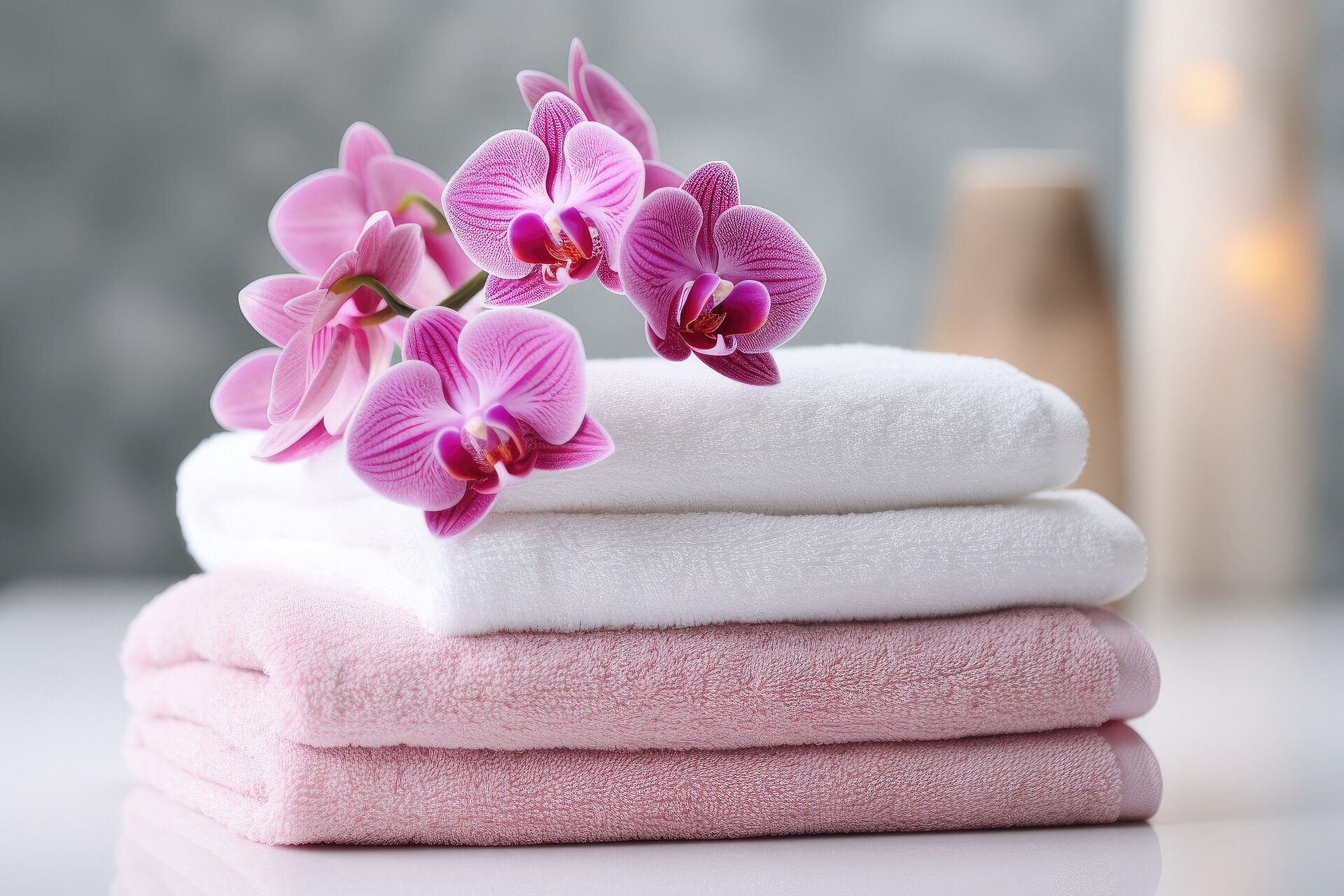
Photo: Tim Reckmann from Hamm, Deutschland / Wikimedia Commons, CC BY 2.0
A 10-session head spa practice schedule
Each session lasts 90–120 minutes: review what you learned last time, then train one new skill. At 3–4 sessions a week you finish in about 3 weeks. If you miss a session's target, repeat that session.
| Session | Main skill | Pass target |
|---|---|---|
| 1 | Setting up the bed and tray; testing water with the wrist, then checking with a thermometer | Set-up in 10 minutes or less; 5 guesses in a row within 1°C |
| 2 | Health form questions, getting the model onto the bed, positioning, covering the ears | All 5 questions in 3 minutes or less; neck on the pad, chin not tilted high |
| 3 | Three pressure levels on a digital scale | Hold each level for 30 seconds inside its range |
| 4 | Five scalp massage moves on dry hair | 10 minutes non-stop at about 1 circle per second, no nails on the skin |
| 5 | Wetting, first wash, second wash, rinsing | No water in ears or eyes; nape rinsed free of foam |
| 6 | Neck and shoulder massage, pointing out the no-press zones | Names all 4 no-press zones; model rates pressure 3–5 out of 10 |
| 7 | Face cleanse and light face massage | Done in 8 minutes, no cream on the hairline or eyes |
| 8 | Conditioning, final rinse, towel wrap, helping the model sit up, blow-dry | Hair roots at the nape and behind the ears completely dry by touch |
| 9 | The full routine, timing every step | All 10 steps completed, actual times recorded |
| 10 | A dress rehearsal scored by the instructor | 80/100 or more with no automatic fail |
Session 1: turning your wrist into a thermometer
Shampoo water should feel pleasantly warm, about 37–39°C, close to or slightly above body temperature. Ask a classmate to set the water anywhere between 34 and 42°C. Hold the inside of your wrist in the stream, guess the temperature, then read the thermometer. Do 10 rounds and note the difference each time. When 5 guesses in a row are within 1°C, your wrist is reliable. Water above 40°C reddens the scalp and can make a client with unstable blood pressure feel faint.
Session 3: training pressure on a kitchen scale
Put the scale on a table and lay a folded towel over it to mimic soft tissue. Press down with the pads of your fingertips, hold, and watch the reading. These numbers are only for training consistency, not a medical standard; on a real person the client's feedback always has the final say.
- Light (about 0.5–1 kg): temple circles, face strokes, the area behind the ears.
- Medium (about 1–2 kg): scalp circles, holding presses along the midline of the head.
- Firm (about 2–4 kg): kneading the upper shoulder muscles, only when the client wants it and rates it 5 out of 10 or less.
Hold each level for 30 seconds without the reading leaving its range, then close your eyes, press again and check. On a model, ask for a rating from 0 to 10 (10 means unbearable pain) and stay at 3–5.
Timing sheet: the 60-minute head spa routine
From session 9 onwards, practise against the table below. The steps add up to 5 + 3 + 8 + 5 + 10 + 3 + 12 + 3 + 8 + 3 = 60 minutes. Your spa may add a foot soak or leave out the face cleanse; if so, re-add the table to match the package.
| Step | What you do | Minutes | Running total |
|---|---|---|---|
| 1 | Welcome the client, go through the health form, store personal items | 5 | 5 |
| 2 | Help the client onto the bed, neck towel, positioning, test the water | 3 | 8 |
| 3 | Face cleanse and light face massage (if included) | 8 | 16 |
| 4 | Wet the hair, first wash | 5 | 21 |
| 5 | Second wash with scalp massage | 10 | 31 |
| 6 | Rinse thoroughly, especially the nape and behind the ears | 3 | 34 |
| 7 | Conditioning treatment under a warm towel, neck and shoulder massage | 12 | 46 |
| 8 | Final rinse, blot with a towel, wrap the hair | 3 | 49 |
| 9 | Help the client sit up slowly, blow-dry | 8 | 57 |
| 10 | Offer water, ask for feedback, aftercare advice, client record | 3 | 60 |
Time checkpoints to memorise
You do not need to remember the whole table while working. Learn three checkpoints: minute 16 start wetting the hair, minute 34 start the conditioning treatment, minute 49 help the client sit up. If you are more than 3 minutes behind at a checkpoint, shorten the next step, but never cut the rinse or drying the nape.
Checks while you work
- Step 2: ask "Is the water temperature comfortable?" on the very first rinse and note the preference on the form.
- Step 5: turn the water down while massaging; as in Figure 3, your other hand shields the face and ears.
- Step 9: the client sits on the edge of the bed for 30–60 seconds before moving to the drying chair.
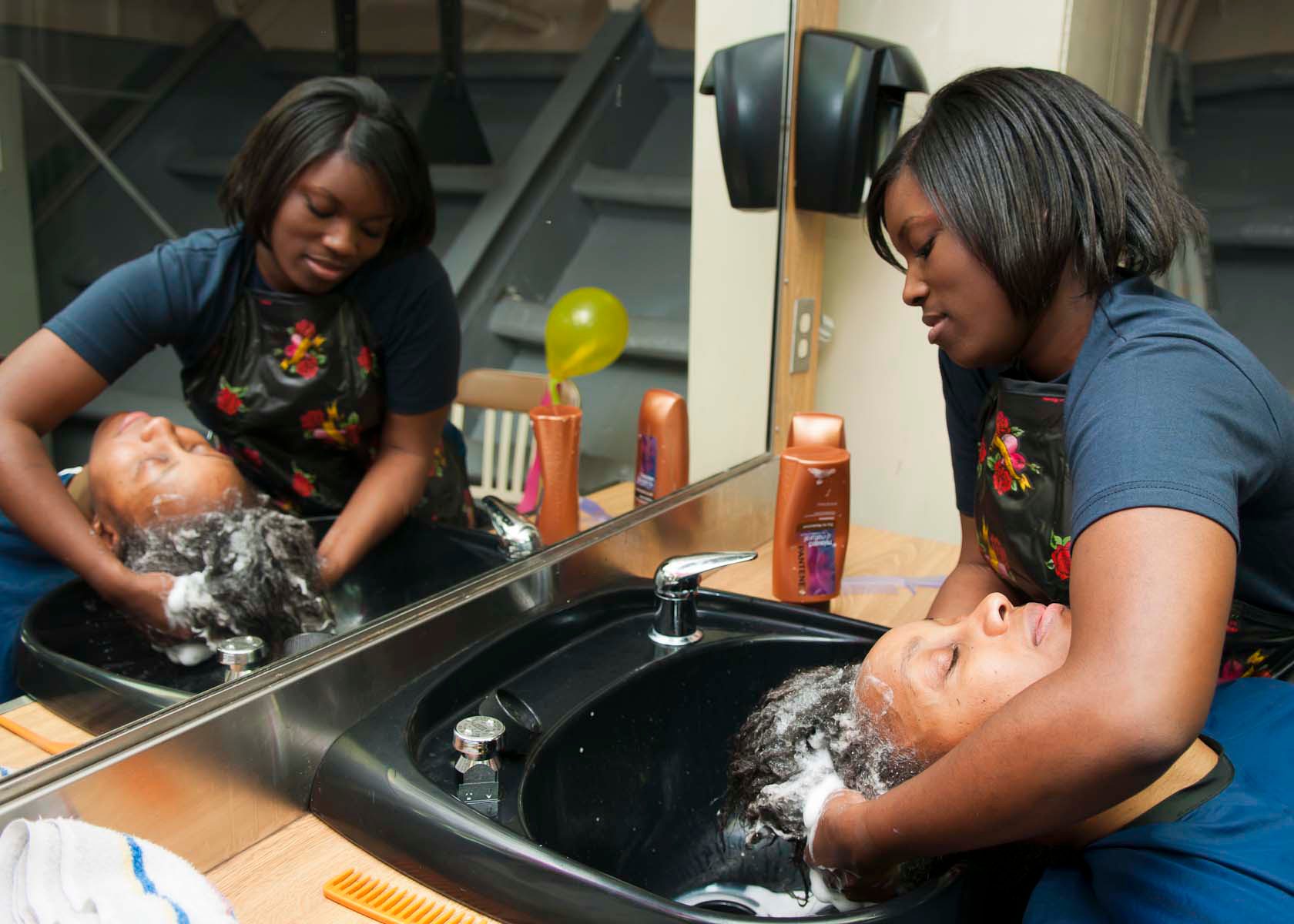
Photo: Official Navy Page from United States of America Mass Communication Specialist Seaman/U.S. Navy / Wikimedia Commons, Public domain
Hand techniques that need the most practice
Massage takes up 30 minutes of the timing sheet (8 minutes on the face, 10 on the scalp, 12 on the neck and shoulders), and it is where clients judge your skill most clearly. If you have studied Swedish massage and its 5 basic strokes, you will recognise the stroking, kneading and gliding here in miniature.
Scalp massage: move the skin over the skull
As in Figure 4, place your fingertips on the scalp and make small circles 1–2 cm across, 3–5 circles per spot, then move on. You are sliding the scalp over the skull, not scrubbing the hair. Follow three lines: the middle of the head from the front hairline to the crown, both temples up to the crown, and behind the ears down to the nape. Finish by spreading your fingers like a comb and stroking from the forehead to the nape 5–6 times.
Neck and shoulders: work on muscle, avoid the danger zones
With the client lying down, slide both hands under the nape, place your fingertips on the muscle bands either side of the spine and draw gently towards the crown; the pressure comes from the weight of the client's own head. On the shoulders, stroke with the palm from the nape to the shoulder tip, then knead the muscle (never pinch the skin). Four zones you never press: both sides of the front of the neck below the jaw angle (where you feel a pulse), the throat, the bony points in the middle of the nape, and right against the bone behind the ears. Never crack or quickly twist the neck.
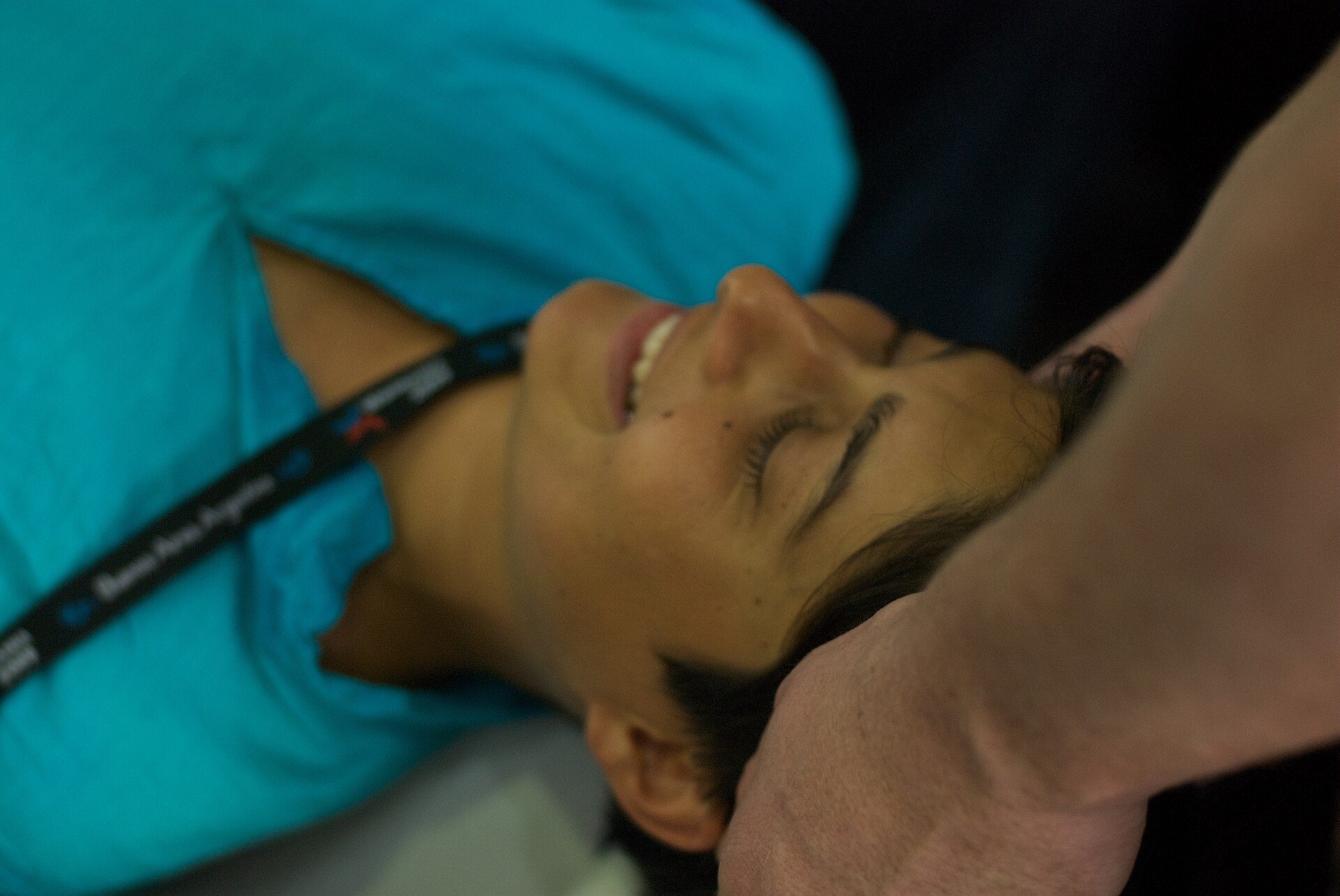
Photo: Wikimania2009 Beatrice Murch / Wikimedia Commons, CC BY 3.0
Who must be postponed or adjusted
Even when practising on a classmate, go through the health form exactly as with a real client to build the habit. Ask specific questions: "When did you last eat?", "Are you taking blood pressure medication?", "Has your neck been painful lately, or your arms tingling?". How to ask and record everything is covered in spa client consultation and health forms.
| Situation | Why to be careful | What a trainee does |
|---|---|---|
| High or low blood pressure that is not under control, frequent dizziness | Tilting the head back, warm water and sitting up fast can cause fainting | If the client is unsure how they are today, postpone and tell the shift lead; use moderate warmth and help them sit up slowly |
| Neck injury, neck pain spreading to the arm, recent head or neck surgery | The reclined position and neck massage can make it worse | Skip the neck massage and wash gently with a raised cushion, or decline and suggest asking a doctor |
| Wounds, stitches, scratches or pus spots on the scalp | Water, shampoo and friction hurt and risk infection | Avoid a small area; for a large wound, do not proceed and suggest seeing a doctor |
| Scalp fungus, thick scales, patchy hair loss, lice | Can spread through towels, combs and the neck rest | Do not wash, do not diagnose; tactfully suggest a dermatologist; disinfect everything touched |
| Fever, cold or flu, under the influence of alcohol | Easy to faint, hard to judge sensation, easy to spread illness | Postpone and book another day |
| Pregnancy | Lying on the back for long can cause discomfort and dizziness | Follow spa policy; shorten time lying down, add cushions, avoid firm pressure on the shoulders, check in often |
| Ate a full meal within about 1 hour | Lying back and shoulder pressure can cause bloating or nausea | Ask the client to rest and wash later; note the new time |
Safety warning: always run the water into the basin and test it on your wrist before pointing the shower head at the client — water from an electric heater can suddenly turn hot when someone else opens a tap. Never press the sides of the front of the neck, and never crack or twist a client's neck. If a client feels dizzy during the wash: turn off the water, wrap the hair, lift the head off the neck rest, do not hurry them to stand, and tell the shift lead. If the client has slurred speech, weak limbs, a drooping face, blurred vision or a sudden severe headache, call emergency services (115 in Vietnam) immediately.
Worked example: practice session 9 for trainee Ha
Ha, 20, is a trainee at a small spa in Thanh Xuan district, Hanoi. In session 9 she runs the full routine on a 32-year-old colleague with waist-length hair and no contraindications on the form. A classmate times every step.
Actual timing against the sheet
| Step | Target (min) | Ha's time (min) | Difference |
|---|---|---|---|
| 1. Health form | 5 | 6 | +1 |
| 2. Positioning, water test | 3 | 4 | +1 |
| 3. Face cleanse and massage | 8 | 10 | +2 |
| 4. First wash | 5 | 6 | +1 |
| 5. Second wash + scalp massage | 10 | 9 | −1 |
| 6. Rinse | 3 | 4 | +1 |
| 7. Conditioning + neck and shoulders | 12 | 12 | 0 |
| 8. Final rinse, towel wrap | 3 | 4 | +1 |
| 9. Sitting up, blow-dry | 8 | 11 | +3 |
| 10. Aftercare, record | 3 | 3 | 0 |
| Total | 60 | 69 | +9 |
Check: 6 + 4 + 10 + 6 + 9 + 4 + 12 + 4 + 11 + 3 = 69 minutes; the differences add up to +1 +1 +2 +1 −1 +1 + 0 +1 +3 + 0 = +9 minutes, matching 69 − 60.
What went wrong and how to fix it
- Drying (+3 min): she dried the ends first and the nape stayed wet, so she had to dry it again. Fix: dry the roots at the nape and behind the ears first; with long hair, blot more thoroughly in step 8.
- Face cleanse (+2 min): she had to turn away to fetch cotton pads. Fix: check the tray against the list before the model lies down.
- +1 minute on 6 steps: she kept glancing at her phone. Fix: only look at the clock at the three checkpoints, minutes 16, 34 and 49.
- Second wash (−1 min): she rushed to make up time and cut the scalp massage, the part clients notice most. Do not cut it.
Result in session 10
After these fixes Ha finishes session 10 in 64 minutes, still a little slow on drying long hair. The instructor scores her with the sheet below: set-up 9, health form and safety 15, water temperature 10, scalp massage 12, neck and shoulders 13, washing and rinsing 8, drying 8, timing 6, hygiene 3. Total 9 + 15 + 10 + 12 + 13 + 8 + 8 + 6 + 3 = 84/100 with no automatic fail, so she passes and may work on real clients with a senior therapist beside her.
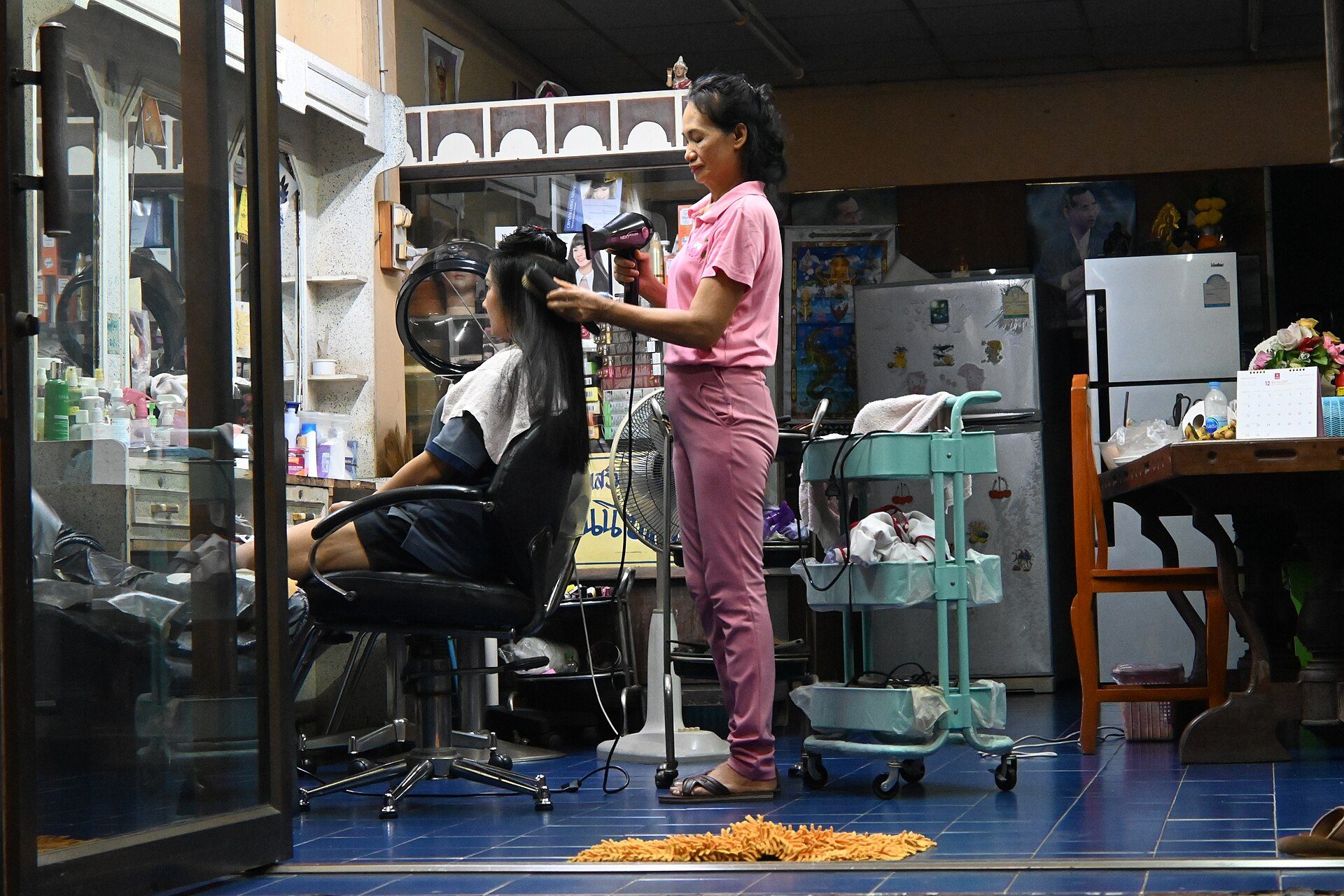
Photo: PattayaPatrol / Wikimedia Commons, CC BY-SA 4.0
A 100-point scoring sheet
Use it from session 9 onwards; ask a classmate or the instructor to score you.
| Item | Maximum | Full marks when |
|---|---|---|
| Set-up of bed, tray and towels | 10 | 10 minutes or less, never leaving the model to fetch something |
| Health form and safe positioning | 15 | All 5 questions, scalp checked in 3 places, neck on the pad |
| Water temperature | 10 | Tested before rinsing, a finger always in the stream, model never says too hot or cold |
| Scalp massage | 15 | Fingertip pads, all 3 lines, even rhythm, no nails on the skin |
| Neck and shoulder massage | 15 | No contact with no-press zones, pressure 3–5/10, constant contact |
| Washing and rinsing | 10 | No water in ears or eyes; nape and behind the ears free of foam |
| Drying | 10 | Dryer 15–20 cm from the hair, nape roots fully dry |
| Timing | 10 | 58–62 minutes: 10 points; 55–57 or 63–65 minutes: 6 points; otherwise 0 |
| Cleaning the shampoo bed afterwards | 5 | Hair trap emptied, basin washed, neck rest disinfected, towels in a lidded basket |
| Total | 100 | Pass: 80 or more and no automatic fail |
Automatic fails: one of these means not yet passed
- Running water onto the model's head before testing the temperature.
- Pressing or circling on the sides of the front of the neck, or cracking or twisting the neck.
- Skipping the health form, or finding a contraindication and carrying on as normal.
- Letting the model stand up immediately after sitting up from the shampoo bed.
Aftercare advice and common beginner mistakes
Keep the advice short and plain, and never promise any medical effect.
Three things to tell the client
- "Please sit for 1–2 minutes before standing up, and have another glass of warm water."
- "If you wash your hair again at home tonight, dry it fully before going to bed; do not sleep with wet hair."
- "If you go out into the wind or into an air-conditioned room, wear a hat or a scarf to keep the back of your neck warm."
Common mistakes: sign → cause → fix
- The client says the neck aches mid-session → the nape rests on the basin edge or the chin is tilted too high → add a folded towel to the neck rest and move the client up so the nape sits on the pad.
- Water runs into the ear → rinsing behind the ear without covering it → cup your palm over the ear and aim the water from front to back.
- The client grimaces or holds their breath during shoulder kneading → pressure above 5/10 → ease off, ask again, go back to palm strokes.
- Hands leave the client suddenly between moves → watching the clock while working → keep one hand on the head or shoulder at all times and only check the time at the three checkpoints.
Frequently asked questions
How long does it take to learn Vietnamese head spa?
If you already know hygiene and contraindications, about 10 practice sessions (around 3 weeks) are enough to complete the 60-minute routine to the scoring standard, followed by 2–4 weeks on real clients under a senior therapist. When choosing a school, ask how many hours of hands-on practice on models are included.
Is a Vietnamese head spa good for you?
For people without contraindications, it cleans the hair and scalp and relaxes the head, neck and shoulders after work. It is a care and relaxation service, not a treatment for headaches, insomnia or neck problems. People with health conditions should ask a doctor first.
What are the steps of the 60-minute routine?
There are 10: health form (5 minutes), positioning and water test (3), face cleanse and massage (8), first wash (5), second wash with scalp massage (10), rinse (3), conditioning with neck and shoulder massage (12), final rinse (3), blow-dry (8), aftercare and record (3). Total: 60 minutes.
Can I practise at home?
At home you can train pressure on a scale, practise scalp massage on dry hair and test water with your wrist. The wet part should be practised on a proper shampoo bed with RCD protection and an instructor present.
Practice assignment and next step
Check yourself before asking to work on real clients; each item is either pass or not yet.
- Pass: 5 wrist water tests in a row within 1°C of the thermometer. Not yet: any guess 2°C or more off.
- Pass: all three pressure levels held for 30 seconds within their ranges on the scale. Not yet: the reading leaves the range.
- Pass: two consecutive rehearsals finished in 58–65 minutes. Not yet: any session over 65 minutes.
- Pass: you point to all 4 no-press zones on a model's neck and name all 7 situations for postponing or adjusting. Not yet: one zone or one situation missing.
- Pass: 80/100 or more on the scoring sheet with no automatic fail. Not yet: under 80 or any automatic fail.
Once you pass all five, you have the head, neck and shoulder part of the "60-minute relaxing body massage" step on the roadmap. The next step is "Level 1 complete – Spa trainee": review hygiene and contraindications and pass the quizzes for your trainee certificate, then move on to "Basic facial care" at Level 2.
Ready to learn properly? Enrol in Spa Therapist Level 1 – Trainee to cover safety, hygiene, contraindications and core techniques (massage, head spa, basic facials), take a quiz for each module and earn a certificate when you finish.