A battery electric vehicle (BEV) is built around five main blocks: the high-voltage battery, the inverter, the electric motor with its reduction gear, the on-board charger (OBC) and the DC/DC converter that steps down to 12 V, plus the cooling system and control computers. A conventional hybrid (HEV), such as Toyota's hybrid models, has a small battery, a petrol engine and two motor-generators, and is never plugged in; a plug-in hybrid (PHEV) has a larger battery, a charging port and an OBC, so it carries the parts of both a petrol car and an electric car. That is why the three types are serviced differently: a BEV such as a VinFast or BYD has no engine oil, but it does have battery coolant, reduction gear oil and software that all need checking.
By the end of this lesson, you will be able to:
- Tell BEVs, HEVs and PHEVs (and 48 V mild hybrids) apart by what you can see when a car arrives at the workshop: charging port, exhaust pipe, badges, READY light.
- Draw the block diagram of battery, junction box, inverter, motor, OBC and DC/DC, and show which way energy flows when driving, charging and braking.
- Explain regenerative braking, estimate the energy recovered in one stop and describe how it changes brake servicing.
- List the service items that differ between a Toyota hybrid, a PHEV and a VinFast or BYD BEV, with time totals that add up.
Learning to become an EV technician? BEV, HEV and PHEV architecture is step 2 of the roadmap, right after high-voltage safety and before batteries, BMS, motors and inverters. See the 8-step EV technician roadmap to learn in the right order.
Three kinds of electrified car: how BEV, HEV and PHEV differ
A technician must name each type correctly, because each has its own high-voltage system, isolation procedure and service schedule. Two questions sort them: does the car have a petrol engine, and can the battery be charged from the grid?
BEV: battery electric vehicle
A BEV runs only on its battery. It has no petrol engine and no exhaust pipe, and all its energy comes from the grid through the charging port. VinFast's VF models and most BYD cars sold in Vietnam belong to this group. The battery is large, from around 20 kWh in small cars to more than 80 kWh in large SUVs, usually at about 400 V and in some models about 800 V.
HEV: conventional hybrid, no plug
An HEV uses a petrol engine as its main energy source, plus a small battery (usually under 2 kWh) and an electric motor. The battery is charged only by the engine and by regenerative braking. Toyota's hybrids (the HEV versions of the Corolla Cross, Camry, Yaris Cross and others) are the familiar example. Hybrid battery voltage is lower than a BEV's, typically a few hundred volts, but it is still high voltage and can kill.
PHEV: plug-in hybrid
A PHEV has both a petrol engine and a battery big enough (often around 10–30 kWh) to drive a few tens of kilometres on electricity alone, plus a charging port and an OBC. BYD sells PHEVs using its DM-i system, and many European and Japanese brands offer plug-in versions.
48 V mild hybrids
A mild hybrid (MHEV) uses a 48 V system with an integrated starter-generator that only assists the petrol engine; it cannot drive on electricity alone. 48 V is below the high-voltage threshold, but the currents are large and can still cause burns and arcs.
| Type | Petrol engine | Plug-in charging | Battery (reference) | How to spot it in the workshop |
|---|---|---|---|---|
| BEV | No | Yes (AC and DC) | About 20–100 kWh, 400 or 800 V | No exhaust, no fuel flap, has a charging port |
| HEV | Yes | No | Usually under 2 kWh, a few hundred volts | Exhaust, fuel flap only, Hybrid badge, READY light |
| PHEV | Yes | Yes (mostly AC, some also DC) | About 10–30 kWh | Exhaust, both a fuel flap and a charging port |
| MHEV 48 V | Yes | No | Small 48 V battery | 48 V or mild hybrid badge, no separate READY light |
The BEV block diagram: where the energy goes
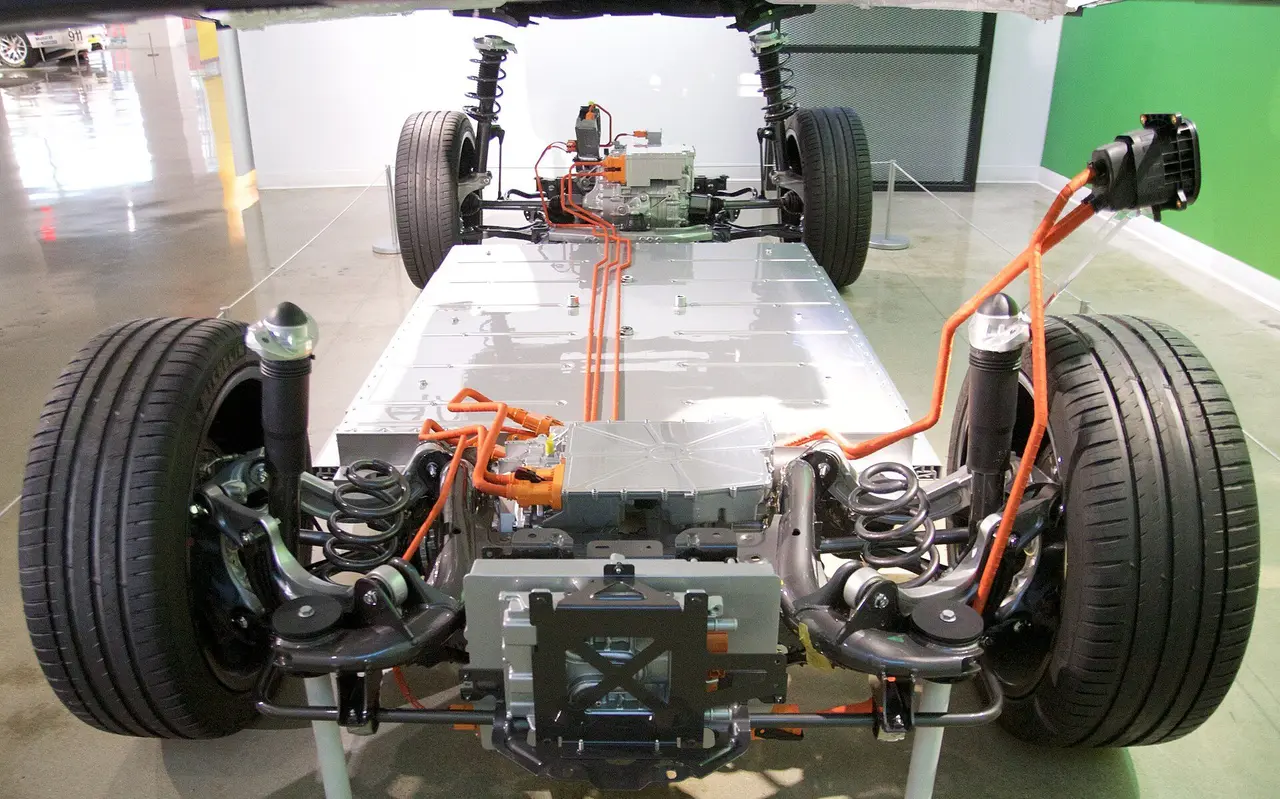
Look at a BEV chassis (Figure 1) and you will see the battery as a flat block under the floor, between the axles. Orange cables run from the battery to the power electronics and the drive unit. Learn the block diagram below by heart before studying each part in depth.
- High-voltage battery: many cells grouped into modules, modules grouped into a pack, monitored by the BMS. The battery supplies direct current (DC).
- High-voltage junction box (often called the PDU): holds the contactors (main relays), the pre-charge circuit and high-voltage fuses. When the car is switched off, the contactors open and cut the battery off from everything else.
- Inverter: turns the battery's DC into variable-frequency three-phase AC to spin the motor; under braking it works the other way round.
- Electric motor and reduction gear: the motor spins very fast, and a single-speed reduction gear lowers the speed, raises torque and drives the half-shafts.
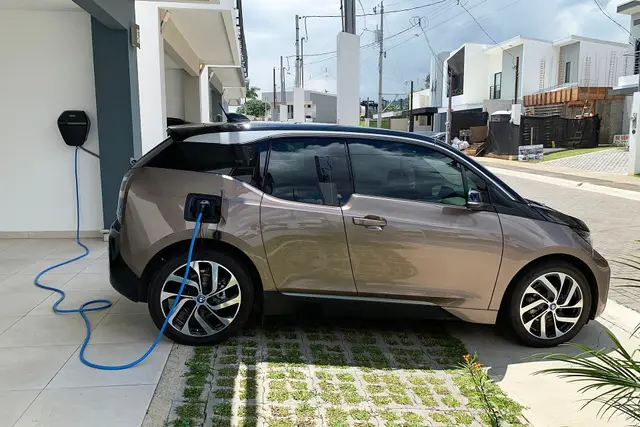
- On-board charger (OBC): converts AC from a wallbox into DC to charge the battery. DC fast charging goes straight to the battery through its own contactors, bypassing the OBC.
- DC/DC converter: steps high voltage down to about 12–14 V to charge the 12 V battery and power lights, screens and ECUs. It replaces the alternator of a petrol car.
- High-voltage auxiliaries: the electric A/C compressor and the heater or heat pump, which draw power straight from the battery.
The drive unit: motor, inverter, reduction gear
On many newer cars the motor, reduction gear and inverter are combined into one assembly called an electric drive unit or e-axle. Figure 2 shows one at the rear axle: the power electronics housing on top, the motor in the middle and the reduction gear next to the half-shaft.
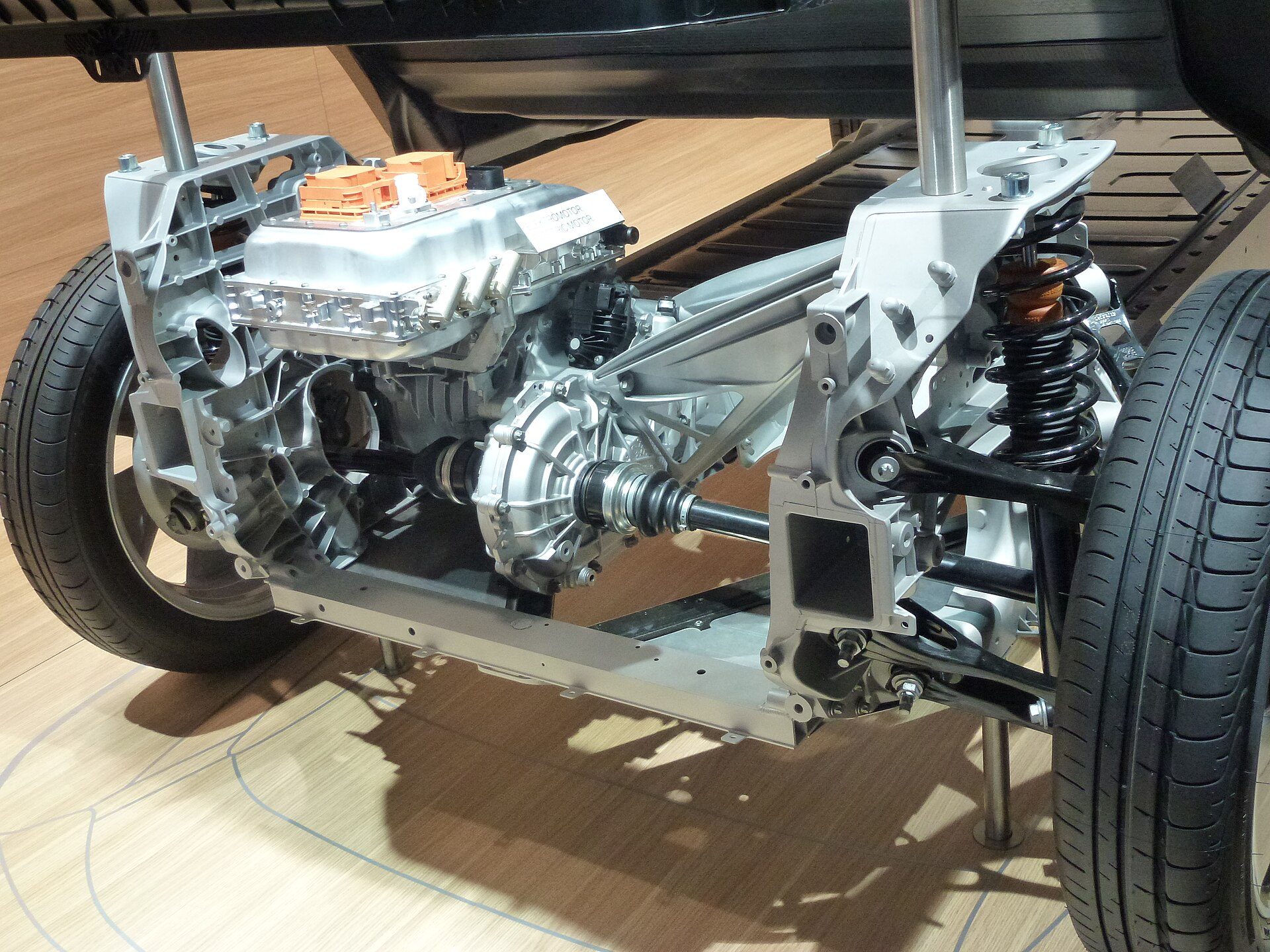
Photo: RudolfSimon / Wikimedia Commons, CC BY-SA 3.0
The inverter: the heart of motor control
The inverter uses power semiconductor switches (IGBT or SiC) that switch thousands of times a second to create three-phase current. Changing the frequency changes motor speed; changing the current changes tractive force. The inverter gets very hot, so it has a coolant loop of its own or one shared with the motor (Figure 3). Inside are large capacitors, which is why step 1 makes you wait for them to discharge before measuring.
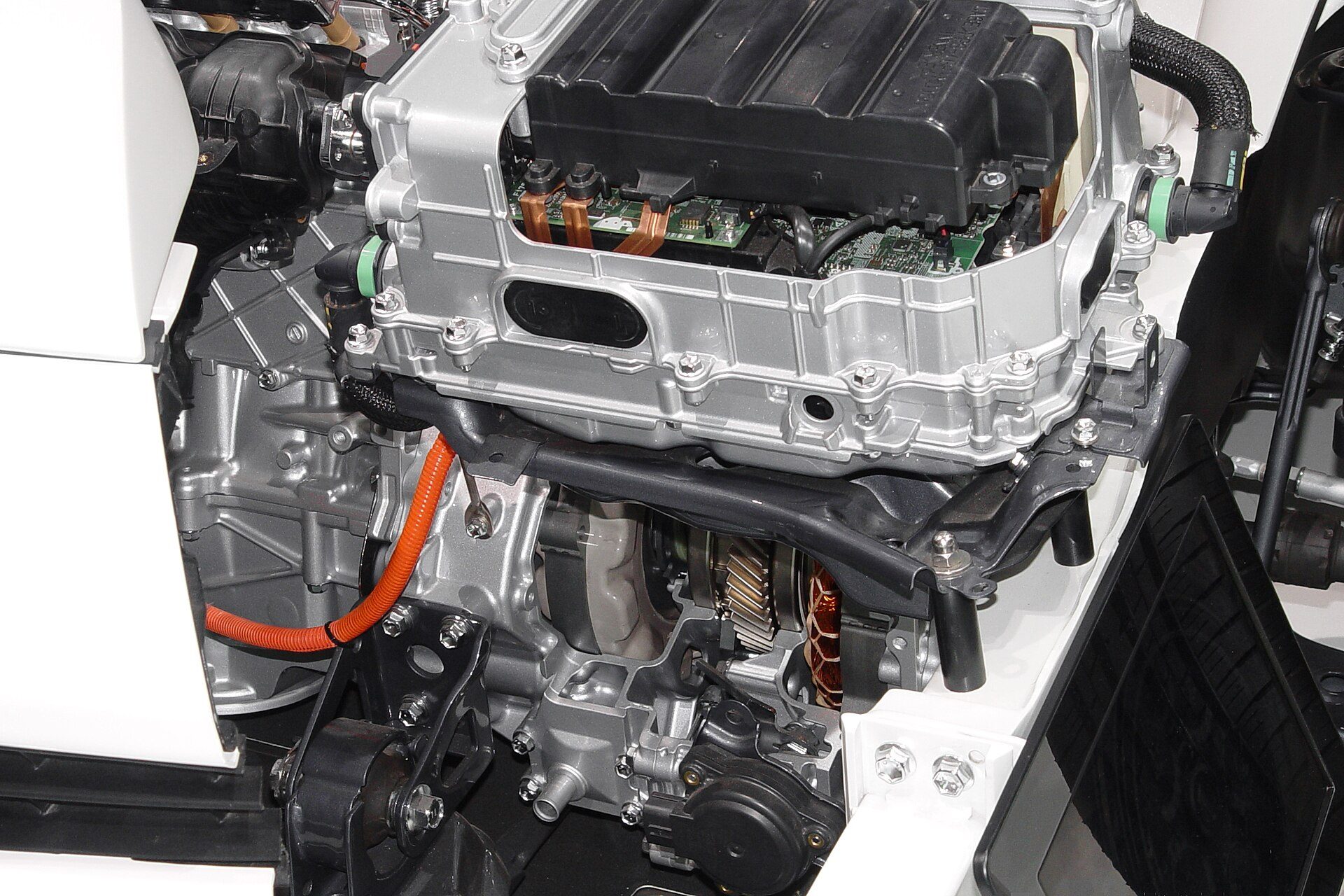
Photo: KaiBorgeest / Wikimedia Commons, CC BY-SA 4.0
OBC and DC/DC: two converters people forget
The OBC sets the maximum AC charging rate, commonly around 6–11 kW depending on the car; a more powerful wallbox cannot charge faster than this limit. The DC/DC only works when the car is READY or charging, so a car left parked for a long time can flatten its 12 V battery even with a full high-voltage pack (covered in step 6).
Regenerative braking: the motor becomes a generator
When the driver lifts off the accelerator or brakes gently, the inverter makes the motor act as a generator. The wheels turn the motor, the motor produces AC, the inverter rectifies it to DC and feeds it back into the battery. The electromagnetic drag slows the car. BEVs, HEVs and PHEVs all have regenerative braking.
Blending with the hydraulic brakes
Regeneration does not replace the normal brakes. The brake computer splits the work: light braking is mostly regenerative, while hard braking or the last moments before a stop bring in the hydraulic brakes. When the battery is nearly full, very cold or very hot, the BMS limits charging current, so regeneration weakens and the hydraulic brakes do more.
A calculation to get a feel for the size
Take an 1,800 kg car braking from 60 km/h (about 16.7 m/s) to a stop. Kinetic energy = ½ × 1,800 × 16.7² ≈ 251,000 J; divide by 3,600,000 to get about 0.07 kWh. Assume 60% is recovered (an illustrative figure; the real value depends on the car and the driving): 0.07 × 0.6 ≈ 0.042 kWh per stop. Twenty stops in town: 0.042 × 20 ≈ 0.84 kWh. If the car uses 15 kWh/100 km, 0.84 kWh is worth about 5.6 km of extra driving. Driving tips for making the most of regeneration are in How to drive an electric car to save battery.
What it means for brake servicing
- Pads wear slowly because the hydraulic brakes work less, but discs rust easily and calipers and slide pins seize from lack of movement, especially in humid weather such as the damp northern Vietnamese spring.
- Brake fluid still absorbs moisture over time; check and replace it on the maker's schedule, even if the pads are thick.
- Electronically controlled brakes: on some models the brake system must be put into service mode with a diagnostic tool before removing a caliper, because the electric brake pump can build pressure on its own. Read the documentation for the exact model.
Toyota hybrids (HEV): layout and key points
Toyota's system is the series-parallel hybrid most often seen in Vietnamese workshops.
The power split device and two motor-generators
Inside the e-CVT is a planetary gear set linking three shafts: the petrol engine, motor-generator MG1 and the output to the wheels (connected to MG2). MG1 mainly generates electricity and starts the engine; MG2 drives the car and does the regenerative braking. Figure 4 shows a cutaway e-CVT with the two motor stators clearly visible. The ratio changes by controlling MG1's speed, with no fixed gears.
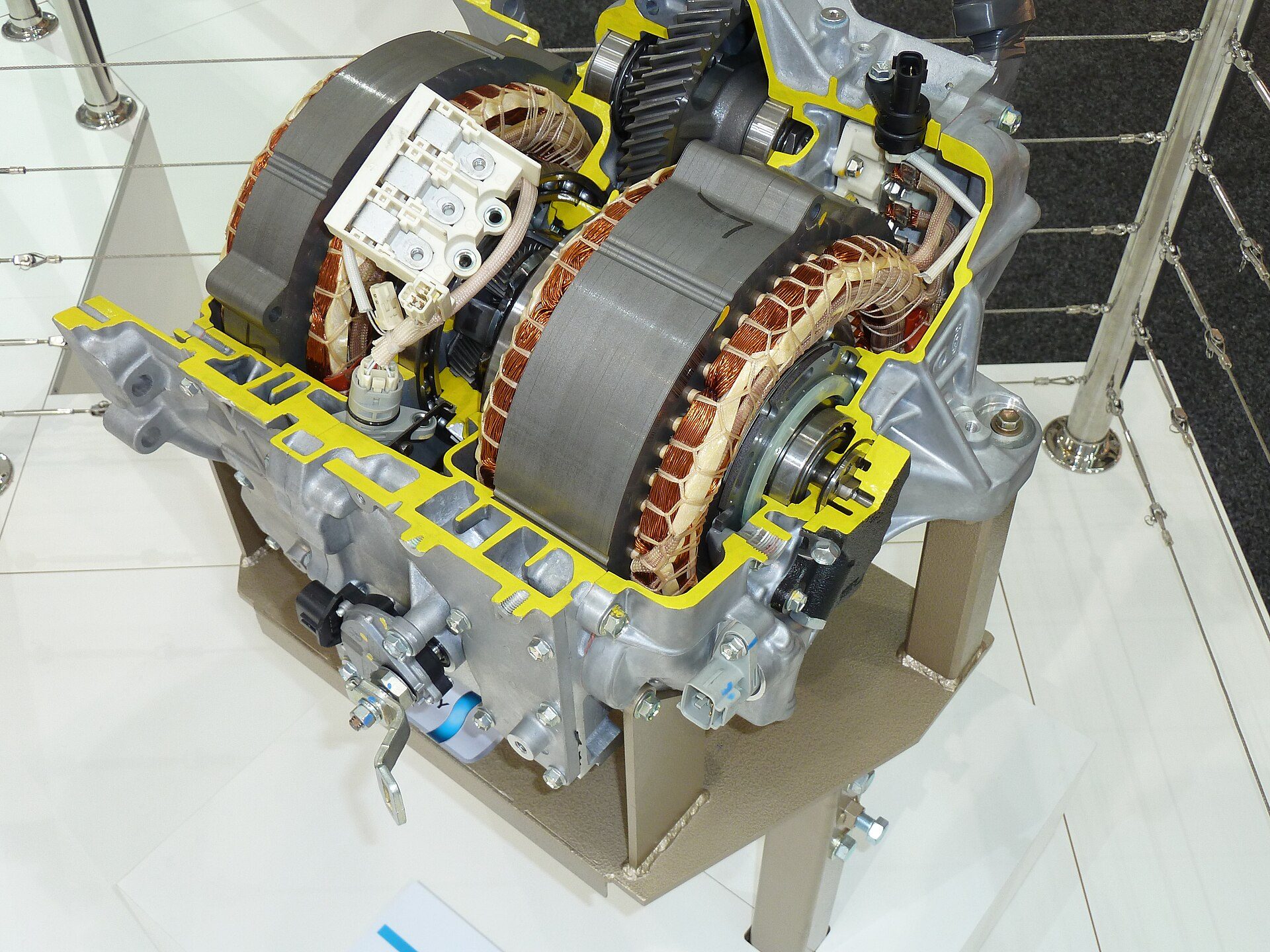
Photo: OSX / Wikimedia Commons, Public domain
The hybrid battery and its cooling fan
Toyota hybrid batteries are NiMH or lithium-ion depending on the generation, usually under or behind the rear seat. Many models cool the battery with a fan drawing air from the cabin, with the intake next to the rear seat. If the intake or its screen is clogged with dust or pet hair, the battery overheats, the system cuts power and the battery ages faster.
The inverter has its own coolant loop
Besides engine coolant, Toyota hybrids have a separate coolant reservoir for the inverter and motor, with its own electric pump. At a service, check both reservoirs and use the exact coolant the maker specifies; never mix them.
READY mode and the engine starting by itself
A hybrid in READY mode can be as silent as a car that is switched off, but when the battery is low or the A/C needs power, the computer may start the petrol engine at any moment. So the system must be fully switched off before working in the engine bay.
PHEVs: two complete systems in one car
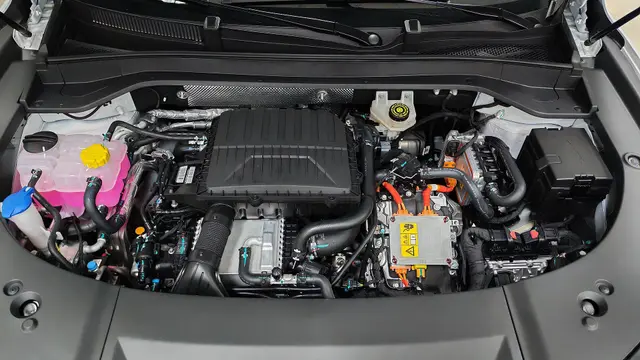
A PHEV combines engine and motor like an HEV, but with a much bigger battery, a charging port and an OBC (Figure 5). Charged regularly, it covers town driving almost entirely on electricity; once the battery is empty it drives like a hybrid.
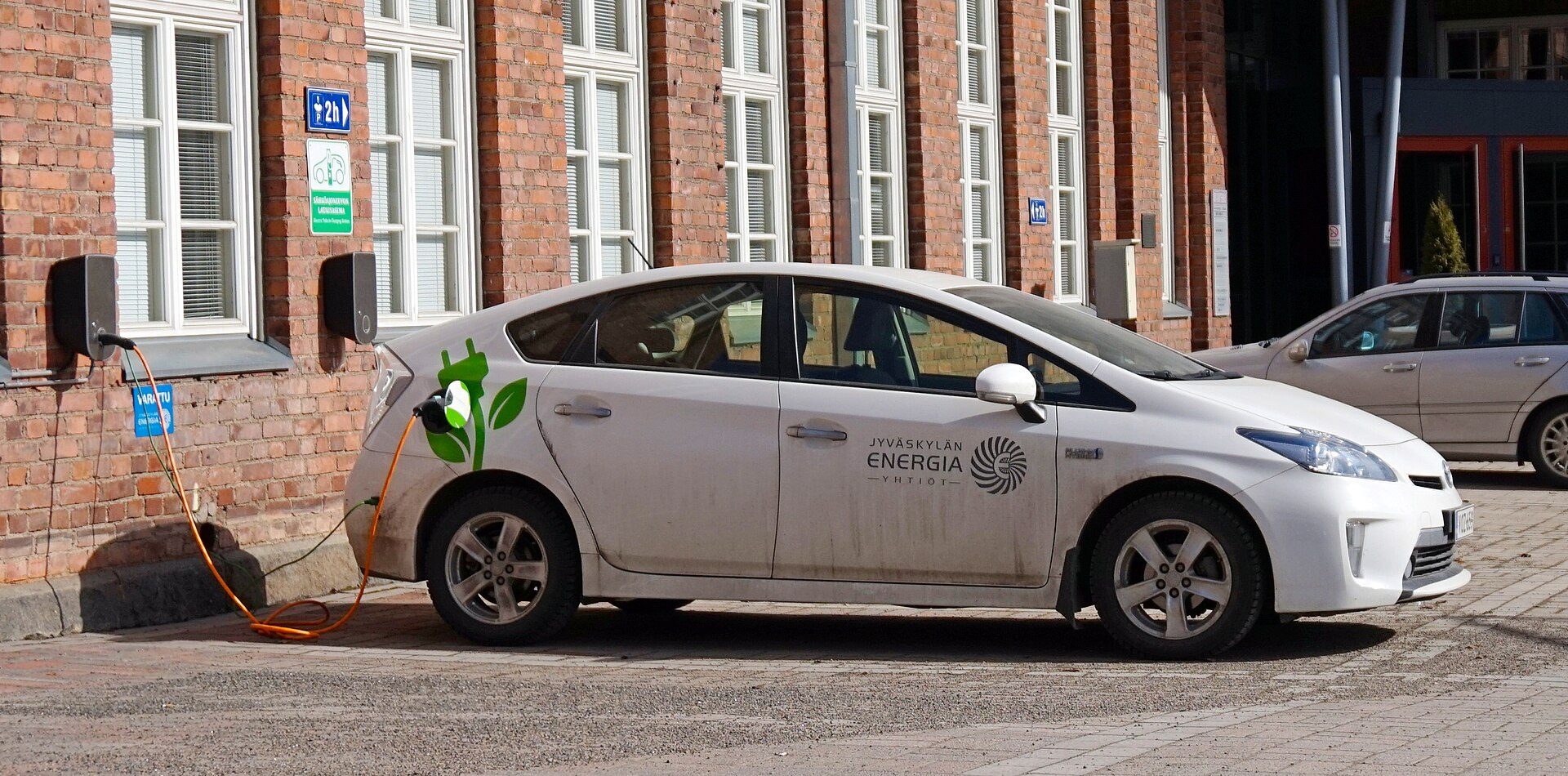
Photo: Tiia Monto / Wikimedia Commons, CC BY-SA 4.0
A rarely used engine still needs servicing
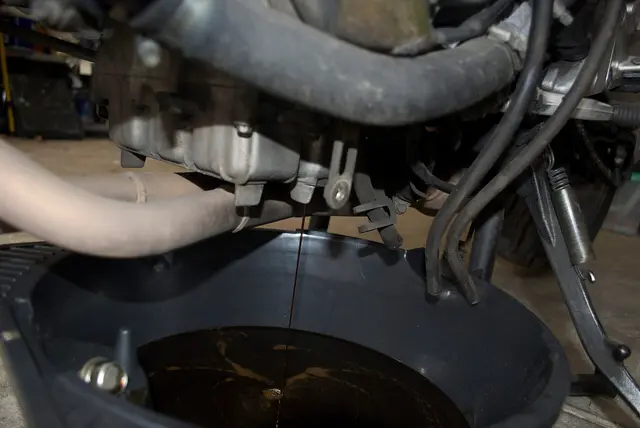
A PHEV owner who charges every night may go weeks with the engine running only a few times. Engine oil still ages with time, and petrol left in the tank goes stale. That is why PHEV schedules often have a time interval as well as a mileage interval, and some cars run the engine periodically to keep it lubricated. Servicing the petrol engine side is the same as on a normal petrol car; see Car service schedule by mileage: intervals, items and costs.
The electrical side is like a BEV
A PHEV has a battery cooling loop, an OBC and a charging port. Check the port for scorching, loose pins and a sealing flap gasket; AC charging faults are covered in step 5.
Servicing differences: Toyota hybrids, PHEVs and VinFast or BYD BEVs
This is the table a new technician needs to know. The exact mileage and time intervals, oil and coolant types for each model must come from the maker's service book or technical documentation; never use one figure for every car.
| Item | HEV (e.g. Toyota hybrid) | PHEV | BEV (e.g. VinFast, BYD) |
|---|---|---|---|
| Engine oil, oil filter, spark plugs, engine air filter | Yes | Yes, also by time | None |
| Engine coolant | Yes | Yes | None |
| Inverter, motor and battery coolant | Inverter and motor | Inverter and battery | Battery, inverter, motor |
| e-CVT or reduction gear oil | Per maker schedule | Per maker schedule | Per maker schedule |
| Battery cooling fan and air intake | Usually | Depends on model | Usually liquid cooled |
| Charging port, OBC | None | Yes | Yes, including the DC port |
| Brake fluid, rusty discs | Yes | Yes | Yes, discs rust most |
| 12 V battery, cabin air filter, tyres | Yes | Yes | Yes, tyres wear faster on a heavier car |
| Fault codes, software updates | Yes | Yes | Very important, with over-the-air updates |
VinFast and BYD BEVs: fewer mechanical items, more electrical work
A BEV has no engine oil, spark plugs, fuel filter or auxiliary belt. The main work shifts to battery coolant, reduction gear oil, high-voltage cables, the charging port, and reading fault codes and battery status with the maker's diagnostic software. On cars with over-the-air updates, know the software version before diagnosing.
Battery warranty and scope of work
Many makers tie battery warranty terms to servicing on schedule at an authorised workshop; the exact conditions are in each car's warranty book. Independent workshops should not open the high-voltage system without the documentation, tools and trained, authorised staff.
Worked example: a check sheet for three cars in one morning
The situation: a service centre takes in three cars at once, a Toyota HEV, a PHEV and a BEV. You are a junior technician who has completed step 1, asked to draw up the item list and estimate times so the team leader can share out the work. The times are assumed figures for planning practice, not manufacturer labour times, and none of the items involves opening the high-voltage system.
Step 1: list the items by car type
| Item | HEV (min) | PHEV (min) | BEV (min) |
|---|---|---|---|
| Identify car type, record mileage, read the service book | 5 | 5 | 5 |
| Change engine oil and oil filter | 25 | 25 | – |
| Clean hybrid battery cooling intake and fan | 15 | – | – |
| Check coolant reservoir levels (car off and cool) | 10 | 15 | 10 |
| Check charging port, flap and seal | – | 10 | 10 |
| Check brakes, disc rust, slide pins | 20 | 20 | 25 |
| Cabin air filter | – | – | 10 |
| Test the 12 V battery | 10 | 10 | 10 |
| Read fault codes with a diagnostic tool | – | 15 | 15 |
| Check and rotate tyres | – | – | 20 |
| Total | 85 | 100 | 105 |
Step 2: add up and double-check
- HEV: 5 + 25 + 15 + 10 + 20 + 10 = 85 minutes.
- PHEV: 5 + 25 + 15 + 10 + 20 + 10 + 15 = 100 minutes.
- BEV: 5 + 10 + 10 + 25 + 10 + 10 + 15 + 20 = 105 minutes.
- All three cars: 85 + 100 + 105 = 290 minutes, or 4 hours 50 minutes for one person.
Step 3: read the result
The BEV needs no oil change, yet its total time is not shorter, because the work moves to brakes, tyres, software and the charging port. The PHEV has the widest range of items because it carries both systems. With two people: one takes the HEV and PHEV (185 minutes), the other the BEV (105 minutes); 185 + 105 = 290 minutes, matching the total.
Safety around hybrids and EVs
This step is mostly about observing and servicing the parts that are not high voltage; the step 1 rules still apply in full. Review EV high-voltage safety: insulated gloves and the isolation procedure if needed.
Safety warning: HEV, PHEV and BEV batteries are all high voltage and can kill. Only people trained and authorised for high-voltage work, as required by the manufacturer, may remove, measure or disconnect orange cables, the junction box, inverter, OBC or battery. Trainees only observe and do mechanical and 12 V work under supervision. Before working in a hybrid's engine bay: switch off READY and keep the smart key well away from the car, because the petrol engine can start by itself. If someone is electrocuted: do not touch them with bare hands, cut the power if it is safe or use an insulated rescue hook, and call an ambulance (115 in Vietnam). If a battery smokes, hisses or gets unusually hot: evacuate, call the fire service (114 in Vietnam) and notify the maker.
Read the labels before you touch
Every high-voltage component carries a warning label and orange cables; on hybrids the cable usually runs under the car from the battery at the back to the engine bay. When lifting the car, use only the lift points given in the documentation, never the cables or the battery casing.
Common beginner mistakes
Thinking every hybrid must be plugged in
Symptom: telling an HEV owner to "remember to charge it". Cause: confusing HEV with PHEV. Fix: identify the type using the table at the start (exhaust, fuel flap, charging port, READY light); an HEV charges itself from the engine and regenerative braking.
Servicing a BEV like a cut-down petrol car
Symptom: checking only tyres and brakes before handing the car back. Cause: thinking "no engine oil, so nothing to do". Fix: follow the BEV item list and check battery coolant, reduction gear oil, the charging port and software fault codes.
Working in the engine bay while a hybrid is READY
Symptom: the petrol engine suddenly starts. Cause: assuming a silent car is switched off. Fix: switch off fully, check the READY light is out and keep the key away from the car.
Frequently asked questions
Does a hybrid car need to be plugged in?
A conventional hybrid (HEV) does not need to and cannot be plugged in; its battery is charged by the petrol engine and regenerative braking. Only plug-in hybrids (PHEVs) have a charging port.
Does an electric car need oil changes?
A BEV has no engine oil, but it still has reduction gear oil, brake fluid and coolant for the battery and inverter. Check and replacement intervals for each come from the maker's service book.
How is a PHEV different from an HEV?
A PHEV has a much larger battery, a charging port and an on-board charger, and can drive a few tens of kilometres on electricity alone. An HEV has a small battery, cannot be plugged in and mainly assists the petrol engine.
What does the inverter do in an electric car?
The inverter turns the battery's direct current into three-phase alternating current to drive the motor, controlling speed and tractive force, and works in reverse during regenerative braking to send energy back to the battery.
Practice exercises and self-assessment
- Hand-draw the BEV block diagram with 7 blocks, using arrows in three colours for three modes: driving, AC charging and regenerative braking.
- In a car park or workshop (observe only, do not touch), classify 5 cars as BEV, HEV, PHEV or petrol and note the signs you used.
- Read the service book of one hybrid and one BEV, and list 3 items only the hybrid has and 3 items only the BEV has.
- Redo the regenerative braking calculation for a 2,200 kg car braking from 50 km/h, assuming 60% recovery.
Self-assessment criteria
- Pass: the diagram has all 7 blocks and shows that DC charging bypasses the OBC and that the DC/DC replaces the alternator.
- Pass: all 5 cars classified correctly, with reasons.
- Pass: the regenerative braking result is about 0.035 kWh per stop (½ × 2,200 × 13.9² ≈ 212,000 J ≈ 0.059 kWh, × 0.6).
- Not yet: confusing HEV with PHEV, forgetting the inverter coolant loop, or touching an orange cable while observing.
Once you can read the block diagram of all three types, move on to the next roadmap step: HV batteries, BMS & insulation testing, where you open up the most important and most expensive block in the car: LFP and NMC cells, modules, the BMS and how to measure insulation resistance correctly.
Keep learning EV repair: after vehicle architecture come batteries and BMS, motors and inverters, AC and DC charging, 12 V and thermal systems, software diagnostics, a workshop placement and high-voltage authorisation. See the 8-step EV technician roadmap.