Personal hygiene in the kitchen is everything a prep cook does before and throughout a shift so that their own body does not contaminate the food: a clean uniform, hair fully covered, short nails, no jewellery, handwashing in 6 steps at the right moments, gloves for the right tasks, reporting sick when ill, and keeping raw food apart from cooked food right at the prep bench. On your first day, the head chef often does not hand you a knife yet but watches whether you do these things properly. This is the first lesson of the prep cook roadmap, written from the point of view of someone stepping into a professional kitchen for the first time, with a checklist you can use tomorrow morning.
By the end of this lesson, you will be able to:
- Get your uniform, hair, nails and personal items up to kitchen standard in the 10 minutes before your shift.
- Wash your hands in 6 steps in about 40–60 seconds and name at least 8 moments in a shift when you must wash them.
- Use gloves and dress a cut correctly, and know when to tell the head chef so you can switch tasks or stay home.
- Explain 4 sources of food poisoning and keep raw and cooked food apart at the prep bench.
- Know which food safety papers kitchen staff need and how to ask about them so you prepare the right ones.
New to working as a prep cook? This is step 1 of the roadmap: personal hygiene and basic food safety, before knife and gas safety and prep work. See the 8-step prep cook roadmap to learn in the right order.
Why personal hygiene is a prep cook's first lesson
The prep cook touches raw ingredients more than anyone in the kitchen: picking herbs, washing meat, cleaning fish, slicing shallots, portioning seasoning. Many dishes, such as fresh herbs, salads, dipping sauces and cut fruit, are never cooked again. If your hands, hair, nails or clothes are dirty, bacteria go straight into the guest's mouth with no step to kill them.
The human body is a source of bacteria
Even healthy people carry bacteria on their skin, in the nose and throat and in the gut. Staphylococcus aureus lives in the nose, on the skin and in open wounds; gut bacteria leave on the hands after using the toilet if you do not wash well. A single hair or a piece of fingernail in a dish is also an immediate complaint and a hit to the restaurant's reputation.
What the head chef watches on your first day
- Whether you arrive early to change, or rush in on the dot with a rain-soaked shirt.
- Whether your hair is fully covered, your nails are long or painted, and you are wearing rings or bracelets.
- Whether you go and wash your hands on your own when you enter and when you change tasks, or need reminding.
- Whether you put your phone on the prep bench or in your locker.
Uniform, hair, nails and personal items before your shift
Arrive 10–15 minutes early. That time is for changing, putting away personal items and washing your hands, not for eating breakfast at the prep bench.
Uniform and shoes
- Chef jacket: clean, worn only in the kitchen, never worn from home, never worn outside to smoke or go to the market. Bring a spare for long or messy shifts.
- Apron: change it when it gets meat or fish blood on it; never wipe your hands on it and then pick up raw herbs.
- Shoes: closed toe, non-slip soles, no slippers. Kitchen shoes stay in the kitchen.
Hair, beard and nails
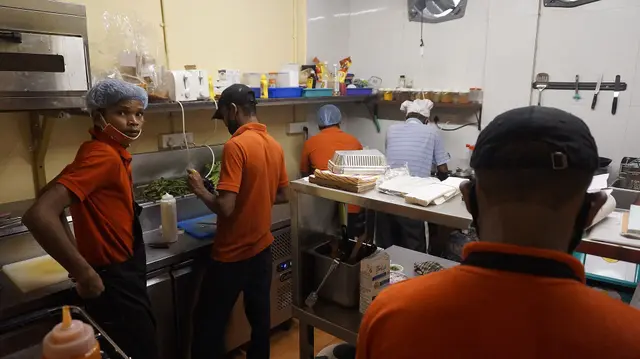
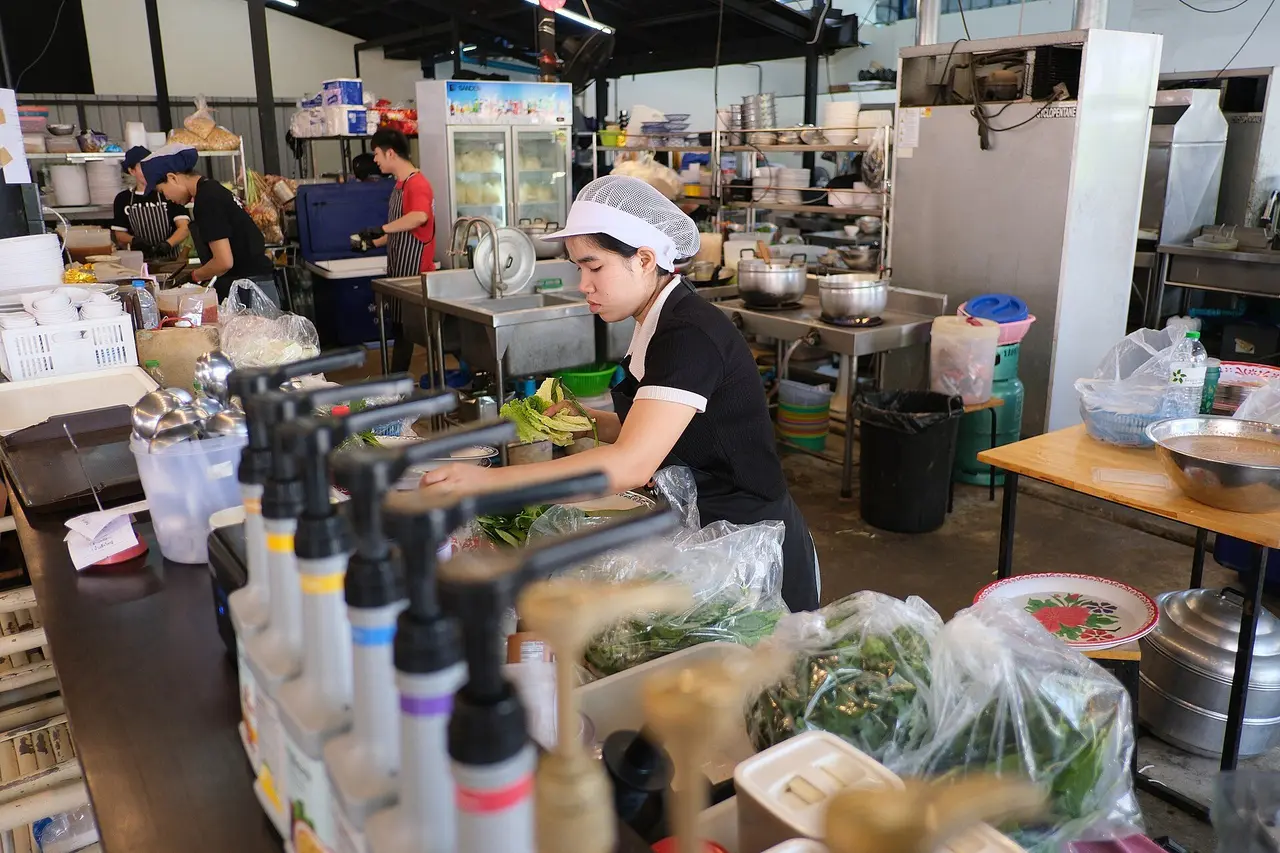
- Tie long hair back and cover it fully with a chef's hat or hairnet (Figure 1), with no fringe showing.
- Men with beards keep them trimmed or follow kitchen rules; some kitchens require beard nets.
- Keep nails short, clean, unpainted and without false nails: dirt hides under long nails where handwashing cannot reach it.
Jewellery, phones and your own food
Take off rings, bracelets, watches and long earrings before entering the kitchen; bacteria collect under rings and jewellery can fall into food. Some kitchens allow a plain wedding band and some do not, so ask the head chef. Phones, wallets and bags go in your locker. Your own food and drinks stay in the break area, not in the ingredient fridge.
Six-step handwashing and the moments you must wash
Handwashing is the task you repeat most in a shift and the one that matters most. Doing it correctly is not hard; doing it often enough when the kitchen is busy is.
The 6-step handwashing routine
Wet your hands under clean running water, take enough soap to cover both hands, then rub through the 6 steps, about 5 times each:
- Rub palm against palm.
- Rub one palm over the back of the other hand with fingers interlaced, then swap (Figure 2).
- Rub palm against palm with fingers interlaced to clean between the fingers.
- Lock the fingers together and rub the backs of the fingers against the opposite palm.
- Clasp one thumb in the other palm and rotate, then swap.
- Bunch the fingertips and rub them in circles in the other palm to clean the tips and under the nails, then swap.
Rinse thoroughly under the tap, dry with a disposable paper towel and use that towel to turn off the tap if it is not touch-free. The whole routine takes about 40–60 seconds, with at least 20 seconds of rubbing with soap.

Photo: Shixart1985 / Wikimedia Commons, CC BY 2.0
When you must wash your hands
- When you enter the kitchen at the start of a shift and when you come back from a break.
- After using the toilet, sneezing, coughing, blowing your nose, or touching your face or hair.
- After touching raw meat, fish, seafood or eggs, and before touching raw herbs or cooked food.
- After carrying delivery boxes, taking out rubbish, mopping or handling cleaning chemicals.
- After touching your phone, money or door handles.
- Before putting on gloves and every time you change them.
A dedicated handwash sink
Wash your hands at the sink meant for handwashing, not in a sink where vegetables are soaking or meat is thawing. The handwash sink must always have soap and paper towels; if they run out, report it at once instead of wiping your hands on your apron.
Gloves, cuts, and when you must stay out of the kitchen
Gloves help, but they do not replace handwashing. Dirty gloves are even more dangerous than bare hands because the wearer believes they are clean.
Using gloves for the right tasks
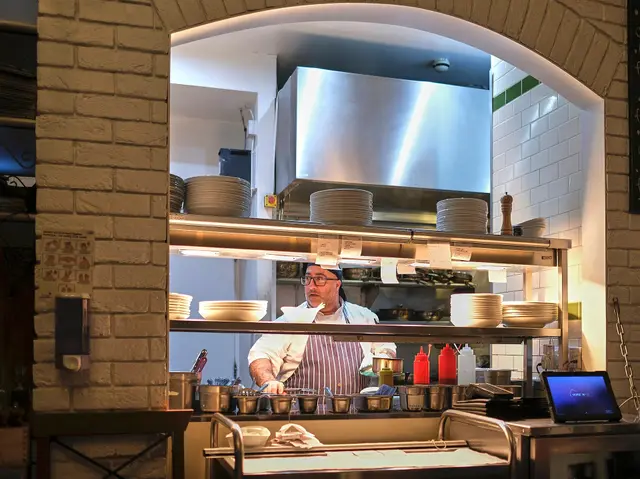
- Wear disposable gloves when touching ready-to-eat food directly: portioning raw herbs, cut fruit, salads, dipping sauces (Figure 3).
- Change gloves when moving from raw to cooked food, when they tear, and after touching a bin, a phone or your face.
- Never wash disposable gloves to reuse them.
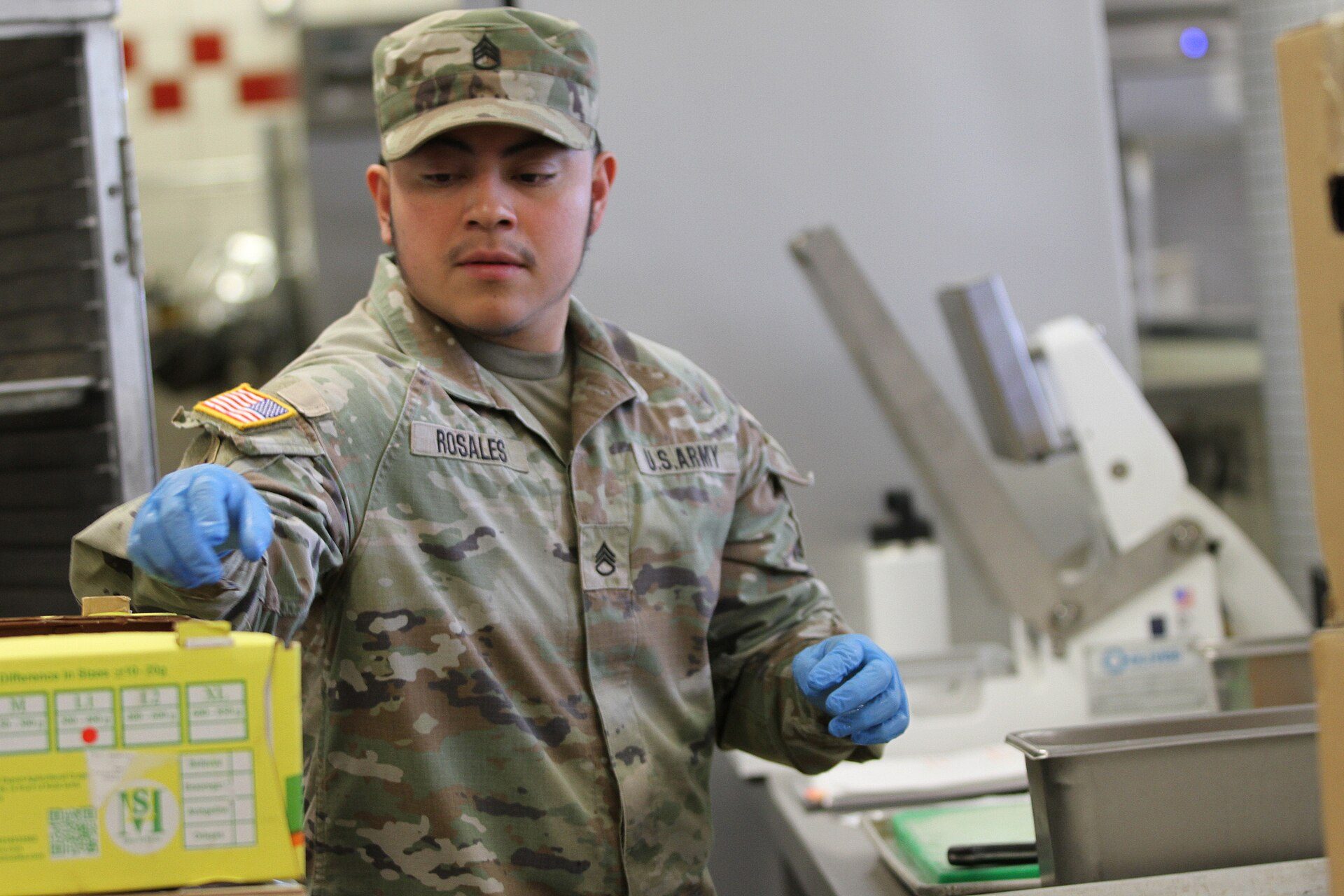
Photo: U.S. Army 16SB by Sgt. Gerald Hill / Wikimedia Commons, Public domain
A minor cut while working
- Stop, put the knife down and step away from the prep bench so no blood falls on the food.
- Rinse the wound with clean water and press a clean gauze pad on it until it stops bleeding.
- Apply a waterproof plaster (many kitchens use blue plasters so they are easy to spot if they fall into food), then put a glove over it.
- Throw away any ingredients with blood on them and tell the head chef so it is recorded.
When to report so you can switch tasks or stay home
If you have diarrhoea, vomiting, fever, jaundice, a sore throat with fever, or a swollen or pus-filled wound on your hand, do not handle food directly. Tell the head chef before your shift. This lesson does not replace a doctor: for a deep cut, bleeding that does not stop after 10 minutes of pressure, a wound that becomes red, hot and swollen, or diarrhoea with high fever and dehydration, see a doctor; in serious cases call 115, Vietnam's emergency number.
Where food poisoning comes from and separating raw and cooked at the bench
Knowing where food poisoning comes from helps you remember why each small habit matters. There are four main sources, and a prep cook can block most of them at the prep stage.
Four sources of food poisoning
| Source | Kitchen examples | How the prep cook blocks it |
|---|---|---|
| Microorganisms | Bacteria from raw chicken, eggs and seafood; staph from hands and wounds | Handwashing, separating raw and cooked, keeping ingredients cold |
| Chemicals | Pesticide residue on vegetables, detergent left on boards and trays | Wash vegetables under running water several times, rinse tools well, store chemicals away from food |
| Natural toxins | Sprouted potatoes, unknown mushrooms, fresh bamboo shoots not boiled enough, pufferfish | Discard suspect ingredients, ask the head chef, never decide alone |
| Foreign objects | Hair, fingernails, bits of plastic, staples from packaging | Cover hair, trim nails, remove jewellery, unpack away from the prep bench |
Keeping raw and cooked apart at the prep bench
Raw food (meat, fish, seafood, eggs, unwashed vegetables) carries bacteria. Cooked and ready-to-eat food must not touch raw food or tools used for raw food. Many kitchens use colour-coded boards and knives: for example red for raw meat, blue for seafood, green for vegetables, white for cooked food. Each kitchen sets its own colours, so ask and learn yours.
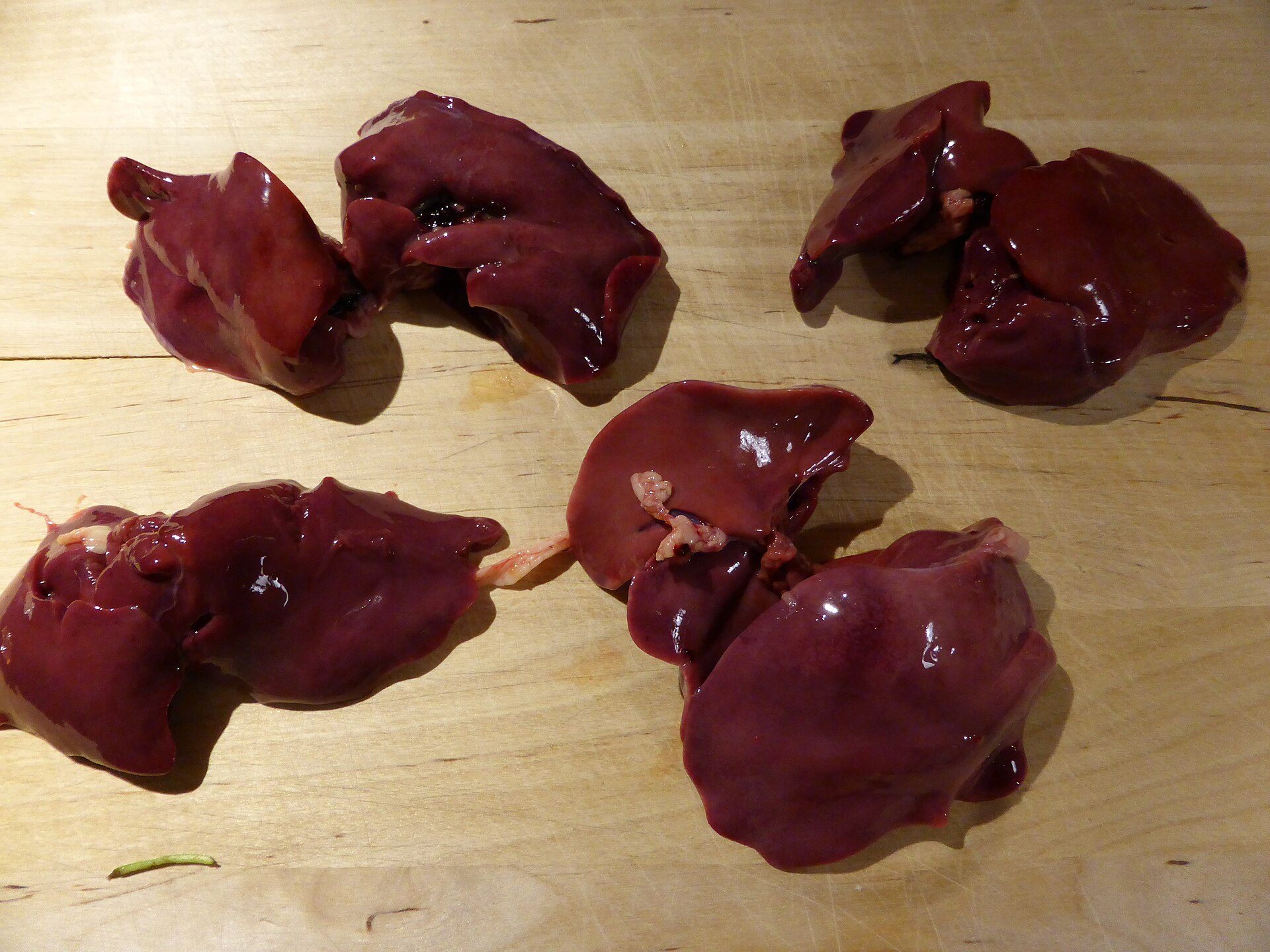
Photo: Poupou l'quourouce / Wikimedia Commons, CC BY 4.0
Work order on a single bench
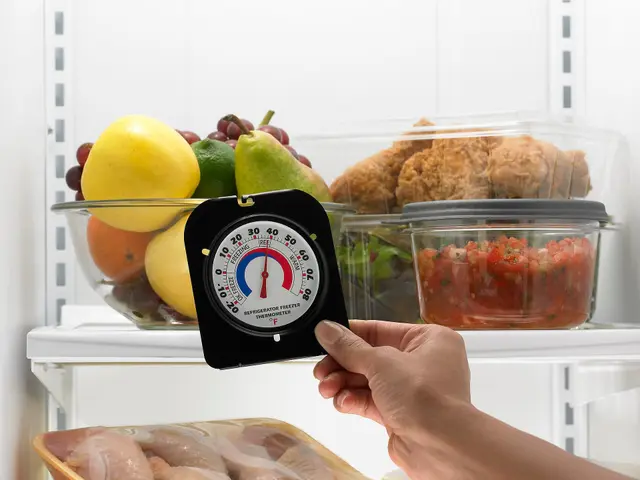
If a small kitchen has only one prep bench, work from clean to dirty: raw herbs and fruit first, then vegetables for cooking, then meat, and fish and seafood last. After each group, clear, wash and sanitise the bench and board following the kitchen's routine before starting the next. You will learn how to arrange fridges and check temperatures in the receiving and storage step.
Food safety papers for kitchen staff
When you start at a restaurant, an industrial canteen or a school kitchen, you are usually asked about two kinds of food safety papers. The rules in Vietnam have changed several times and can differ by type of premises, so this lesson gives only the principles.
Confirmation of food safety knowledge
People who handle food directly usually need training and confirmation that they have food safety knowledge. Many businesses run the training for staff or send them on a course. Ask your manager as soon as you start: does the kitchen have a training plan, what do you need to submit, and by when.
Health check
Many businesses require a health certificate at hiring and regular check-ups while you work. Ask where to go, what is checked and who pays. Keep copies of your own papers for when you change jobs.
Note: NAMBIN does not quote document numbers or fees because the rules may have changed. Ask the business owner, the local health office or the food safety authority, and read the current regulations. Do not buy a "fast-track" certificate without training: you lose money and still do not know how to work safely.
Worked example: Lan's first morning shift in a 120-cover restaurant
Lan, 19, starts as a prep cook on the 6:00–14:00 morning shift at a Vietnamese rice restaurant serving about 120 guests each lunchtime. Her main jobs: picking and washing herbs, preparing pork and fish, and making dipping sauce. She arrives at 5:45, changes into uniform, puts her ring in her locker, ties her hair, puts on a cap and washes her hands before entering the prep area.
Counting handwashes in one shift
| Moment | Times per shift | Reason |
|---|---|---|
| Entering the kitchen at the start | 1 | Hands bring dirt in from outside |
| After carrying the morning delivery boxes | 1 | Boxes have been on trucks, in stores and on the ground |
| Switching from raw meat and fish to raw herbs | 2 | Stops bacteria moving from raw food to ready-to-eat food |
| After using the toilet | 1 | Gut bacteria |
| After the staff lunch | 1 | Returning from a break |
| After taking out rubbish | 2 | Dirty bins and bags |
| After touching her phone | 1 | Phones are not cleaned like kitchen tools |
| Changing tasks (dipping sauce, portioning herbs) | 3 | Each task change means washing and fresh gloves |
| Total | 12 |
Check: 1 + 1 + 2 + 1 + 1 + 2 + 1 + 3 = 12 times. Each takes about 40 seconds for the full 6 steps plus 20 seconds to walk over and dry, so 60 seconds. For the shift: 12 × 60 = 720 seconds = 12 minutes out of 8 working hours. Twelve minutes does not slow the kitchen down; one poisoning outbreak can close it.
Personal kit Lan buys herself (reference prices for 2026, varying by region)
The restaurant provides 2 chef jackets and 2 aprons. Lan buys:
| Item | Quantity × unit price | Total |
|---|---|---|
| Non-slip kitchen shoes | 1 pair × 250,000 VND | 250,000 VND |
| Cloth hair caps | 2 × 30,000 VND | 60,000 VND |
| Nail clipper and nail brush | 1 set × 40,000 VND | 40,000 VND |
| Waterproof plasters | 1 box × 50,000 VND | 50,000 VND |
| Pre-employment health check | 1 × 250,000 VND | 250,000 VND |
| Total | 650,000 VND | |
Check: 250,000 + 60,000 + 40,000 + 50,000 + 250,000 = 650,000 VND (about 26 USD). Some employers pay for the health check or provide shoes; ask before you buy.
Common mistakes of new prep cooks and how to fix them
Wiping hands on the apron instead of washing
Sign: hands that just held meat are wiped on the apron and then pick up raw herbs. Cause: a busy kitchen and a far-away handwash sink. Fix: treat the apron as dirty; every switch from raw to ready-to-eat means a handwash, even when the kitchen is calling.
Wearing one pair of gloves all morning
Sign: gloves on from the start of the shift until lunch, for every task. Cause: thinking gloves equal clean. Fix: change gloves when you change tasks or touch something dirty; gloves are for ready-to-eat food.
Hiding illness to keep working
Sign: you have diarrhoea but come in anyway for fear of losing pay. Cause: embarrassment about reporting. Fix: tell the head chef before the shift so you can move to a non-food task or stay home; one sick worker can make a hundred guests ill.
Leaving your phone on the prep bench
Sign: slicing shallots while reading messages. Cause: habit. Fix: the phone stays in your locker, used only on breaks, followed by a handwash.
Frequently asked questions
How long does 6-step handwashing take?
About 40–60 seconds for the whole routine, with at least 20 seconds of rubbing with soap. Any faster usually means missing the spaces between fingers, the thumbs or the fingertips.
Does a prep cook need a food safety knowledge certificate?
People who handle food directly usually need food safety training and confirmation of their knowledge, and many employers require a health check. The exact requirement depends on the type of business and current rules in Vietnam; ask your manager when you start.
Do I still need to wash my hands if I wear gloves?
Yes. Wash before putting gloves on and every time you change them. Torn gloves or sweaty hands inside gloves can still contaminate food.
What does personal hygiene in food handling include?
A clean uniform, covered hair, short nails, no jewellery, washing hands at the right moments in the right way, gloves for the right tasks, covered wounds, reporting illness, and no eating, drinking or smoking in food areas.
Can I work in the kitchen with a mild cold or runny nose?
Tell the head chef and let them decide. Usually you are moved to tasks with less contact with ready-to-eat food, wear a mask and wash your hands after every time you blow your nose; with a fever you should not handle food.
Practice and self-assessment
- Tonight, pack for work using the checklist: chef jacket, shoes, cap, nails, jewellery off, a place for your phone.
- Practise 6-step handwashing in front of a mirror, time it 3 times and write the times down.
- Write down 8 moments in your shift when you must wash your hands and estimate the count, like Lan's table.
- Ask the head chef about the kitchen's board and knife colour code and copy it down.
Self-assessment criteria
- Pass: all 6 handwashing steps in 40–60 seconds, without skipping the thumbs and fingertips.
- Pass: you enter the kitchen with hair covered, short nails, no jewellery and your phone in the locker.
- Pass: you can name the 4 sources of food poisoning and the clean-to-dirty prep order.
- Not yet: wiping hands on the apron instead of washing, one pair of gloves all morning, or hiding illness to work.
To see what a prep cook does all day, what it pays and how to get hired, read What is a kitchen assistant? Duties, 2026 pay and how to get hired. For the food safety picture of the whole kitchen (fridge temperatures, food samples), see Food hygiene in the kitchen: 10 rules every new cook must follow. Once personal hygiene is a habit, move on to the next step: Knife, gas, hot oil & slippery floor safety, where you learn to hold and store knives, shut off gas valves and smother an oil fire the right way.
Keep learning to be a prep cook: after personal hygiene come knife and gas safety, receiving and storing goods, preparing vegetables, meat and fish, mise en place and supporting the line at peak hours. See the 8-step prep cook roadmap.