Setting a restaurant table properly means laying the same full set of items at every seat, straight, clean and evenly spaced, then checking the shared items in the middle of the table before the first guest walks in. A Vietnamese meal needs a bowl, an underplate, a spoon, chopsticks, a dipping-sauce dish and a glass; a Western table follows the rule of forks on the left, knives on the right, used from the outside in; a 10-seat round banquet table needs the seats divided evenly around the table and the lazy Susan. This lesson includes a worked example of setting up a 12-table banquet in 90 minutes, with figures that add up.
By the end of this lesson, you will be able to:
- Set a 4-person Vietnamese table and a 3-course Western cover in the right positions, in about 3 minutes per table.
- Divide a round table evenly into 10 seats and fully set a wedding banquet table, including the shared items.
- Fold 3 common napkin styles and polish glasses free of water spots without snapping the stems.
- Check and refill condiments, napkins and toothpicks using a pre-opening checklist.
- Note sold-out items, specials and bookings in the pre-shift briefing, and turn that information into tasks for your section.
Learning restaurant service properly? Table setting and pre-opening prep is step 2 of the roadmap, after food hygiene and presentation. See the 8-step restaurant server roadmap to learn in the right order.
What table setting is and why it must be done before opening
Table setting (Vietnamese restaurants often say "set ban" or "setup ban") means laying out the eating and drinking items for every seat and the shared items in the middle, so that when guests sit down you only need to pour water, hand over the menu and take the order. On a busy shift, every minute spent fetching an extra pair of chopsticks is a minute another guest waits.
Five rules for every type of table
- Clean: no water spots on glasses, no crumbs on the tablecloth, no stained cutlery; hold glasses and cutlery in the right places, as you learned in the presentation step.
- Complete: every seat has the same set, counted before you leave the table.
- Straight and even: seats are evenly spaced, and items of the same kind line up when you look across the table.
- The house standard: every restaurant has its own reference photo for table settings; this lesson teaches a common layout, and at work you follow your manager's photo.
- Spares ready: the service station (a cabinet or trolley near your section) always holds extra bowls, chopsticks, glasses and napkins to replace dropped items at once.
How much table space one seat needs
Each guest needs about 50–60 cm of table width to use cutlery without bumping the person next to them. A square 4-seat table of 80 × 80 cm gives one seat per side. Cutlery handles and the plate rim usually sit about 1–2 cm from the table edge (roughly one finger joint) so they do not catch the guest's clothes.
Work order: from large to small
- Line up tables and chairs, wipe the table top and check the legs do not wobble.
- Lay the tablecloth (if used), seams facing down, with an even drop on every side.
- Place the plate or bowl (the largest item of each seat) first to mark the seat.
- Place knives, forks, spoons and chopsticks; then glasses; napkins last.
- Place the shared items: condiments, napkins, toothpicks, table number, flowers.
- Step back two paces, look at the whole table, fix anything crooked, and push the chairs in until the seat edge just touches the cloth.
How to set a 4-person Vietnamese table
A Vietnamese meal shares dishes in the middle of the table, with a personal bowl for each guest. So there are fewer personal items than on a Western table but more shared ones. The layout below works for rice eateries, Vietnamese restaurants and most Asian restaurants (see Figure 1).
Items for one seat
- 1 underplate centred in front of the chair, about 1–2 cm from the table edge.
- 1 rice bowl on the underplate, or to the left of it if the restaurant uses the underplate for picking up food.
- 1 porcelain spoon in the bowl or on the underplate, handle to the right.
- 1 pair of chopsticks on the right, on a chopstick rest, tips pointing forward and not at the next guest. Paper-wrapped chopsticks stay in their wrapper.
- 1 small dipping-sauce dish above the bowl, slightly to the right.
- 1 water or beer glass above and to the right, just above the chopstick tips.
- A napkin or packaged wet towel to the left of the underplate, or a folded cloth napkin on the bowl or plate.
Set fast, assembly-line style
Place all 4 underplates first (opposite plates on one straight line), then all the bowls, all the spoons and chopsticks, and finally the sauce dishes, glasses and napkins. Working in a line is faster than finishing one seat at a time. When done, count all 7 items at each seat.
Shared items in the middle
The middle of the table usually holds fish sauce, chilli sauce, salt and pepper, a napkin box and a toothpick holder, sometimes a jug of iced tea. Keep them compact and leave enough room for the shared dishes; on hotpot or grill tables leave the centre clear for the burner.
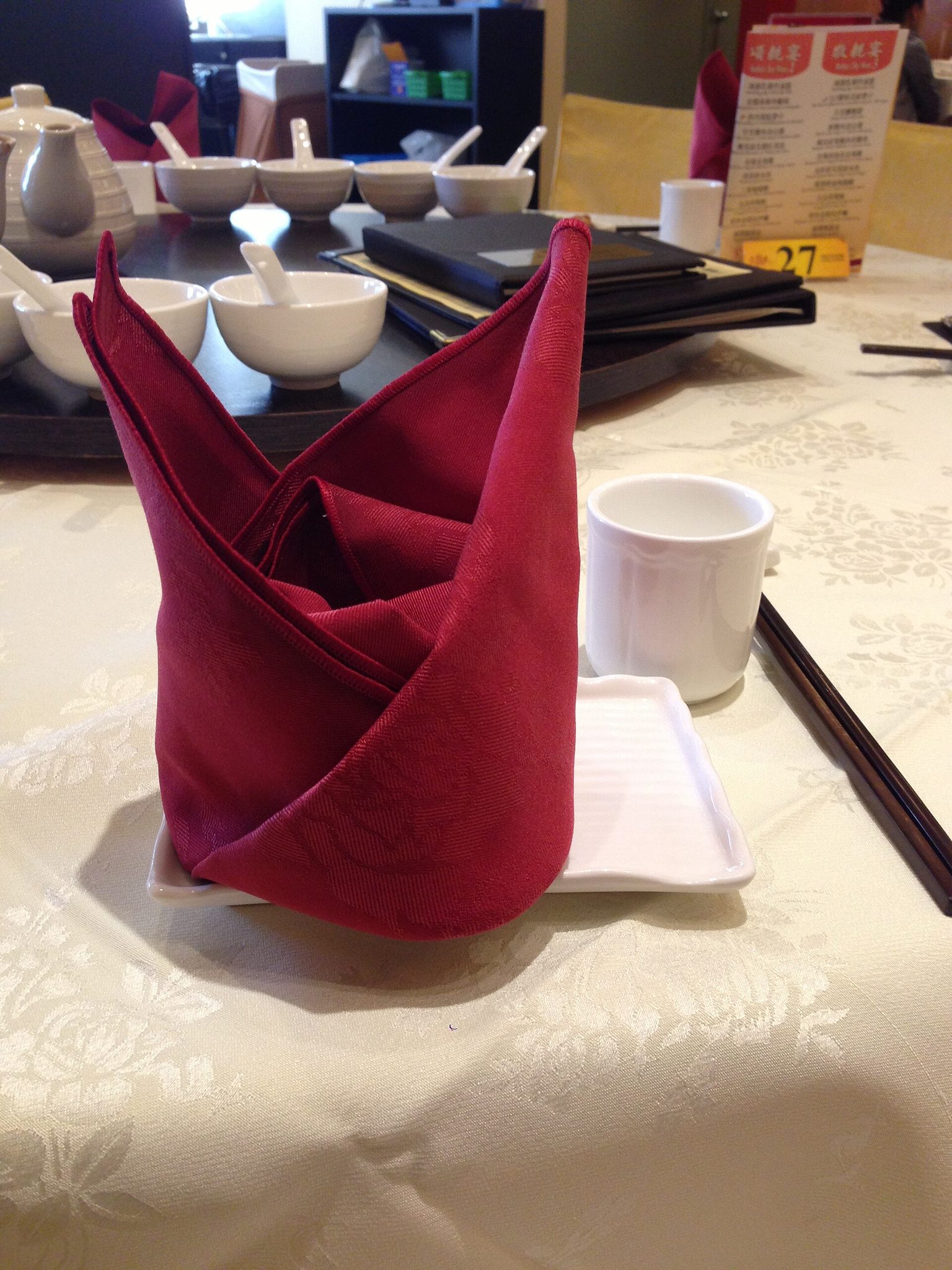
Photo: User:PCStuff / Wikimedia Commons, CC BY-SA 3.0
How to set a Western table
A Western table has more items, but there is only one core rule: forks on the left, knives and spoons on the right, and guests use them from the outside in, course by course (see Figure 2).
Knives, forks and spoons: outside in
- Dinner plate (or charger plate) in the centre of the cover.
- Forks to the left of the plate, tines up. The starter fork is outside, the main-course fork inside.
- Knives to the right of the plate, blade facing in towards the plate so it never points at the next guest.
- Soup spoon on the right, outermost, because soup usually comes first.
- Dessert cutlery lies horizontally above the plate: a dessert spoon or fork.
- No more than 3 pieces of cutlery on each side; for more courses, bring cutlery with each course.
Glasses and the bread plate
The water glass sits just above the tip of the innermost knife. A wine glass (if used) goes to the right of the water glass, in a diagonal or a straight row according to the house standard. The small bread plate goes above and to the left, over the forks, with the butter knife laid across it. The folded napkin goes in the centre of the plate or to the left of the forks.
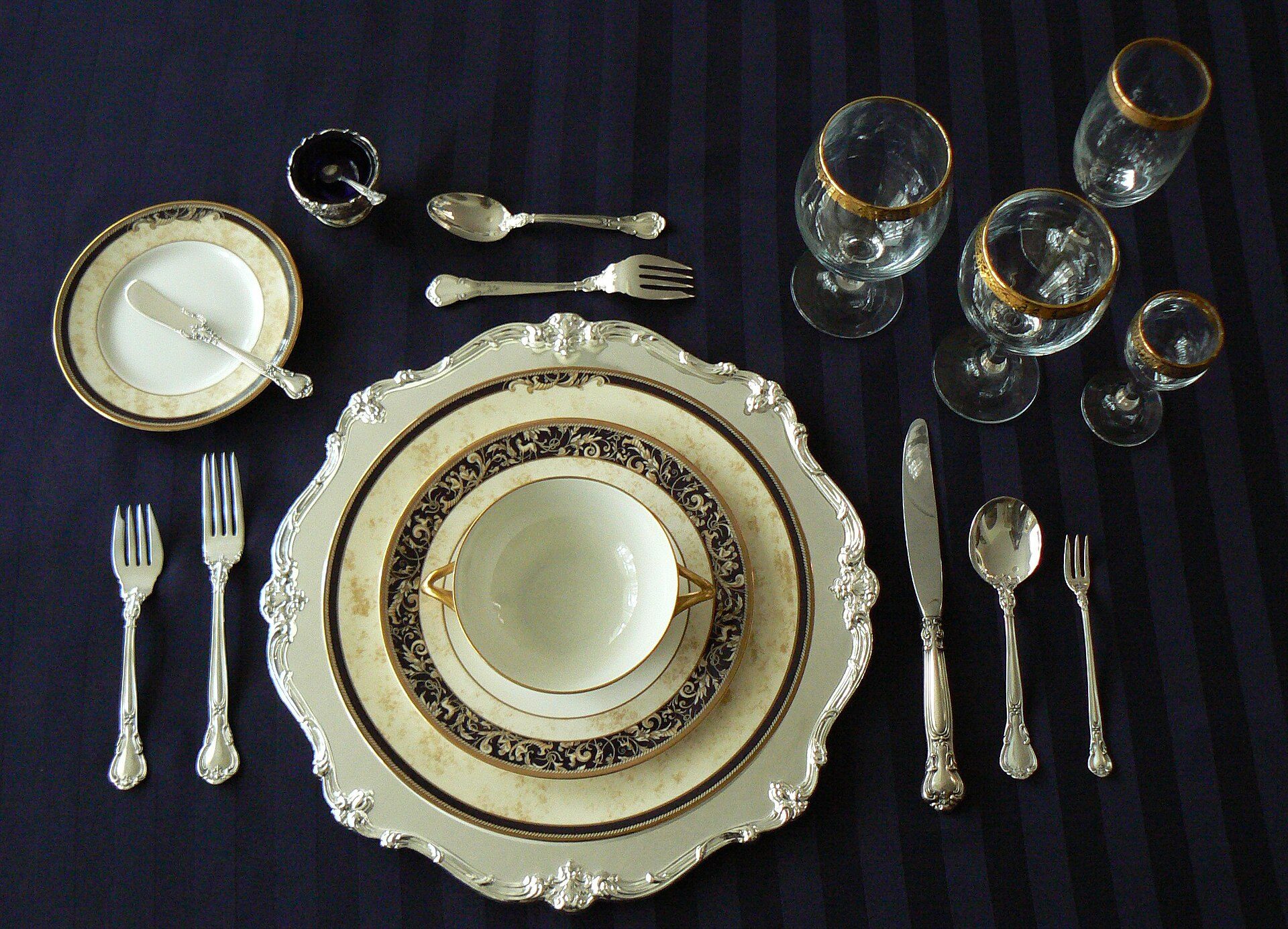
Photo: No machine-readable author provided. KillerChihuahua assumed (based on copyright claims). / Wikimedia Commons, CC BY-SA 3.0
Set for the menu, not out of habit
For à la carte service, tables are usually pre-set with just 1 knife, 1 fork, 1 water glass and a napkin; if a guest orders soup, bring the soup spoon before the soup arrives. For a 3-course set menu (soup, main, dessert) set everything from the start: on the right the soup spoon outermost, then the knife; on the left the fork; above the plate the dessert spoon. Ask about the menu before you set, because extra cutlery confuses guests as much as missing cutlery.
Setting a 10-seat round banquet table
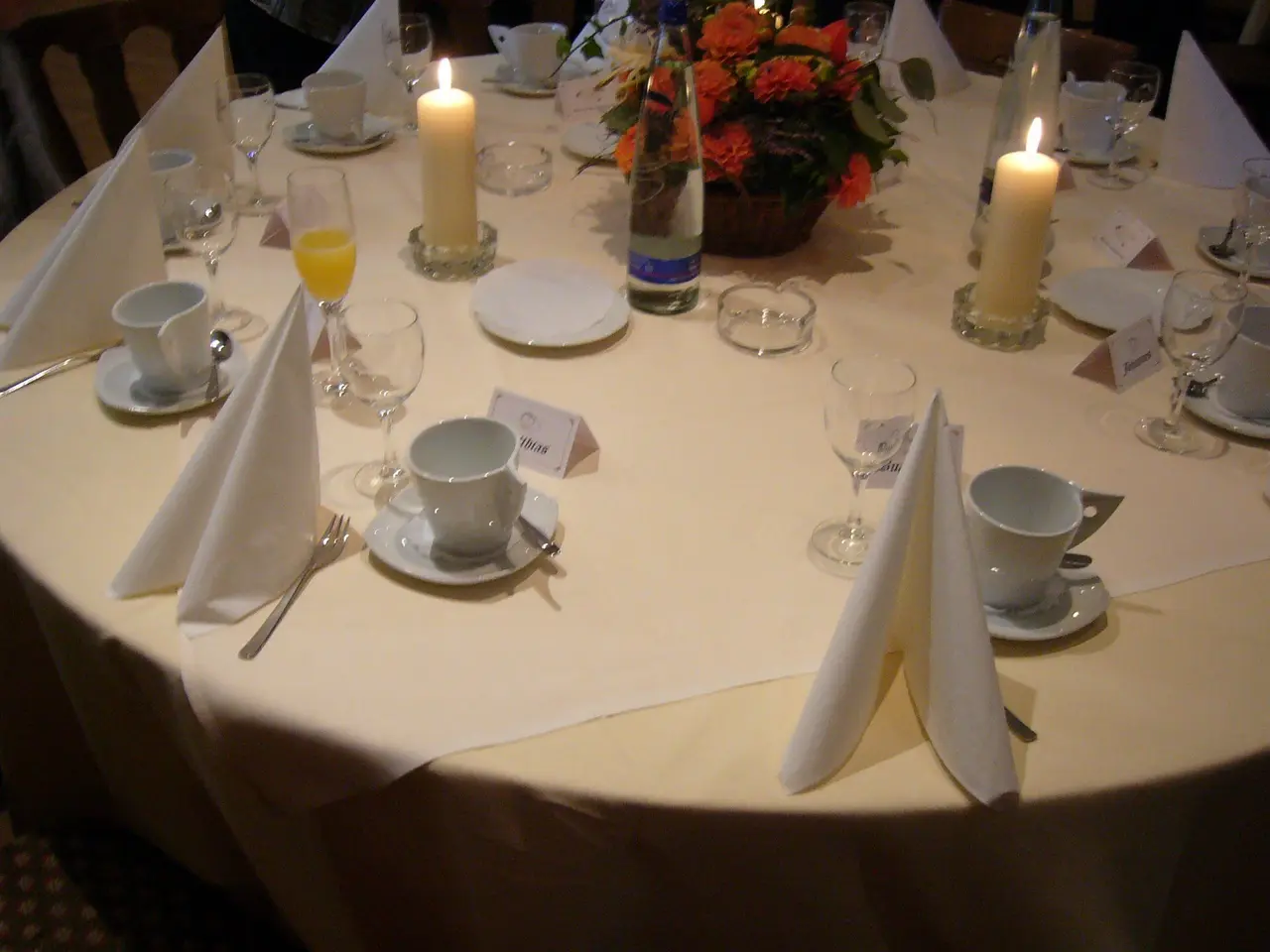
The 10-seat round table is the one you will meet most often at weddings, company parties and seafood restaurants in Vietnam. It is usually about 1.6–1.8 m in diameter depending on the restaurant, and many places add a glass lazy Susan in the middle (see Figure 3).
Preparing the table, cloth and lazy Susan
Place the table according to the hall layout and lock the folding legs. Lay the cloth so it drops evenly all round. Centre the lazy Susan base, put the glass top on and spin it once to check it does not wobble.
Dividing 10 seats evenly
Put 2 underplates opposite each other at the 12 o'clock and 6 o'clock positions, then divide each half of the table into 5 equal seats. A 1.8 m table has a circumference of about 3.14 × 1.8 = 5.65 m, so 10 seats give each guest about 56 cm. A 1.6 m table has a circumference of about 5.03 m, leaving about 50 cm each: still workable, but glasses and sauce dishes must be tucked further in. Chairs follow the plates, not where they happen to be standing.
Items on a banquet table
Each seat usually has an underplate, a bowl, a porcelain spoon, chopsticks on a rest, a sauce dish, 1–2 glasses (soft drink, beer or wine) and a folded napkin. On the lazy Susan or the centre: the table number, a low flower arrangement (never blocking the view of the guest opposite), condiments, napkins and toothpicks; chilled drinks usually come out on the banquet captain's signal rather than sitting on the table early.
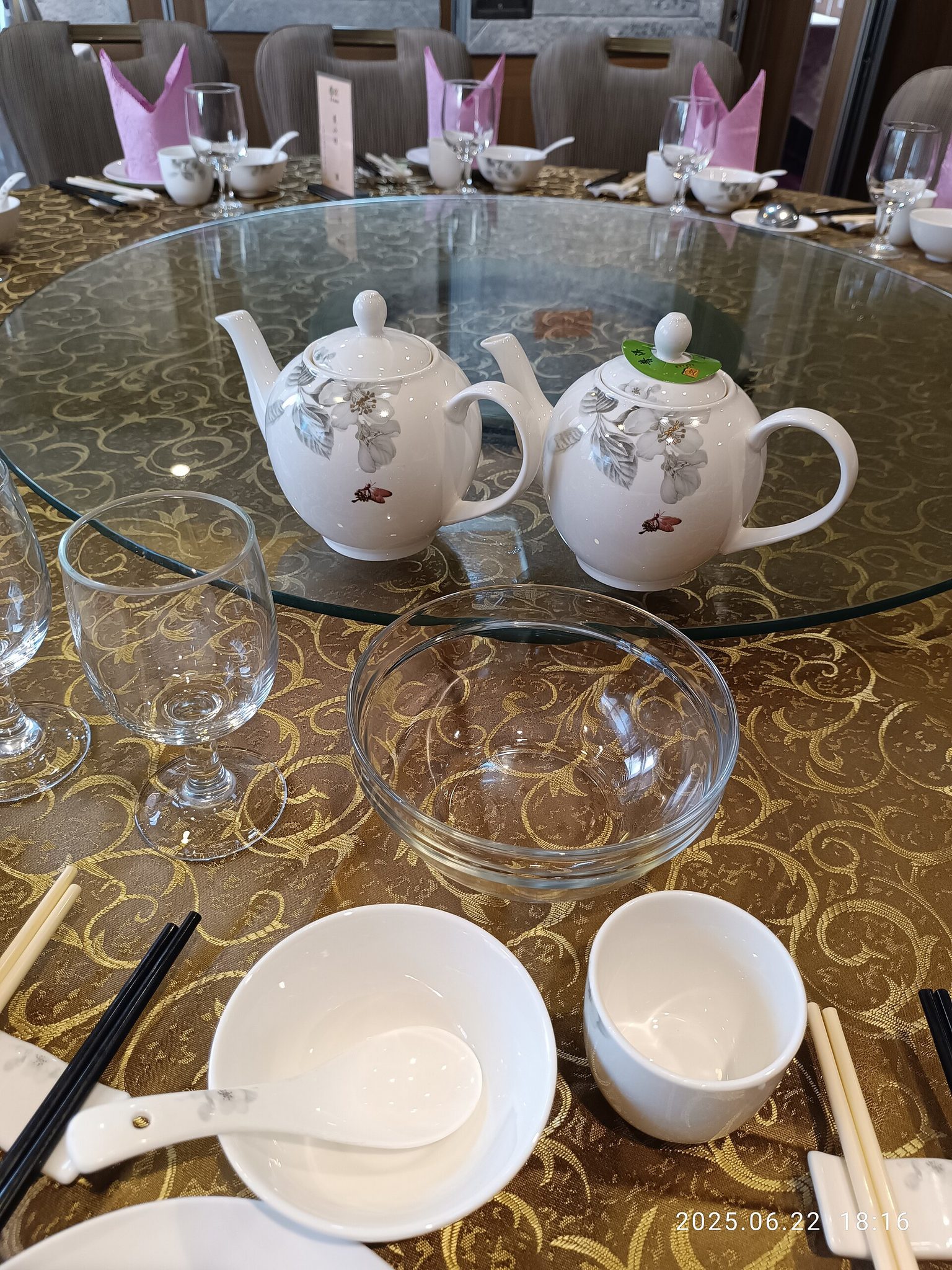
Photo: TsdgTion Orrm / Wikimedia Commons, CC0
The table below compares the three table types so you remember the key differences.
| Table type | Personal items per seat | Shared items | Common mistakes |
|---|---|---|---|
| Vietnamese, 4 people | Underplate, bowl, spoon, chopsticks, sauce dish, glass, napkin | Fish sauce, chilli sauce, salt and pepper, napkins, toothpicks | Chopsticks pointing at the next guest, forgetting the sauce dish |
| Western, 3-course menu | Plate, fork, knife, soup spoon, dessert spoon, water glass, bread plate, napkin | Salt and pepper, perhaps a small vase or candle | Knife blade facing out, cutlery in the wrong course order |
| Round banquet, 10 people | As Vietnamese, plus 1–2 glasses | Lazy Susan, table number, low flowers, condiments, napkins, toothpicks | Uneven seats, tall flowers blocking faces |
Folding napkins, polishing glasses and checking condiments
These three small jobs take up much of the prep time and are often rushed, yet guests will always notice a lipstick mark on a glass or a sticky fish sauce bottle.
Three easy napkin folds
Wash your hands before folding and fold on a clean surface, because the napkin touches the guest's mouth.
- Rectangle (book fold): fold in half, in half again into a square, then in three lengthways. Place it to the left of the fork or under it; fastest, suits à la carte tables.
- Pyramid (candle) fold: fold diagonally into a triangle, bring the two base corners up to the tip to make a square, turn it over, fold in half upwards and stand it up (see Figure 4). Suits plates on banquet tables.
- Fan in a glass: fold in half, pleat accordion-style along the length with pleats of about 2–3 cm, fold the bottom in half and tuck it into a glass so the top fans out, as in Figure 3.
Stack folded napkins on a clean tray and count enough for all guests plus spares; reject any stained or frayed napkins.
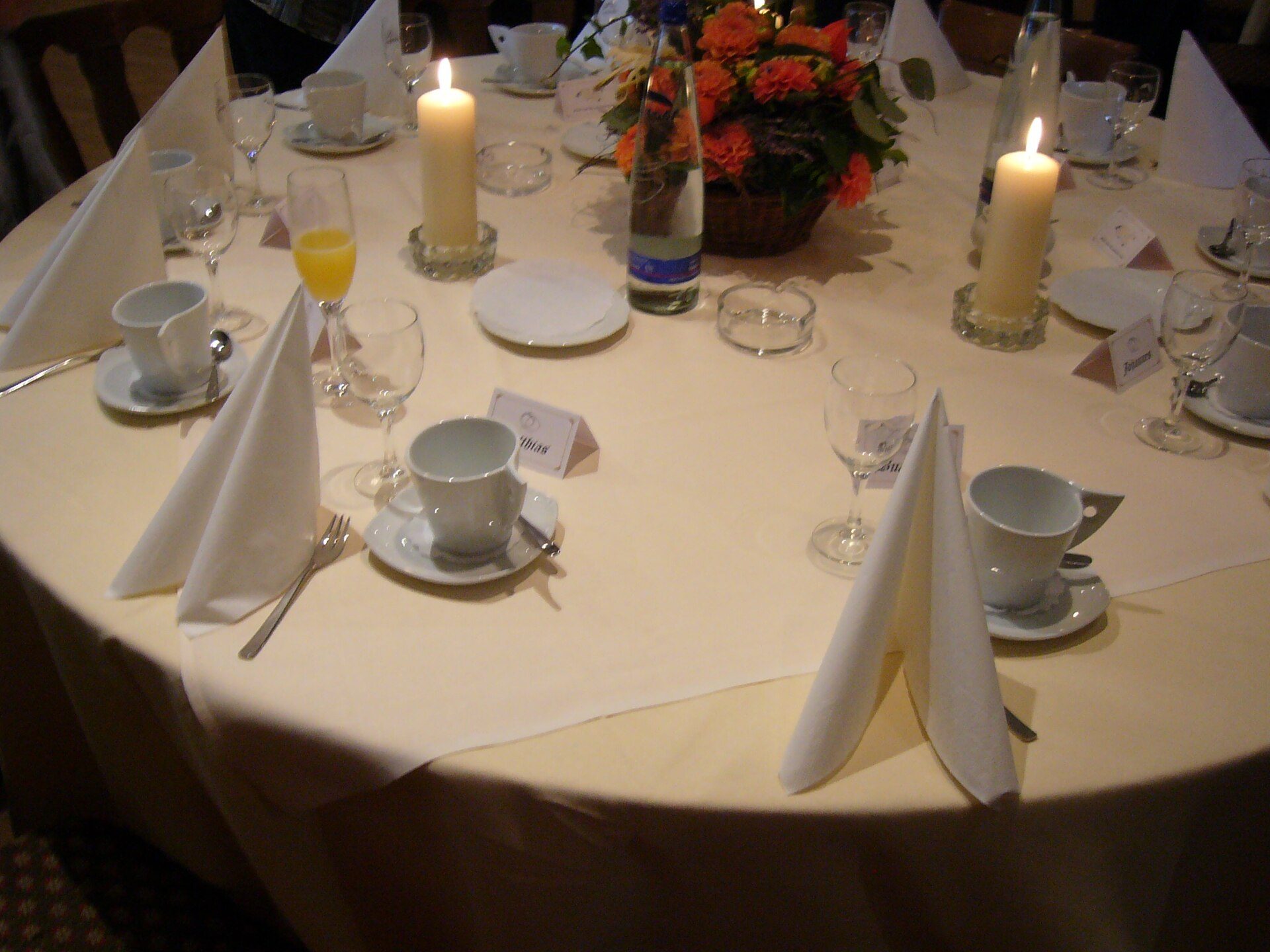
Photo: User:Mattes / Wikimedia Commons, Public domain
Polishing glasses without breaking them
- Only polish glasses that have already been washed by machine or by hand; polishing does not replace washing.
- Hold the rim over hot steam for a few seconds (a hot water urn or bucket) so a thin film of moisture forms.
- Hold the base or stem through a dry, clean, lint-free glass cloth; bare hands never touch the bowl.
- Push the end of the cloth into the glass, turn the glass and cloth in the same direction, polishing the rim and then the bowl.
- Hold the glass up to the light: water spots, lipstick or fingerprints mean polish again; a chipped rim or crack means it goes out at once.
- Place glasses upside down or on a clean tray, and carry them by the stem or lower bowl to the table.
The most common way to snap a wine glass is to hold the base with one hand and twist the bowl the other way with the other hand: the thin stem cannot take the twisting force. Always turn the whole glass in one direction, and swap a damp cloth for a dry one.
Checking and refilling condiments before opening
- Fish sauce, soy sauce and vinegar bottles: fill to about 3/4, wipe the neck and body clean so nothing drips on guests' hands.
- Salt and pepper: shake to check for lumps and blocked holes.
- Chilli sauce and chilli oil: check colour and smell, never top new on top of old leftovers; use older stock first according to house rules.
- Napkins and toothpicks: full, with dust-free holders.
Safety warning: A glass that breaks while you polish it can cut deep into your hand: never polish a cracked glass, never force a twist on the bowl, and sweep up broken glass with a brush and dustpan rather than bare hands. Steam used for polishing can scald: keep your hand out of the steam and hold the glass through a dry cloth. Round table tops and glass lazy Susans are heavy: carry them with two people, lock folding legs before setting anything on the table, and never stand on a chair to lay a cloth. Candles, solid fuel and portable gas burners go on the table unlit and are lit only as the shift leader instructs. For a burn, cool it under cool running water for 15–20 minutes; for a large or deep burn, or a cut that bleeds heavily, tell the manager and go to a medical facility.
The pre-shift briefing: sold-out items, specials and bookings
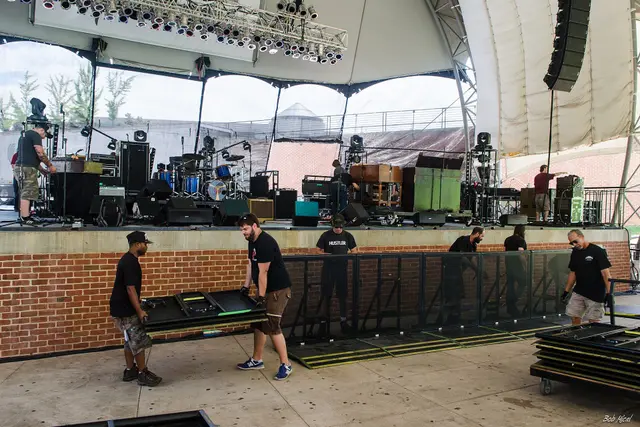
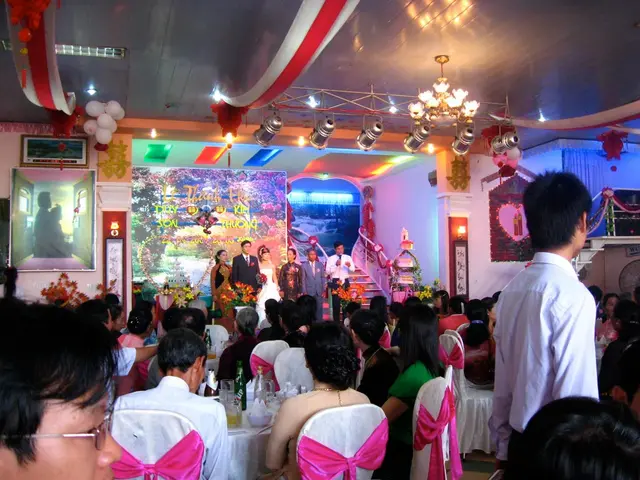
The pre-shift briefing (also called a line-up) is a short stand-up meeting of 10–15 minutes before opening, where the manager or shift leader tells the team what it needs to know for today's shift (see Figure 5). What you hear here decides which tables you set, how many seats, and what you tell guests.
What a briefing usually covers
- Sold-out items: dishes the kitchen cannot make today or has only a few portions of. You must know before guests order, so you never have to go back and say a dish is gone.
- Specials: seasonal dishes, new dishes and dishes the restaurant wants to promote; note the price, main ingredients and a one-line description to pass on to guests.
- Bookings: name, arrival time, party size, assigned table and special requests such as a birthday, high chair, quiet table or allergies already reported.
- Sections: who covers which tables, who is on the door, who helps with the banquet.
What to write in your notebook
Bring a small notebook and pen and write four lines: SOLD OUT, SPECIALS, BOOKINGS, MY SECTION. If anything is unclear (does the special contain shrimp, does the booked table need a high chair), ask during the briefing. If a booking has a guest with an allergy, write down the guest's name and the allergen; you will learn how to ask and alert the kitchen in the food allergy step.
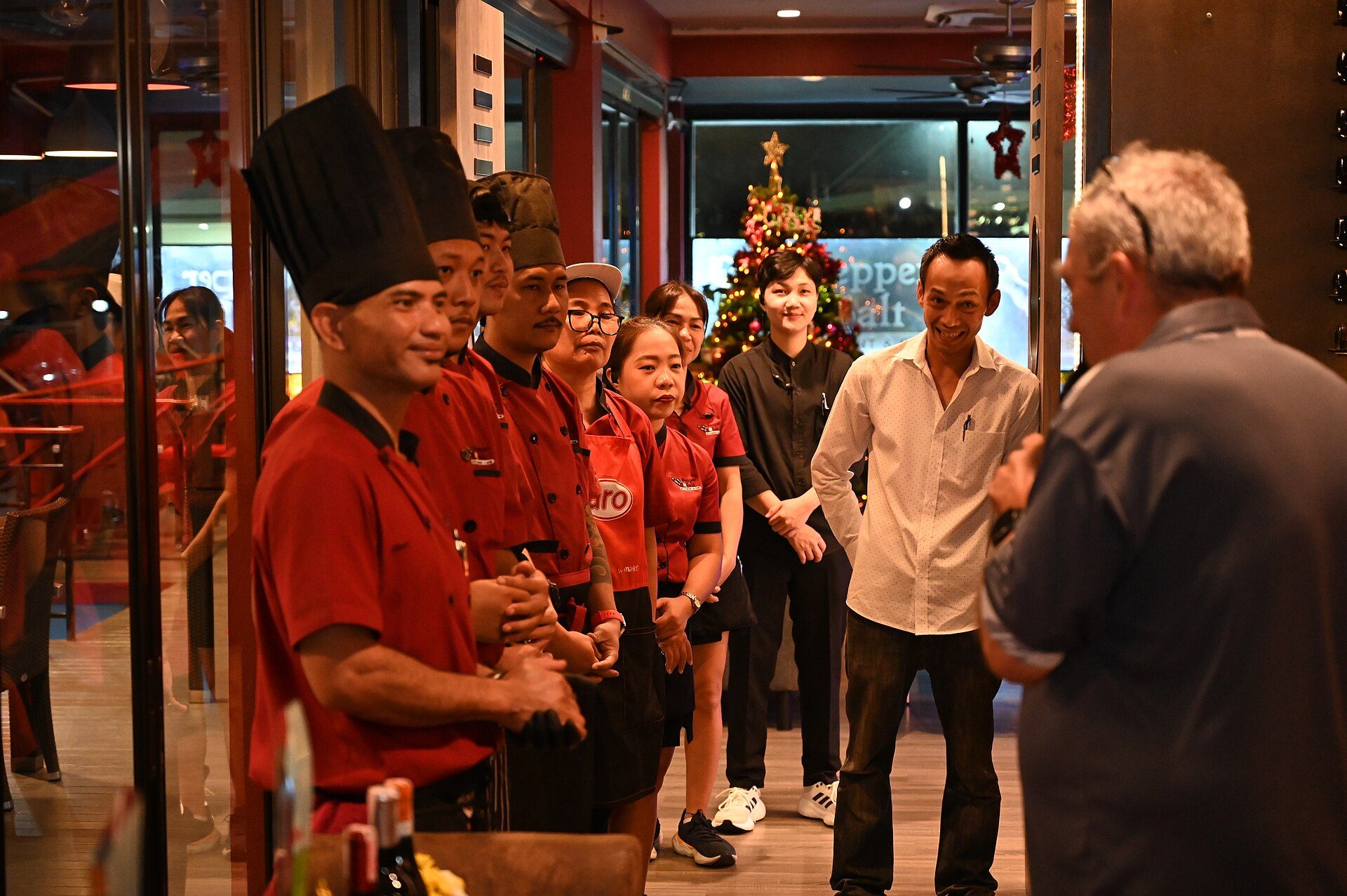
Photo: PattayaPatrol / Wikimedia Commons, CC BY-SA 4.0
Worked example: setting up a 12-table banquet in 90 minutes
On Saturday evening the restaurant hosts a wedding banquet of 12 round tables with 10 guests each. Guests start arriving at 18:30. The setup team has 4 people starting at 17:00, so there are 90 minutes. Each seat has an underplate, bowl, porcelain spoon, chopsticks, sauce dish, soft-drink glass, beer glass and folded napkin.
Step 1: count the items to bring out
Guests: 12 × 10 = 120. House rules call for 10% spares to replace dropped items or cover extra guests: 120 × 10% = 12. So each one-per-guest item needs 120 + 12 = 132 pieces. There are 2 glasses per guest, so 120 × 2 = 240 glasses, plus 10% (24), for a total of 264 glasses.
| Item | Guests × pieces | 10% spares | Total to prepare |
|---|---|---|---|
| Underplates, bowls, spoons, chopsticks, sauce dishes (each) | 120 × 1 = 120 | 12 | 132 |
| Napkins | 120 × 1 = 120 | 12 | 132 |
| Glasses (soft drink + beer) | 120 × 2 = 240 | 24 | 264 |
| Condiment sets, table numbers, flowers | 12 tables × 1 = 12 | not needed | 12 |
Step 2: work out labour time and divide the work
The shift leader estimates the pace of experienced staff (it varies between restaurants; these are example figures):
- Placing tables, laying cloths, fitting lazy Susans, arranging chairs: 4 min/table × 12 tables = 48 labour-minutes.
- Pyramid-folding napkins: 20 s/napkin × 132 napkins = 2,640 s = 44 labour-minutes.
- Polishing glasses: 10 s/glass × 264 glasses = 2,640 s = 44 labour-minutes.
- Laying place settings: 30 s/seat × 120 seats = 3,600 s = 60 labour-minutes.
- Condiments, table numbers, flowers, final check: 2 min/table × 12 tables = 24 labour-minutes.
Total: 48 + 44 + 44 + 60 + 24 = 220 labour-minutes. Split between 4 people: 220 ÷ 4 = 55 minutes each. Real time: briefing 15 minutes (17:00–17:15), work 55 minutes (17:15–18:10), leaving 90 − 15 − 55 = 20 minutes (18:10–18:30) to fix anything crooked, replace missing items, tidy uniforms and take position to greet guests.
Step 3: work in order so nobody waits
Two people place tables and lay cloths first, because nothing can be set without a cloth; the other two fold napkins and polish glasses at the service station. Then all four lay the place settings in a line: one places underplates and bowls, one spoons and chopsticks, one glasses, one napkins and condiments. Finally one person walks round all 12 tables counting seats and adjusting.
Common table setting mistakes and how to fix them
Uneven seats on a round table
Sign: two guests bump elbows while the other side has a gap. Cause: plates were placed where the chairs happened to be. Fix: place 2 opposite plates first, divide each half into 5, then move the chairs to match the plates.
Glasses with water spots or fingerprints
Sign: the glass looks cloudy against the light, with a ring at the bottom. Cause: polishing with a damp cloth, or touching the glass with bare hands afterwards. Fix: swap to a dry cloth as soon as it gets damp, hold the glass by the stem or lower bowl through the cloth, and check each glass against the light before setting it.
Frequently asked questions
Which restaurant table setting should a beginner learn first?
Learn the 4-person Vietnamese table first because it is the most common, then the 10-seat round banquet table, and the Western cover last. At any restaurant, ask for the house reference photo and practise exactly that layout.
How is a wedding banquet setup different from a normal table setup?
A wedding banquet sets many tables at once to one pattern, with table numbers, flowers and sometimes place cards and table skirts; drinks and dishes come out on the banquet captain's signal. That is why you count every item, work in an assembly line and check table by table, as in the example above.
What is the easiest way to remember Western cutlery placement?
Forks on the left, knives and spoons on the right, knife blades facing the plate, and guests work from the outside in, course by course. Glasses go top right, the bread plate top left.
What if the manager talks too fast at the briefing?
Write the key words first, then at the end ask about exactly what you missed, especially sold-out items and bookings in your section. Asking before opening is always better than guessing wrong in front of a guest.
Practice tasks and self-assessment
- Set a 4-person Vietnamese table against the clock; photograph it from above and from table level.
- Set one Western cover for a 3-course menu (soup, main, dessert), naming each piece of cutlery aloud as you place it.
- Fold 10 napkins in each style, polish 20 glasses and check each one against the light.
- Redo the worked example for a 15-table banquet with 10 guests per table and 10% spares.
Self-assessment criteria
- Pass: the 4-person Vietnamese table has all 7 items at each seat in about 3 minutes, and opposite plates line up when viewed across the table.
- Pass: the Western cover is in the right order: on the right the soup spoon outermost, then the knife with its blade facing the plate; the fork on the left; the dessert spoon horizontal above.
- Pass: the 10 seats on a round table differ by no more than a few centimetres; all 20 glasses are spotless against the light.
- Pass: the 15-table banquet works out to 150 guests, 15 spares, 165 pieces of each item and 330 glasses.
- Not yet: twisting the stem against the bowl while polishing, putting a chipped glass on the table, or being unable to list the sold-out items after the briefing.
With the tables set, you move on to the next step of the roadmap: Carrying trays, serving & clearing, where you learn one-hand tray carrying, holding 3 plates, serving from the correct side and clearing tables quickly and quietly. The lesson How to carry a serving tray without spilling covers that step in detail; to review how to handle glasses and plates hygienically, see Restaurant server grooming and hygiene.
Keep learning restaurant service: after table setting come tray carrying and clearing, ordering on a POS, presenting dishes and upselling, handling allergies and complaints, then running a section on a busy shift. See the 8-step restaurant server roadmap.