There is no single answer to how much you should spend on Facebook ads per day. Small shops just starting out in Vietnam usually test with about 100,000–300,000 VND a day per ad set (roughly 4–12 US dollars), but your right number must be worked out backwards from the profit on each order and the number of orders you want. Spend too little and the delivery system does not get enough data to learn; spend too much before you know which ads work and you burn money. This lesson shows you how to set a budget from three numbers, split it into a testing phase and a scaling phase, and know when to increase spend and when to switch ads off.
By the end of this lesson, you will be able to:
- Calculate the maximum cost you can pay for one order (your advertising break-even point) from the selling price, the cost of goods and delivery costs.
- Convert that into a maximum cost per message based on your shop's closing rate.
- Plan a testing week and a scaling week for 3 ad sets, with totals that add up.
- Apply 4 rules for raising and cutting budgets without wrecking the learning phase.
- Choose between campaign budget (CBO) and ad set budget (ABO) for each situation.
Want to learn to run ads systematically? See the 8-step Facebook Ads Specialist roadmap: from policies, Business Manager and Pixel to campaign structure, reading results, and a real project with a budget of 3–5 million VND.
Quick answer: how much do Facebook ads cost per day?
Technically, Meta lets you set a very low budget — Ads Manager will warn you if you enter less than the minimum for your optimisation goal and your account's currency. But "able to run" is not the same as "running at a profit". The right question is: how much do you need each day for the system to find customers while you still make money?
Reference levels by phase (2026)
| Phase | Reference daily budget | Duration | Goal |
|---|---|---|---|
| Testing (beginners, small shops) | 100,000–300,000 VND per ad set | 5–7 days | Find the ads and audiences with a low cost per message or per order |
| Stable | 300,000–1,000,000 VND per campaign | 2–4 weeks | Keep cost per order below target, with steady orders |
| Scaling | 1,000,000 VND and up | Depends on stock and capacity to handle orders | More orders without cost per order going above break-even |
These ranges are 2026 references for online retail shops in Vietnam and depend on the product category, the season and the region; they are not a Meta price list. Highly competitive categories such as cosmetics, real estate and education usually pay more per impression than budget fashion or household goods.
What does your ad money actually pay for?
Most ads are charged by impressions: you pay by CPM (cost per 1,000 impressions), even when you optimise for messages or purchases. The system runs an auction against other advertisers targeting the same viewer. That is why the same 200,000 VND may buy fewer impressions during the year-end sales season than in an ordinary month. Besides the amount you set, check the Billing section to see the real total spent, including any taxes and fees required by law.
Why not start with 50,000 VND a day?
With a cost per message of about 15,000 VND, 50,000 VND buys only 3 messages a day. Three messages are not enough to tell a good ad from a bad one — the difference could be pure luck. A tiny budget also means the system takes many days to exit the learning phase (explained below).
Three numbers that decide your budget
Before opening Ads Manager, pick up a calculator (Figure 1) and work out three numbers. Professional media buyers always start here; beginners usually skip this and only look at whether "cost per message is cheap or expensive" without knowing how cheap it has to be to make a profit.
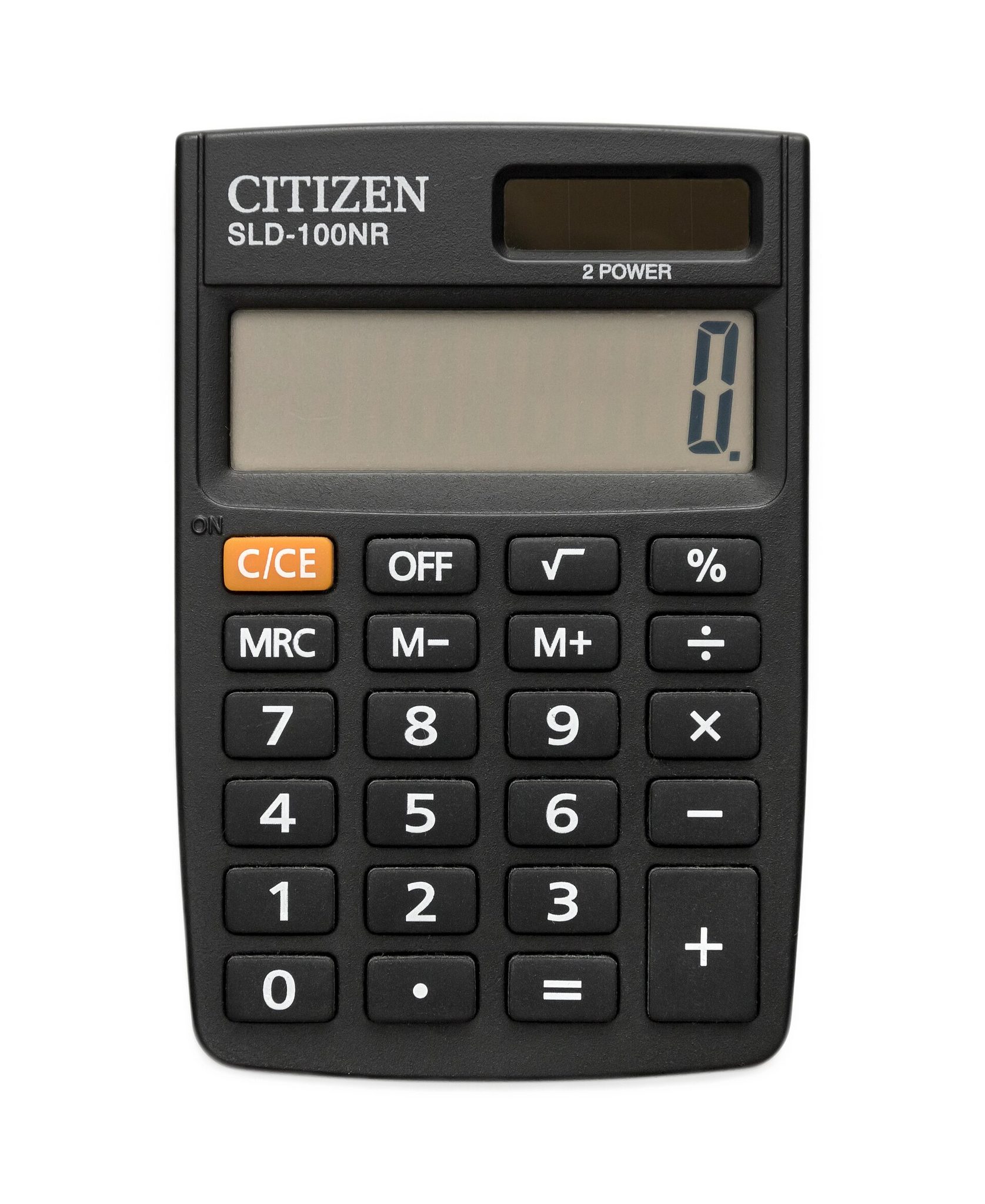
Photo: LoMit / Wikimedia Commons, CC BY-SA 4.0
Number 1: gross profit per order before advertising
Take the selling price and subtract the cost of goods, packaging, the part of the shipping fee the shop pays, and an allowance for returns. The result is the maximum you can spend on advertising to get one order without making a loss — your break-even CPA (CPA: cost per action, in this case per order).
Number 2: target CPA
You do not want to just break even. Decide how much profit you want to keep on each order; what remains is your target CPA. For example, with a break-even CPA of 100,000 VND and a desired profit of 40,000 VND per order, your target CPA is 60,000 VND.
Number 3: closing rate from messages
Most Vietnamese shops run message ads and close the sale in Messenger. Count over the last 2–4 weeks: out of every 100 people who message you, how many place an order? If you have no data yet, use 20–25% for moderately priced products and update it after one week. Maximum cost per message = target CPA × closing rate. With 60,000 VND and 25%, that is 15,000 VND.
From three numbers to a daily budget
Daily budget ≈ orders wanted per day × target CPA. For 5 orders a day at a target CPA of 60,000 VND you need about 5 × 60,000 = 300,000 VND a day. If that is more than you can afford, lower the number of target orders rather than forcing your CPA down to an unrealistic level.
The learning phase and budget structure
Every time you create a new ad set or make a significant edit, Meta's delivery system enters the learning phase: it shows the ads to many kinds of people to find who is most likely to take the action you optimise for. According to Meta's guidance, an ad set usually needs about 50 optimisation events within 7 days of its last significant edit to exit the learning phase. During this phase, costs typically fluctuate a lot.
The budget must cover 50 events a week
If you optimise for messages at 15,000 VND per message, 50 messages a week costs about 750,000 VND a week, or just over 100,000 VND a day — affordable for a small shop. If you optimise for website purchases at a CPA of 60,000 VND, 50 orders a week costs 3,000,000 VND a week, about 430,000 VND a day for one ad set. This is why beginners on small budgets usually start with a messages objective, or optimise for an event earlier in the funnel.
CBO or ABO?
ABO (ad set budget) — you set money for each ad set; good for testing because every audience and every ad gets an even share of spend for a fair comparison. CBO (campaign budget, which Meta now calls Advantage+ campaign budget) — you set one total for the campaign and the system shifts money towards the best-performing ad sets; good once you know which ad sets work and want to scale. Beginners should test with ABO and scale with CBO.
Daily budget or lifetime budget?
A daily budget makes cash flow easy to control and suits campaigns that run continuously. Note that the system may spend somewhat more or less than the set amount on a given day, but averaged over a week it will not exceed Meta's limits. A lifetime budget suits promotions with a clear end date, such as a 3-day sale.
Worked example: a men's T-shirt shop, the first 2 weeks
Mr Minh sells men's T-shirts online in Hanoi and has never run ads. All figures are an illustrative example using 2026 references. Figure 2 shows a familiar scene for any shop: every order you close must be packed, labelled and shipped — and these costs must be counted before you set a budget.

Photo: Meanwell Packaging / Wikimedia Commons, CC BY 2.0
Step 1: work out the three numbers
| Item | Amount (VND) |
|---|---|
| Selling price of one T-shirt | 250,000 |
| Cost of goods | − 110,000 |
| Packaging + the shop's share of shipping | − 30,000 |
| Allowance for returns | − 10,000 |
| Break-even CPA | 100,000 |
| Profit to keep per order | − 40,000 |
| Target CPA | 60,000 |
| Closing rate from messages 25% → maximum cost per message | 15,000 |
Step 2: testing week (ABO)
- One campaign with a messages objective and 3 ad sets: A, broad targeting of men aged 22–40 in Hanoi; B, men's fashion interests; C, a lookalike audience based on past customers.
- 100,000 VND per day for each ad set, with the same 3 ads in all 3 ad sets.
- Total for week 1: 3 × 100,000 × 7 = 2,100,000 VND.
- Results at the end of the week: A 14,000 VND per message, B 22,000 VND per message, C 16,000 VND per message.
Step 3: week 2 — switch off the weak ad set, move money to the good ones
- B is nearly 50% over the 15,000 VND limit after 7 days → switch it off.
- A goes up to 200,000 VND per day, C stays at 100,000 VND per day: a total of 300,000 VND per day × 7 = 2,100,000 VND.
- The average cost comes in at 15,000 VND per message → 2,100,000 ÷ 15,000 = 140 messages; closing 25% = 35 orders.
- Actual CPA: 2,100,000 ÷ 35 = 60,000 VND, exactly on target. Profit after advertising: 35 × (100,000 − 60,000) = 1,400,000 VND.
Step 4: deciding on next month
The two weeks cost 4,200,000 VND (about 165 US dollars). Week 2 held the target CPA at 300,000 VND a day, which works out to about 9,000,000 VND for a full 30 days. Mr Minh only scales further when there is enough stock and his staff can answer messages in time — 20 messages a day is already a substantial load for one person who also packs orders.
When to increase and when to cut the budget
Raising the budget is exactly when beginners tend to ruin their best campaign: at 15,000 VND per message, doubling the budget in one go can push the cost up to 25,000 VND. The reason is that a big change sends the ad set back into the learning phase, and the system has to reach more people in less efficient pockets of the audience. The four rules below are common practical experience, not Meta rules.
Photo: HuangWending18072009 / Wikimedia Commons, CC0
Rule 1: only judge with enough data
Do not switch off or scale after a few hours. Wait at least 3 days, or until the ad set has spent about 2–3 times your target CPA (in the example above, 120,000–180,000 VND) without a single order, before concluding that it is weak.
Rule 2: increase in small steps
Increase by about 20–30% at a time, 2–3 days apart, while costs stay below target. From 200,000 VND to 250,000 VND, then 300,000 VND. To scale faster, duplicate a winning ad set into a new one with its own budget instead of doubling the old one.
Rule 3: switch off ad sets that clearly cross the threshold
An ad set whose cost per order exceeds the break-even CPA after enough data should be switched off, not left to "see how it goes for a few more days". An ad set above target but below break-even is worth trying with new creatives before switching it off.
Rule 4: cut back when stock or sales staff cannot keep up
A message that goes unanswered for 15–30 minutes is wasted ad money. If the shop cannot keep up, reduce the budget or run ads only during staffed hours; do not leave messages waiting overnight.
Common mistakes when setting an ad budget
Figure 4 is a simple reminder: every unit of currency spent on ads should come back as an order. The four mistakes below make money go out without coming back.

Photo: Shixart1985 / Wikimedia Commons, CC BY 2.0
Spreading the budget too thin
Sign: 10 ad sets at 30,000 VND a day each, all of them stuck in "Learning". Cause: wanting to test everything at once. Fix: no more than 3–4 ad sets in a testing week, each with enough money for several messages a day.
Editing every day
Sign: costs swing up and down and no ad set exits the learning phase. Cause: changing audiences, ads and budgets every morning. Fix: batch changes, edit on a schedule of every 2–3 days, and record them in a log.
Looking only at cost per message, not at orders
Sign: messages are cheap at 8,000 VND, but people only ask the price and then go quiet. Cause: the ad attracts the curious, not buyers. Fix: compare against real orders every week and calculate CPA rather than just cost per message.
Using borrowed money or stock money to "push" the budget
Sign: running out of money for stock just as ads start bringing in orders. Cause: expecting that spending more means earning more. Fix: only use an amount you can accept losing during the testing week, and keep the ad fund separate from the stock fund.
Financial warning: advertising does not guarantee orders. Do not believe promises like "spend 1 million, get 10 million back", and never use high-interest short-term loans to fund ads. Set an account spending limit in Billing so you do not overspend if you forget to switch a campaign off.
Frequently asked questions
Is 100,000 VND a day enough for Facebook ads?
It can be, if you run just 1 ad set optimised for messages and the cost per message is around 10,000–20,000 VND. That gives you 5–10 messages a day, enough to learn and close a few orders. Split 100,000 VND across many ad sets and it becomes hard to evaluate anything.
How much do Facebook ads cost per month?
Multiply your daily budget by 30. Small shops typically spend 3–10 million VND a month (2026 reference); the practice project in the NAMBIN roadmap uses 3–5 million VND over 2–4 weeks.
Should I hire someone to run my ads?
If you can learn the three numbers in this lesson and have time to check results daily, you can run ads yourself. If you hire someone, ask clearly about the management fee (usually a percentage of spend or a flat fee), who holds the ad account, and which metrics they will report. The ad account must be in your name.
The ads ran for 1 day with no orders — should I switch them off?
Not yet, unless you have already spent more than 2–3 times your target CPA. On day one the system is still learning; evaluate after 3 days or once there is enough data.
At what budget should I use CBO?
Once 2–3 ad sets have proven themselves and the total budget is enough for each to get several events a day — usually from about 300,000–500,000 VND a day upwards for a message-based shop.
Practice exercise: a 2-week budget for one product
- Choose a real product (yours or a friend's) and write down the selling price, cost of goods, packaging, the shop's share of shipping and the returns allowance.
- Calculate the break-even CPA, the target CPA and the maximum cost per message using Mr Minh's table.
- Build a testing-week table: number of ad sets, budget per ad set, weekly total.
- Write your switch-off and scale-up rules for week 2 in advance, with concrete numbers (for example "switch off if > 22,000 VND per message after 3 days").
- Estimate the number of messages per day and check whether the shop has enough people to reply.
Self-assessment criteria
- Pass: the three numbers are calculated correctly; the two-week total matches the per-ad-set table; the switch-off and scale-up rules have thresholds in money and days.
- Pass: each ad set's budget covers at least 5 messages a day at the maximum cost you calculated.
- Not yet: the budget is set by gut feeling ("let's try 50k and see"), there is no break-even CPA, or the rules only say "switch off if it looks bad".
Setting the right budget is only half the job; the other half is reading the results. The next step of the roadmap is Reading metrics and performance reports: CPM, CTR, CPC, cost per message, CPA, ROAS, and how to explain them to a shop owner. See the full 8-step Facebook Ads Specialist roadmap, which also includes the lessons on disabled ad accounts and on installing the Pixel to track orders more accurately.