A client books a 30-minute "Red Dao herbal bath" after a long week. A new therapist makes the water very hot, because "hot water lets the herbs work", helps her in and goes next door to tidy another room. Fifteen minutes later the client presses the call bell: she is dizzy, her heart is racing, and when she stands up she sways and has to grab the edge of the tub. Nothing was wrong with the herbs. What went wrong was water that was too hot, a soak nobody was timing, and a client left alone.
A herbal bath (in Vietnamese tắm lá thuốc người Dao đỏ, a soak in water brewed from dried leaves) is a familiar service at spas and homestays in the northern mountains, and more and more city spas offer it. It looks simple. Doing it properly means: labelled herbs prepared exactly as the supplier says, a thermometer instead of your hand, health questions before you accept the client, a time limit, someone within reach the whole time, a plan for when something goes wrong, and a tub cleaned and dried after every client.
Scope. This guide is for new spa therapists. In a spa, a herbal bath is a relaxation service. It does not detox the body, cure joint or back pain, cause weight loss or replace postnatal or medical care, so never present it that way. All temperatures and times below are common practice and for reference only: always follow the product label, your spa's written procedure and your manager. For clients with a health condition, who are pregnant or who are under treatment, their doctor's advice comes first. Sauna and steam rooms, herbal compresses, foot soaks and body wraps have their own guides.
What a herbal bath is, and how it differs from a steam room or a foot soak
These services are often lumped together because they all use warmth and herbs, but the way you run them and the risks are different:
Sauna or steam room: the client sits in a hot room and is exposed to hot air or steam.
Herbal foot soak: only the feet and ankles go into warm water, usually at the start of a foot massage.
Herbal bath: the client sits in a tub, usually wooden, with warm herbal water up to about chest height. With water around most of the body, heat, thirst and tiredness build up much faster than in a foot soak, and the client is alone in a closed room with a wet floor. A herbal bath is not "a big foot soak".
According to Sa Pa tourism material, each Red Dao family has its own recipe of dried leaves, stems and roots, boiled for hours. City spas usually buy packaged dried herbs (boiled on site) or herbal concentrate (mixed with hot water), and you work from that product, not from a family recipe.
Quick reference table for one herbal bath
The figures below are common practice, for reference only, so you can compare them with your own spa's procedure. They are not a mandatory standard.
Item | Reference value | Notes for the therapist |
|---|---|---|
Water temperature when the client gets in | About 37–40°C | First-time, older or easily tired clients: stay at the lower end. Never "the hotter the better". |
Upper limit | Not above about 40°C | Many hot tub safety guidelines abroad advise not going above this; your spa may set a lower limit. |
Soaking time | About 15–20 minutes | First time: about 10–15 minutes. If the client feels tired, stop early; don't push to "finish the time". |
Water level | Chest height when seated | No soaking up to the shoulders for first-timers or clients who heat up quickly. |
Check-ins during the soak | About every 5 minutes | Ask through the door or stay close; the call bell is always within reach. |
Rest after leaving the tub | About 15–20 minutes | Sitting or lying down, kept warm, with warm water to drink before the next service or going home. |
Herbal mixing ratio | As on the supplier label | Every product is different; never invent your own recipe. |
Preparing the herbs and the herbal water
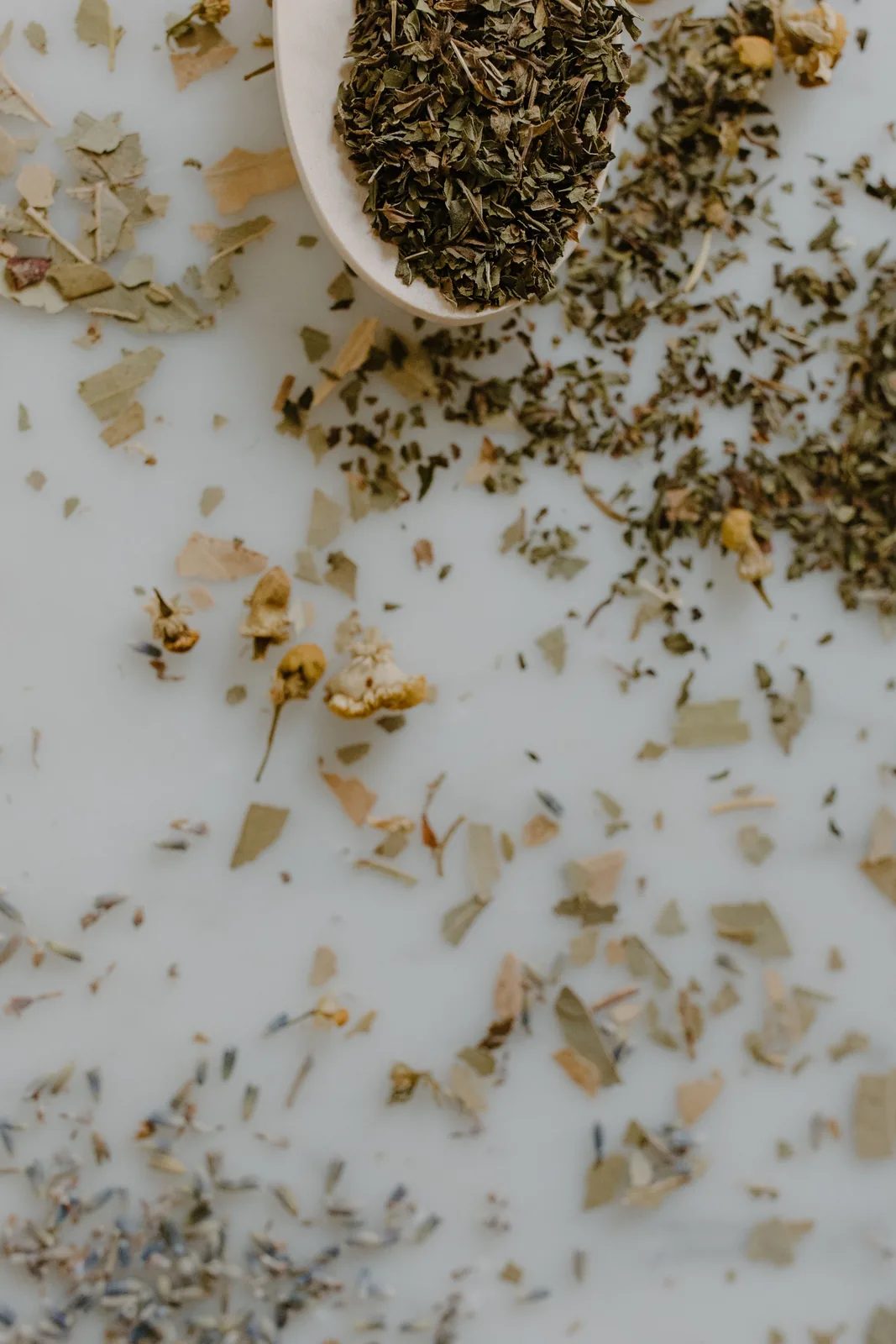
Figure 1. Assorted dried herbs and leaves are scattered over a white surface, with a wooden scoop of crumbled dark green leaves at the top. Herbs for the tub should come from a labelled pack, be fully dry and free of mould, and be used only as the supplier describes. (Photo: Tara Winstead, Pexels, Pexels License)
Choosing the herb source
Buy only products whose label shows the name, main ingredients, directions, expiry date and place of production.
Do not pick wild plants or add extra leaves to the bath. Some plants irritate the skin, and a non-specialist cannot tell them apart.
Dried herbs must be fully dry, smell herbal and show no mould; concentrate must not smell sour or fermented or have a film on top.
Write the batch number and the date the pack was opened in your log. If a client later reports itching or a rash, you will know which batch was used.
Boiling the herbs or mixing the concentrate
Follow the label exactly for the amount of herbs per tub, the boiling time and the mixing ratio for concentrate. A few general rules:
Boil herbs in the kitchen or service area, and strain out the leaves and stems before pouring into the tub, so the client does not sit on twigs and bits of leaf.
A pot of boiled herbal water is heavy and extremely hot. Pour it into the tub before the client enters the room, wear heat-resistant gloves, ask a second person to help if the pot is heavy, and never carry a hot pot past a client.
Herbal water is dark (yellow-brown to deep red), so you cannot judge its temperature by its colour. Always measure with a thermometer after mixing.
Storage
Keep dried herbs dry, closed, out of the sun and away from cleaning chemicals; store opened concentrate as the label says. Herbal water not used on the day is thrown away, never kept overnight and reheated.
Setting up the treatment room and the tub
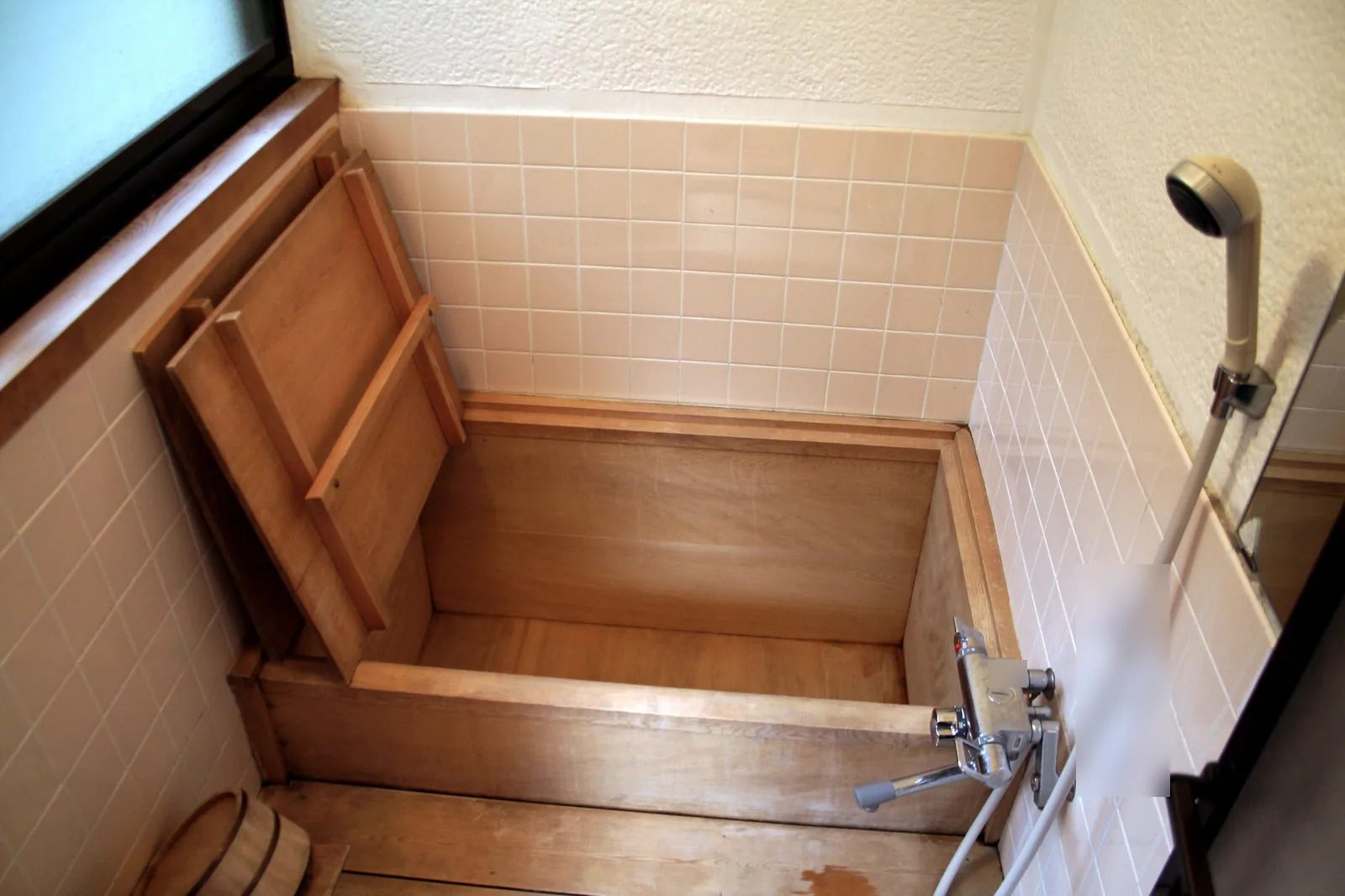
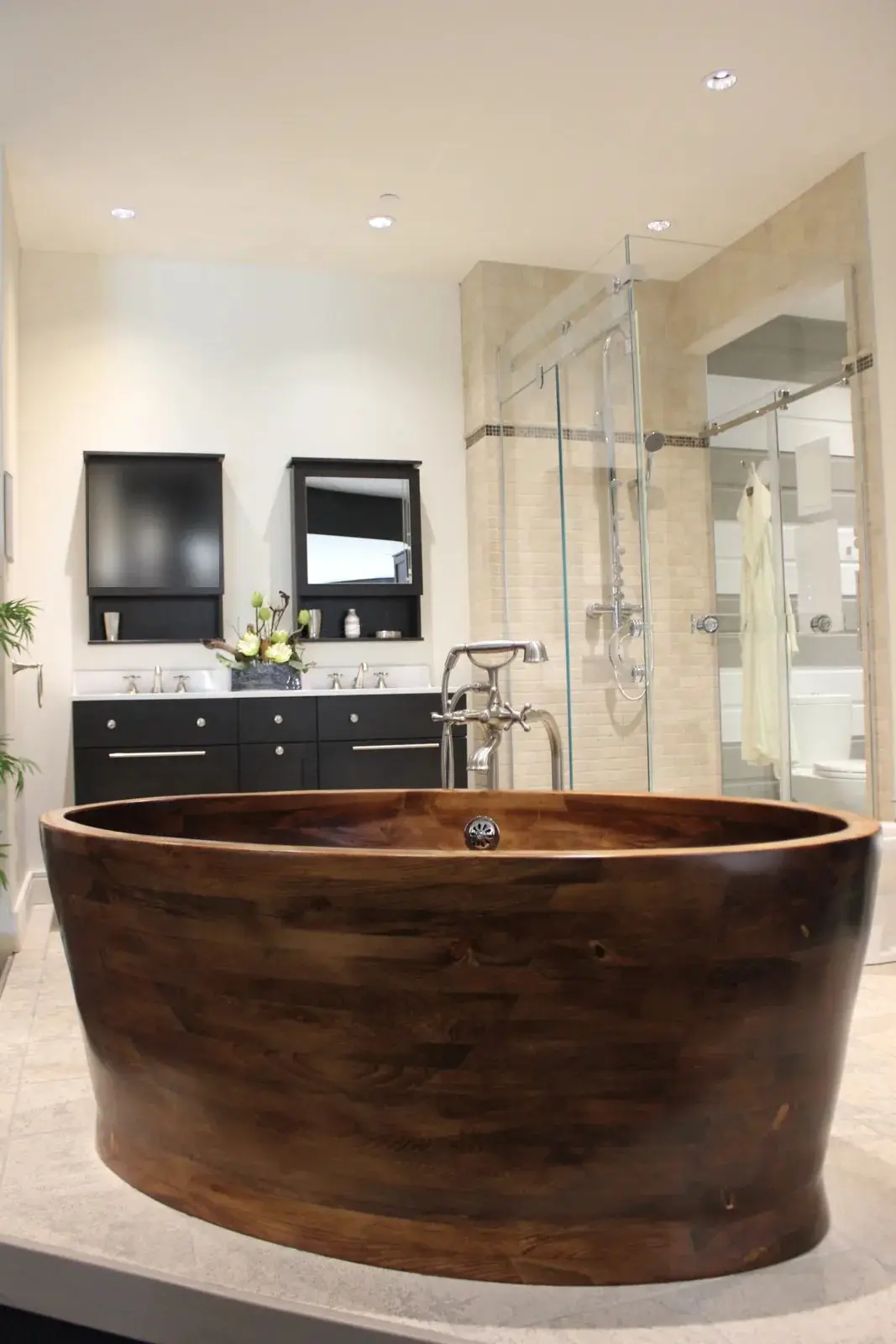
Figure 2. A deep square wooden bathtub sits in a small tiled bathroom, with its wooden lid boards lifted and leaning against the side wall, a hand shower and mixer tap on the tiled wall beside it and a wooden bucket in the corner. Before each client, check for cracks and splinters, keep the floor dry and have the shower ready. (Photo: BradBeattie, Wikimedia Commons, CC BY-SA 3.0)
Before every client, check the room from the floor up:
Floor: dry, with a non-slip mat at the point where the client steps in and out. The most dangerous moment is stepping out of the tub, with wet feet and possibly a slightly light head.
Tub: clean, no herb residue, no cracks, no splinters; a firm step if the tub is tall, and a grab rail or a rim strong enough to hold on to.
Water supply: hot and cold water both working, so you can add cold water quickly if the client feels too warm; a hand shower for rinsing before and after.
Electrics: sockets, dryers and heat lamps dry and well away from the tub; no extension leads or charging phones beside it.
Ventilation: the door stays closed for warmth, but an extractor fan or vent must work. A stuffy room tires clients quickly.
Supplies: towels, a robe, slippers, a glass of warm water, a water thermometer, a timer and a call bell within the client's reach.
Door: it must not lock from the inside, or it must open from the outside, in case a client faints.
Client screening before the soak
Read the health form and ask the key questions again just before the bath, in a natural tone: "Before you get into the warm water, I'd just like to ask you a few quick questions for your safety."
Decline, or accept only with a doctor's approval
Pregnancy: many spas do not offer full-body hot soaks to pregnant clients. If your spa has a different policy, the client needs her doctor's approval and you follow the spa's rules.
Heart disease, high or low blood pressure, a history of fainting, epilepsy, diabetes (especially with reduced feeling in the hands or feet), or ongoing treatment for a chronic condition.
Fever, marked tiredness, just recovering from an illness, or an infectious illness.
Postpone to another day
Alcohol in the last few hours, or medicines that cause drowsiness or dizziness.
A very heavy meal just before, or very hungry and weak.
Open wounds, grazes, inflamed or infected skin, a rash, or bad sunburn.
Same-day waxing, full-body scrub or peel: the skin stings easily with hot water and herbs, so book another day following your spa's procedure.
Ask more and adjust
Past allergy to herbs or essential oils, or very sensitive skin: do a skin check with the herbal water first (Step 2 below) and keep the soak shorter.
Older clients, first-timers, or people who feel tired in hot baths: lower end of the temperature range, shorter soak, more frequent check-ins.
Clients who are menstruating: explain the spa's hygiene policy kindly and let the client decide or choose another service.
When you postpone, suggest a lighter alternative service and write the reason on the client record.
Step-by-step: running a herbal bath
Step 1. Fill the tub and check the temperature
Pour in the strained herbal water (or concentrate at the label ratio), then top up to the planned level. Stir the whole tub well, because hot water rises and the bottom stays cooler. Measure in the middle of the tub, at the depth where the client will sit, and wait for the reading to settle before you read it.
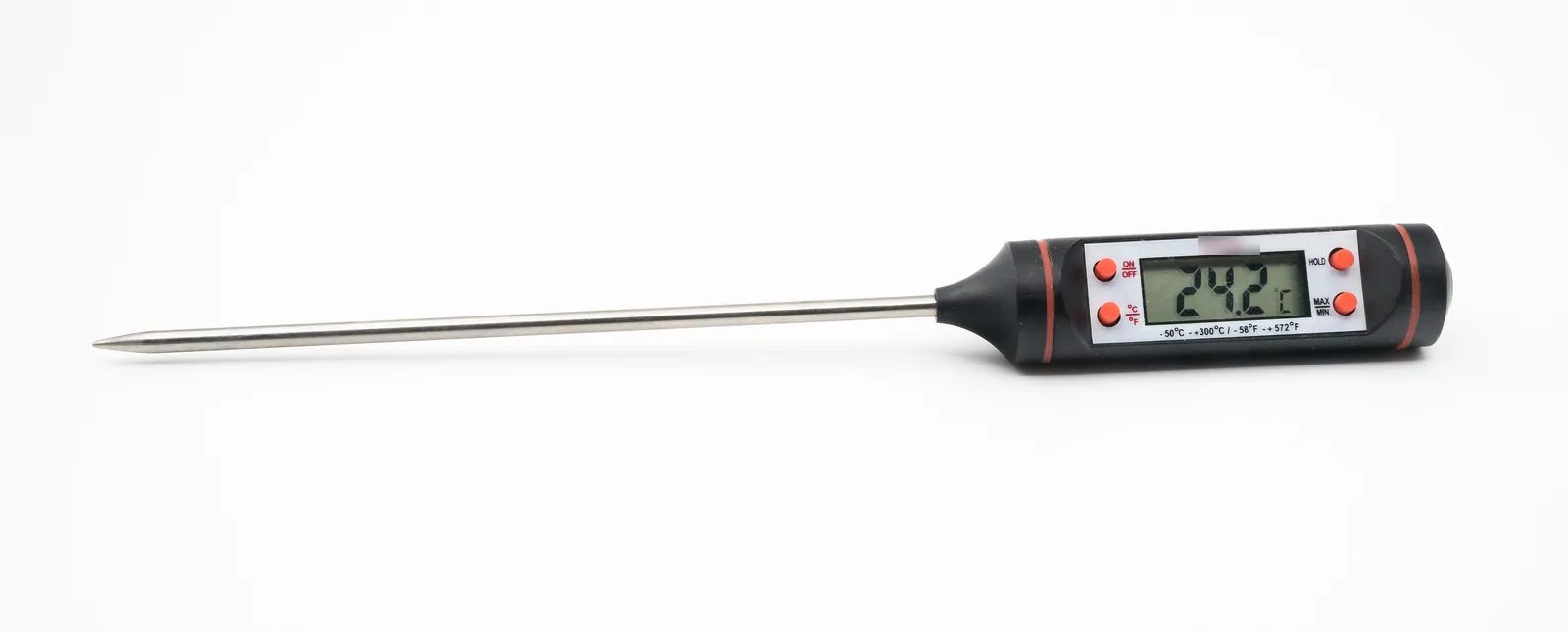
Figure 3. A digital probe thermometer with a long steel stem and a black handle shows its reading on a small display, photographed on a white background. A probe or floating water thermometer gives you a number to record; your hand only gives you a guess. (Photo: Jacek Halicki, Wikimedia Commons, CC BY-SA 4.0)
Never decide by hand that it is "just right": a therapist who handles hot towels and stones all day gets used to heat. Use a water thermometer you trust, compare it now and then with a second one, and log the reading.
Step 2. Skin check with the herbal water
For first-time clients or anyone with a history of allergy, dab a little cooled herbal water on a small patch of skin on the inner forearm and wait a few minutes. If the skin turns red, stings, itches or comes up in bumps, do not go ahead: record it and offer another service. This quick check does not rule out every allergy, so you still watch the client throughout.
Step 3. Brief the client before they get in
Keep it short and clear:
Use the toilet, have a quick rinse in the shower, tie up long hair, remove jewellery, and take a few sips of warm water.
Step in slowly, hold on, and sit down gradually so the body gets used to the warmth.
Only soak up to chest height. No putting the head under, no face in the water, no drinking the bath water.
If you feel dizzy, sick, your heart races, you feel short of breath, or your skin itches or burns, press the bell or call out straight away. Don't try to sit it out.
Step 4. The client gets in, the timer starts
Stay close while the client climbs in, then ask: "How does the water feel?" If it is too hot, add cold water and stir; never talk them into "putting up with it so the herbs soak in". Start the timer the moment they sit down and tell them clearly: "We'll soak for about 15 minutes, and I'll check on you every few minutes."
Step 5. Supervise during the soak
This is the step most often skipped, and the most important one.
The therapist in charge stays within earshot and does not go off to work on another floor. Never leave a client unsupervised in the tub.
Check in about every 5 minutes. If the client answers vaguely or not at all, knock, say you are coming in, and go in to check at once.
A very red face, heavy sweating, pale lips or fast breathing mean it is time to invite the client out.
Never add boiling water while the client is in the tub. If the water needs warming up, ask the client to sit on the chair outside the tub, add hot water, stir, measure again, and only then invite them back in.
Step 6. Help the client out on time, slowly
Many people feel light-headed for a few seconds when they stand up out of warm water. Give a one-minute warning, ask the client to sit up straight for a moment, then stand slowly, holding on. Stay right beside them as they step out, wrap a towel around them and seat them on a chair at once, rather than letting them stand drying off.
Step 7. Rest, warmth and hydration
Dry off, dress warmly (especially if the rest area is air-conditioned), offer a glass of warm water and let the client rest for about 15–20 minutes. Whether to rinse after the soak depends on the product directions and the client's preference; there is no need to promise that "leaving it on makes it work better". Remind clients who ride a motorbike home to leave only when they feel fully alert.
Step 8. Record the session
Record the water temperature, actual soaking time, batch number and any reaction or complaint, so next time you know what suits this client.
Combining a herbal bath with massage or a steam room
Herbal bath first, massage after is common, but let the client rest and drink first, and watch for dizziness when they change position.
Do not put a herbal bath straight after a sauna or steam room to "boost the effect": two heat sessions back to back tire and dehydrate clients faster. If a package has both, add a rest break and shorten each part.
No waxing or scrubs straight after a herbal bath.
Stop signs and first aid
Help the client out of the tub at once if they have
Dizziness, blurred vision, nausea, headache, or feel "floaty".
Palpitations, a racing heart, shortness of breath or chest tightness.
Red, stinging or itchy skin, a rash or hives where the water touched.
Drowsiness, slow answers or confusion.
What to do
Help the client out of the tub slowly. Do not let them jump up on their own.
Sit or lay them down in a dry, airy place. If they feel dizzy, lay them down and raise their legs if that feels better to them.
Dry them off and offer small sips of water if they are fully alert.
Itching or a rash: rinse off the herbal water with cool water. Do not put any cream or medicine on the skin yourself.
Tell your manager, stay with the client, and do not let them leave alone until they have recovered.
Call 115 (emergency services) if
The client faints or does not come round, has difficulty breathing, chest pain, a seizure, is confused and cannot answer properly, or the face, lips or tongue swell quickly with difficulty breathing. While waiting, follow the operator and your spa's first-aid trained staff. Afterwards, write up the incident as your spa requires.
Cleaning and drying the tub after every client
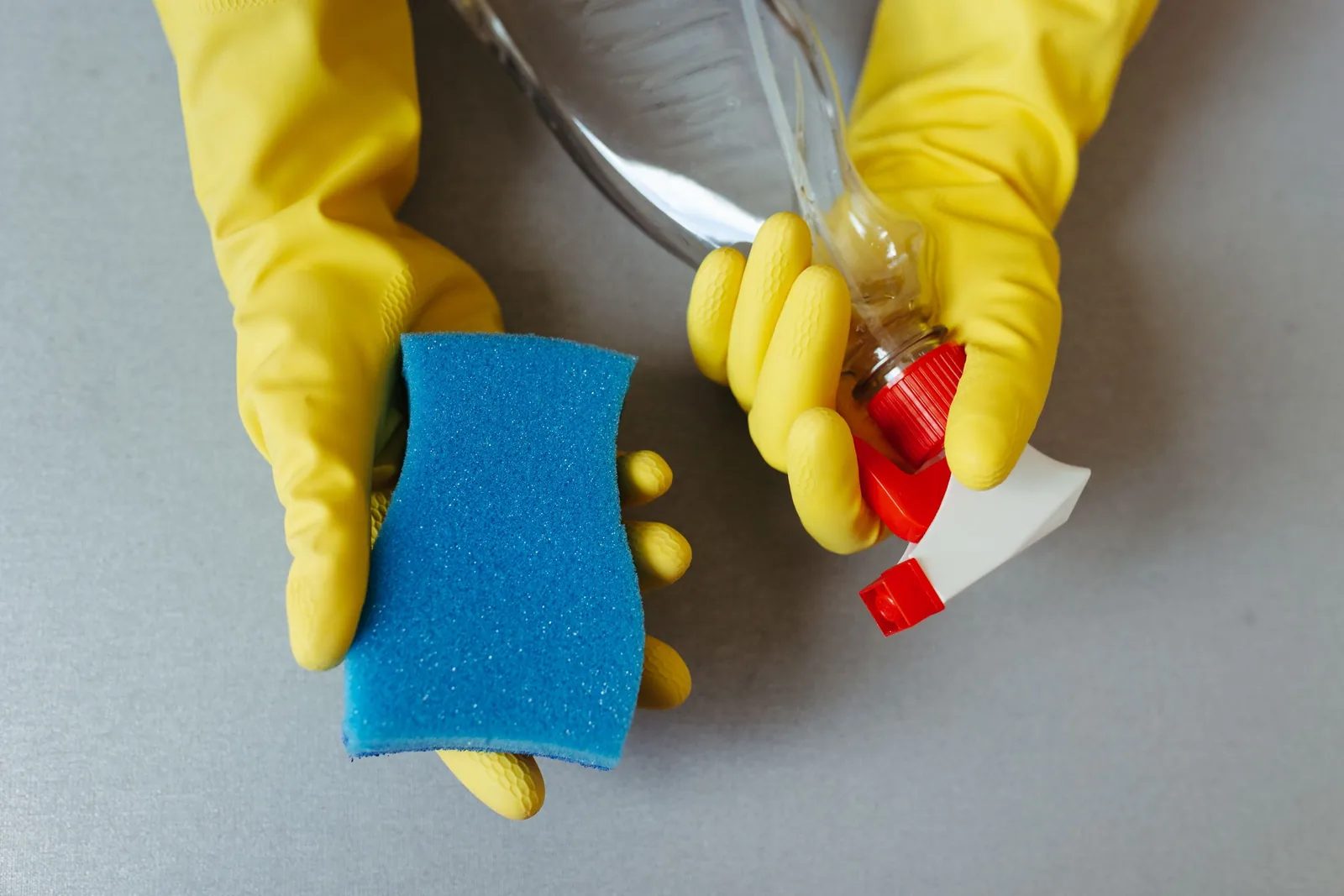
Figure 4. Hands in yellow rubber gloves hold a blue sponge and a clear spray bottle with a red trigger above a grey surface. After every client: drain, scrub, rinse, disinfect as your spa's product label says, and dry the tub and floor. (Photo: Jonathan Borba, Pexels, Pexels License)
Warm herbal water carries organic matter from plants and skin, which feeds bacteria and mould. Rule number one: fresh water for every client. Never reuse the previous client's water, however clean it looks.
Put on gloves, drain all the water, and remove leaf residue from the bottom and the drain.
Scrub the sides and bottom with a soft brush or sponge and a cleaner suited to the tub material (wooden tubs usually do not tolerate harsh chemicals or wire brushes). Pay attention to the rim, where clients rest their arms and neck.
Rinse well, then disinfect using your spa's chosen product at the concentration and contact time on its label; rinse again if the label says so.
Dry the tub with a clean cloth, then leave the lid off or open so it dries completely. A wooden tub that stays damp all the time goes mouldy, discoloured and smelly.
Wipe the floor, chair, water scoop and grab rail; change the non-slip mat and towels.
At the end of the day, look for cracks, loose hoops and black mould spots. If a tub is damaged, report it to your manager and take it out of use.
Practical example: a regular who wants it "as hot as in Sa Pa"
Mr Tuan, a 52-year-old regular, tells you that on a trip to Sa Pa he soaked in "scalding water and it felt great", and asks for the same. His health form says he takes blood pressure medicine.
The right way to handle it:
Don't argue. Explain: "We keep the water in a safe range. Very hot water can make you dizzy, especially on blood pressure medicine."
Ask about his doctor's advice. He says he was told to avoid very hot or long baths. You tell your manager, who accepts him at the lower end of the range with a shorter soak.
You measure 38°C in the middle of the tub, note it in the log and set the timer for 12 minutes; you check in at 5 and 10 minutes.
You help him stand up slowly; he rests for 20 minutes and drinks warm water before his massage. You update his record.
What the therapist does not do: make the water hotter to please him, leave him to soak alone until the timer goes off, or say "this herbal bath helps lower blood pressure".
Safety checklist
Herbs or concentrate labelled, in date, no mould; batch number logged.
Tub clean, no cracks or splinters; fresh water for each client.
Floor dry, non-slip mat in place, grab rail firm; no electrical equipment near the tub.
Room ventilated; door can be opened from outside.
Health form read, key questions asked again, skin check done if needed.
Water stirred, measured with a thermometer, reading recorded.
Stop signs explained; call bell within reach; timer started when the client sits down.
Check-ins about every 5 minutes, therapist within earshot; no boiling water added while the client is in the tub.
Client helped up slowly, rested, kept warm and given water.
Water drained, tub cleaned and dried, room reset; session recorded.
Frequently Asked Questions
A client asks whether the herbal bath helps with weight loss, detox or back pain. What do I say?
Be honest: it is a relaxation service, and many clients feel warm and comfortable afterwards. It does not detox the body, does not cure back or joint pain and does not cause weight loss, so you do not promise any of these. Suggest that a client with long-lasting back or joint pain sees a doctor.
The client wants a longer or hotter soak than the spa allows. What then?
Explain kindly: "Soaking too long or too hot can make you dizzy when you stand up, so I keep it at this level for your safety." If they want more time, invite them out to rest and drink first, then decide according to spa rules. Never simply extend the soak without a break.
I'm alone on shift with a client in the bath and a new client arrives. What should I do?
The client in the tub comes first. Ask the new client to wait or a colleague to welcome them. If you are often alone on shift, suggest the spa does not book herbal baths at those times.
Practice Exercises
Temperature layers. Fill a tub without stirring and measure at the surface, the middle and near the bottom; then stir well and measure again. Compare the readings and write down what you notice.
Read the label. For the herbal product your spa uses, write down the ingredients, the mixing ratio, the warnings, the expiry date and the batch number. If anything is missing, tell your manager.
Screening role play. A colleague plays a client who has just drunk beer, one on blood pressure medicine and a first-timer. Decide: accept, postpone or adjust, and explain kindly.
Incident drill. The client reports dizziness at minute 10. Practise helping them out, laying them down, telling the manager and writing the log. Time the team.