Proper aftercare for a new tattoo comes down to 4 things: keep the dressing on for as long as the artist says, wash gently with clean water and a mild fragrance-free soap 2–3 times a day, apply a very thin layer of aftercare product, and avoid soaking, sun, scratching and picking until the skin has healed. Most tattoos that end up faded, blurred or inflamed got that way because the client applied too much ointment, went swimming too early or picked the scabs, not because of the needle or the ink. This lesson is written for tattoo apprentices: you need to understand the process so you can explain it to clients in person and on a printed sheet, recognise warning signs, and know when to tell a client to see a doctor.
By the end of this lesson, you will be able to:
- Explain day by day how a client should remove the dressing, wash and moisturise a new tattoo.
- Explain how long a tattoo takes to heal through 4 stages, and what is normal at each stage.
- Answer "what should I avoid after getting a tattoo?" with real reasons, separate from folk beliefs.
- Recognise signs of an infected tattoo or ink allergy and refer the client to a doctor in time.
- Put together an aftercare kit and work out usage and cost with figures that add up.
Learning tattooing properly? Consultation and aftercare instructions are step 2 of the roadmap, right after sterile practice and preventing bloodborne infection. See the 8-step tattoo artist roadmap to learn in the right order.
Why a new tattoo needs care like an open wound
During tattooing, the needle punctures the skin thousands of times a minute to deposit ink in the dermis. After the session the surface is a wide graze that weeps fluid and may ooze a little blood and excess ink. The skin barrier is temporarily broken, so bacteria from hands, clothing and dirty water can get in.
Poor aftercare harms both health and the artwork
Infection causes pain, may need medicine and can leave scars. Even without infection, picking scabs early or soaking for a long time pulls ink out, leaving patchy, faded areas that need a touch-up. For a studio, a badly healed tattoo is bad advertising, however good the work was on the day.
The artist's responsibility starts before tattooing
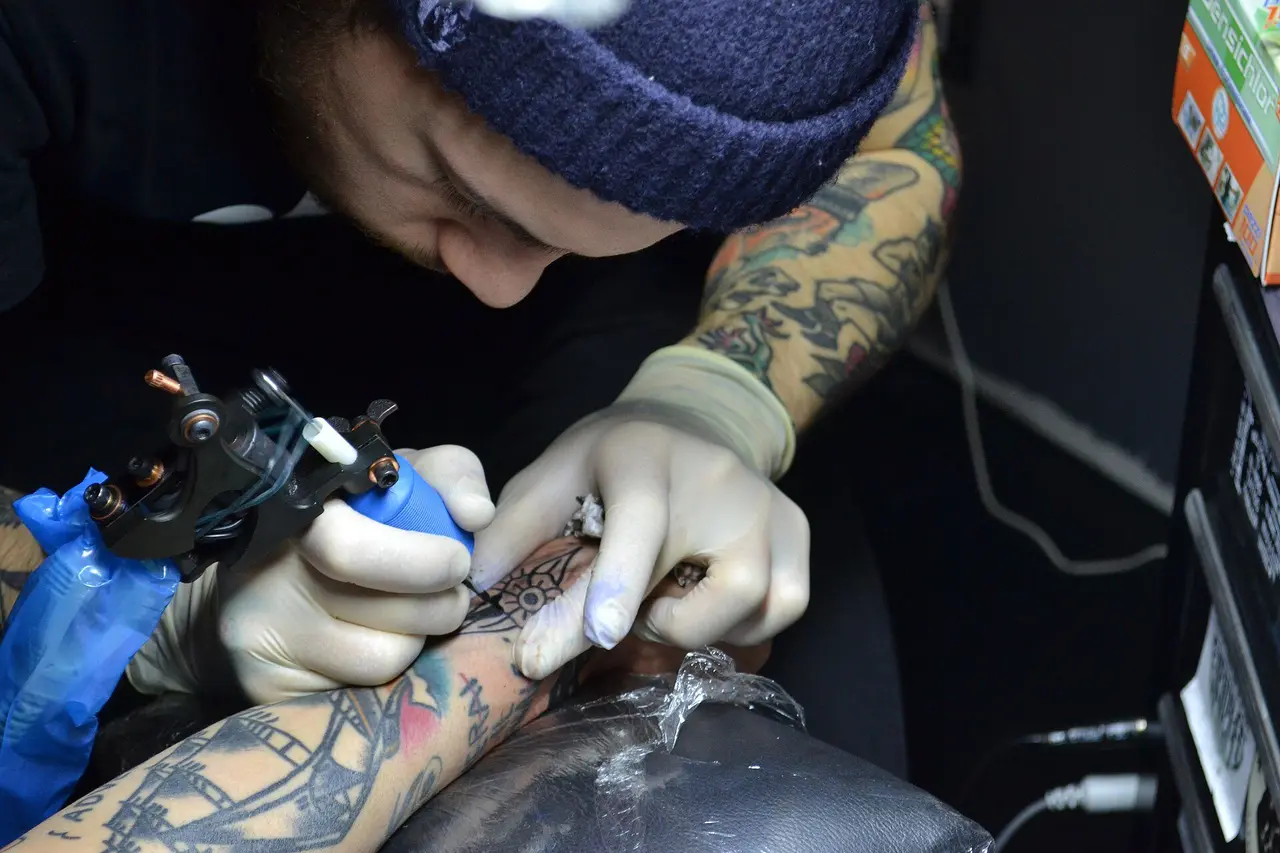
Aftercare only works if the session was sterile: single-use needles and cartridges, fresh gloves, barrier film on the machine and cord, ink dispensed into single-use caps (see Figure 1). If this part goes wrong, even perfect aftercare struggles to save the result. That is why the roadmap puts sterile practice at step 1.
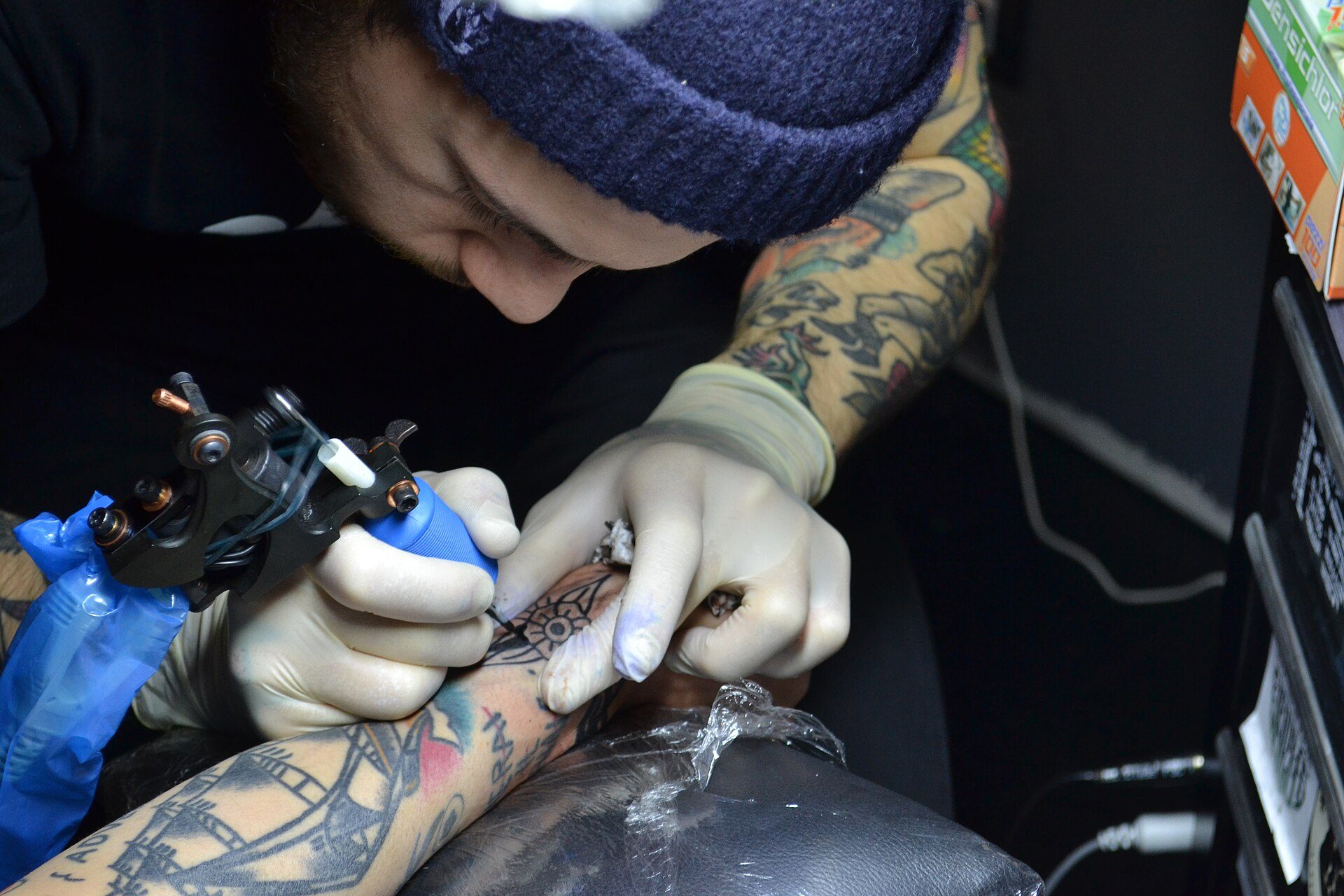
Photo: Technopop.tattoo / Wikimedia Commons, CC BY-SA 4.0
Straight after tattooing: wrapping and instructions at the studio
The last minutes of a session decide whether the client goes home with a clean wound. Complete every step below before the client leaves the chair.
Cleaning and dressing
- Change into fresh gloves. Remove excess ink and fluid with clean paper towel and a suitable cleansing solution, dabbing, not rubbing.
- Let the client see the tattoo and take a quick photo within a few minutes; do not leave it exposed to dusty air for long.
- Dress it with professional tattoo wrap or a transparent tattoo film (Figure 2), extending about 2–3 cm beyond the edge of the design.
- Write on the aftercare sheet: dressing type, time applied, when it may be removed.
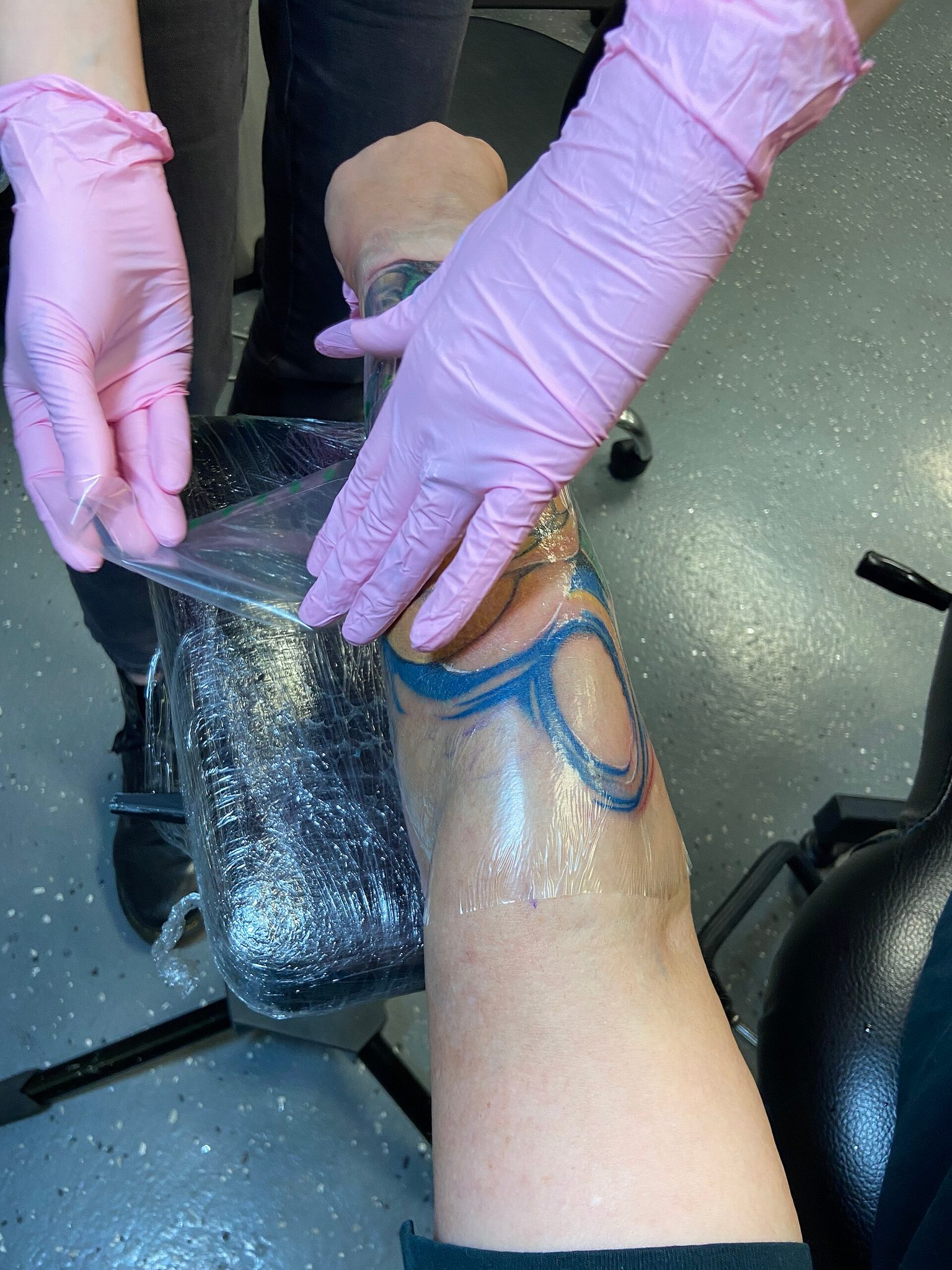
Photo: Myotus / Wikimedia Commons, CC BY-SA 4.0
Ordinary wrap versus transparent film
| Dressing | Typical wear time | Advantages | Remove early when |
|---|---|---|---|
| Professional plastic tattoo wrap | A few hours, often 2–4 hours or as the artist advises | Cheap, easy, suits large pieces | Dirty, slipping, lots of fluid pooling |
| Transparent "second skin" film | Often 3–5 days per the maker's and artist's instructions | Little washing on day one, protects from rubbing | Fluid leaking past the edges, edges lifting, itching or rash under the film |
Under a transparent film, it is normal on day one to see fluid mixed with ink pooling into a pocket. But if fluid leaks out of the edges, the film lifts, or the skin around the edge turns red and itchy, the client must remove it, wash the area and switch to open aftercare.
A printed aftercare sheet
Clients who have just been tattooed are usually tired and forget half of what they hear. Give every client a printed sheet with the washing and moisturising schedule, the list of things to avoid, signs that need a doctor and the studio's phone number. Keep a signed copy on file together with the pre-tattoo consent form.
The aftercare routine: how to wash, and what to put on a new tattoo
Washing and moisturising are simple but must be regular and gentle. Here is how to instruct the client once the dressing is off.
How to wash a tattoo
- Wash hands with soap for at least 20 seconds before touching the tattoo.
- Wet the tattoo with clean, lukewarm water, never hot.
- Lather a mild, fragrance-free soap in the hands and wash gently with the fingertips, no cloth, sponge or brush.
- Rinse the soap off fully and pat dry with clean paper towel, no rubbing. Let it air-dry for 10–15 minutes before applying anything.
What to apply after tattooing
Apply a very thin layer of the product the artist recommends: a healing ointment or fragrance-free lotion meant for fresh tattoos, just enough for a slight sheen, not a greasy wet layer (see the pre-portioned ointment in Figure 3). A thick layer suffocates the skin, keeps it too moist, can blur the ink and gives bacteria a place to grow. Usually apply 2–3 times a day after each wash.
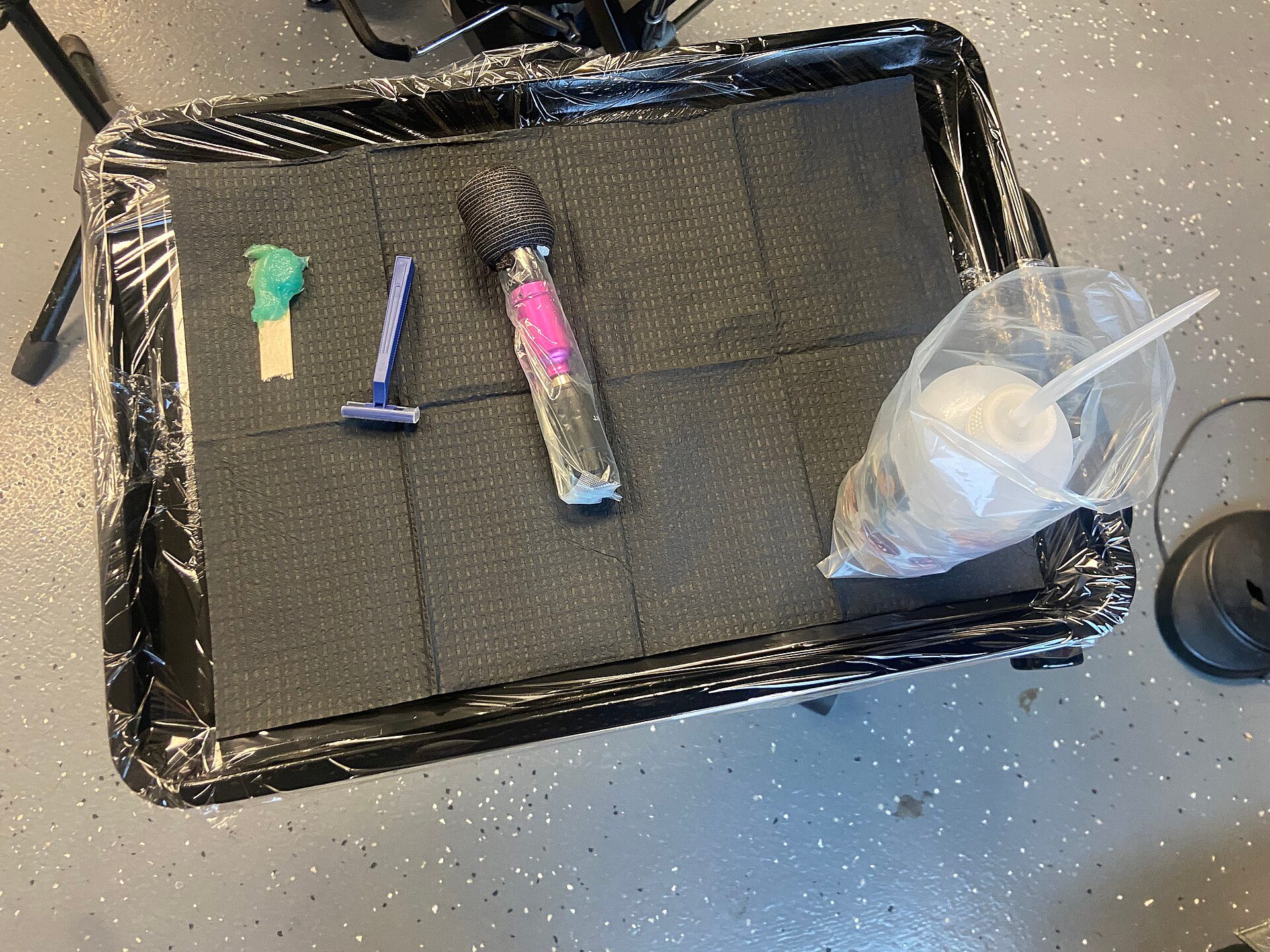
Photo: Myotus / Wikimedia Commons, CC BY-SA 4.0
Things not to apply without advice
- Antibiotic creams, steroid creams or someone else's medicine: only on a doctor's advice; self-treating can cause allergy and mask infection.
- Coconut oil, turmeric, toothpaste, leaves or "family remedies": not sterile and easily irritating.
- Moisturisers with fragrance, alcohol or exfoliants (AHA, BHA, retinol) on healing skin.
How long does a tattoo take to heal? 4 stages clients should know
The skin surface usually heals in about 2–4 weeks, but the deeper layers take longer, often several months. Timing varies with the size of the piece, location, amount of ink, the client's skin and aftercare. Explain it by stage so clients know what is normal.
| Stage | Typical timing | Normal | Client's job |
|---|---|---|---|
| 1. Weeping | Days 1–3 | Mild redness around the design, slight swelling, warmth, clear fluid mixed with ink | Wash gently 2–3 times a day, thin layer of ointment, loose clothes |
| 2. Flaking and itching | About days 4–14 | Thin ink-coloured flakes coming off in small pieces, itching | No scratching or picking; tap lightly or apply a thin layer when itchy |
| 3. Cloudy skin | About weeks 2–4 | The tattoo looks dull and shiny, as if under a film | Keep moisturising lightly, no soaking yet, cover from the sun |
| 4. Deep healing | About 1–3 months or longer | Colours clear up, skin softens | Sunscreen outdoors; book a check and touch-up if needed |
What a just-finished tattoo looks like
Right after tattooing, the skin around the lines is usually slightly red and pink at the edges, and the design looks shiny from fluid and ointment (Figure 4). Mild redness that fades over 1–3 days is normal. Redness that spreads and pain that increases after day 2–3 is no longer normal.
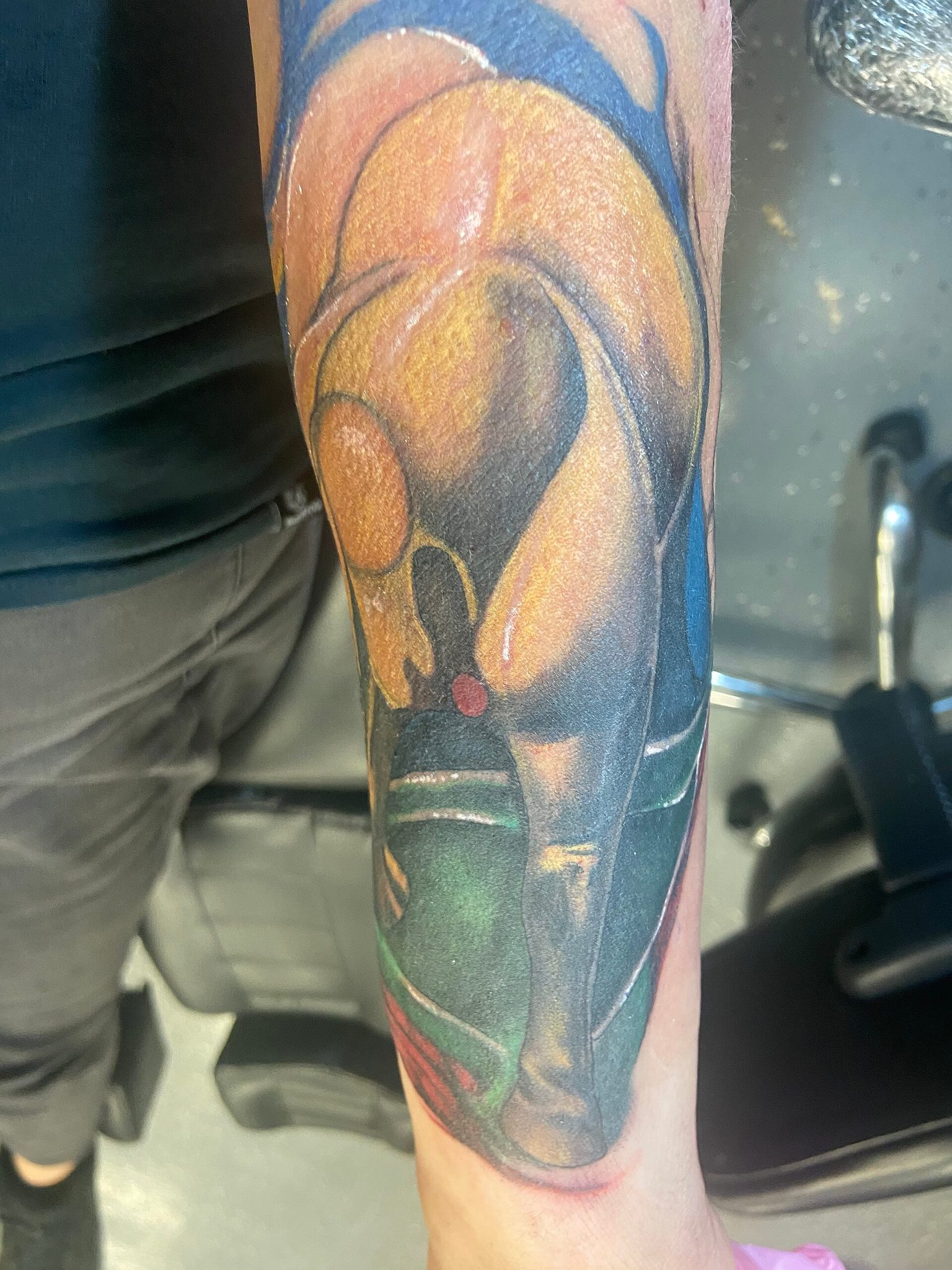
Photo: Myotus / Wikimedia Commons, CC BY-SA 4.0
Why location affects healing time
Areas that move and rub a lot, such as elbows, wrists, feet and the waistline, usually heal more slowly and are more likely to need a touch-up. Feet and lower legs are far from the heart, circulation is slower and they swell easily if the client stands a lot. Mention this when advising on placement so the client is not surprised.
What to avoid after a tattoo: real reasons, not folk beliefs
Vietnamese clients often ask what to "abstain from", as after surgery. Answer with concrete reasons so clients follow the advice instead of just hearing a list of bans.
Things to avoid
- Soaking: no swimming, baths, sea, lakes or rivers until the surface has fully healed, usually at least 2–3 weeks. Quick showers are fine.
- Sun: no direct sun on a new tattoo; cover it with loose clothing, and use sunscreen only once healed.
- Scratching and picking: picking scabs pulls ink out and leaves pale patches.
- Rubbing and sweat: avoid tight clothes and heavy workouts that rub the area and cause heavy sweating in the first few days.
- Dirty environments: crowded gyms, construction dust, animal pens, pets lying on the area; bedding must be clean.
Alcohol and medicines
Never tattoo a drunk client, and tell clients not to drink before their session. It is also wise to limit alcohol in the first days after. Clients on blood thinners or treatment for chronic conditions must say so before tattooing and ask their treating doctor; that is the contraindication section of your consultation form.
Food taboos: tell clients the truth
Popular Vietnamese advice to avoid beef, water spinach, seafood or sticky rice after a tattoo has no solid scientific evidence. Clients can eat normally, with enough nutrition and water; anyone with an existing food allergy still avoids that food as usual. Clients prone to keloid scars must tell you beforehand and should ask a dermatologist before deciding to get tattooed, because this is about their skin type, not their diet.
Infected tattoo: warning signs and when to see a doctor
Tattoo artists do not diagnose or treat infections. Your job is to explain the warning signs in advance, reply quickly to client messages, and tell the client to see a doctor when the signs below appear.
Warning, see a doctor straight away: redness spreading and pain increasing after day 2–3; marked swelling and heat; yellow or green pus, or a bad smell; red streaks running from the tattoo along the limb; fever or chills; painful swollen glands in the armpit or groin. The client must go to a medical facility to be examined, not buy antibiotics to take or apply, not squeeze or lance anything. High fever, confusion, rapidly spreading red streaks or difficulty breathing mean emergency care or calling 115 (Vietnam's ambulance number). In the studio: needles and cartridges are blood-contaminated sharps; drop them into a sharps container right after use, never recap by hand, never reuse.
Normal versus abnormal
| Sign | Usually normal | Needs a doctor |
|---|---|---|
| Redness | A thin red margin at the edge, fading over 1–3 days | Redness spreading outward, increasing after day 2–3 |
| Fluid | Clear or ink-tinged fluid on day one | Cloudy yellow or green pus, bad smell |
| Pain | Sore like sunburn, easing off | Sharp, increasing pain, painful even when not touched |
| Whole body | A little tired after a long session | Fever, chills, swollen glands |
| Itching, raised skin | Itching while flaking in weeks 1–2 | Raised, intensely itchy skin in one ink colour, lasting weeks or appearing months later |
Ink allergy
Some people react to tattoo ink, more often to colours such as red. Signs are that the area of one colour becomes raised, itchy and scaly for a long time, sometimes appearing weeks or months later. The client needs a dermatologist; keep a record of the ink name and batch you used so you can provide it if the doctor asks.
Recording and follow-up
When a client sends a photo of an abnormal-looking tattoo, record the date, the photo and a description in their file, advise them to see a doctor and follow up on the outcome. If several clients report the same problem within a short time, review the entire sterile routine, the ink batch, needle batch and work area (Figure 5).
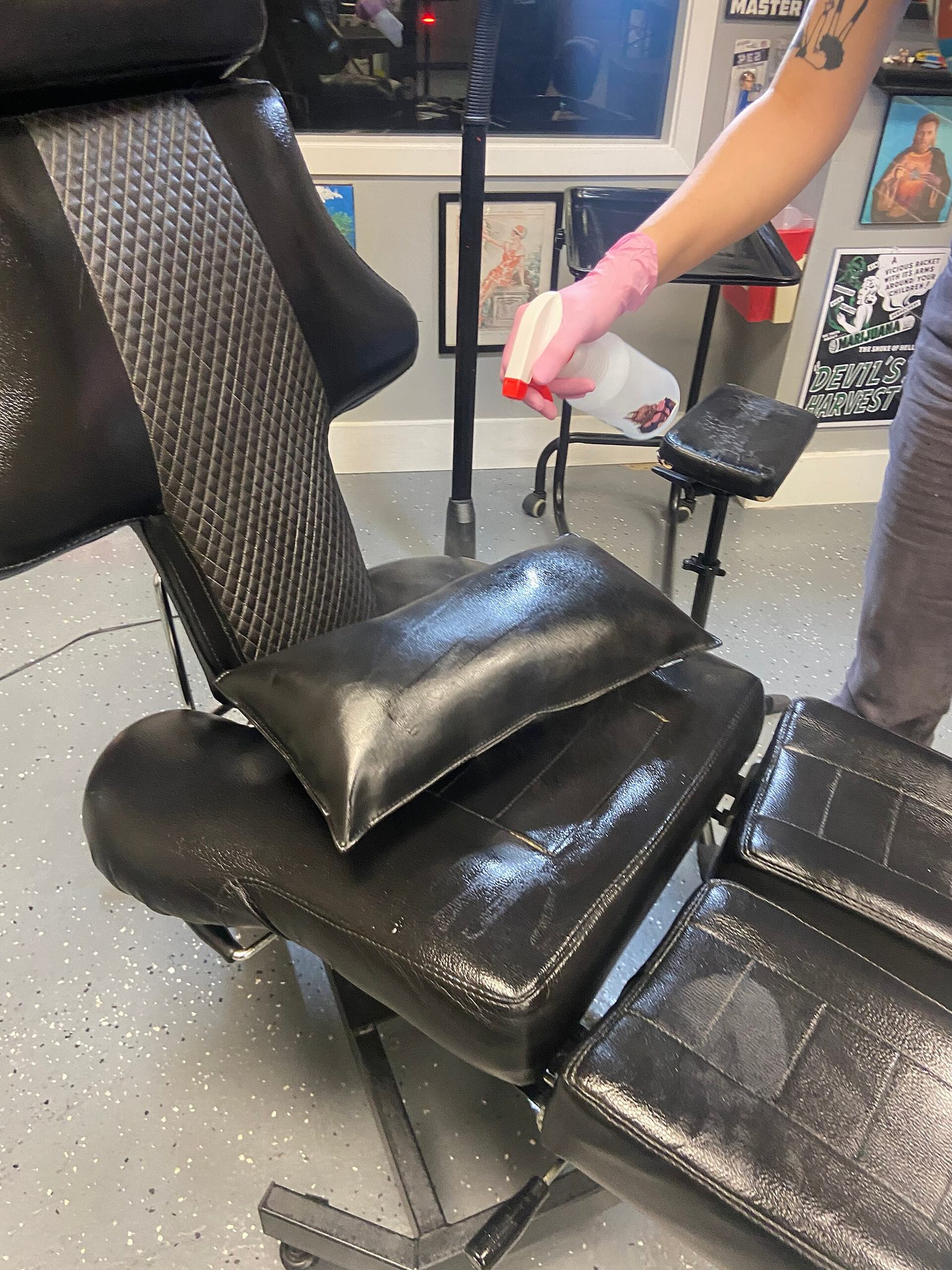
Photo: Myotus / Wikimedia Commons, CC BY-SA 4.0
Worked example: an aftercare kit for a 10 × 15 cm forearm tattoo
A 26-year-old man gets a black-and-grey tattoo on the inner forearm, 10 × 15 cm, in a 3-hour session. He works in an office, rides a motorbike, and has a beach trip next week. Your consultation form confirms: no blood thinners, no keloid tendency, over 18 with ID.
Aftercare plan for the first 14 days
- Apply a 15 × 20 cm transparent film, extending 2.5 cm past the design on each side: (10 + 2 × 2.5) × (15 + 2 × 2.5) = 15 × 20 cm.
- Keep the film on for 3 days; on day 4 remove it, wash, then continue with open aftercare.
- From day 4 to day 14 (11 days): wash and moisturise 3 times a day, 11 × 3 = 33 times in total.
- About 0.3 g of ointment each time: 33 × 0.3 = 9.9 g, so a 15 g tube is enough with some left for week 3.
- Beach trip next week: advise him to postpone swimming, or go without soaking the tattoo and keep it fully covered from the sun.
Kit cost (2026 reference, varies by area and supplier)
| Item | Quantity × unit price | Amount |
|---|---|---|
| Transparent film 15 × 20 cm | 1 sheet × 45,000 VND | 45,000 VND |
| Tattoo healing ointment, 15 g tube | 1 tube × 85,000 VND | 85,000 VND |
| Mild fragrance-free soap, small bottle | 1 bottle × 55,000 VND | 55,000 VND |
| Clean dry paper towels | 1 pack × 15,000 VND | 15,000 VND |
| Total | 200,000 VND (~USD 8) | |
Check: 45,000 + 85,000 + 55,000 + 15,000 = 200,000 VND. Many studios include this kit in the tattoo price, others sell it separately; either way, state it clearly on the quote so the client does not feel surprised by an extra charge. Supply prices vary by supplier; these are reference figures only.
Follow-up schedule
Message the client on day 2 and day 7 and look at the photos they send. Book a check-up after about 4–6 weeks, once the surface has healed, to decide whether a touch-up is needed.
Common mistakes when giving aftercare instructions
Verbal instructions only, no sheet
Sign: clients message to ask again about things you told them, and each does something different. Cause: instructions given verbally while the client was tired. Fix: one printed sheet used by every artist in the studio, plus a photo of it sent by message.
Every artist says something different
Sign: artist A says apply a thick layer, artist B says let it dry out. Cause: the studio has no shared procedure. Fix: agree on one routine and one product, and update it when you change dressings or ointment.
Reassuring a client who shows infection signs
Sign: a client sends a photo of spreading redness and pus, and the artist replies "that's normal, just add more cream". Cause: fear of losing reputation. Fix: tell the client to see a doctor now and record it; hiding problems is what really destroys a reputation.
Frequently asked questions
What should I avoid in the first 2 weeks after a tattoo?
Avoid soaking (swimming, baths, the sea), direct sun, scratching and picking, tight rubbing clothes and dirty environments. Eat normally and limit alcohol in the first days.
How long does a tattoo take to heal?
The surface usually heals in about 2–4 weeks; the deeper layers need about 1–3 months or longer, depending on size, location and skin type.
What should I put on a new tattoo?
A thin layer of healing ointment or fragrance-free lotion recommended by your artist, after washing and patting dry. Do not apply antibiotic or steroid creams or home remedies on your own.
What should I do if my tattoo is infected?
Spreading redness, increasing pain, pus, a bad smell, fever or red streaks along the limb mean seeing a doctor right away, without self-medicating with antibiotics. Tell the studio so the artist can record it and review their procedure.
Can people under 18 get a tattoo?
Responsible studios do not tattoo anyone under 18, even with a family member present; skin and decisions at that age still change a lot. Check ID before accepting a client, and look up the current local rules.
Practice exercises and self-assessment
- Write a one-page aftercare sheet for a studio: dressing schedule, 14-day washing and moisturising schedule, things to avoid, signs that need a doctor, contact number.
- Role-play with a classmate: one plays a client asking "is eating water spinach after a tattoo a problem?" and "can I go to the beach next week?", the other answers with reasons.
- Work out the film size, number of applications and amount of ointment for a 12 × 20 cm calf tattoo, following the worked example.
Self-assessment criteria
- Pass: the sheet has all 5 parts and a client understands it in 2 minutes.
- Pass: you correctly tell apart the 5 normal signs and 5 doctor-needed signs in the table.
- Pass: your film size, number of applications and ointment amount add up.
- Not yet: you tell a client to self-apply antibiotics, reassure a client with pus, or tattoo someone under 18.
With consultation and aftercare under your belt, move on to the next step of the roadmap: Drawing and designing tattoos to fit the body, where you learn to choose size and orientation along muscles and joints so the tattoo looks good and heals well.
Keep learning tattooing: after consultation and aftercare come designing for the body, machines, needles and ink, lining, shading and a supervised apprenticeship. See the 8-step tattoo artist roadmap.