A men's haircut that suits the face is never chosen from face shape alone: a barber also reads the crown (hair whorl), the dips and bumps of the skull, the hairline and the beard, then asks what the client does for work and how much time he has to style his hair each morning, and finally agrees on the cut with a reference photo before picking up the clippers. With only a few millimetres on the sides, a flat back of the head or a double crown shows straight away if the style is wrong. This lesson covers reading the head from four angles, turning a reference photo into cutting numbers, and a five-minute worked consultation.
By the end of this lesson, you will be able to:
- Find the position, number and direction of a client's crowns, and choose the minimum length that keeps the crown area from sticking up.
- Feel and look at the skull to find dips and bumps, then set the fade height and the extra length each zone needs.
- Recognise six men's face shapes and four front hairline types, and suggest suitable haircuts and beard shapes.
- Ask six questions about work and habits, then lock in the style with a reference photo turned into measurable numbers (guard, centimetres, parting side).
- Run a chair-side consultation in about five minutes and record it for the next visit.
Learning barbering in the right order? Reading head shape and advising styles is step 2 of the path, right after tool hygiene and client safety and before scissor-over-comb and fades. See the 8-step barber learning path to learn in the right order.
Why a barber reads the client's head before choosing a style
In step 1 you learned to check the scalp before a close cut (see how to clean and disinfect clippers, razors and combs as a barber). This step finds the real shape under the hair: when the sides are only 1 to 10 mm long, whatever you cut is what everyone sees.
The shorter the hair, the more the head shape shows
With 3 to 4 cm of hair, a dip at the back of the head is almost invisible; take a skin fade up high and it looks like a dent from the side. So the barber's first question is "how short can this head go, and where".
Four views: front, both sides, back and from above
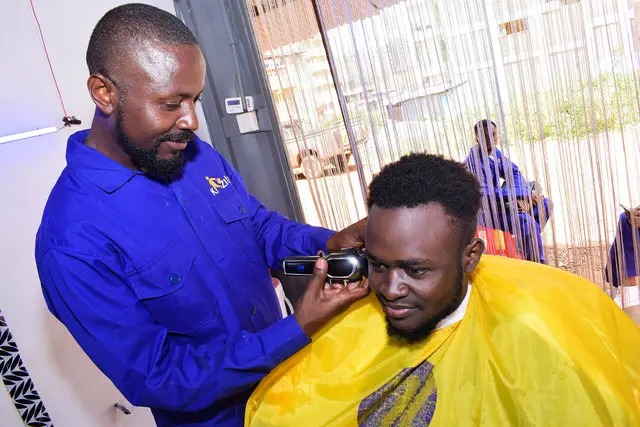
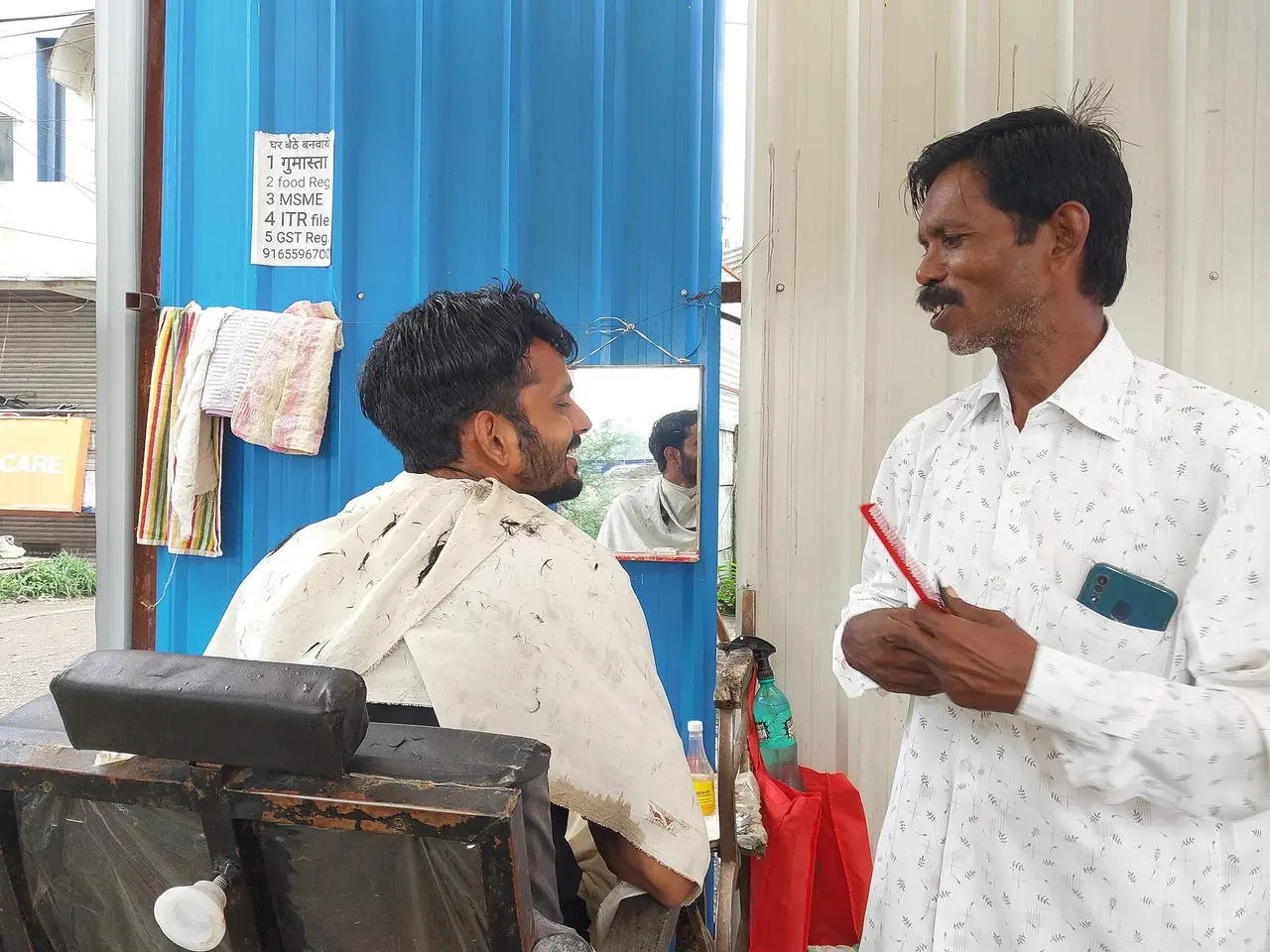
Check the front and the balance of both sides in the mirror, step to each side for the profiles, stand behind for the nape, and look down from above for the crown. Figure 1 shows a barber talking with a client before the cut, asking and watching at the same time.
Reading the crown: position, number and direction
A crown, or hair whorl, is the point where hair grows out in a spiral, usually at the top of the head or slightly behind it. Hair around the crown grows in several directions, so cutting it too short makes it stand up or leaves a round patch of visible scalp. Figure 2 shows a head with two crowns side by side, the hardest area to handle in a short cut.
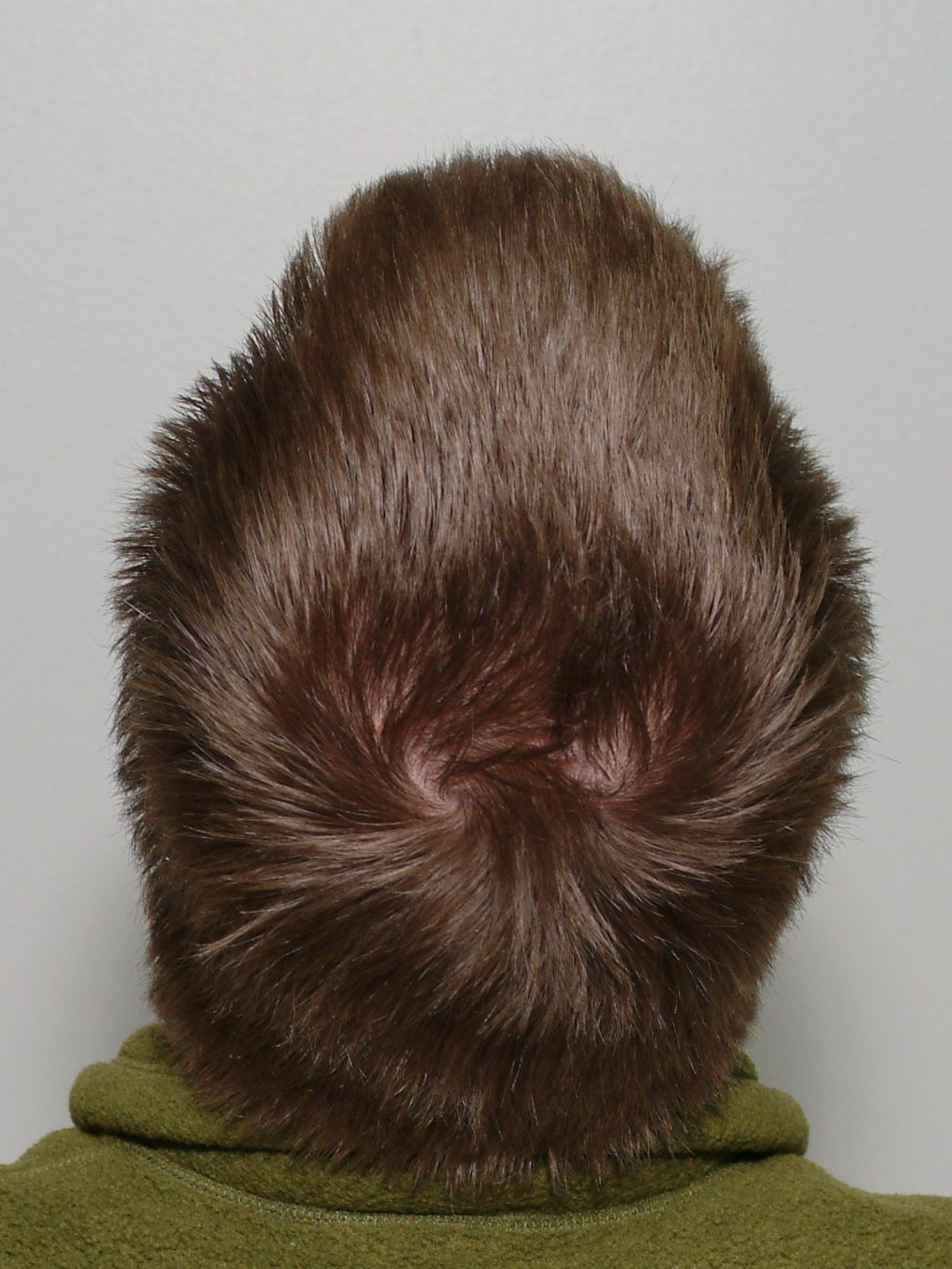
Photo: No machine-readable author provided. HorsePunchKid assumed (based on copyright claims). / Wikimedia Commons, CC BY-SA 3.0
How to find the crown quickly
- Stand behind the client and look down for the point where hair spreads out like the centre of a spiral.
- Comb the hair backwards from the forehead with a wide-tooth comb and let go; the hair will split around the crown by itself.
- Note the direction: clockwise or anticlockwise. It decides which way the top wants to fall.
- Check for smaller whorls at the front hairline and the nape: many people have a cowlick in the fringe or a small whorl at the nape.
The crown sets the parting and the top length
The natural parting usually sits on the side the hair falls towards from the crown. Part it against the whorl and the hair will spring up after a few hours, however well it was waxed that morning. With a double or high crown, keep the crown area at least about 3 to 4 cm long so the weight of the hair holds it down; if the client wants it shorter, choose a deliberately textured or spiky style such as a crop.
Front cowlicks and nape whorls
A cowlick at the front hairline makes a straight fringe hard to lay flat; style the fringe in the direction of the cowlick instead (quiff, side part). For a small whorl at the nape, avoid medium-length nape hair: either fade close through the whorl or leave it long enough to lie down.
Feeling the skull: dips, bumps and how length compensates
No skull is perfectly round. The biggest differences are at the back (the occipital area): full and round, flat, or with a clearly protruding ridge of bone. Hair fools the eye, so a barber has to use his hands.
How to feel the client's head
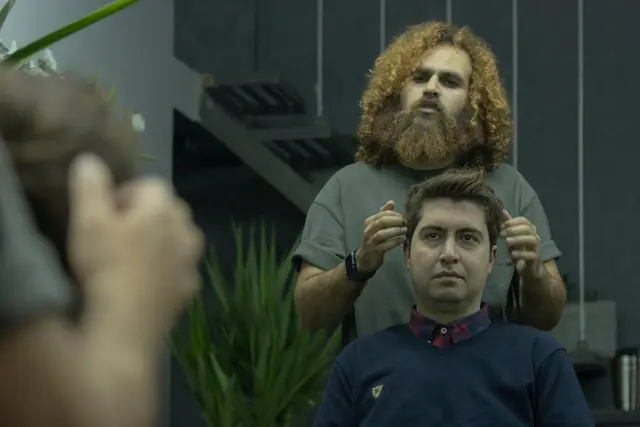
Tell the client first: "I'm just going to check the shape of your head." Rest your palm lightly on the nape and slide it slowly up to the top along the centre line, then do the same on both sides from above the ears up to the parietal ridge. Remember three points: where the head starts to curve upwards (the parietal ridge), the deepest dip and the most prominent bump. Figure 3 is a side view that helps you match what your hand feels with the real curve.
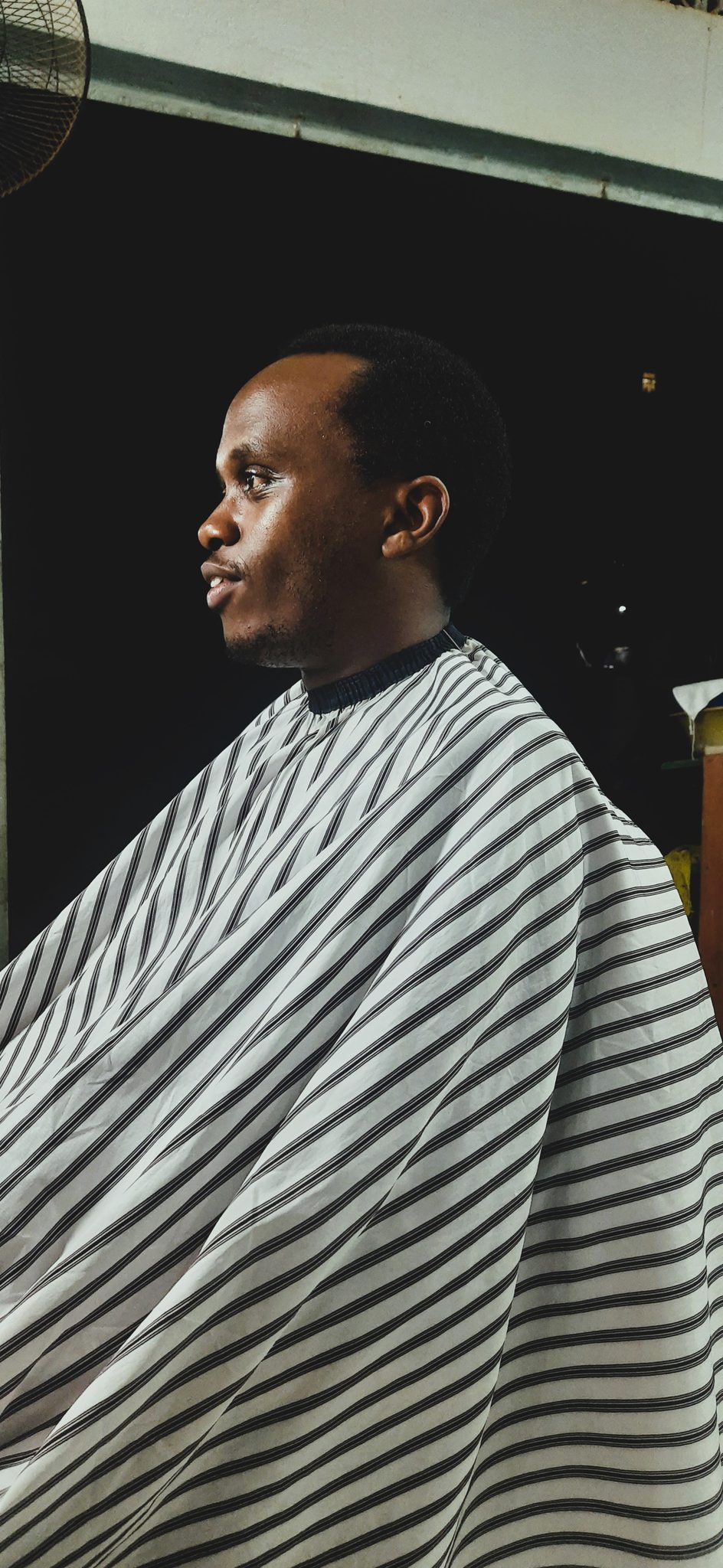
Photo: Alvinategyeka / Wikimedia Commons, CC0
What to do for each head shape
| Head shape (feel and look) | Do | Avoid |
|---|---|---|
| Flat back of the head | Leave the occipital area longer, use a low fade or taper, blend softly to build roundness | A high or skin fade that goes above the dip |
| Bony ridge at the back | Place the guide line below the ridge, leave hair above it one guard longer | A guide line running across the top of the ridge |
| Prominent parietal ridge (wide upper sides) | Short sides, mid or high fade to narrow the width | Thick sides that push out at the edges |
| Low, flat top | Build height with 5 to 7 cm on top, blow-dried up or a quiff | An even buzz cut with one guard all over |
| Long head front to back | Moderate length at the back, top not too high | A tall pompadour with a shaved nape |
Scars and raised moles
If a scar has no hair growth, ask whether the client wants it covered and keep enough length around it; around a raised mole, cut only with scissors or clippers with a guard on.
Safety and health note: Barbers do not diagnose disease. If you feel a new, painful or weeping lump; see an open sore or graze; find a smooth, round bald patch; red skin with thick scaling; or a mole the client says has recently grown, changed colour or bled, do not cut close over that area, tell the client gently what you noticed and suggest he sees a dermatologist. Do not joke or guess the name of a condition in front of other people. Never run clipper blades or razors over raised moles or damaged skin.
Men's face shapes, hairlines and beards
Only once you know how short the head can go do you look at the face. The usual aim is to bring head and face closer to an oval: add height for a round face, reduce it for a long face, and keep or soften an angular face as the client prefers.
Identifying the face shape
Lift the fringe, look straight through the mirror, compare the width of the forehead, cheekbones and jaw, and compare face length with cheekbone width. Judging the proportions by eye is enough; you do not need a ruler.
| Face shape | Signs | Styles that usually suit | Avoid |
|---|---|---|---|
| Oval | Longer than wide, forehead slightly wider than chin, soft lines | Most styles: side part, crop, undercut, fades of any height | A heavy fringe covering the whole forehead, which shortens the face |
| Round | Length close to width, rounded jaw | Height on top (quiff, pompadour, spiky), mid or high fade on the sides | Round, even volume, a straight fringe, thick sides |
| Square | Forehead, cheekbones and jaw about equal, strong jaw angles | Crew cut, side part, buzz cut; texture on top to soften | Overly fussy styles that make the face look heavier |
| Long (oblong) | Face clearly long compared with its width | Moderate top, a falling fringe or a crop with fringe, low fade or taper | A tall pompadour, sides shaved high |
| Inverted triangle | Wide forehead, small pointed chin | A falling or side-swept fringe to cover some forehead, sides not too close; a chin beard adds fullness | Everything slicked back to show the forehead, a high skin fade |
| Diamond | Cheekbones widest, narrow forehead and chin | Keep weight at the temples, a textured fringe, a soft side part | Shaving the temples close, which makes the cheekbones look wider |
The front hairline
Four front hairlines are common: straight, M-shaped (both temple corners slightly receded), a widow's peak in the centre of the forehead, and a hairline receding at the temples. M-shaped and receding hairlines suit a short, textured top or a fringe pushed slightly forward, rather than slicking everything back and exposing both corners. Figure 4 shows a barber defining the front hairline with a trimmer.
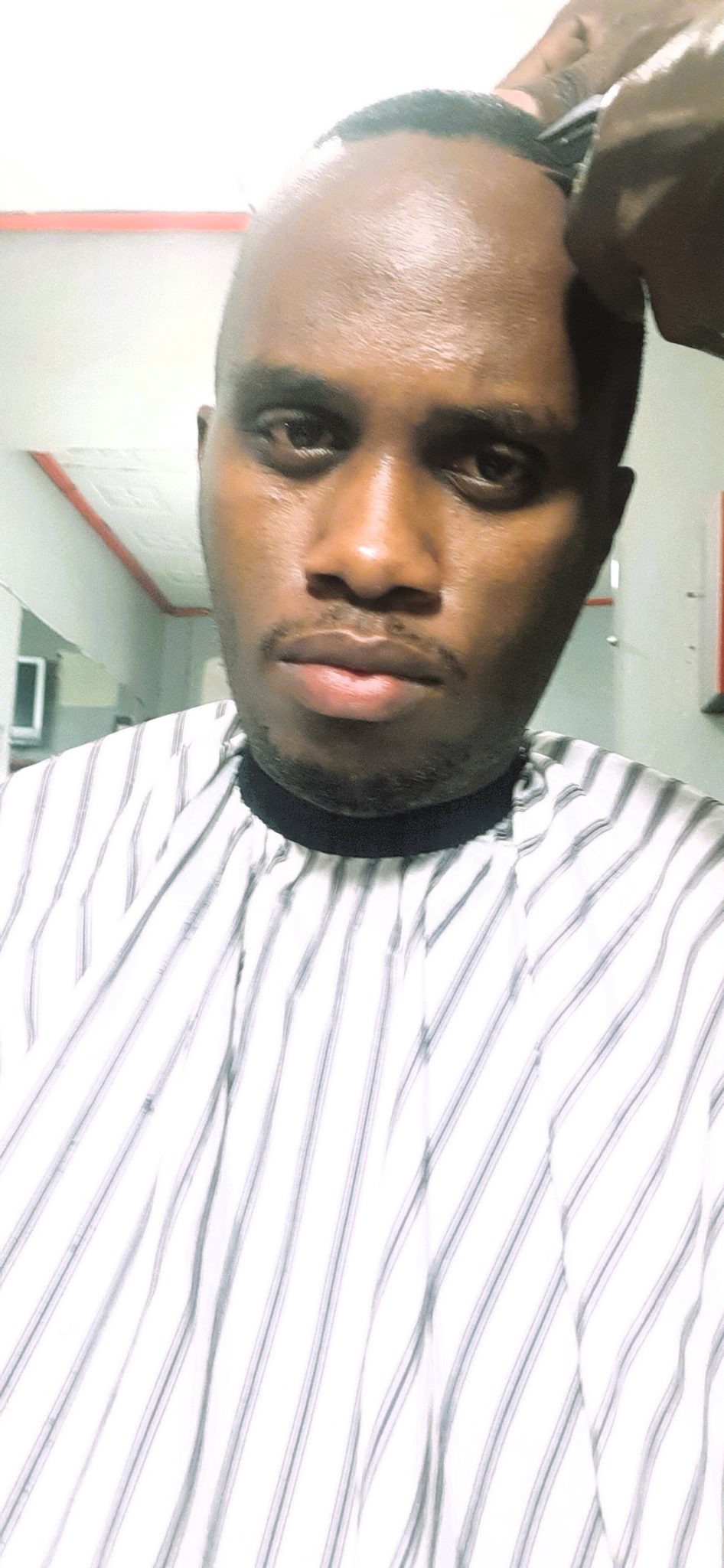
Photo: Alvinategyeka / Wikimedia Commons, CC0
The rule: line up along the natural hairline and only clean the fine hairs in front of it. Pushing the line back for a sharper look raises the forehead, and it takes weeks to grow back. With a receding hairline, ask whether the client wants the forehead lined up at all.
Sideburns and beard work together
If the client wears a full beard, the fade at the sideburn must blend down into the beard (a beard fade), not stop at a hard line. A round face can keep the chin beard slightly longer than the cheeks to lengthen the face; a long face should keep the chin beard short. Detailed beard trimming is step 6 of the path; at this step you only agree on the overall shape.
Asking about the client's work and habits
A style that looks great in the chair but clashes with the client's job means he will not come back: a delivery rider who wears a motorbike helmet eight hours a day cannot keep a tall pompadour.
Six must-ask questions
- What do you do for work, and does your workplace have rules about hair or beards?
- Do you wear a motorbike helmet, hard hat or chef's cap for long periods during the day?
- Do you have time in the morning to blow-dry and use wax, or do you just wash and go?
- How often do you get a haircut?
- Do you want to see scalp on the sides, or just short and neat?
- What did you like and dislike about your last cut?
Suggestions by job
| Job or habit | Priority | Styles that usually suit |
|---|---|---|
| Office, bank, customer-facing sales | Neat, professional, still tidy as it grows | Side part with a low fade or taper, a neat crop |
| Long hours in a helmet or hat (delivery riders, technicians, construction) | No styling needed, does not look crushed after the helmet | Short crop, buzz cut, two-block with a short top |
| Kitchens, food factories | Short, fits under a hairnet, easy to wash | Crew cut, buzz cut, fade with a short top |
| Students, creative jobs | A statement look, willing to style | Mid or high fade, undercut, mohican, quiff |
| Daily gym or sport | Heavy sweating, frequent washing | Buzz cut, crew cut, textured crop |
Vietnamese hair changes the choice
Most Vietnamese men have thick, coarse, straight hair, and the sides tend to stick outwards; cut the sides to 1 to 2 cm without a fade and within a week they stand up like a hedgehog. That is why two-block and undercut styles are popular: the sides are taken close and the longer top falls over them. For thin or fine hair, a short textured crop usually looks fuller than a long top lying flat against the scalp.
Agreeing with a reference photo before picking up the clippers
Style names have no shared standard between shops: the client's "undercut" may be your two-block. A reference photo lets both of you look at the same thing.
What makes a reference photo usable
- At least one side view and one back view, not only the front.
- The person in the photo has hair similar to the client's (thick, coarse, straight), ideally an Asian model.
- A real photo, not a heavily edited picture or a drawing.
If the client has no photo, the shop should keep an album of its own clients' cuts (photographed with permission), sorted by style: fade, side part, crop, undercut. Figure 5 is the kind of side-view photo taken after a high taper, showing clearly where the short section starts and how long the top is.
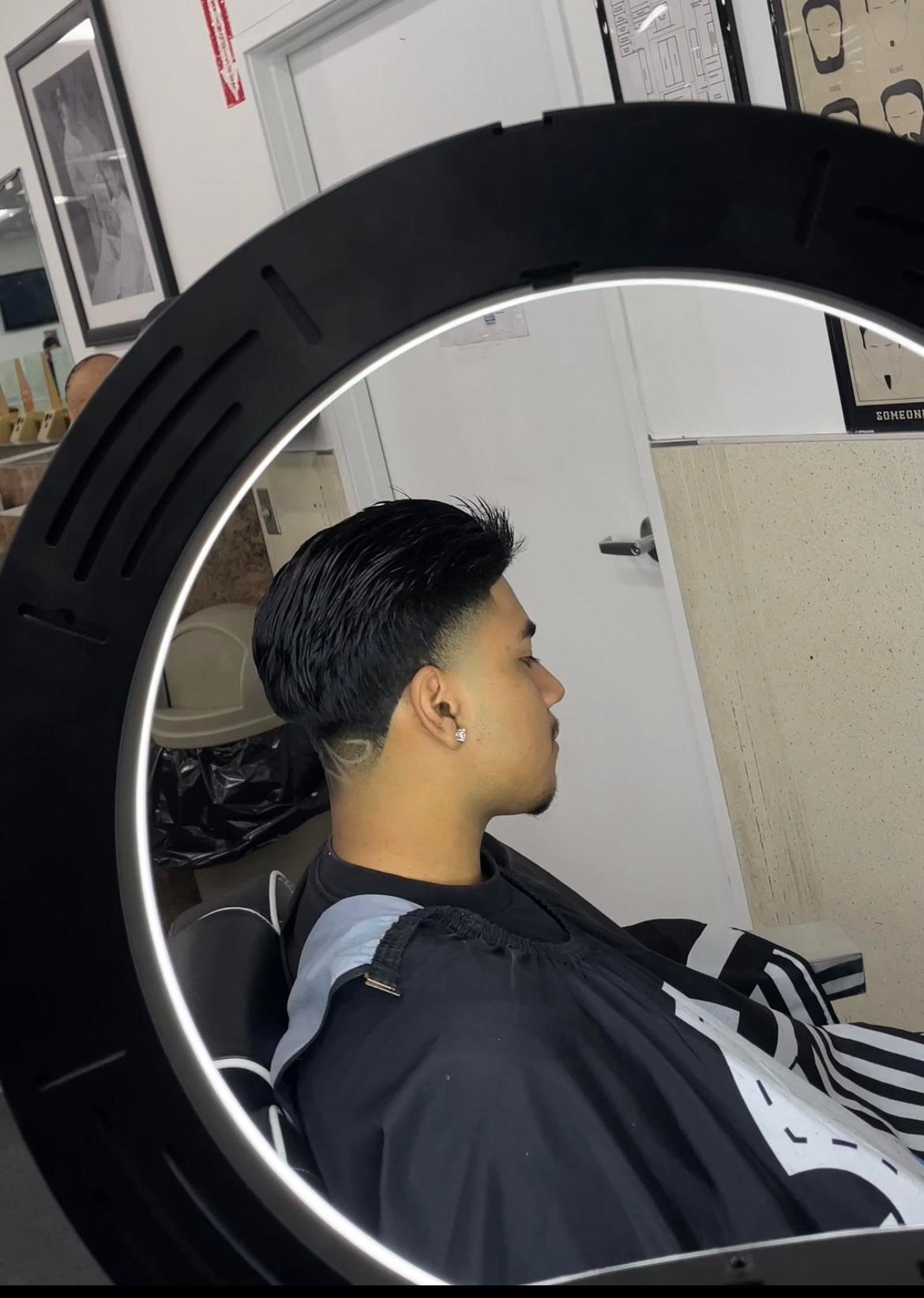
Photo: Bekham.o / Wikimedia Commons, CC BY 4.0
Translating the photo into cutting numbers
After looking at the photo, repeat the plan to the client in numbers and point to the spots on his head. A quick sign-off covers: fade height (point to it with a finger), shortest guard (skin or a #1 guard of about 3 mm), top length (for example 6 cm, measured with the hair held between your fingers), parting side, nape outline (rounded, squared or natural taper), and whether to line up the forehead. You will use the full guard chart in how to do a fade haircut: low, mid, high and skin fade step by step.
Say upfront what the photo cannot deliver
If the photo has a thick fringe but the client's hair is thin at the front, or a flat top but he has a double crown, say so straight away: "On your head it will look different here; I suggest this adjustment." Before the cut it is advice; after the cut it sounds like an excuse.
The five-minute chair-side consultation
A busy shop cannot spend 15 minutes advising on every men's cut. Five minutes is enough if you follow the order and skip nothing.
Five steps and timing
| Step | What to do | Time |
|---|---|---|
| 1 | Greet the client and ask the six work and habit questions | 1 min |
| 2 | Look from four angles, find the crown, feel the head, check the scalp | 1.5 min |
| 3 | Look at the client's photo or the shop album | 1 min |
| 4 | Agree the numbers, point to them on the head, repeat them for confirmation | 1 min |
| 5 | Make a quick note in the book or client record | 0.5 min |
| Total | 5 min |
The confirmation sentence
For example: "So to confirm: low fade on the sides starting one finger-width above the ear, a #0.5 guard at the bottom, about 6 cm on top, left parting, natural nape, no forehead line-up. Does that work for you?" When the client nods to a sentence with real numbers, you have clear reference points while cutting.
Recording it for next time
Note the date, the agreed numbers and one comment (for example "double crown, top no shorter than 4 cm") so that next time the client only has to say "same as last time". Take or post photos of clients only with their consent.
Worked example: Tuan, 28, bank teller
Tuan brings a photo of a Korean singer with a high skin fade and a tall, spiky top. He works as a bank teller, rides a motorbike 30 minutes each way, has about 5 minutes to style his hair in the morning and gets a cut about every 4 weeks.
What the head reading found
- Crown: two crowns side by side on top, the main one clockwise, hair falling to the left.
- Skull: flat at the back, with the dip starting about two finger-widths above the nape line.
- Face: slightly round, average forehead, a mild M-shaped hairline.
- Hair: thick, coarse, straight; the sides stick out.
- Scalp: clean, no inflamed spots, no grazes.
The agreed plan
A high skin fade would expose the flat back of the head, and a very sharp look may not fit the dress standards at a bank counter. The barber proposes: a low fade with a #0.5 guard (about 1.5 mm) as the shortest length and the guide line below the dip; 6 cm on top to hold down the double crown; a left side part following the crown; a fringe pushed slightly forward to soften the M corners; no forehead line-up. The style still has height on top like the photo, and after the helmet he only needs to restyle it with his fingers.
Timing for the whole visit
| Task | Time |
|---|---|
| Five-step consultation | 5 min |
| Base cut and low fade on the sides and nape | 20 min |
| Scissor-over-comb blend into the top, texturising the top | 15 min |
| Wash, blow-dry, wax and show the client how to style | 10 min |
| Total | 50 min |
The total is 5 + 20 + 15 + 10 = 50 minutes, the pace of an experienced barber; beginners usually take longer on the fade.
Common mistakes when advising men's haircuts
Cutting the crown too short
Sign: a few days later the client says a tuft on top sticks up and will not lie down. Cause: the crown was not found first and the top was cut evenly short. Fix: next time leave the crown area longer, or switch to a deliberately spiky style.
A high fade on a flat or ridged head
Sign: from the side, the back of the head looks dented, or a ridge shows in the middle of the close-cut area. Cause: the guide line was placed from the photo without feeling the head. Fix: lower the guide line below the dip and leave the area above it one guard longer.
Cutting to a style name without a photo
Sign: the client says "that's not what I meant". Cause: you and the client understood the name differently. Fix: look at a photo and repeat the plan in numbers before switching on the clippers; ask about work too, so the style works outside the shop.
Frequently asked questions
What men's haircut suits a round face?
A round face suits styles with height on top such as a quiff, pompadour or spiky top, combined with short sides from a mid or high fade if the head shape allows. Avoid evenly round volume, straight fringes and thick sides. A neat chin beard kept slightly longer than the cheeks also makes the face look longer.
What haircut works with a double crown?
There are two options: keep the crown area long enough (about 3 to 4 cm or more) for the hair to lie down and part it in the direction of the main crown, or choose a deliberately textured style such as a crop or spiky top so the raised tuft becomes part of the look. Avoid cutting the top to about 1 to 2 cm while still expecting it to lie flat.
What men's haircut suits a high forehead or M-shaped hairline?
A short textured top pushed slightly forward, a crop with a fringe or a soft side part usually hides the M corners better than slicking everything back. Do not line up the forehead higher. If the client worries that his hair is falling out unusually fast, suggest he asks a dermatologist rather than guessing the cause.
How do I advise a client who does not know what he wants?
Ask the six questions, read the head, then open the shop album and offer two options, not ten, explaining the morning styling time and cutting interval for each.
Practice exercises and self-assessment
- Read the heads of five people you know (friends, family): sketch the top of the head, mark the crowns and their direction, note the dips and bumps.
- For each person, identify the face shape and front hairline type, and suggest two haircuts using the tables above.
- Role-play a consultation with your senior barber or a classmate: time all five steps and finish with a confirmation sentence that includes numbers.
- Build an album of 20 men's haircut reference photos (photos you have rights to use or clients have agreed to), sorted by style, each with a side view.
Self-assessment criteria
- Pass: you found the crown and its direction correctly on all five people, confirmed by your senior barber.
- Pass: you can point to the dip or bump on a model's head by hand and say where the guide line should go.
- Pass: the role-play consultation takes about 5 to 6 minutes, includes all six questions and ends with a sign-off in numbers.
- Not yet: you suggest a style from face shape alone, forget to ask about work, or agree on a style by name without looking at a photo.
If the client is a woman or needs advice on perms or colour, see how hairdressers analyse hair and keep a client record in hair consultation: how to analyse hair, scalp and face shape. Once you can read a client's head and agree on a style in numbers, move on to the next step of the path: Scissor-over-comb & top section cutting, where you learn to hold scissors and comb correctly and turn the agreed numbers into real cutting lines at the nape and on top.
Keep learning barbering: after reading head shape come scissor-over-comb, clipper fades, popular men's styles, shaves, a 30-model project and opening a shop. See the 8-step barber learning path.