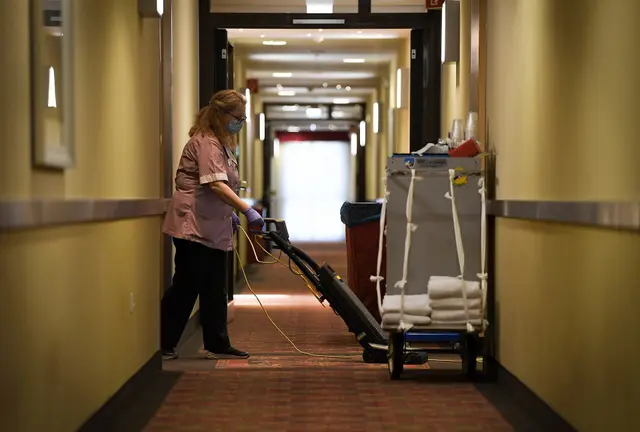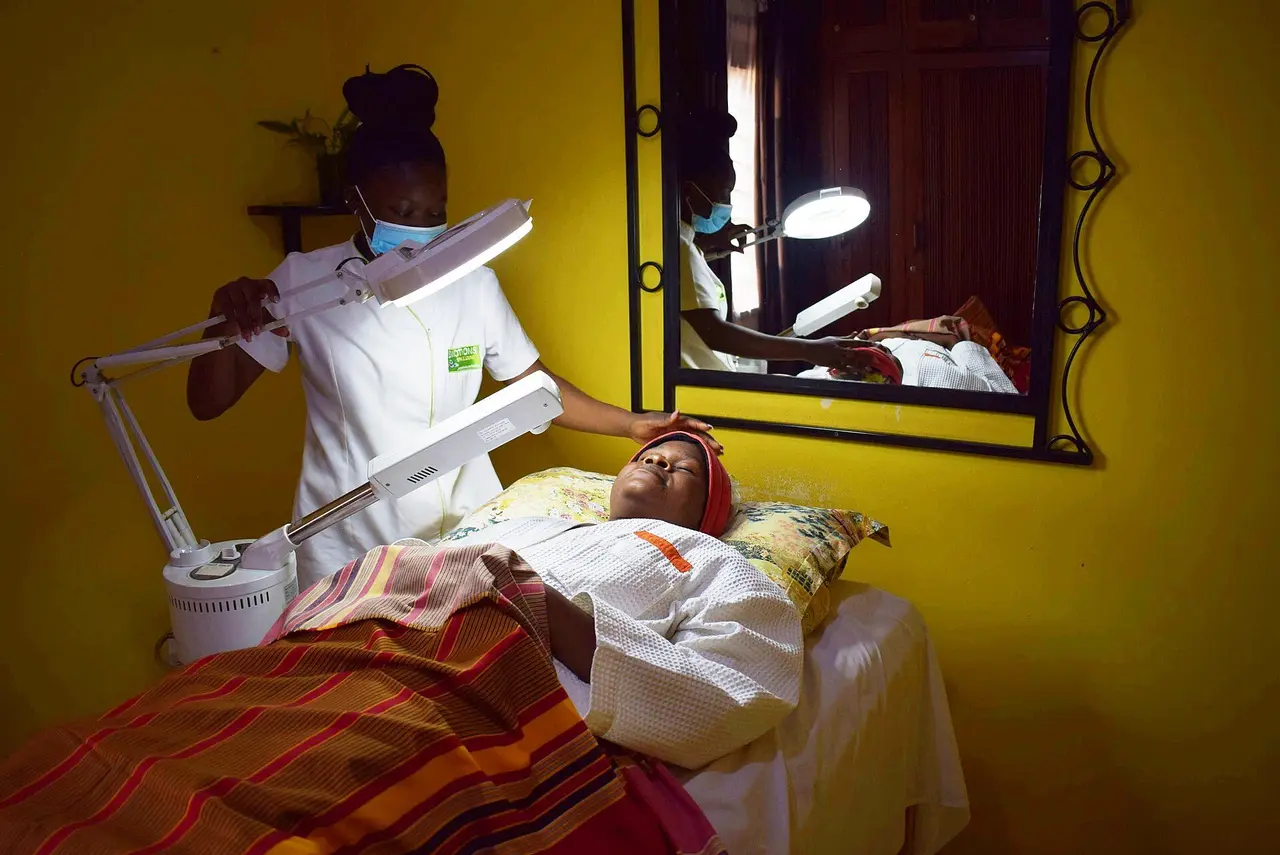
A skincare spa may provide non-invasive services on healthy skin: cleansing, gentle exfoliation, masks, facial massage, extraction of non-inflamed comedones with sterile tools, and cosmetic products and non-invasive skincare machines used as the manufacturer instructs. A spa must not inject (fillers, botulinum toxin, mesotherapy, "skin booster" injections), give infusions, use or sell prescription medicines, perform procedures that draw blood, or treat severe inflammatory acne, melasma, eczema or other skin diseases: those belong to medical examination and treatment, which in Vietnam must be carried out by licensed health facilities and licensed practitioners. This is the first lesson for newcomers training as skincare therapists, covering the boundaries of the job and the hygiene rules for every shift; the legal part states principles only, so read the regulations currently in force or ask the provincial Department of Health where you work.
By the end of this lesson, you will be able to:
- Classify a service as "spa may do it", "health facility only" or "check first" using 3 test questions.
- Apply 5 hygiene rules every shift: hands, gloves, towels and beds, tools, and shared products.
- Recognise 7 signs that mean stopping the service and advising the client to see a dermatologist, and say it tactfully.
- Fill in a client record with the mandatory questions about current medicines, allergies and pregnancy.
- Work out disposable hygiene supplies for a day of 8 facials, with costs that add up.
Just starting out in skincare? Hygiene, sterility and legal limits are step 1, before skin structure, the facial routine, extractions and skincare machines. See the 8-step skincare specialist roadmap to learn in the right order.
Why the limits of the job come first
Vietnam's beauty market is full of services that blur the line between spa and medicine, advertised attractively: "whitening injections", "algae implants", thread lifts, microneedling at the spa. Newcomers are easily asked by owners or clients to do things outside their scope. The consequences can be infection, scarring, skin necrosis or anaphylaxis for the client, and fines, suspension or greater liability for the therapist and the business.
Three test questions before any service
- Does it break the skin barrier? Needles through the skin, bleeding or removing deep layers of skin are signs of an invasive procedure.
- Does it use medicines? Injectable drugs, prescription medicines and products whose active ingredients may only be used on a doctor's order.
- Is it meant to treat a disease? Severe inflammatory acne, melasma, eczema, psoriasis, fungal infections and keloid scars are skin diseases that need diagnosis.
A single "yes" means the service is outside a spa therapist's scope. If the answer is "not sure", stop, ask your manager and look up the current rules before doing it.
A short course is not a practising licence
A certificate from a few-day course in fillers, cosmetic tattooing or microneedling does not turn a spa therapist into someone allowed to perform medical procedures. A licence to practise medical examination and treatment is tied to a medical qualification and a licensing process run by the health authorities. When someone promises "finish the course and you can inject", check with the Department of Health yourself.
What a spa may do, and what belongs to health facilities
The table shows the classification commonly used in the trade, based on invasiveness and the aim of treating disease. Specific rules can change; the business conditions and the list of techniques allowed at each type of facility must be checked against the regulations in force when you work.
| Service | Usual classification | Notes for the therapist |
|---|---|---|
| Cleansing, makeup removal, steaming, masks | Spa may do it | On healthy skin, following hygiene procedures |
| Face, neck and shoulder massage | Spa may do it | Ask about contraindications, avoid inflamed areas |
| Gentle exfoliation with cosmetic products | Spa may do it | Follow the maker's instructions, patch test a small area first |
| Extraction of non-inflamed blackheads and whiteheads | Spa may do it | Gloves, single-use lancets, a sharps container |
| Non-invasive skincare machines (magnifying lamp, steamer, cosmetic iontophoresis) | Usually spa may do it | Trained, per the maker's instructions, disinfect contact heads |
| High-strength or deep chemical peels | Usually health facilities | Risk of burns and hyperpigmentation; needs a doctor's assessment |
| Laser and IPL to treat melasma, scars or remove tattoos | Usually health facilities | Check current rules on equipment and facilities |
| Microneedling that draws blood, "algae" or "powder" implants | Invasive, not a spa service | Breaks the skin barrier, infection risk |
| Fillers, botulinum toxin, mesotherapy, whitening injections or drips | Health facilities and licensed practitioners only | Risk of vascular occlusion, necrosis, anaphylaxis |
| Prescribing, selling or using prescription medicines; unlabelled mixed creams ("kem tron") | Spa must not do it | Long-term use of steroid creams can thin skin, cause visible blood vessels and dependence |
Cosmetics versus medicines
Cosmetics clean, beautify, protect and keep skin in good condition. Medicines diagnose, prevent or treat disease. Creams containing actives such as tretinoin, topical antibiotics, topical steroids, or oral acne medicines are medicines, used only on a doctor's orders. A therapist must not recommend them, apply them, or use them on a client, even if the client brings their own.
Advertising and promises to clients
Avoid words such as "cure", "treatment", "permanently clears" or "medical grade" in spa advertising, as they suggest a medical service. Describe what you actually do: "deep cleansing, extraction of non-inflamed comedones, soothing the skin".
5 hygiene rules for every shift
Spa hygiene means stopping bacteria, viruses and fungi passing from one client to the next and from therapist to client. For the detailed cleaning, disinfecting and sterilising procedure, read cleaning and disinfecting spa tools and treatment rooms; below are the 5 minimum rules for skincare therapists.
Rule 1: hands and clothing
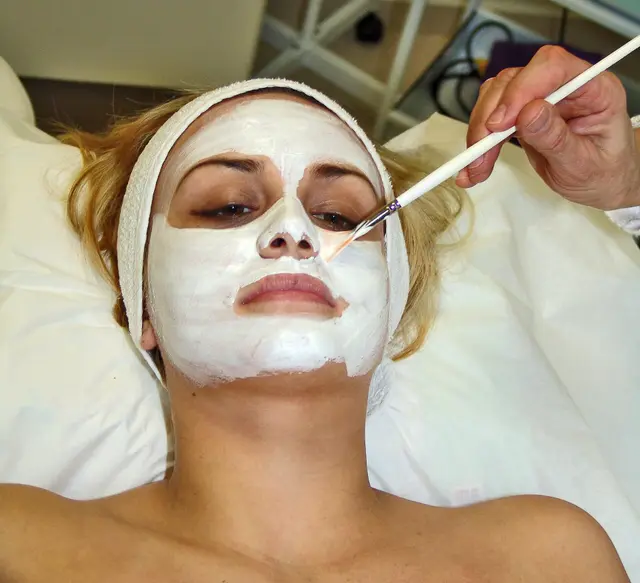
Wash your hands with soap for 40–60 seconds before and after every client, and after touching your phone or money or using the toilet. Keep nails short, no rings or bracelets, hair tied back, and wear a mask when working close to the client's face (Figure 1). If you have a cough, fever, cold sore or a cut on your hand, tell your manager so someone else takes over.
Rule 2: gloves at the right moments
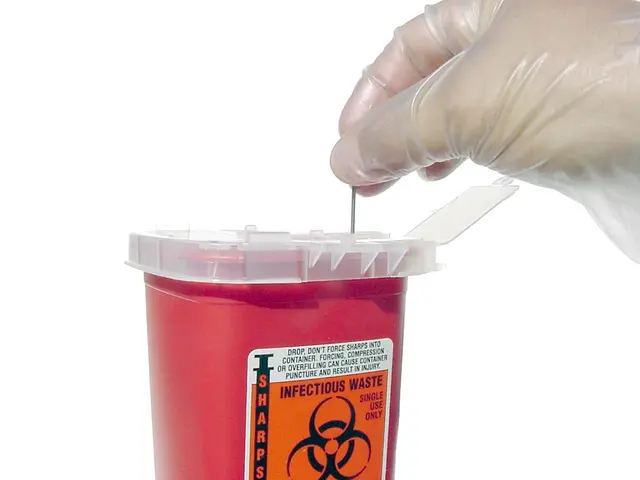
Wear gloves for extractions, when the client's skin is broken, when you may touch fluid or blood, and when using exfoliating chemicals (Figure 2). Use a new pair for every client; take them off as soon as you move from a dirty task to a clean one, and wash your hands afterwards. Gloves do not replace handwashing.
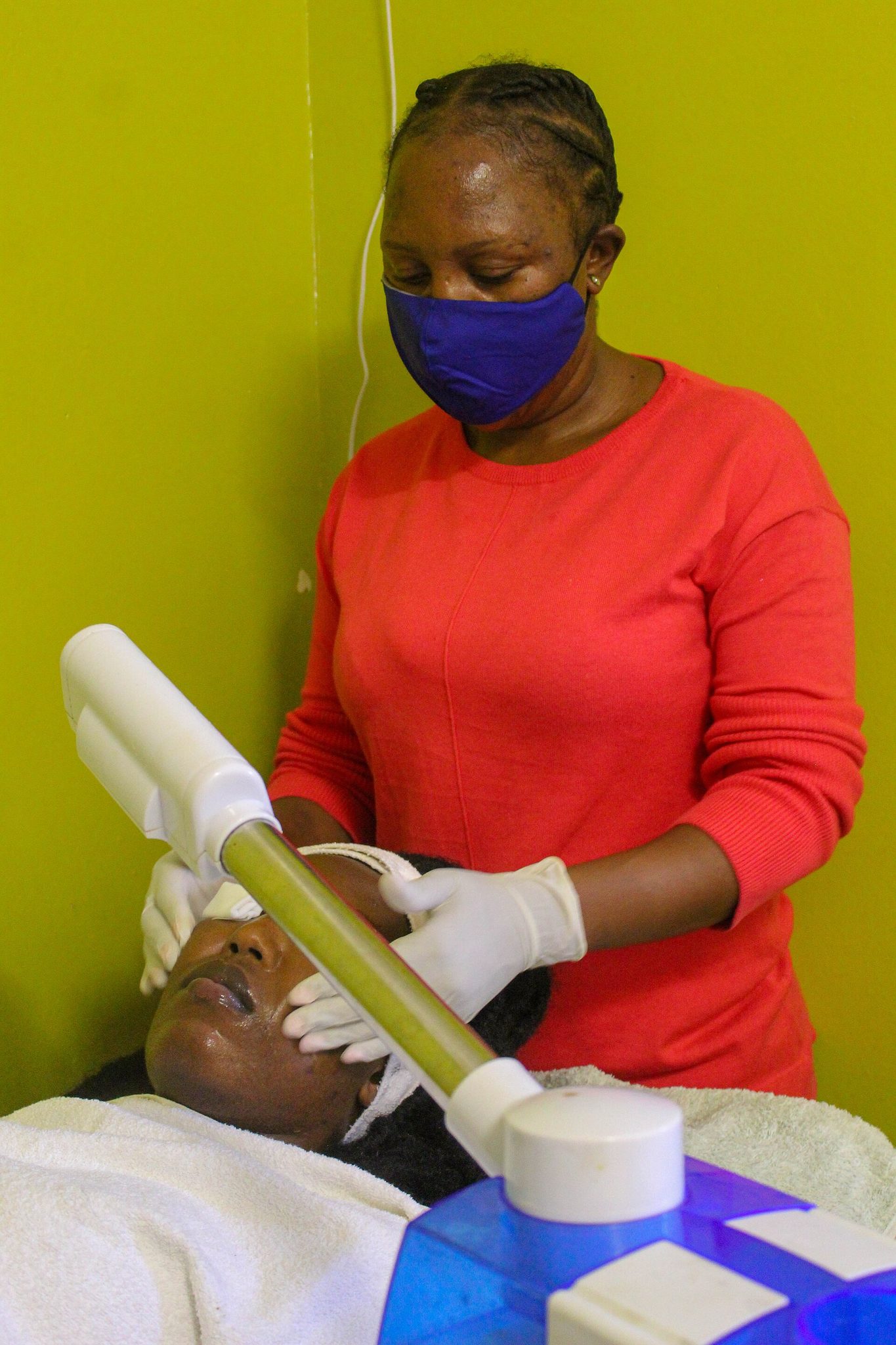
Photo: Kolobetsoo / Wikimedia Commons, CC BY-SA 4.0
Rule 3: towels, bed linen and the bed
- A fresh set of towels and a fresh sheet or paper cover for every client; never reuse the previous client's "still clean" towel.
- Put used towels straight into a lidded basket, wash hot and dry completely; rewash any towel that smells damp.
- Wipe the bed, pillow, armrests and magnifying lamp with surface disinfectant between clients, leaving it for the contact time on the label.
Rule 4: reusable and single-use tools
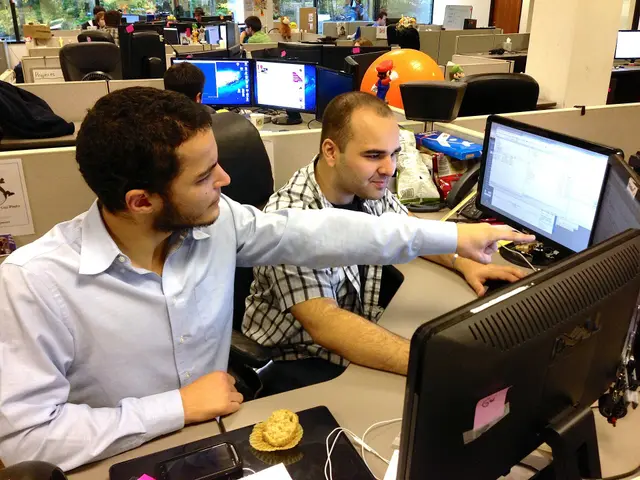
Extraction lancets are single-use: open the pack in front of the client and drop the lancet into a sharps container straight after use. Reusable metal comedone extractors, tweezers and scissors must be cleaned of all residue before being disinfected or sterilised exactly as the equipment and solution instructions say (Figure 3), then stored in a sealed pouch or box until used. Cotton pads, gauze, sticks and sponges are single-use.
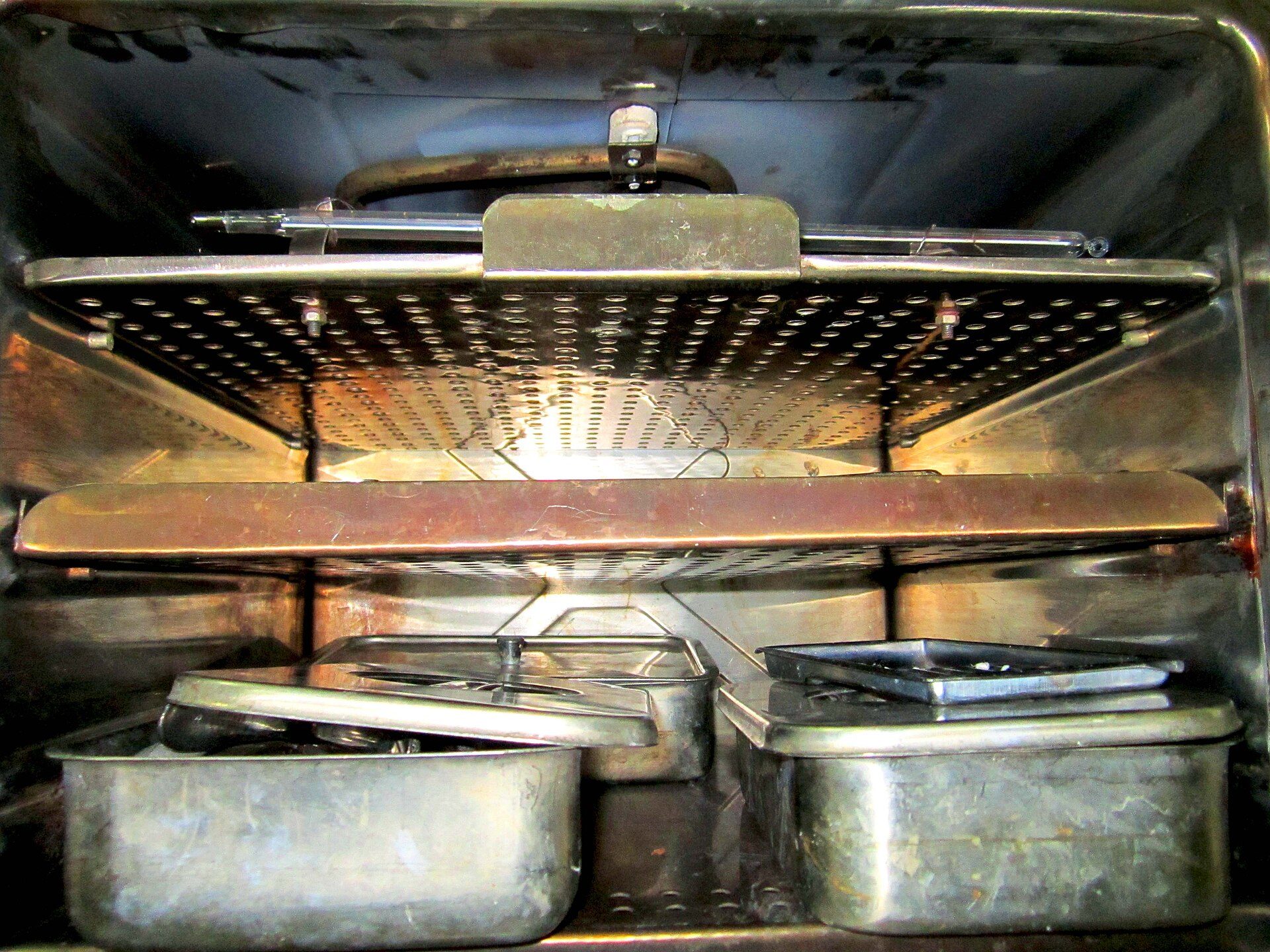
Photo: Делфина / Wikimedia Commons, CC BY-SA 4.0
Rule 5: shared products
Never dip fingers or used brushes into shared jars of cream or mask. Scoop product with a clean spatula into a separate bowl for each client, discard the leftovers and never return them to the jar. Write the opening date on the pack and use it within the period-after-opening on the label; throw out products that change colour or smell.
When to stop and refer to a dermatologist
Spa therapists see a client's skin more often than a doctor does, so you may be the first to notice something that needs a check-up. You do not diagnose, but you recognise "this is not spa work" and advise the client to see a doctor.
7 signs that mean stopping
- Red, painful inflamed spots, spreading pustules, nodules or cysts.
- A new mole or pigmented spot that grows quickly, has an irregular border, several colours, bleeds or itches.
- Sores or raw patches on the face that are slow to heal.
- Red, stinging skin with tiny bumps and visible blood vessels after long use of creams of unknown origin.
- Red, scaly, very itchy or weeping patches (possibly eczema, psoriasis or fungal infection).
- An allergic reaction during the session: facial or lip swelling, hives, difficulty breathing (call 115, Vietnam's emergency number, at once for breathing difficulty).
- The client is taking prescription oral or topical acne medicine, or is pregnant or breastfeeding, and the service uses strong actives: ask the treating doctor first.
How to tell the client
Be brief and honest, without frightening them and without diagnosing: "This area looks deeply inflamed; if I work on it, it may leave marks or scars. I suggest you see a dermatologist for proper treatment. Today I'll only cleanse and soothe the healthy skin." Record in the client file that you advised a doctor's visit.
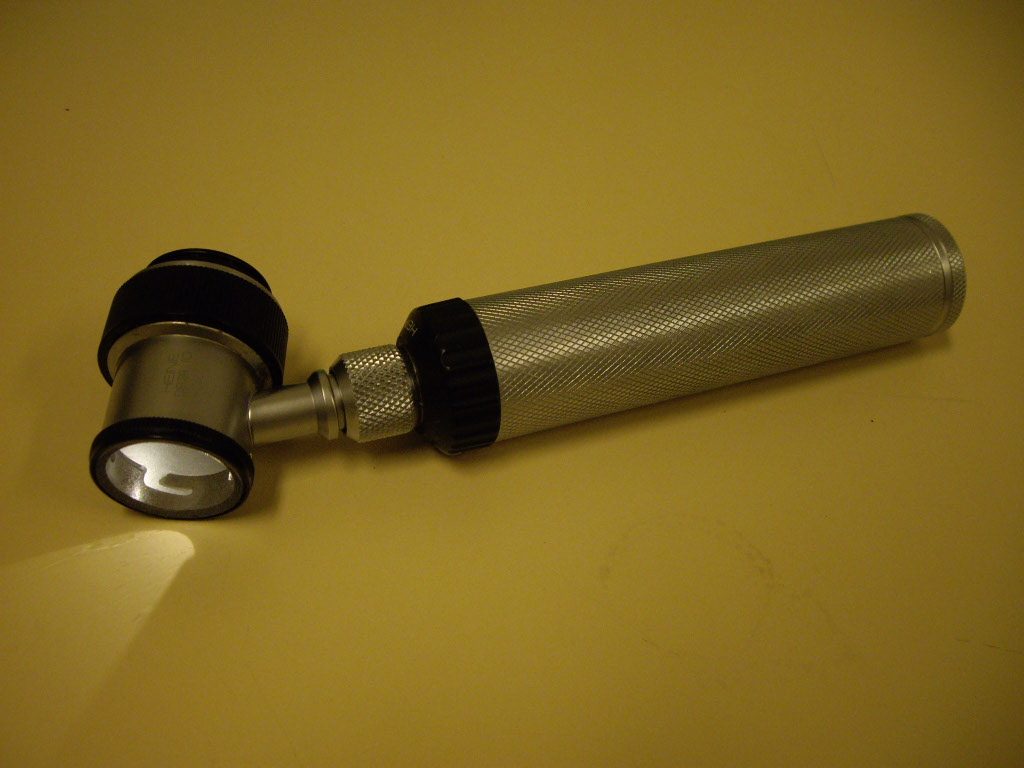
Photo: Frank33 / Wikimedia Commons, CC BY-SA 3.0
The client record and mandatory questions
Before the first session, ask and record: diagnosed skin conditions, current medicines (oral and topical), history of cosmetic allergies, pregnancy or breastfeeding, recent cosmetic procedures, and any tendency to keloid scarring. The client signs to confirm. The record helps you decide whether to proceed, and proves you asked the right questions.
Worked example: hygiene supplies for a day of 8 facials
The situation: Ha, a new therapist at a small spa, has 8 basic facial clients on the day shift, 4 of whom are having non-inflamed comedones extracted. The shift leader asks Ha to work out the single-use supplies and towel laundry cost for the day.
Step 1: count the supplies
- Gloves: 2 pairs per client (one for cleansing, one for extraction or masking) → 8 × 2 = 16 pairs.
- Extraction lancets: 4 clients × 3 lancets = 12 lancets.
- Cotton pads: 10 per client → 8 × 10 = 80 pads.
- Disposable paper bed covers: 8.
- Cloth towels to launder: 3 per client (hair wrap, face towel, body cover) → 8 × 3 = 24 towels.
Step 2: cost (2026 reference prices, varying by area and supplier)
| Item | Quantity × unit price | Amount |
|---|---|---|
| Medical gloves | 16 pairs × 3,000 VND | 48,000 VND |
| Single-use extraction lancets | 12 × 1,000 VND | 12,000 VND |
| Cotton pads | 80 × 300 VND | 24,000 VND |
| Disposable paper bed covers | 8 × 5,000 VND | 40,000 VND |
| Washing and drying towels (power, water, detergent) | 24 towels × 2,000 VND | 48,000 VND |
| Total | 172,000 VND | |
Check: 48,000 + 12,000 + 24,000 + 40,000 + 48,000 = 172,000 VND a day (about USD 6.60), or 21,500 VND per client across 8 clients. A basic facial at a small spa usually costs around 150,000–400,000 VND (2026 reference, varying by area), so hygiene is only a small share. Cutting gloves or reusing lancets to save a few thousand dong trades a tiny saving for the risk of infection and a lost reputation.
Common mistakes and how to fix them
Agreeing to do "skin booster injections" because the owner asks
Signs: being told to inject with no medical qualification or practising licence. Consequence: health risks for the client and legal liability for you. Fix: refuse and explain it is a medical procedure; if you are pressured, consider changing workplace.
Applying a cream the client brought in
Signs: the client hands over a tube "prescribed by a doctor" or a mixed cream and asks you to apply it after the facial. Fix: do not apply it; the client uses it at home as the doctor directed, and the spa only uses its own products with known ingredients.
Dipping a brush into a shared mask jar
Signs: one jar used for many clients with a brush going back and forth. Fix: decant product into separate bowls with a clean spatula before starting.
Frequently asked questions
Can a spa inject fillers or botulinum toxin?
As a general principle, fillers and botulinum toxin are invasive procedures within the scope of medical examination and treatment, which must be carried out at licensed health facilities by suitably licensed practitioners. Spas and skincare therapists do not offer them. Check the specific rules in force with the Department of Health.
Do skincare therapists need a certificate?
A vocational certificate in skincare from a reputable training centre is worthwhile to prove your skills to employers and clients. Specific requirements for business conditions and staff certificates can change; ask the local authorities before opening a business or accepting a job.
Is it OK to have spots extracted at a spa?
Yes for non-inflamed blackheads and whiteheads, done hygienically with gloves and single-use lancets. Inflamed spots, pustules, nodules and cysts should not be squeezed; the client should be advised to see a dermatologist.
Can a spa sell acne or melasma creams?
A spa should only sell cosmetics of clear origin that have been notified as the rules require. Creams whose actives are prescription medicines, or unlabelled mixed creams, must not be sold or used.
Practice tasks and self-assessment
- Take the price lists of 2 spas near you and sort every service into "spa may do it", "health facility only" or "check first" using the 3 test questions.
- Practise setting up the bed and tray for one client: fresh towels, paper cover, gloves, sealed lancets, sharps container and product decanted into bowls.
- Role-play: a client with a cyst on the chin wants it squeezed; give your referral advice in 30 seconds.
- Work out supplies for a day of 10 clients, 6 with extractions, using the table above.
Self-assessment criteria
- Pass: you correctly place injections, microneedling, treatment lasers and prescription medicines outside the spa's scope.
- Pass: the tray is complete and nothing is shared between two clients.
- Pass: your advice does not diagnose or frighten, and is recorded in the file.
- Not yet: accepting invasive services, reusing lancets, dipping brushes into shared jars, or skipping the question about current medicines.
With the job's boundaries and hygiene clear, move on to the next roadmap step: Skin structure, types and analysis, where you learn about the epidermis, the skin barrier, skin types and how to fill in a client record. When you reach the extraction step, also read comedone extraction done right: a 10-step sterile spa procedure.
Keep learning skincare: after hygiene and legal limits come skin structure and types, the facial routine, sterile extractions, facial massage and non-invasive skincare machines. See the 8-step skincare specialist roadmap.