Making a clear, sweet and fragrant pho beef broth comes down to five jobs: choose fresh marrow bones and meaty bones, blanch them to remove blood and scum, char ginger and shallots and toast the dry spices, simmer at the barest bubble for at least 7–8 hours while skimming regularly, and finally season with fish sauce, salt and rock sugar. A cloudy, smelly or harsh, aniseed-heavy broth almost always means one of those five jobs was skipped. This lesson is written for a restaurant kitchen in Vietnam: a recipe for a 50-litre pot, a work schedule that starts the evening before, food cost per bowl and how to store broth safely.
By the end of this lesson, you will be able to:
- Choose and prepare 15 kg of beef bones for a 50-litre pot and blanch them properly so the broth stays clear.
- Char ginger and shallots, toast and bag cinnamon, star anise, black cardamom and coriander seed, and know when to add them so the broth does not turn harsh.
- Hold a gentle simmer, skim and top up to collect about 32 litres of broth for about 80 bowls.
- Calculate the cost of the broth and of one bowl of pho, with figures that add up.
- Cool broth quickly, store it overnight and reheat it according to food safety principles.
Learning Vietnamese cooking properly? Broths for pho, bun bo and hu tieu are step 3 of the roadmap — after food hygiene and knife and prep skills. See the 8-step Vietnamese cuisine cook roadmap (in Vietnamese) to learn in the right order.
What makes a good pho broth?
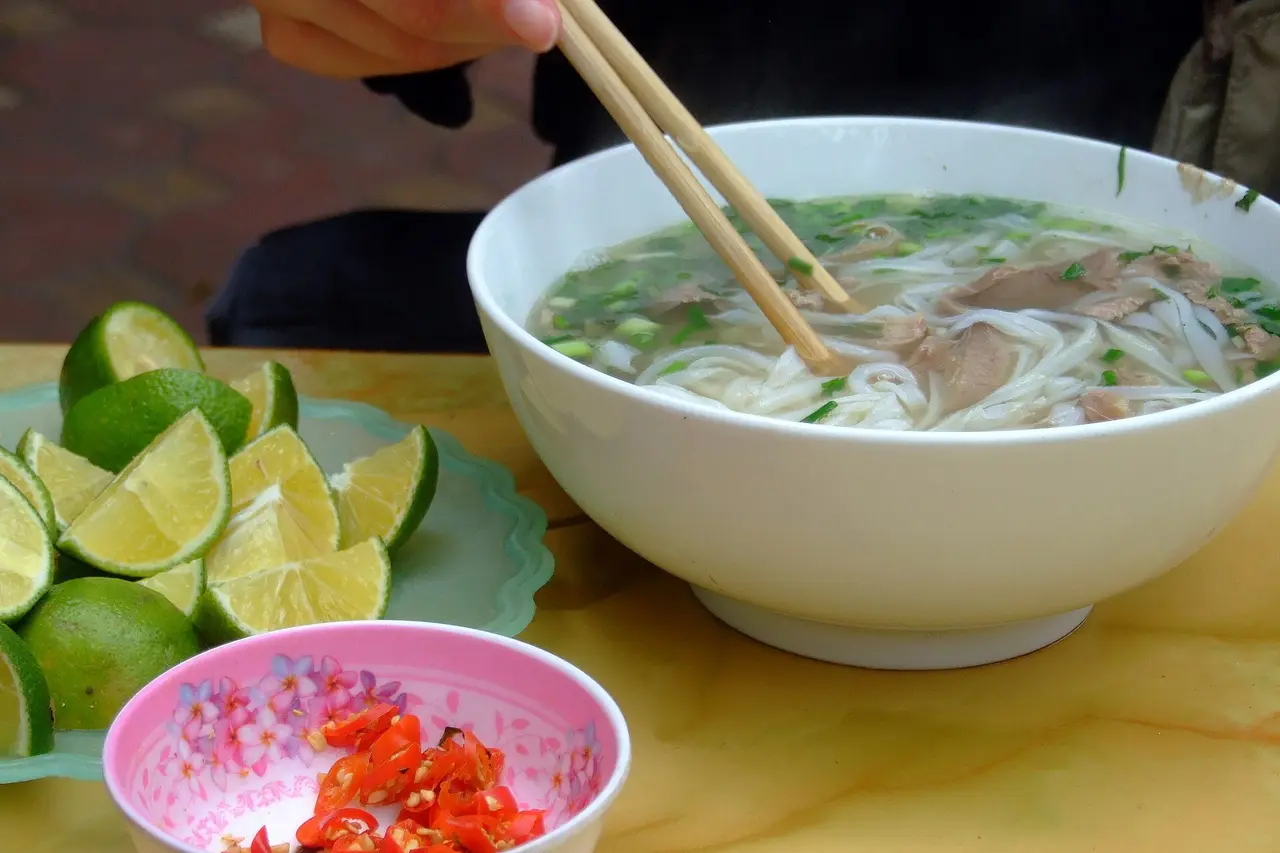
A pot of pho beef broth has three layers of flavour: natural sweetness from bones and meat, a smoky aroma from charred ginger and shallots, and the warm perfume of cinnamon, star anise and black cardamom. A great bowl is one where these three are balanced, with a clear, pale amber broth and a thin, fragrant layer of fat on top (Figure 1).
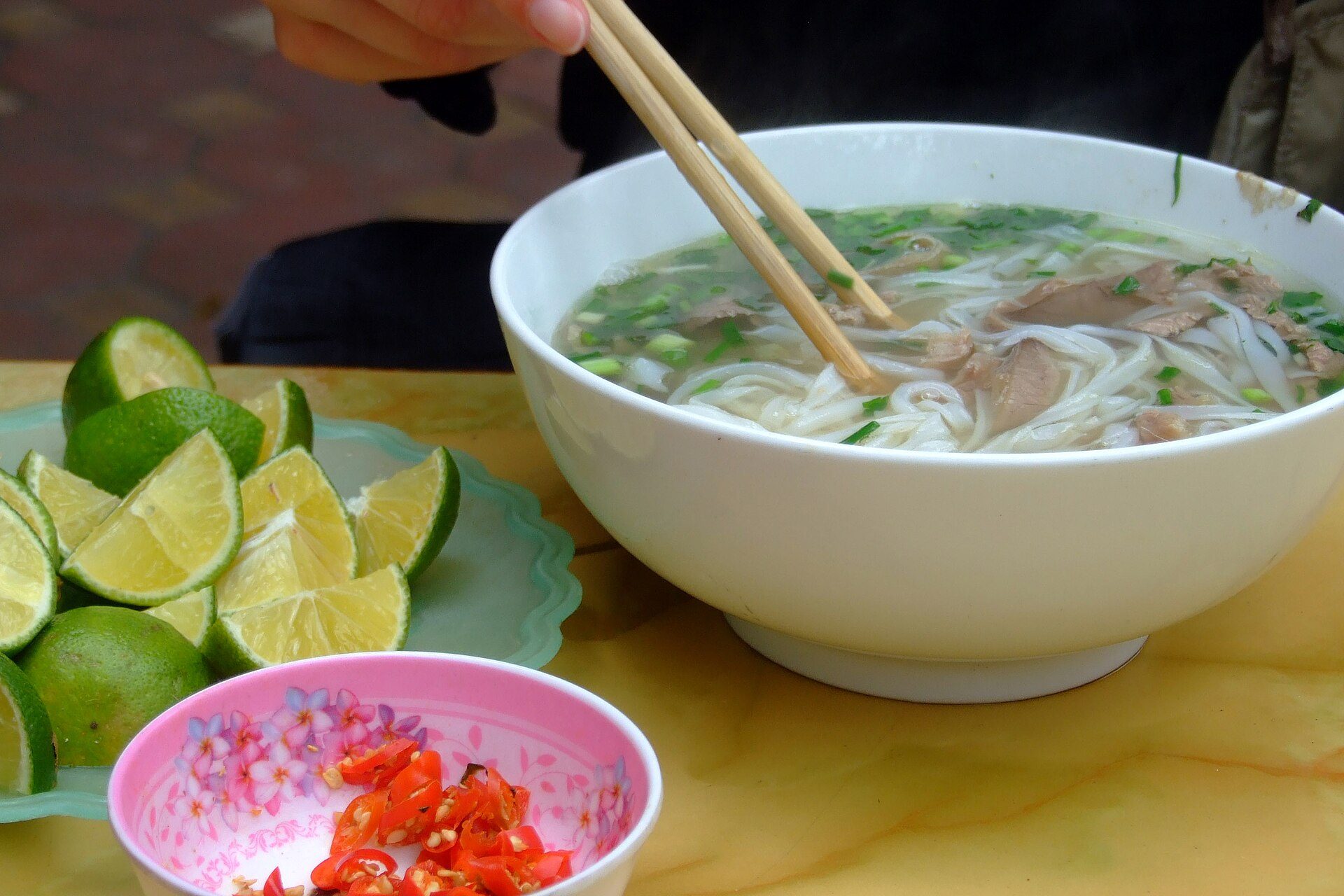
Photo: Codename5281 / Wikimedia Commons, CC BY-SA 3.0

Sweetness: from bones and meat, not MSG
Marrow bones (leg and knuckle bones) are rich in marrow and give body and richness. Meaty bones (spine, ribs, bones with meat attached) give a deeper sweetness. Brisket, flank or shank simmered in the same pot becomes a topping and sweetens the broth further. A broth with real bone sweetness needs only moderate seasoning; customers notice when a shop leans on MSG because they feel thirsty afterwards.
Aroma: charred ginger, shallots and dry spices
Ginger and shallots charred until the skins blacken give pho its signature smoky aroma and also mask the strong smell of beef bones. The dry spices — cinnamon, star anise, black cardamom (thao qua), coriander seed and cloves — are toasted and tied in a cloth bag. Spices are the "top note", not the base: too much, or simmered too long, and the broth turns harsh.
Clarity: technique, not luck
The broth stays clear when blood and impurities on the bones are removed by blanching, and the pot is held at a gentle shiver rather than a rolling boil. A hard boil breaks fat and protein into tiny particles that emulsify into the liquid and cloud it — and once a broth is cloudy, it is very hard to rescue.
Recipe for a 50-litre restaurant pot
This recipe uses a 50-litre stainless steel stockpot and yields about 32 litres of finished broth, enough for about 80 bowls at 400 ml each. The quantities are a starting point; every shop adjusts to its customers' taste and to the quality of each batch of bones.
| Ingredient | Quantity | Notes |
|---|---|---|
| Beef marrow bones | 10 kg | Ask the butcher to cut 10–15 cm pieces and crack them to expose the marrow |
| Meaty beef bones (spine, ribs) | 5 kg | A little meat left on makes the broth sweeter |
| Starting water | 38 litres | Top up with about 8 litres of boiling water during simmering |
| Ginger | 0.8 kg | Charred, scraped clean, smashed |
| Shallots | 1 kg | Charred in their skins, burnt layer peeled off |
| Onions | 2 kg | Charred or raw, halved |
| Cinnamon (cassia) | 60 g | Toasted |
| Star anise | 50 g | About 15–20 stars, toasted |
| Black cardamom | 5 pods | Charred, cracked; remove some seeds to avoid bitterness |
| Coriander seed | 30 g | Toasted |
| Cloves | 8 | Use sparingly, very strong |
| Nutmeg | 2–3 | Optional, cracked |
| Fish sauce | 0.5 litre | Added at the end |
| Salt | about 250 g | Add gradually |
| Rock sugar | about 300 g | Gives a clean, lingering sweetness; add gradually |
Choosing marrow bones and meaty bones
Buy bones on the day, bright pinkish red with pink marrow, not slimy and not sour-smelling (Figure 2). Old bones with grey marrow are the number one cause of a smelly broth. A ratio of 2 parts marrow bones to 1 part meaty bones is a common starting point; for a richer broth, increase the meaty bones.
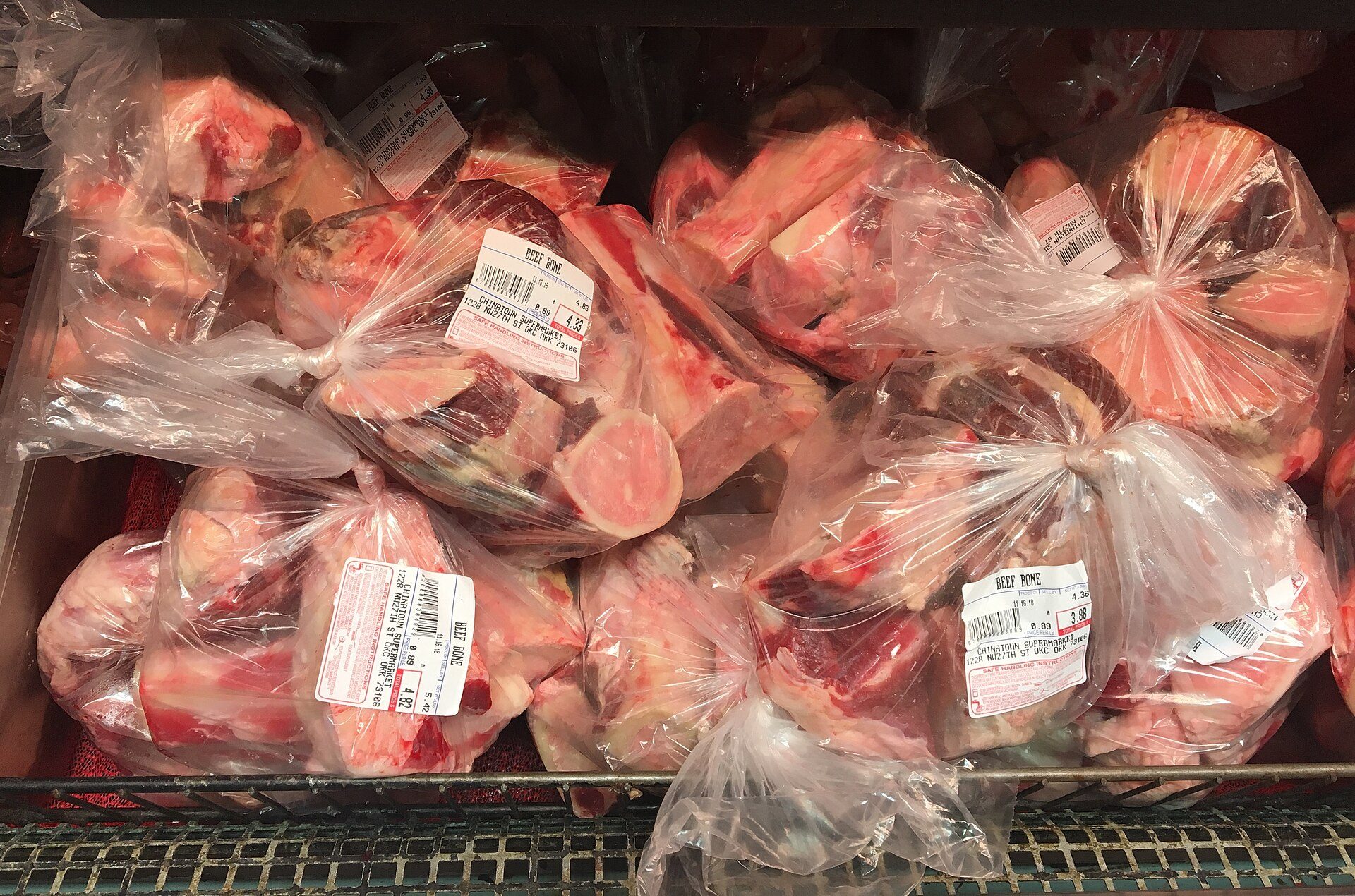
Photo: OKJaguar / Wikimedia Commons, CC BY-SA 4.0

Meat simmered in the pot
Many shops simmer brisket, flank or shank in the broth pot: add it after blanching, simmer about 1.5–2.5 hours depending on the cut, lift it out, plunge it into iced water for a few minutes to firm up, then drain and slice thinly to order. This meat is not counted in the broth cost; it is costed as the meat portion of each bowl.
Step by step: from blanching to seasoning
The broth for the morning service usually starts the evening before. This is the working order in a restaurant kitchen.
- Soak and rinse: soak the bones in cold, lightly salted water for 30–60 minutes to draw out blood, then rinse.
- Blanch: cover the bones with cold water, bring to a hard boil for 10–15 minutes until all the scum rises. Pour away all the water, rinse the bones under the tap and scrub off clotted blood and bone fragments; wash the pot too.
- Start the simmer: put the clean bones in the pot, add 38 litres of cold water, bring it up on high heat until just about to boil, then turn the heat down immediately.
- Skim: skim continuously with a mesh ladle for the first 30–45 minutes, then every 20–30 minutes.
- Char ginger and shallots: meanwhile, char the ginger, shallots and onions until the skins blacken, scrape off the burnt parts, rinse and add them to the pot.
- Simmer gently: keep the surface barely bubbling for 7–8 hours (many shops go 10–12 hours); top up with boiling water when the level drops, about 8 litres in total.
- Add the spices: toast the cinnamon, star anise, black cardamom, coriander seed and cloves, put them in a cloth bag and add it for the last 1–1.5 hours; taste, and remove the bag once the aroma is right.
- Season: add salt and rock sugar first and fish sauce last, when the broth is nearly ready; taste from a separate bowl and season a little at a time.
A gentle simmer and skimming: the secret to clarity
A gentle simmer means only small bubbles rising in one corner of the pot, about 90–95°C, with no rolling surface. On an industrial gas burner, turn to the lowest flame once it boils and set the pot slightly off-centre so the scum gathers on one side for easy skimming. Do not seal the lid — condensation dripping back also clouds the broth; if you cover it, leave a gap.
Toasting the spices properly
Toast the dry spices in a dry pan over medium heat, stirring constantly for 3–5 minutes until fragrant, without letting them burn black (Figure 3). Thick, pungent cassia bark (Figure 4) is needed only in small amounts. Tie everything in a cloth bag or a stainless steel infuser so it lifts out easily and loose bits do not cloud the broth or make it harsh.
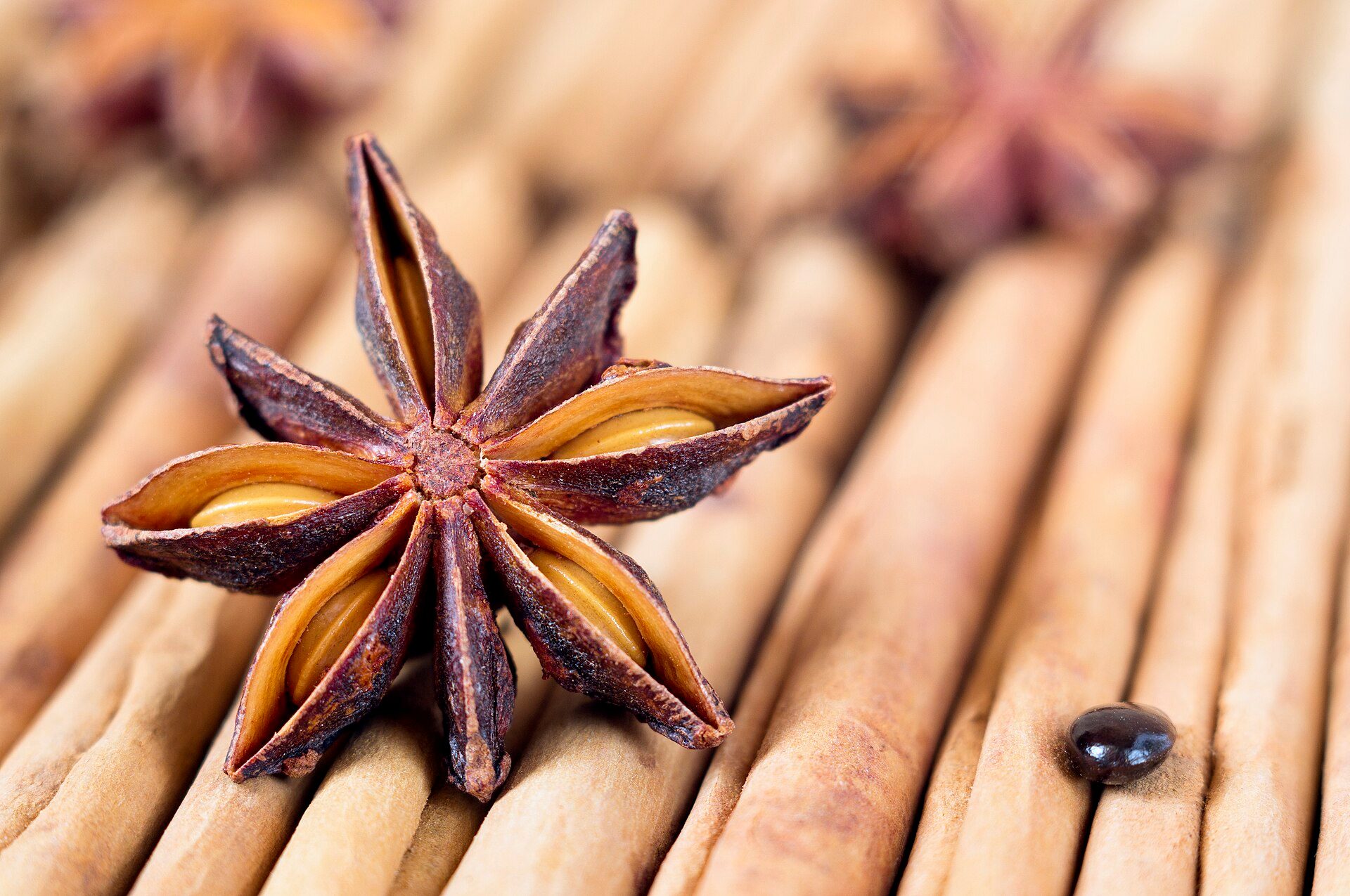
Photo: Retro Lenses / Wikimedia Commons, CC BY 4.0

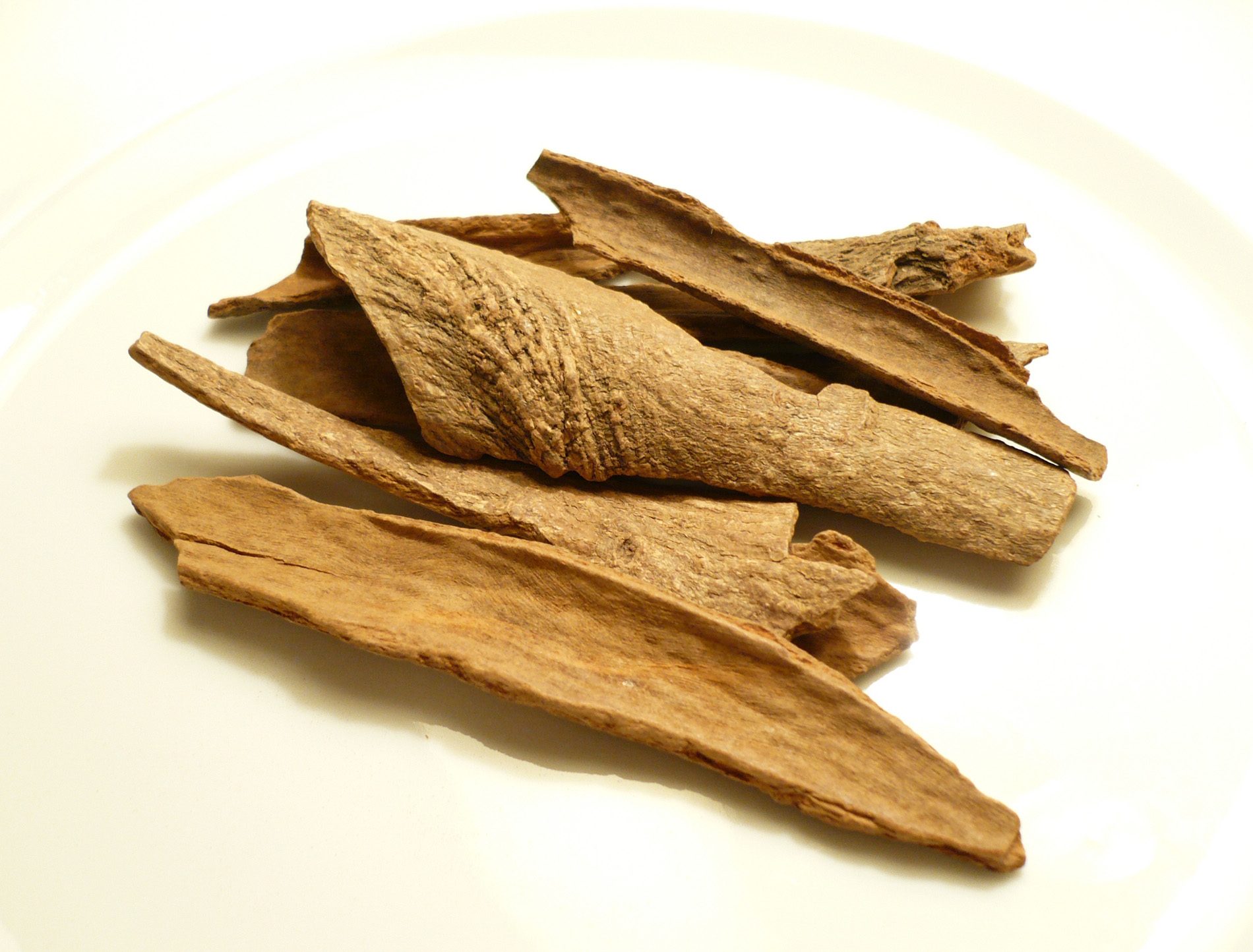
Photo: Badagnani / Wikimedia Commons, CC BY 3.0

Seasoning: order and checks
Salt "opens up" the bone sweetness, rock sugar gives a clean sweet finish, and fish sauce gives the signature aroma — but it loses fragrance and can darken the broth if boiled for long, so it goes in last. Tasting broth on its own is not enough: make a test bowl with noodles, meat and spring onion, because plain rice noodles dilute the seasoning.
Work schedule and cost per bowl (worked example)
Mr Tuan's pho shop sells from 6 to 10 am, about 80 bowls a day, from one 50-litre pot. The kitchen schedule: 5 pm receive and soak the bones; 6 pm blanch and rinse; 6:30 pm start the simmer; 7 pm add the charred ginger and shallots; simmer overnight with someone watching the flame or a safe timer-controlled burner; 3 am add the spice bag; 4:30 am remove the spices and season; 5:30 am move the pot to a holding burner for service.
Cost of the broth (2026 reference prices)
Prices are in Vietnamese dong; 1,000 VND is roughly 4 US cents, so 100,000 VND is about 4 USD.
| Item | Calculation | Cost |
|---|---|---|
| Beef marrow bones | 10 kg × 45,000 VND | 450,000 VND |
| Meaty beef bones | 5 kg × 55,000 VND | 275,000 VND |
| Shallots | 1 kg × 60,000 VND | 60,000 VND |
| Ginger | 0.8 kg × 40,000 VND | 32,000 VND |
| Onions | 2 kg × 25,000 VND | 50,000 VND |
| Dry spices (cinnamon, star anise, black cardamom, coriander seed, cloves, nutmeg) | lump sum | 58,000 VND |
| Fish sauce | 0.5 litre × 120,000 VND | 60,000 VND |
| Salt | about 250 g | 5,000 VND |
| Rock sugar | 0.3 kg × 40,000 VND | 12,000 VND |
| Gas for about 11 hours (blanching plus overnight low simmer) | estimate | 78,000 VND |
| Total for the pot | 1,080,000 VND (about 43 USD) |
Checking the sum: 450,000 + 275,000 + 60,000 + 32,000 + 50,000 + 58,000 + 60,000 + 5,000 + 12,000 + 78,000 = 1,080,000 VND. The pot yields 32 litres (38 litres at the start + 8 litres topped up − about 14 litres lost to evaporation and absorbed by the bones). At 400 ml per bowl: 32 ÷ 0.4 = 80 bowls, so the broth costs 1,080,000 ÷ 80 = 13,500 VND per bowl.
Cost of one bowl of rare-and-well-done beef pho
| Component | Portion | Cost |
|---|---|---|
| Broth | 400 ml | 13,500 VND |
| Fresh rice noodles | 200 g (15,000 VND/kg) | 3,000 VND |
| Rare and well-done beef | 60 g (250,000 VND/kg) | 15,000 VND |
| Spring onion, herbs, lime, chilli | lump sum | 2,500 VND |
| Total cost per bowl | 34,000 VND |
13,500 + 3,000 + 15,000 + 2,500 = 34,000 VND. Selling at 60,000 VND a bowl, ingredients make up 34,000 ÷ 60,000 ≈ 57% of the price. Pho has a higher food-cost ratio than many rice dishes because beef is expensive, so shops must weigh meat portions and make full use of the simmered meat. These ingredient prices are 2026 references in Vietnam and vary by region and season; full menu pricing (labour, rent, waste) is covered in step 8 of the roadmap.
Yield and how to improve it
Getting only 32 litres from a 50-litre pot sounds wasteful, but that is the evaporation that concentrates the flavour. To raise yield, do not pour in plain water at the end — the broth will taste thin and need extra seasoning, which makes it harsh and salty. Instead, scale up the bones proportionally or use a bigger pot.
Northern versus Southern pho
Both are beef pho, but the regional tastes differ clearly. Cook for the majority taste where your shop is, or label it "Northern-style pho" on the sign so customers know what to expect.
| Feature | Northern pho (Hanoi) | Southern pho (Saigon) |
|---|---|---|
| Broth | Clear, clean, less sweet, ginger and shallot forward | Sweeter, often more rock sugar; some shops add dried squid or dried shrimp |
| Dry spices | Used with restraint, light anise and cinnamon | More pronounced cinnamon and anise |
| Noodles | Wider | Narrower |
| Accompaniments | Spring onion, onion, lime, chilli, garlic vinegar; few herbs | A plate of bean sprouts, Thai basil, sawtooth herb; hoisin and chilli sauce |
Adjusting the recipe by region
For Northern pho: keep the recipe above, reduce the rock sugar to about 150–200 g and keep the spices at the low end. For Southern pho: keep or increase the rock sugar, and optionally add 100–200 g of grilled dried squid or dried shrimp for a seafood sweetness (add during simmering and remove before service). Whatever the region, the broth must still be clear.
Customers seasoning at the table
Southern pho customers usually add sauces, lime, chilli and herbs themselves (Figure 5), so the base broth can be seasoned slightly lighter. Northern customers add less, so the broth must taste right straight from the ladle.
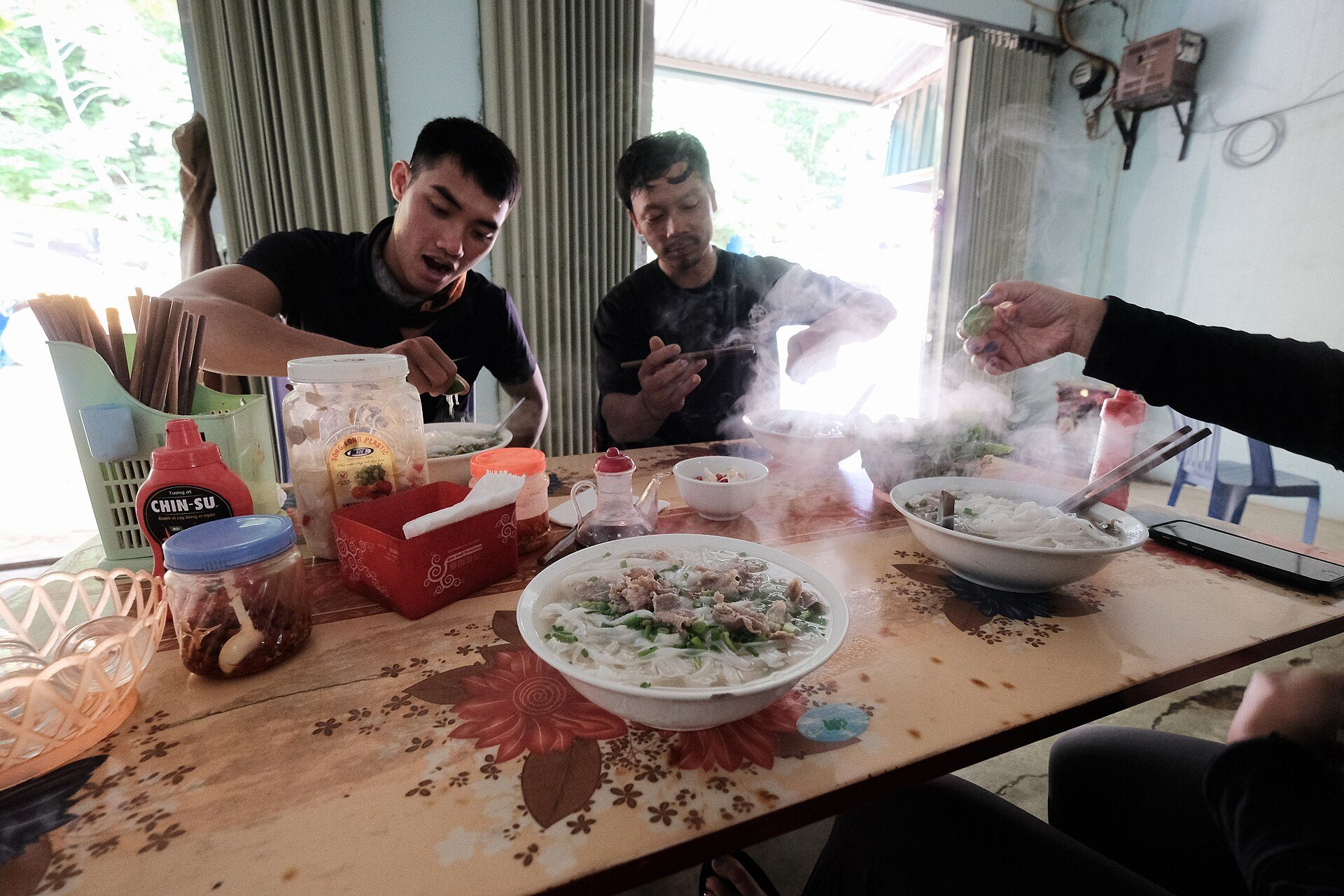
Photo: Vinnie Cartabiano / Wikimedia Commons, CC BY 2.0

Common faults: cloudy, smelly, harsh broth
Cloudy broth
Sign: grey, murky broth with broken specks of fat. Cause: no blanching or the blanching water not discarded, a rolling boil, no skimming, a sealed lid. Fix: hold a gentle simmer next time; a slightly cloudy pot can be strained through several layers of fine cloth, but it will not become fully clear again.
Smelly broth
Sign: a fishy, rank bone smell. Cause: bones that are not fresh, not soaked and blanched well, ginger and shallots not charred enough. Fix: never try to use bones that smell off; check bones on delivery, blanch thoroughly and char the aromatics properly.
Harsh, bitter, aniseed-heavy
Sign: an astringent, bitter taste and an anise smell that drowns the beef. Cause: too much star anise or cloves, spices simmered all night, burnt spices, too many cardamom seeds. Fix: add the spice bag for the last 1–1.5 hours only, taste and remove it early; if it is already harsh, dilute with unspiced bone broth if you have some.
Cloyingly sweet or too salty
Sign: customers get thirsty, the sweetness tastes "fake". Cause: sugar or MSG used to make up for too few bones; fish sauce added early and reduced. Fix: use the full bone ratio, season at the end and a little at a time.
Food safety and kitchen safety with large pots
A big pot of broth is an ideal home for bacteria if it cools slowly. This is the part many shops get most wrong.
Cool it fast
A 30–40 litre pot left to cool on the stove can take half a day, spending hours in the temperature range where bacteria multiply fastest (roughly 5–60°C). A widely used food safety guideline is to bring it from about 60°C down to about 21°C within 2 hours, then to 5°C or below within the next 4 hours. How: divide the broth into shallow stainless steel containers, stand them in tubs of ice water and stir regularly; you can also drop in ice wands (clean plastic bottles of ice). Only put it in the fridge once cooled, and do not seal it tightly while still hot.
Storing overnight and reheating
Store leftover broth in the fridge at 5°C or below and use it within 1–2 days; label it with the date and time it was made. Before service, bring all of it back to a full boil, then hold it above 60°C throughout service. Never pour old broth into a new pot that is simmering. Throw away broth that smells sour or shows unusual foam. For the specific rules on food safety knowledge certificates and keeping food samples in Vietnam, check with your local authority and the current regulations.
Kitchen safety warning: a 50-litre pot full of broth weighs 50–60 kg and is close to 100°C — never lift it alone and never move it while it is boiling. Ladle broth out with a long-handled ladle or use a pot with a drain tap; set the pot on a low, stable burner. Wear non-slip shoes, keep the floor dry, and wear heat-resistant gloves and a long apron when blanching and pouring. Gas burners running overnight: check valves and hoses with soapy water, have someone watching or an automatic gas shut-off, and keep a fire extinguisher within reach. For burns: cool under clean running water for 20 minutes, never apply toothpaste or fish sauce; for large, deep or facial burns, call 115 (emergency services in Vietnam) or go to a medical facility.
Hygiene of tools and cooks
Keep the board and cleaver for raw bones separate from the board for cooked meat. Wash and dry the spice bag after every use and replace it once it holds old smells. A cook with a cut on the hand must cover it and wear gloves; anyone with diarrhoea or a fever stays out of the kitchen.
Frequently asked questions
How long should pho beef broth simmer?
For beef bones at restaurant scale, at least 7–8 hours at a gentle simmer; many shops go 10–12 hours for a deeper broth. A pressure cooker shortens the time, but the broth is usually less clear and it is not practical at restaurant scale.
Do I need MSG in pho broth?
No. A broth with enough bones, seasoned properly with salt, rock sugar and fish sauce, is naturally sweet. If you use it, use only a little and within the food additive rules; never use it to hide a shortage of bones.
Why does pho broth turn sour overnight?
Because it cooled slowly at room temperature or went into the fridge warm in a deep container, letting bacteria grow. Cool it fast in shallow containers on ice and store at 5°C or below; sour broth must be thrown away.
How many bowls does a 50-litre pot make?
With the recipe above you collect about 32 litres; at 400 ml per bowl that is about 80 bowls. With large 500 ml bowls, about 64.
Can I simmer the bones a second time?
Some shops re-simmer the bones to make a second, weaker stock for the next batch, but it is very thin; use it only instead of plain water to start a new pot, never serve it directly, and refrigerate it just like finished broth.
Practice exercises and self-assessment
- Make a small 10-litre pot at one fifth of the recipe (3 kg of bones), recording the time of each step and the surface temperature while simmering.
- Split it in two: keep one half at a gentle simmer and boil the other hard for 30 minutes; compare colour and taste to see the difference.
- Recalculate the pot cost and the cost per bowl using ingredient prices at your local market.
- Practise cooling 10 litres of broth in shallow containers on ice, measuring the temperature every 30 minutes.
Self-assessment criteria
- Pass: the broth is clear enough to see the bottom of the bowl; bone sweetness is obvious and the spices do not drown the beef; seasoning is right in a test bowl with noodles.
- Pass: your cost table adds up correctly; the broth drops below 21°C within 2 hours when cooled.
- Not yet: you skip blanching, boil hard, simmer the spices all night, or let the pot cool on its own before refrigerating it.
Once you have mastered pho broth, you are ready for the next step of the roadmap: Dipping sauces & regional flavours — balancing salt, sweet, sour and heat with standard recipes, which is also the foundation for seasoning bun bo and hu tieu broths.
Want to become a Vietnamese cuisine cook? See the 8-step Vietnamese cuisine cook roadmap (in Vietnamese) — from food safety, knife skills and broths to kitchen operations and dish costing.