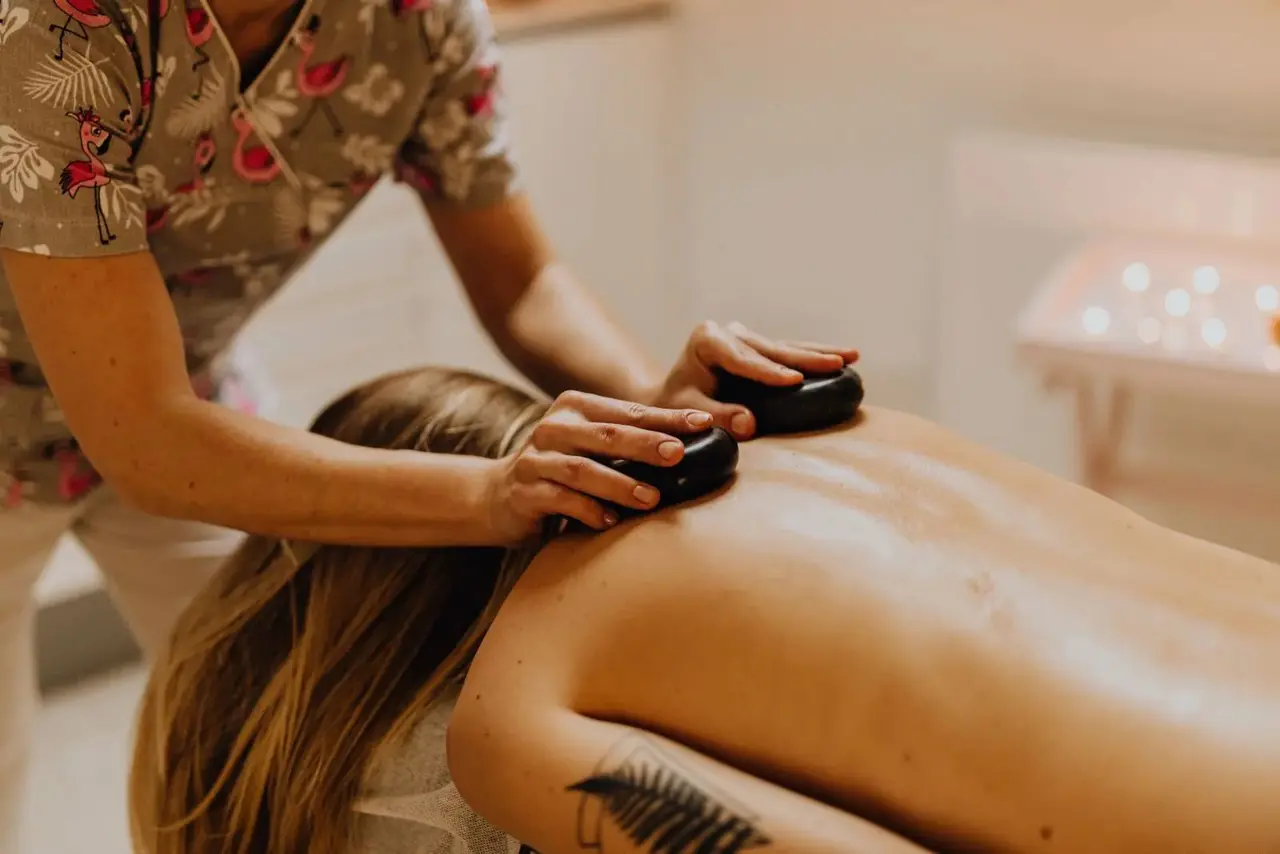
"The stones feel lovely and warm." "My left shoulder is stinging a little." Both can be heard in the same hot stone massage, minutes apart. Clients love the deep, even warmth of hot stones, which is why the treatment appears on so many spa menus. It is also the treatment in which a new therapist is most likely to burn a client: basalt stones hold heat for a long time, a resting stone concentrates that heat on one small patch of skin, and a relaxed client often does not want to complain. This guide shows trainee spa therapists how to heat and test stones safely, which clients need extra care or a different treatment, how to run a session of about 60 minutes, and what to do if you suspect a burn.
Scope of this guide. Hot stone massage in a spa is a relaxation treatment, not a medical treatment, and a spa therapist does not diagnose or treat health conditions. Temperatures and times in this article are given for reference only and come from common professional massage guidance; always follow the stone heater manufacturer's instructions, your spa's written protocol and your supervisor. If a client has a medical condition, is pregnant or takes regular medicine, their doctor's advice comes first. This article does not cover hot stones on the face or cold stone techniques, which need separate training.
Why hot stones can burn
Stones store heat in their core
Massage stones are usually smooth basalt: dark, dense and heavy, which is exactly why they hold heat so well. When a stone sits in hot water long enough, it heats all the way through. If a stone is too hot and you dip it quickly in cool water, only the surface cools; a little later, heat from the core moves back to the surface. That is why professional safety guidance says that a stone which is too hot should be put aside and replaced with a correctly heated one, not "cooled down quickly" and used.
The three most common causes of burns
Water that is too hot, or the wrong heating device. Rice cookers, slow cookers, ovens, microwaves and frying pans cannot keep stones at a steady, controlled temperature; stones can heat unevenly or far too much.
A stone left too long in one place. A moving stone spreads its heat; a resting stone concentrates heat on one area. The most dangerous situation is a client lying on top of a stone: their body weight presses it against the skin and they cannot move away from it.
A client who cannot feel the heat, or does not say so. People with nerve damage from diabetes, older clients with thin skin, and people taking some medicines can have reduced heat sensation. Other clients feel the burn but think "it must be hot to work" and stay quiet.
Relaxation, not treatment
Describe hot stone massage honestly as a warm, relaxing treatment. Do not promise that it cures pain or illness, helps weight loss or "detoxes" the body. If a client asks, you can say: "Many clients find the warmth helps them relax. If you have pain that has lasted a long time, it is best to see a doctor about it."
Preparing your equipment before the client arrives
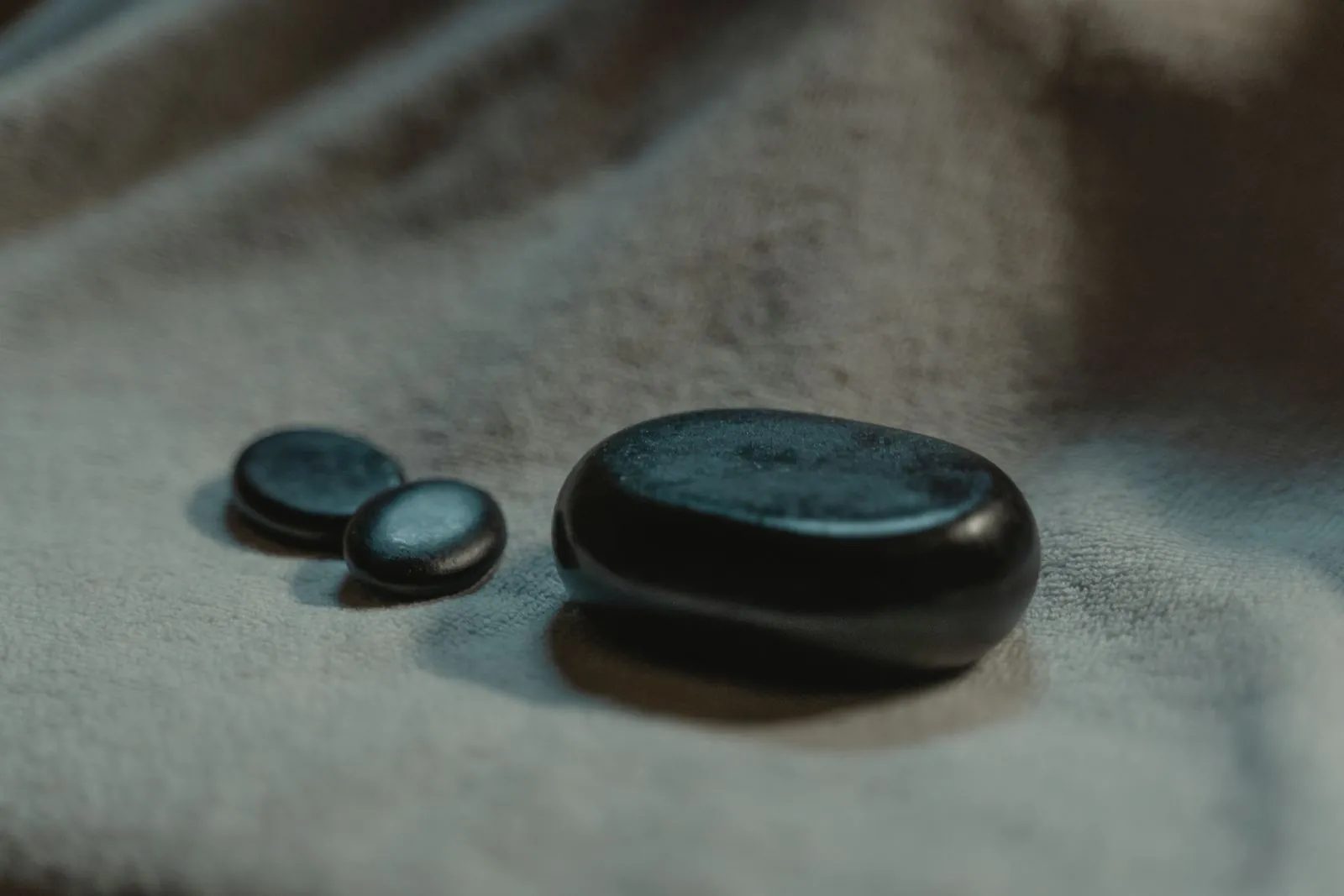
Figure 1. Smooth black massage stones with rounded edges resting on a towel. Before every session, run your fingers over each stone and remove any that are cracked, chipped or sharp-edged. (Photo: Tima Miroshnichenko, Pexels)
The stone set
A typical set includes large flat stones for the back and thighs, medium stones for the calves and arms, and small stones for the hands and the back of the neck; the number varies between sets. Use smooth, non-porous stones from a professional spa supplier. Do not use river pebbles or decorative stones: you do not know how they hold heat or whether they can be cleaned properly. Before every session, run your fingers over each stone. Any stone with a crack, a chip or a sharp edge is removed from the set.
A professional stone heater and a thermometer
Heat stones only in a professional massage stone heater with temperature control, with the stones fully covered by water. Water heats stones evenly and lets you control their temperature. Do not trust the dial alone: use a waterproof digital thermometer to check the water temperature before the client comes in and several times during the session.
Put a thin towel on the bottom of the heater insert so the stones do not rest directly on the base, add the stones, cover them completely with water and switch the heater on in good time. How long a full set takes to heat through depends on the heater and the number of stones; one manufacturer's manual mentions about an hour (for reference). Follow your heater's instructions.
Electrical safety around the heater
A stone heater is an electrical appliance full of hot water, sitting next to a treatment table. Plug it into a fixed socket protected by a residual current device (RCD or RCBO) installed by a qualified electrician, not into an extension lead lying on the floor. Place the heater on a stable table away from walkways, with the cable where nobody can trip over it. Unplug it before you add water, empty it or clean it. If the cable or plug is cracked, scorched or loose, stop using the heater and tell your supervisor.
Other supplies
A slotted spoon (never put your hand into hot water), a towel-lined tray for stones, a bowl of cool water for your own hands, thin towels or a sheet for placed stones, massage oil (ask about allergies first), draping towels and your spa's health form.
Temperature reference table and how to test stones
Guidance published by the American Massage Therapy Association (AMTA) says that water between about 110 and 130 °F, roughly 43–54 °C, will generally bring stones to a usable temperature. Some professional safety protocols add that stones should never be heated above 130 °F (about 54 °C). This article uses that cautious upper limit. The numbers below are for reference only; your heater manufacturer's instructions and your spa's protocol come first.
Item | Reference value | Notes |
|---|---|---|
Water temperature for gliding stones | About 43–54 °C | Read it with a thermometer, not only the dial |
Upper limit for the water | About 54 °C | If it is higher, turn the heater down and wait for the whole set to cool; do not take out over-hot stones and cool them |
Placed (resting) stones | Warm, and cooler than gliding stones | Always on a sheet or towel, never directly on bare skin; lift and check the skin often |
Older clients, thin skin, first-time clients | Lower end of the range | Test on a small area and ask more often |
Hand test by the therapist | Hold the stone firmly for about 5 seconds | If you cannot hold it comfortably for 5 seconds, it is too hot for the client |
The three-layer test
Test every stone before it touches the client:
Thermometer: the water is within the range your spa allows.
Your hand: lift the stone out with the spoon, dry off excess water, hold it firmly for about five seconds, then touch it to the inside of your forearm. The inner forearm is more sensitive than the palm, which quickly gets used to heat.
The client's skin: touch the edge of the stone lightly to a small area, such as the calf, and ask: "How does that warmth feel?" If the client says it is hot, change the stone. Do not try to persuade them to accept it.
During a session your hands get used to the heat, so what feels "fine" to you near the end of the session is less reliable than at the start. Cool your hands in the bowl of water between rounds, and keep asking the client.
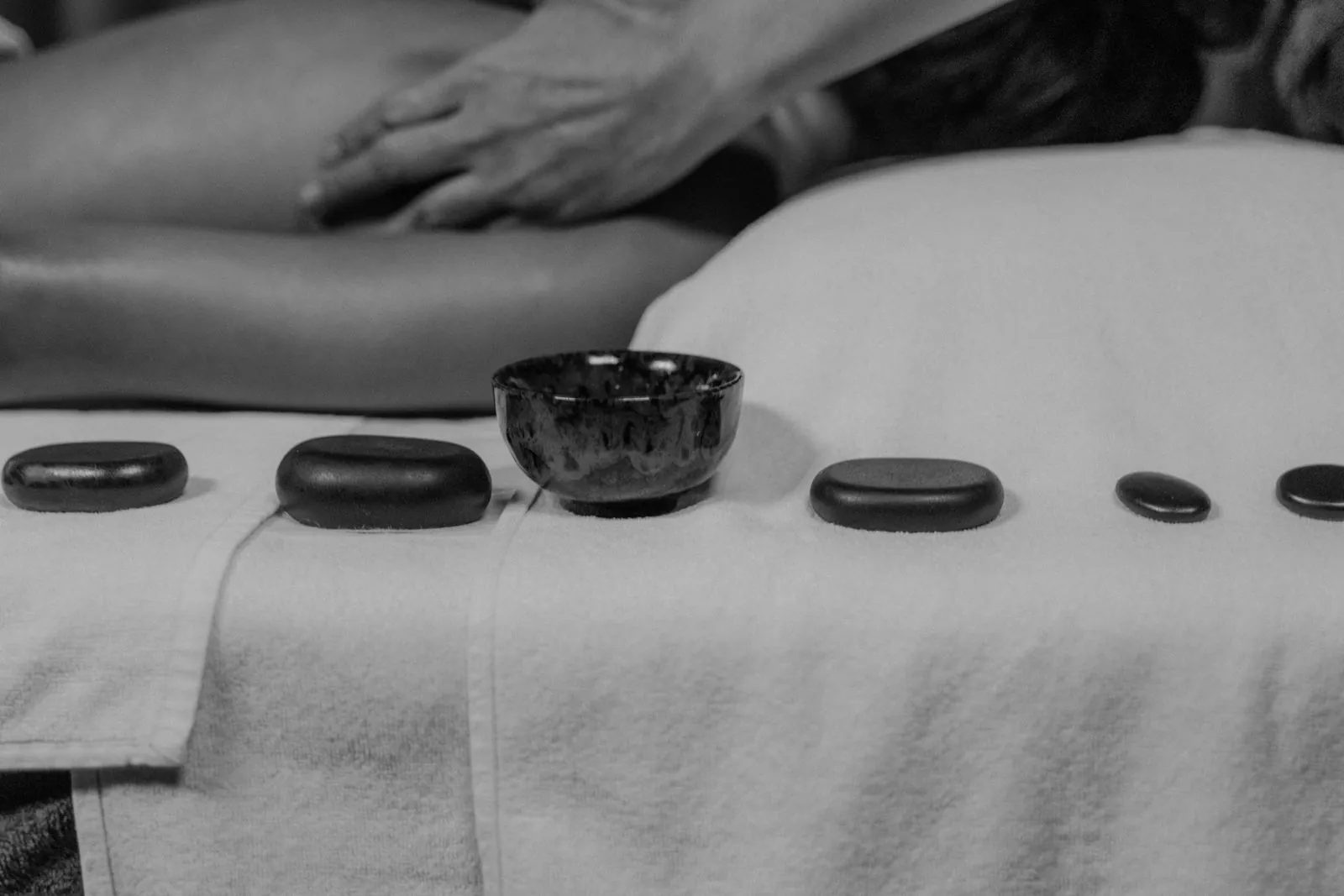
Figure 2. Stones laid out on a towel within easy reach of the therapist. Even after they leave the heater, each stone still needs the three-layer test before it touches the client. (Photo: Tima Miroshnichenko, Pexels)
Screening the client before a hot stone massage
Go through your spa's full health form, as for any massage, then ask extra questions about heat. The table below is common practice for reference; it does not replace a doctor's advice. When you are unsure, choose the more cautious option: a hand-only massage is still an excellent service.
Client situation | Level | What to do |
|---|---|---|
Fever, feeling unwell, or has just drunk alcohol | Do not do hot stones | Rebook for when they are well |
Open wound, rash, skin inflammation or sunburn on the area | Do not use stones there | Avoid the area or offer another treatment |
Recent surgery, or currently having chemotherapy or radiotherapy | Not without a doctor's approval | Ask the client to check with their doctor first |
Diabetes, numbness or reduced sensation in hands or feet | High risk of burns | No stones on areas with reduced sensation; suggest asking a doctor; offer a hand-only massage |
Heart disease, high or low blood pressure that is not well controlled | Caution | Do not proceed if they feel dizzy or unwell; ask them to check with their doctor if unsure |
Pregnancy | Not without a doctor's approval | Many spas offer a separate pregnancy massage instead |
Varicose veins, history of blood clots | Avoid the area | No firm strokes and no stones on varicose veins; a history of clots needs a doctor's approval first |
Recent injury with swelling or heat (sprain, knock) | No heat on that area | Suggest seeing a doctor if the pain is significant |
Older client, thin skin, medicines or skin that is sensitive to heat | Caution | Milder stones, shorter session, test a small area, check the skin often |
Three useful extra questions:
"Do you ever have numbness or less feeling in your hands or feet?"
"Have you had a hot stone massage before? Did it ever feel like it was burning?"
"Is there any area that is painful, swollen or recently injured today?"
Then agree on how the client will tell you: "If any stone feels too hot, please tell me straight away and I'll change it immediately." Write the answers and the agreed adjustments on the client record, and keep health information private: store forms where only authorised staff can see them, and do not discuss a client's health in front of other people.
A hot stone massage of about 60 minutes, step by step
The times below are a suggestion to help you practise your pacing; your spa may use its own sequence.
Before the session (not counted in the 60 minutes)
Switch on the heater early, check the water with the thermometer, inspect the stones and lay out your supplies. Make sure the cable is safe and the floor is dry.
Step 1: Welcome and screening (about 5 minutes)
Go through the health form and the heat questions, explain how the stones will feel, and agree on the "too hot" signal. If there is a contraindication, offer another treatment or rebook.
Step 2: Warm-up with your hands (about 5 minutes)
With the client lying face down and properly draped, apply oil and use hand strokes on the back, as in your 60-minute body massage. This lets the client get used to your pressure and leaves a thin layer of oil so the stones glide smoothly.
Step 3: Test on a small area (about 2 minutes)
Use the three-layer test. Start with the flat side of the stone, touch lightly, lift and ask the client. On the first pass, let the back of your fingers touch the skin just before the stone, so the client's skin meets the heat gradually.
Step 4: Back and shoulders with gliding stones (about 15 minutes)
Hold the stone snugly in your palm, flat side on the skin, and use long strokes along the muscles on either side of the spine, then circular strokes around the shoulder blades. Never press directly on the spine. Keep the stone moving. When it cools, return it to the heater and take a new one that you have tested.
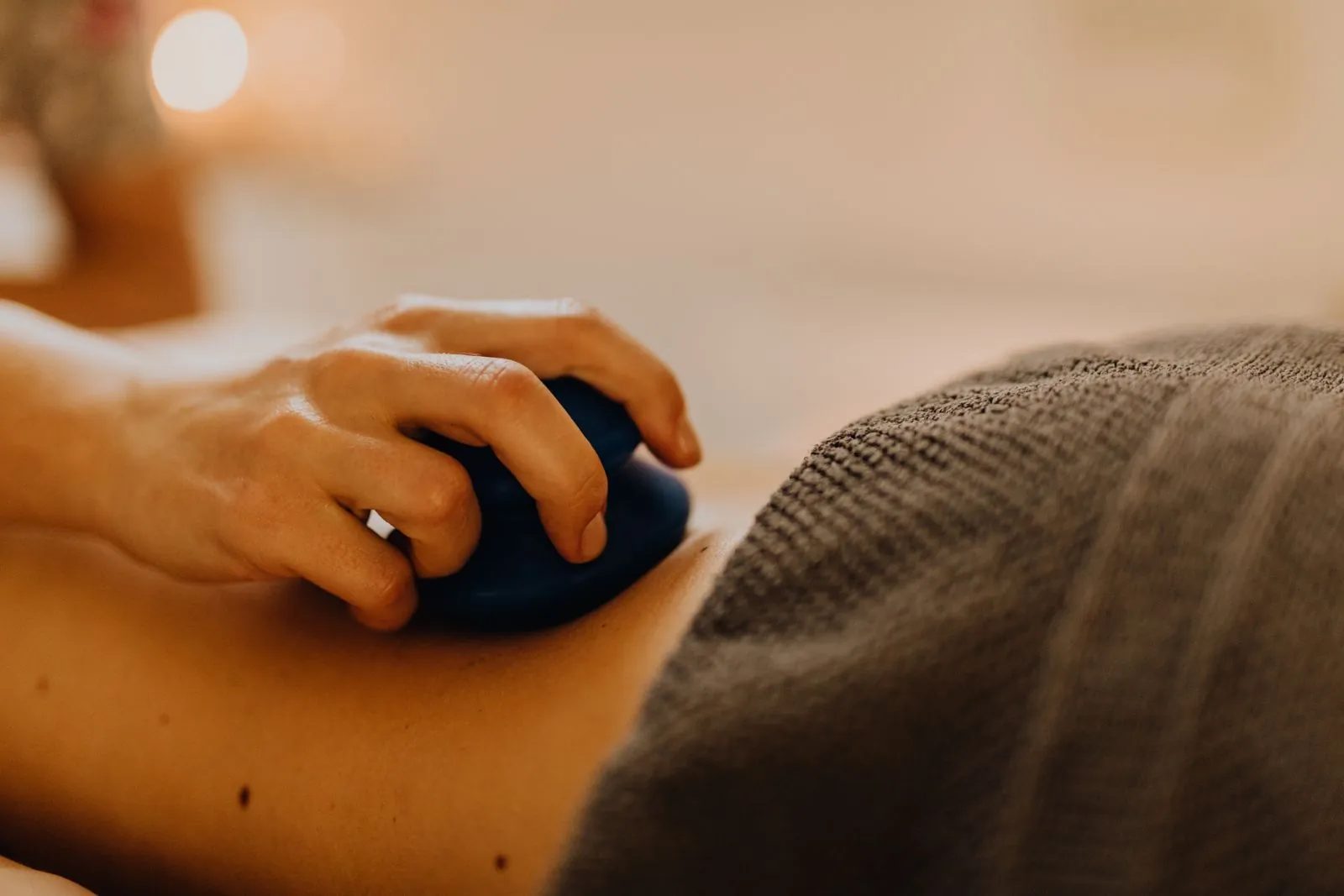
Figure 3. The stone sits snugly in the palm, flat side on oiled skin, while the rest of the body stays covered. A moving stone spreads its heat; a stone resting in one place concentrates it. (Photo: Kaboompics.com, Pexels)
Step 5: Backs of the legs (about 8 minutes)
Glide along the calves and the back of the thighs, with lighter pressure behind the knee. Do not use firm strokes over varicose veins.
Step 6: Placed stones, if your treatment includes them (within steps 4–5)
Place stones only on top of a sheet or thin towel, never directly on bare skin, and use stones that are warm rather than hot. Lift each placed stone after a short time, about one to two minutes for reference, look at the skin and ask the client. Never let a client lie on top of a stone, and do not pile thick blankets over placed stones, because this traps heat.
Step 7: Turn the client, then the fronts of the legs and the arms (about 12 minutes)
Remove every stone from the client's back before they turn over, then check the table surface too. Glide along the shins, thighs and arms. If the client likes it, you can rest a small warm stone in their palm, and still ask how it feels.
Step 8: Shoulders and back of the neck from the head of the table (about 8 minutes)
Use small stones and gentle strokes on the tops of the shoulders and the back of the neck. Do not press on the front or sides of the neck, and do not twist or crack the neck.
Step 9: Finish (about 5 minutes)
Remove excess oil with a warm towel and look over every area you worked on. Help the client sit up slowly and offer a drink of water. Ask how they feel, and ask them to contact the spa if any patch of skin becomes red and sore or blisters later in the day.
The "keep it moving" rule
A stone touching bare skin is always moving; if you need to pause, lift it off. Work with two sets, one in use and one heating, because cool stones glide poorly and tempt you to press harder. Never leave a client alone with stones on their body.
Normal skin or a burn? Signs to watch for
After gliding stones, skin that is evenly pink across the whole area and fades within a few minutes is a normal response to warmth. Stop and check carefully if you see:
A dark red mark with a clear edge, in the shape of a stone.
The client says it stings or burns, or still feels hot after the stone has been lifted.
Skin that looks white, shiny or blistered.
Redness that does not fade after a few minutes.
First aid if you suspect a burn
Stop immediately, remove all stones from the area and turn the heater down or off.
Cool the skin with cool or lukewarm running water for about 20 minutes, which is the widely recommended first aid for minor burns. Do not use ice or iced water. If there is no tap near the table, use clean towels soaked in cool water and change them often.
Do not put toothpaste, butter, massage oil, fish sauce or any home remedy on the burn, and do not burst blisters.
Cover the area loosely with clean, dry gauze or a clean cloth.
Tell your supervisor. Advise the client to see a doctor if there are blisters, if the burn is larger than a small patch, if it is on the face, hands, feet, genitals or a joint, if the skin looks white or charred, or if the client has diabetes or is elderly. For a severe burn, or if the client feels faint or unwell, call 115.
Record the incident: time, area of skin, water temperature at the time, what you did and who you informed. This helps the spa review its procedure; it is not about blaming anyone.
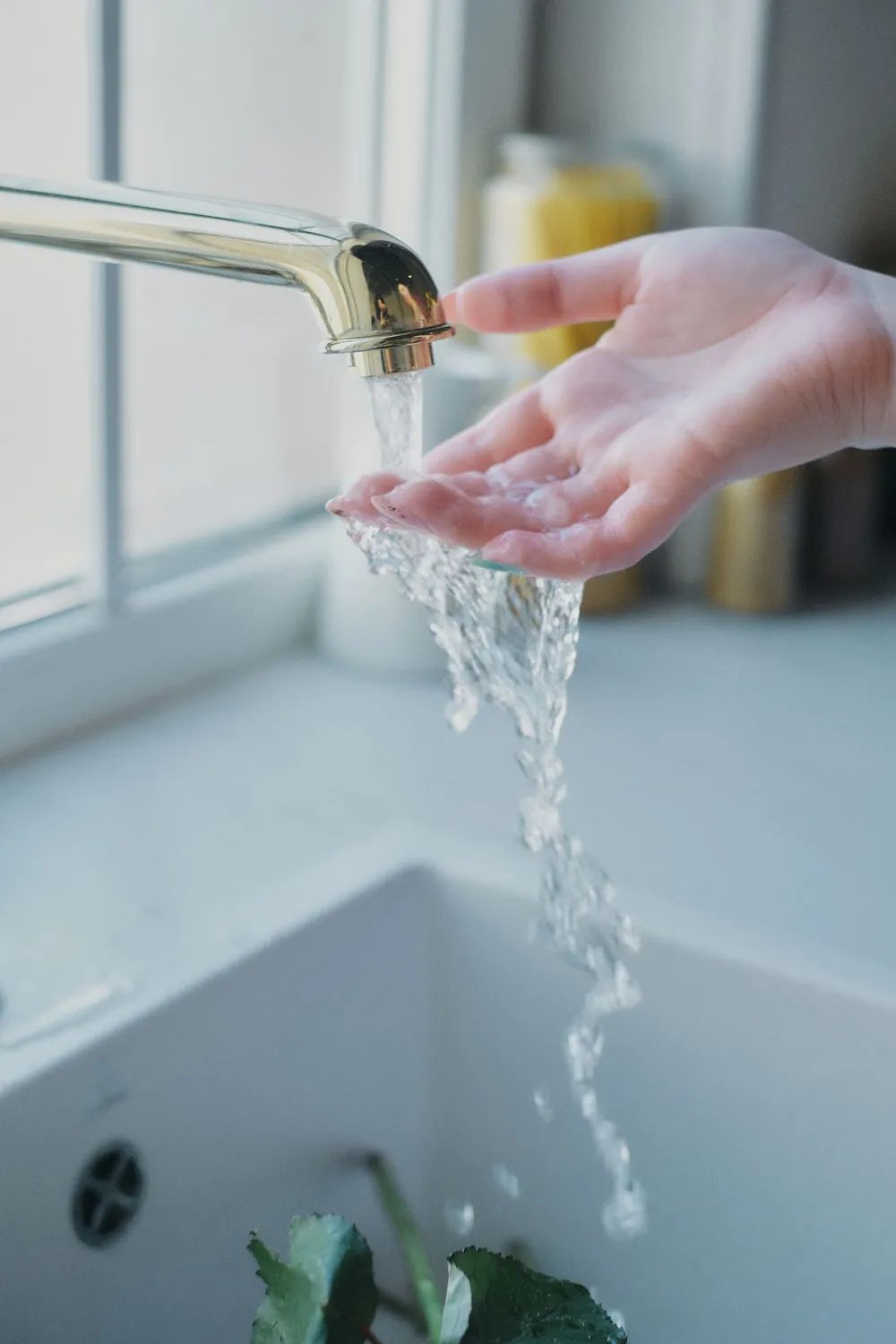
Figure 4. Cool running water from a tap. If you suspect a burn, cool the skin with cool running water for about 20 minutes; never use ice, toothpaste or oil. (Photo: ZUMRAD NORMATOVA, Pexels)
Worked example: a client with diabetes who wants hot stones
The situation
Chị Hạnh, 52, books a 60-minute hot stone massage at a spa in Đà Nẵng because her "neck and shoulders always ache". On the health form she ticks diabetes. When you ask more, she says her feet are often numb, and that once she soaked her feet in hot water without realising it was too hot.
Identifying the risk
Diabetes with numb feet suggests reduced sensation: she might not notice that a stone on her legs or feet is too hot.
She says she feels heat normally on her neck and shoulders, but you cannot be sure from that alone.
Your spa's protocol says that clients with diabetes need their doctor's approval before heat treatments.
What you offer, and how you say it
You explain kindly: "For clients who are being treated for diabetes, we ask you to check with your doctor before hot stones, because the feeling of heat can be weaker and a burn can happen without you noticing." Today you offer a hand-only massage focused on the neck and shoulders, with no heat on her feet or legs, and you write the reason on her client record.
When chị Hạnh comes back with her doctor's approval, you plan a careful session: stones only on the back and shoulders, at the lower end of the temperature range, no placed stones, and a check of her skin every few strokes.
The key point: you did not turn the client away. You offered a safer service, explained why, and kept a clear record.
Cleaning stones and the heater after each client
Lift the used stones out and wash them with water and a mild detergent to remove the oil, then disinfect them with a product suitable for stone, following the manufacturer's instructions and your spa's procedure. Rinse and dry them.
Do not put oily stones back into shared water: the oil contaminates the water and coats the heater.
Change the water in the heater according to your spa's procedure, unplug the heater before emptying it, and wipe the insert clean.
Inspect the stones again while cleaning, and remove any that are cracked or chipped.
Hot stone safety checklist
Stones heated only in a professional stone heater, fully covered by water.
Water temperature checked with a thermometer, within the spa's range and not above the upper limit.
Every stone inspected for cracks, chips and sharp edges.
Heater on a stable table, plugged into an RCD-protected fixed socket, cable out of walkways.
Health form completed, including the extra heat questions, and the "too hot" signal agreed.
Each stone tested three ways: thermometer, my hand and inner forearm, a small area of the client's skin.
Gliding stones always moving; placed stones only on a sheet or towel, and lifted to check the skin.
No stones under the client's body; all stones removed before the client turns over.
Skin checked during and at the end of the session.
First aid steps known: cool running water about 20 minutes, no home remedies, tell the supervisor.
Stones washed and disinfected, heater cleaned, client record updated.
Frequently Asked Questions
How hot should massage stones be?
For reference, professional guidance from the American Massage Therapy Association describes heating water at about 43–54 °C (110–130 °F), and some safety protocols say never above about 54 °C. In practice, read the thermometer, hold the stone for about five seconds, touch it to your inner forearm, then test a small area and ask the client. Older clients and clients with thin skin need milder stones.
Can I heat stones in a rice cooker or microwave?
No. These appliances are not designed to keep water at a controlled temperature for massage stones, and stones can heat unevenly or become far too hot.
Can a pregnant client have a hot stone massage?
Not without her doctor's approval. Pregnancy is listed in many professional protocols as a condition that needs extra caution with heat treatments. Many spas offer a separate pregnancy massage with positioning and techniques designed for it.
The client asks for hotter stones. What should I say?
Keep to your spa's safe limit and explain why: "The stones hold heat for a long time, so hotter than this can burn even if it doesn't feel like it at first." To make the treatment feel warmer, change stones more often and keep the parts of the body you are not working on covered, instead of raising the water temperature.
Practice Exercises
Exercise 1: The three-layer test. With your trainer, heat a set of stones and record the water temperature. For five stones of different sizes, do the hand-and-forearm test and write down whether you would use each stone for gliding, for placing on a towel, or not at all.
Exercise 2: Screening role-play. With a partner, practise the extra heat questions. Your partner plays a client who mentions numb feet, a recent ankle sprain or high blood pressure. Decide what you would offer in each case and practise explaining it kindly.
Exercise 3: Keep it moving. On a practice partner who is fully clothed, use a cool (unheated) stone and practise long gliding strokes on the back for five minutes without stopping the stone on one spot. Your trainer watches for pauses.
Exercise 4: Burn first aid drill. Your trainer says: "The client says a spot on her shoulder is stinging and there is a stone-shaped red mark." Talk through every step out loud, from removing the stones to completing the incident record.