Ms Hoa, 38, an office worker, books a 90-minute body massage. While filling in the form, she says: “Please do my abdomen too. I've been feeling bloated lately, and I heard abdominal massage also reduces fat.” On the form, she notes that she had a caesarean section two years ago, is not taking any medication, and finished lunch about 30 minutes ago. Do you start straight away, how do you do it, and what do you tell her about “reducing fat”?
The short answer: a relaxing abdominal massage is the gentlest part of a body massage, not the part where you “work hard to melt fat”. Before you start, you must ask about pregnancy, abdominal surgery, abdominal pain, illnesses under treatment and when the client last ate. While working: drape fully, use the whole warm palm, light pressure, circle clockwise, never press deep, and stop immediately if the client feels pain or discomfort. For Ms Hoa: move the abdominal part to the end of the session because she has just eaten, ask more about the surgical scar, and tell her honestly that massage does not reduce fat.
By the end of this lesson, you will be able to decide when abdominal massage is appropriate, drape the client discreetly, perform a 10–15 minute clockwise routine with the right pressure for each area, recognise the signs that mean you must stop, and advise clients honestly. This lesson only covers abdominal massage for non-pregnant adult clients, as part of a body massage. It does not teach deep pressing on internal organs, “abdominal manipulation” or slimming treatments, and it does not replace a doctor's advice.
What relaxing abdominal massage can and cannot do
The front of the abdomen has no bone to protect it; beneath a thin layer of muscle lie the digestive organs, large blood vessels and the bladder. Many clients are also shy about exposing their abdomen or are afraid of being ticklish. So the goal at the spa is a warm, pleasant feeling of letting go, not deep work.
You can tell clients that gentle abdominal massage helps many people feel relaxed and comfortable and breathe more slowly. Things you must not promise:
“Reduces belly fat”, “melts fat”, “a slimmer waist after a few sessions”. Manual massage does not remove fat; saying so is a false promise to the client.
“Cures constipation”, “cures stomach ache”, “detoxes”. Clients with long-lasting digestive problems need to see a doctor, not wait for a massage.
“Repositions the uterus”, “adjusts the intestines”. Spa therapists do not work on, or talk about working on, internal organs.
Basic abdominal anatomy so you place your hands correctly
A few “landmarks” to remember:
Working boundary: from just below the rib margin down to roughly the level of the two hip bones, and out to the waist on both sides. Do not work down close to the pubic bone.
Xiphoid process: the small piece of bone at the bottom of the breastbone, right in the middle at the top of the abdomen. Do not press on this point.
Lower rib margin: below the right rib margin is the liver, below the left is the spleen. Only glide along the rib margin; do not hook your fingers under the ribs.
Navel and abdominal midline: deep beneath, close to the midline, lies the abdominal aorta. If you place your hand and feel a strong pulse under your palm, lighten your touch and move your hand to the side; do not press down there.
Lower abdomen, above the pubic bone: this is where the bladder is. Do not press, and invite the client to use the toilet before the session.
Path of the large intestine: as commonly taught in the trade, the large intestine goes up on the client's right side, crosses above the navel, and comes down on the left side. This is why circular strokes usually go clockwise when you look down at the client's abdomen (with the client's head at “12 o'clock”).
A memory tip for direction: imagine a clock face on the client's abdomen, with the client's head at 12. The client's right side is at 9 (on your left if you stand looking up from the client's feet). Your hands travel 9 → 12 → 3 → 6, that is, from the client's lower right abdomen upward, across above the navel, and down on the client's left.
When not to massage the abdomen, or when to adjust
When you reach the abdomen, ask again verbally even if the client has filled in the form. The table below gives reference guidance; each spa should agree on its own internal rules.
Client's situation | How to proceed (reference) |
|---|---|
Pregnant or possibly pregnant | No abdominal massage. Follow the spa's pregnancy massage procedure. |
Recent abdominal surgery (caesarean, appendectomy, laparoscopy, liposuction…) | No abdominal massage until a doctor gives permission. Once permitted, only glide gently and do not press on the scar. |
Abdominal pain of unknown cause, cramping pain, fever, nausea, vomiting, diarrhoea | Do not work on the abdomen. If the pain is severe or persistent, advise the client to see a doctor. |
A bulge at the navel or groin (possible hernia), an unusual hard lump | Do not work on the abdomen and do not “examine” it further yourself. Advise the client to see a doctor. |
Under treatment for digestive, liver, kidney or cardiovascular disease, aneurysm or cancer | A doctor's opinion is needed first. Without one, skip the abdomen. |
Has just eaten a full meal | Move the abdomen to the end of the session or skip it; many places recommend waiting about 1–2 hours after a meal (reference). |
Menstruating | Ask the client. Many prefer to skip it; if you do work, only glide gently and avoid the lower abdomen. |
Open wounds, rash, infection or a fresh tattoo on the abdominal skin | Avoid that area of skin or skip the abdomen. |
Taking anticoagulants, bruises easily | Use only very light pressure. |
Client is shy or does not want it | Respect this and give the time to other areas. Do not try to persuade them. |
The principle: if in doubt, skip the abdomen. A body massage without the abdominal part is still a complete session.
Preparing for abdominal massage
Room, table and client
Keep the room warm enough. The abdomen gets cold easily; a cold client tenses their abdominal muscles and finds it hard to relax.
Invite the client to use the toilet before the massage. A full bladder makes the client uncomfortable when lying face up and when the lower abdomen is touched.
Place a pillow or rolled towel under the knees when the client is face up. Slightly bent knees let the abdominal muscles soften, the client feels more comfortable and the lower back arches less.
Use a low head pillow; do not let the chin tuck into the chest.
Work on the abdomen once the client is settled face up and the body is warm; the order of areas follows the spa's procedure.
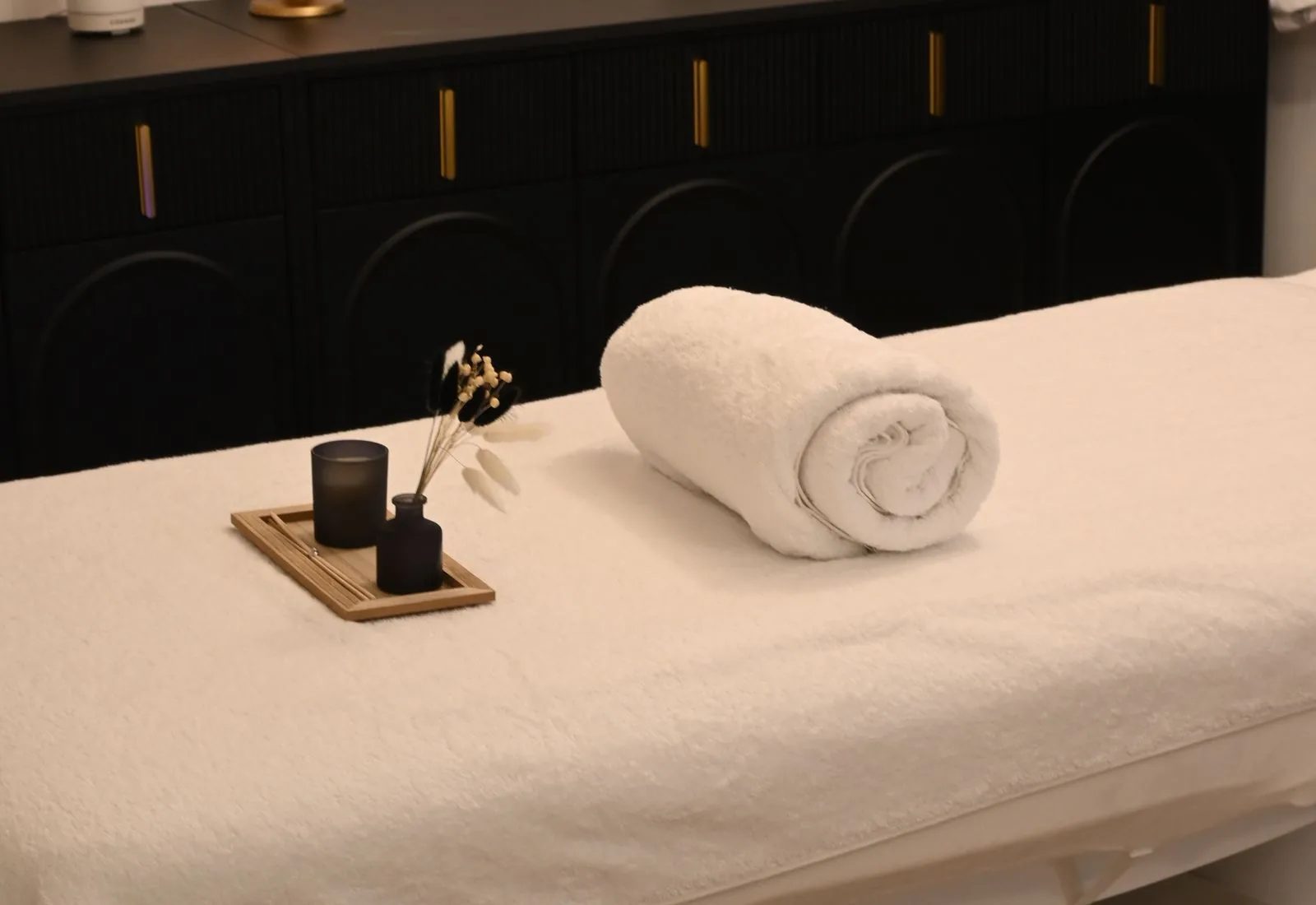
Figure 1. The table is laid with a clean towel and a rolled towel is ready to go under the client's knees when they lie face up (Photo: Marine Fougère, Pexels)
Therapist's hands and oil
Nails cut short and filed smooth, rings and watch removed; wash your hands and rub your palms together to warm them.
Use a little oil: put the oil in your palm and warm it before applying it to the skin. Do not pour oil directly onto the client's abdomen, because cold oil startles the client and easily runs down to the towel edge.
Oils containing essential oils: dilute and patch-test according to NAMBIN's lesson on massage oils. Do not use “heating” oils or “fat-burning” oils of unclear composition on the abdomen.
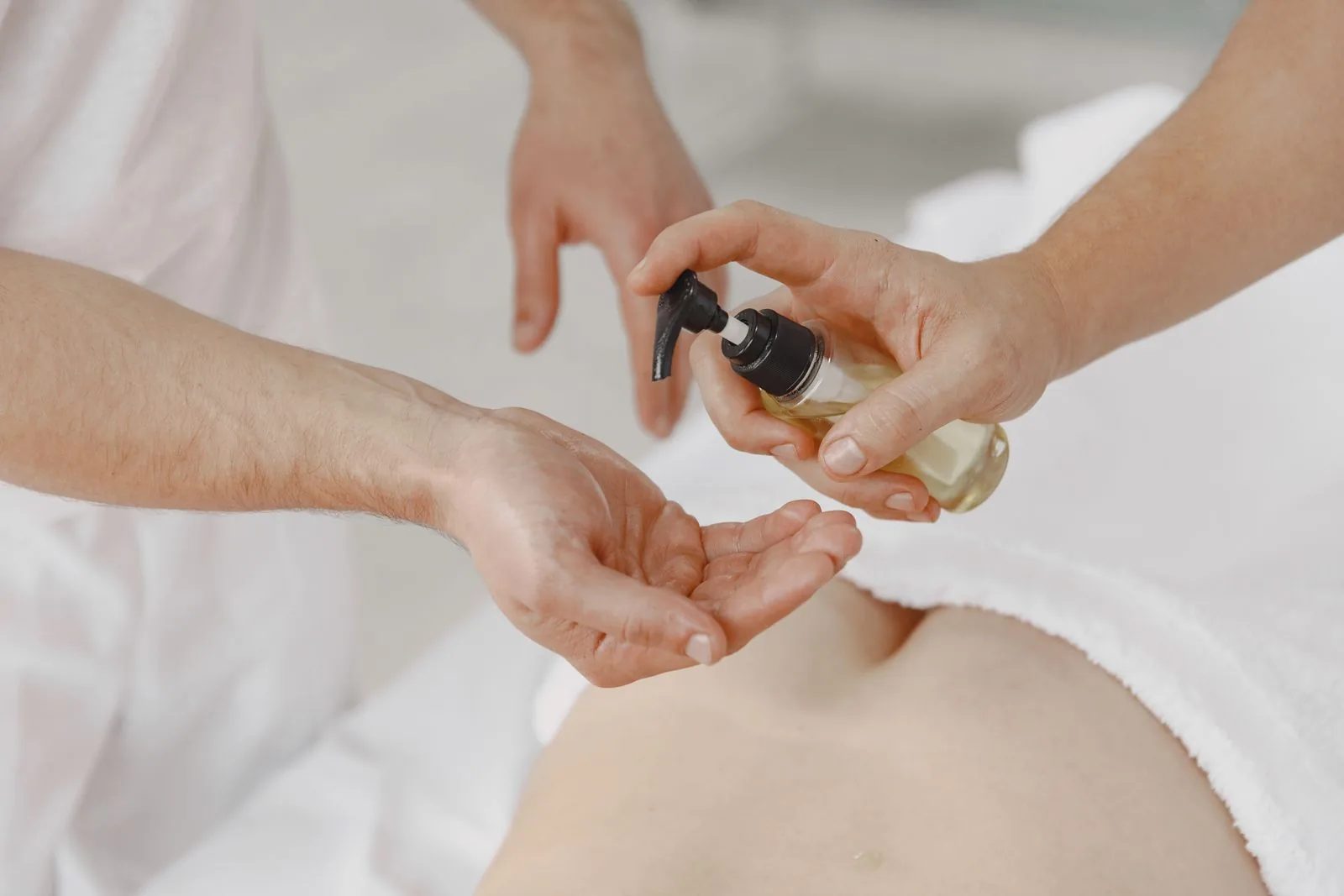
Figure 2. Dispense a small amount of oil into your palm and warm it first; do not pour oil straight onto the client's abdomen (Photo: Gustavo Fring, Pexels)
Draping for abdominal massage: discreet and warm
Tell the client and ask permission first: “I'll work on your abdomen now; I'll only uncover from below your chest down to your hips.”
For female clients: place a second towel (chest towel) horizontally across the chest, on top of the large towel. Hold the chest towel in place before pulling the large towel up from below or folding it down, so the breasts are never exposed.
For all clients: keep the lower towel edge at about the level of the hip bones, fold it neatly and tuck it lightly so it does not slip. Do not pull the towel any lower, and do not pull or touch the underwear waistband.
Uncover only the area being worked on; cover it again as soon as you finish to keep the client warm.
If the client wants to keep their top on: work through the thin top or through the towel using static hand placement and gentle compression, without oil.
A 10–15 minute abdominal massage routine (reference)
Durations are suggestions; pressure always starts light and is only increased when the client finds it comfortable.
Step | Movement | Time (reference) |
|---|---|---|
1 | Static hand placement, ask how it feels | About 30 seconds |
2 | Broad strokes to spread the oil | About 2 minutes |
3 | Clockwise circles around the navel | About 3 minutes |
4 | Strokes following the abdominal frame (up the right, across, down the left) | About 3 minutes |
5 | Gentle pulling from the waist to the centre of the abdomen | About 2–3 minutes |
6 | Hands resting with the breath, finish | About 1–2 minutes |
Step 1: Static hand placement and asking how it feels
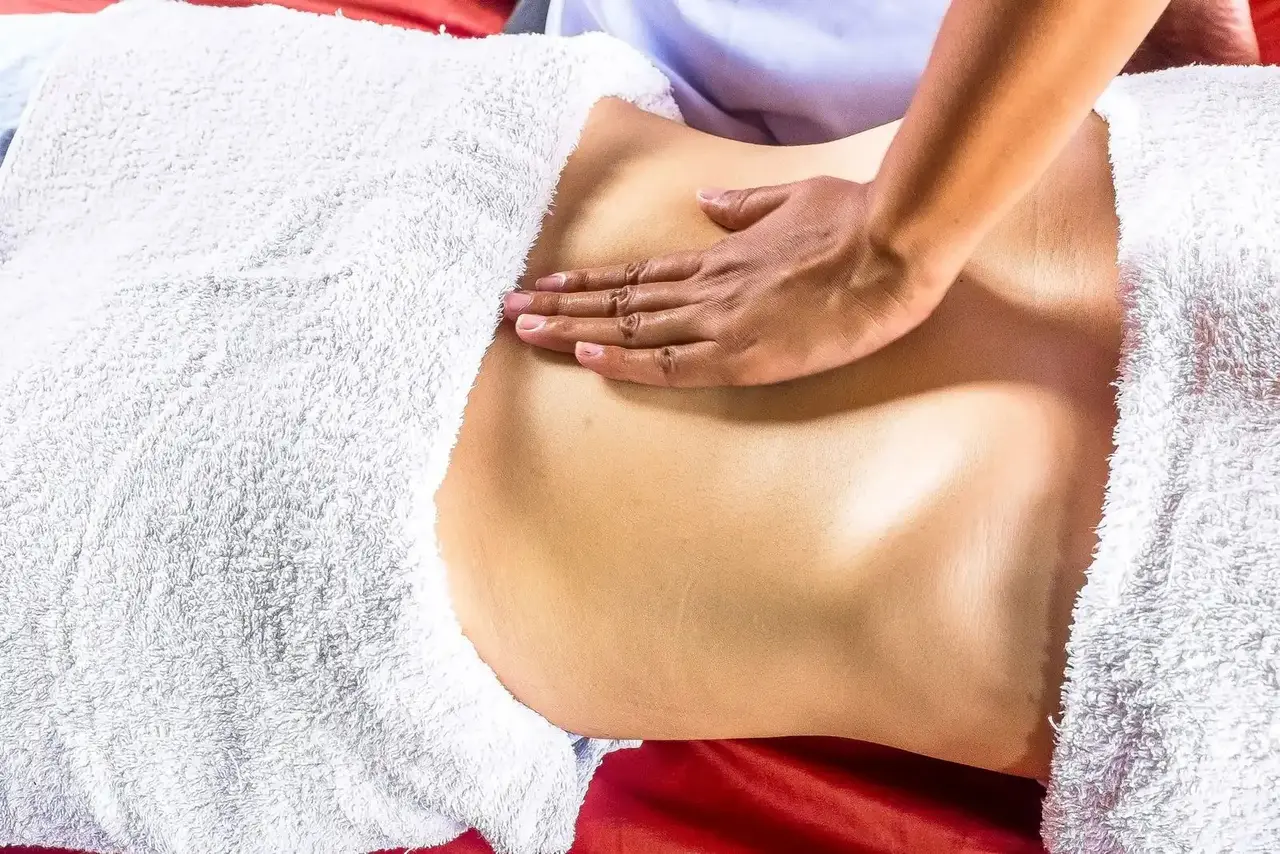
Stand at the client's side. Gently place one palm on the client's abdomen (through the towel or clothing is fine) and hold still for a few breaths so the client gets used to your hand and you can feel whether the abdomen is soft or tense. Ask briefly: “Are my hands cold?” If the client tenses, holds their breath or laughs because it tickles, keep your hand still a little longer and remind them to breathe slowly.
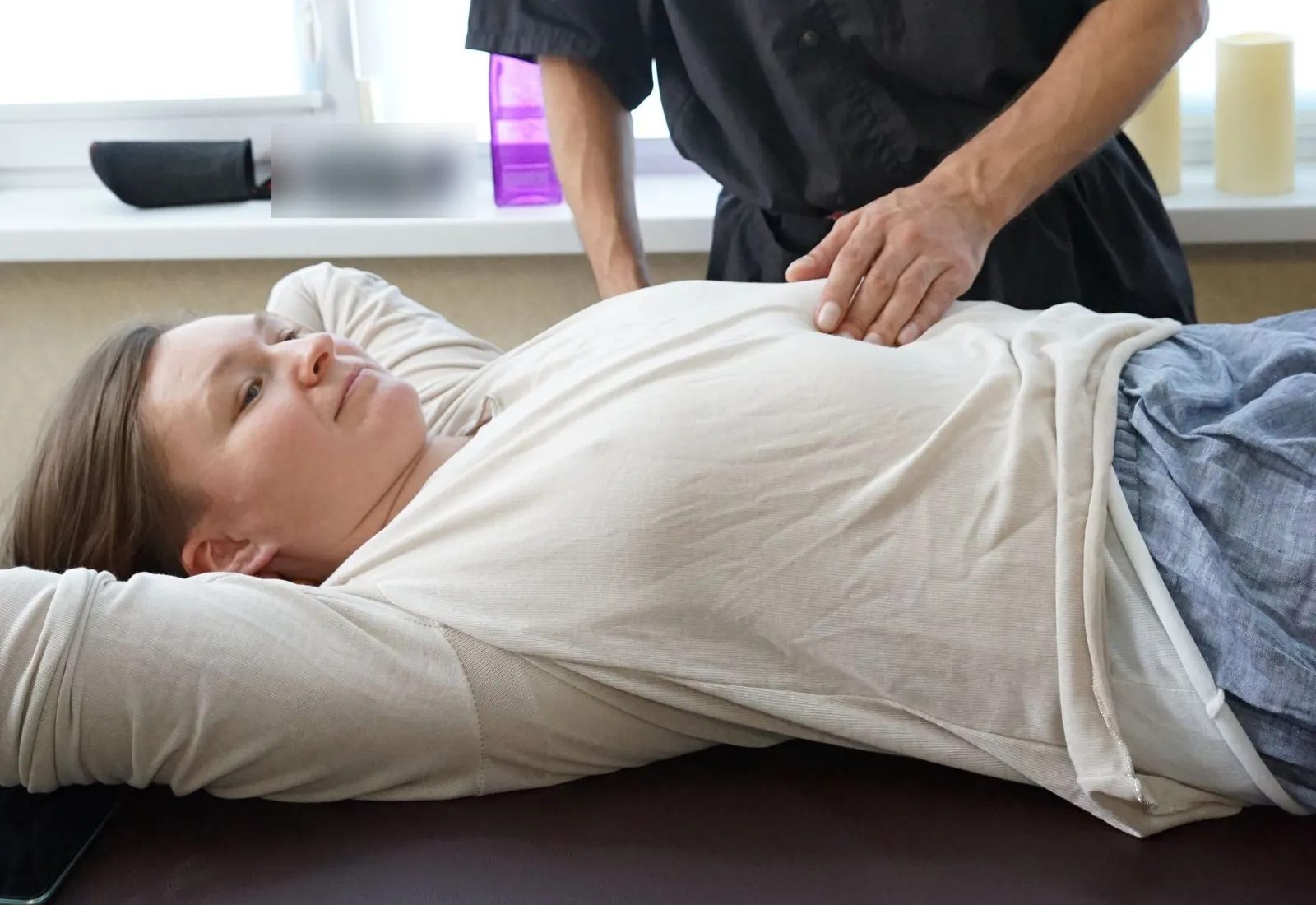
Figure 3. Rest your hand lightly on the client's abdomen over their clothing so they get used to your touch and you can feel whether the abdomen is soft or tense (Photo: Jakob Welik, Pexels)
Step 2: Broad strokes to spread the oil
With a small amount of warmed oil, place both hands flat on the lower abdomen, one on each side of the navel. Glide slowly upward; near the rib margin, separate your hands to each side, glide along the rib margin down to the waist, then draw both hands gently back around to the lower abdomen. Repeat several times.
Your hands travel below the rib margin and never up onto the chest; over the area above the navel, lighten the pressure and do not push into the xiphoid process. Keep the movement slow and continuous so the client does not feel tickled.
Step 3: Clockwise circles around the navel
Place one whole palm flat beside the navel, with the other hand on top of the back of the lower hand to support the pressure. Circle broadly around the navel clockwise (as seen from your side, with the client's head at “12 o'clock”). Start with small circles around the navel, then gradually widen them out towards the edges of the abdomen.
Use the whole palm and the flat of the fingers, not the fingertips pressing down; do not put a finger into the navel; keep the rhythm slow and even.
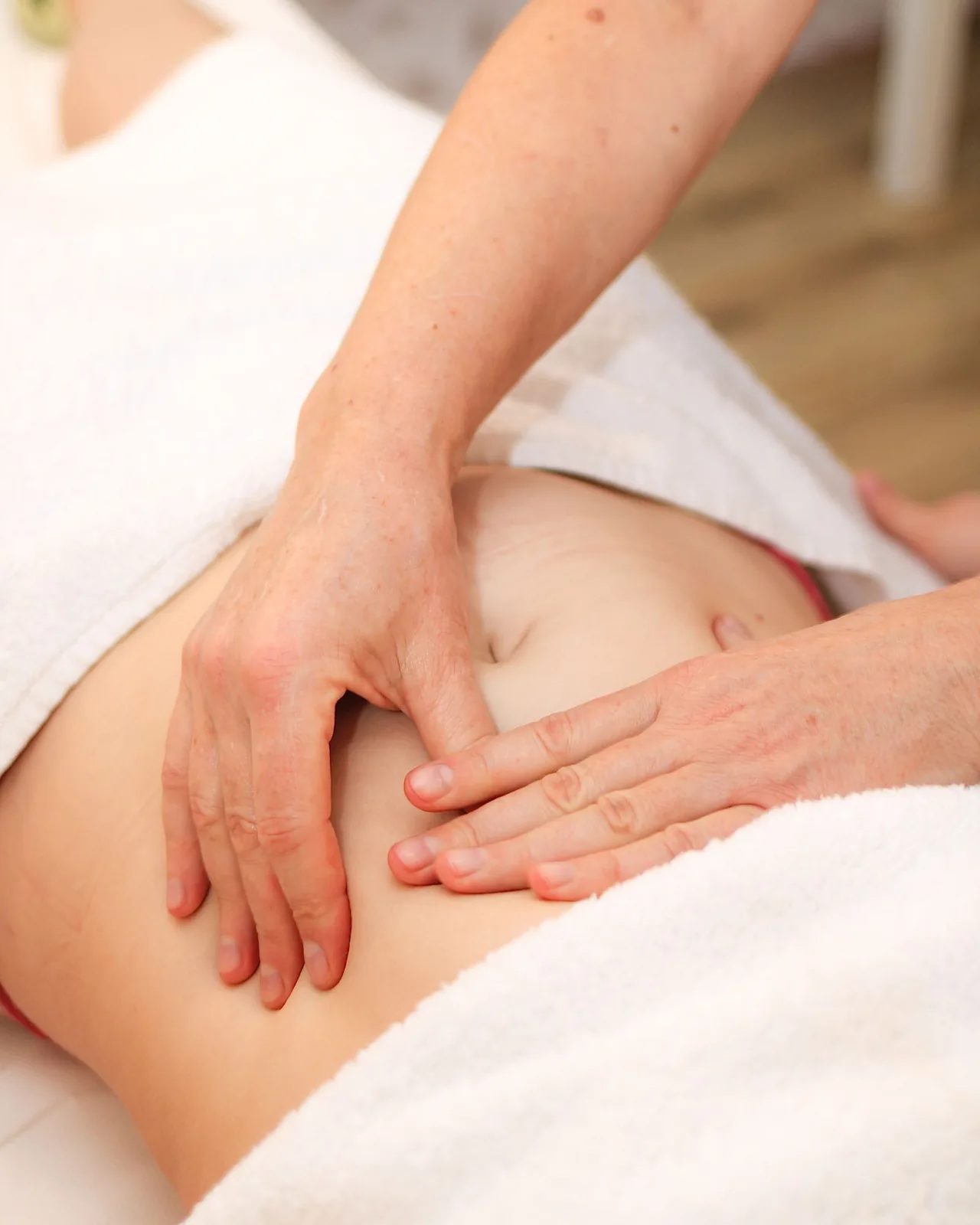
Figure 4. Both hands follow the curve around the navel while the client's chest and the area below the hips stay fully covered by towels (Photo: Larysa Stratiichuk, Pexels)
Step 4: Strokes following the abdominal frame
This movement follows the direction the trade usually calls the “large intestine path”:
Place the flat of your fingers on the lower abdomen on the client's right side, just inside the hip bone.
Glide slowly upward to near the right rib margin.
Glide across above the navel to the client's left side (remember to keep pressure light over the middle).
Glide down on the client's left side to near the left hip bone.
Lift your hand gently, return to the starting point and repeat.
Use light to moderate pressure. Do not try to “feel the intestines” or press deep. If the client feels pressure or pain, or you find an unusual hard spot or bulge, lift your hand away and see the section on signs that you must stop below.
Step 5: Gentle pulling from the waist to the centre
Stand on one side and reach over to the far side of the client's waist. Wrap your whole hand around the waist and pull gently up towards the centre of the abdomen, alternating hands as if pulling a thin piece of cloth. Do several passes, then walk around to the other side of the table to switch sides. Pressure can be moderate if the client likes it, but avoid stretching the skin, especially with clients who are older or have thin skin.
Step 6: Hands resting with the breath, finishing
Do a few light broad strokes as in step 2, then rest both hands still on the client's abdomen. You can suggest: “Breathe in slowly so your belly rises gently into my hands, then breathe out slowly.” Follow the breath a few times, then lift your hands away very slowly; never pull them away suddenly.
If there is a lot of oil left, wipe gently with a clean warm towel if the client wishes, then cover them again immediately.
Pressure for each area (reference)
Pressure on the abdomen is always lighter than on the back. Signs that the pressure is right: the client breathes evenly, the abdomen is soft under your hand, and the client does not tense, hold their breath or draw their knees up.
Area | Pressure (reference) | Hand surface to use | Notes |
|---|---|---|---|
Around the navel | Light | Whole palm | No fingers in the navel, no deep pressing |
Upper middle abdomen, below the xiphoid | Very light, gliding only | Palm | Do not press on the xiphoid process |
Along the lower rib margin on both sides | Light | Flat of the fingers | Do not hook fingers under the ribs |
Lower abdomen, above the pubic bone | Very light or skip | Palm | Bladder location; keep to the towel boundary |
Both sides of the waist | Light to moderate | Whole hand | Pull gently, do not stretch the skin |
Any spot with a strong pulse under the hand | No pressure | — | Lighten your touch and move your hand to the side |
Signs that you must stop immediately
Stop immediately when the client reports pain, cramping or increasing pressure; when the client feels nauseous, dizzy, sweaty or looks pale; when you feel an unusual hard lump or bulge or a strong pulse under your hand; when the client tightens their abdomen, holds their breath or pulls the towel back over themselves; or when the client says “that's enough”, even jokingly.
Initial response:
Lift your hands away, cover the client fully, and ask how they are feeling; let them lie and rest, and if they want to sit up, help them up slowly by rolling onto their side first.
Offer warm water if the client wants it; do not give the client any medicine yourself. Do not continue the abdominal part in that session; record it on the client card and report to the manager.
If the pain does not go away or you have felt an unusual lump: advise the client to see a doctor, say it gently and do not guess at a diagnosis.
Severe abdominal pain, fainting, difficulty breathing or chest pain: call 115 (Vietnam's emergency number) immediately and report to the manager.
Real-life case: Ms Hoa and the “fat-reducing abdominal massage”
Before the session. You ask more questions: the caesarean was two years ago, the scar has healed, there is no more pain, and the doctor gave no restrictions; she has no abdominal pain, no fever and is not menstruating. The point to watch is that she has just had lunch.
How to talk to her. “Since you've just eaten, I'll do your back and legs first and leave the abdomen until near the end of the session so you'll be more comfortable. Abdominal massage helps you relax, but manual massage can't reduce fat; I'm telling you now so you don't have the wrong expectations.”
During the session. Near the end of the session, she no longer feels full. You place a rolled towel under her knees, put the chest towel in place, uncover to hip level, and work for 10 minutes with light pressure; over the surgical scar area you only glide lightly above it and do not press on the scar.
Recording on the client card. “Abdominal massage 10 minutes, light pressure, at the end of the session because the client had just eaten. Old caesarean scar, healed; avoided pressing on the scar. Client comfortable. Explained that massage does not reduce fat.”
If Ms Hoa had answered that the scar was only a few months old, or still painful, the answer would be different: skip the abdomen today and advise her to ask her doctor before having this area massaged.
Common mistakes
Pressing deep with the fingertips because you think “it has to be strong to work”.
Cold hands and cold oil that make the client tense their abdomen.
Massaging right after a meal; forgetting to ask about surgery or pregnancy because the client “looks healthy”.
Pulling the towel too low or exposing the chest while adjusting the towel.
Promising fat loss or a cure for constipation to sell a treatment package.
Over-reaching to the far side of the waist and hurting your own back.
Hygiene after each client
Replace all chest towels, drapes and knee-bolster towels for the next client; wipe the oil bottle and pump; never dip your hand into a shared oil jar; wash your hands before touching the next client. For towel laundering and table cleaning procedures, see NAMBIN's lesson on hygiene and disinfection.
Abdominal massage safety checklist
☐ I asked again verbally about: pregnancy or possible pregnancy, abdominal surgery (how long ago, healed or not, any doctor's instructions), abdominal pain, fever, nausea, hernia, illnesses under treatment, anticoagulants.
☐ I asked when the client last ate; after a full meal I moved the abdominal part or skipped it.
☐ I asked whether the client wants abdominal massage; if menstruating, I asked their preference.
☐ I invited the client to use the toilet before the session.
☐ The room is warm with a rolled towel under the knees; nails short, rings removed, hands clean and warm.
☐ The chest towel was placed before uncovering; the lower towel edge is at hip-bone level and neatly tucked.
☐ I used the whole palm with light pressure; no pressing on the xiphoid, no hooking under the ribs, no pressing on the lower abdomen.
☐ If I feel a strong pulse or an unusual lump: no pressure, move my hand, stop if needed.
☐ I recorded on the client card: duration, pressure, areas avoided, the client's response.
Frequently asked questions
Does abdominal massage reduce belly fat?
No. Manual massage helps relaxation; it does not remove fat, so do not advertise or promise “fat melting” or “a slimmer waist”. Clients who want to reduce belly fat should be advised to consult a doctor or nutritionist.
Why should the abdomen be massaged clockwise?
As commonly taught in the trade, this direction follows the path of the large intestine: up on the client's right, across above the navel, down on the left. Following this direction keeps the movements consistent; but more important than the direction are light pressure and never pressing deep.
Can a client who is menstruating have an abdominal massage?
It depends on the client. Many prefer to skip the abdomen on those days, so ask them. If the client wants it, only glide lightly over the upper abdomen and both sides of the waist, avoiding the lower abdomen. If the client has severe or unusual period pain, advise them to see a doctor rather than trying to massage it.
What if the client is ticklish?
Lay your whole palm flat, hold still for a few breaths, then move slowly with even pressure; light fingertip touches usually tickle more. If the client is still very ticklish, skip the abdomen and spend the time on other areas.
How long after a caesarean can the abdomen be massaged?
There is no single figure, because it depends on the type of surgery, how the wound heals and each person's health. Therapists should not set a time frame themselves; suggest that the client asks the doctor who has been following them. Even once the doctor has given permission, only glide lightly and do not press on the surgical scar.
Practice exercises
Mark the landmarks on the abdomen: on a body chart, mark the xiphoid process, rib margin, navel, hip bones and bladder area; draw arrows for the clockwise circling direction and the strokes following the abdominal frame.
Practise pressure on yourself: lie face up with a pillow under your knees and circle on your own abdomen at three pressure levels; note which level feels comfortable and at which level you start to feel pressure.
Practise draping with a partner (clothed): place the chest towel, uncover to hip level, tuck the edge, and cover again without the towels shifting.
Practise the full 10-minute routine: do all 6 steps; your partner gives feedback on pressure, speed, hand warmth and where it tickled.
Consultation role-play: one person plays a client who “wants a fat-reducing abdominal massage and has just eaten”; the other practises asking health questions, rearranging the session and gently explaining that massage does not reduce fat.
Self-assessment criteria: you asked all the questions about pregnancy, surgery, abdominal pain and meals; you draped fully, without exposing the chest or pulling the towel below the hips; you used the whole palm in the correct direction; you did not press on the xiphoid, lower abdomen or any spot with a pulse; you knew when to stop at unusual signs; you did not promise fat loss or cures; and you recorded the client card in full.