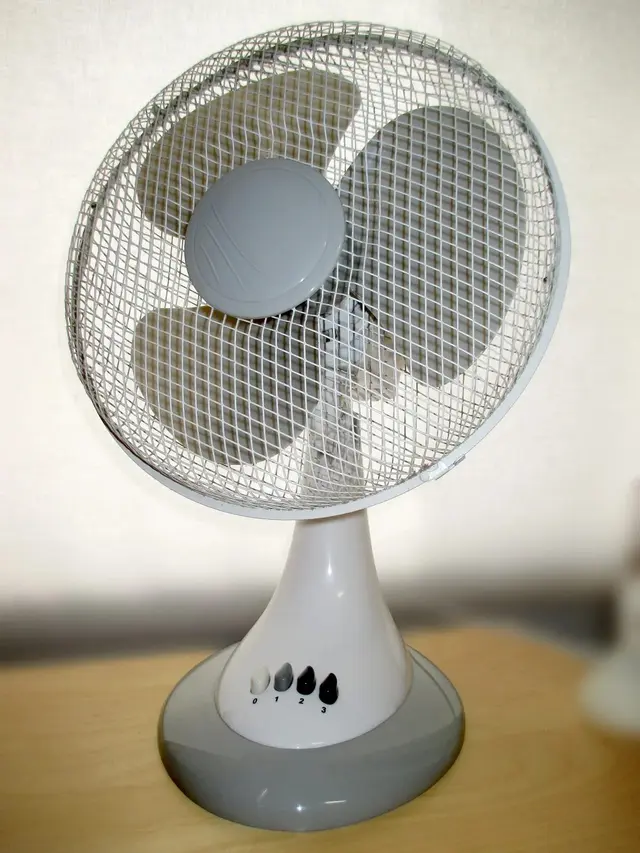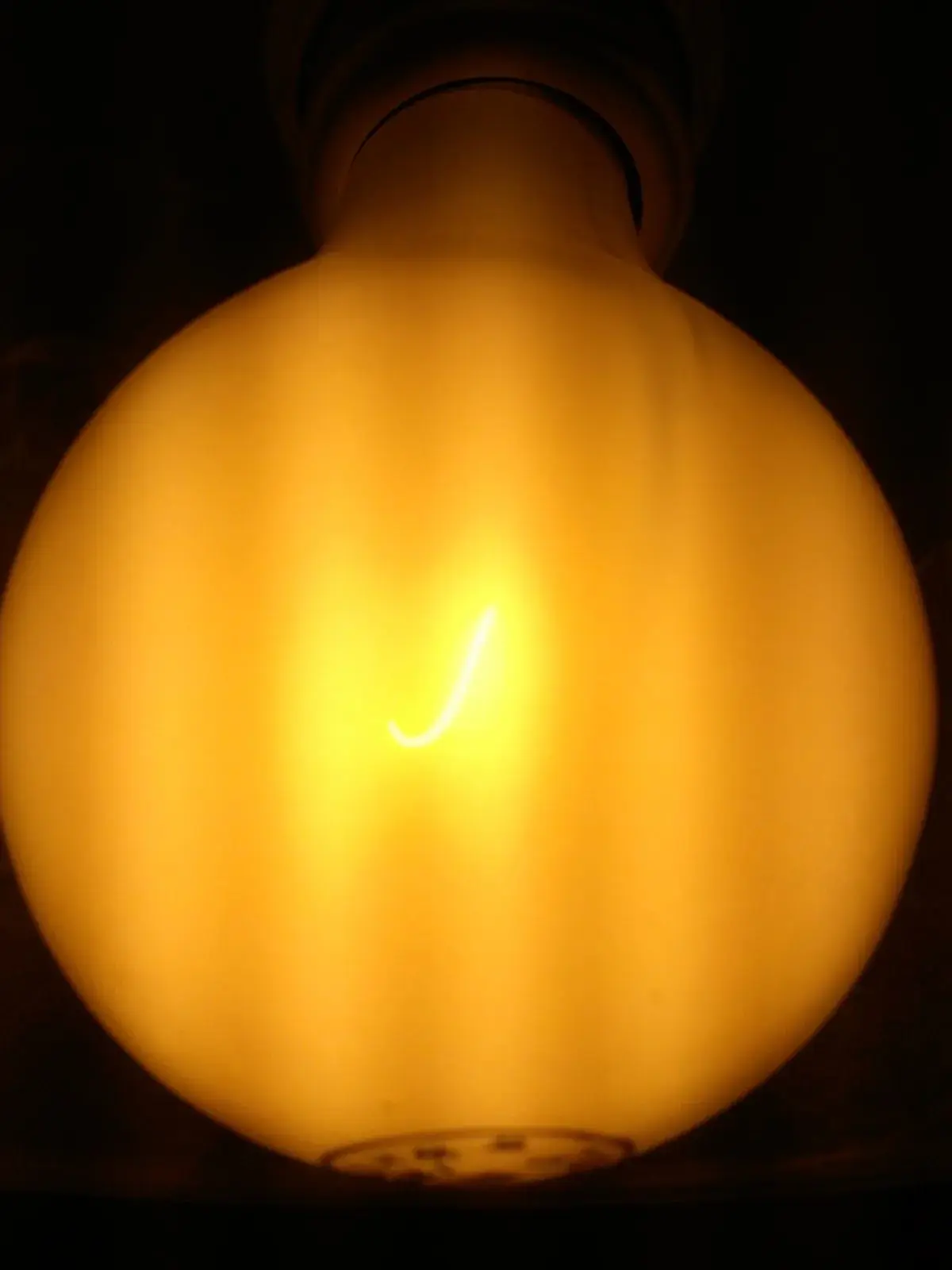
The lights dip for a moment every time the air conditioner kicks in. A ceiling lamp flickers on and off in the evening. Or every light in the house goes dim and bright again for no obvious reason. Flickering and dimming are among the most common complaints an electrician hears, and also among the most misunderstood: sometimes it is a cheap bulb, sometimes a normal effect of a large motor starting, and sometimes it is the early warning of a loose connection that is heating up inside a wall or the distribution board.
This guide shows how to narrow the problem down step by step: is it one light, one circuit, or the whole house? Does it happen only when a big appliance starts, or at random? Does it affect the neighbours too? Each answer points to a different cause and a different person to fix it.
Scope and safety. Written for trainee and working residential electricians, and for homeowners who want to understand the process, on 230 V / 50 Hz supplies as used in Vietnam (mostly single-phase homes, some larger homes and shophouses on three-phase). Homeowners should stay with the observation steps, changing bulbs with the power off, and reading a plug-in meter. Opening sockets, switches, light fittings or the distribution board is work for a competent, licensed electrician. Numbers marked for reference are typical examples, not rules or limits from a standard.
When flickering is an emergency
Most flicker is a nuisance. Some flicker is a fire or shock risk. Treat the situation as urgent, switch off the main switch if you can reach it safely with dry hands, and call an electrician at once if you notice any of these:
A burning or hot-plastic smell, smoke, crackling or buzzing from a socket, switch, light fitting, the board or the meter box.
A socket, switch plate, plug or the board cover that is warm or hot to the touch, or shows brown or black marks.
Some lights become much brighter while others go dim at the same time, or appliances suddenly fail, reset or smell hot. This pattern can mean a loose or broken neutral (explained below).
You feel a tingle when touching a metal appliance, tap or light fitting.
The flicker started after water got into the house (a roof leak, flooding) or after building work near cables.
Step 1: Describe the flicker precisely
Before touching anything, collect facts. A good description saves hours of searching. Ask the customer (or note for yourself):
What exactly flickers? One lamp, every lamp in one room, every lamp on one floor, or everything in the house, including fans and the TV?
What kind of flicker? A fast shimmer, a brief dip lasting a second, a slow pulsing up and down, or lights going completely off and back on?
When? Constantly, at certain times of day (often the evening peak), or exactly when something else switches on: the air conditioner, water pump, water heater, washing machine, kettle, iron or a motor?
Since when? Did it start after new lamps, a new dimmer or smart switch, a new air conditioner, renovation or a storm?
Does a neighbour see the same thing?
Any other signs? Smells, heat, noises, tripping breakers, appliances failing early.
Example: a customer says "the lights flicker all the time". Questioning shows that only the two LED downlights in the living room flicker, and only since a rotary dimmer was fitted. That is a lamp-dimmer compatibility problem, not a supply problem, and you can leave the distribution board closed.
Step 2: One lamp, one circuit or the whole house?
The extent of the flicker is the strongest clue. Walk through the house and switch on lights in every room, plus a fan or a radio on a socket in different rooms. Then sort the problem into one of three groups.
Only one lamp flickers
The cause is almost always at that lamp or its switch:
A failing lamp or LED driver. Cheap LED bulbs often flicker as their driver ages, especially in hot, enclosed fittings.
A loose lamp in its holder, or a worn or burnt lampholder contact.
A loose terminal in the fitting, the switch or a junction box on that lamp's cable.
A lamp that is not compatible with a dimmer or with an electronic, smart or illuminated switch.
For old fluorescent tubes: an ageing tube, a worn starter or a failing ballast. Flicker at the ends of a tube and blackened ends are typical signs of end of life.
The quick test is substitution: with the power to that light off, swap in a lamp that you know works properly elsewhere. If the good lamp flickers too in the same fitting, the problem is in the fitting, switch or wiring, not the lamp.
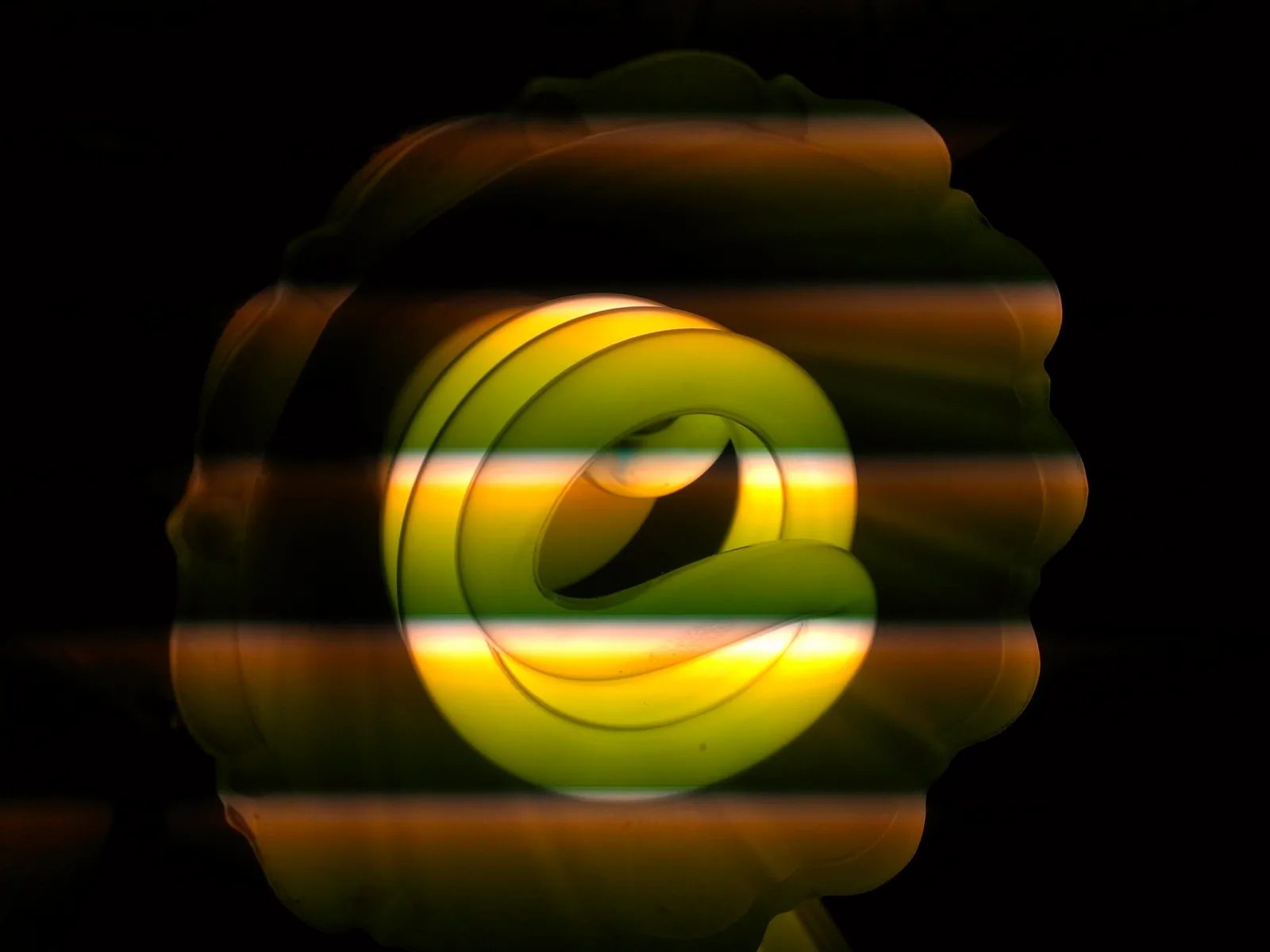
Figure 1. A compact fluorescent lamp photographed with a smartphone: the horizontal dark and bright bands are a camera effect (rolling shutter) that makes the lamp's rapid flicker visible. Phone cameras show banding on many lamps that look steady to the eye, so bands alone do not prove a fault; trust what people actually see. (Photo: Ragesoss, Wikimedia Commons, CC BY-SA 3.0)
All the lamps on one circuit flicker
If every light controlled by one MCB flickers, but lights on other circuits are steady, suspect a loose or high-resistance connection on that circuit: at the MCB terminal, at the neutral bar for that circuit, in a junction box, or at the first switch or lamp on the run. A shared neutral between two circuits (a common wiring mistake) can also cause odd flicker on one circuit when the other is loaded. This is electrician work: it means opening the board and accessories with the circuit isolated.
The whole house flickers or dims
When everything dims together, the cause is upstream of the individual circuits: the supply voltage, the service cable from the pole, the meter connections, the main switch or main RCD terminals, or the main neutral. It can also be a normal effect of a large load starting in your own house. Steps 3 and 4 separate these.
Step 3: Does it happen when a big appliance starts?
Every cable and connection has some resistance. When current flows, a little voltage is "lost" along the way, so the voltage at the lamps drops slightly. Motors (air conditioner compressors, water pumps, washing machines, refrigerators) draw a starting current several times their running current for a fraction of a second up to a few seconds. Heaters (water heaters, kettles, irons, induction cookers) draw a large steady current. Either can make lights dip.
Test it deliberately: switch on one large appliance at a time while watching a lamp, preferably an older-style or filament-type lamp, because many LED lamps hide small voltage changes and others exaggerate them.
A brief, slight dip can be normal
A short, barely noticeable dip when an air conditioner or pump starts, with the lights immediately returning to normal, is common in many homes, particularly at the end of long supply lines. It is not by itself a sign of danger.
Warning signs
The dip is deep (lights go clearly dim, fans slow down, the TV or router resets).
The dimming lasts as long as the appliance runs, not just at start-up. A large steady drop under load points to resistance somewhere: a loose terminal, an undersized or very long cable, or a poor supply connection.
The motor struggles to start: it hums, starts slowly, or its own protection trips. An air conditioner or pump that repeatedly fails to start on low voltage can be damaged.
The problem appeared suddenly in an installation that used to be fine. Cables do not shrink, but connections do loosen and corrode over time.
Example: in a three-storey tube house, the lights on the top floor dim heavily whenever the water pump on the roof starts, while the ground floor barely flickers. The electrician finds the top floor fed through a long, thin cable from the ground-floor board with a joint in a ceiling box that has become discoloured. Remaking the joint and later upgrading the feed cable fixes it.
Step 4: Is it your house or the supply?
If the whole house flickers at random, or dims for long periods (often in the evening when everyone is cooking and running air conditioners), find out whether the neighbours have the same problem.
Neighbours on the same street or pole see the same flicker or low voltage: the problem is probably on the supply network (an overloaded transformer, a long low-voltage line, a poor connection on the network). Report it to your local power company (EVN) customer service, with dates, times and what you observed. Do not try to fix anything on the pole or meter.
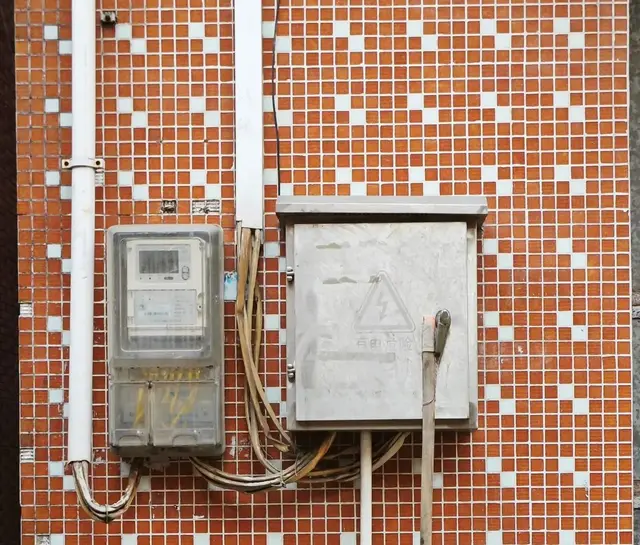
Only your house is affected: the problem is most likely between the meter and your appliances, but the service cable and its connections at the pole and meter are still possible. The meter, its seals and everything on the supply side belong to the power company.
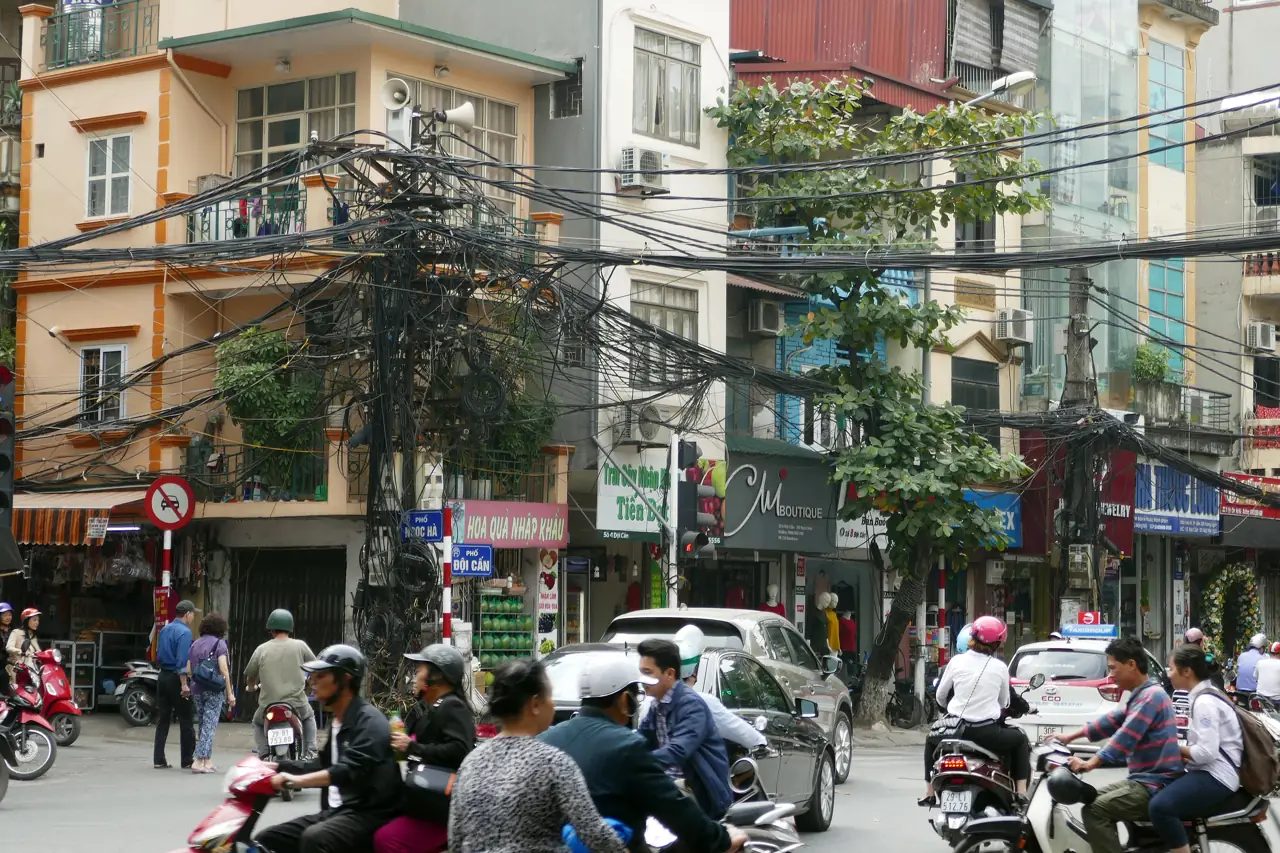
Figure 2. A street in Hanoi with power and communication cables bundled around a pole and running to the shophouses on both sides. Many houses share the same low-voltage network, so neighbours comparing notes is a quick way to tell a supply problem from a fault inside one house. Never climb to or touch these cables. (Photo: Ji-Elle, Wikimedia Commons, CC BY-SA 4.0)
Step 5: Measure the voltage (the right way)
Seeing is not measuring. A voltage record tells you whether the supply is low, unstable, or fine and the fault is inside the house.
Simple option for homeowners: a plug-in meter
A plug-in voltage and energy meter that goes into an ordinary socket shows the voltage without opening anything. Note the reading at different times of day, and when large appliances start. Write down the lowest and highest values and when they happened. Many inexpensive plug-in meters are not precise, so treat their numbers as trends, not exact values.
For electricians: a multimeter and a load test
With a multimeter of a suitable CAT rating, test leads in good condition, and the usual precautions for live measurement:
Measure line to neutral at a socket with nothing else running: this is the no-load voltage at that point.
Switch on a known resistive load on the same socket or circuit (a kettle or heater of known wattage) and measure again.
Compare the two readings, then repeat at the main switch outgoing terminals if the board can be accessed safely.
How to read it, for reference:
If the voltage is low even with no load in the house, and the reading at the main switch is equally low, the supply itself is low. Record it and report it to the power company.
If the voltage at the main switch stays steady but drops a lot at a socket under load, the resistance is in that circuit: a loose terminal, a poor joint, or a cable that is too small or too long for the load.
If the voltage at the main switch itself drops a lot under load, look at the main connections (main switch terminals, the cable from the meter, the main neutral) and the supply connection.
A difference of a few volts between no load and full load is normal in most homes. A much larger drop on one circuit than on the others is the thing to investigate. The acceptable values depend on cable length, size and load; use your local rules and the power company's stated supply range, not a single number from this article.
Find the heat
A connection with high resistance turns electrical energy into heat. With a heavy load running for some time, an electrician can check for heat with an infrared thermometer or thermal camera at the board, sockets and switches, without touching live parts. One terminal noticeably hotter than its neighbours carrying similar current is a strong lead. Then isolate the circuit before opening anything.
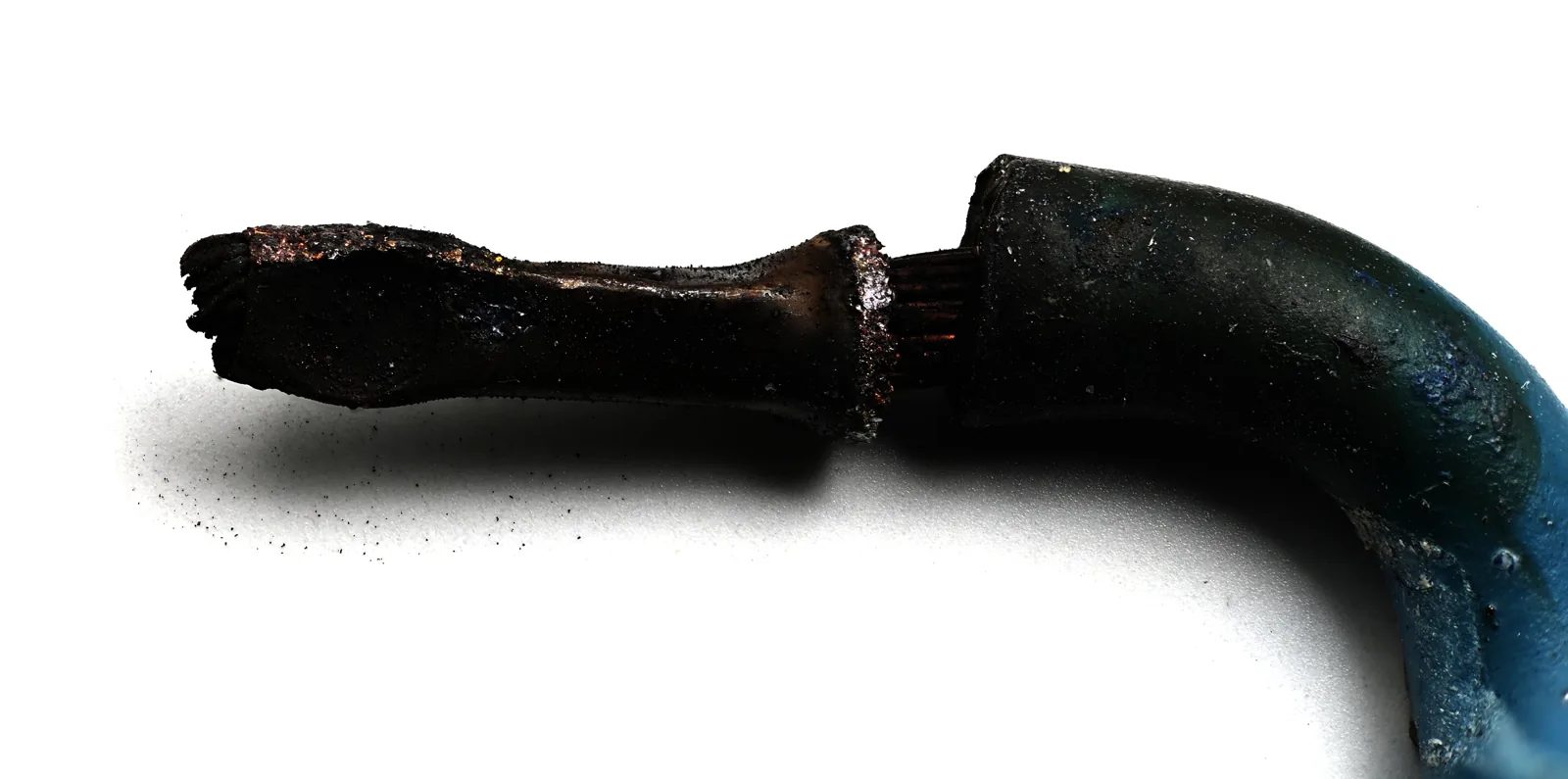
Figure 3. A wire end with a crimped ferrule that has been badly overheated in a screw terminal: the ferrule is blackened and partly melted, its plastic collar has gone and the cable insulation is charred. A poor connection like this can show up as flicker or dimming long before it fails completely. (Photo: Phiarc, Wikimedia Commons, CC BY-SA 4.0)
Step 6: The dangerous one – a loose or broken neutral
The neutral conductor carries the return current. If the neutral connection becomes loose or breaks, the symptoms depend on the installation:
In a single-phase house, a high-resistance main neutral behaves like any bad joint: the whole house dims and flickers when load changes, and the joint heats up. If it opens completely, everything stops, but the neutral side of the wiring can become live through the connected loads.
Where three-phase supplies or a shared neutral are involved (larger houses, shophouses, or several houses on a shared network neutral), a lost neutral can make the voltage on one phase rise well above normal while another falls. Then some lights glow very brightly, others go dim, and electronics can be damaged within minutes.
What to do: if you see bright-and-dim at the same time, or appliances failing, switch off the main switch, unplug sensitive electronics, and call an electrician immediately (and the power company if the fault may be on the supply side). This is not something to "keep an eye on".
Step 7: Lamps, drivers, dimmers and smart switches
Modern lighting adds its own causes of flicker, which are unrelated to the supply:
Non-dimmable LEDs on a dimmer: flicker, buzzing, short life. Use lamps marked dimmable, and a dimmer meant for LED loads, within its minimum and maximum load.
Too few LEDs on a dimmer: many dimmers need a minimum load; below it, the light pulses or will not dim smoothly.
Smart switches without a neutral and illuminated switches pass a small current through the lamp even when "off", which can make LEDs flash or glow (see our guide on why LED lights glow or flicker when switched off).
Mixing different LED brands or models on one dimmer or one driver often gives uneven brightness and flicker.
An overloaded or cheap LED driver for strip lights or panels can flicker as it heats up.
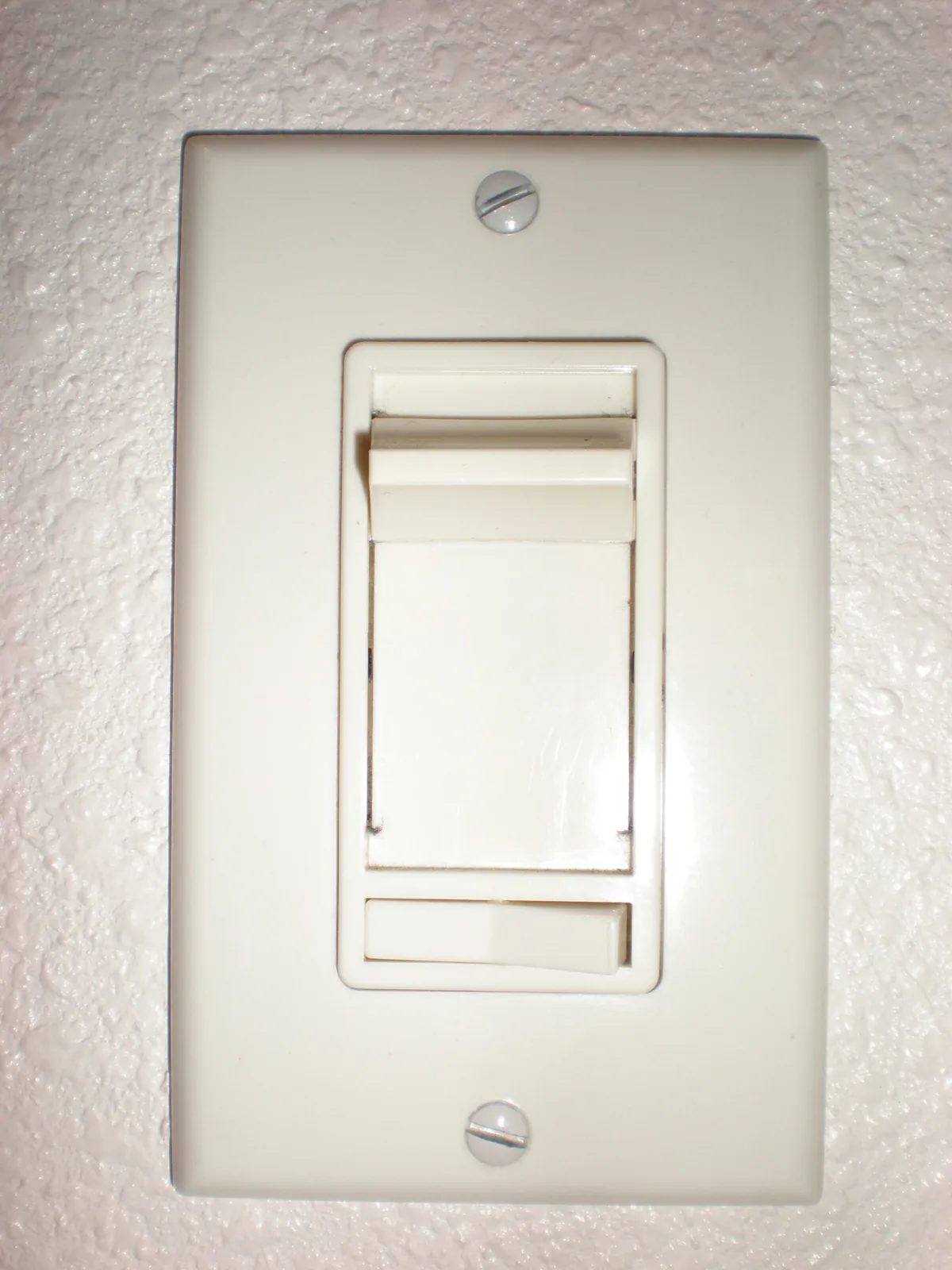
Figure 4. A slide dimmer switch in a cream wall plate, installed in a home in California, USA. If LED lamps start flickering after a dimmer like this is fitted, check that the lamps are marked dimmable and that the dimmer suits LED loads before suspecting the wiring. (Photo: BrokenSphere, Wikimedia Commons, CC BY-SA 3.0)
Symptom reference table
What you see | Most likely causes | Who checks | Urgency |
|---|---|---|---|
One lamp flickers; others steady | Failing lamp or driver, loose lamp, worn lampholder, dimmer/switch incompatibility | Homeowner (swap lamp, power off); electrician if it continues | Low, unless the fitting is hot or smells |
Fluorescent tube flickers, ends blackened | Tube, starter or ballast near end of life | Homeowner or electrician | Low |
All lights on one circuit flicker | Loose terminal at MCB, neutral bar, junction box or first accessory; shared neutral | Electrician | Medium to high: loose joints heat up |
Whole house dips briefly when AC or pump starts | Motor starting current with normal cable and supply resistance | Observe; electrician if the dip is deep | Usually low |
Whole house dims as long as a heavy load runs | Loose main connection, undersized or long cable, weak supply connection | Electrician; power company for supply side | Medium to high |
Whole street dims in the evening | Overloaded or long low-voltage network | Power company (EVN) | Report it; protect sensitive equipment |
Some lights very bright, others dim; appliances failing | Loose or broken neutral, especially with three-phase or shared neutral | Electrician immediately; power company if supply side | Emergency: switch off the main |
Flicker with burning smell, heat or crackling | Arcing or overheating connection | Electrician immediately | Emergency: switch off the main |
How electricians fix the common causes
Remaking loose or burnt connections
With the circuit isolated and proved dead, the electrician removes the damaged section rather than just retightening it: cuts back any discoloured conductor to clean, bright metal, replaces heat-damaged accessories, terminals or connectors, and remakes the joint properly. Screw terminals should be tightened to the manufacturer's stated torque where given; fine-stranded conductors in screw terminals usually need suitable ferrules. Copper and aluminium conductors should never be twisted or clamped together directly; use connectors rated for the purpose.
Re-checking the board
One burnt terminal is often a sign of others. On a flicker job it is good practice to check every terminal in the board (with the supply isolated), look for heat marks on busbars and the neutral bar, and confirm that each circuit has its own neutral terminal and is not borrowing a neutral from another circuit.
Dealing with voltage drop
If measurements show the cable is simply too small or too long for the load (a typical case is a pump, air conditioner or water heater added years after the house was wired), the long-term fix is a dedicated circuit with a correctly sized cable and breaker. A plug-in or whole-house voltage stabiliser can help where the supply itself is low, but it does not fix a loose connection, and a stabiliser that is too small or badly installed can create problems of its own.
Escalating to the power company
If the supply voltage is low or unstable at the main switch with the house load switched off, or the problem affects neighbours too, the fix is on the network. Give the power company a clear record: dates, times, readings, what was switched on, and whether neighbours are affected. The homeowner should contact the local EVN customer service through the channels on their bill, website or customer app.
Explaining it to the customer
Customers often worry that flicker means "the electricity is dangerous" or, at the other extreme, ignore it for months. Give a short, honest explanation:
"Only this lamp is faulty; a better-quality, dimmable lamp will fix it."
"The short dip when your air conditioner starts is normal for a house at the end of a long line. It's not a fault, but tell me if it gets worse."
"I found a terminal that was overheating. That's why the lights flickered. I've replaced it, and I recommend checking the other connections in the board."
"Your supply voltage is low even with everything in the house switched off. That's on the power company's side; here are the readings to give them."
Safety checklist
Treat flicker with a burning smell, heat, crackling, or bright-and-dim lights as an emergency: switch off the main and call an electrician.
Switch off and, where possible, lock off the circuit and prove it dead with an approved tester (tested on a known live source before and after) before opening any accessory, fitting or board.
Homeowners: change lamps only with the light switched off and the lamp cool; do not open sockets, switches or the board.
Use a multimeter with a suitable CAT rating, undamaged leads with finger guards, and insulated tools for any live measurement; keep one hand away and stand on a dry surface.
Never open, unseal or work on the meter, its box or the service cable: they belong to the power company.
Do not increase breaker sizes or bypass protection to "stop" a problem: fix the cause.
Replace any accessory, terminal or cable section that shows heat damage; do not just retighten it.
Do not twist copper and aluminium together; use connectors rated for the job.
Unplug sensitive electronics during suspected neutral or voltage problems.
If someone receives an electric shock, switch off the power before touching them and call emergency services (115 in Vietnam).
Frequently Asked Questions
Why do my lights dim when the air conditioner turns on?
The compressor motor draws a high current for a moment as it starts, which causes a small voltage drop across your wiring and the supply cable. A brief, slight dip is common. If the dimming is deep, lasts while the air conditioner runs, or has recently become worse, have an electrician check the connections and the cable feeding the air conditioner, which should usually be on its own circuit.
Can flickering lights cause a fire?
Flicker itself does not, but one of its causes can: a loose or corroded connection that arcs and heats up. If flicker comes with heat, discolouration, a burning smell or crackling, switch off and call an electrician. If it is only one cheap lamp flickering, the risk is low, but replace the lamp.
Why do only my LED lights flicker, while old bulbs did not?
LED lamps contain electronic drivers that react differently to voltage dips, dimmers and small leakage currents through smart or illuminated switches. Better-quality lamps, dimmable lamps on suitable dimmers, and switches with a neutral connection usually solve it. LED flicker alone does not mean the house wiring is faulty.
All my neighbours' lights flicker too. What can I do?
That points to the supply network. Record when it happens and report it to your local power company. Inside your home, a correctly sized voltage stabiliser for sensitive equipment, or surge protection fitted by an electrician, can reduce the impact while the network issue is resolved.
Is it safe to keep using the house while the lights flicker?
If it is one lamp, yes. If the whole house or one circuit flickers, reduce heavy loads and get it checked soon. If there is a burning smell, heat, crackling, or some lights are much brighter than usual, switch off the main switch and get help immediately.
Will a voltage stabiliser fix flickering lights?
Only if the cause is low or unstable supply voltage. It will not fix a loose terminal, a faulty lamp or a dimmer incompatibility, and it can hide a developing fault. Find the cause first.
Practice Exercises
Fault interview. Write ten questions you would ask a customer who says "my lights keep flickering". Group them under: what flickers, when, since when, other signs.
Load test. On a training board or your own home (with supervision), record the voltage at a socket with no load, then with a kettle running, and calculate the difference. Repeat on a socket at the far end of the house and compare.
Sorting cases. For each case, decide the likely cause and who should fix it: (a) one downlight flickers after a dimmer was fitted; (b) the top floor dims whenever the roof pump runs; (c) the whole street dims every evening at 7 pm; (d) bedroom lights flare bright while the kitchen goes dim and the fridge stops.
Thermal check plan. Write a step-by-step plan for checking a distribution board for overheating terminals: which loads to run, how long to wait, what tool to use, what counts as "noticeably hotter", and how to isolate before opening.
Customer explanation. In three sentences, explain to a homeowner why the short dip when the air conditioner starts is normal, and in what situation they should call you back.