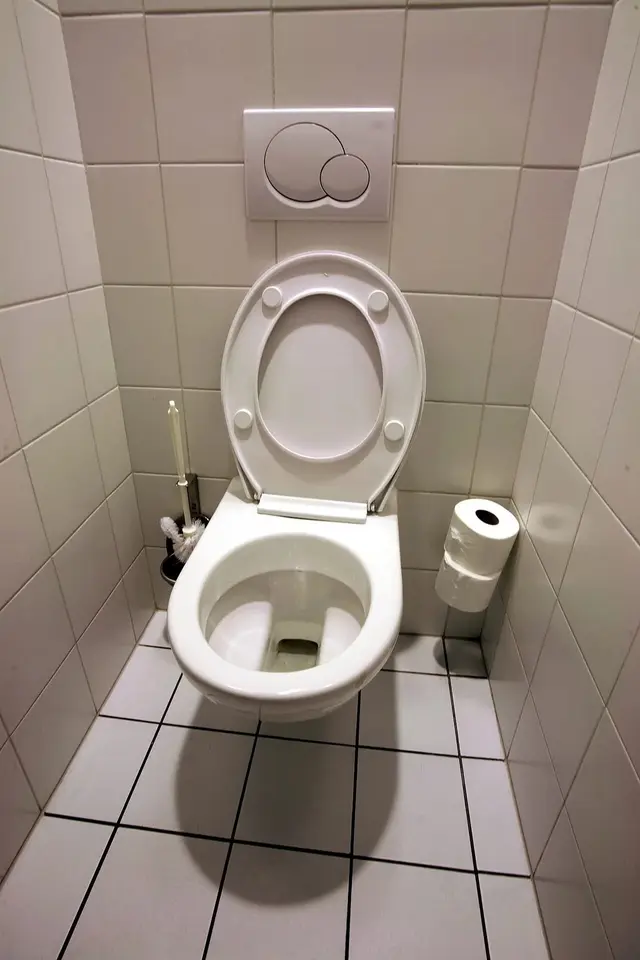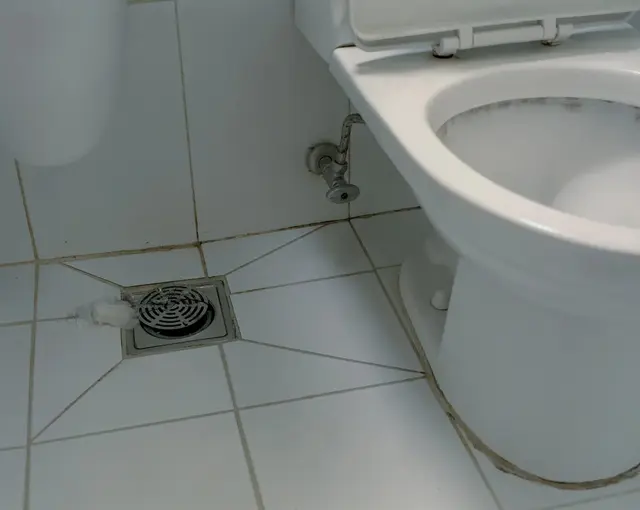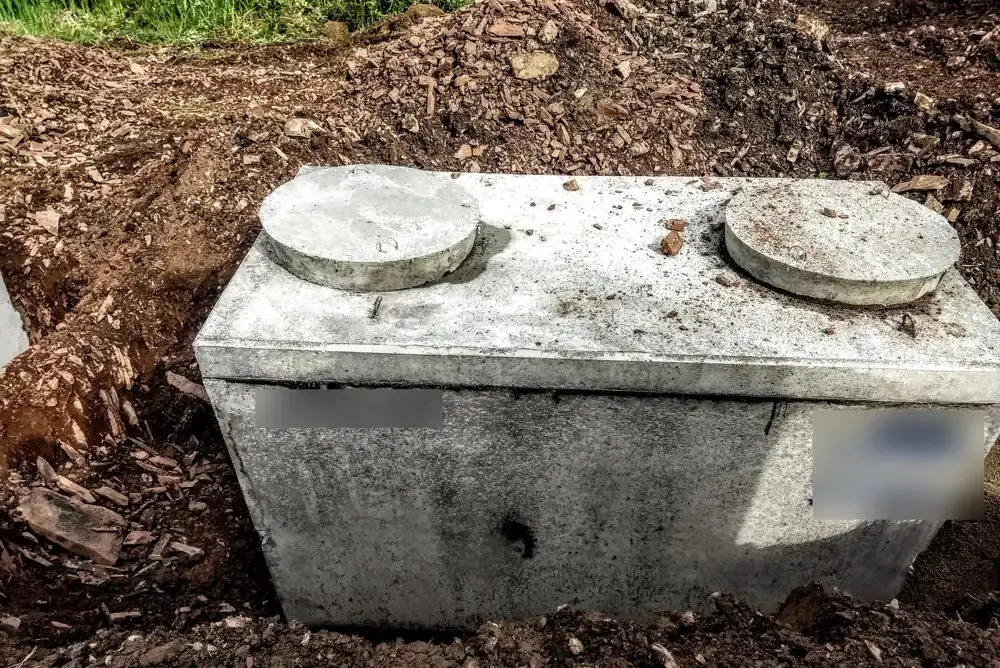
"For the past few days the toilet has been draining slowly and gurgling, and the back yard stinks." Many young plumbers immediately bring a plunger to unblock the toilet, and two days later the customer calls again, because the blockage is not in the toilet but in a septic tank full of sludge, a clogged inlet or outlet pipe of the tank, or a blocked tank vent pipe.
A septic tank is also a life-threatening place: the gases inside can cause suffocation, poisoning, fire and explosion, and there have been many cases where a person climbed down to clean out a tank and then the people who went down to rescue them also became victims.
By the end of this lesson, you will be able to recognise the signs of a full septic tank, tell it apart from a blocked single fixture or a blocked shared pipe, open the access cover and observe the water level safely from ground level, decide when to call a pumping service, and advise the customer after pumping so the tank lasts.
This lesson focuses on the septic tank. For a blockage right at the toilet, see the lesson Blocked toilet, water rising when flushed. For bad smells in the bathroom caused by drain pipes and traps, also read Drain pipe slope and how to prevent bad smells in the bathroom.
Understand the septic tank before diagnosing
A septic tank is a sealed tank buried in the ground or under the ground-floor slab. It receives wastewater from the toilets (and in many houses also shower and kitchen water). Inside the tank, the wastewater separates into three layers:
The scum layer floating on top: grease, paper, light materials.
The middle water layer: water from which much of the solids has settled out; it flows through the compartments and then out through the outlet pipe to the sewer or an inspection chamber.
The sludge layer at the bottom: solids that settle and are slowly broken down by microorganisms but never disappear completely. The sludge and scum grow thicker over time.
Tanks in Vietnamese homes are usually built of brick or cast concrete and divided into two or three compartments (holding, settling and filter compartments). Newer houses often use prefabricated composite or plastic tanks. The inlet and outlet pipes usually have a tee fitting or a dip pipe extending below the water surface so the scum does not flow out. A properly designed tank also has a vent pipe that carries gases up high.
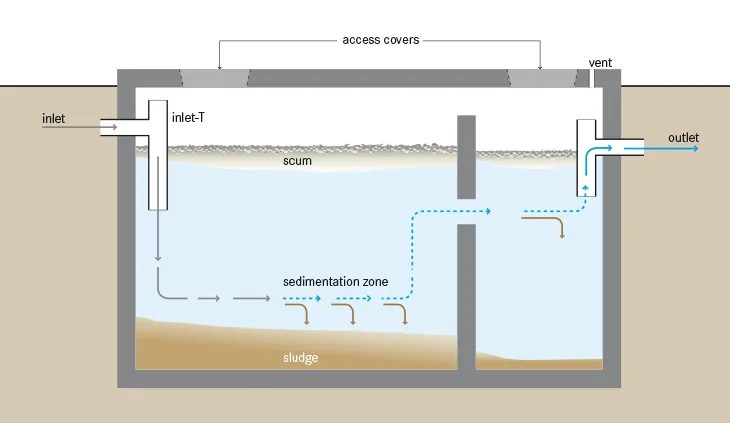
Figure 1. Cross-section of a two-compartment septic tank: wastewater enters through an inlet tee, scum floats on top, sludge settles at the bottom, and the water passes through the opening in the baffle wall and out through the outlet pipe; on top are the access covers and the vent pipe. (Image: Tilley, E., Ulrich, L., Luthi, C., Reymond, Ph., Zurbrugg, C., Wikimedia Commons, CC BY-SA 4.0)
An important consequence for the plumber: in a tank that is working normally, the water level is always level with the bottom of the outlet pipe. A tank does not fail because it is "full of water". It fails when the sludge and scum become so thick that they take up most of the volume, the water has no time to settle, solids carry over into the outlet pipe and clog it, or a thick scum layer blocks the mouth of the inlet pipe.
Ask right away: what water goes into the tank? In many townhouses only toilet water goes into the tank, while shower and kitchen water go straight to the sewer; in some houses everything goes into the tank. This determines how you read the symptoms in Step 2.
Signs of a septic tank problem
No single sign is enough to draw a conclusion on its own; record as many as you can:
All the toilets in the house drain slowly, not just one. The toilet on the lowest floor is usually the worst affected.
Gurgling and bubbling in a toilet or ground-floor floor drain when water is flushed upstairs.
Dirty water backing up through floor drains or the ground-floor toilet when the whole household is using a lot of water (early morning, evening, laundry days).
Bad smells around the tank cover, the back yard, or the area where the tank sits under the floor; the smell gets worse after a lot of water is discharged.
Damp access covers seeping black water, wet or sinking ground or tiles above the tank.
Not pumped for many years: the customer cannot remember the last time it was pumped.
Easily confused: a bad smell in only one bathroom is usually caused by a dried-out trap or a leaking toilet base seal; everything draining slowly only during heavy rain or high tides is usually caused by the external sewer backing up, and pumping the tank only helps temporarily.
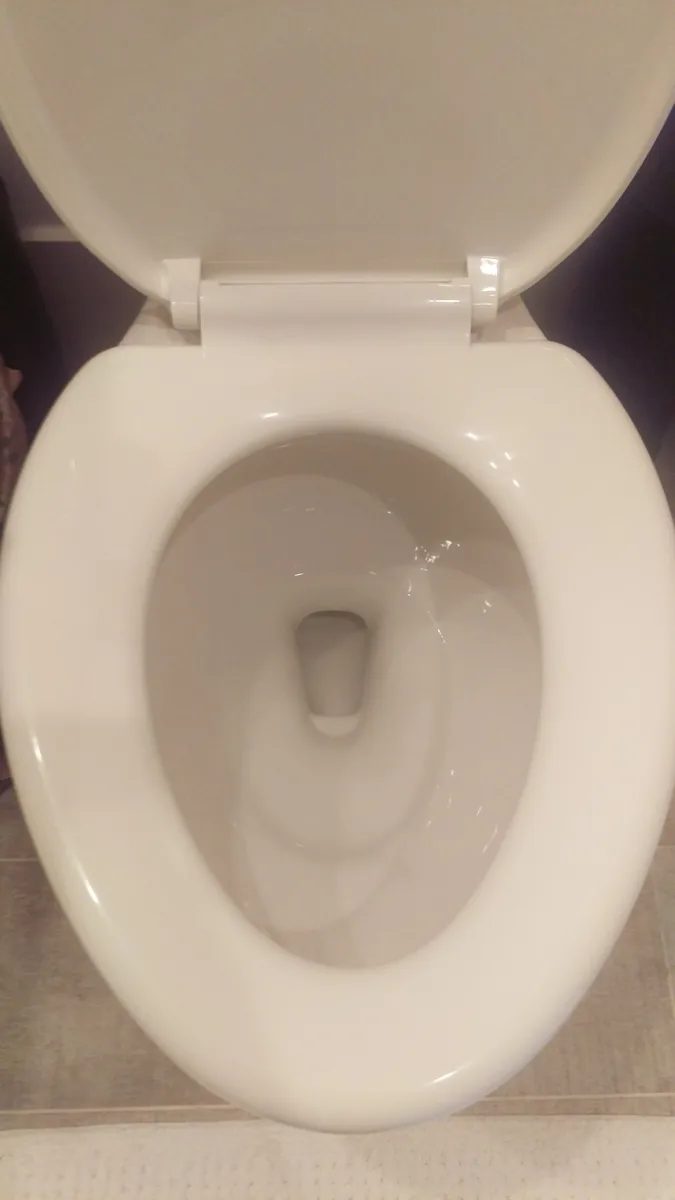
Figure 2. Watch how the water drains from the toilet bowl when flushed. Only when all the toilets drain slowly, together with gurgling and smells in the yard, should you think of the septic tank. (Photo: Dee.lite, Wikimedia Commons, CC BY-SA 4.0)
Quick diagnosis table
Symptom | Common cause | How to check | What to do |
|---|---|---|---|
One toilet drains slowly, the others are normal | Blockage at the toilet or in its own branch pipe | Test-flush each fixture | Unblock the toilet or branch pipe |
All toilets slow; with the tank lid open, the water level is level with the bottom of the outlet pipe | Blocked pipe from the house to the tank (the section before the tank) or thick scum blocking the inlet | Watch the inlet: does water flow in when someone test-flushes? | Clear the inlet pipe through the cleanout; consider pumping if the scum is thick |
All toilets slow; the water level in the tank is above the bottom of the outlet pipe | Blocked outlet pipe or filter compartment, external sewer backing up, tank full of sludge | Open the last compartment cover and look at the outlet; check the inspection chamber and external sewer | Clear the outlet pipe; call a pumping service if the sludge and scum are thick |
The water level in the tank is clearly below the bottom of the outlet pipe even though the house is in use | The tank may be cracked and leaking into the ground | Monitor the water level after a few hours of no use | Inform the customer; a builder or specialist is needed to check the structure |
Toilet gurgles and smells, but water still drains | Tank vent pipe or soil stack blocked, insufficient venting | Find the vent pipe outlet on the roof or wall | Clear it and refit the vent cap correctly |
Slow only during heavy rain or high tides | The shared external sewer backing up | Check the last inspection chamber of the house and the alley sewer | Schedule the work for when the water recedes; advise on a backflow valve if appropriate |
The table is a guide for narrowing down the problem. Every house has different pipework, so check it against what you find on site.
Protective equipment and safety before you start
Read this section carefully before any other step.
Never climb or crawl down into a septic tank, inspection chamber or enclosed pit, even "just a little way to scoop it out". The gases in the tank may include hydrogen sulphide (H2S), which smells of rotten eggs and at high concentrations paralyses your sense of smell, so you can no longer smell it even though the gas level is still rising; methane (CH4), which is flammable and explosive; and CO2 and oxygen deficiency, which cause suffocation. At high concentrations, a person can collapse after only a few breaths.
Do not put your head close to the tank opening. Stand upwind, step back once the cover is open, and let the gas vent for a few minutes before observing.
Absolutely no flames near the tank: no smoking, no lighters or burning paper to see inside, no grinding, welding or cutting near the opening. Use a flashlight.
Always have a second person above ground. If anyone collapses inside the tank or at its opening: do not go down to rescue them; immediately call 114 (fire and rescue) and 115 (ambulance) in Vietnam, and ventilate from outside if possible. A rescuer who goes down without breathing apparatus becomes the next victim.
Protective equipment: long-cuff rubber gloves, boots, splash goggles, a face mask. Note that medical masks and cloth masks do not filter toxic gases; they only protect against splashes.
A portable gas detector with H2S, O2 and combustible gas (LEL) channels is a tool worth having if you often work around tanks and inspection chambers. It must be calibrated according to the manufacturer's instructions.
Fence off and cover the tank opening as soon as you open the lid. An open cover is a risk of children, elderly people or pets falling in. Never leave the opening uncovered while you go to fetch tools.
Hygiene after the job: wash your hands with soap before eating or drinking; any scratch that comes into contact with wastewater must be washed thoroughly and disinfected.

Figure 3. A portable multi-gas detector (the one in the photo displays CH4, SO2, NO2 and CO2). For work around septic tanks and inspection chambers, choose a detector with H2S, O2 and combustible gas (LEL) channels. (Photo: SabirovaNigora, Wikimedia Commons, CC BY 4.0)
7 steps to inspect and deal with a septic tank showing signs of being full
Step 1: Get complete information from the customer
Before touching anything, ask and write down:
When the symptoms started, and whether they are constant or only at peak times or after rain.
When the tank was last pumped; what year the house was built; whether there are documents or drainage drawings.
How many people live there, and whether there have been more recently.
What water goes into the tank: only the toilets, or also shower, kitchen and washing machine water.
Where the access cover is: in many houses it has been tiled or concreted over, and the owner does not know where the tank is.
Whether wet wipes, sanitary pads or cooking grease are put down the toilet.
Whether they have already poured drain-cleaning chemicals or any other products in (so you can wear suitable protection).
Step 2: Test each fixture to narrow down the problem
Flush each toilet in turn and run the basin taps and showers, from the top floor down to the bottom floor, and observe:
Which toilets are slow, and which floor drains back up or bubble.
Whether other fixtures gurgle when one fixture is flushed.
Reading the results:
Only one fixture has a problem: most likely a local blockage. Deal with it following the lessons on unblocking toilets and floor drains; no need to open the tank yet.
All the toilets are slow, but basins and showers are fine (in a house where shower water does not go into the tank): suspect the shared toilet pipe or the septic tank.
All fixtures are slow (in a house where everything goes into the tank, or the shared pipe after the tank): suspect the tank, the outlet pipe or the external sewer.
Step 3: Find the tank and the access cover
Follow the direction of the toilet soil stack on the ground floor, and look at the outside walls, the back yard, under the stairs and the floor of the ground-floor bathroom.
Look for concrete covers, cast-iron covers, tiles with different-coloured grout, and vent pipes.
If the tank has been tiled over, do not break into it without agreeing with the customer first: explain clearly the suspected location, the area to be broken out and how the floor will be reinstated. This is also an opportunity to recommend building a permanent access cover so that next time no breaking is needed.
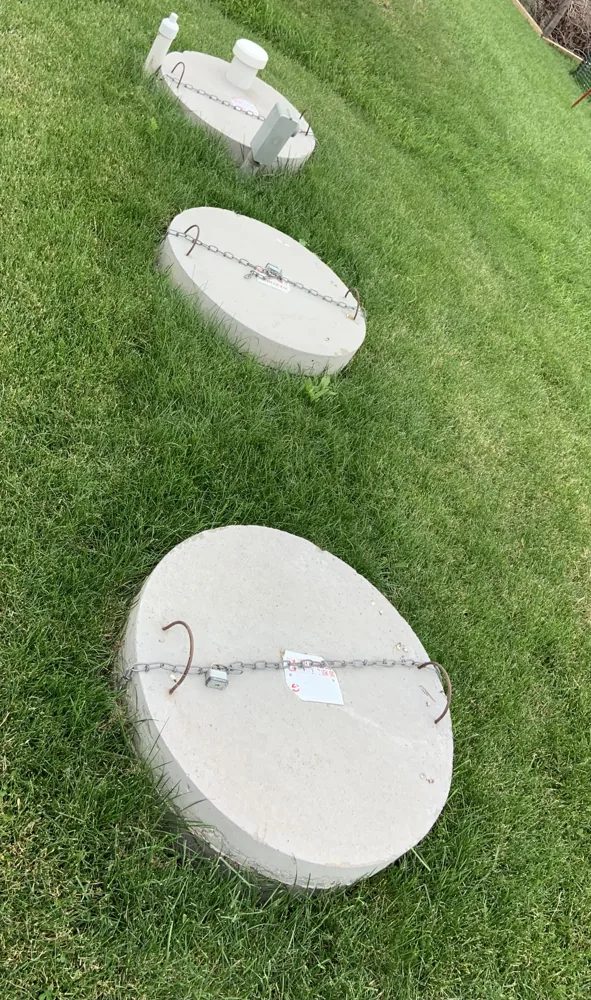
Figure 4. Septic tank access covers exposed at ground level, with lifting hooks and a locking chain to prevent them being opened by mistake. When the covers are easy to find and open, inspection and pumping are quick and no floor has to be broken up. (Photo: Wikideas1, Wikimedia Commons, CC0)
Step 4: Open the cover and observe from ground level
Fence off the area, keep anyone not involved well away, and lay out your tools neatly.
Heavy concrete covers: use a crowbar or hook, lift with two people, keep your back straight and bend your knees, and watch out for pinched fingers.
Once it is open, step back and wait a few minutes for the gas to vent. If you have a gas detector, take a reading at the opening before going close.
Shine a flashlight and observe from where you stand, without putting your head into the opening: - Water level relative to the bottom of the outlet pipe: level with the bottom of the outlet pipe is normal; clearly higher means the outlet pipe or something beyond it is blocked; clearly lower while the house is still using water (and the tank has not just been pumped) is a sign the tank may be leaking. - The scum layer on the surface: thick, crusted and almost touching the mouth of the inlet pipe is a sign it needs pumping. - The inlet pipe: ask someone in the house to flush a toilet and see whether water flows into the tank straight away. If no water flows in but the toilet still backs up, the blockage is in the pipe between the house and the tank. - Baffle walls, tees, dip pipes: check whether they are broken or have fallen off (where visible).
Step 5: Estimate the thickness of the sludge and scum
A common method is to use a long pole with white or light-coloured cloth wrapped around its lower end, or a purpose-made sludge sampler:
Lower the pole vertically to the bottom of the tank while standing at ground level, wait a moment, then pull it up slowly.
The part of the cloth stained with thick black sludge shows the thickness of the bottom sludge layer.
Push the pole gently through the scum layer to feel and mark how thick the scum is.
Some international guidelines can be used as a reference: the US Environmental Protection Agency (US EPA) suggests pumping when the bottom of the scum layer is within about 15 cm (6 inches) of the bottom of the outlet pipe, or the top of the sludge layer is within about 30 cm (12 inches) of the outlet pipe. Another often-quoted rule of thumb is to pump when sludge and scum together take up about one third of the water depth in the tank (for reference). Tanks in Vietnam vary greatly in size and number of compartments, so these figures are only a guide. The final decision is based on all the signs taken together.
Record the measurements, the date and photos of the tank opening (taken from above) to explain to the customer and to compare next time.
Step 6: Deal with the actual cause
Case A: Blocked inlet pipe (tank water level normal, toilet still backs up).
Clear it with a drain snake or drain-cleaning machine through the cleanout on the soil stack, or from the inlet on the tank side (working from ground level with a long handle).
If thick scum is blocking the inlet, clearing it only helps temporarily; the tank needs pumping.
Case B: Blocked outlet pipe or filter compartment (water level above the bottom of the outlet pipe).
Check the inspection chamber and the sewer after the tank first; if the external sewer is full, deal with it from the sewer side. If there is an inspection chamber, clear the outlet pipe with a drain snake working from the chamber back toward the tank.
If the filter compartment is clogged and the tank is full of sludge: it needs pumping.
Case C: Tank full of sludge and scum.
Call a professional septic tank pumping service with a vacuum truck, suction hoses and trained staff. They transport the waste to a treatment site as required by regulations; sludge must not be dumped into sewers, ditches or gardens.
Your role: show them where the tank is, open the compartment covers in advance, and check after pumping.
A residential plumber does not scoop out the tank with buckets and does not go down into the tank.
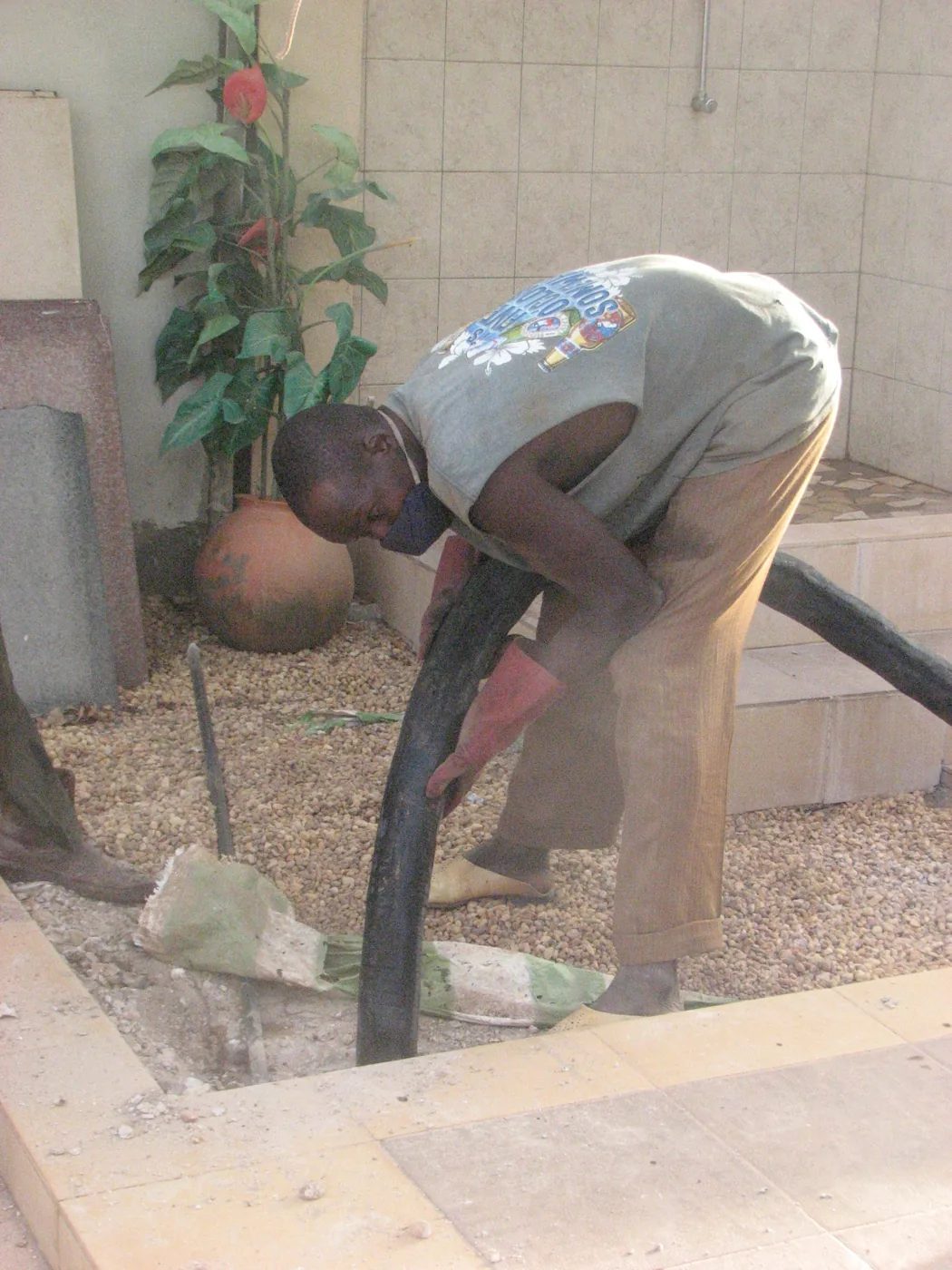
Figure 5. Pumping a septic tank: the suction hose is lowered into the tank opening from ground level, and nobody goes down into the tank. The mask in the photo only protects against splashes and does not filter toxic gases. (Photo: SuSanA Secretariat, Wikimedia Commons, CC BY 2.0)
Case D: Blocked vent pipe.
Find the vent pipe outlet (usually on the roof or running up a wall). Leaves, bird nests, debris, or a cap fitted during renovations are common causes.
Clear it and refit the vent cap; do not put the vent outlet near windows, air intakes or places where people often stand (to keep smells out of the house).
Do not block the vent pipe because the customer complains about the smell: fixtures will gurgle and drain slowly, and gases may be pushed back into the house.
Case E: Suspected cracked or leaking tank, or damaged baffle wall.
Take photos and inform the customer. Structural repairs to the tank are a job for a builder or a specialist tank contractor, carried out after the tank has been fully pumped and ventilated, and following a confined-space safety procedure.
Step 7: After pumping, check and hand over
There is no need to scrub the tank with cleaning chemicals. Strong chemicals can reduce the microorganisms that break down waste in the tank.
Close the cover securely, with a handle or lock, tightly sealed so smells do not escape and nobody opens it by mistake.
Test-flush each toilet and floor drain in turn from top to bottom; confirm there is no more gurgling or backing up.
Check that the vent pipe outlet is clear.
Fill in the handover sheet: pumping date, sludge thickness before pumping, access cover location, and the date of the next inspection.
How often to pump the tank: advising the customer correctly
Customers often ask "how many years between pumpings?". There is no single figure that is right for every house, because it depends on the tank volume, the number of users, what water goes into the tank and how it is used.
To give the customer a reference point: the US EPA recommends inspecting household septic tanks at least every 3 years and states that tanks are typically pumped every 3 to 5 years (for reference, based on conditions in the USA). In Vietnam, tanks are usually smaller, households are larger, and in some places shower water also goes into the tank, so many houses need to be inspected sooner.
Give honest advice: recommend regular inspection and sludge measurement rather than promising a fixed figure; houses with many occupants or rented rooms should be inspected more often; do not scare customers to sell services, and do not say "this tank never needs pumping".
Prevention: what to tell the customer
Only flush toilet paper that dissolves in water down the toilet. Wet wipes, sanitary pads, nappies, cotton pads, thick paper towels, condoms and clumps of hair go in the bin.
Do not pour cooking oil or grease down toilets or sinks. Grease forms scum, thickens the scum layer in the tank and clogs pipes.
Limit pouring large amounts of strong cleaning chemicals or drain cleaners down the toilet. Use ordinary cleaning products in moderate amounts.
Bacterial additives advertised as "no pumping needed": effectiveness depends on the product and conditions, and they cannot replace pumping out the sludge once the tank is full. Make this clear to the customer.
Repair leaking cisterns and constantly running taps promptly: too much water entering the tank leaves no time for solids to settle.
Keep the access cover openable; do not tile over it.
Safety and quality checklist
Before starting:
[ ] Asked the customer and tested each fixture to narrow down the problem.
[ ] A second person present; long gloves, boots, goggles, flashlight, gas detector (if available); no sources of ignition.
When opening the tank:
[ ] Area fenced off, standing upwind, cover opened and then stepped back to let the gas vent.
[ ] No head put into the opening; nobody goes down into the tank.
[ ] Observed the water level relative to the bottom of the outlet pipe, the scum layer and the inlet.
[ ] The tank opening is never left open without someone watching it.
After the work:
[ ] Cover closed securely and tightly, with a handle or lock.
[ ] All fixtures test-flushed, no more gurgling or backing up.
[ ] Vent pipe clear.
[ ] Hands washed, tools cleaned, handover sheet completed.
Frequently asked questions
Is a slow-draining toilet always caused by a full septic tank?
No. Most slow toilets are caused by a blockage at the toilet or in the branch pipe. Think of the septic tank when several toilets are slow at the same time, other fixtures gurgle, there is a bad smell around the tank and it has not been pumped for a long time.
Can bacterial additives replace pumping? Does the tank need to be "seeded" with bacteria after pumping?
They cannot replace pumping once the tank is full, because the bottom sludge contains a lot of material that never fully breaks down. After pumping, seeding is usually unnecessary either: household wastewater naturally brings its own microorganisms, and the US EPA considers that septic tanks do not need additives (for reference). If the customer wants to use them, let the customer decide.
I smelled rotten eggs at the tank opening and then the smell suddenly disappeared. Does that mean it is safe?
Not necessarily. Hydrogen sulphide at high concentrations can paralyse your sense of smell, so "the smell going away" may be an even more dangerous sign. Step well back, let it ventilate, and rely only on a gas detector, not on your nose.
The tank was just pumped, but a few days later the toilet is slow again?
Pumping the tank does not clear the pipe between the house and the tank, an external sewer that is backing up, or a blocked vent pipe. Check again using the diagnosis table.
Practice exercises
Draw a diagram: draw the drainage layout of a three-storey townhouse you know, marking the toilet soil stack, the shower drain pipe, the septic tank, the inspection chamber and the vent pipe. Show clearly which water goes into the tank and which goes straight to the sewer.
Narrow it down on paper: for three scenarios (one toilet slow; all toilets slow but showers fine; all fixtures slow only when it rains), write what you would check first and your preliminary conclusion.
Supervised trial measurement: under the supervision of an instructor, open the cover of a working tank, observe the water level relative to the bottom of the outlet pipe, and measure the sludge with a cloth-wrapped pole from ground level. Record the measurements and photos.
Role-play: the customer says "just climb down and scoop it out for me, it's quicker than calling the pumping truck". Explain why you refuse, and propose a safe alternative.
Rescue role-play: a colleague collapses at the tank opening. Say out loud the first three things you would do and one thing you must absolutely never do.