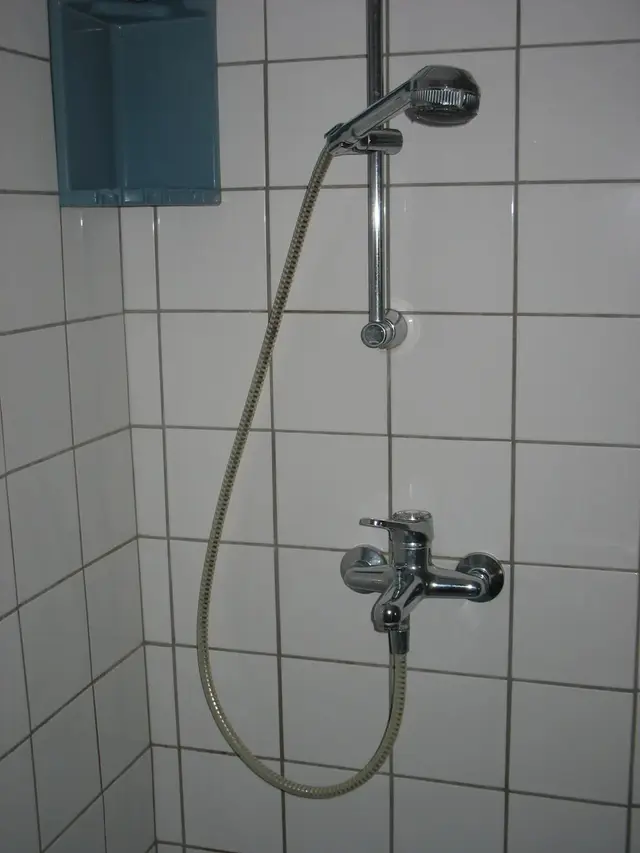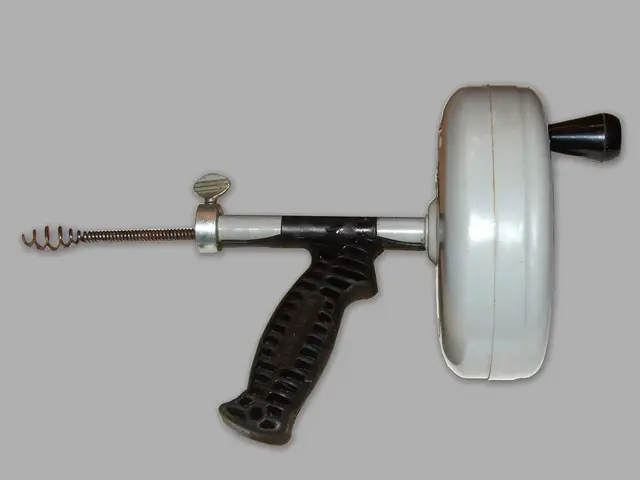
“My shower just drizzles, I can never rinse the soap off.” “The cold water is strong, but as soon as I turn on the hot water it gets really weak.” “On the ground floor the water gushes, but on the top floor it only trickles.” A weak shower is a very familiar call for a plumber. Many people immediately think of buying a booster pump, when the cause may just be a scaled-up shower head, a valve that isn't fully open, or a water tank sitting too low above the bathroom.
A good plumber doesn't guess: work back from the shower head towards the source, measure before you repair, and show the customer the before-and-after readings. This lesson belongs to the “Fixing common leaks & blockages” step. By the end of this lesson, you will be able to tell weak flow caused by a blockage apart from weak flow caused by low pressure, and know when a booster pump is actually needed.
Safety before you start
Electricity: before touching a storage water heater, an instantaneous water heater or a pump, switch off the circuit breaker and double-check with a voltage tester. Do not open the casing of electrical equipment; leave that to an electrician or the manufacturer's warranty service.
Hot water and pressure: wait for the water to cool, close the cold water supply valve to the heater, and open a hot tap to release the pressure before undoing any connection. Never remove or plug the safety valve while the heater is still under pressure.
Descaling chemicals: only use mild ones (vinegar, citric acid) or a product recommended by the manufacturer; wear gloves and glasses; never mix them with chlorine-based cleaners.
Roofs: use a fixed ladder and a firm footing, and don't go up when it is raining; on a roof without railings, you need a safety harness and a helper.
Don't increase pressure on your own initiative: do not set a pump's pressure switch beyond the manufacturer's permitted level, and do not remove an installed pressure-reducing valve.
Understanding “weak water” correctly: pressure or flow?
Pressure (bar) is the force pushing the water at the point of use. In a house supplied from a roof tank, the pressure is determined mainly by the height difference between the water level in the tank and the outlet.
Flow rate (litres/minute) is the amount of water that actually comes out. Flow drops when the water path is restricted (scale, a partly open valve), even when the supply pressure is adequate.
When all taps are closed, the pressure in the pipe is close to the pressure created by the height (static pressure). When a tap is opened and water flows through a restriction, the pressure downstream drops (dynamic pressure).
Three questions to narrow it down
One outlet or the whole house? One weak shower: suspect the shower head, the hose or the mixer valve. The whole bathroom: suspect the branch valve or branch pipe. The whole house or a whole floor: suspect the roof tank, the main pipe or the pump.
Hot, cold or both? Only the hot water is weak: focus on the water heater and the hot line. Both: see the common section.
Since when? Gradually weakening over many months is usually scale. Suddenly weak after a water outage or pipe repair is usually air in the pipes, plastic debris pushed into a strainer, or a valve not fully reopened. Weak only at peak times: suspect an inadequate supply.
Tools: a bucket marked in litres, a stopwatch, a threaded water pressure gauge with thread adaptors, an adjustable spanner and pliers wrapped in cloth, PTFE tape, spare washers, an old brush, vinegar or citric acid, plastic bags, a torch.
Baseline measurements: flow with a bucket and pressure with a gauge
Measuring flow: open the shower fully (cold water only) and collect the water in a marked bucket for a timed period. Flow (litres/minute) = litres ÷ seconds × 60. Example: 3 litres in 30 seconds is 6 litres/minute. Repeat with hot water and at another outlet for comparison. There is no general “standard” figure; compare with the manufacturer's specification for that particular shower head, and compare before and after the repair.
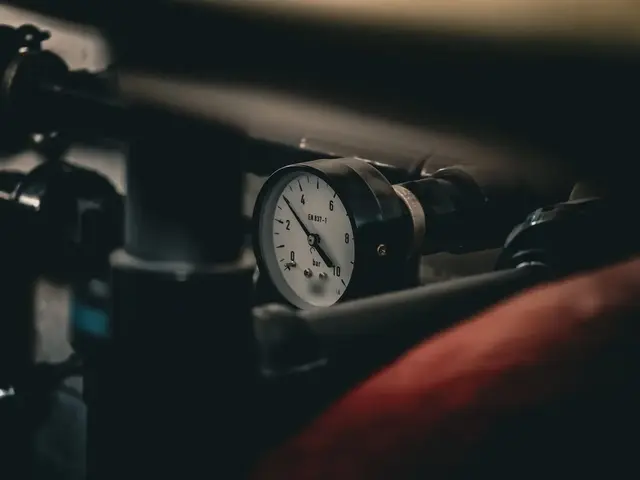
Measuring pressure: remove the shower head or tap aerator and screw on the pressure gauge. Close all other taps and open the valve of the outlet being measured: read the static pressure. Ask someone to open another tap nearby: read the dynamic pressure. Record both figures.
Reference table: static pressure by height difference (houses with a roof tank)
With still water, about 10 m of height difference gives about 1 bar (more precisely, 1 bar is equivalent to about 10.2 m of water column). The height difference is measured from the water surface in the tank down to the measuring point, not from the bottom of the tank or the roof floor. The values below are for reference only.
Height difference from the water surface in the tank to the outlet | Estimated static pressure (reference) | Meaning for diagnosis |
|---|---|---|
About 1 m | About 0.1 bar | Very low; shower heads and instantaneous water heaters usually struggle to work well |
About 2 m | About 0.2 bar | Low; common in bathrooms directly below the roof tank |
About 3 m | About 0.3 bar | Still low; a basin tap runs but the shower is usually weak |
About 5 m | About 0.5 bar | Medium-low |
About 10 m | About 1 bar | Usually adequate; still check against the minimum pressure of each appliance |
If the measured static pressure is close to the estimate and the water is still weak, the source lacks pressure, and clearing blockages will not help much. Cheap gauges have errors, so compare different points using the same gauge. The table does not apply to houses supplied directly from the mains.
The 7-step procedure for finding the cause
Step 1. Ask the customer and walk around the house
Use the three narrowing-down questions. Also ask: where is the roof tank, is there a booster pump, is the water heater a storage type (with a tank), an instantaneous type (heats on demand) or a solar heater; has there been a water outage or pipe repair recently? Try the taps on each floor and note which ones are weak.
Step 2. Check the shower head, the shower hose and the tap aerator
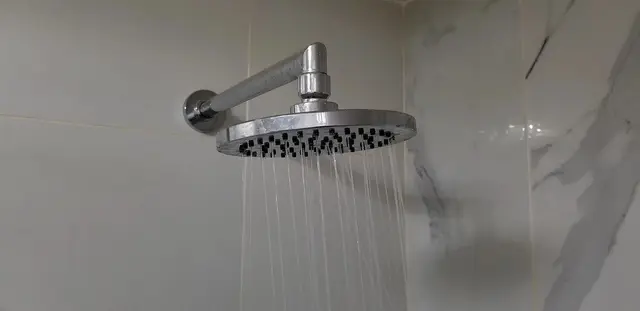
This is the most common cause when only one outlet is weak. Close the valve, remove the shower head from the hose (or from the wall-mounted shower arm), then reopen the valve so water flows straight from the end of the hose:
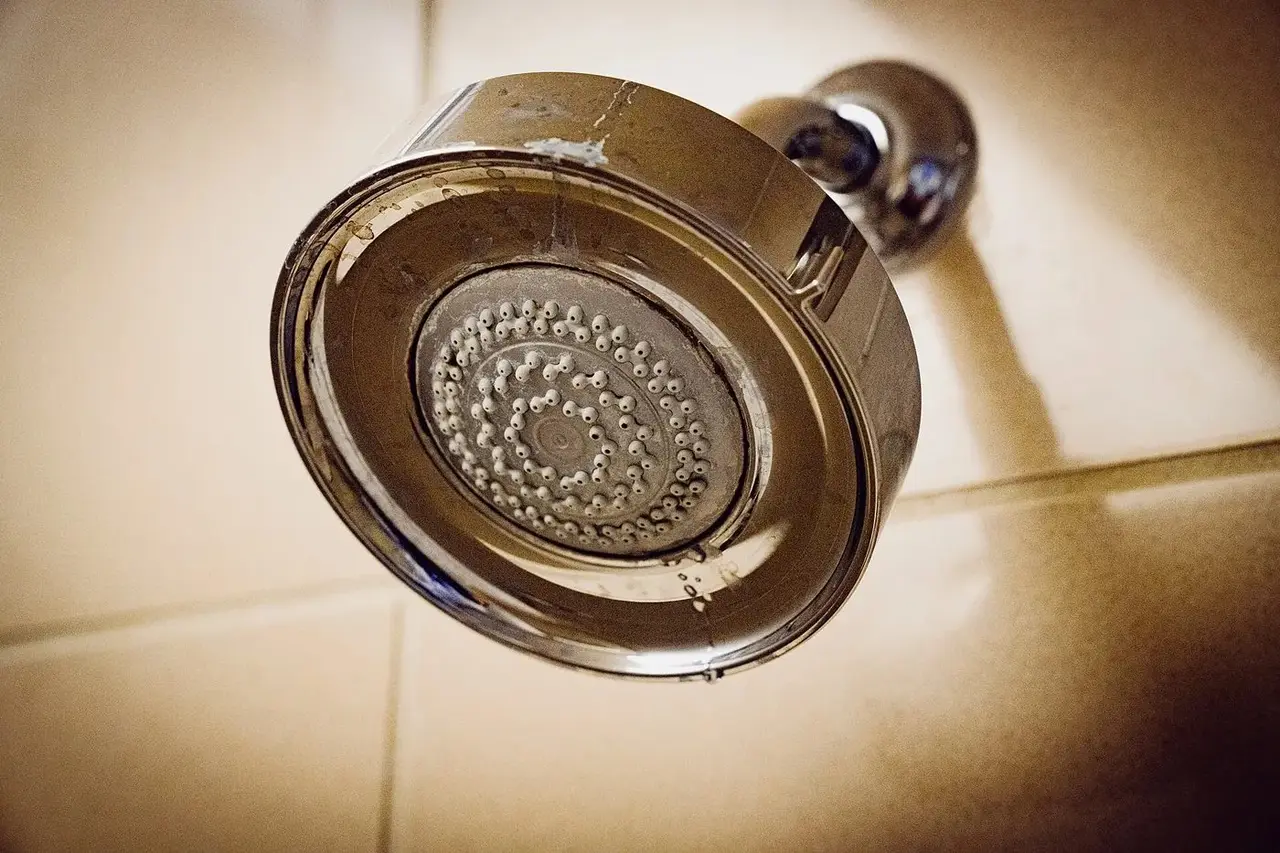
Much stronger flow straight from the hose: the shower head is blocked. The face of the head usually has white scale blocking the holes, jets spraying sideways, or some holes with no water.
Still weak straight from the hose: work back to the hose and the mixer valve.
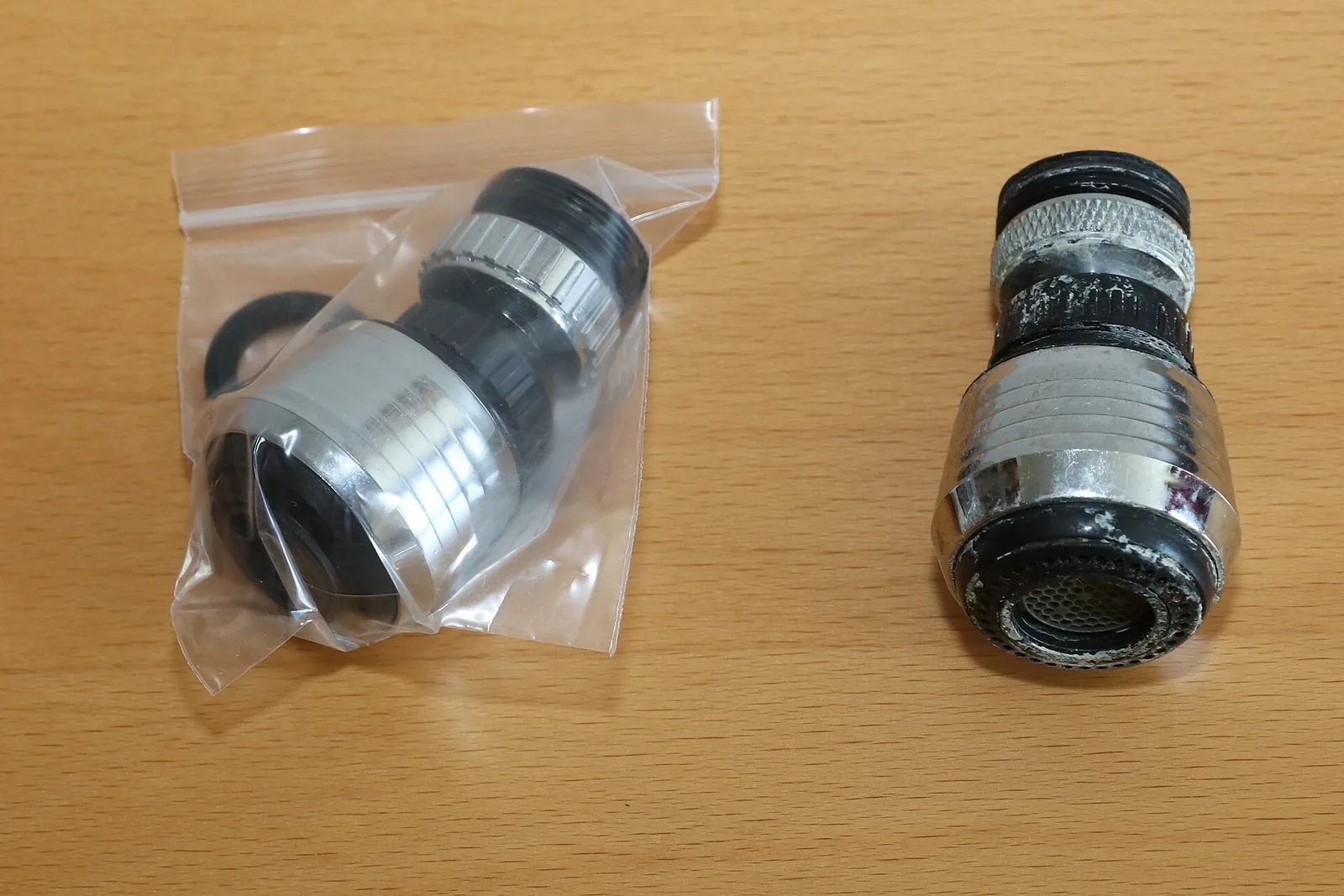
Figure 1. A shower head fixed on a shower arm on a tiled wall. With this type, unscrew the nut at the joint to remove the head for inspection. According to the photographer, this is a low-flow shower head. (Photo: Emily Hayflick, Wikimedia Commons, CC BY-SA 3.0)
Cleaning the shower head: for soft rubber nozzles, rub gently with a finger or a brush to break up the scale. For hard scale, soak in diluted vinegar or citric acid; check the manufacturer's instructions for concentration and soaking time, because coloured finishes (gold, black, bronze) can be affected. If the head can't be removed, put a plastic bag of solution over it and tie it in place. Do not poke hard with needles or nails: this distorts the holes and the jets will spray crooked permanently.
Strainers and flow restrictors: many shower heads and hose ends have a washer with a small strainer at the threaded joint, which often gets blocked by sand, plastic debris or scale, especially after pipe repairs. Some shower heads have a flow restrictor to save water; don't remove it without asking the customer and reading the manufacturer's instructions.
Shower hose: a kinked or tightly twisted hose, or one whose inner tube has come loose or collapsed, restricts the flow. Straighten the hose and measure again; if the hose is old, stiff or bulging, replace it with a new one with the correct thread size.
Basin and kitchen tap aerators: same principle. Unscrew the aerator, rinse the mesh and soak off the scale; if the thread is worn or broken, replace it with one of the correct size.
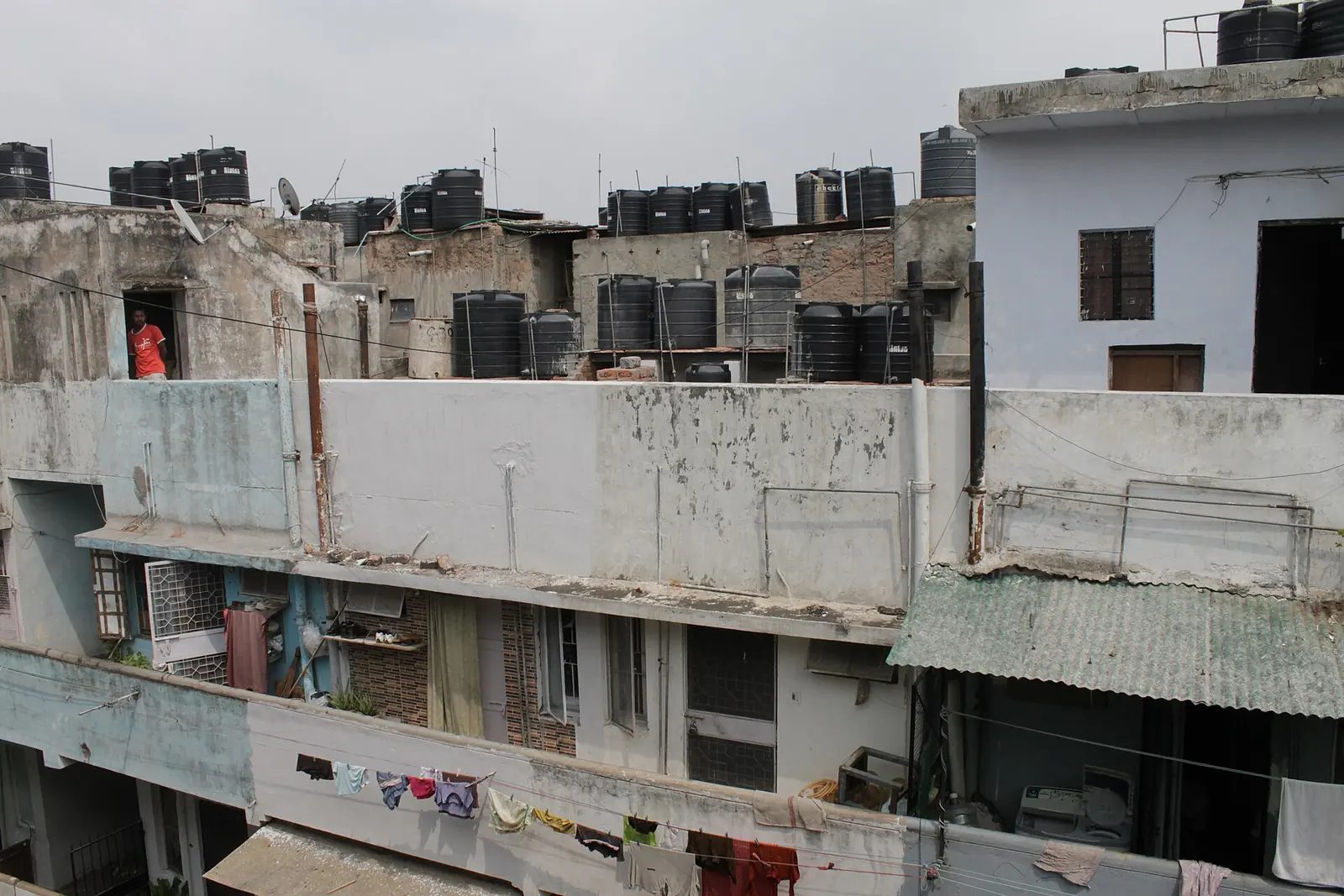
Figure 2. A new tap aerator still in its bag (left) and an old aerator (right) whose body, thread and mesh are covered in white scale; according to the photographer, the old aerator's thread was damaged. (Photo: MKFI, Wikimedia Commons, Public domain)
Step 3. Check the isolating valves, angle valves and the shower mixer
Branch isolating valves and angle valves: check that every valve on the line into the bathroom is fully open; older screw-down valves can stick or lose their washer plate, so the handle still turns but the washer doesn't lift fully.
Shower mixer: the mixing cartridge may be scaled up, or the strainers in the two wall connections (many mixers have strainers here) may be blocked. Close the branch valve, dismantle according to the manufacturer's instructions, and clean the strainers and cartridge; if the cartridge is damaged, replace it with the correct part number.
Diverter (shower columns, showers with a bath spout): if it is stuck halfway, the water splits into two paths; check whether the lower spout still runs after switching to the shower head.
Make one change, take one measurement.
Step 4. Separate the hot and cold water
Close the hot side and measure the cold side; then the other way round. If only the hot water is weak, the cause lies between the hot water source and the mixer.
Storage water heater: the safety valve on the cold inlet (usually combining a non-return valve and pressure relief) can get stuck with scale. Switch off the power, close the inlet water, release the pressure, then remove it for inspection; if the valve is faulty, replace it with the type specified by the manufacturer. Never fit an isolating valve between the safety valve and the heater. Also check for a kinked flexible supply hose or a blocked strainer in a connector.
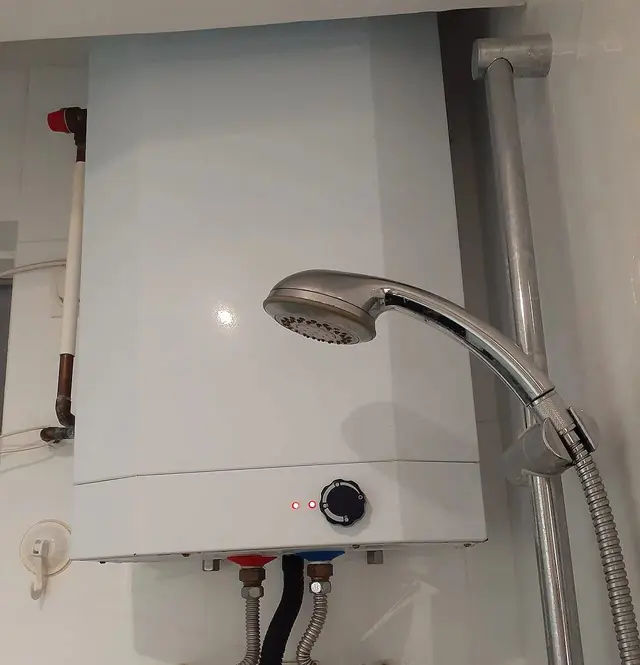
Instantaneous water heater: it needs a minimum flow rate before the flow switch activates the heating element. With a weak supply, the heater won't heat or will run hot and cold; the minimum varies by model, so check the manual. Many units have a strainer at the water inlet; clean it after switching off the power and closing the water, and don't open the casing yourself.
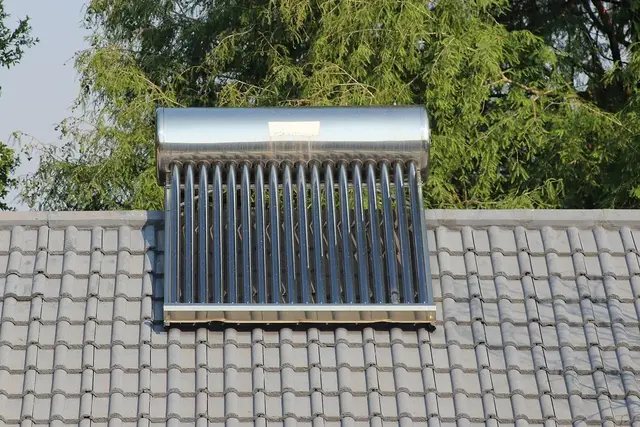
Rooftop solar water heater: the hot tank usually sits at about the same level as the cold tank, so on the top floor the height difference is very small; weak hot water may be due to the layout, not necessarily a fault.
Step 5. Measure static and dynamic pressure: blockage or low pressure?
If the shower head, hose and mixer are all clean but the flow is still weak, measure the static pressure at the weak outlet and at an outlet on a lower floor, then measure the dynamic pressure with another tap open:
Static pressure close to the estimate, dynamic pressure drops only slightly, flow still weak: the source only has that much pressure; see Step 7.
Static pressure correct but dynamic pressure drops sharply: there is a restriction on the route from the tank to the outlet: a valve, scale, a strainer, or a pipe too small for several appliances; see Step 6.
Static pressure much lower than the estimate: check whether the tank still has water and whether there is an air lock.
Step 6. Check the roof tank, strainers, main pipe and air in the pipes
Roof tank: check the water level. A low tank caused by a faulty float valve, a pump that doesn't run or a weak mains supply is a common cause of “weak water throughout the house”. Check that the valve after the tank outlet is fully open and that the outlet isn't blocked by debris. The tank lid must have a clear vent hole; if the lid is sealed, a vacuum forms as water flows out, the flow becomes weak and the tank can even be dented.
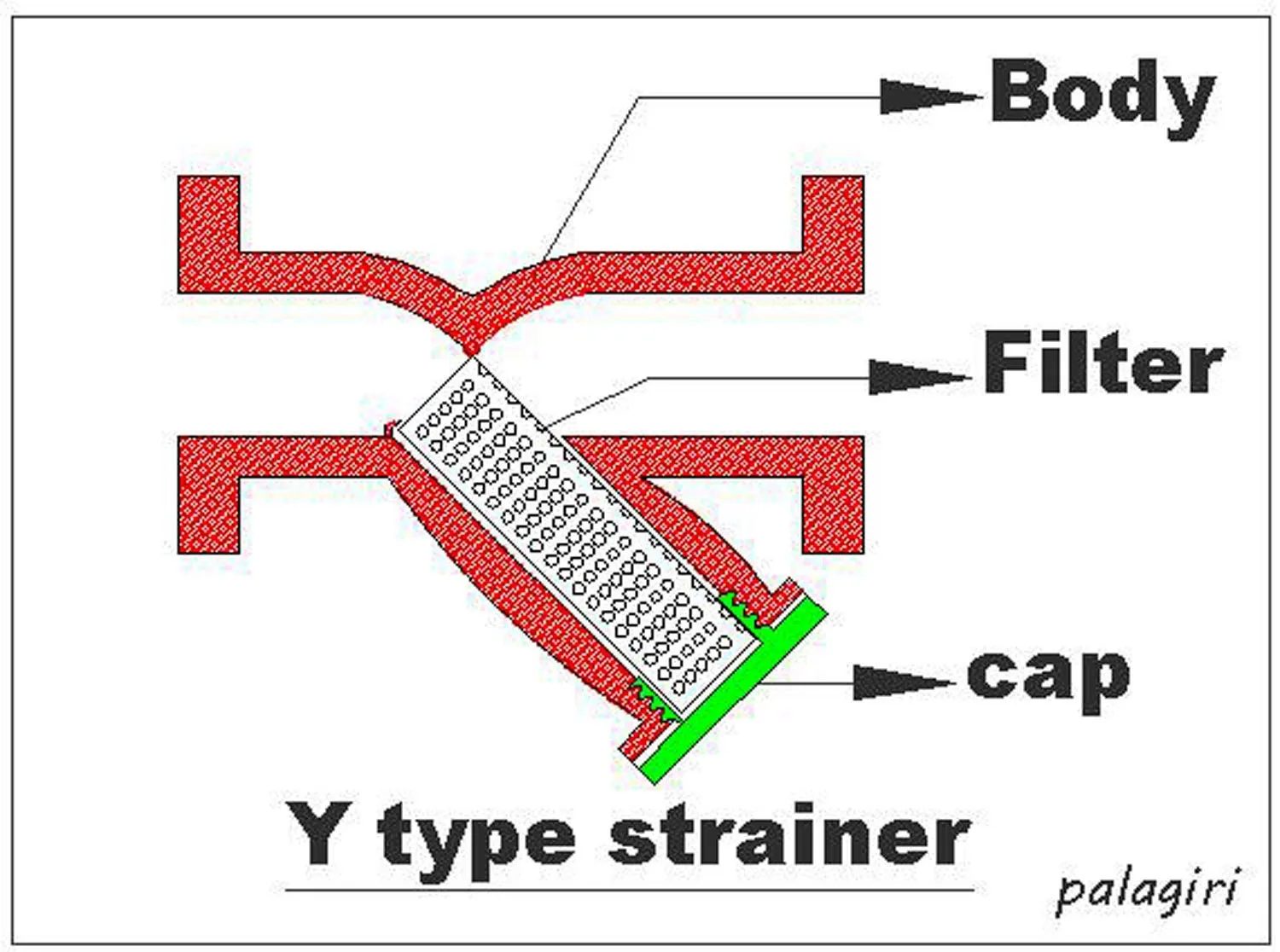
Figure 3. Plastic water tanks on the roofs of multi-storey buildings. The floor directly below the tank has the smallest height difference and therefore usually the weakest water. (Photo: BohunkaNika, Wikimedia Commons, CC BY-SA 4.0)
Y-strainers and inlet filters: many houses have a Y-strainer or coarse filter after the roof tank, before the pump or after the water meter. A fully blocked mesh is a frequently forgotten cause. Close the valves on both sides, open the cap, pull out and rinse the mesh, check the cap seal, refit it, open the valves slowly and check for leaks.
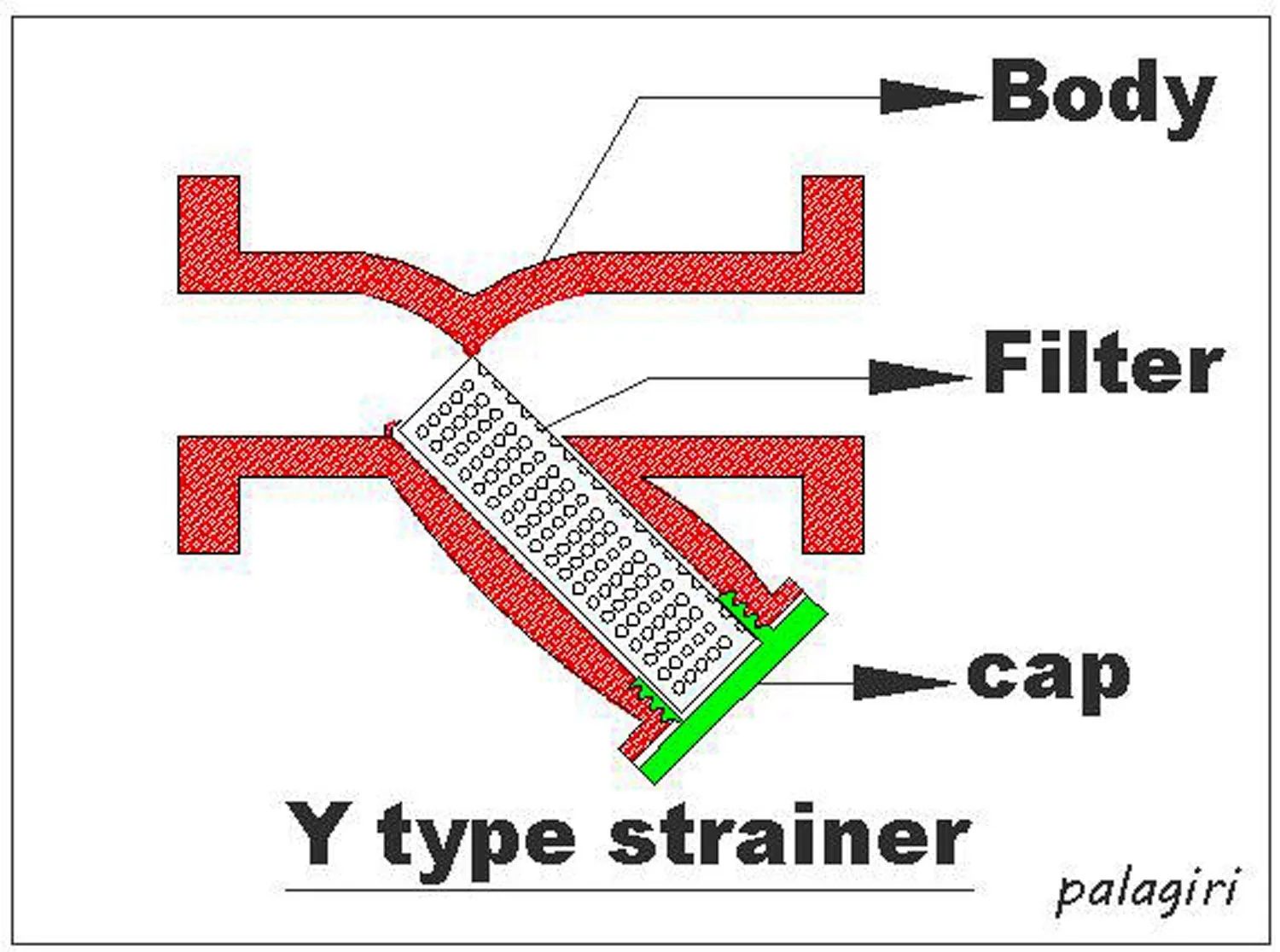
Figure 4. Cross-section of a Y-strainer: the valve body (Body), the mesh filter (Filter) lying diagonally in the side branch, and the screw cap (cap) for removing the mesh for cleaning. (Drawing: Palagiri, Wikimedia Commons, CC BY-SA 4.0)
Air in the pipes: after the tank runs dry or after a water outage, air can get trapped in sections of pipe that rise and fall. Signs: the tap splutters, water comes out in bursts, gurgling noises. Once the tank has refilled, open each tap in turn and let it run until there are no more air bubbles before moving on to the next.
Old pipes with scale: older houses with galvanised steel pipes or long-serving metal pipes may have rust and scale that gradually narrow the bore. Signs: rusty-coloured water when first opened, several outlets on the same line gradually getting weaker. The long-term solution is usually to replace that pipe run, which needs a separate survey and quotation.
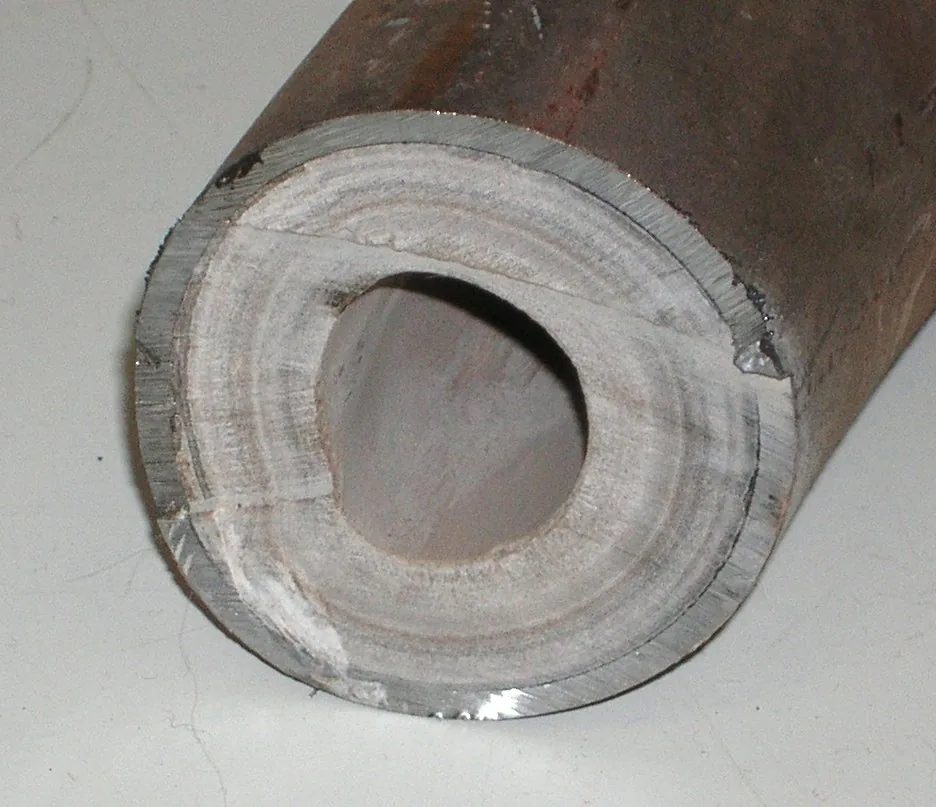
Figure 5. Cross-section of a metal pipe with thick scale on the inner wall, leaving a much narrower bore. According to the photographer, this is a pipe from a heat exchanger; scale in household water supply pipes is usually thinner but narrows the flow in the same way. (Photo: Александр Юрьевич Лебедев, Wikimedia Commons, Public domain)
Houses supplied directly from the mains: if the water is weak right after the water meter and varies by time of day, the cause may be the mains pressure. Note the times, measure at the tap nearest the meter, and advise the customer to contact the water supply company. Do not install a pump drawing directly from the shared mains; many areas do not allow it.
Step 7. When the cause is low pressure: advising on solutions
If all blockages have been ruled out but the static pressure is still low because of the height, this becomes a renovation job. Offer the customer these options:
Raise the roof tank: increases pressure on every floor and uses no electricity; but a full tank is very heavy and a tall stand catches more wind, so someone who understands structures must approve it. Never prop the tank up on bricks or a temporary frame.
Install a booster pump after the roof tank for the top floor or the whole house: choose it by the flow rate and head in the catalogue, with dry-run protection, and have an electrician do the electrical side with earth-leakage protection and earthing. The pump's cut-out pressure must be lower than the permitted working pressure of the water heater and other downstream appliances, according to the manufacturer's documentation. For selection and installation, see the lesson “Installing a pump, roof tank and water heater for a town house correctly”.
Switch to appliances suited to low pressure: choose shower heads and water heaters whose working pressure range matches the measured pressure. Shower heads advertised as “pressure boosting” mainly use small nozzles to make the jets stronger; they don't produce more water.
Re-route pipes during renovation: undersized branch pipes, long runs and many bends all cause losses.
Quote materials and labour separately; don't promise “guaranteed strong flow” before measuring.
Quick lookup table: symptom – likely cause – how to check – how to fix
Symptom | Likely cause | How to check | How to fix |
|---|---|---|---|
Only one shower weak, jets spraying sideways | Scaled shower head, blocked connector strainer | Remove the shower head and compare with water flowing straight from the hose | Soak to descale, rub the nozzles, rinse the strainer; replace if damaged |
Still weak with the shower head removed | Kinked or collapsed hose, dirty mixer, valve not fully open | Straighten the hose, check each valve and the mixer inlet strainers | Replace the hose, clean the strainers and cartridge, open the valves fully |
Only hot water weak | Safety valve stuck with scale, kinked supply hose, scaled-up heater | Separate hot/cold, measure the flow on each side | Switch off the power, release pressure, clean or replace the valve with the correct type |
Water splutters and comes in bursts after an outage | Air trapped in the pipes | Gurgling sounds, visible air bubbles | Bleed the air from each tap in turn once the tank is full |
Whole house suddenly weak | Empty tank, faulty float valve, pump not running, blocked Y-strainer | Check the tank level, the pump and the strainer | Repair the float valve or pump, rinse the strainer |
Top floor always weak | Height difference from the tank too small | Static pressure close to the estimate | Advise raising the tank or a booster pump |
Real-life scenario
The following scenario illustrates the reasoning; the readings are only examples. An apartment where only one shower is weak, while the basin tap in the same bathroom is still strong. Bucket measurement: about 2 litres in 30 seconds. With the shower head removed, the water flows much more strongly straight from the hose; the strainer in the connector is almost completely blocked with scale and a piece of plastic. The plumber rinses the strainer and soaks the shower head following the instructions on the descaler packaging; the new measurement is about 4 litres in 30 seconds. By contrast, a top-floor bathroom only about two metres below the tank's water surface, with static pressure close to the estimate: clearing blockages won't help, and the customer needs advice according to Step 7.
Safety and handover checklist
Switched off the circuit breaker and confirmed there was no power before touching the water heater, instantaneous heater or pump.
The heater was cool, the inlet water closed and the pressure released before undoing connections; the safety valve was not removed or plugged.
Wore gloves and glasses when using descaler; did not mix it with chlorine-based cleaners.
Worked safely on the roof; did not set the pressure switch beyond the manufacturer's limit.
After the repair: checked every connection that was undone for leaks; filled with water and ran a hot tap until the air was gone before restoring power to the heater.
Measured the hot and cold flow again; recorded the cause, work done, materials, before-and-after readings and any problems found but not yet dealt with (old pipes, low tank).
Call a more experienced plumber or the manufacturer's warranty service when: you would need to open the casing of electrical equipment; touching the water heater gives a tingling sensation; the tank needs raising or the structure needs altering; you suspect a leak or blockage in concealed pipes; the problem lies in an apartment block's shared riser (report it to the building management).
Frequently asked questions
Is installing a booster pump the quickest way to fix weak water?
No. If the cause is a blocked shower head, a partly open valve or a blocked strainer, a pump just costs money without solving the root cause. A pump makes sense once you have measured and confirmed that the source lacks pressure.
Why is only the hot water weak while the cold water is still strong?
Hot water also passes through the water heater, the safety valve, the supply hose and the hot pipework; scale tends to build up in these places. With a rooftop solar heater, the small height difference also makes hot water weak on the top floor.
Will soaking the shower head in vinegar damage the finish?
Ordinary chrome plating is rarely affected by a mild solution for a moderate time; coloured finishes or special coatings may be damaged. Check the manufacturer's cleaning instructions and rinse afterwards with clean water.
Practice exercises
Measure the flow with a bucket at three outlets (a shower, a basin tap and a tap on another floor), twice each; record them in a table and calculate the average.
Estimate the height difference from the water surface in the roof tank to the highest shower in the house and calculate the static pressure using the reference table; if you have a pressure gauge, take a real measurement and compare.
Remove, clean and refit a shower head and a tap aerator; measure the flow before and after, and photograph the strainer before rinsing.
Write a sample job report for the scenario “weak water in the top-floor bathroom”, with readings, a conclusion and two recommended options.
Self-assessment criteria — you pass when:
You can distinguish weak flow caused by a blockage from weak flow caused by low pressure using static pressure, dynamic pressure and flow readings.
You never touch electrical equipment before switching off the power, and never remove a safety valve while the heater is under pressure.
You explain to the customer using before-and-after readings and state clearly when a booster pump is actually needed.
After this lesson, review the pump selection and installation section in the “Pumps, water tanks & water heaters” step.