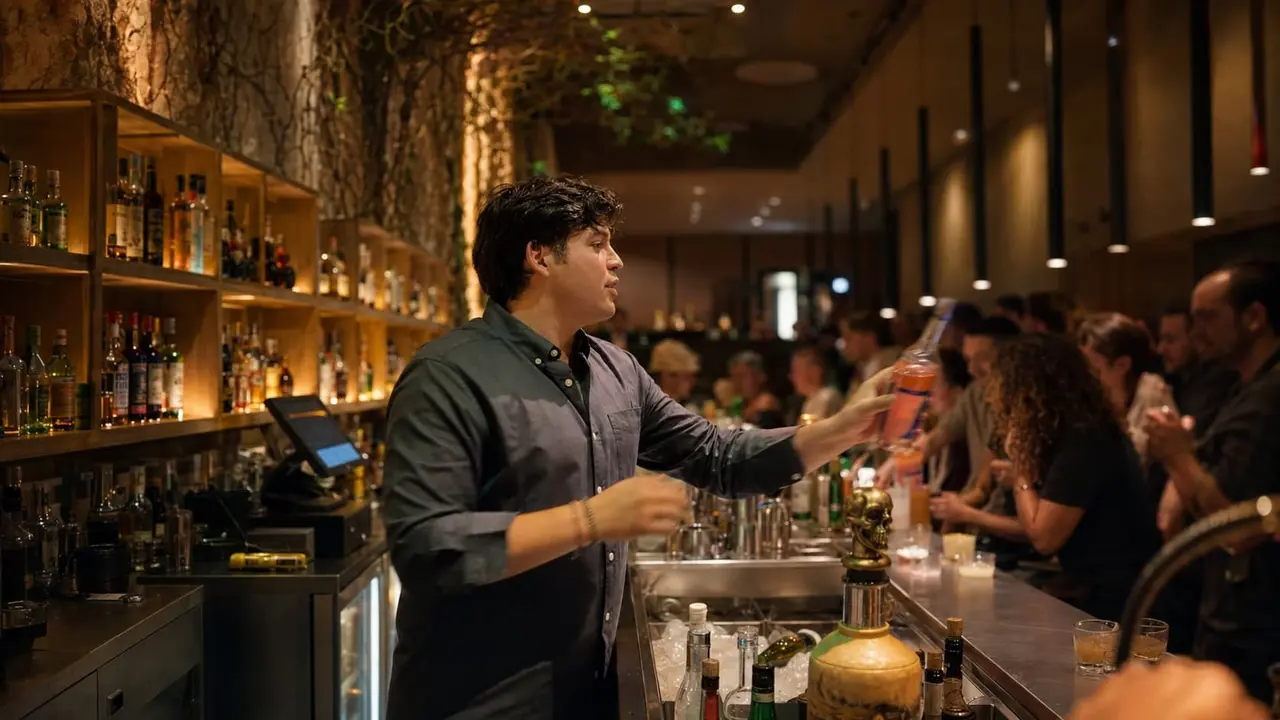
Responsible alcohol service means a bartender does not sell alcoholic drinks to anyone under 18, keeps track of how much guests have drunk, stops serving when a guest shows signs of intoxication and refuses politely, and helps guests get home safely instead of driving themselves. It goes hand in hand with safety at the bar itself: knives, broken glass and fire from flaming (flambé) cocktails. This is the first lesson a new bartender should read, because a beautiful cocktail cannot make up for a road accident after a guest leaves.
By the end of this lesson, you will be able to:
- Check ID and work out a guest's age accurately from the date of birth in a few seconds.
- Convert beer, wine, spirits and cocktails into alcohol units to track how much a guest has drunk.
- Recognise three levels of intoxication and know the right action at each level, including when to call 115 (Vietnam's emergency number).
- Refuse further service with scripts that let the guest save face, and arrange a safe way home.
- Work safely with knives, broken glass, flambé fire and wet floors behind the bar.
Just starting as a bartender? Responsible service and bar safety are step 1 of the roadmap, before bar tools, shake and stir techniques and the classic cocktails. See the 8-step bartender roadmap to learn in the right order.
What responsible alcohol service is and why bartenders learn it first
The bartender is the last person to decide whether a guest gets one more drink. You are not just making drinks; you are keeping the guest, other road users and the venue safe. A bar known for "serving school kids" or "letting drunk guests drive home" loses its reputation, can be penalised, and its staff are tarred with the same brush.
Legal principles you need to know
- Do not sell or supply alcoholic drinks to anyone under 18. This is set out in Vietnam's Law on Prevention and Control of Harmful Effects of Alcohol and Beer.
- Do not push or encourage people to drink: a bartender never offers "one more for fun" to a guest already showing signs of intoxication.
- Drivers must have no alcohol in their blood or breath under current Vietnamese traffic law, so there is no amount that counts as "safe to drive".
Penalties and procedures change over time. Read the current regulations or ask your manager or the local authorities; do not rely on hearsay online.
Venue policy
Many bars and hotels have their own policies stricter than the law, such as checking ID for anyone who looks under 25, limiting drinks per guest, or free overnight parking for guests who have been drinking. On your first day, ask the manager: is there an incident log, who decides to stop service, and which taxi company or ride-hailing app does the venue use?
Checking age: how to ask for ID properly
Guessing age by eye is easy to get wrong, especially with guests in make-up or office clothes. The safe rule is: if a guest looks young, ask for ID, and ask in a normal voice as routine, not suspicion.
IDs commonly accepted
- A valid Vietnamese citizen ID card, or the electronic ID in the official government identity app.
- A valid passport (common with foreign guests).
- A driving licence with a photo and date of birth.
Do not accept a photo of someone else's ID, a student card without a date of birth, or "my friend's definitely old enough". Some venues accept other documents; follow your venue's rules.
Working out age quickly
Take today's date and go back exactly 18 years. For example, if today is 24/11/2026, a guest is 18 if born on or before 24/11/2008. A guest born on 25/11/2008 is not old enough until tomorrow. Many bars post the "latest date of birth we can serve" at the bar and update it every morning so staff do not have to do mental arithmetic.
Three checks
- Look at the photo, then the guest's face: do they match?
- Read the date of birth and compare it with the latest date you can serve.
- Check the expiry date and any signs of tampering, then hand it back with a thank you.
If the guest has no ID or is under 18: "I'm sorry, we can only serve alcohol to guests aged 18 and over with ID. Can I get you a mocktail or a fresh juice?" Also do not serve alcohol to an adult if you see them buying it for an under-18 sitting with them.
Tracking alcohol and recognising intoxication
Drinks differ in volume and strength, so counting "glasses" is not enough. Bartenders should get used to converting into alcohol units: 1 unit is 10 g of pure alcohol.
Conversion formula
Grams of alcohol = volume (ml) × strength (%) × 0.789 (the density of alcohol, g/ml). Divide by 10 to get units.
| Drink | Calculation | Grams of alcohol | Units |
|---|---|---|---|
| 1 can of beer 330 ml, 5% | 330 × 0.05 × 0.789 | 13.0 g | 1.3 |
| 1 glass of wine 150 ml, 13% | 150 × 0.13 × 0.789 | 15.4 g | 1.5 |
| 1 shot of spirit 45 ml, 40% | 45 × 0.40 × 0.789 | 14.2 g | 1.4 |
| 1 cocktail with 45 ml of 40% base spirit | 45 × 0.40 × 0.789 | 14.2 g | 1.4 |
| 1 strong cocktail with 60 ml of 40% base spirit | 60 × 0.40 × 0.789 | 18.9 g | 1.9 |
Note: a "light, sweet" cocktail can contain more alcohol than a can of beer. How fast people clear alcohol varies widely with weight, sex, whether they have eaten and any medication; nothing sobers you up quickly, not coffee and not a cold shower.
Three levels of intoxication and what to do
| Level | Common signs | What the bartender does |
|---|---|---|
| 1. Merry | Talkative, loud laughter, ordering faster, fewer inhibitions | Slow the pace, offer water and food, suggest alternating with mocktails |
| 2. Clearly drunk | Slurred speech, repeating themselves, glazed eyes, spilling drinks, fumbling with money, arguing, bothering other guests | Stop serving alcohol, tell the manager, arrange a way home |
| 3. Heavily drunk | Staggering, falling asleep, vomiting, confused, cannot answer | No service, never leave them alone, watch their breathing, call 115 if there are danger signs |
When to call 115
Call 115 at once if the guest cannot be woken, breathes slowly or irregularly, has a seizure, has cold pale skin, or vomits while drowsy. Lay them on their side so they do not choke on vomit, give them nothing more to drink, do not make them vomit, and do not leave them alone. If a guest drank alcohol of unknown origin and then has blurred vision, severe stomach pain or trouble breathing, suspect methanol poisoning and call an ambulance immediately; this is also why a bar only uses spirits of clear origin.
Refusing politely and getting guests home safely
Refusing is the hardest part of the job. The goal is to stop the alcohol while the guest keeps face, with no argument in front of their friends.
A five-step refusal
- Decide early, before the guest is very drunk; tell your colleagues and the manager so the whole shift is consistent.
- Speak privately, at eye level, quietly; do not point and do not say "you're drunk".
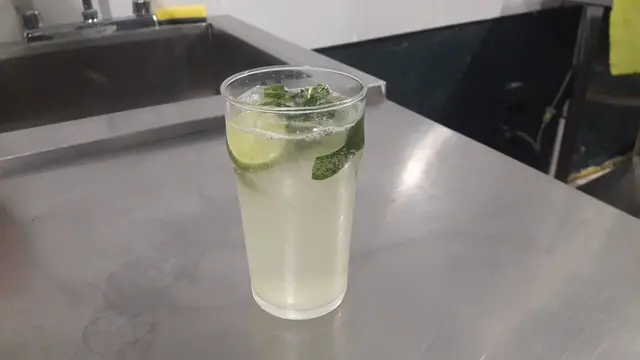
- Talk about the policy and your care, not about the guest: "I'm going to pause the alcohol for your table tonight. Let me bring you a fresh lime soda and a fruit plate."
- Offer alternatives: water, mocktails, food, a slower bill.
- Hold your position and do not negotiate a "last one"; if the guest becomes aggressive, step back and let the manager or security handle it.
Reminding guests not to drive
Ask early, at the first drink: "How are you getting home tonight?" If the guest is driving, suggest a mocktail such as a virgin mojito, or a designated non-drinking driver in the group. Once guests have been drinking, offer to call a taxi or ride-hailing car, mention a designated-driver service if the venue works with one, or offer overnight vehicle parking under the venue's policy.
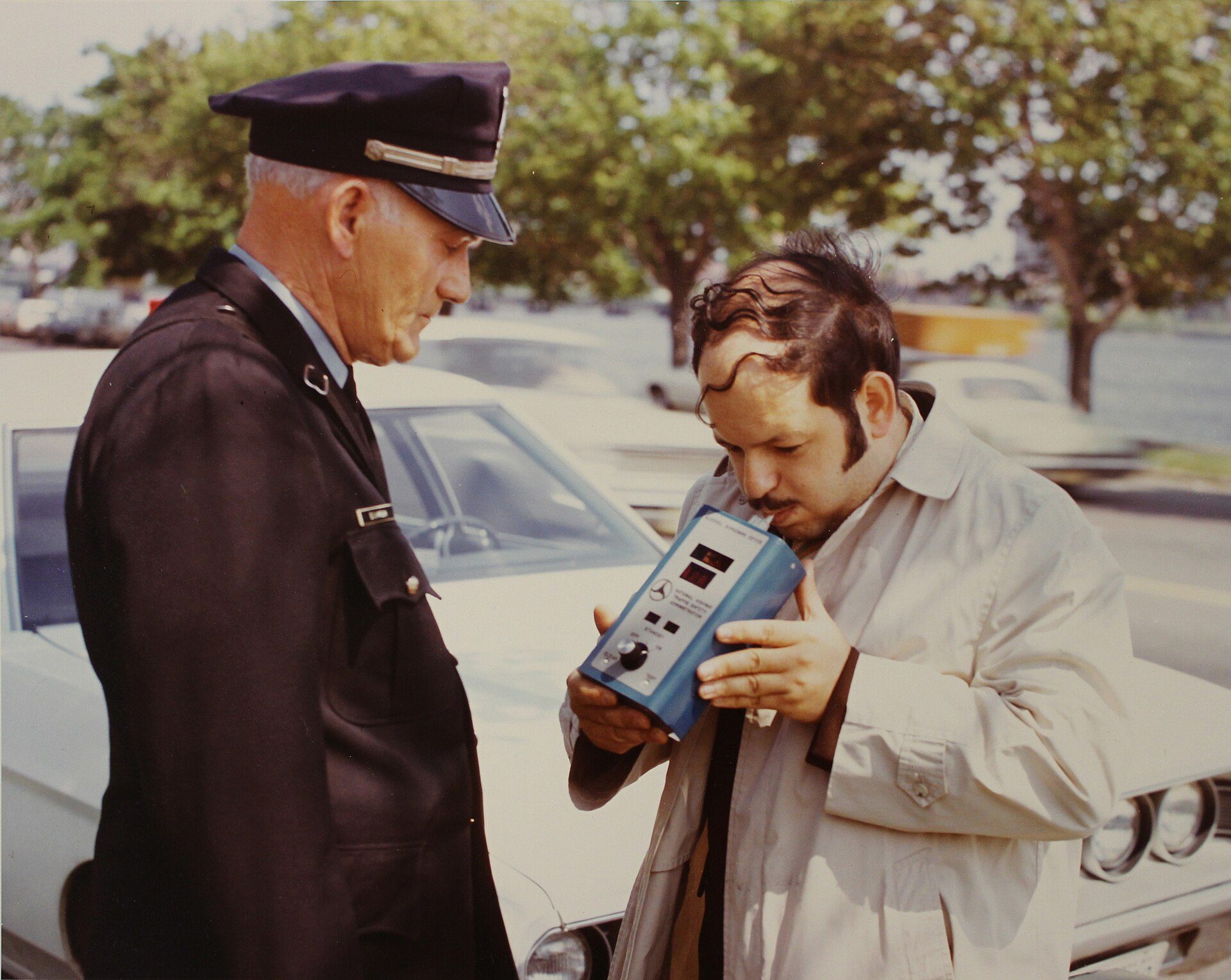
Photo: Unknown author Unknown author or not provided / Wikimedia Commons, Public domain
Keeping an incident log
Every time you refuse service, record the time, table, reason, who handled it and how the guest got home (Figure 1 is a reminder of why "feeling fine" cannot be trusted). The log protects staff if there is a complaint and helps the next shift know which regulars need watching.
Bar safety: knives, broken glass, fire and wet floors
A busy bar packs sharp knives, glassware, ice, flammable alcohol and wet floors into a narrow space. Most accidents come from rushing and a cluttered bar.
Knives and boards
Cut limes and oranges on a board with a damp cloth or non-slip mat underneath, keep knives sharp (a blunt knife slips more easily), and curl your fingers when holding fruit (see Figure 2). Lay the knife flat on the board with the blade facing inward; never leave a knife in the sink or under a pile of cloths.
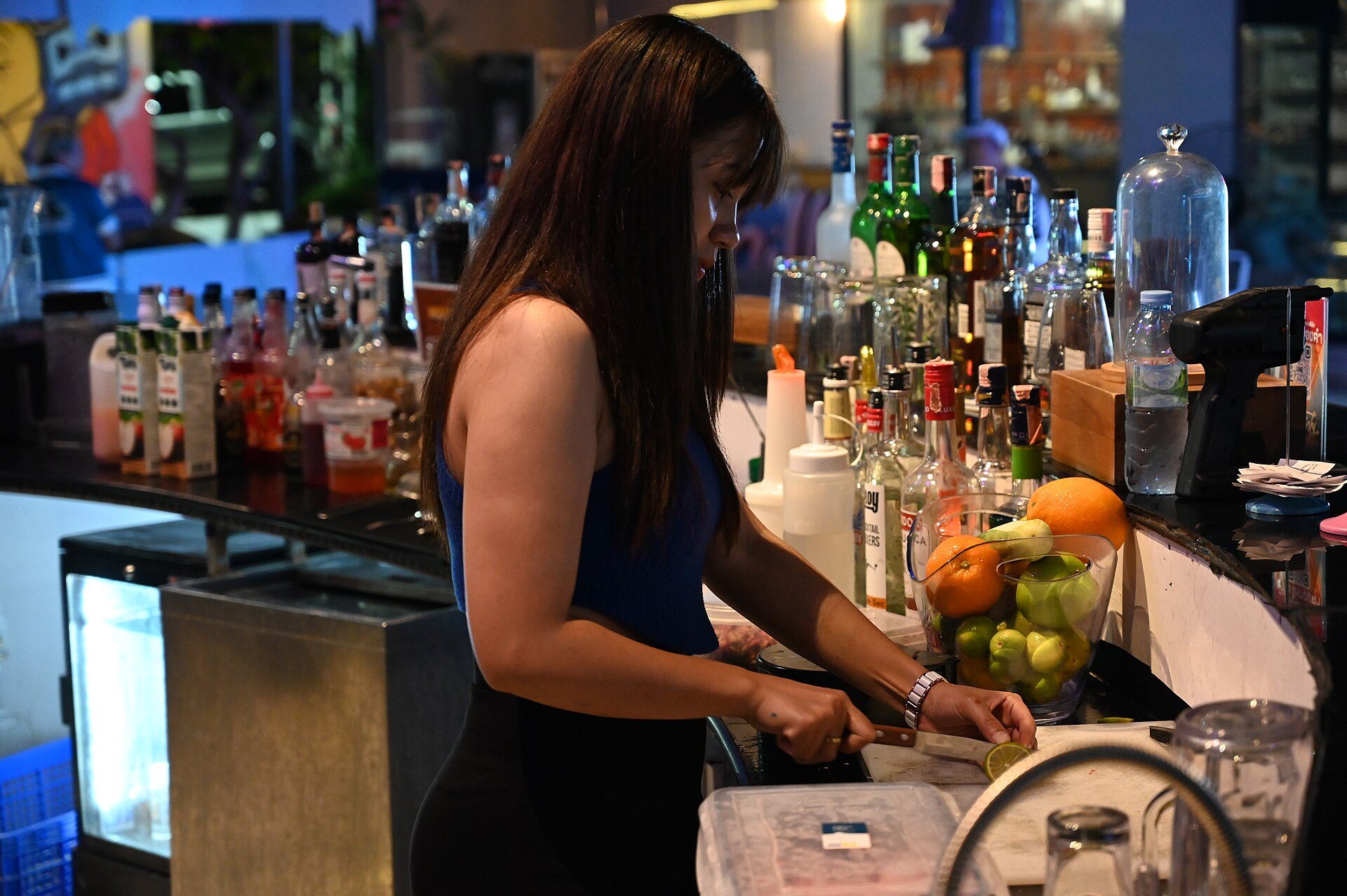
Photo: PattayaPatrol / Wikimedia Commons, CC BY-SA 4.0
Broken glass
- Throw out chipped or cracked glasses at once; never use them "just this once".
- Never scoop ice with a glass. If a glass breaks in the ice well, empty all the ice in that well and wash it, because glass fragments in ice are almost invisible.
- Pick up broken glass with a brush and dustpan and small fragments with damp paper towel; put it in a separate box or bin marked "broken glass", never straight into a bin bag.
Fire with flaming cocktails
Flaming cocktails use a small amount of high-proof spirit (Figure 3). Alcohol flames can be almost invisible under bright lights, so accidents often happen when someone thinks the flame is out.
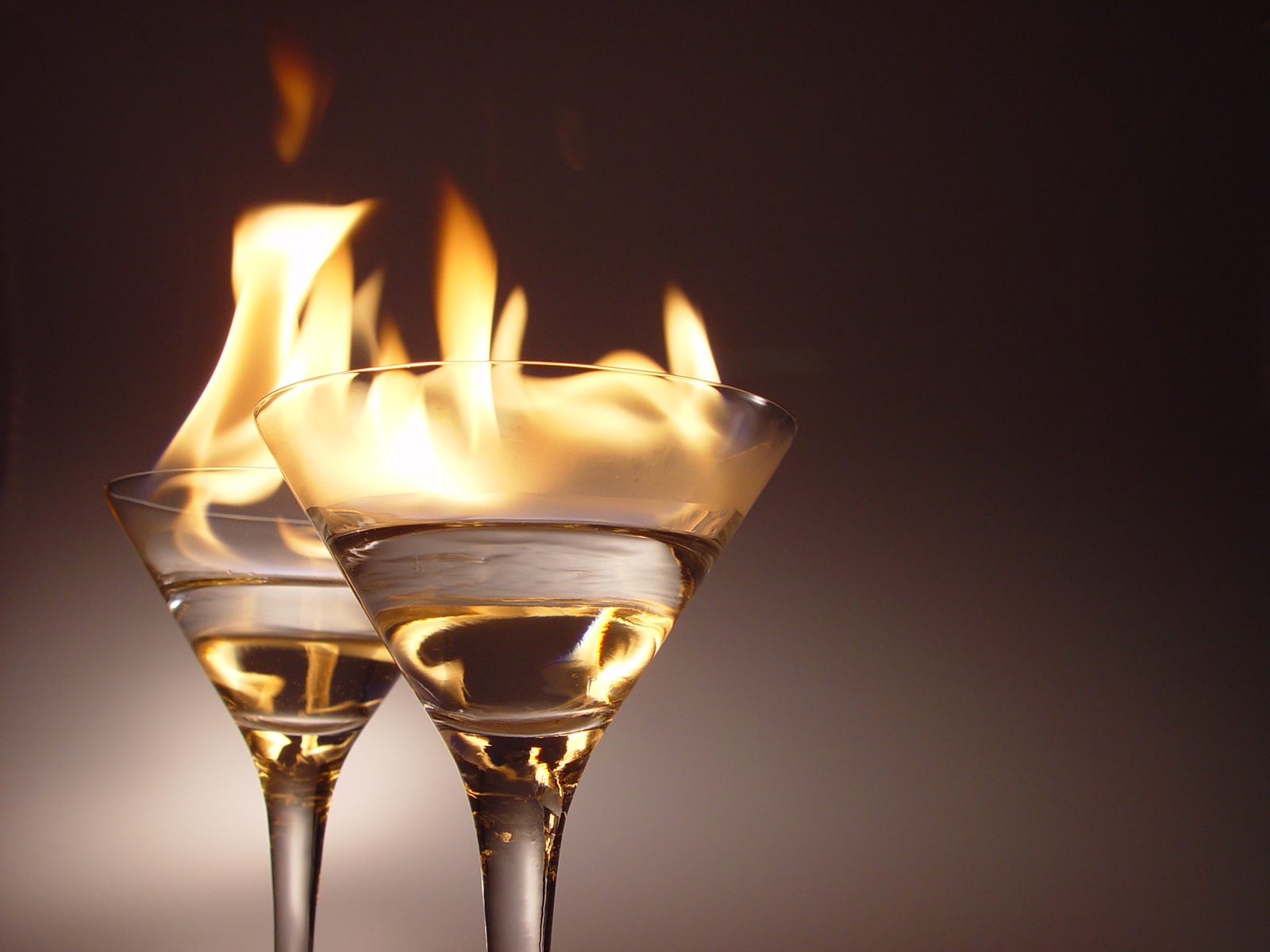
Photo: Nik Frey (niksan) / Wikimedia Commons, CC BY 2.5
Safety warning: Only make flaming cocktails once your manager has approved it and shown you in person. Never pour from the bottle into a burning glass, because the flame can travel up the stream into the bottle; measure a small amount into a jigger, cap the bottle and move it away before lighting. Tie your hair back, roll up your sleeves, place the glass on a heat-resistant surface away from napkins, menus and curtains. Put the flame out by covering the glass with a lid or the base of another glass before serving, and never hand a burning glass to an intoxicated guest. Know where the venue's fire extinguisher and fire blanket are. For a burn, cool it under cool running water for about 20 minutes and see a doctor if it is large or has big blisters. Wipe up water and ice on the floor at once to avoid slipping while holding glasses or knives.
Lifting and floors
Beer crates and ice tubs are heavy: bend your knees, keep your back straight, and ask for help when it is too heavy. Rubber anti-slip mats behind the bar must be lifted, washed and dried regularly.
Worked example: a table of 4 over 3 hours
Friday, 9 pm: table 6 has 4 guests after work, staying until about midnight. You are the bartender on duty and record their drinks on a tracking slip.
Drinks and conversion
| Guest | Drinks | Grams of alcohol | Units |
|---|---|---|---|
| Hung (motorbike) | 4 cans of beer 330 ml, 5%: 4 × 330 × 0.05 × 0.789 | 52.1 g | 5.2 |
| Mai | 2 glasses of wine 150 ml, 13%: 15.4 × 2 | 30.8 g | 3.1 |
| Quang (motorbike) | 3 cocktails, each with 45 ml of 40% base spirit: 14.2 × 3 | 42.6 g | 4.3 |
| Thao (driving a car) | 2 mocktails | 0 g | 0 |
| Whole table | 125.5 g | 12.6 | |
Check: 52.1 + 30.8 + 42.6 = 125.5 g; 5.2 + 3.1 + 4.3 + 0 = 12.6 units.
Your decisions
- 11 pm: Hung is loud and spills beer on the table (level 2). You tell the manager, stop beer for Hung, and bring water and a fruit plate.
- Hung and Quang came by motorbike: you suggest a ride-hailing car, and the venue keeps both motorbikes overnight under its policy, recording the plates and time.
- Thao has had no alcohol all evening and drives Mai home.
- Log: table 6, 11 pm, service stopped for 1 guest, 2 motorbikes kept overnight, guests left safely by ride-hailing car and Thao's car.
The table still pays happily and promises to come back, because nobody was embarrassed and everyone got home safely.
Common mistakes in alcohol service
Guessing age by eye
Sign: not asking for ID because the guest "looks mature". Cause: not wanting to bother the guest. Fix: ask everyone who looks under 25, presented as standard venue routine.
Selling a "last one" to a drunk guest
Sign: the guest pleads and you give in to end it. Cause: worrying about the tip. Fix: decide once and have the whole shift stick to it; offer a non-alcoholic alternative.
Not asking how guests are getting home
Sign: you only find out they are driving when they pick up their keys. Cause: focusing only on the drinks. Fix: ask at the first drink and note it on the table slip.
Lighting a drink on a cluttered bar
Sign: napkins and open bottles right next to the flaming glass. Cause: putting on a show and forgetting to prepare. Fix: clear the area, put bottles away, have a lid ready before lighting.
Frequently asked questions
Is selling alcohol to under-18s penalised in Vietnam?
Yes. The Law on Prevention and Control of Harmful Effects of Alcohol and Beer prohibits selling or supplying alcohol and beer to anyone under 18, and there are penalties. The specific fines are set in the current penalty regulations; check the latest documents or ask your manager.
Can a bartender refuse a guest who demands another drink?
Yes. A venue can refuse service for safety, and the manager should back that decision. Refuse politely, offer alternatives and log the incident.
How much can I drink and still drive?
In Vietnam, drivers must have no alcohol in their blood or breath, so the safe answer is: if you drink, do not drive. Feeling alert does not mean the alcohol has gone.
Does responsible service reduce sales?
It may cost a few drinks in the short term, but guests treated with respect come back, and the venue avoids incidents, penalties and bad publicity. Mocktails and food make up that revenue.
Practice tasks and self-assessment
- Write down the "latest date of birth we can serve" for 5 different days and have a classmate check them.
- Convert 5 drinks on your venue's menu into alcohol units, using the actual ml and strength on the bottle labels.
- Role-play with a classmate: refuse a level-2 guest asking for one more drink, film it and review your voice, distance and wording.
- Walk around the bar and point out the fire extinguisher, first aid kit, broken glass bin and anti-slip mats.
Self-assessment criteria
- Pass: you work out age correctly 5 times out of 5, in under 10 seconds each.
- Pass: your unit conversions use the correct formula, with rounding error no more than 0.1.
- Pass: in the role-play you never say "drunk", never argue, offer an alternative and ask how they are getting home.
- Not yet: serving a young-looking guest without checking ID, selling a "last one", or pouring from the bottle into a burning glass.
Once you have responsible service and bar safety down, the next roadmap step is Bar tools & base spirits: you get to know the shaker, jigger, bar spoon and strainer, and the main families of gin, vodka, rum, tequila and whisky, how to read labels and how to spot counterfeits.
Keep learning bartending: after responsible service come tools and base spirits, shake, stir, build and muddle, 20 classic cocktails, mocktails with Vietnamese ingredients and running the bar. See the 8-step bartender roadmap.