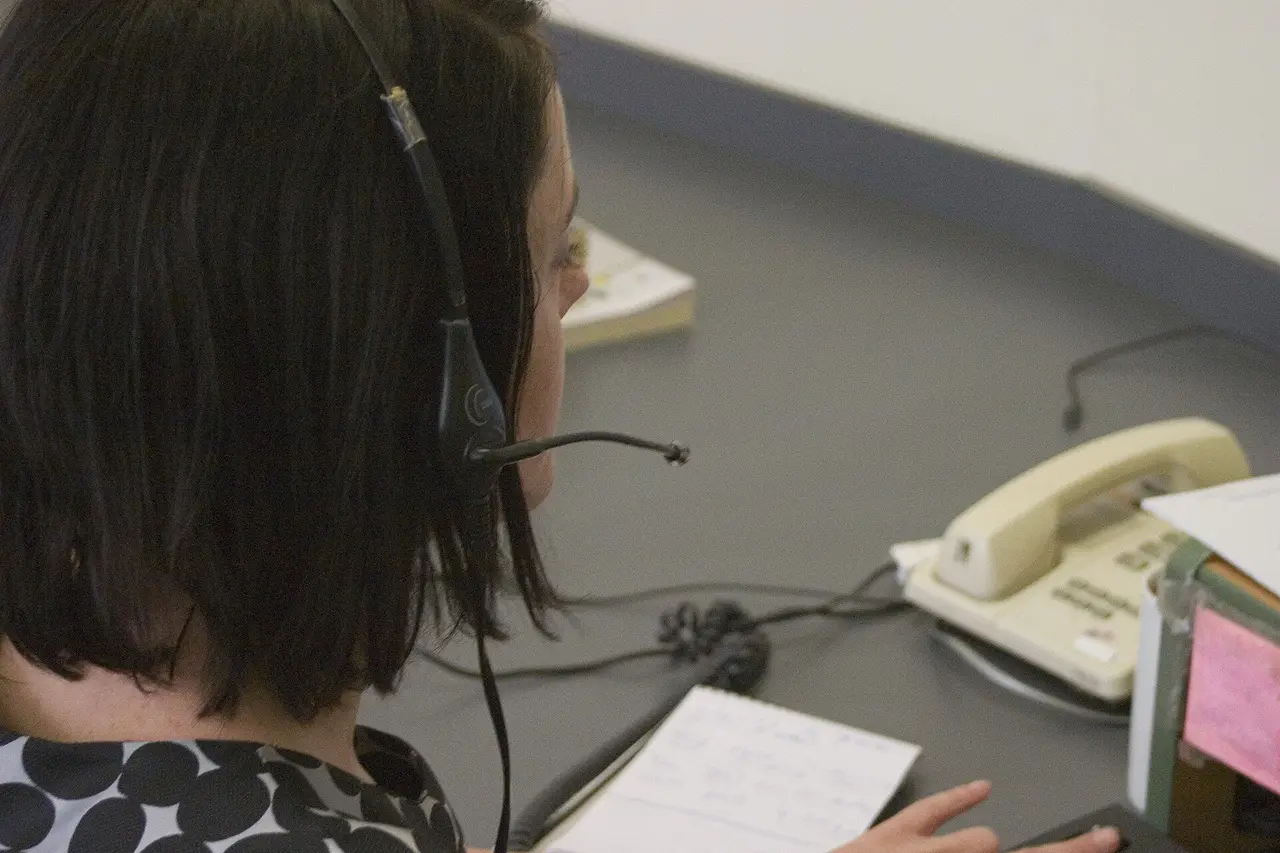
Customer service (CS) is the job of receiving, answering and resolving every request from customers who have bought or are using a product or service, by phone, chat, Zalo, email or at a service desk, so that they get a fast, correct and safe resolution. CS agents are measured by metrics such as CSAT (satisfaction), FCR (first contact resolution) and AHT (average handle time), and must follow strict rules on verifying identity and protecting customers' personal data. This lesson is the first step for newcomers: understanding the role, the process, and what you must never do with customer data.
By the end of this lesson, you will be able to:
- Describe the CS job and tell the channels apart: phone hotline, chat, Zalo, email and service desk.
- Follow a 6-step process to handle a request from first contact to closure.
- Calculate CSAT, FCR and AHT correctly from a shift's figures and understand what each one tells you.
- Verify a customer's identity before giving information, and know which data must never be asked for or disclosed.
- Recognise impersonation and scam calls and handle them by the book.
Just starting in customer service? The role, processes and customer data protection are step 1 of the roadmap, before phone voice skills, writing chat replies or handling complaints. See the 8-step customer service roadmap to learn in the right order.
What customer service is and what a CS agent does
A CS agent represents the company whenever a customer needs to ask, get help or complain. To the customer, the voice on the phone or the Zalo reply is "the company". A correct, quick and polite answer keeps the customer; a wrong answer or a data leak can lose the customer and harm the whole company.
The daily work
- Answer questions about products, prices, return and warranty policies, and order status.
- Help with tasks: resetting a password by the proper process, updating a delivery address, guiding customers through an app.
- Take complaints, create a ticket, pass it to the right department and follow it through to completion.
- Call customers back as arranged and run satisfaction surveys after resolution.
- Record every contact fully in the customer relationship management (CRM) system.
How CS differs from telesales
Telesales makes outbound calls to sell, and its main target is revenue. CS mostly receives requests and solves problems, and its main targets are quality and speed of resolution. Many companies add upselling and retention to CS work, but that comes in a later roadmap step once your foundations are solid.
Who suits this job
People who are patient, like helping, speak clearly, type fast, can handle pressure from frustrated customers and are happy to follow procedures. Reference pay in Vietnam for 2026 is typically about 6–9 million VND a month (roughly US$235–355) for new agents and about 10–18 million for experienced agents, shift leads or English-speaking CS, depending on region and company.
Customer service channels
Companies today usually run several channels at once. Each has its own speed, tone and security risks, so agents need to know what each channel is for.

Photo: Petiatil ( talk ) on Wikipedia-en . / Wikimedia Commons, Public domain
| Channel | Customer's expected response (reference) | Strengths | Watch out for |
|---|---|---|---|
| Phone hotline | Answered within tens of seconds | Handles urgent issues, you hear the customer's emotion | Identity is verified verbally, easy for fraudsters to impersonate |
| Web or in-app chat | A few minutes | One agent can handle several chats, with history | Keep wording short, never paste raw customer data into chat |
| Zalo Official Account, Facebook Messenger | Within working hours, minutes to hours | Familiar to customers, easy to send photos | Use only the company's official account, never personal Zalo |
| Within 1 working day | Full records, can carry documents | Check the recipient address before sending | |
| Service desk in person | On the spot | You can see documents and products | Keep screens and customer papers out of other people's view |
The response times in the table are typical only; every company has its own service level agreement (SLA), and you follow the one where you work.
Handling a request: 6 steps
Whether it is a call about delivery time or a complaint about a faulty product, good CS agents follow the same framework. Completing every step means nothing is missed, no data leaks and the customer does not have to call back.
- Greet and receive: greet with the script, give your name, and let the customer explain the whole issue.
- Verify identity: before saying anything about an account or order (details in the next section).
- Record: create or update the ticket in the CRM, noting the problem in the customer's words, the time and the channel.
- Resolve or escalate: look it up and apply policy; if it is beyond your authority, pass it to the right team and give a specific response time.
- Confirm with the customer: summarise what was done and what the customer needs to do next, and ask "Is there anything else I can help you with?"
- Close and survey: update the ticket status and send the satisfaction survey if your company uses one.
Notes the next person can understand
Use a template: what the customer needs, how they were verified, what was done, the result and any follow-up promised. Do not record personal feelings such as "annoying customer, talks too much". A colleague on the next shift should grasp the case in 20 seconds so the customer does not have to start again.
When to escalate
Pass the case to the shift lead or a specialist team when it is beyond your authority (large refunds, policy exceptions), when there are signs of fraud, when the customer makes threats, or when legal issues are involved. Handling angry customers and complex complaints is covered in handling difficult customers.
CSAT, FCR and AHT: how to calculate them and what they mean
Almost every company uses these three metrics to assess CS agents. Knowing how they are calculated shows you where you are doing well and where to improve.
| Metric | What it measures | Calculation |
|---|---|---|
| CSAT (Customer Satisfaction) | How satisfied customers are after being helped | Satisfied responses (usually 4–5 on a 5-point scale) ÷ total responses × 100% |
| FCR (First Contact Resolution) | Share of requests fully resolved on the first contact, with no need to come back | Requests resolved first time ÷ total requests × 100% |
| AHT (Average Handle Time) | Average time to handle each request | (Total talk time + hold time + after-call work) ÷ number of calls |
Do not chase one metric
To lower AHT, an agent might rush and hang up, but then the customer calls back, so FCR falls and CSAT falls with it. A call two minutes longer that solves the problem is usually better than two short calls. Each company sets its own targets; ask your team lead for yours and exactly how they are measured.
Other metrics you will meet
First response time (FRT) on chat and email; abandonment rate when callers hang up after waiting too long; NPS, which measures whether customers would recommend the company. At this step you only need to know their names and meanings.
Verifying identity and protecting customer data
Personal data is any information linked to a specific person: name, phone number, address, date of birth, ID number, bank account, purchase history, location. Some types are more sensitive, such as health, financial and location data. Vietnam has specific regulations on personal data protection, and your company will have detailed internal procedures; read them carefully and ask the legal team when unsure.

Photo: Petiatil / Wikimedia Commons, CC BY-SA 3.0 us
Verify before you speak
Before giving or changing any account information, confirm that the person contacting you is the account holder using your company's verification questions, usually 2–3 items such as full name, registered phone number, order number, date of birth or a few final digits of an ID. Ask so the customer says it; never read the information out for the customer to confirm.
- Right: "Could you tell me the phone number registered on the account, please?"
- Wrong: "Your number is 0912 345 678, is that right?" A fraudster only has to say "yes".
Things you must never do
- Never ask for an OTP code, password, PIN or card CVV; legitimate companies never need these over the phone.
- Never read out full ID or account numbers; if needed, mention only the last few digits.
- Never send customer data through personal Zalo or email, or screenshot the CRM into group chats.
- Never stick customer information or passwords on partitions or screens (see Figure 2).
- Lock your computer every time you leave your seat, even for one minute.
- Never look up acquaintances or celebrities out of curiosity.
Security warning: Leaking customer data can lead to customers being scammed out of money, the company being penalised, and you facing discipline or legal liability. When a caller cannot be verified, demands an immediate change of phone number, email or delivery address, or pressures you to "hurry up, the boss is waiting", stop, follow the procedure and tell your shift lead. No emergency justifies skipping verification.
Recognising scam and impersonation calls
Phone fraud runs in two directions: fraudsters call the hotline pretending to be customers to obtain or change information, and fraudsters pretend to be company staff and call customers to steal money. A CS agent must block the first and help customers protect themselves against the second.
Signs and responses
| Sign | Response |
|---|---|
| The caller cannot answer verification questions, or says "I'm the account holder's wife, husband or assistant" | Politely decline to give information and ask the account holder to contact you directly |
| Demands to change phone number, email or delivery address during the call | Follow the change process with extra authentication; tell your shift lead if suspicious |
| Pressure, threats, claims to be from the authorities | Stay calm, do nothing outside the procedure, escalate |
| A customer says someone "from the company" called asking for an OTP or a transfer to a personal account | Confirm the company never asks for this, advise the customer to contact their bank to block transactions and report to the police, and log the case |
A script for refusing
"I really want to help you, but to protect our customers' accounts I can only give information once the account holder is verified. You can ask the account holder to call from the registered number, or visit our service desk with ID." It accuses no one, but holds the line.
Reminding customers to protect themselves
At the end of a call, where appropriate, remind the customer: contact the company only through the official hotline, website or app; do not click unknown links; never give an OTP to anyone. Companies often put this reminder in the script; do not skip it when busy.
Worked example: calculating metrics after a shift
Linh, a hotline agent for an e-commerce marketplace, works an 8-hour shift (480 minutes) and takes 40 calls. At the end of the shift the system exports the figures below.
| Figure | Value |
|---|---|
| Total talk time | 160 minutes |
| Total hold time | 20 minutes |
| Total after-call work (CRM notes, tickets) | 60 minutes |
| Calls resolved on first contact | 32 / 40 |
| Surveys answered / rated 4–5 | 25 / 21 |
Calculating the metrics
- AHT = (160 + 20 + 60) ÷ 40 = 240 ÷ 40 = 6 minutes per call.
- FCR = 32 ÷ 40 × 100% = 80%.
- CSAT = 21 ÷ 25 × 100% = 84%.
- Handling time takes 240 ÷ 480 = 50% of the shift; the rest is waiting for calls, breaks, the start-of-shift briefing and learning new products.
Reading the result
The team lead reviews the 8 calls not resolved first time: 5 needed the warehouse to check goods (beyond Linh's authority), and in 3 Linh forgot to ask for the order number and had to call back. Linh does not need to talk faster; she needs to add "ask for the order number before searching" to her script. If she does, FCR could rise to 35 ÷ 40 = 87.5% with almost no change to AHT.
A verification case during the shift
A caller claiming to be the account holder's husband wants to change the delivery address of a high-value order "because my wife is busy". Linh asks for the registered phone number and the caller cannot remember it. Linh declines politely with the script above, notes it in the ticket and tells the shift lead. Later the account holder calls from the registered number and confirms she never asked anyone to change the address.
Common mistakes of new CS agents
Reading information out for the customer to confirm
Sign: "Your address is number 12 ... street, is that right?" Cause: wanting to be quick and friendly. Fix: always ask so the customer says it, and check it against the system.
Promising beyond your authority
Sign: "I'll refund you right now" before approval. Cause: wanting to please the customer. Fix: say exactly what you can do and when: "I'm sending the refund request now; the finance team will reply within 2 working days."
Thin notes
Sign: the ticket just says "customer asked about order". Cause: rushing to the next call. Fix: use a 5-point note template; time spent on notes counting toward AHT is normal.
Using personal Zalo "to help faster"
Sign: customers are added as personal Zalo friends and send invoices and IDs there. Cause: convenience. Fix: use official channels only; customer data must not sit on personal devices or accounts.
Frequently asked questions
What qualifications does a customer service agent need?
Many Vietnamese companies hire from high school graduates or vocational and college graduates upward, preferring a clear voice, fast typing and basic office IT skills. English-speaking CS roles also need conversational English. Companies usually give 1–2 weeks of product and process training before you take calls.
What is a good CSAT score?
There is no single figure for every industry. Many CS teams aim for CSAT of about 80% or more, but what matters more is whether your trend is rising or falling and why customers are not satisfied.
What if a customer wants information about a family member's order?
Give it only to the verified account holder or someone authorised under your company's procedure. Ask the customer to have the account holder contact you directly.
Does customer service involve night shifts?
It depends on the company. Bank, telecom and e-commerce hotlines often run 24/7 with rotating shifts; small companies usually work office hours. Ask about the shift pattern at interview.
Practice tasks and self-assessment
- Write a 6-step script for "a customer asks why their order is late", including the identity verification question.
- Calculate AHT, FCR and CSAT for: 35 calls, 140 minutes talk, 14 minutes hold, 56 minutes after-call work, 28 resolved first time, 17 satisfied out of 20 surveys.
- Role-play with a classmate: they pretend to be a family member demanding a delivery address change; you refuse by the procedure.
- Check your own desk, phone and computer: is any data or password exposed?
Self-assessment criteria
- Pass: you get AHT = 6 minutes, FCR = 80%, CSAT = 85% for the exercise above.
- Pass: your script has all 6 steps, with verification phrased as a question the customer answers.
- Pass: in the role-play you disclose nothing, stay polite and explain the correct way to proceed.
- Not yet: reading information out for confirmation, asking for an OTP, or sending customer data through a personal channel.
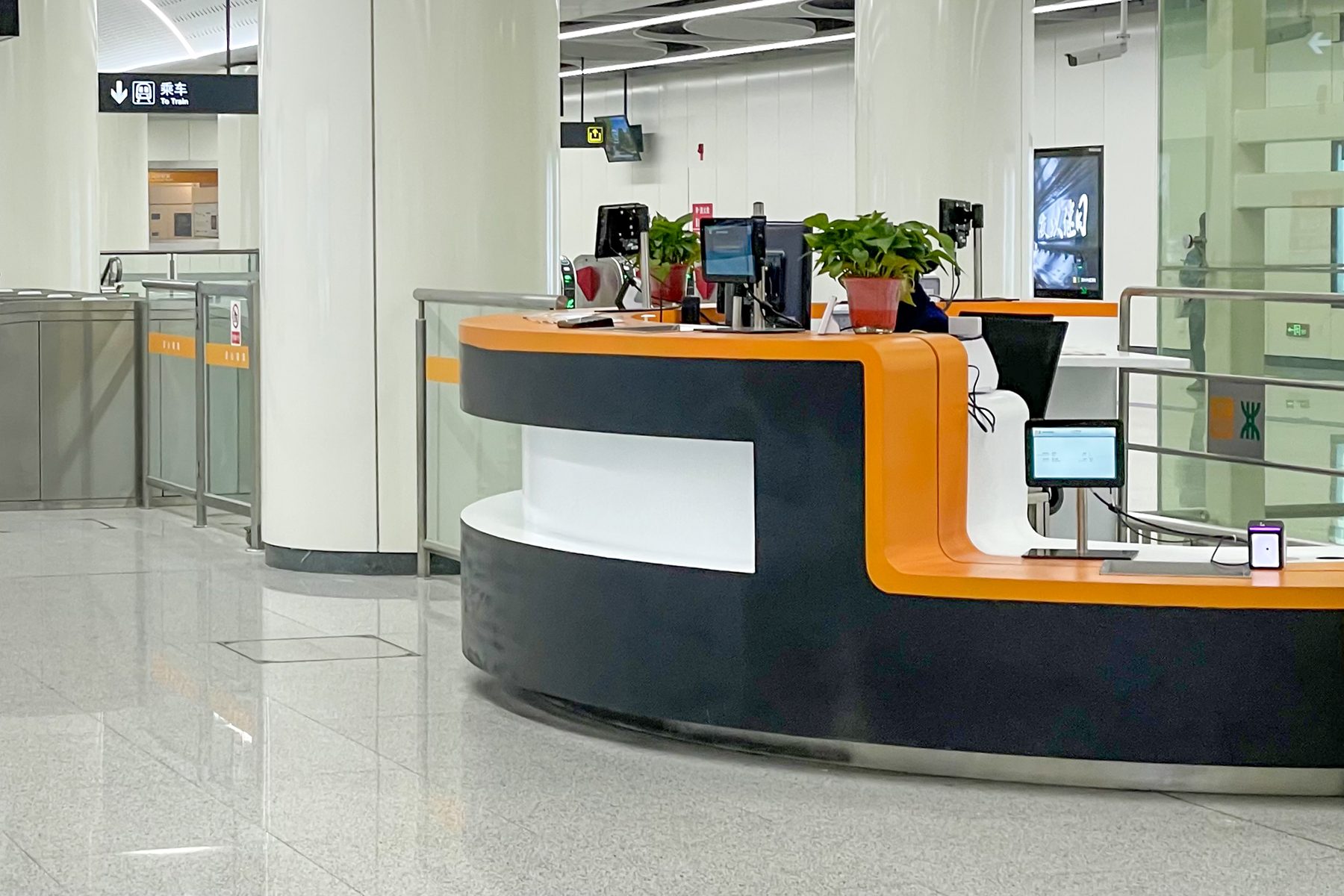
Photo: Windmemories / Wikimedia Commons, CC BY-SA 4.0
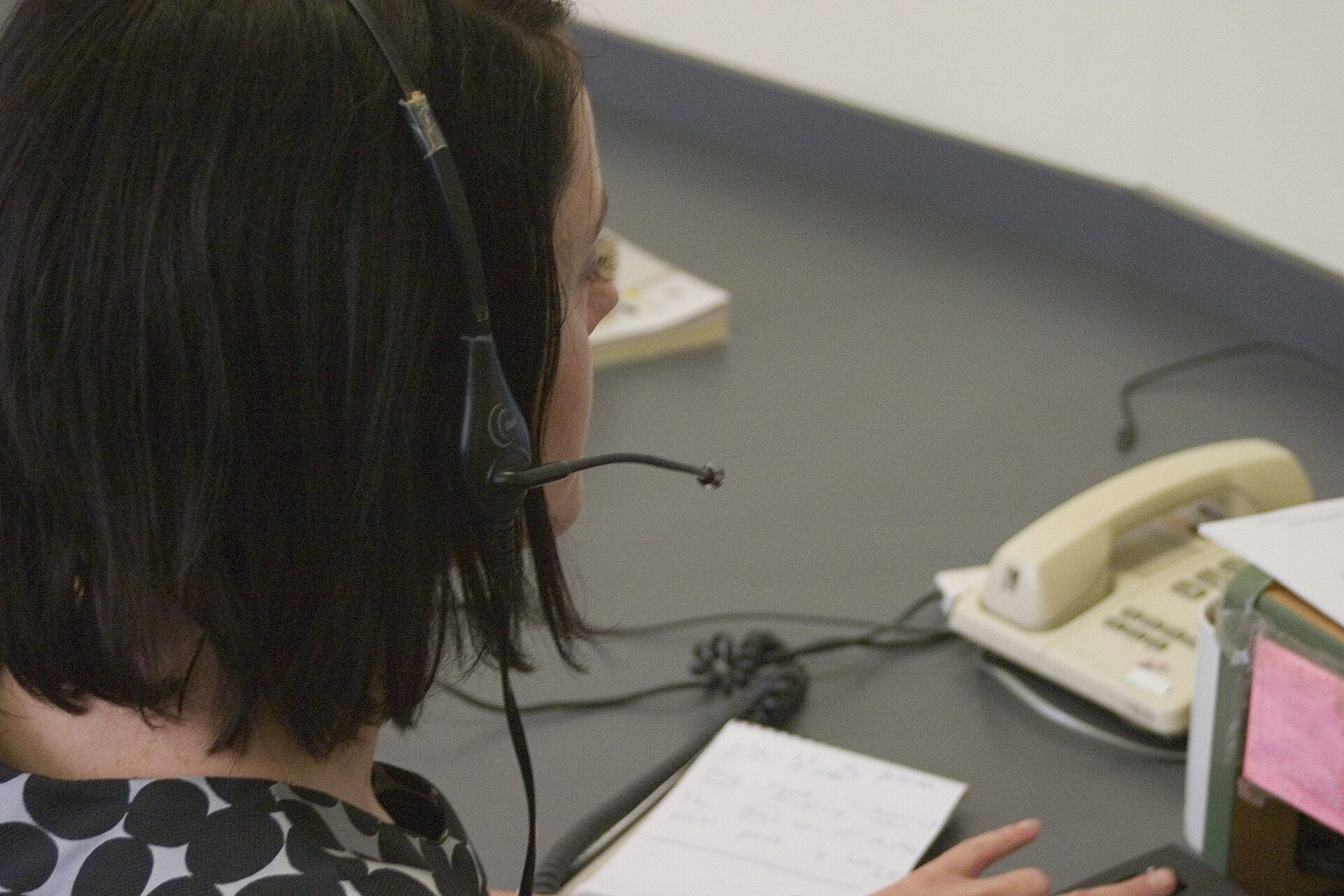
Photo: Panelxf / Wikimedia Commons, CC0
Once you understand the role, the process and the security rules, move on to the next roadmap step: Voice, listening & phone communication, where you practise greeting, confirming needs, keeping a clear voice at a steady pace and closing calls professionally.
Keep learning customer service: after the role and security come phone voice skills, writing chat, Zalo and email replies, CRM and call centre software, complaint handling, upselling and a simulated shift. See the 8-step customer service roadmap.