Head spa safety comes down to three jobs you do before any hand technique: clean and disinfect the wash bed, towels and combs after every client; check the electrics and hot water in the wet area at the start of every shift; and ask a few health questions so you know which clients must wait and which only get a gentle treatment. Clients come back because they relaxed, but they leave and tell their friends because of a towel that smelled, water that was too hot or a dizzy spell when they sat up. This is the first lesson of the roadmap, written for someone who has never stood behind a wash bed, with checklists you can use from your very first shift.
By the end of this lesson, you will be able to:
- Clean and disinfect the wash bed, basin, combs and herb bowls in the right order in about 8 minutes between clients.
- Mix a surface disinfectant at the right strength and keep clean and dirty towels strictly apart.
- Check the RCD, sockets, hair dryer and hot water with a start-of-shift checklist.
- Run a 2-minute health screening and decide: normal treatment, gentle treatment, or postpone.
- Work out the towels and tools a 2-bed shop needs, with figures that add up.
Just starting out as a head spa therapist? Hygiene, water and electrical safety and contraindications are step 1 of the roadmap, before scalp care, herbs, the wash routine and massage. See the 8-step head spa therapist roadmap to learn in the right order.
Why safety is the first lesson for a head spa therapist
A Vietnamese herbal head spa ("goi dau duong sinh") looks gentle, yet the 45–60 minutes of a session combine three sources of risk.
The three main risks
- Infection: scalp fungus, head lice, folliculitis and boils can pass between clients via combs, towels and the neck rest if nothing is disinfected in between.
- Electricity and hot water: water heaters, dryers, lights and sockets sit in a wet area; water that is too hot burns the scalp, especially in people with reduced heat sensation.
- The client's health: people with unstable blood pressure, recent surgery, a scalp wound or neck spine problems can faint, be hurt or get an infection if treated like a healthy client.
The limits of the job
A head spa therapist provides care and relaxation; you do not diagnose or treat illness. If the scalp looks abnormal or the client describes unusual symptoms, leave that area alone, note it down and suggest they see a doctor. Never recommend medicines or "special treatment oils".
Cleaning the wash bed, towels and combs in the right order
The golden rule of spa hygiene is clean first, then disinfect. Hair, shampoo foam, conditioner and herb residue on a surface stop the disinfectant from working. Wiping alcohol over a comb that still holds hair is close to useless.
Disinfecting between two clients
- Put on gloves and drop the used towels into a lidded dirty-towel basket, never onto the bed or a client's chair.
- Remove the hair from the basin's hair trap and put it in a lidded bin.
- Rinse the basin and tap, wipe away foam, then apply disinfectant to the basin, neck rest and armrests, leave it for the contact time on the label and wipe dry.
- Put combs, wash brushes, clips and herb bowls into the "dirty" tray and take out a clean set disinfected earlier.
- Lay fresh towels on the neck rest and cushion, test the water temperature again, then invite the next client.
Figure 1 is a good example: the therapist wears gloves and a mask while washing, the basin area is tidy and the bottles are kept in one place.
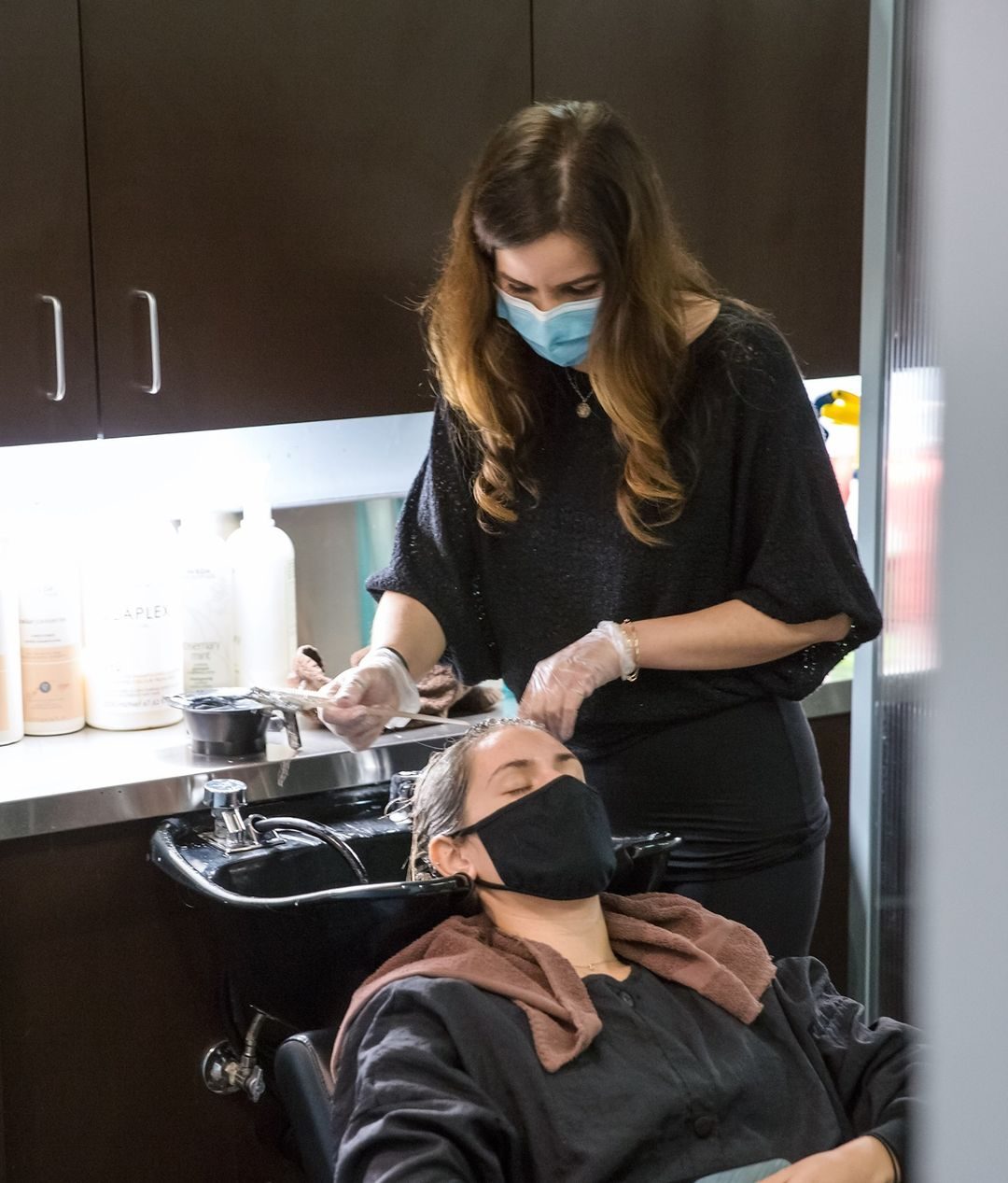
Photo: Hair Spies from US / Wikimedia Commons, CC BY 2.0
Combs, brushes and herb bowls
Keep 3–4 sets of combs per bed so the set just used has time to be cleaned and dried. For the dirty tray: remove all hair, wash in soapy water, rinse, soak in a lidded tub of disinfectant for the time on the label, let dry and store in a closed box. Wooden combs absorb water and are hard to disinfect, so plastic combs are the better choice.
Clean towels and dirty towels
The towel is the first thing a client smells. Store clean towels on a closed, high shelf away from the basins (Figure 2); dirty towels go in a lidded basket and never return to the clean shelf, even if they were "barely used". Wash towels on the washing machine's hot cycle (around 60°C or above if your machine has it) or use a laundry disinfectant as directed, then tumble-dry or air-dry completely. Towels left damp overnight smell sour and grow mould; if a towel smells, rewash it instead of spraying perfume on it.
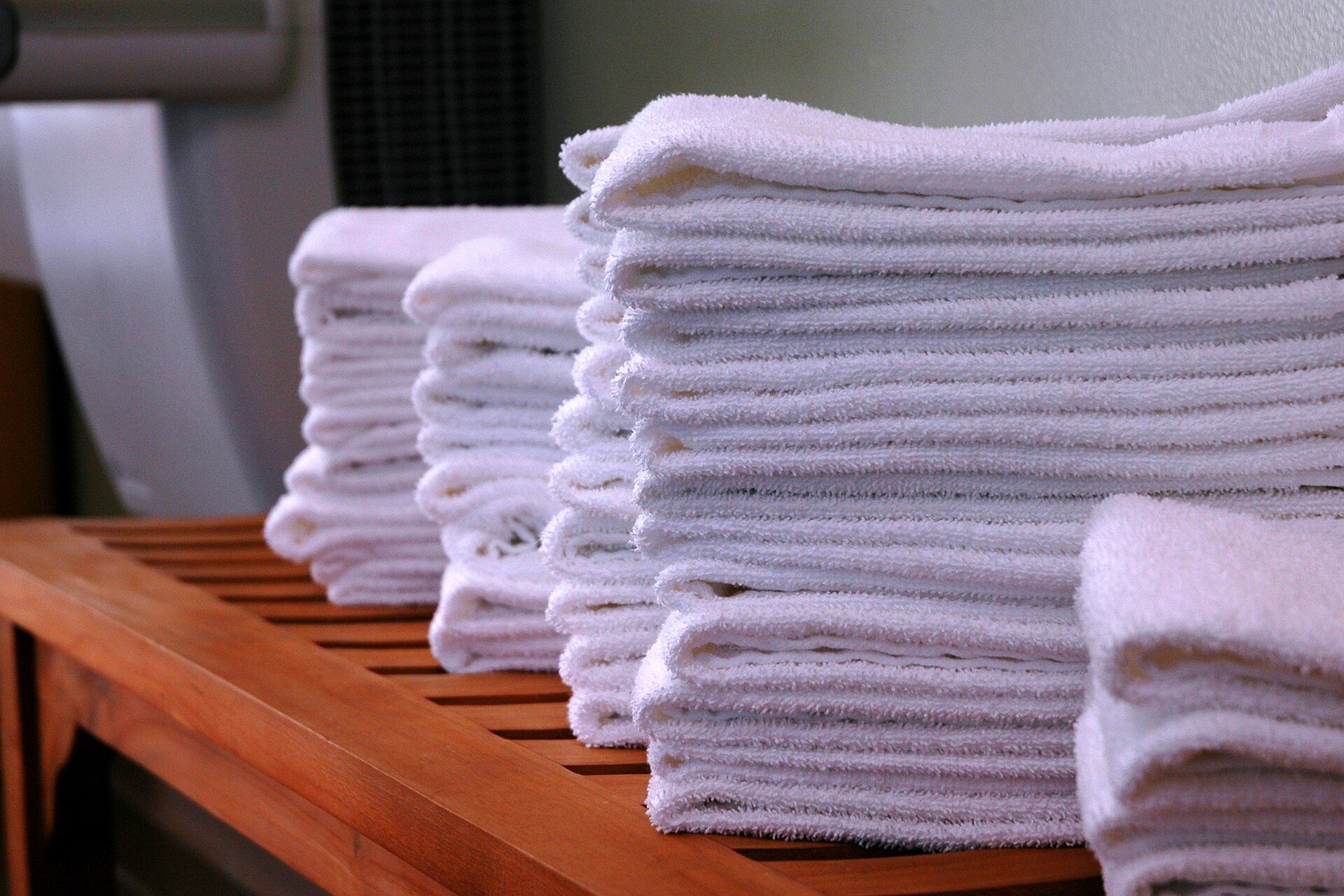
Photo: Brandon.wiggins / Wikimedia Commons, CC BY-SA 3.0
End of day and weekly cleaning
- End of day: remove and wash the hair traps, scrub the basins, wipe the bed cushions including underneath, mop the wet area, empty the bins and wash all the day's towels.
- Weekly: clean the drains, wipe the towel cabinet, check the expiry dates of shampoo and essential oils. Herbal wash water is brewed fresh each day, never kept overnight and reheated.
Mixing disinfectant at the right strength
Many shops use 70% alcohol for small tools and diluted household bleach or a purpose-made surface disinfectant for basins and floors. Too weak and it will not kill bacteria and fungi; too strong and it corrodes taps, fades cushions and stings the client's nose.
Diluting household bleach for surfaces
Household bleach strength varies by product, so read the percentage on the label first. Many hygiene guides use about 0.1% for surfaces. With 5% bleach, mix 1 part bleach to 49 parts water: 40 ml bleach + 1,960 ml water = 2 litres of 0.1% solution. Check: 40 ml × 5% = 2 ml of active ingredient in 2,000 ml, which is 0.1%. Mix a fresh batch every day in a lidded bottle labelled with the date.
Chemical safety warning: Never mix bleach with other cleaners (acidic toilet cleaners, products containing ammonia, vinegar): this can release toxic gas that makes breathing difficult. Wear gloves when mixing, work in a ventilated spot and never spray near a client's face. If chemicals splash into an eye, rinse under clean running water for at least 15 minutes and see a doctor. Alcohol is flammable: keep it away from dryers, candles and the stove used to brew herbs.
Cleaning guide by item
| Item | Clean | Disinfect | How often |
|---|---|---|---|
| Basin, tap, neck rest | Rinse, wipe off foam and hair | Surface disinfectant, full contact time, wipe dry | After every client |
| Combs, brushes, clips | Remove hair, wash with soap | Soak as the label says or wipe with 70% alcohol | After every client |
| Herb bowls | Wash with dish soap | Rinse with hot water, let dry | After every client |
| Towels, pillow covers | Machine wash | Hot cycle or laundry disinfectant, dry fully | One client, one use |
| Wet-area floor, drains | Mop, remove hair | Surface disinfectant | End of day; drains weekly |
Water and electrical safety in the wash area
The wash area is a wet zone: your hands are wet for most of the shift, surrounded by water heaters, dryers and lights. Installing electrics is an electrician's job; your job is to check at the start of each shift and know how to react when something is wrong.
RCDs and sockets
The circuits in the wash area should be protected by a residual current device (RCD, usually 30 mA) like the one in Figure 3, and the water heater needs an earth wire. The RCD has a TEST button: press it as often as the manufacturer recommends (many say monthly). The breaker must trip; then switch it back on. If it does not trip, it no longer protects anyone: tell the owner to call an electrician at once. To understand the principle well enough to talk to an electrician, read how to wire an RCD at home.
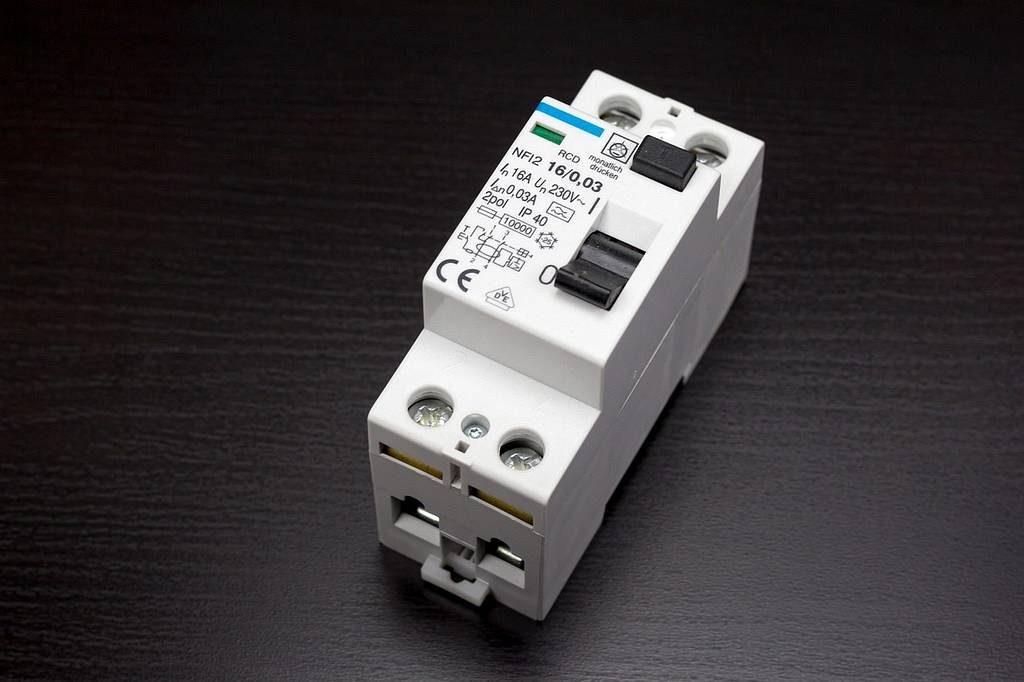
Photo: Diermaier / Wikimedia Commons, CC0
Dryers, cords and wet hands
- Sockets should be mounted high, away from taps and basins; never use an extension lead lying on a wet floor.
- Check the dryer cord and plug: no cracked casing, no tape repairs, no unusual heat. Some dryers have a plug with built-in shock protection, as in Figure 4.
- Dry your hands before plugging in or unplugging; pull the plug, never the cord.
- After use, unplug the dryer and hang it on its hook, never leave it on the basin edge or on the client.
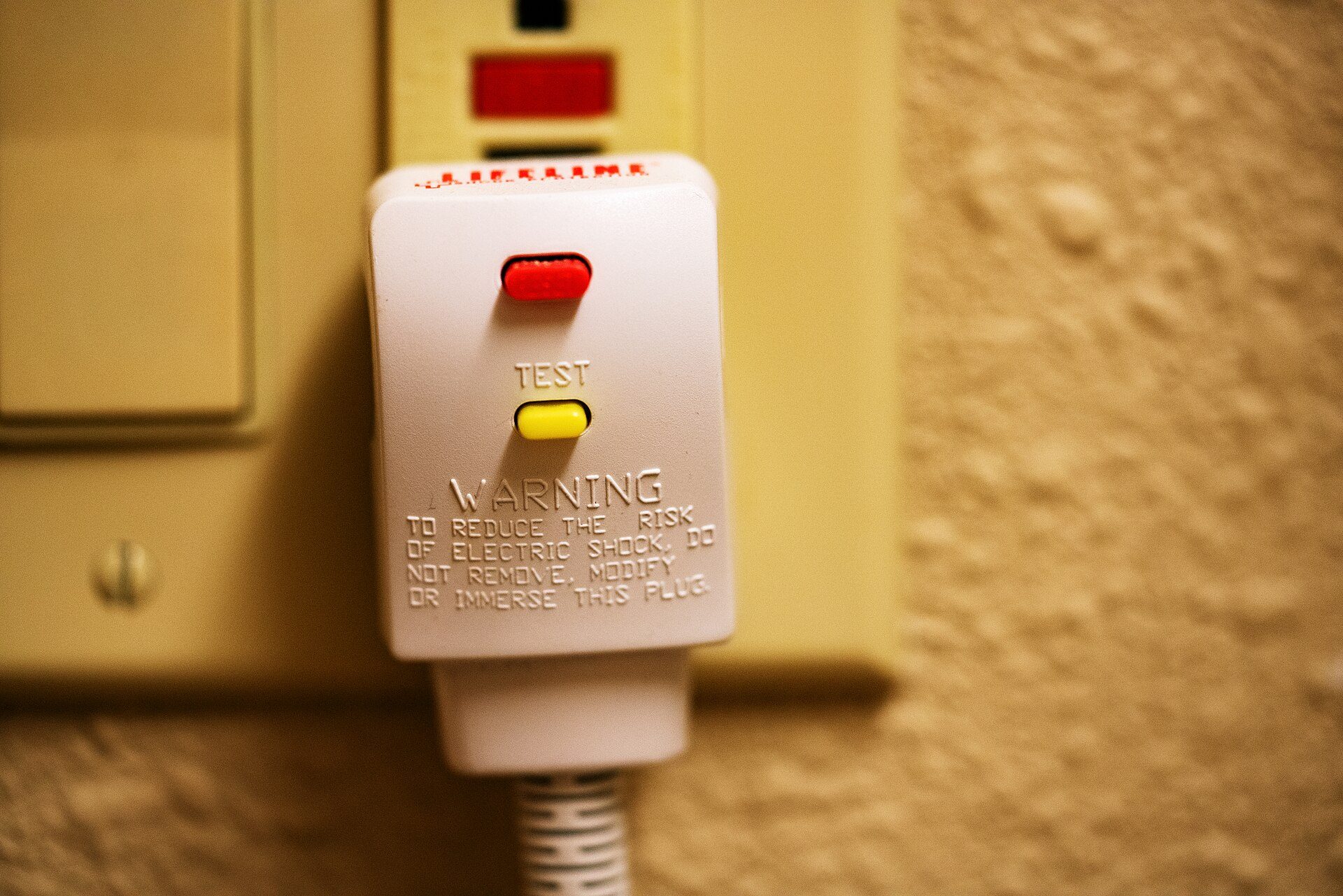
Photo: Tony Webster from Minneapolis, Minnesota, United States / Wikimedia Commons, CC BY 2.0
Hot water: test before it touches the client
Wash water should feel pleasantly warm, about 37–40°C. Each time you open the tap, let it run a few seconds, test it on the inside of your wrist and check it against a thermometer a few times at the start of the shift until your wrist is reliable. At peak times the heater may run cold mid-wash or suddenly surge hot, so keep one hand between the stream and the client's scalp. If the heater casing leaks, you smell burning or the tap gives a tingle, switch off at the breaker, stop using that bed and tell the owner; see also a water heater leaking current.
Electrical safety warning: Do not dismantle or rewire water heaters, sockets or dryers unless you are an electrician. If there are signs of current leakage (a tingle when touching the tap, an RCD that keeps tripping, a burning smell), switch off at the breaker, do not touch the equipment with wet hands and call an electrician. If someone is being electrocuted, cut the power before touching them and call 115 (the emergency medical number in Vietnam).
Slippery floors and sitting up
Keep the wash-area floor dry: lay anti-slip mats where clients walk and wipe up puddles straight away. After the wash, raise the backrest slowly, support the client's shoulders as they sit up and let them sit still for about half a minute before standing. Someone who has lain back for a long time, especially with low blood pressure, can feel faint if they stand up suddenly.
Contraindications: who must wait, who gets a gentle treatment
A contraindication is a health condition that makes a treatment potentially harmful. With a head spa, most clients can still have their hair washed, but some must postpone entirely and some should only have a gentle wash with no firm neck and shoulder massage. The list below is for screening; it does not replace a doctor's diagnosis.
A 2-minute screening
Ask before the client lies down, using specific questions rather than "do you have any illnesses?":
- "Do you have a fever, or feel tired or dizzy today?"
- "Are you being treated for blood pressure, heart problems or diabetes?"
- "Have you recently had surgery or an injury to the head, neck or eyes, or had a tooth pulled?"
- "Is your scalp itchy, or do you have a wound, boils, or a prescribed cream on it?"
- "Do you have neck or shoulder pain, numb hands, or has a doctor told you to avoid massage? Are you pregnant?"
Also look at the scalp when you part the hair at the first step. Write the answers on the client card, even when everything is normal.
Decision table by client condition
| Condition | Why care is needed | Decision |
|---|---|---|
| Fever, unwell, possible infectious illness | More exhaustion, spreads to others | Postpone until well |
| Open wound, inflamed scalp, pustules, suspected fungus or lice | Infection, spread via tools | Postpone, suggest a dermatologist; thoroughly disinfect anything touched |
| Recent surgery to the head, neck or eyes | Affects the wound; head tilted back | Postpone until a doctor allows it |
| Uncontrolled high or low blood pressure, frequent dizziness | Head tilt, hot water and standing quickly can cause fainting | If unsure about today, postpone; if stable: moderate water, gentle massage, sit up slowly |
| Neck pain, cervical disc problems, neck injury | Firm pressure or twisting can make it worse | Wash only; no firm neck and shoulder massage, never twist or crack the neck |
| Pregnancy | Lying back for long is uncomfortable; sensitive to essential oil scents | Shorten the session, add a pillow, ask about scents, no firm acupressure |
| Diabetes | May feel heat poorly, burns easily | Control water temperature with a thermometer |
| Just drank alcohol, just ate a big meal, or very hungry | Dizziness, nausea when lying back | Postpone, or wait until the client has rested or eaten lightly |
When to suggest seeing a doctor
Suggest a doctor when the scalp has red, scaly patches, patchy hair loss, spreading pustules or itching that has lasted weeks; or when the client mentions a severe headache, weakness or numbness in the limbs, or blurred vision. If during the wash the client feels faint, is short of breath, has chest pain, slurred speech or a drooping face: stop immediately, place them lying or sitting safely, call 115 and alert the manager. You never give the client medicine.
Checklists for the start of shift and between clients
Print this checklist, stick it on the tool cabinet and tick it daily for your first week. At the end of the shift: unplug the dryers and extra lights, wash the towels, clean the hair traps, pour away the old disinfectant and note any faulty equipment for the owner.
Start of shift (about 10 minutes)
- Press the RCD TEST button when the check is due; switch it back on and log it.
- Look over the cords, plugs and sockets of dryers and lights; hang a "do not use" sign on anything faulty.
- Switch the water heater on early enough and test the water at each bed with a thermometer and your wrist.
- Mix the day's disinfectant and label the date; check alcohol, gloves and masks.
- Count enough clean towels for the day, put clean comb sets in each bed's box, dry the floor and lay the anti-slip mats.
Between two clients (about 8 minutes)
Follow the five steps in the hygiene section above. Do not cut corners because a client is waiting; asking someone to wait a few more minutes is better than a wash that is not clean.
Worked example: a 2-bed shop with 14 clients a day
Lan, 19, has just started at a 2-bed head spa in Da Nang. The owner asks her to work out towels, cleaning supplies and bed turnaround time for a normal day of 14 clients (7 per bed).
Towels and combs
- Each client uses 3 towels: one hair wrap, one shoulder towel, one neck-rest towel. Per day: 14 × 3 = 42 towels.
- Today's towels are washed tonight and folded tomorrow morning after drying; allowing for rainy days when drying is slow, Lan plans stock for 3 days: 42 × 3 = 126 towels, rounded up to 130.
- Combs: 4 rotating sets per bed, so 2 beds need 4 × 2 = 8 sets of combs and wash brushes.
Turnaround time
Lan times one turnaround: changing towels 2 minutes, cleaning and disinfecting the basin, neck rest and armrests 3 minutes, clearing the hair trap 1 minute, swapping the comb set 1 minute, testing the water 1 minute. Total: 2 + 3 + 1 + 1 + 1 = 8 minutes. For the day: 14 turnarounds × 8 minutes = 112 minutes, almost 2 hours, so bookings need about 10 minutes between clients rather than back-to-back slots.
Start-up hygiene kit costs (2026 reference, varies by region)
| Item | Quantity × unit price | Amount |
|---|---|---|
| White cotton towels | 130 × 25,000 VND | 3,250,000 VND |
| Comb and wash brush sets | 8 × 45,000 VND | 360,000 VND |
| Lidded soaking tubs | 2 × 150,000 VND | 300,000 VND |
| 70% alcohol, 5-litre can | 1 × 250,000 VND | 250,000 VND |
| Household bleach, 5-litre can | 1 × 120,000 VND | 120,000 VND |
| Anti-slip mats | 2 × 150,000 VND | 300,000 VND |
| Total | 4,580,000 VND | |
Check: 3,250,000 + 360,000 + 300,000 + 250,000 + 120,000 + 300,000 = 4,580,000 VND (about US$175). Each day Lan mixes 2 litres of 0.1% bleach solution (40 ml of 5% bleach + 1,960 ml water), so she uses 40 ml of bleach a day and a 5-litre can lasts about 5,000 ÷ 40 = 125 days. Prices are only a guide and depend on the supplier and towel quality.
Common beginner mistakes and how to avoid them
Wiping alcohol over a comb that still has hair
Sign: the comb looks clean but hair and oily residue remain between the teeth. Cause: skipping the soap wash in a hurry. Fix: always remove hair and wash first, disinfect second; keep enough rotating sets so you never have to rush.
Towels that smell even after washing
Sign: the client grimaces when you lay the towel down. Cause: towels left damp in the machine or basket too long, or folded before fully dry. Fix: hang or tumble-dry straight after washing and fold only when bone dry; rewash smelly towels and retire stained old ones.
Skipping the health questions for a "regular"
Sign: a regular client feels faint when sitting up. Cause: health changes between visits. Fix: ask the five screening questions every time; with regulars you can simply ask "has anything changed since last time?".
Frequently asked questions
Who should not have a head spa wash?
People with a fever or illness, an open wound or inflamed scalp, recent surgery to the head, neck or eyes, uncontrolled blood pressure or dizziness should postpone. People with neck pain, pregnancy or diabetes can usually have a gentle, adjusted wash and should ask their doctor if unsure.
How often should a hair wash bed be cleaned?
Wipe and disinfect the basin, neck rest and armrests after every client. Clear the hair trap after every client and wash it at the end of the day; clean the drain weekly. Wipe the bed cushion at the end of the day, including underneath.
Is there a risk of electric shock at a head spa?
Yes, if the wet area has no RCD or earth wire, or extension leads lie on a wet floor. When an electrician has installed things correctly, the RCD test button is pressed regularly and staff keep their hands dry when using electrical equipment, the risk is very low.
What temperature should head spa water be?
About 37–40°C, pleasantly warm. Do not go hotter for "deeper relaxation": very hot water reddens the scalp, burns people with reduced heat sensation easily and can make people with unstable blood pressure dizzy.
Practice tasks and self-assessment
- Time three bed turnarounds following the five steps, recording the time for each step.
- Read the bleach label at the shop or at home and work out the bleach and water needed for 1 litre of 0.1% solution.
- Role-play with a classmate: ask the five screening questions, fill in the card and decide normal, gentle or postpone for three different scenarios.
- Work out towels and combs for a 3-bed shop with 24 clients a day, following Lan's example.
Self-assessment criteria
- Pass: you turn a bed around in about 8–10 minutes without skipping cleaning before disinfecting.
- Pass: your dilution matches the strength on the label and your check comes out at exactly 0.1%.
- Pass: in all three role-plays your decision matches the contraindication table and you can explain why.
- Not yet: reusing towels, wiping alcohol over combs with hair, running water without testing it, or giving a firm massage to a client who reported neck pain or unstable blood pressure.
Once hygiene, water and electrical safety and client screening are second nature, move on to the next roadmap step: Scalp, hair & common herbs, where you learn to recognise scalp and hair types and to use honey locust pods (bo ket), lemongrass, holy basil and pomelo peel safely. To preview how to practise a full session, read a 10-session head spa practice plan; when you start thinking about running your own business, opening a head spa shop in Vietnam is step 8 of the roadmap.
Keep learning head spa: after hygiene and safety come scalp care, herbs, the standard wash routine, head, neck and shoulder massage, relaxing acupressure and opening a shop. See the 8-step head spa therapist roadmap.