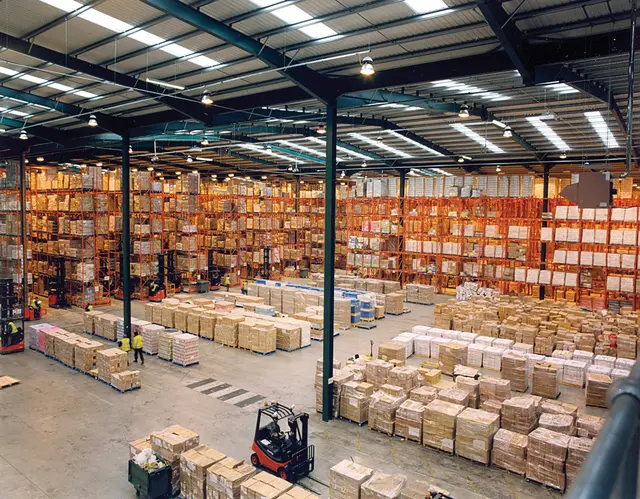
Warehouse safety starts with 5 habits: wear steel-toe boots and a hi-vis vest for the whole shift, lift with your legs keeping your back straight and the load close, stay in pedestrian walkways and well clear of forklifts at work, never load a rack beyond the limit on its load sign, and only drive a forklift once you have been trained and hold an operator certificate as the rules require. Most warehouse accidents do not come from difficult tasks but from "just this once" shortcuts: cutting across a forklift lane, twisting while carrying a heavy carton, adding one more box to a full rack level. This is the first lesson of the roadmap, written the way a warehouse team leader coaches a new starter, with a PPE table, forklift rules, how to read a rack load sign and a worked example of checking the load on one rack level where the numbers add up.
By the end of this lesson, you will be able to:
- Choose and wear the right protective equipment for each warehouse area and check it before your shift.
- Lift, carry and lower cartons in 6 steps, and know when to use a trolley or call a second person.
- Stay in your lane, read floor markings and keep a safe distance from moving forklifts.
- Read a rack load sign and add up the weight on a level before putting more stock on it.
- Understand why only trained, certified people may drive forklifts, and know how to report a hazard.
New to warehouse work? Warehouse safety, lifting and PPE are step 1 of the roadmap, before receiving, location codes, picking and warehouse management software. See the 8-step warehouse operative roadmap to learn in the right order.
Why are warehouses accident-prone?
A warehouse puts pedestrians, forklifts, trolleys, heavy goods and tall racks in the same space. In peak season (year-end sales, Lunar New Year in Vietnam), orders multiply, many new people start, everyone is in a hurry, and that is when accidents rise.
The 4 main hazards
- Collisions with forklifts: heavy machines with large blind spots; with a tall load the driver struggles to see ahead.
- Falling goods: from high racks, from badly stacked pallets, from the forks.
- Poor lifting posture: back pain, disc injuries, muscle strain, usually building up over weeks.
- Slips and trips: stretch film, strapping and cardboard on walkways, wet floors at the loading dock.
Safety training before you start
Under the principles of Vietnam's occupational safety and health law, new workers must receive safety instruction and training before starting work, and employers must provide suitable protective equipment. The exact content and duration are set by current regulations and each warehouse's internal rules. On your first day, if nobody has briefed you on safety, you have the right to ask your team leader before taking on a task.
Personal protective equipment in the warehouse
PPE only works if you wear it correctly and for the whole shift, not just when someone is checking. Every warehouse has its own rules; the table below shows the common standard in consumer goods and e-commerce warehouses.
| PPE | Protects against | When needed |
|---|---|---|
| Steel-toe safety boots with non-slip soles | Falling goods and wheels on your toes; slipping | All shift in stock areas; required in most warehouses |
| Hi-vis vest | Helps forklift drivers see you from a distance, even in dark corners | All shift wherever forklifts operate |
| Cut-resistant or work gloves | Carton edges, strapping, pallet nails, box cutters | Loading and unloading, cutting straps, opening cartons |
| Hard hat | Head injuries from goods falling from high racks | High-rack areas and where forklifts pick at height, as site rules require |
| Safety box cutter (self-retracting blade) | Fewer cuts when opening cartons | Every time you open a carton or cut film |
Steel-toe boots
Safety boots have a steel or composite toe cap over the toes (Figure 1), plus slip-resistant, puncture-resistant soles. A 20 kg carton dropping from a low rack level, or a pallet truck wheel rolling over your toe, means broken toes in ordinary shoes; in safety boots it usually just hurts. Check before each shift: toe cap not dented, soles not worn smooth, laces secure.
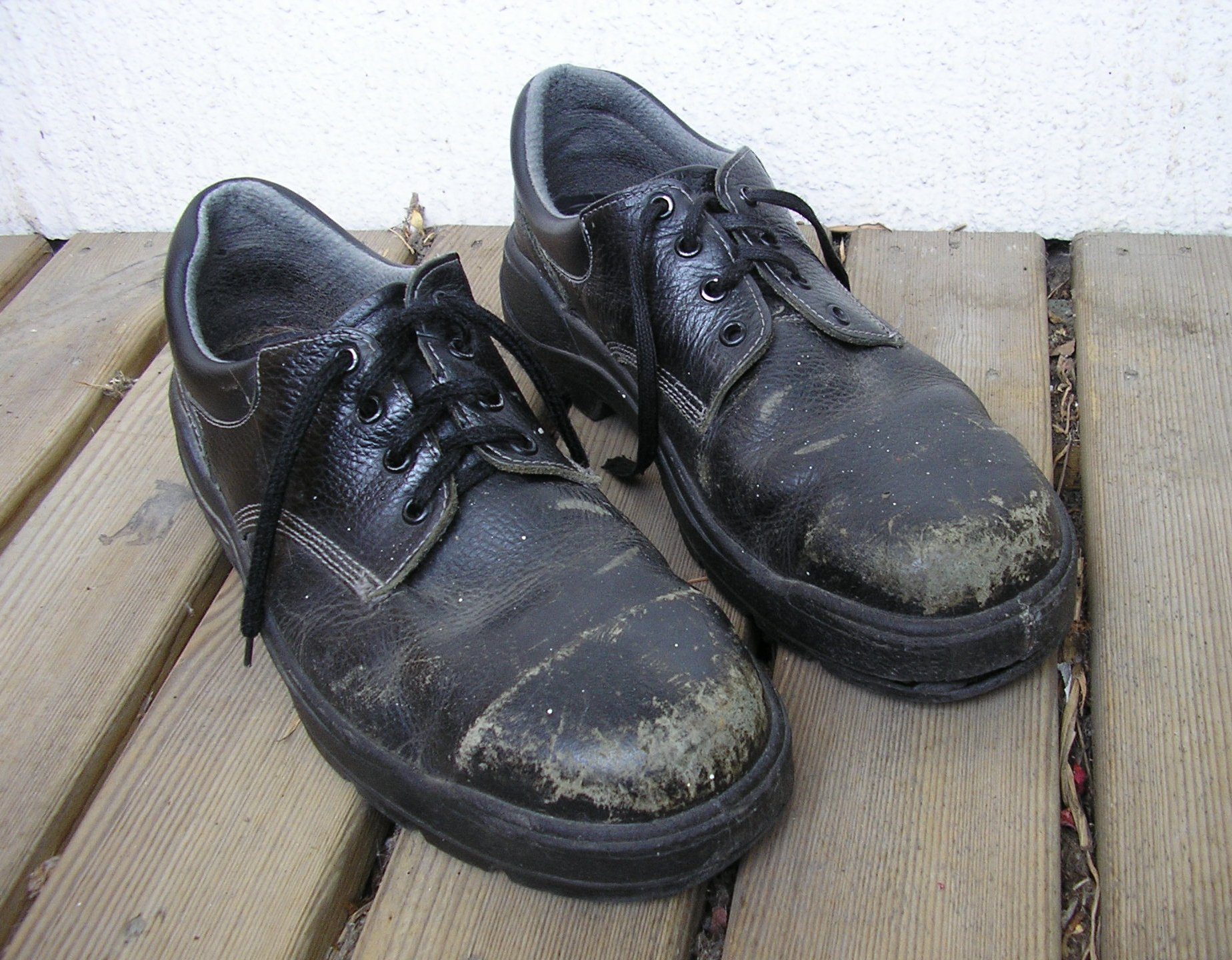
Photo: Liftarn / Wikimedia Commons, CC BY-SA 3.0
Hi-vis vest and clothing
Wear an orange or lime hi-vis vest with reflective strips as the outermost layer, zipped up, never tied round your waist. Keep clothes close-fitting, with no loose garments or long scarves that can catch on conveyors or forks. Do not wear headphones in forklift areas; you need to hear horns and reversing alarms.
Gloves and box cutters
Open cartons with a safety cutter, cutting away from your body, and never clamp a carton between your legs to cut it. When cutting steel or plastic strapping, stand to one side, because it springs back hard. Retract the blade after use and put the cutter in its holder, not on top of a carton.
Lifting correctly so your back does not hurt
A warehouse operative may lift hundreds of cartons per shift. One bad lift will not hurt straight away, but 300 a day for a few months will. The principles: straight back, power from the legs, load close to the body, no twisting while carrying.
6 steps to lift a carton
- Assess: push the carton to gauge the weight, read the weight label, check the route is clear.
- Get close: feet shoulder-width apart, one foot slightly forward, right up to the carton.
- Lower yourself: bend your knees, keep your back straight, do not bend at the waist.
- Grip firmly: both hands firmly on the base or handles, pull the carton in to your stomach.
- Stand up: straighten your legs smoothly, head up, no jerking.
- Move and lower: to change direction, turn your feet rather than twisting your back; lower in reverse, bending your knees.
When to use a trolley or call a second person
There is no single figure right for everyone, since it depends on build, lifting height, carrying distance and repetition. Many companies set a reference limit of about 20–25 kg for one person when the load is close to the body at waist height; lifting from the floor, above shoulder height or bulky items brings that figure down a lot. Above your warehouse's limit, for bulky cartons that block your view, or unstable goods (liquids, glass), use a trolley, a pallet truck or a two-person lift.
Picking and putting away at height
Do not reach above shoulder height for heavy items; use a ladder with handrails or the warehouse's work platform, and never stand on cartons or climb racking. Heavy goods belong on the middle levels (waist to shoulder) so pickers do not have to bend low or reach high.
Staying in your lane and avoiding forklifts
Forklift collisions are the most serious accidents in a warehouse. Even a slow forklift weighs several tonnes, and the driver often cannot see a pedestrian close beside or behind the truck (Figure 2).
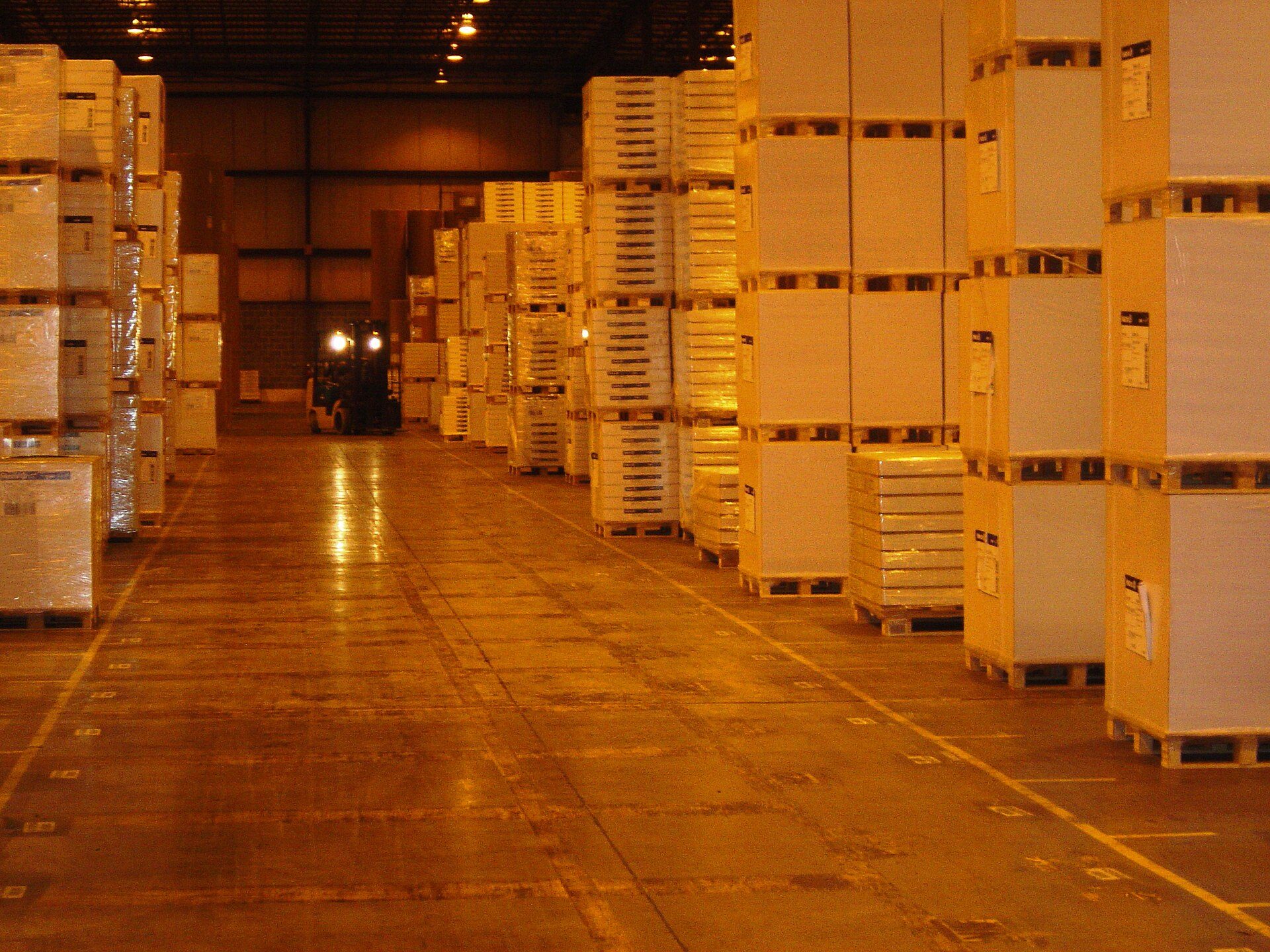
Photo: Không rõ tác giả / Wikimedia Commons, CC BY-SA 3.0
Floor markings and pedestrian walkways
Many warehouses mark lanes on the floor: pedestrian walkways, vehicle lanes, no-standing zones in front of the dock doors, pallet storage areas. Colours vary from site to site, so ask your team leader on day one. Walk in the pedestrian lane, do not cut across vehicle lanes or squeeze between pallets, and keep walkways clear by picking up fallen film and strapping straight away.
Rules around forklifts
- Stop at aisle junctions and look both ways; check the convex mirror if there is one.
- Make eye contact with the driver before crossing in front of the truck; if you are not sure they have seen you, wait.
- Never stand or walk under raised forks or a raised load; never stand behind a reversing truck.
- Do not walk close to a turning truck: the rear swings out wider than you expect.
- When guiding a truck, stand where the driver can clearly see you, outside the truck's path and away from where a load could fall (Figure 3).
- Never ride on the forks or on a pallet carried by a forklift.
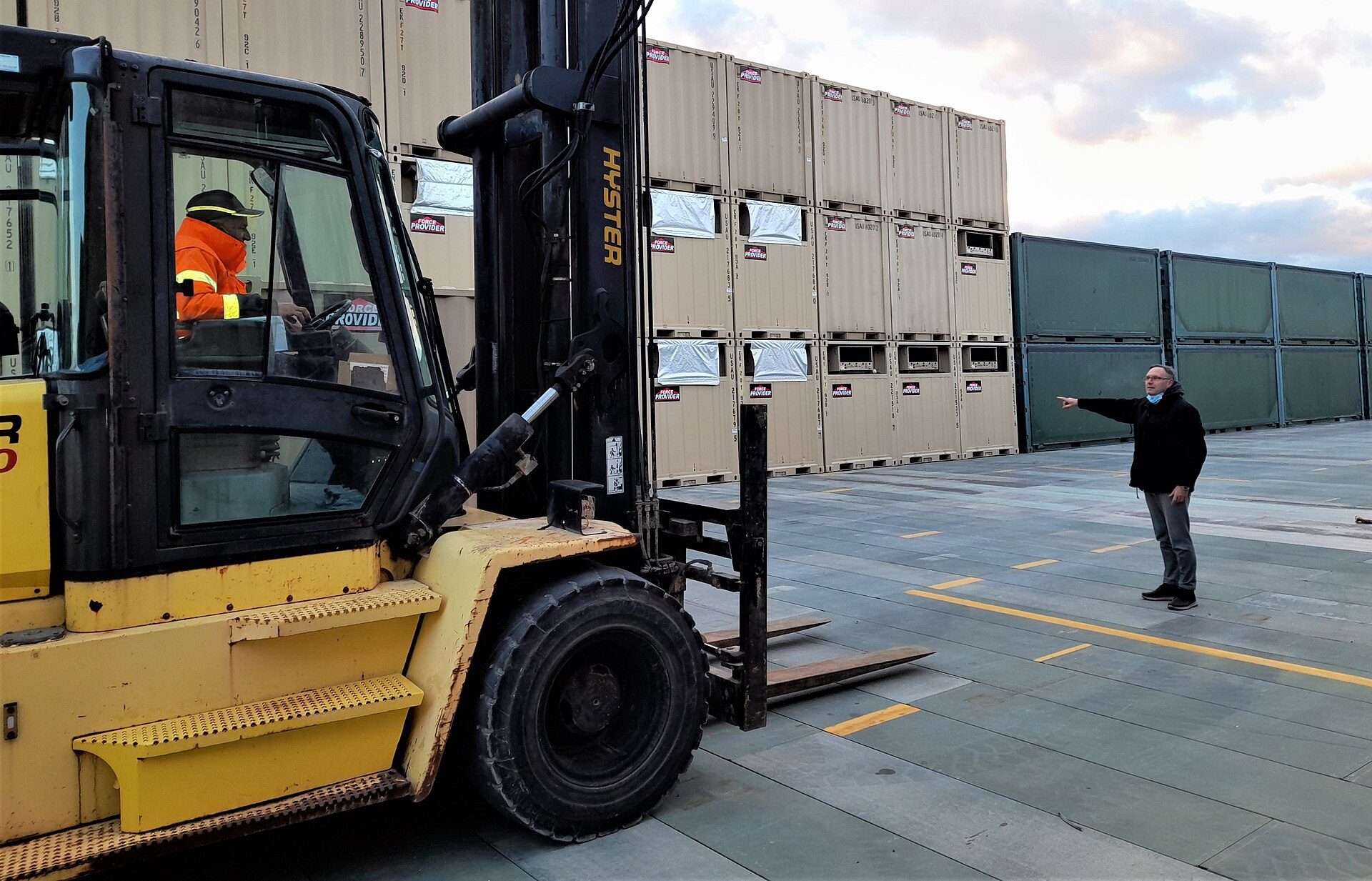
Photo: U.S. Army USASC by Cameron Porter / Wikimedia Commons, Public domain
Safety warning: Do not drive a forklift unless you have been trained and hold an operator certificate as required, not even "just to move one pallet quickly". Never walk under a raised load, never stand behind a reversing truck, never ride on the forks. Never climb racking. If you see dented or bent racking, broken pallets, leaning loads, oil or water on the floor: stop work, cordon off the area if that is your job, and tell your team leader at once. If someone is injured: do not move them if a spinal injury is possible, call the site first-aider and call an ambulance (115 in Vietnam).
Forklifts: only drive once trained and certified
New starters often think a forklift is "as easy to drive as a motorbike". In reality a forklift's centre of gravity shifts with the load, it steers with the rear wheels, and it can tip over when turned sharply, driven fast with the forks raised or carrying an off-centre load.
Why a certificate is required
Forklifts are equipment with strict safety requirements in Vietnam: trucks must be inspected periodically, and operators must be trained and certified as current regulations require. For the type of certificate, where to train and how long it is valid, ask your company's safety or HR team and check the current documents of the labour authorities; do not trust offers of "a licence after one session". Driving a forklift is a way to earn more in this trade, but take the proper route: train, pass the test, and be assigned a truck by the company.
Hand pallet trucks and trolleys
New staff usually use hand pallet trucks and trolleys. Simple as they are, you still need instruction: pull or push as the warehouse specifies, never let anyone ride on them, do not exceed the load marked on the truck, lower the forks fully when parking, and never leave a truck blocking an emergency exit.
Watching forklifts at work
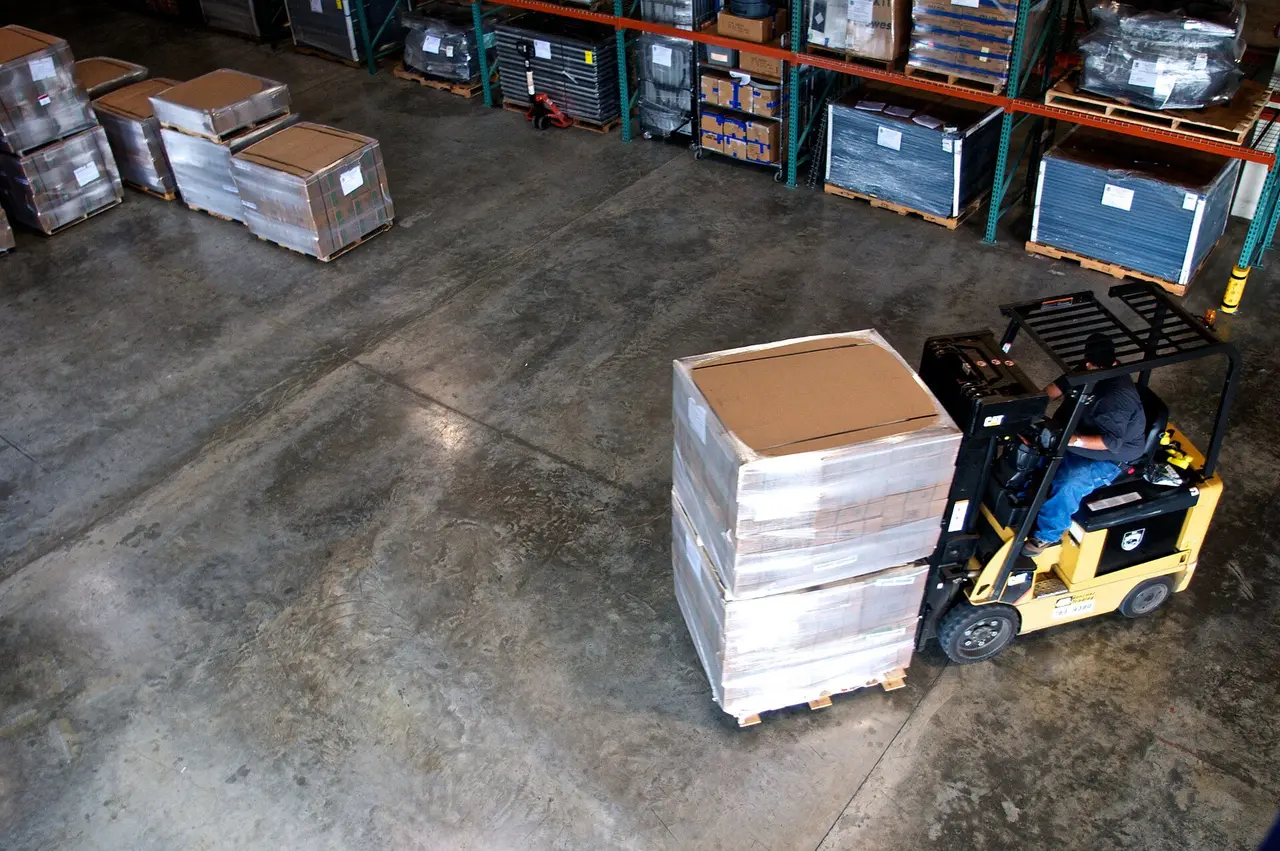
When a forklift is moving pallets in your area (Figure 4), your job is to keep your distance and give way. If you are assigned to work near a truck (unloading, counting), agree stop and go signals with the driver and only approach once the truck has fully stopped and the forks are lowered.
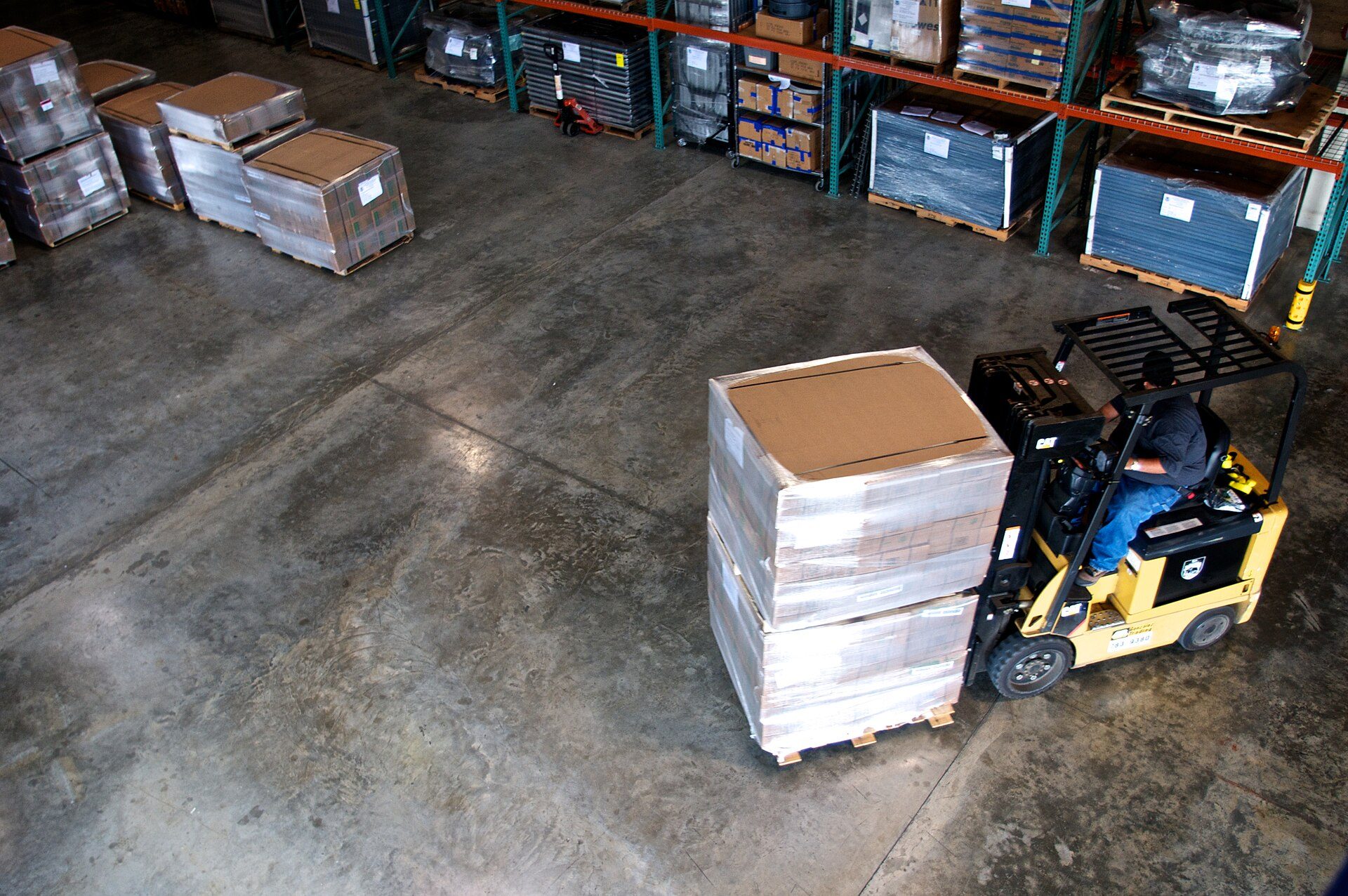
Photo: Department of Homeland Security. Federal Emergency Management Agency. Public Affairs Division. 3/1/2003 / Wikimedia Commons, Public domain
Rack load limits and safe stacking
A collapsing rack or goods falling from a rack can injure several people at once. Pallet racking is designed for a set load; overloading or poor stacking makes beams sag and uprights gradually bend.
Reading the load sign
Properly installed racking carries a sign showing the permitted load, usually in kg per level or per bay, sometimes per pallet. The total weight of goods plus pallets on one level must not exceed that figure. If a rack has no sign, ask your team leader rather than guessing.
Stacking rules
- Heavy goods on low levels, light goods higher up (Figure 5).
- Pallets sit squarely on both beams, do not overhang the edge, and do not rest on the bracing.
- Broken pallets, leaning loads or torn wrap are not put away; report them for fixing first.
- Never climb racking or stand on pallets in the rack.
- Store in the warehouse's FIFO/FEFO dispatch order; how to do this is explained in the lesson on FIFO vs FEFO.
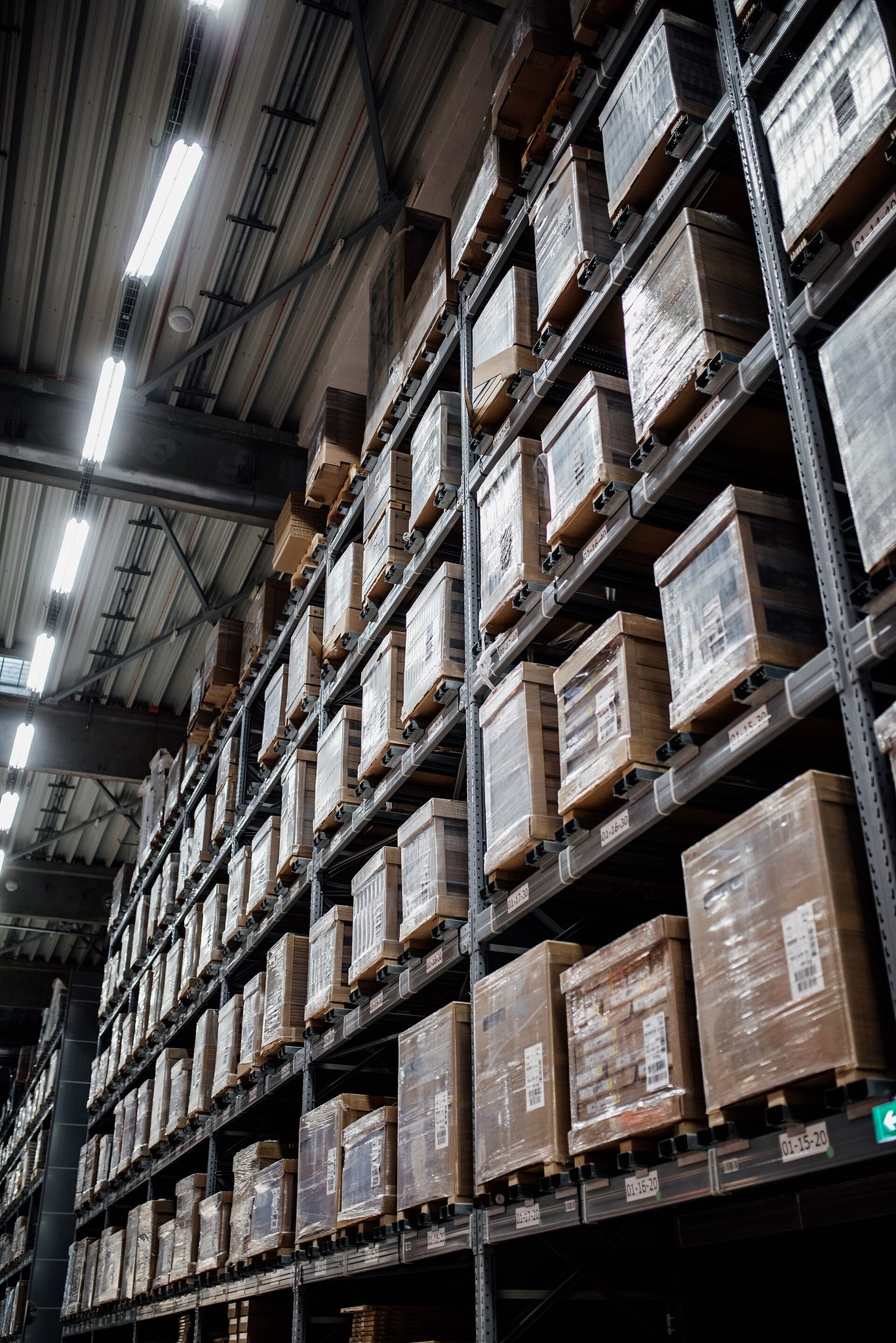
Photo: Shixart1985 / Wikimedia Commons, CC BY 2.0
Damaged racking
Forklifts hitting rack uprights is common. If you see a dented or bent upright, a sagging beam or a missing locking pin, report it immediately and do not put more stock in that bay until it has been inspected.
Worked example: checking the load on a rack level before putting away
Tuan is a new operative at a consumer goods warehouse in Binh Duong. His team leader asks him to put 2 pallets on level 2 of bay B-03. The rack sign says: maximum load 1,000 kg per level.
Working out each pallet's weight
| Pallet | Goods | Calculation | Weight |
|---|---|---|---|
| A | 48 cartons of liquid detergent, 9.5 kg each, wooden pallet 20 kg | 48 × 9.5 + 20 | 476 kg |
| B | 40 cartons of cooking oil, 12 kg each, wooden pallet 20 kg | 40 × 12 + 20 | 500 kg |
| Total on level 2 | 976 kg | ||
Check: 456 + 20 = 476 kg; 480 + 20 = 500 kg; 476 + 500 = 976 kg, below 1,000 kg with 24 kg to spare. The level is within its limit, but no extra carton heavier than 24 kg can go on it. The detergent pallet (liquid goods) is better on a low level; Tuan tells his team leader and they swap: pallet A goes to level 1, pallet B to level 2.
The manual lifting part
A customer order needs 6 loose cartons of 12 kg cooking oil from level 1. Each carton is 12 kg, below the reference limit for one person lifting close to the body; Tuan bends his knees to take each carton and places it on a trolley instead of hugging 2 at a time (24 kg, blocking his view). The total of 6 × 12 = 72 kg goes in one trolley trip.
What Tuan does not do
The forklift driver is busy, but Tuan does not drive it himself, even for "just 2 pallets". He waits for a certified operator and stands outside the truck's path while the pallets are lifted.
Common mistakes new warehouse staff make
Cutting across forklift lanes
Sign: pedestrians weaving between pallets and crossing vehicle lanes. Cause: hurrying, or the walkway takes a long way round. Fix: always use the right lane, and suggest changes to your team leader if the layout does not work.
Bending your back to lift from the floor
Sign: lower back pain at the end of the shift. Cause: habit, assuming the carton is light. Fix: bend your knees for every carton, even light ones, until it becomes a reflex.
Adding "one more carton" to a rack level
Sign: sagging beams, goods overhanging the edge. Cause: not reading the load sign. Fix: add up the weight before putting away, and ask if there is no sign.
Taking off the hi-vis vest because it is hot
Sign: vest tied round the waist or slung over a shoulder. Cause: a hot warehouse. Fix: wear a breathable mesh vest, drink water regularly, take your scheduled breaks.
Frequently asked questions
What PPE is needed in a warehouse?
Usually steel-toe safety boots, a hi-vis vest, work gloves and a safety cutter; in high-rack areas or where site rules require, a hard hat as well. The employer is responsible for providing suitable equipment.
How many kilograms is safe to lift?
There is no single figure for everyone. Many workplaces use a reference of about 20–25 kg for one person with the load close to the body at waist height; from the floor, at height or over a distance it is lower. Follow your warehouse's rules and use a trolley or a two-person lift above the limit.
What certificate do you need to drive a forklift?
Forklift operators must be trained, given safety training and hold a suitable operator certificate under the regulations in force. Ask your company's safety or HR team and check official documents rather than trusting adverts for quick licences.
Is safety training required for warehouse work?
Yes. New workers must receive safety instruction before starting; content and duration follow current regulations and company rules.
What should I do about back pain from warehouse work?
Review your lifting posture, use trolleys more and warm up before the shift. If pain lasts several days, spreads down your leg or comes with numbness, see a doctor and tell your team leader so you can be given suitable duties.
Practice exercises and self-assessment
- Walk the warehouse with your team leader and sketch a map of walkways, vehicle lanes, junctions, convex mirrors, fire extinguishers and emergency exits.
- Lift 20 sample cartons using the 6 steps while someone watches your back and legs.
- Pick 3 rack levels, read the load signs, count the cartons and add up the total weight as in the example table.
- Check your PPE before 5 shifts in a row: boots, hi-vis vest, gloves, cutter.
Self-assessment criteria
- Pass: your map shows walkways, vehicle lanes and emergency exits, matching the real layout.
- Pass: 20 of 20 lifts with bent knees, straight back and no twisting.
- Pass: correct total weight for all 3 rack levels, sums that add up, correctly compared with the load sign.
- Not yet: cutting across forklift lanes, removing your hi-vis vest, climbing racking, or driving a forklift without a certificate.
Once safety is second nature, move on to the next step of the roadmap: Receiving, counting & document checks, where you learn to check quantities, specifications, expiry dates and carton condition against the delivery note before signing.
Keep learning warehouse work: after safety come receiving and counting, location codes and FIFO/FEFO, picking and packing e-commerce orders, WMS software and scanners, and stocktaking. See the 8-step warehouse operative roadmap.