Shrimp and fish pond safety comes down to three things a newcomer must master before any other farm work: every paddlewheel and aerator needs an earth-leakage breaker (RCD), an earthed motor frame and cables hung clear of the water; lime, chlorine and disinfectants are handled with goggles, gloves and a mask and mixed the right way; and only aquaculture veterinary products on the approved list are used, at the dose on the label, with no banned antibiotics. A pond is where electricity, water, chemicals and darkness meet, so electric shock, lime burns, chlorine fumes and drowning all really happen on farms. This is the first lesson of the roadmap, written for people starting work on a shrimp or fish farm, with checklists you can use straight away.
By the end of this lesson, you will be able to:
- Check the paddlewheel and aerator electrics of a pond with an 8-point checklist and know when to call an electrician.
- Choose and wear the right protective gear when mixing and spreading lime, chlorine and disinfectants, and give first aid when chemicals hit eyes or skin.
- Read an aquaculture drug label: active ingredient, dose and withdrawal period, and recognise products you should not use.
- Work out chemical doses from the pond water volume (m³) instead of guessing, to avoid overdosing.
- Set up a chemical and drug logbook and night-time pond safety rules for the whole farm.
Just starting out in aquaculture? Pond, electrical and chemical safety is step 1 of the roadmap, before pond preparation, seed selection or water management. See the 8-step aquaculture roadmap to learn in the right order.
Why safety is the first step on a fish or shrimp farm
A whiteleg shrimp farm with a few ponds can run dozens of paddlewheels around the clock mid-season, with motors sitting just above the water and cables crossing wet pond banks. At the same time the farm uses tonnes of lime per crop, chlorine to disinfect water, potassium permanganate, iodine, BKC and veterinary drugs. Much of this work happens at dawn or at night, when people are tired and the light is poor.
The 4 main hazards at a pond
- Electric shock: cracked cable insulation, joints sitting in water, a motor leaking current into the aerator float; touching an aerator with wet hands before switching it off.
- Chemical burns: quicklime (CaO) heats up strongly with water, lime and chlorine splash into eyes, skin stays in contact with strong solutions.
- Toxic fumes: chlorine mixed by mistake with acid or other chemicals releases chlorine gas; formalin and disinfectants evaporate in closed stores.
- Drowning: ponds lined with HDPE plastic are very slippery, and someone who falls in may not be able to climb out, especially at night or when alone.
Risks to consumers and to the whole crop
Safety here also means food safety. Shrimp or fish treated with banned antibiotics, or harvested before the withdrawal period is over, may carry residues and be rejected by processors and traders or sent back from export markets. One such case can wipe out a crop's profit and the farm's reputation.
Electrical safety for paddlewheels and aerators
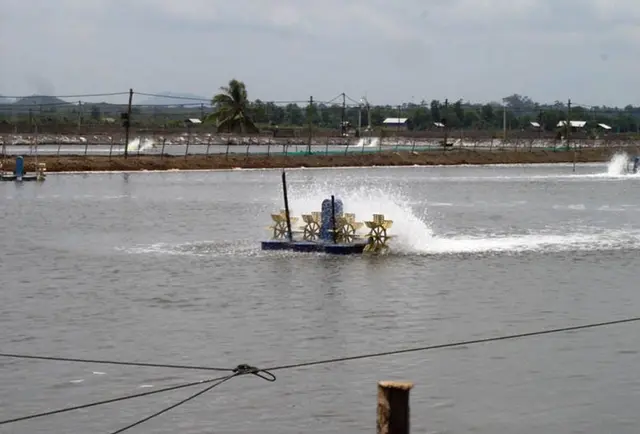
Paddlewheels (Figure 1) and aerators are electrical equipment used right on the water surface, outdoors, in sun and rain all year. Cable sheaths age quickly in the sun, rainwater seeps into joints, motors get damp. That is why pond electrics need devices that cut the power automatically on leakage; you cannot rely on workers being careful alone.
RCDs and earthing
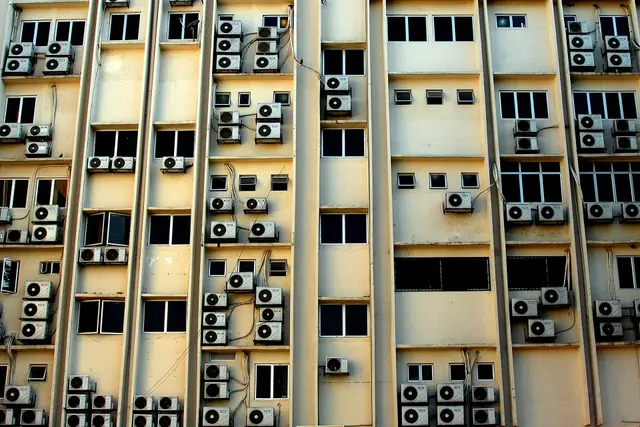
An earth-leakage breaker (RCD, RCBO or ELCB, called "aptomat chong giat" in Vietnam) cuts the power when current leaks, and a 30 mA type is the usual choice for circuits people can touch (Figure 2). Each aerator circuit or each pond board should have its own RCD, so one leaking aerator only trips that unit instead of shutting down the whole pond at midnight. Motor frames and metal structures must be earthed as your electrician directs. How to choose and wire these devices is covered in the electrician article How to wire an RCD (RCBO/RCCB) at home; farm wiring itself should be done by an experienced electrician.
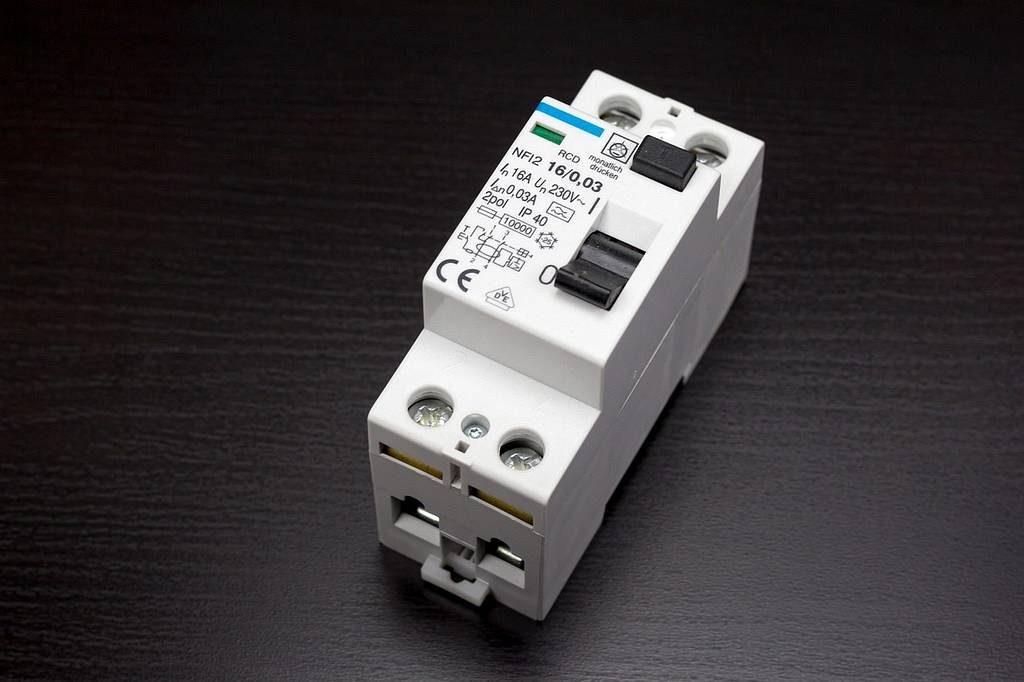
Photo: Diermaier / Wikimedia Commons, CC0
Cables, joints and outdoor boards
- Use double-sheathed, UV-resistant cable sized for the aerator load; never run flexible indoor cord out to the pond.
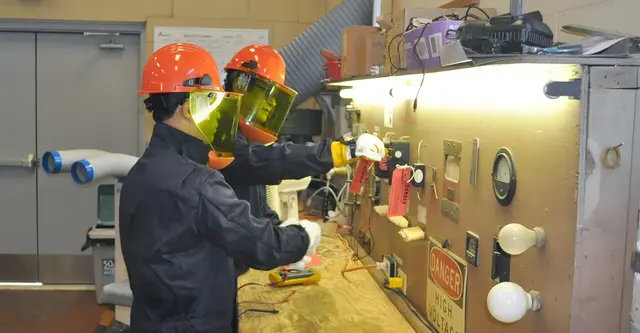
- Hang cables on posts or a tensioned support wire, clear of the water and the bank, never lying in water, mud or where people walk (Figure 3).
- Put joints in waterproof boxes; do not tape them up and drop them in the water.
- Pond switchboards need a roof, a closed door, a raised position and a warning sign; no wet clothes or chemicals inside.
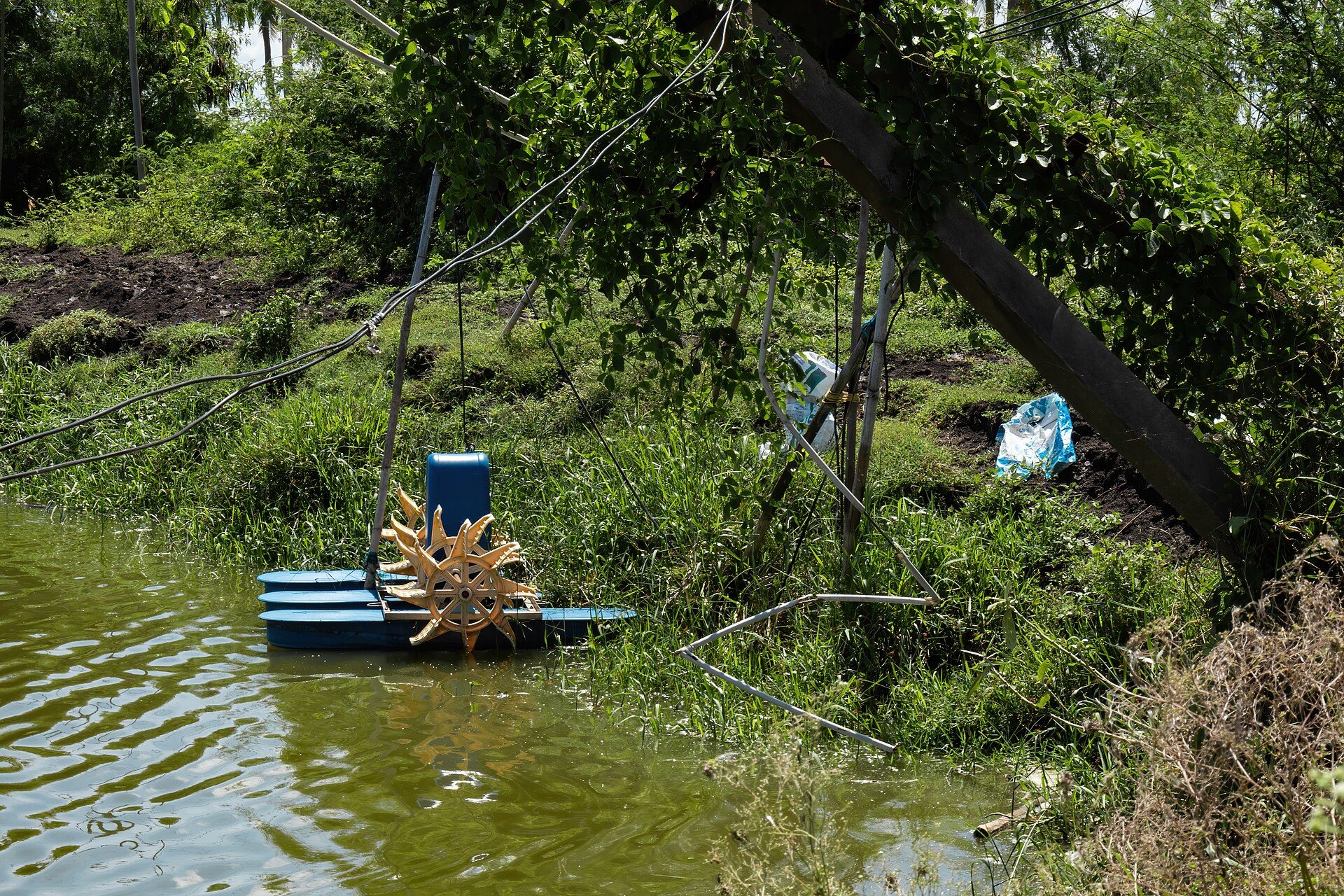
Photo: iMahesh / Wikimedia Commons, CC BY-SA 4.0
Rules for repairing aerators or clearing the paddles
- Switch off that aerator's breaker and hang a "Under repair, do not switch on" sign; nobody else switches it back on.
- Check the motor frame and cable with a voltage tester pen before touching them.
- Never enter the pond or touch an aerator with wet hands or feet before the power is off.
- After the repair, recheck the cable and joints, switch on, then press the TEST button.
Protective gear for lime, chlorine and disinfectants
Most pond chemicals are corrosive, strong oxidisers or give off toxic fumes. The safest approach: read the label first, put on protective gear first, mix in the right order, and stand upwind when spreading.
Common chemicals and protective gear
| Chemical | Main hazard | Minimum protection | Mixing and spreading notes |
|---|---|---|---|
| Quicklime (CaO) | Strong heat on contact with water, skin and eye burns | Sealed goggles, long rubber gloves, mask, long sleeves, boots | Add lime slowly to plenty of water, never water onto lime |
| Slaked lime, dolomite, agricultural lime | Dust irritates eyes and airways | Goggles, mask, gloves | Spread standing upwind |
| Chlorine (calcium hypochlorite) | Strong oxidiser, releases chlorine gas with acids, burns skin | Sealed goggles, gloves, chemical respirator | Dissolve in water; never mix with acids, formalin or other chemicals |
| Potassium permanganate (KMnO4) | Strong oxidiser, stains and irritates skin | Gloves, goggles | Keep away from flammables, oil and grease |
| Iodine, BKC, formalin | Irritate skin and eyes; formalin fumes are toxic | Gloves, goggles, chemical respirator | Mix in a ventilated place, exactly as labelled |
Chlorine: the chemical that needs the most care
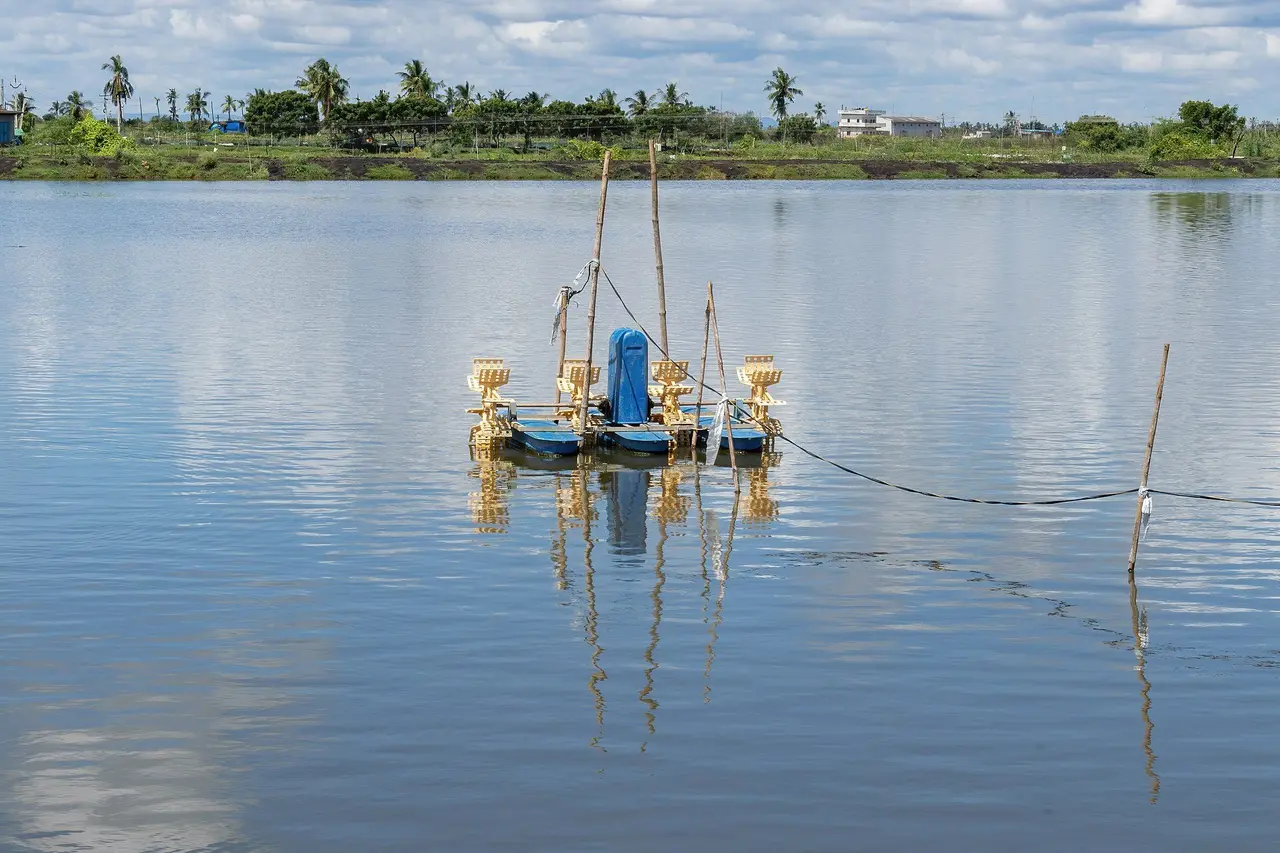
Granular or powdered chlorine (Figure 4) is a strong oxidiser. Mixed with acid or certain other chemicals, or left damp in a closed store, it can release chlorine gas that causes coughing, breathlessness and airway burns. Always dissolve chlorine in a large bucket of water, stand upwind, keep your face away from the bucket and never mix it in the same bucket as another chemical. After chlorination, pond water must be treated and left until residual chlorine has gone, following the pond preparation procedure, before stocking.
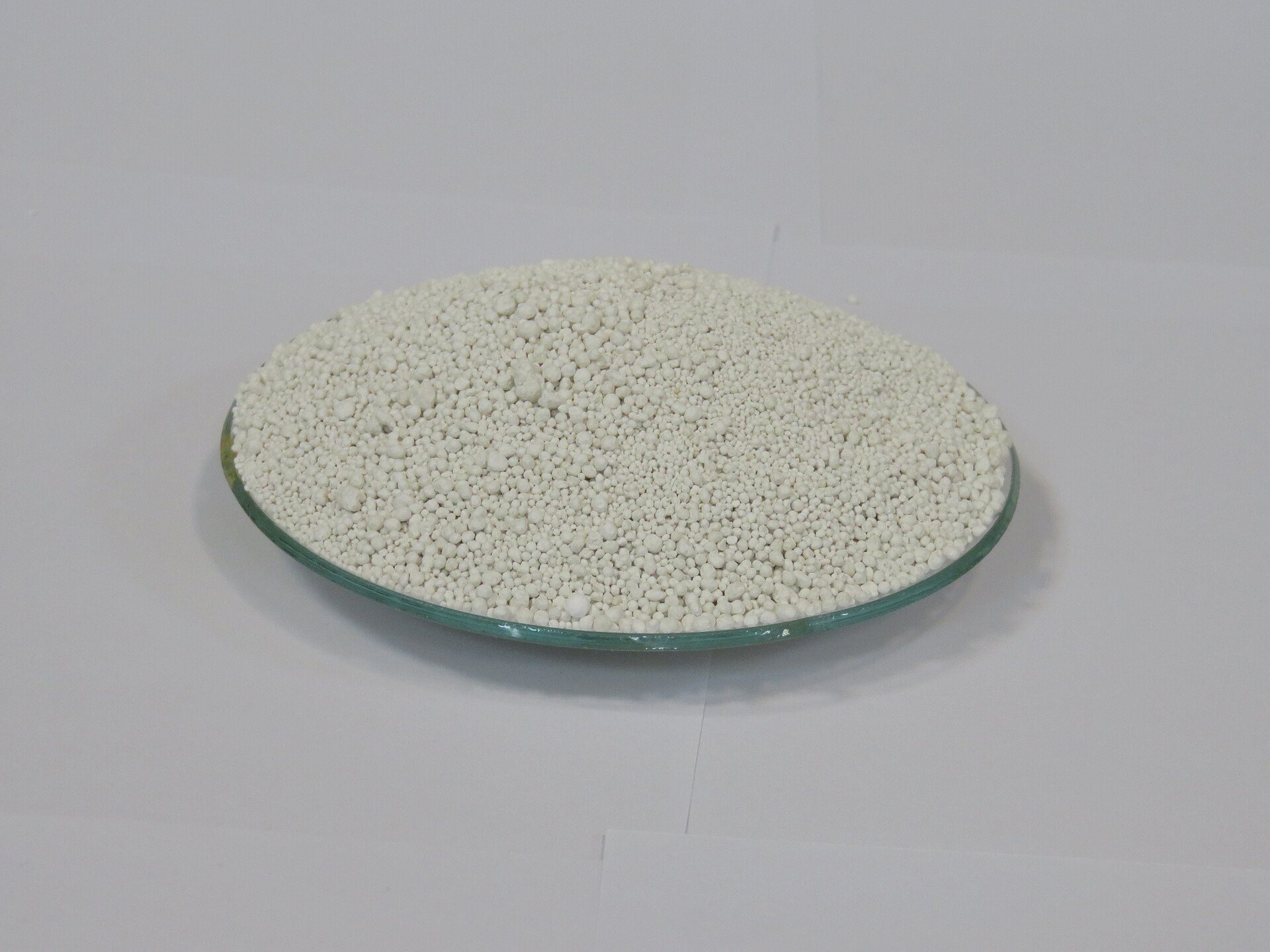
Photo: CCPCIRAN / Wikimedia Commons, CC BY-SA 4.0
The chemical and drug store
- Dry, ventilated and locked, away from living quarters, the kitchen and the feed store, and out of children's reach.
- Keep groups apart: lime; oxidisers (chlorine, permanganate); veterinary drugs; fuel.
- Keep products in their labelled packaging; never decant into drinking bottles or feed sacks.
- Collect empty packaging for disposal as your locality requires; never throw it in canals or reuse it for feed.
Safety warning: Lime or chlorine in the eyes: rinse at once with clean running water for at least 15 minutes, then see a doctor. On skin: brush off dry powder, rinse with plenty of water, remove contaminated clothing. Chlorine fumes inhaled, with coughing, chest tightness or breathlessness: move to fresh air immediately and call emergency services (115 in Vietnam). Chemical swallowed: do not induce vomiting; take the product label and go to emergency care. Never touch an aerator or cable before its breaker is off; if someone is being electrocuted, cut the power first, then help.
Aquaculture veterinary drugs: approved products only
In Vietnam, aquaculture veterinary drugs, chemicals and probiotic water treatments are regulated through a list of products approved for sale and a list of banned substances. These lists change over time, so this lesson does not quote document numbers; check the current lists on the website of the veterinary and fisheries authorities, or ask your local veterinary sub-department or agricultural extension station.
Read the label before you buy and use
- Active ingredient and strength: know what substance you are using, not just the brand name.
- Registration number, manufacturer, expiry date: do not buy a product missing these.
- Dose per volume of water or per kg of feed: use the right unit and never estimate by eye.
- Withdrawal period: the number of days you must stop using the product before harvest so residues fall; record it so you never harvest too early.
Antibiotics: never on your own, never banned ones
Some antibiotics, such as chloramphenicol and the nitrofuran group, are banned for food-producing animals in many markets; for the full banned list, check the current official regulations. Antibiotics should only be used when a bacterial disease has been diagnosed, under the direction of a technician or veterinary officer, at the right dose and for the full course. Do not add antibiotics to daily feed "for prevention", and do not buy unlabelled drugs, "family recipe" products or unofficial imports of unknown origin.
Drug and chemical logbook
Every time you use a product, record the date, pond, product name, active ingredient, dose, who applied it, why, and the withdrawal period. The log keeps you from harvesting during a withdrawal period, and processors, traders or certification schemes may ask for it when they buy. The article Shrimp pond pH: target range, how to measure, raise and lower it shows how to log water readings; keep them in the same book as the drug log.
Preventing drowning and working at ponds at night
HDPE-lined ponds have slopes as slippery as glass when wet; people who fall in often cannot grip well enough to climb out, especially in boots and wet clothes. Earth ponds are dangerous too, because of soft bottom mud.
Farm rules
- Never go to the ponds alone at night; if you must, tell someone when you leave and when you will be back, and take a phone.
- Every pond has at least one life ring or rescue rope hanging on the bank where it is easy to grab.
- Banks and feeding bridges are lit, and lighting circuits also go through an RCD.
- No pond work or walking the banks after drinking alcohol; children must not play near the ponds.
Storms and lightning
During thunderstorms, do not stand on an open pond bank or a feeding bridge, and do not repair electrics outdoors. Wait until the storm passes before checking aerators, and check breakers and cables before touching any equipment.
Worked example: dosing by m³ and safety kit for a 2-pond farm
You have just started at a shrimp farm with 2 ponds, each 3,000 m² with 1.2 m of water and 4 paddlewheels. The owner gives you two jobs: work out the dose of a disinfectant product for one pond, and draw up a list of safety equipment.
Part 1: dose by water volume
- Water volume of one pond: 3,000 m² × 1.2 m = 3,600 m³.
- Suppose the label says 1 litre per 2,000 m³ of water (an illustrative figure; always use the number on the label of the product you have).
- Amount needed: 3,600 ÷ 2,000 × 1 litre = 1.8 litres.
- Common mistakes: misremembering the dose as "1 litre per 1,000 m³" gives 3.6 litres, double the correct dose; or calculating from the 3,000 m² surface area and forgetting the depth.
Part 2: safety equipment list (2026 reference prices in Vietnam, varying by area and supplier)
| Item | Quantity × unit price | Cost |
|---|---|---|
| 30 mA RCDs (for aerators without one) | 4 × 350,000 VND | 1,400,000 VND |
| Voltage tester pen | 1 × 50,000 VND | 50,000 VND |
| Sealed safety goggles | 2 × 80,000 VND | 160,000 VND |
| Long rubber gloves | 4 pairs × 40,000 VND | 160,000 VND |
| Chemical respirator | 1 × 250,000 VND | 250,000 VND |
| Life rings | 2 × 250,000 VND | 500,000 VND |
| 30 m rescue rope | 2 × 150,000 VND | 300,000 VND |
| First aid box, eyewash bottle | 1 set × 300,000 VND | 300,000 VND |
| Total | 3,120,000 VND | |
Check: 1,400,000 + 50,000 + 160,000 + 160,000 + 250,000 + 500,000 + 300,000 + 300,000 = 3,120,000 VND (about 120 USD). Split over 2 ponds, that is 1,560,000 VND per pond, and most items last several crops. It is small next to the value of a pond of shrimp and cannot be compared with an electrocution.
Common safety mistakes at the pond
Removing an RCD because it keeps tripping
Sign: aerators stop at midnight and someone "fixes" it by bypassing the RCD. Real cause: current is leaking from a motor, cable or joint. Fix: keep the RCD and have an electrician find the leak; a tripping RCD is saving someone's life.
Pouring water into a tub of quicklime
Sign: the lime boils over and splashes onto face and hands. Cause: wrong mixing order. Fix: always add lime slowly to a large amount of water, and put on protective gear before opening the bag.
Mixing chlorine with other chemicals
Sign: the bucket fumes, there is a sharp smell, the person mixing starts coughing. Cause: saving buckets, mixing everything together to save time. Fix: one labelled bucket per chemical, mix in a ventilated spot, stand upwind.
Raising the dose "to be sure"
Sign: shrimp or fish weaken and surface after treatment. Cause: increased dose, or calculating per m² instead of m³. Fix: calculate from water volume, follow the label, log it, and ask a technician when unsure.
Frequently asked questions
Do shrimp pond aerators need an RCD?
Yes. Paddlewheels and aerators run on electricity right at the water surface, so the risk of leakage is high; a suitable RCD, earthing and cables hung clear of the water are the three basic layers of protection. Installation should be done by an experienced electrician.
How do I know an aquaculture drug is approved?
Check that the label has a registration number, manufacturer and expiry date, then compare it with the current list published by the veterinary and fisheries authorities. When unsure, ask your local veterinary sub-department or extension station.
What should I do if lime gets in my eyes?
Rinse straight away with clean running water for at least 15 minutes, do not rub, then see an eye doctor. Do not put drops, lemon juice or vinegar in the eye to "neutralise" it.
What is a withdrawal period?
It is the number of days you must stop using a drug before harvest so residues in the shrimp or fish drop to permitted levels. The figure is on each product's label; record it and push back the harvest date if needed.
Practice tasks and self-assessment
- Inspect one pond with the checklist: an RCD on each aerator circuit, TEST button works, motor frames earthed, cables hung high, joints in sealed boxes, roofed switchboard, bank lighting, life ring.
- Work out a dose for your pond in m³ using a real product label, and write the calculation in the logbook.
- Audit the chemical store: which products lack labels, are expired or are stored in the wrong group.
- Draw up a drug and chemical log with columns for date, pond, product, active ingredient, dose, applied by and withdrawal period.
Self-assessment criteria
- Pass: you find and report every unsafe electrical point on the 8-point checklist.
- Pass: your dose calculation uses volume in m³ and matches the product label.
- Pass: you can explain first aid for lime or chlorine in the eyes and for inhaled chlorine fumes.
- Not yet: you touch an aerator before switching it off, mix chemicals together, or use an unlabelled drug.
Once electrical, chemical and drug safety are second nature, move on to the next roadmap step: Pond preparation & water treatment, where you learn to remove sludge, dry the pond bottom, apply lime, filter and treat water before stocking, using the safety rules from this lesson.
Keep learning aquaculture: after safety come pond preparation, choosing and stocking seed, water quality, feeding and FCR, shrimp and fish disease prevention, and a full grow-out crop. See the 8-step aquaculture roadmap.