Safety in a car repair workshop starts with three things: lifting the car at the correct lift points and lowering it onto the mechanical locks before going underneath, never working under a car held up only by a jack, and handling the hot and toxic fluids in a car (engine oil, coolant, brake fluid, petrol) correctly. Alongside these come personal protective equipment (PPE) and the habit of collecting used oil and oily rags in separate containers. This is the first lesson in the auto mechanic roadmap, written for someone who has never worked in a garage, with a checklist you can use from your very first shift.
By the end of this lesson, you will be able to:
- Find a car's correct lift points and raise it on a two-post lift following the test, raise, lower-onto-locks sequence.
- Support a car correctly with a jack, axle stands and wheel chocks when no lift is available.
- Recognise and safely handle hot oil, boiling coolant, brake fluid, petrol and exhaust gas.
- Choose a full set of PPE on a budget whose figures add up.
- Sort and collect used oil, old filters and oily rags following hazardous waste principles.
Learning car repair properly? Workshop, lift and chemical safety are step 1 of the 8-step roadmap, before car systems, servicing, brakes, suspension and steering, engines and OBD2 diagnostics. See the 8-step auto mechanic roadmap to learn in the right order.
The main hazards in a car repair workshop
A B-segment sedan weighs about 1.1–1.3 tonnes and a 7-seat SUV about 1.8–2.2 tonnes. With that mass above your head, any small mistake with a lift point or lock can cause a fatal accident. On top of that, a car that has just been driven into the workshop is very hot and holds several toxic, flammable fluids.
Cars falling, sliding or rolling
The most serious garage accidents usually happen when a car falls off a lift or a jack, or rolls because its wheels were not chocked. Common causes: lift arms on the wrong points, the lift not lowered onto its locks, a jack used as a support, and removing heavy parts so that the car's centre of gravity shifts.
Heat and pressure
An exhaust can be several hundred degrees Celsius, engine oil after a drive can be above 90°C, and the cooling system runs at about 1 bar, so the coolant inside can be above 100°C without boiling. Opening the radiator cap on a hot engine releases the pressure suddenly, the coolant flashes to steam and sprays out.
Chemicals and exhaust gas
Brake fluid damages paint and irritates the eyes, glycol-based coolant is poisonous if swallowed, petrol and cleaning solvents are flammable, and battery acid is corrosive. Running an engine in a closed workshop produces carbon monoxide, which has no colour or smell and can poison you.
Rotating parts and electricity
On many cars the electric radiator fan can start by itself even with the engine off; belts and pulleys on a running engine can catch hair, sleeves and gloves. Hybrids and electric cars have high-voltage systems with orange cables: do not touch them until you are trained, see the lesson EV high-voltage safety.
Car lifts: lift points and a safe lifting sequence
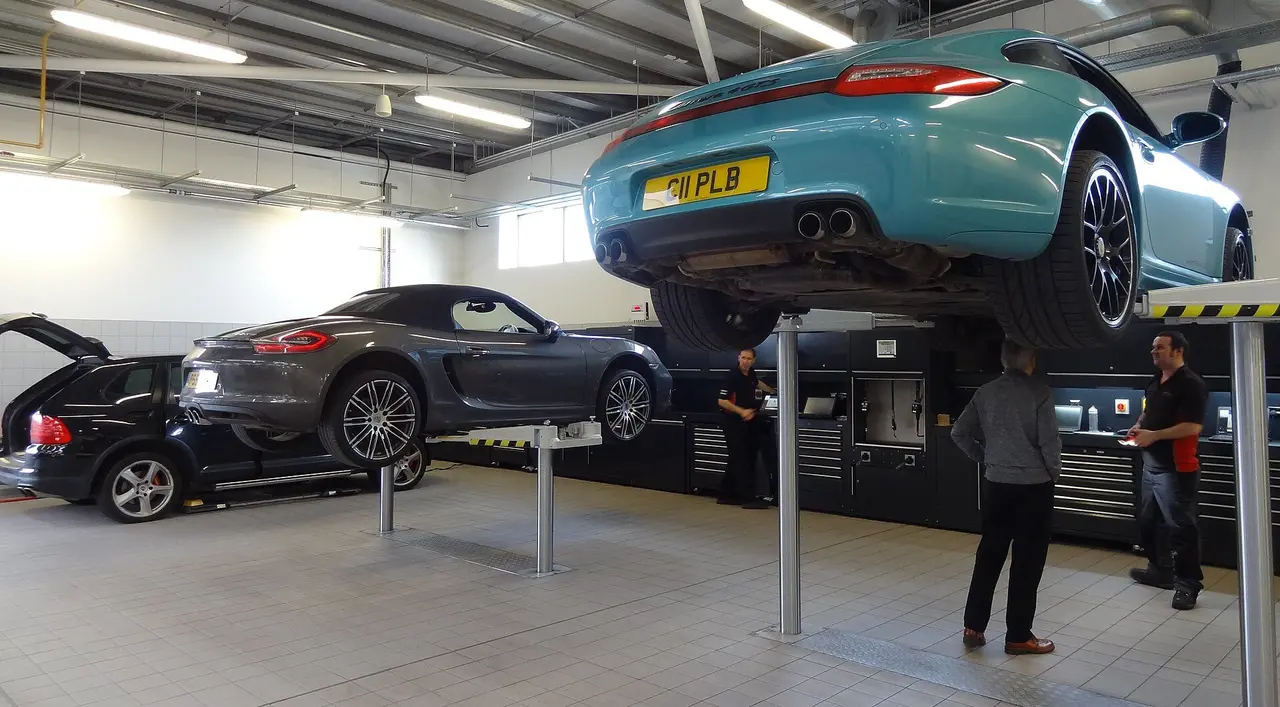
The lift is the equipment you will use most, and also the most dangerous. The three common types in Vietnamese garages are the two-post lift (Figure 1), the four-post lift (the car drives onto two runways) and the scissor lift (low and compact).
Finding the correct lift points
- Read the owner's manual or repair information: the maker shows the 4 points for a lift and for a jack.
- Many cars have markings on the sill: notches, arrows or triangles stamped in the metal, near the front and rear wheels.
- Never place a lift arm under the thin floor pan, the exhaust, the fuel tank, an EV battery pack or a suspension arm (unless the documentation allows it).
- The rubber pads on the arms must be intact and set to the right height to sit flat against the lift point.
Lifting sequence: test, raise, lower onto the locks
- Drive the car between the posts and balance it as the lift instructions describe (move the arms to suit a nose-heavy car), apply the handbrake, switch off and take the key.
- Swing the arms under the 4 lift points and check each one by eye from both sides.
- Raise the car about 10–15 cm off the ground, stop, and gently rock the body at the front and rear. If it shifts or you hear slipping, lower it and start again.
- Raise it to working height, then lower it gently so the mechanical locks engage in their teeth (listen for the "clack" on both posts). Only then go underneath.
- When lowering: clear tools and drain pans from under the car, check nobody is nearby, raise slightly to release the locks, then lower slowly.
Start-of-shift checks and load limits
At the start of each shift, check that the locks on both posts work, the equaliser cables are not frayed, there are no hydraulic leaks and the arm restraints engage. Never lift a car heavier than the capacity marked on the lift (common garage two-post lifts are about 3.5–4.5 tonnes). Lifts must be maintained and inspected regularly according to the manufacturer's instructions and current occupational safety rules in Vietnam; ask the workshop manager about the inspection schedule, and if a lift behaves abnormally, report it immediately and tag it out of use.
Removing heavy parts: add a safety stand
Removing a gearbox, rear axle, engine or suspension assembly shifts the car's centre of gravity, and the car can tip towards one end on the lift. Use a tall under-hoist safety stand (Figure 2) or a transmission jack to give extra support under the body or the assembly being removed, as the repair information directs.
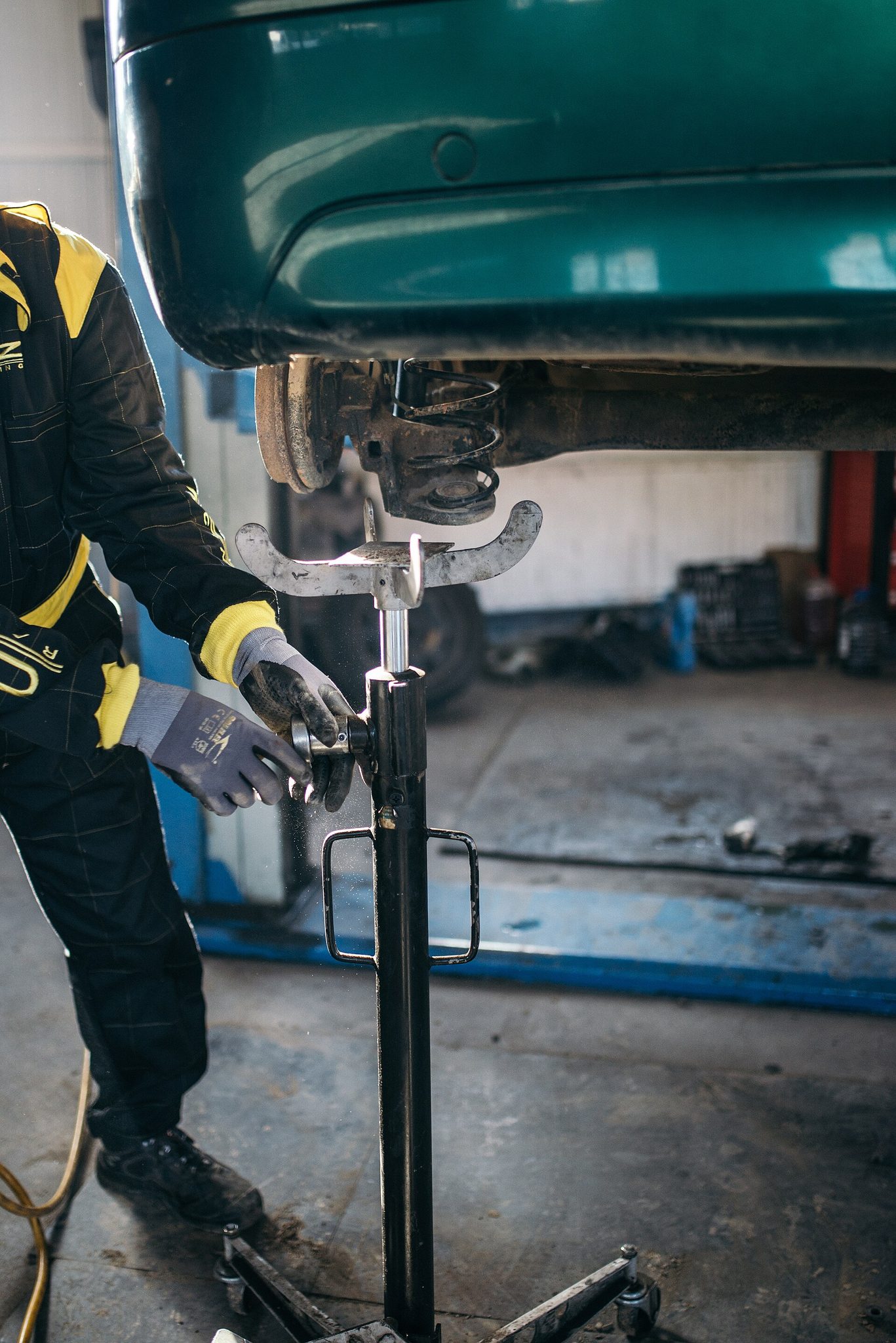
Photo: Shixart1985 / Wikimedia Commons, CC BY 2.0
Jacks, axle stands and wheel chocks when there is no lift
In a small garage, at a roadside call-out or when changing tyres, you will lift cars with a trolley jack. The golden rule: a jack is for lifting only, never for supporting a car while someone is underneath.
The jack lifts, the stands support
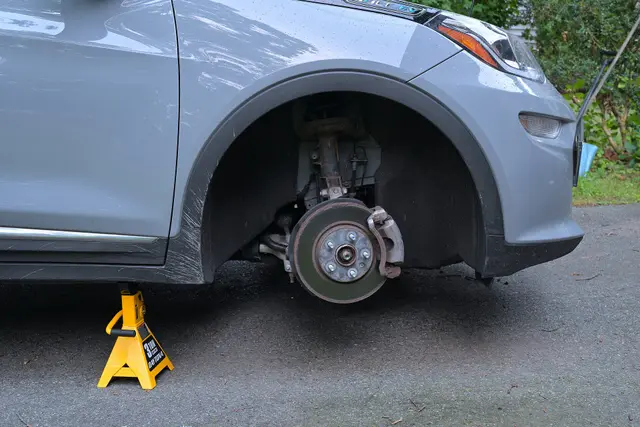
A hydraulic jack can slowly lose pressure or slip off its point; the mechanical jack supplied with a car (as in Figure 3) is only for changing a wheel at the roadside. After lifting, place axle stands of suitable capacity under the points intended for stands, lower the car slowly onto them, and leave the jack lightly in contact as a backup. Always use stands in pairs on flat concrete, never on bricks or scraps of wood.
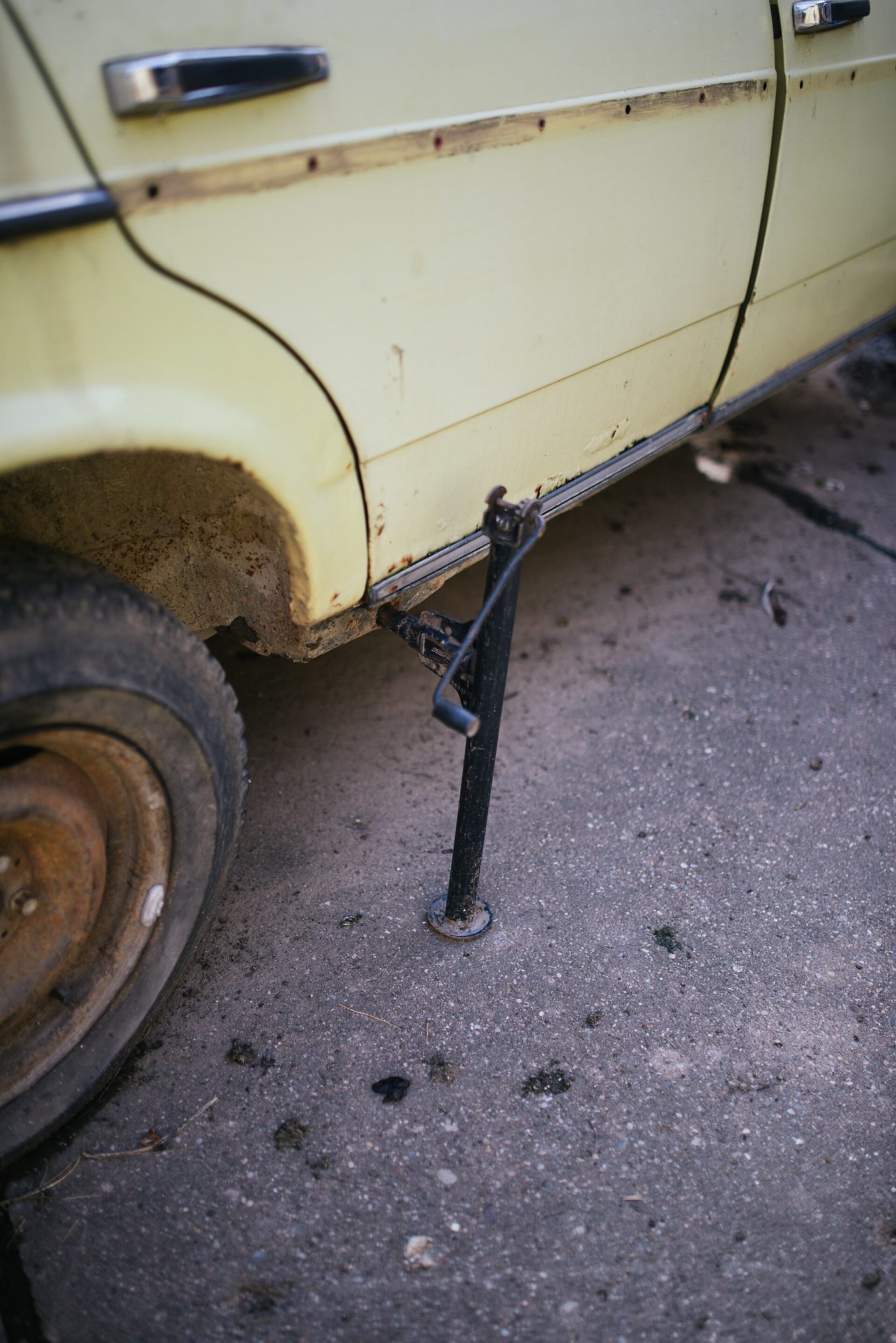
Photo: Shixart1985 / Wikimedia Commons, CC BY 2.0
Chocking the wheels and securing the car
- Chock (Figure 4) the wheels at the opposite end to the one being lifted: lifting the front means chocking both rear wheels front and back.
- Put an automatic in P and a manual in first or reverse, and apply the handbrake (remember it usually locks only the rear wheels).
- Remove the key or keep the smart key well away from the car, and hang a "Under repair, do not start" tag on the steering wheel.
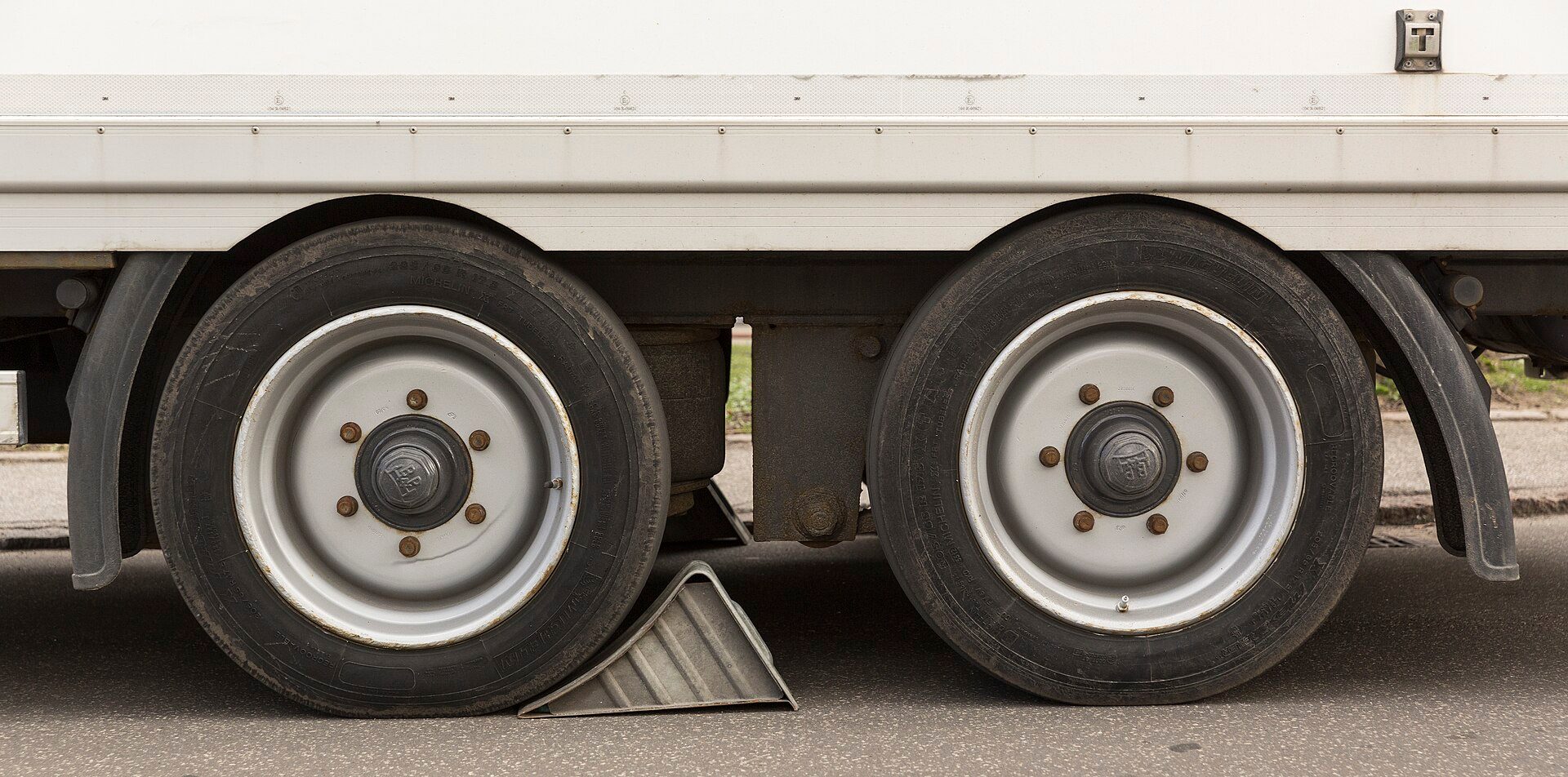
Photo: Villy Fink Isaksen / Wikimedia Commons, CC BY-SA 4.0
Ground and work position
Only lift a car on level, solid ground. Slopes, dirt and asphalt softened by the sun can let stands sink or jacks tilt. At the roadside, switch on the hazard lights, place a warning triangle behind the car and work from the side away from traffic.
Hot oil, coolant, brake fluid and petrol: safe handling
Safety warning: Never open the radiator cap or expansion tank cap while the engine is hot; wait until it has cooled completely, cover the cap with a thick rag and turn it slowly to the pressure-release notch first. Freshly drained engine oil can be very hot: wear gloves and glasses, stand out of the oil stream and keep your hand away from beneath the drain hole. If brake fluid gets in your eyes, rinse with clean running water for at least 15 minutes and see a doctor; if someone swallows coolant or petrol, do not induce vomiting, call 115 (Vietnam's ambulance number) or go to a medical facility immediately. No smoking, grinding or welding near where petrol is being drained; spread oil absorbent on spills and clean them up at once. Run engines indoors only with an exhaust extraction hose or good ventilation.
Engine and gearbox oil
Draining oil while the engine is warm helps it flow out completely, but do not drain it the moment a car arrives after a long drive. Use a drain pan big enough for the job (a car's engine oil is usually about 3.5–5 litres) and place it offset in the direction the oil will spurt (Figure 6). If the drain plug falls into the pan, fish it out with a magnet rather than putting your hand into hot oil.
Coolant
Ethylene glycol coolant tastes sweet and is poisonous to people and pets. Never store old coolant in drink bottles and never pour it down the drain. Clean up spills to prevent slips and to keep children, dogs and cats from licking them at a customer's home.
Brake fluid
DOT 3 and DOT 4 brake fluids absorb moisture from the air and damage paint. Wipe around the reservoir cap before opening it (Figure 5), close it as soon as you have topped up, and never reuse old fluid or fluid from a bottle that has been open a long time. If brake fluid lands on paint, wash it off with water at once.
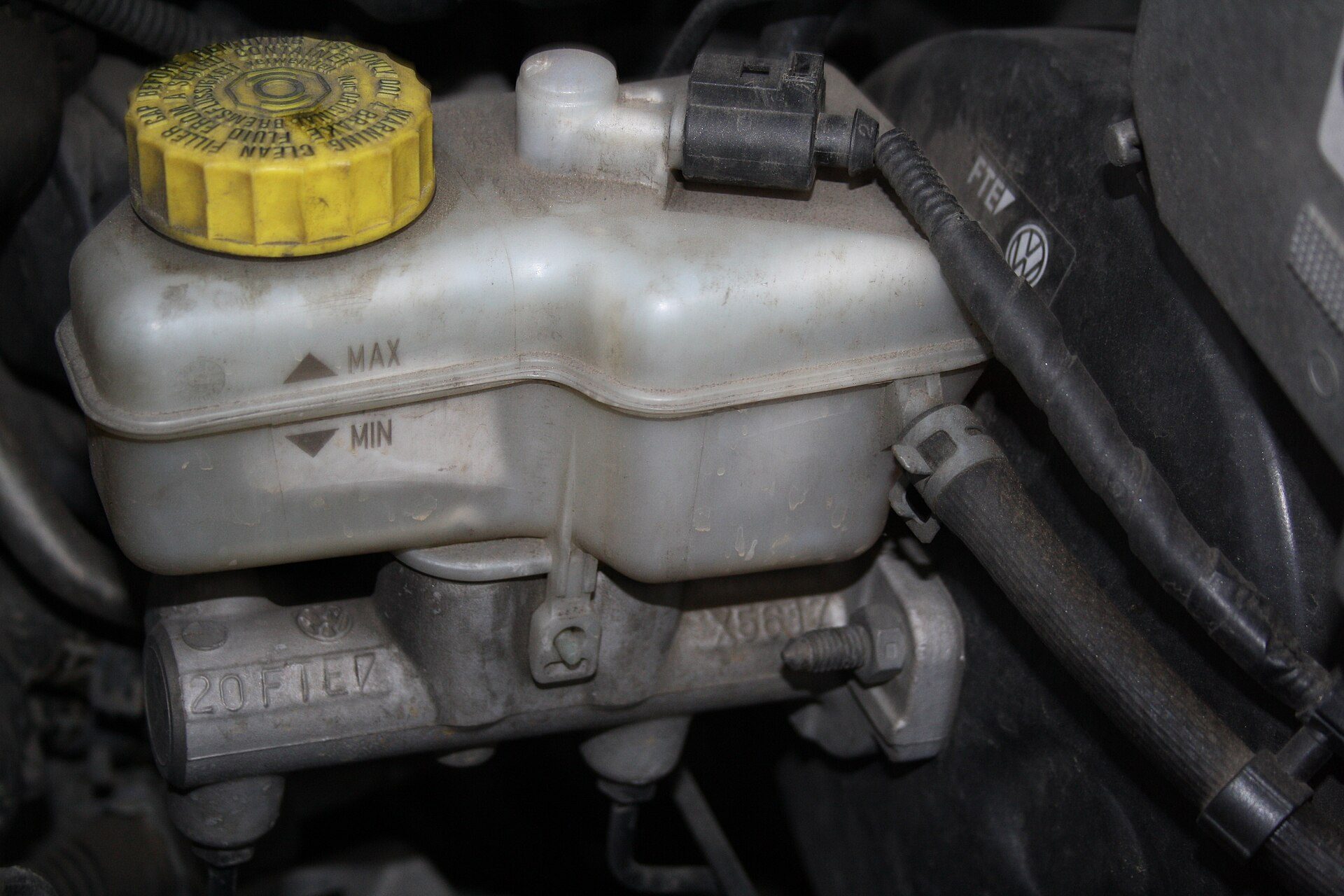
Photo: Frettie / Wikimedia Commons, CC BY 3.0
Petrol, diesel and batteries
Petrol vapour is heavier than air and collects in pits and trenches. Draining fuel or removing a fuel pump must be done in a ventilated area, away from ignition sources, with an extinguisher at hand. Lead-acid batteries can give off hydrogen when charging; disconnect the negative terminal first and reconnect the positive first, as explained in the lesson how to disconnect a car battery safely.
Personal protective equipment and waste collection
Minimum PPE for a new technician
- Safety boots with protective toecaps and slip- and oil-resistant soles.
- Safety glasses when working under cars, draining oil, grinding or using compressed air.
- Nitrile gloves when handling oil, coolant and brake fluid; mechanic's gloves when handling sharp parts.
- Overalls that fit closely with no loose sleeves; long hair tied back; no rings or bracelets when working on electrics or near rotating parts.
- Earplugs for impact guns and grinders; an organic vapour respirator when using cleaning solvents in enclosed spaces.
Used oil, old filters and rags: never down the drain
Used engine oil, old oil filters, oily rags, old brake fluid, old coolant and dead lead-acid batteries are hazardous waste. The general principle: collect them in separate lidded containers, label each type, store them under a roof with a spill bund, and hand them over to a licensed waste handler. Stand old oil filters upside down to drain before binning them. A workshop's duties to register and keep records for hazardous waste follow current environmental regulations in Vietnam; the workshop manager should check with the local environmental authority to get it right.
Fire prevention in the workshop
Fire extinguishers belong on walkways, with in-date inspection tags. Do not pile oily rags in a warm corner; put them in a lidded metal bin. On your very first day, find out where the workshop's main switch and emergency exits are.
Worked example: an oil change on a two-post lift
Tuan, a new technician who has been at the garage for 2 weeks, receives a 1.5-litre sedan for a scheduled oil and filter change. The senior mechanic asks him to carry out every safety step and time each one so they can review it afterwards. The service items by mileage are covered in the lesson car service schedule by mileage; here we focus only on safety.
Steps and timing
| Step | Main safety actions | Time |
|---|---|---|
| 1. Receive the car | Seat, steering wheel and floor covers; record mileage; take the key, tag the steering wheel | 5 minutes |
| 2. Position on the lift | Centre the car, find the 4 lift points in the documentation, swing the arms, check from both sides | 5 minutes |
| 3. Raise the car | Raise 10–15 cm, rock test, raise, lower onto the locks on both posts | 3 minutes |
| 4. Drain oil, change filter | Nitrile gloves, glasses; drain pan offset with the oil stream; old filter stood upside down | 15 minutes |
| 5. Underbody check | Inspection lamp; look for leaks and torn rubber; do not touch a hot exhaust | 7 minutes |
| 6. Refit drain plug, lower car | Torque the drain plug to specification with a torque wrench; clear pans and tools; look around, then lower | 5 minutes |
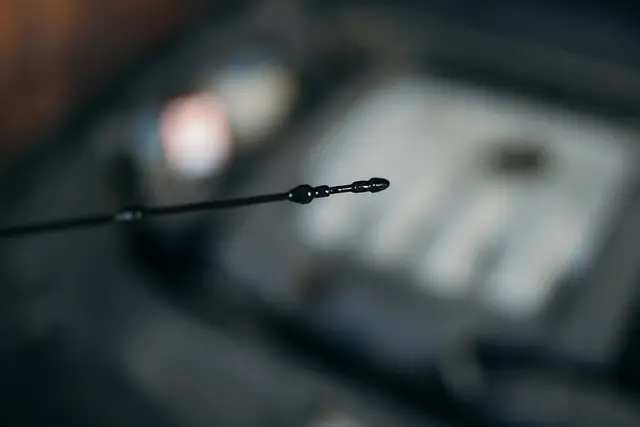
| 7. Refill, check, clean up | Run the engine with exhaust extraction, check for leaks and the dipstick; used oil into its own container; wipe the floor | 10 minutes |
| Total time | 50 minutes | |
Check: 5 + 5 + 3 + 15 + 7 + 5 + 10 = 50 minutes. The safety actions (covering the car, the test lift, lowering onto the locks, clearing up before lowering, collecting the oil) add up to only about 10 minutes, but they are the first thing a senior mechanic looks at when judging a newcomer.
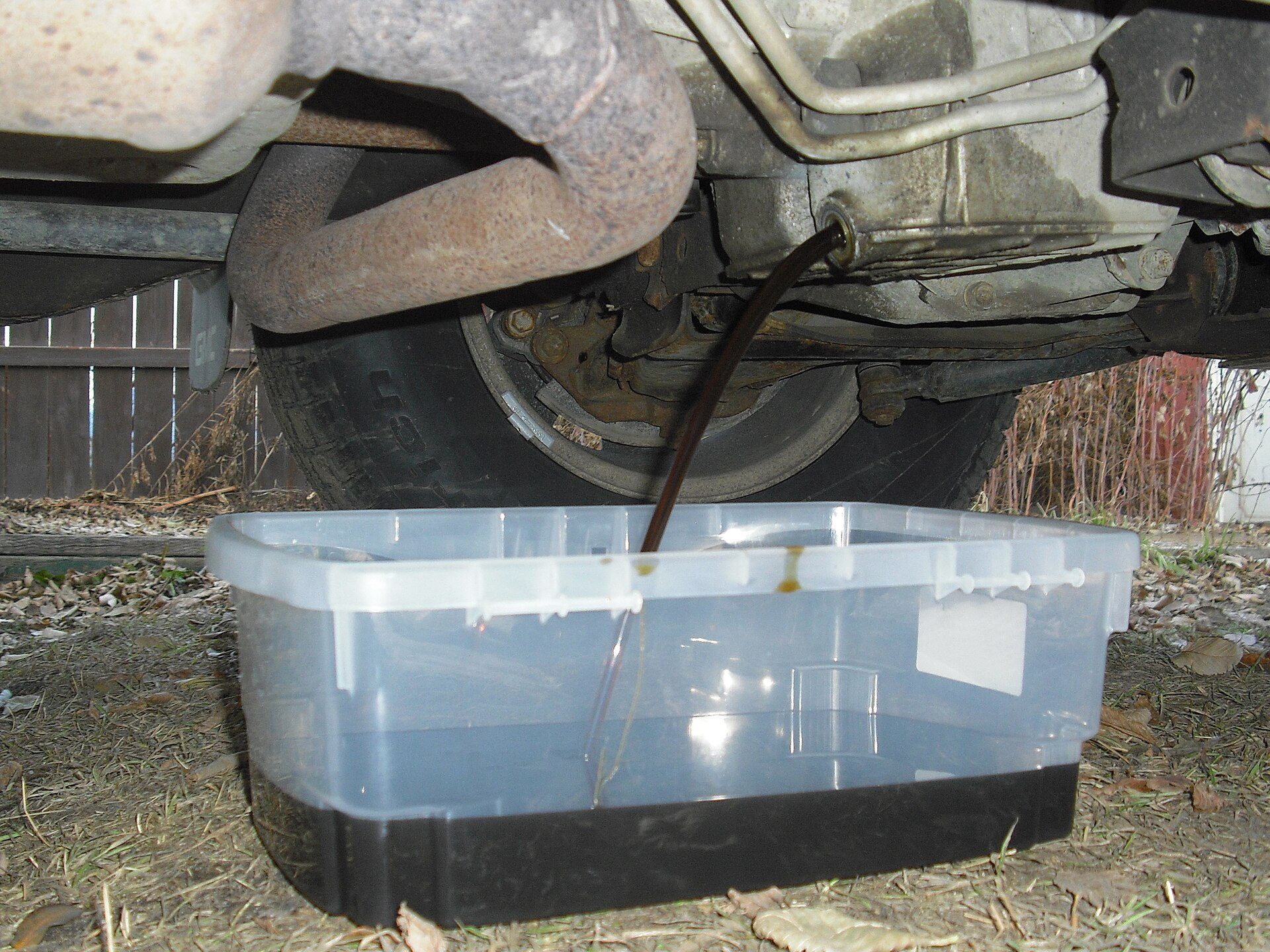
Photo: Myke Waddy / Wikimedia Commons, Public domain
Tuan's PPE (reference prices for 2026 in Vietnam, depending on where you buy)
| Item | Reference price |
|---|---|
| Safety boots with toecaps, oil-resistant soles | 450,000 VND |
| Safety glasses | 60,000 VND |
| Nitrile gloves (box of 100) | 150,000 VND |
| PU-coated mechanic's gloves | 50,000 VND |
| Overalls (2 sets) | 400,000 VND |
| Earplugs | 30,000 VND |
| Organic vapour respirator | 250,000 VND |
| Total | 1,390,000 VND |
Check: 450,000 + 60,000 + 150,000 + 50,000 + 400,000 + 30,000 + 250,000 = 1,390,000 VND (about 53 USD). Many garages supply overalls and gloves to staff, so ask before buying to avoid doubling up.
Common mistakes new technicians make
Going under the car before the lift is on its locks
Symptom: the lift is held only by hydraulic pressure and the locks have not engaged. Cause: rushing and skipping the lower-onto-locks step. Fix: make it a habit to hear the "clack" on both posts and look at the locks before stepping in.
Placing lift arms under the floor pan or a suspension arm
Symptom: a dented floor, the car tilting as it rises, metallic creaks. Cause: lift points not looked up. Fix: check the documentation, find the marks on the sill, and check all four arms before raising beyond 15 cm.
Opening the radiator cap on a hot engine
Symptom: steam and boiling coolant spray onto your face and hands. Cause: wanting to check quickly for the customer. Fix: wait for it to cool, cover with a thick rag, turn to the pressure-release notch; check the level against the marks on the expansion tank when the engine is cold.
Pouring used oil out with wash water
Symptom: oil slicks in the workshop drains. Cause: not bothering to walk to the used oil container. Fix: keep the used oil container near the lift, with a funnel and lid, clearly labelled.
Frequently asked questions
Where are the lift points on a car?
Usually on the lower sills on both sides of the body, near the front and rear wheels, marked with notches or stamped symbols. The exact positions are in each car's owner's manual or repair information; for electric cars with a battery pack under the floor, following the documentation is even more critical.
Can you go under a car supported only by a jack?
No. A jack is for lifting only; when anyone is under the car, it must sit on correctly rated axle stands or a lift lowered onto its locks, with the wheels chocked.
What should you do if brake fluid gets in your eyes?
Rinse the eyes immediately with clean running water for at least 15 minutes, remove contact lenses if worn, then see an eye doctor. Prevent it by wearing safety glasses whenever you work on brakes.
How should a garage dispose of used engine oil?
Collect it in a separate lidded, labelled container, never mixed with water or general waste, and hand it to a licensed hazardous waste handler. The workshop completes the paperwork required by current environmental regulations.
Practice exercises and self-assessment
- Look up and point out the 4 lift points on 3 different cars in the workshop (at least 1 SUV), and photograph each point.
- Under a senior mechanic's supervision, raise a car on a two-post lift following all 5 steps and have it assessed.
- Support a car with a jack, 2 axle stands and wheel chocks on level ground.
- Draw a map of your workshop showing the used oil container, rag bin, extinguishers, main switch and emergency exits.
Self-assessment criteria
- Pass: you identify 4 out of 4 lift points on all 3 cars; you do the 10–15 cm test lift and lower onto the locks on both posts without being reminded.
- Pass: stands are used in pairs on level ground, chocks are on the correct side, and the car is in gear or P with the handbrake on.
- Pass: you can explain what to do if brake fluid gets in an eye and why the radiator cap must not be opened hot.
- Not yet: you go under a car before the locks engage, support a car only on a jack, or pour used oil down a drain.
Once you can work safely, move on to the next step of the roadmap: Car systems, tools & torque specs, where you learn the main systems of a car, choose the right sockets, spanners and torque wrench, and tighten wheel nuts and drain plugs to the maker's torque.
Keep learning car repair: after workshop safety come car systems and torque, servicing by mileage, brakes, suspension and steering, engines, gearboxes and OBD2 diagnostics, and a garage placement. See the 8-step auto mechanic roadmap.