Learning motorbike repair in Vietnam takes about 3–6 months to handle basic servicing, 1–2 years to become a lead mechanic who can fix most common faults alone, and usually 3–5 years of real work before you have the skill, regular customers and savings to open your own shop. Tuition ranges from almost nothing (apprenticing in a shop) to tens of millions of VND (long vocational programmes). This lesson helps you choose a way of learning that fits your budget, understand realistic pay at each level and work out how much capital you need to open a shop.
By the end of this lesson, you will be able to:
- Answer "how long does it take to learn motorbike repair" using 3 skill milestones, with the jobs you can do at each one.
- Compare 4 ways of learning by duration, reference tuition for 2026 and the certificate you receive.
- Estimate a motorbike mechanic's pay by level and region without being fooled by "huge income" adverts.
- Draw up a capital budget for a small repair shop and work out the payback period.
- Prepare for the elementary vocational certificate exam and the basic paperwork for opening a shop.
Where to start? NAMBIN splits the motorbike mechanic trade into 8 steps, from workshop safety to certification and opening a shop. See the 8-step motorbike mechanic roadmap to see what each step covers and the order to learn them in.
Quick answer: how long does it take to learn motorbike repair?
In this trade, "finishing your training" is not the day you receive a certificate; it is the day customers trust you with their bike. Splitting the journey into three milestones helps you set the right expectations: you will not be fooled by "job-ready in one month" courses, and you will not lose heart thinking you must study for years before earning your first wage. (In this lesson, prices are given in Vietnamese dong; 1 million VND is roughly 40 US dollars.)
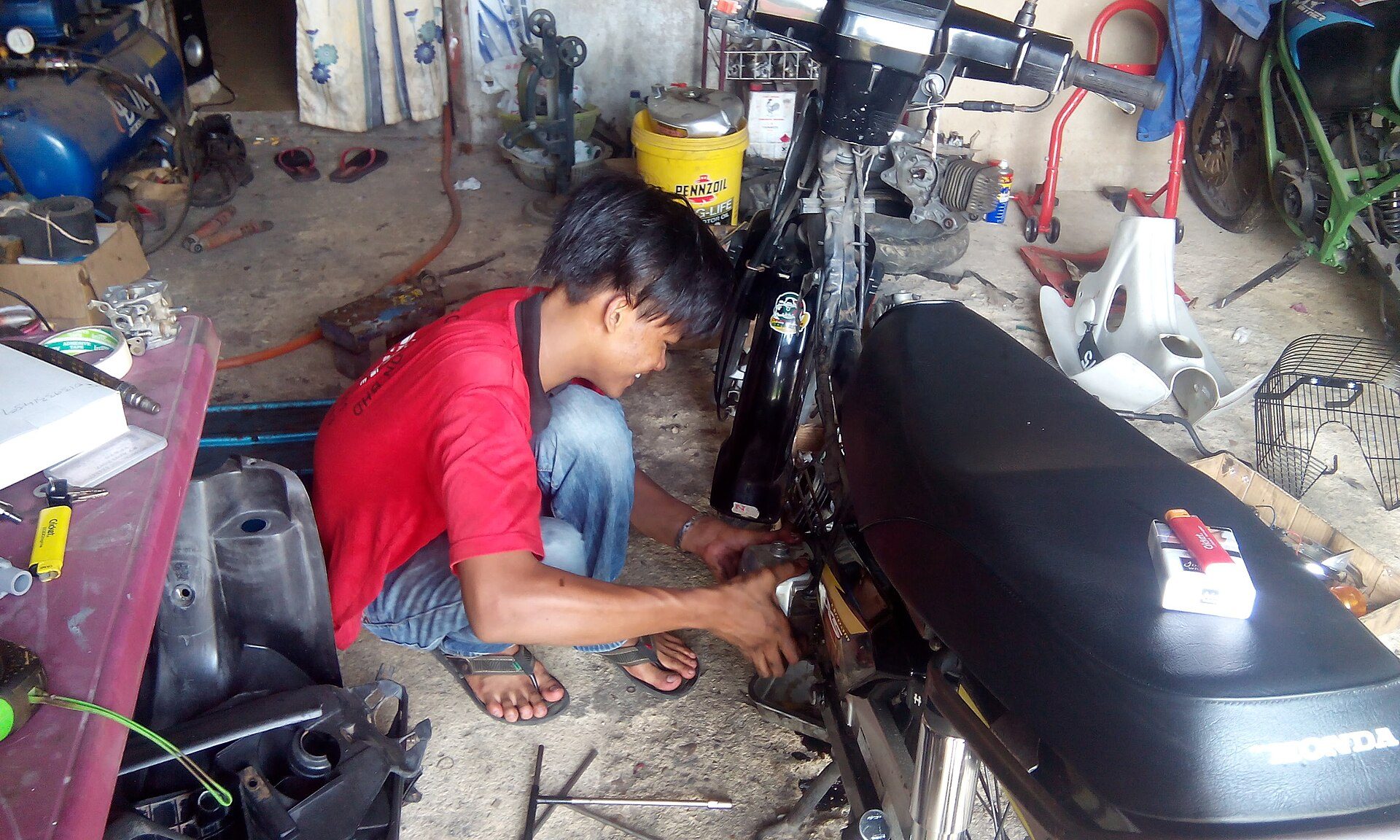
Photo: madmalaysia / Wikimedia Commons, CC BY-SA 4.0
Milestone 1: basic servicing — about 3–6 months
You can change the oil, clean the air filter, replace spark plugs, adjust the chain, repair punctures and replace brake pads following the correct procedure and torque. This group of jobs makes up most of a shop's customers, so shops are happy to take on apprentices to do this work under supervision. The roadmap lesson on how many kilometres between oil changes is an example of the knowledge you need at this milestone.
Milestone 2: lead mechanic — about 1–2 years
You diagnose and fix common faults on your own: bikes that won't start, batteries that keep going flat, sluggish scooters, handlebar vibration, fuel-injection warning lights. A lead mechanic takes in the bike, writes the job sheet, quotes the price and is responsible for the result. How fast you reach this milestone depends on how many jobs you get to do: a busy shop with a master mechanic who is willing to teach speeds things up a lot.
Milestone 3: skilled mechanic, ready to open a shop — usually 3–5 years
You overhaul engines, handle difficult faults that other shops send back, manage spare parts stock and keep regular customers. Opening a shop also needs capital, premises and business skills — things you cannot learn in a few months.
4 ways to learn motorbike repair: time and reference tuition in 2026
In Vietnam there are four common paths. Choose by asking three questions: how much money can you spend on training, how soon do you need an income, and do you need a certificate right away (for example, to apply to a manufacturer's dealer)?
| Way of learning | Duration | Reference tuition, 2026 | Hands-on practice | Certificate |
|---|---|---|---|---|
| Apprenticeship in a shop | 6–18 months | Usually free; some shops pay an allowance of 2–5 million VND/month | Almost all of it, on customers' bikes | None, unless you sit an exam separately |
| Short course at a training centre | 1–3 months | about 4–15 million VND | Varies, often 50–70% | Certificate of course completion |
| Vocational school, elementary level | about 3 months | about 3–8 million VND; may be subsidised under government schemes | About 70–80% | Elementary vocational certificate |
| Intermediate or college diploma (automotive/motorbike technology) | 1.5–3 years | School's annual tuition | Alternating theory and workshop | Intermediate or college diploma |
These figures are reference ranges for 2026; they vary by province and institution and are not the price list of any particular place.
Apprenticing in a shop: cheapest, but depends on the master mechanic
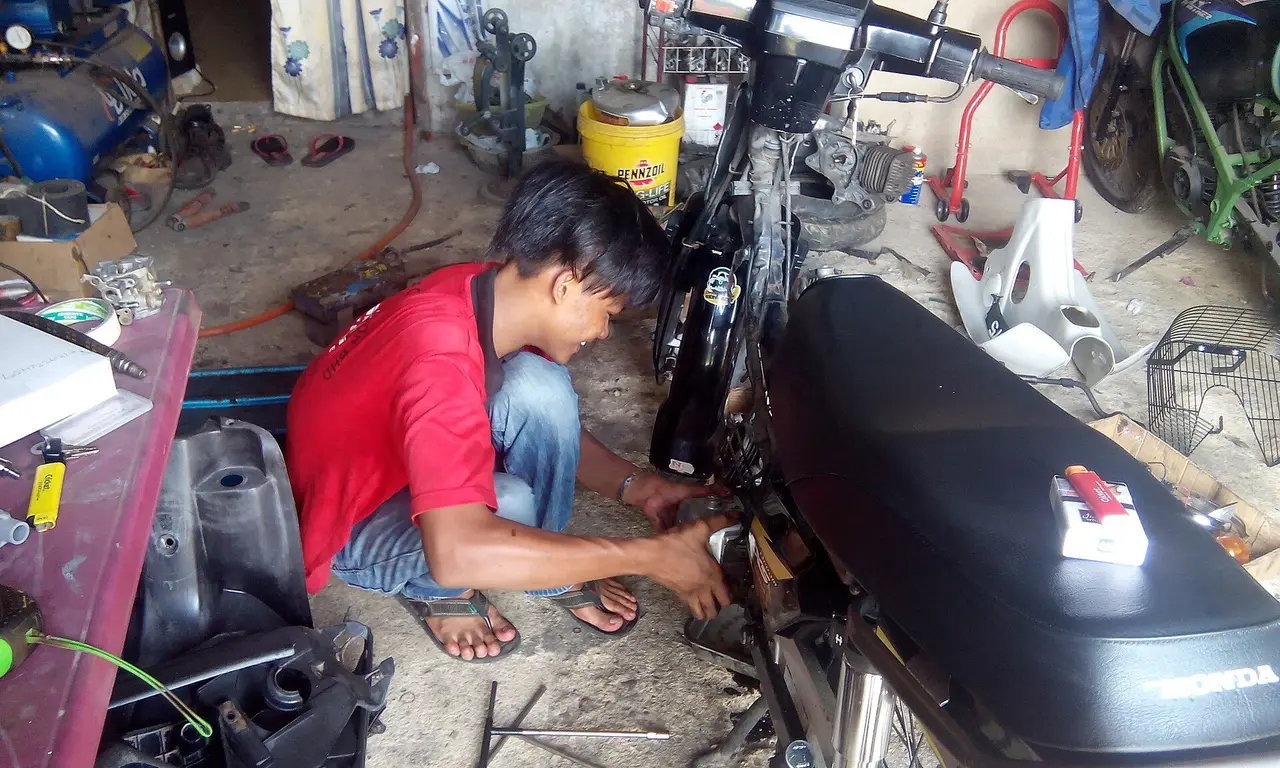
You join a shop as a helper: moving bikes, washing parts, passing tools, then gradually changing oil and fixing punctures (see Figure 2). The advantage is that you learn real work, receive an allowance, and many places provide meals or lodging. The drawback: foundation knowledge such as electrical circuits and fuel-injection principles is often taught as "just do what I do", and some shops keep you on manual chores for too long. Before you accept, ask clearly: after how long will you be allowed to do which jobs, how much is the allowance, and is there a fixed commitment period?
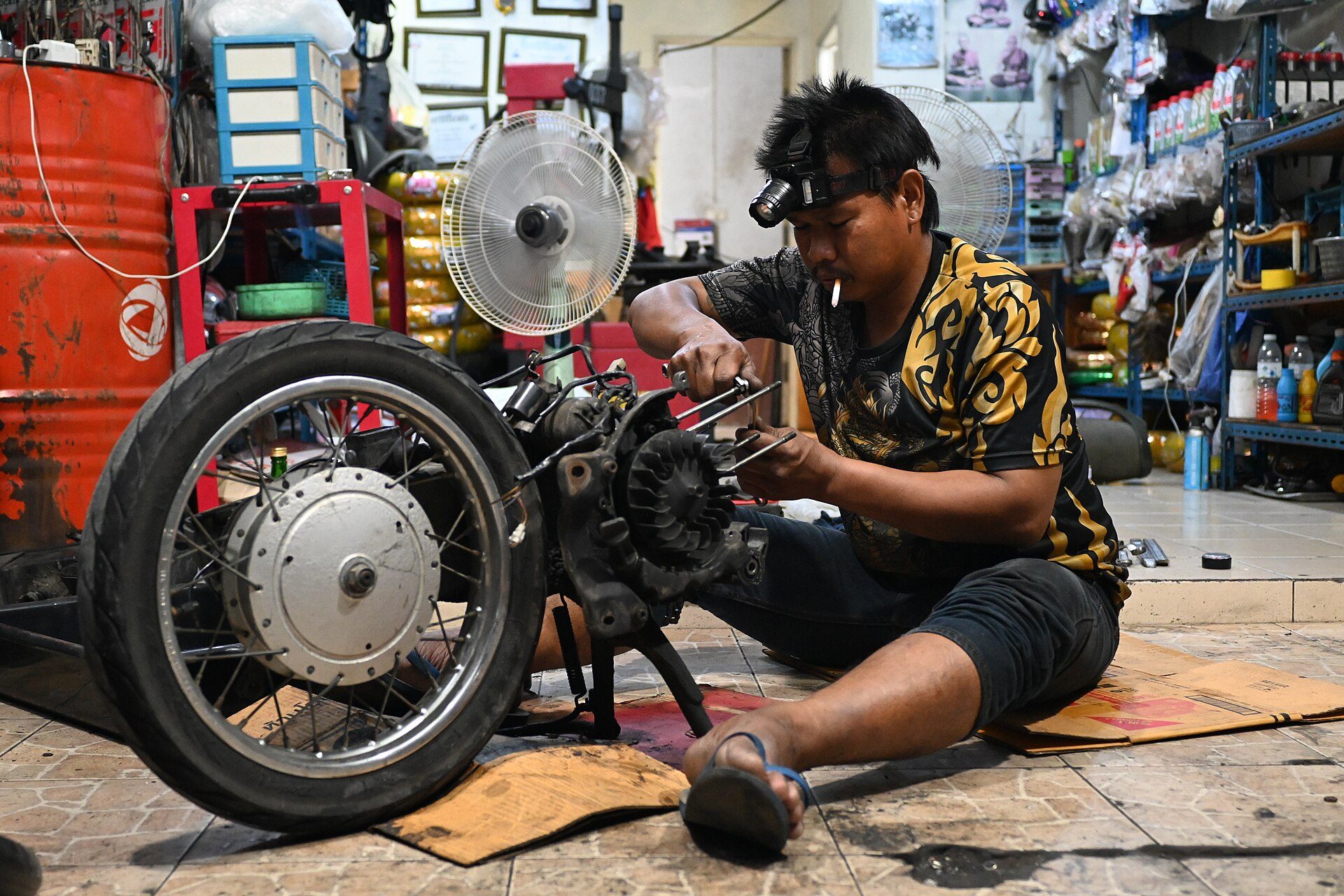
Photo: PattayaPatrol / Wikimedia Commons, CC BY-SA 4.0
Elementary vocational school: a certificate at a reasonable price
The elementary-level ("so cap") motorbike repair programme usually lasts about 3 months, combines theory with workshop practice, and ends with an exam for the elementary vocational certificate. Some groups, such as people receiving unemployment benefit or workers covered by social policy programmes, may receive tuition support — ask the local employment service centre or the school's training office. It is a good option for gaining a foundation and a certificate before starting an apprenticeship.
Short courses and long programmes
Short courses suit people who already have a foundation and need to learn one area quickly, such as fuel injection or scooters. Ask how many hours of hands-on practice on real bikes there are and how many students share each bike; if 6–8 people stand around one bike, you will rarely hold a tool. Intermediate and college programmes suit young people who want a thorough education and later want to work at a manufacturer's dealer, a large workshop, or move on to cars.
How much do motorbike mechanics earn? Reference table for 2026
A mechanic's income depends on skill, workplace and how pay is structured: a fixed wage, a share of labour charges, or a mix. The table below gives reference ranges for 2026; big cities usually pay more than the provinces, and none of these figures are guaranteed.
| Level | Typical years in the trade | Reference income per month | Notes |
|---|---|---|---|
| Apprentice | 0–6 months | 2–5 million VND (allowance) | Many places provide meals or lodging |
| Assistant or junior mechanic | 6 months – 1.5 years | 6–9 million VND | Servicing, brakes, tyres, basic electrics |
| Lead mechanic at a shop or dealer | 1.5–3 years | 9–15 million VND | May include a bonus on labour revenue |
| Skilled in FI, scooters, overhauls | 3–5 years or more | 12–20 million VND | Sought after by busy shops |
| Running your own shop | Usually from year 3–5 | 12–25 million VND, possibly more, or a loss | Depends on premises, customer numbers, capital |
Why two mechanics with the same experience can earn very different amounts
A mechanic who only does servicing and part swaps hits an income ceiling early. A mechanic who can read fuel-injection fault codes, cure sluggish scooters and overhaul engines properly gets higher-value work and customers seek them out. Each step in the roadmap — electrics, fuel injection, scooters and overhauls — is a step up in income.
Manufacturer's dealer or independent shop?
Dealers have set procedures, training on new models, special tools and diagnostic equipment; pay is stable and comes with social insurance. Independent shops see every kind of fault, old bikes and modified bikes — you learn many kinds of improvised fixes and how to talk to customers. Many skilled mechanics work at a dealer for a few years to build solid foundations, then leave to open their own shop.
What do you need to learn in motorbike repair?
Whichever path you choose, you must go through every knowledge group in the 8-step roadmap. If you skip a group, you will "pay" for it when a difficult bike arrives. Figure 3 shows engine disassembly — the part that demands the most patience and care.
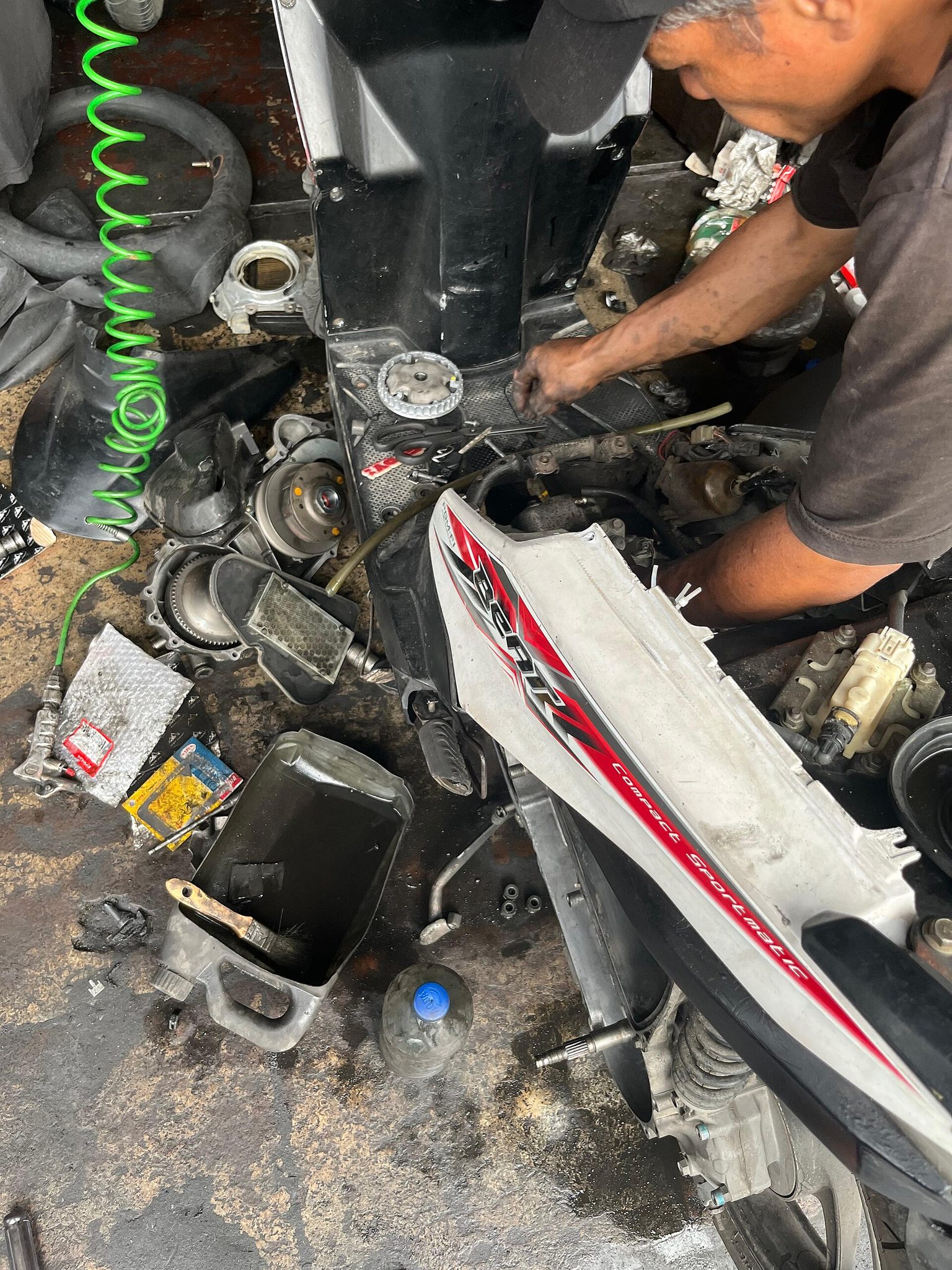
Photo: Dyalim / Wikimedia Commons, CC BY-SA 4.0
Foundation group: safety, tools, servicing
Fire prevention when draining fuel, handling used oil, supporting the bike securely; using the right sockets, spanners, torque wrench and circlip pliers; service schedules for manual bikes and scooters. This is the first thing a shop checks when you ask to apprentice.
Vehicle safety group: brakes, tyres, chain, suspension
Replacing brake pads, bleeding hydraulic brakes, repairing tubeless tyres, replacing chain and sprockets. Mistakes in this group directly endanger the customer's life, so every torque value must be right.
Diagnostic group: electrics, fuel injection, scooters
Testing the battery, charging and starting systems; reading FI fault codes; servicing the CVT clutch and drive belt; dismantling the engine to measure cylinder and piston. The lesson on motorbikes that won't start is an example of measurement-based diagnosis that a lead mechanic must master.
Vocational certificates and the paperwork for opening a shop
Many shops still take on people without certificates, but a certificate makes it easier to get into a dealer or large workshop and serves as proof of skill when customers ask. Opening a shop also involves business registration and environmental responsibilities.
Preparing for the elementary vocational certificate exam
The elementary vocational certificate is issued by a licensed vocational education institution after you complete the course and pass the exam. The exam usually has a theory part (engine principles, electrical system, safety) and a practical part (disassembly and assembly, servicing, diagnosing one fault). An effective way to revise: redo every exercise in the roadmap yourself, write torque values and standard specifications in a notebook, and ask a lead mechanic to grade one complete practical task before exam day.
Household business registration, price list and Google Maps
Small shops usually register as a household business at the business registration office of the commune or ward where the shop is located; ask the local tax office how to declare tax, because the rules for household businesses are changing. A clearly displayed price list for labour (oil change, puncture repair, brake pad replacement and so on) builds trust and reduces arguments. Create a Google Maps listing with real photos, opening hours and a phone number — riders who break down on the road often search for "motorbike repair near me".
Spare parts and used oil
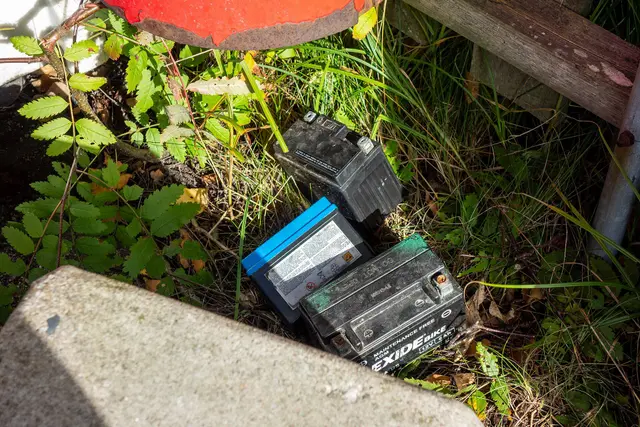
Choose parts suppliers you can trust and who provide invoices; tell customers clearly which parts are genuine and which are aftermarket, and the price of each. Used oil, dead batteries and oily rags are hazardous waste: store them separately in lidded containers and sign a contract with a licensed collection company.
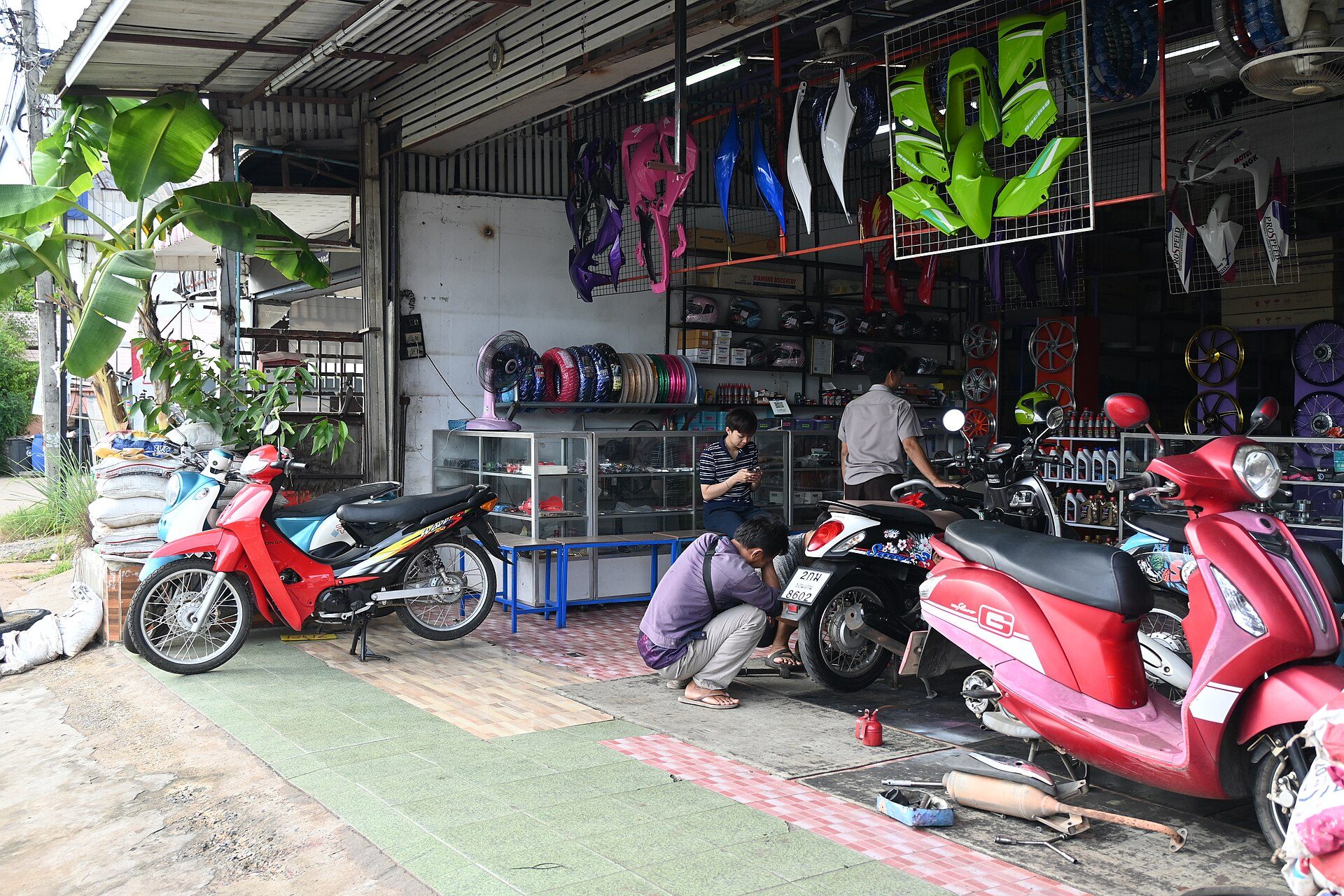
Photo: PattayaPatrol / Wikimedia Commons, CC BY-SA 4.0
Safety warning for opening a shop: a repair shop always contains petrol, oil, batteries, grinders and welders — the fire risk is very high. Keep a fire extinguisher (dry powder or CO₂) where it is easy to reach, never drain petrol near a flame or power socket, ban smoking in the shop, keep wiring tidy and fit a residual-current circuit breaker against electric shock. Put the bike on its centre stand or a solid stand before removing a wheel; wear eye protection when grinding or using compressed air.
Worked example: Tuan, 19, a 4-year plan to his own shop
Tuan lives in a small provincial town, has just finished secondary school, has 5 million VND in savings and wants to open a repair shop in his family's street-front house. He draws up the following plan (all figures are illustrative, reference 2026).
Year 1: elementary vocational course, then apprenticeship
- Months 1–3: elementary motorbike repair course, tuition 4 million VND, earning the elementary certificate.
- Months 4–12: apprentice at a busy shop, allowance 3 million VND/month × 9 months = 27 million VND, lunch provided.
- End of year 1: confident with servicing, brakes and tyres; about 300 oil changes completed.
Years 2–3: lead mechanic at a dealer, saving capital
- Average lead mechanic pay 10 million VND/month; spending 6 million/month; saving 4 million/month.
- Savings over 24 months: 4 × 24 = 96 million VND.
- Learns fuel injection and scooters at the dealer; overhauls an old bike himself for practice.
Year 4: the capital budget for the shop
| Item | Reference cost |
|---|---|
| Basic tool set (sockets, spanners, torque wrench, circlip pliers, multimeter, compression gauge) | 25 million VND |
| Air compressor, air gun, puncture repair kit | 10 million VND |
| Bike lift or stands | 12 million VND |
| Initial stock of parts and oil | 30 million VND |
| Sign, shelving, electrics, fire extinguisher, used-oil drum | 8 million VND |
| Reserve for the first 3 months' costs | 15 million VND |
| Total | 100 million VND (about 4,000 USD) |
Check: 25 + 10 + 12 + 30 + 8 + 15 = 100 million VND. Tuan's money: 5 million at the start minus 4 million tuition leaves 1 million; in year 1 he saves another 5 million from his allowance; in years 2–3 he saves 96 million — a total of 1 + 5 + 96 = 102 million, just enough because he pays no rent. If he had to rent, say at 5 million a month with a 2-month deposit and 1 month in advance, he would need another 15 million. If the shop makes a net profit of 15 million a month after costs, the 85 million of capital (excluding the reserve) pays back in about 85 ÷ 15 ≈ 6 months; a new shop usually takes a few months to build a customer base, so a realistic plan is 9–12 months.
Common mistakes when choosing how to learn
Believing "one month to job-ready, open a shop straight away"
Symptom: promises of high income, very short training, little practice on real bikes. Cause: comparing by duration and price instead of the number of jobs you actually do. Fix: ask exactly how many practical hours there are and how many students share each bike; treat a short course as a foundation and still plan for an apprenticeship afterwards.
Stuck on manual chores as an apprentice
Symptom: after 6 months you are still only washing and moving bikes. Cause: no learning plan agreed with the shop owner. Fix: propose concrete milestones (which month you start oil changes, brakes, electrics); study theory alongside the roadmap to prove you are ready.
Opening a shop with no regular customers and no cash-flow plan
Symptom: all the capital goes on tools, and by the second month there is no money to buy parts. Cause: no reserve. Fix: keep at least 3 months of costs in reserve, and open the shop where you already have regular customers or a network of people who know you.
Frequently asked questions
How soon after starting can I earn a wage?
Shop apprentices usually receive an allowance from the start. If you take an elementary vocational course of about 3 months and then work as an assistant mechanic, reference pay is 6–9 million VND a month once you can handle basic servicing.
Where is the best place to learn motorbike repair?
Combine the two: build your foundation at a vocational school that issues a certificate, then apprentice at a busy shop or dealer with a master mechanic willing to teach. Prioritise places that let you work on real bikes as much as possible.
Is a motorbike mechanic's pay good?
Reference for 2026: junior mechanics 6–9 million, lead mechanics 9–15 million, skilled mechanics 12–20 million, shop owners 12–25 million VND a month, depending on region and customer numbers. These are not guaranteed figures; income rises most clearly when you become good at electrical and fuel-injection diagnosis.
How much capital do I need to open a motorbike repair shop?
A small shop on premises you already have: about 80–150 million VND (roughly 3,200–6,000 USD), depending on how many tools and how much stock you buy. If you rent, add the deposit and a few months' rent.
Can women learn motorbike repair?
Yes. Electrical diagnosis, fuel injection and customer service do not require great strength, and heavy work is helped by equipment such as bike lifts and torque wrenches. What matters is care for detail and not minding oil and grease.
Exercise: build your own learning plan
- Write down how much money you can spend on training and how many months you can live on a low income.
- Choose 2 ways of learning from the comparison table; call at least 2 places and ask about practical hours, students per bike and the certificate you receive.
- Set dates for the 3 skill milestones: which month you will handle servicing, which year you will be a lead mechanic, which year you will be ready to open a shop.
- Draw up a shop capital budget following Tuan's template, using real prices in your area.
Self-assessment criteria
- Pass: your plan has concrete dates, includes at least one apprenticeship period on real bikes and a date for the elementary certificate exam.
- Pass: your capital budget covers tools, parts, fire safety and a 3-month reserve, and the total adds up correctly.
- Not yet: your plan just says "take a crash course and open a shop", has no reserve, or is missing a fire extinguisher and somewhere to store used oil.
This is the last step of the roadmap — Vocational certificate, price list and opening a shop. To revise, work backwards through the steps: routine servicing; brakes, tyres and chain; electrics and starting; fuel injection; scooters and overhauls — and for each step redo one practical exercise and have it graded. Once you have a shop, you can grow further by specialising in big bikes or electric motorbikes, or by moving on to cars. See the 8-step motorbike mechanic roadmap.