A client calls: "Every time the toilet upstairs flushes, the bathroom basin goes glug-glug." Another says the floor drain bubbles and gurgles whenever the washing machine empties. Nothing is overflowing yet, so it is tempting to ignore. But a gurgling drain is the drainage system telling you something: air is being forced through water where it should not be.
This guide explains what the sound means, how to find the cause from which fixture gurgles, when, and whether one or several fixtures are involved, and how to fix each cause: partial blockages, blocked or missing vents, faulty air admittance valves, trap siphonage, and problems at the main drain, sewer or septic tank.
Scope of this guide. This article is for trainee and working residential plumbers, and for homeowners who want to understand the problem before calling one. It focuses on diagnosing the sound. For full unblocking methods, see our separate guides on blocked floor drains, kitchen sink grease blockages, blocked toilets and full septic tanks. Drainage rules differ between countries and buildings; where a change to the vent or stack is needed, follow local regulations and the product manufacturer's instructions. Any figures below are for reference only.
What a gurgling drain is telling you
Every fixture (basin, sink, shower, floor drain, toilet) is connected to the drain through a trap: a bend or cup that always holds some water. That water, the trap seal, blocks sewer gas from coming back into the room.
When water runs down a pipe it pushes air in front of it and pulls air behind it, a bit like a piston. A drainage system stays quiet when air can move freely in and out through a vent, an open pipe that usually rises above the roof. If air cannot get in or out easily, the pressure in the pipe changes:
Negative pressure (suction). Falling water pulls air from the easiest place it can find, often through the water in a nearby trap. You hear a gurgle, and some of the trap water is sucked away.
Positive pressure. Water or air is pushed towards a trap from below, so bubbles burst up through the trap water, sometimes with a smell.
Partial blockage. Water and air pass the obstruction in slugs, so you hear glugging as air bubbles back up the pipe past the water.
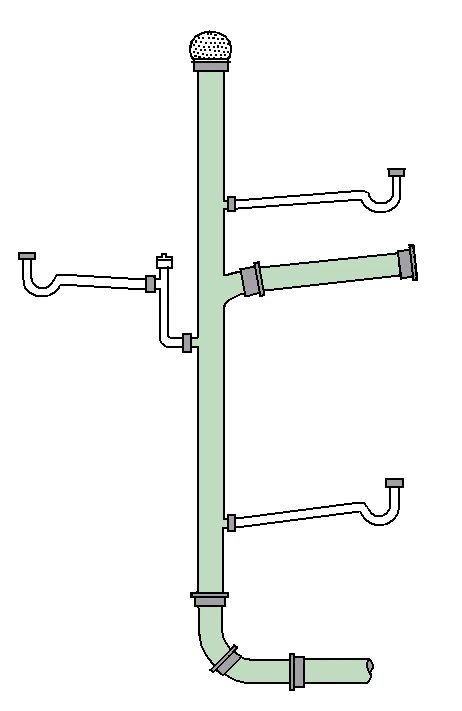
Figure 1. A drain-waste-vent stack: branch pipes with traps join a vertical stack, which continues up to an open vent terminal at the top and turns at the bottom into the main drain. The vent lets air in and out, so falling water does not suck or push the water out of the traps. (Diagram: Martin2Reid, Wikimedia Commons, CC BY-SA 3.0)
So gurgling is rarely "just noise": each gurgle can cost trap water, and a weak seal lets sewer gas in.
First, ask three diagnostic questions
Before you pick up any tool, ask the client (or observe yourself) and write down the answers.
1. Which fixture gurgles?
One fixture only: most likely its own trap, branch pipe or connection.
Several fixtures, especially on the lowest floor: more likely a shared pipe, the stack, the vent, or the main drain, septic tank or sewer.
2. When does it gurgle?
While that fixture drains (the basin gurgles as it empties): partial blockage in the branch, or self-siphonage of its own trap.
When a different fixture drains (the basin gurgles when the toilet flushes, the floor drain bubbles when the washing machine pumps out): an air-pressure problem in shared pipework, usually a vent issue, or a blockage downstream of both fixtures.
When nothing is in use (at night, on windy days, after heavy rain): neighbours on a shared stack, wind across the vent, or the sewer or septic system backing up.
3. What else is happening?
Does the water drain slowly? Slow drainage points towards a blockage. Normal speed with gurgling points more towards venting.
Does the toilet bowl water level drop, rise or bounce after another fixture is used?
Is there a sewer smell near a basin or floor drain? That often means trap water is being lost.
Does water come up in a floor drain or shower tray when something else drains? That warns of a downstream blockage; act soon.
Step 1: Rule out the simple single-fixture causes
If only one fixture gurgles and it also drains slowly, start there.
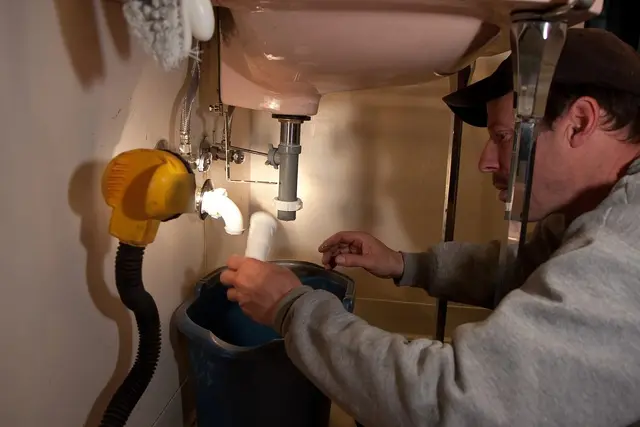
Clean the strainer and trap. Hair and soap (basins, showers), grease (kitchen sinks) and lint (floor drains) often cause a partial blockage just below the plug hole. Wearing gloves, with a bucket underneath, remove and clean the trap (our sink and floor drain guides cover this in detail).
Check the pop-up plug, which often collects hair.
Look for a sagging or squashed waste hose. Corrugated flexible wastes, common in Vietnamese homes, can sag into an extra U and trap air.
Refill and test. If the gurgle has gone and drainage is normal, the job may be done.
If the fixture drains well but still gurgles as the last water leaves, suspect self-siphonage (Step 3).
Step 2: Test fixtures one at a time and in combinations
When more than one fixture is involved, a simple test sequence will tell you a great deal. Work methodically and note the results.
Run each fixture on its own (release a full basin, run the shower, flush the toilet) and listen at the other fixtures on that floor and the floor below.
Watch the toilet bowl level before and after another fixture drains: did it drop, rise or bubble?
Run the washing machine drain cycle and watch the nearest floor drain and shower tray.
Run two or three fixtures at once. A system that copes with one but not several often has a vent or downstream restriction.
How to read the results
Toilet bubbles or its water rises when the shower or basin drains: the shared pipe below both is likely partly blocked, and the water from the shower is pushing air back up through the toilet. This is a blockage warning, not only a vent issue.
Basin gurgles and loses trap water when the toilet flushes, but everything drains at normal speed: classic induced siphonage caused by poor venting.
Several fixtures on the lowest floor gurgle, drain slowly and smell, while upper floors seem fine: suspect the main drain, an inspection chamber, the public sewer connection or the septic tank (Step 5).
Gurgling only with the washing machine: look at how the drain hose is connected (Step 4).
Step 3: Check the traps and the trap seal
A trap only works if it holds enough water. Look closely at the traps on the gurgling fixtures.
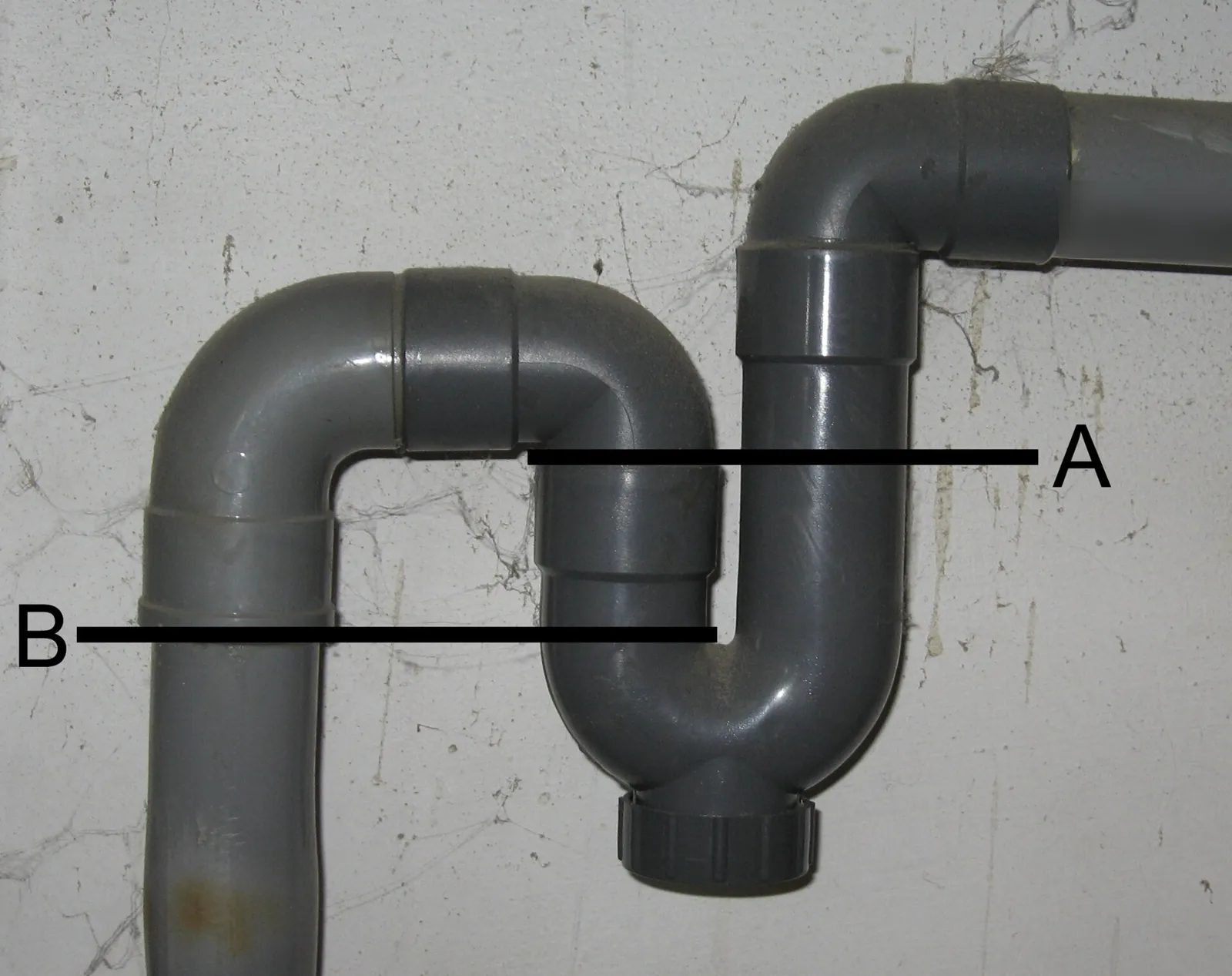
Figure 2. A grey PVC trap with two levels marked by the photographer: A, the bottom of the outlet crossover, where standing water spills over, and B, the lowest point of the inlet side. The water held between these two levels is the trap seal; if suction pulls it down towards B, air passes through and sewer gas can enter. The screw cap at the bottom is for cleaning. (Photo: McGeddon, Wikimedia Commons, CC BY-SA 3.0; printed text on the pipe blurred)
Self-siphonage
When a basin is emptied, a solid plug of water rushing down the waste pipe can suck the water out of the trap behind it. This self-siphonage is more likely when:
the trap is an S-trap that drops straight down into the floor, rather than a P-trap that leaves horizontally into the wall;
the pipe after the trap is long, steep or smaller than the trap outlet;
the fixture has a smooth, round bowl that empties in one rush.
Signs: a loud final gurgle as the basin empties, and a smell later. Check the trap water level after draining (torch, or remove the trap).
Fixes: re-arrange the waste so it runs more gently from the trap and is vented within a sensible distance (check local guidance), use a correctly sized P-trap, or fit an anti-siphon trap or an approved valve-type (waterless) trap. Never drill a hole in the waste pipe to "let air in": it lets sewer gas out.
Induced siphonage
Here the suction comes from another fixture, typically a toilet flush sending a large volume down the shared pipe. A basin or floor drain trap on the same branch loses water and gurgles. This usually means the branch or stack is not vented well enough (Step 4).
Evaporation and floor drain traps
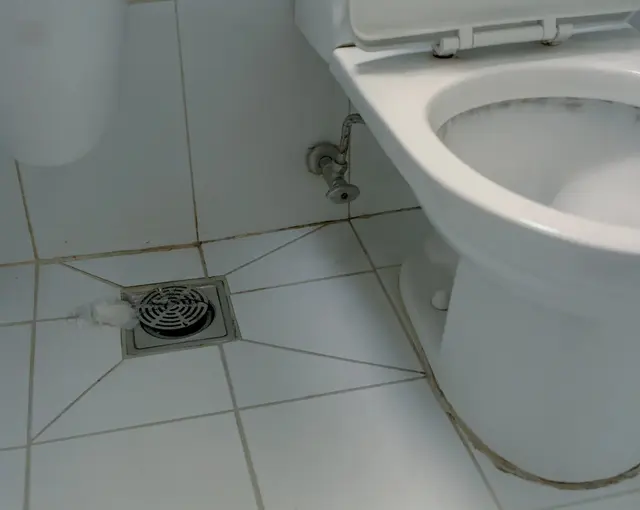
Floor drains in guest bathrooms, balconies and rarely used rooms often lose their water simply by evaporation, especially in hot weather. Many floor drains in Vietnam use a removable cup or bell insert, which holds only a small amount of water and can be lost quickly through evaporation or suction.
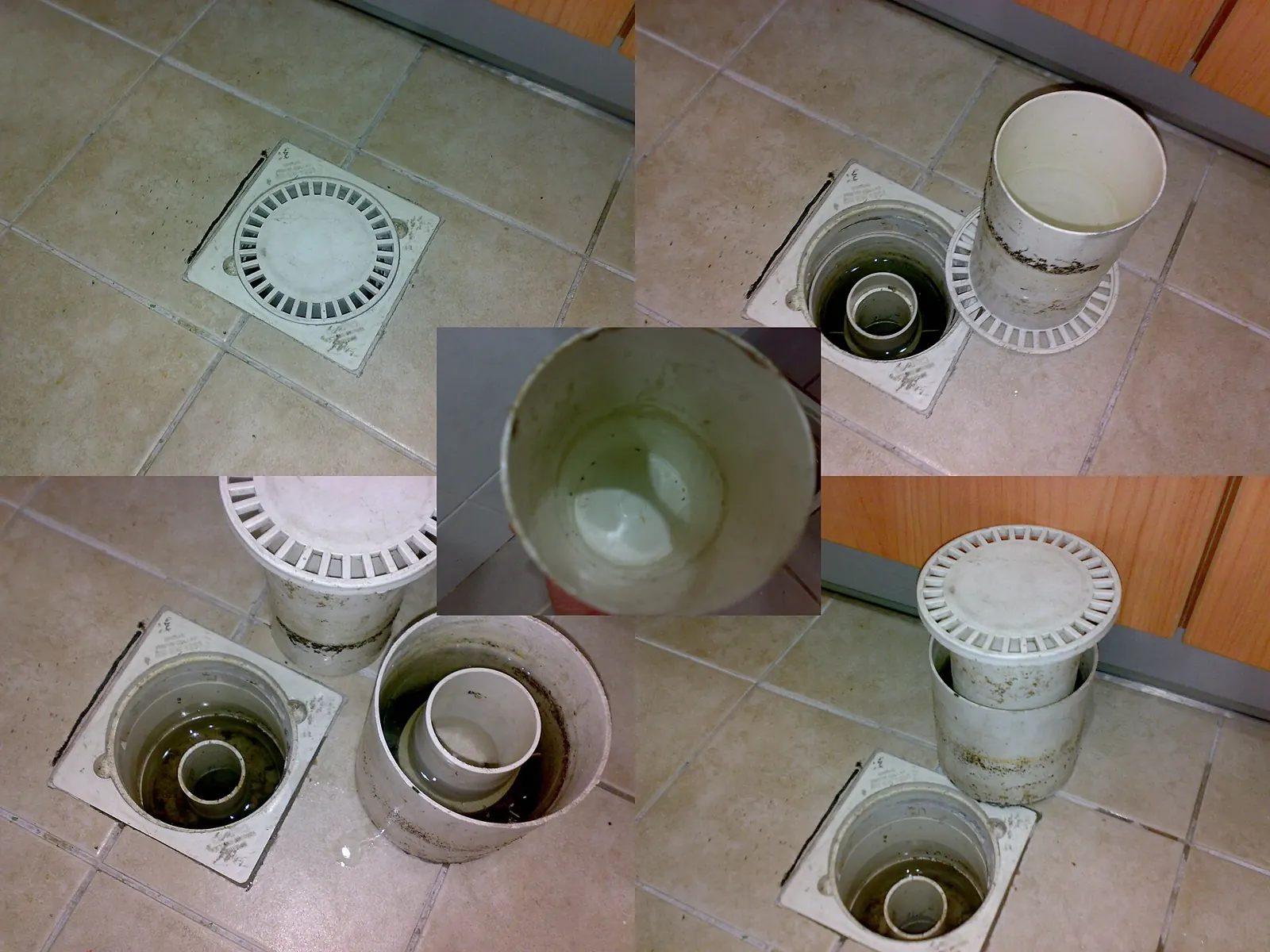
Figure 3. A floor drain with a removable cup-type trap insert. When fitted, the cup sits over the central pipe and dips into the water around it, forming the seal. A shallow seal like this is easily lost by evaporation or suction, and sludge on the cup stops it sealing: clean and refit the insert correctly, and top up rarely used drains. (Photos: KLLvr283, Wikimedia Commons, CC BY-SA 3.0)
Fixes: top up rarely used floor drains with water regularly, check the insert is seated and not cracked, clean out sludge, or fit a deeper-seal or anti-odour insert that suits the drain body. If the floor drain bubbles at every toilet flush, fix the venting or downstream cause, not just the insert.
Step 4: Check the vent and the air admittance valve
If drainage speed is normal but gurgling happens when other fixtures drain, the vent is the most likely cause.
Find out how the house is vented
Many Vietnamese townhouses (nhà ống) have one vertical uPVC stack in a service shaft (hộp kỹ thuật) collecting each floor's toilets, floor drains and basins and running to the septic tank (bể phốt) or the sewer. A good system continues the stack up as a vent that opens above the roof, plus a vent from the septic tank. In practice you may find:
no vent at all: the stack simply ends at the top floor;
a vent that was cut off or capped during a roof or terrace renovation;
a vent pipe that ends inside a ceiling, a stair well or the attic instead of outdoors (a source of smells as well as gurgling);
a vent pipe that is too small.
Ask about renovations, look in the service shaft through any access panel, and find the vent terminal on the roof or terrace.
Check the roof vent terminal (safely)
Vent terminals get blocked by leaves, bird or insect nests, building debris, a plastic bag, or a cap fitted to keep rain out. A fine mesh clogged with dirt also restricts air.
Inspect from a safe position first: a flat terrace, a parapet, or with binoculars from a neighbouring roof or window.
If the vent is on a sloping tiled or sheet-metal roof, do not climb onto it without proper fall protection and a second person. Wet tôn roofs are extremely slippery.
Clear visible debris with gloved hands or a tool. Feed a drain snake down from the top only where you can stand securely.
To keep rain or animals out, use a proper vent cowl or cage. Never seal the top.
Check the air admittance valve (AAV)
An air admittance valve (often sold in Vietnam as a "van thông hơi một chiều") is a one-way valve on a vent pipe inside the building. When suction develops, a light seal lifts and lets room air in; when pressure returns to normal it closes, so sewer gas cannot escape. Rules on where AAVs are allowed vary.
Typical AAV problems:
Stuck closed: dirt, insects, dried sealant or a damaged membrane stop it opening. The result is gurgling and siphoned traps, exactly as if there were no vent.
Stuck open or seal damaged: you get a sewer smell near the valve, but the gurgling may stop.
Wrong position: below the trap it should protect, inside a sealed box with no air, or tilted when the maker says vertical.
Expecting too much: an AAV only lets air in; it cannot release positive pressure. A system with AAVs but no open vent to the outside may still bubble gas through traps, and a septic tank needs an open vent.
How to check: with the room ventilated, unscrew the AAV (most are screw-fit) and repeat the test that caused the gurgle. If the gurgling stops with the valve off, the valve (or its size) is the problem. Refit or cap the opening straight after the test so gas does not enter the room. Replace a faulty valve with one rated for the pipe size and load, fitted as the manufacturer says, and keep it accessible behind a grille or panel.
When the vent is simply missing
Options to discuss with the client:
Extend the stack vent through the roof or an outside wall, ending where gas cannot drift into windows, balconies or air-conditioner intakes (check local guidance on distances), with the roof opening sealed against rain.
Fit AAVs on branches where an outdoor vent is impractical, keeping at least one open vent for the system.
Re-route branches so small traps do not share a short branch with the toilet.
In apartments and shared buildings, agree any stack or vent change with building management.
Step 5: Look downstream: main drain, sewer and septic tank
If several fixtures gurgle, especially on the ground floor, and drainage is slow, the problem is often beyond the house's internal pipes.
Inspection chambers and the main drain
Many houses have inspection chambers (hố ga) between the stack and the septic tank or sewer. Wearing gloves, lift the cover and look without leaning in:
Water standing high in the chamber, above the outlet, means the blockage is further downstream (towards the septic tank or sewer).
Chamber empty or flowing normally while the house drains are slow means the blockage is between the house and the chamber.
Clearing a main drain usually needs drain rods or a powered machine, or a drain cleaning service. Do not climb into the chamber.
Septic tank (bể phốt) problems
A septic tank that is full of sludge, has a blocked outlet, or a blocked or missing vent can make the ground-floor toilet and floor drains gurgle, flush slowly and smell. (Our full septic tank guide covers the signs and safe checks.) Key points:
Bubbling in the toilet or floor drain when water is used elsewhere suggests air and water cannot leave freely through the tank.
The tank vent (often a thin pipe up an outside wall) can block like the stack vent; check its top from a safe position.
Desludging is a job for a licensed service with a vacuum truck.
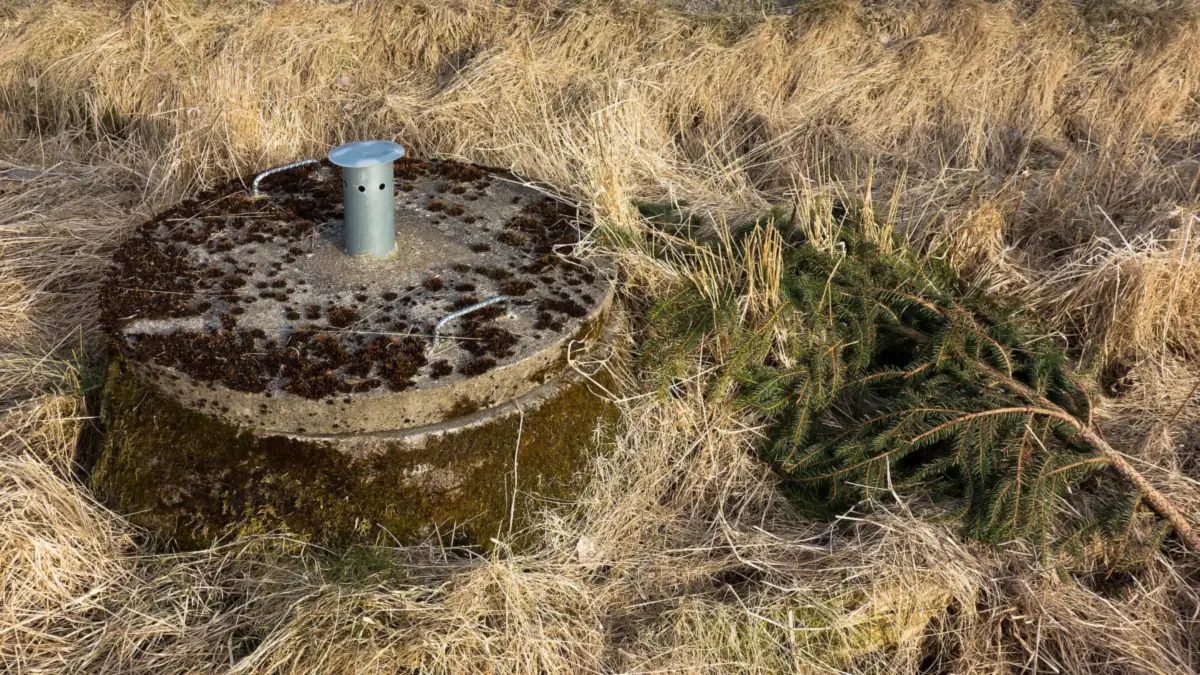
Figure 4. The lid of a buried rural septic tank in Sweden, with a short capped pipe through the middle, apparently for venting. Whatever the layout (in Vietnamese townhouses the bể phốt is often under the ground floor, with a thin vent pipe up an outside wall), the vent must stay open. Never open, lean into or enter a septic tank: the gases inside can kill. (Photo: W.carter, Wikimedia Commons, CC0)
Public sewer and heavy rain
Where the house connects to a public or combined drain, gurgling often appears during or after heavy rain or high tides, when the public drain is full and backs up; ground-floor drains may even overflow. An accessible backwater (non-return) valve, installed to the maker's instructions, can help. Report public-system problems to the local drainage authority.
Step 6: Washing machine and other pumped discharges
Washing machines and dishwashers pump water out much faster than a basin drains. Common causes of gurgling:
Hose sealed into a floor drain or small pipe with tape or a plug. Air cannot escape, so the drain gurgles, and dirty water can even siphon back into the machine. Leave an air gap, or use a proper standpipe or sink waste connection as the machine's manual describes.
Floor drain too small or blocked with lint, so pumped water backs up and air bubbles through. Clean the trap and pipe; consider a dedicated outlet with its own trap.
Hose too low or pushed too far into the standpipe, encouraging siphoning. Follow the manual's hose height.
Practical example: floor drain gurgles when the washing machine drains
On a townhouse's third-floor laundry balcony, the floor drain gurgles and smells whenever the washing machine empties. The hose is pushed deep into the drain and the gap wrapped in plastic. Removing the plastic and cleaning a wad of lint from the trap insert stops the gurgling; you suggest a dedicated outlet for the machine.
Practical example: basin gurgles when the toilet flushes
In a two-storey house, the basin gurgles and loses trap water whenever the toilet beside it flushes, yet both drain quickly. The basin waste joins the toilet branch just before the stack, and the stack ends under the terrace tiles with no vent. An accessible AAV on the basin branch stops the gurgle, and you recommend extending the stack vent above the terrace, because an AAV cannot relieve positive pressure from the stack and septic tank.
Quick reference: symptom, likely cause, check and fix
Symptom | Likely cause | Check | Fix |
|---|---|---|---|
One basin or sink gurgles and drains slowly | Partial blockage in its trap or waste pipe | Remove and inspect the trap; look for sagging or squashed hose | Clean trap and waste; replace damaged hose; fit properly graded pipe |
Basin gives a loud final gurgle, smells later | Self-siphonage | Trap water level after draining; S-trap or long steep waste? | Re-arrange waste; P-trap, anti-siphon or approved valve-type trap |
Basin or floor drain gurgles when the toilet flushes; drainage speed normal | Induced siphonage from poor venting | Watch trap water level during flush; check vent and AAV | Clear vent terminal; repair or add AAV; add or extend vent |
Toilet bubbles or water rises when shower or basin drains | Partial blockage downstream of both fixtures | Test fixtures one by one; lift inspection chamber cover and check level | Clear branch or main drain with rods or a machine; call a drain service if needed |
Several ground-floor fixtures gurgle, drain slowly, smell | Main drain, septic tank or sewer restriction | Inspection chamber level; septic tank signs | Clear main drain; licensed desludging; clear tank vent |
Gurgling or smell near an AAV | AAV stuck closed (gurgle) or open (smell) | Remove AAV briefly during the test | Replace with correct size and position; keep accessible |
Gurgling on windy days or at night with nothing in use | Wind over vent terminal or neighbours on a shared stack | Check vent terminal height and cowl; ask about shared stack | Fit suitable vent cowl; check stack venting with building management |
Floor drain gurgles when washing machine pumps out | Hose sealed into drain, lint blockage, undersized drain | Check hose connection and air gap; clean trap insert | Leave air gap; clean; fit dedicated standpipe or outlet |
Bubbling and back-up during heavy rain | Public sewer or combined drain surcharging | Note timing with rain or tide; check chamber level | Report to authority; consider accessible backwater valve |
Safety checklist
Sewer gas. Drains and septic tanks can contain hydrogen sulphide (H2S), which smells of rotten eggs at low levels but can deaden your sense of smell at higher levels, so "the smell went away" does not mean it is safe. They can also contain methane, which is flammable, and air with too little oxygen. Ventilate the area, work with a second person nearby, and stop if anyone feels dizzy, gets a headache or has trouble breathing.
Never enter a septic tank, inspection chamber or manhole, and never lean your head into one. People have died trying to rescue someone who collapsed inside. Confined-space work needs trained people with gas detection and rescue equipment.
No naked flames or sparks near open drains, septic tank lids or vent pipes. Do not smoke.
Roof and terrace work. Do not climb onto sloping or wet roofs without fall protection, a secure ladder that is tied or footed, and a second person. Avoid working on roofs in rain or strong wind. Watch for overhead power lines near the roof.
Chemical drain cleaners do not fix venting problems and can cause heat, splashing and toxic fumes. Never mix products, never plunge or snake a drain after pouring chemicals in, and tell the plumber if any were used.
Gloves and hygiene. Wear waterproof gloves and eye protection when opening traps and chambers, cover cuts, and wash hands and tools afterwards. Sewage carries bacteria and viruses.
Electrical safety. Unplug the washing machine before handling its drain hose, and keep powered drain machines and extension leads away from standing water; use an RCD-protected supply.
Replace covers and refill traps when you finish, so no one falls into an open chamber and no gas escapes into the house.
Frequently Asked Questions
Is a gurgling drain dangerous?
The sound is not, but it is a warning: traps may be losing water and letting sewer gas in, or a blockage may be building towards an overflow.
Why does my toilet gurgle when the washing machine drains?
Either the shared drain below them is partly blocked, so the pumped water pushes air back up through the toilet, or the system is poorly vented, so the rush of water pulls air through the toilet's water seal. If the toilet water rises or bubbles strongly, treat it as a blockage first.
Does a gurgling toilet mean my septic tank is full?
It can, especially if the ground-floor toilet and floor drains are all slow and smelly. But a blocked tank vent, a blocked main drain or a vent problem in the house can cause the same sound. Check the inspection chamber and the tank vent before booking a desludging service.
Can I use an air admittance valve instead of a roof vent?
Often an AAV is accepted for individual fixtures or branches, but the system generally still needs at least one open vent outside to release positive pressure and vent the septic tank or sewer. Check local rules and the manufacturer's instructions.
Will a chemical drain cleaner stop the gurgling?
Only for a soft blockage near the fixture, and cleaning the trap by hand is safer. Chemicals do nothing for a blocked vent, faulty AAV, siphoning trap or full septic tank.
Why do my drains gurgle when no one is using water?
Other floors or neighbours on a shared stack, wind across the vent terminal, or (after heavy rain) a backed-up public sewer.
Practice Exercises
Diagnosis. "The shower drain gurgles only when the toilet next to it flushes. Both drain quickly. It smells in the morning." Give the likely cause, two checks and the most likely fix.
Test sequence. Plan a test sequence for a three-storey townhouse where the ground-floor floor drain bubbles whenever an upstairs shower runs.
Read the chamber. The inspection chamber water stands above the outlet pipe. Where is the blockage, what next, and what must you not do?
AAV check. Describe how to test safely whether a basin AAV is stuck closed.
Washing machine. Describe a drain connection that does not seal the hose into the floor drain, and why the air gap matters.
Safety briefing. Write five safety rules for a trainee checking a roof vent and a septic tank vent on a two-storey house.