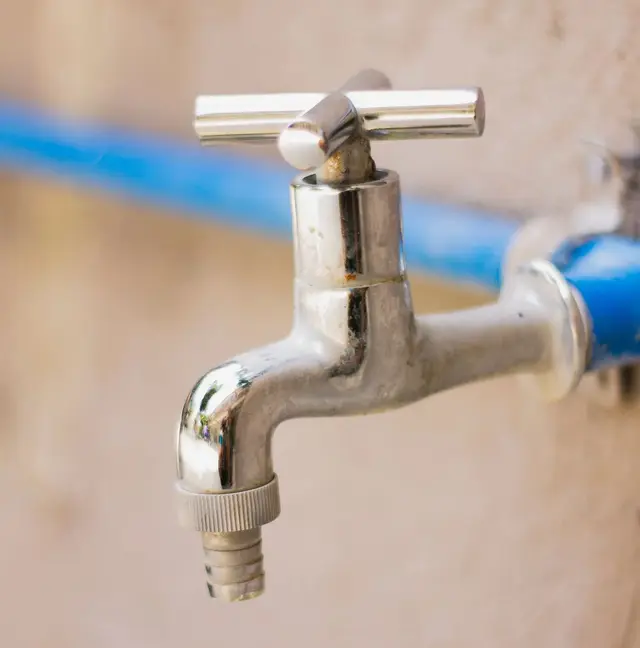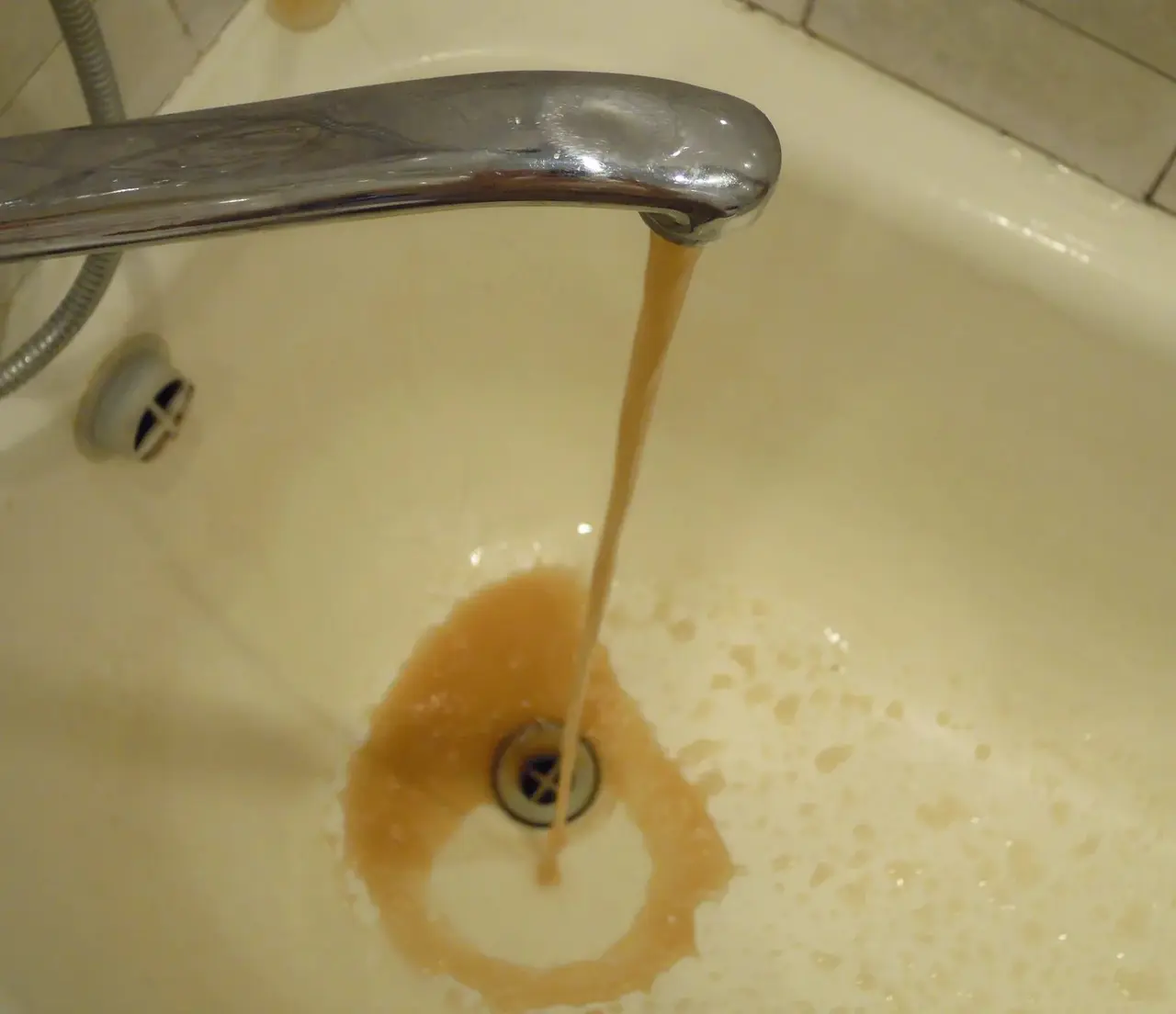
Few calls worry a household more than "the water has gone brown". The client wants to know straight away whether it is the city supply, the tank, the pipes or the water heater. It can be any of them, and a plumber who guesses often sells the wrong fix: a new filter will not cure a worn-out heater anode, and cleaning a tank will not help if the rust comes from an old galvanised pipe in the wall.
This guide gives you a repeatable way to trace discoloured, cloudy or smelly tap water to its source: the first questions, quick tests with a clear glass, narrowing the problem down from the mains to the tap, and choosing the fix that matches the cause.
Scope and safety. Written for residential plumbers in Vietnam and for homeowners. It covers homes supplied from the city mains, often through an underground cistern (bể ngầm), a pump and a rooftop tank, and homes on well water. It is a diagnosis guide: tank cleaning, sediment pre-filters, RO purifiers and air in pipes have their own articles. It gives no health advice or water quality limits. Figures marked for reference are rough working examples, not rules from a standard. If the water looks, smells or tastes unusual, do not drink it or use it for cooking until the cause is known; use bottled water and ask the water supplier or an accredited laboratory. Any work on the electrics of a water heater or pump (230 V/50 Hz) must start with the power switched off and isolated, and electrical repairs must be done by a qualified electrician.
Step 1: Ask the right questions before touching anything
Five minutes of questions usually halves the search. Write the answers down.
Which taps are affected?
All taps, hot and cold: the cause is upstream: mains, cistern, pump, rooftop tank or the main pipe from the tank.
One tap or one bathroom: look at that branch, tap, flexible hose or local filter.
Only the hot water: the water heater or the hot pipework is the prime suspect.
When did it start, and what happened just before?
After mains work or a supply outage in the street: disturbed deposits in the city pipes, which usually clear with flushing.
After tank cleaning or a dry tank: sediment stirred up, or air drawn into the pipes.
After plumbing work: new pipe smell, cutting debris or disturbed old steel pipe.
After heavy rain or flooding: possible contamination of an underground cistern or a well. Treat this as serious.
Is it constant or only the first draw?
Only the first water in the morning or after a holiday, then clear: water standing in old steel pipe or a storage heater picks up rust and smell.
Constant, even after long running: the source itself is affected (mains, tank, well).
What exactly does the client see or smell?
Yellow, orange-brown, black flecks, milky white, green slime, a chlorine, rotten-egg, musty or plastic smell? Check it yourself, and ask whether the neighbours have the same problem.
Step 2: Quick tests with a clear glass
You need a clean, clear glass and a white background. Test first at the tap nearest the point where the supply enters the house, then at the affected tap.
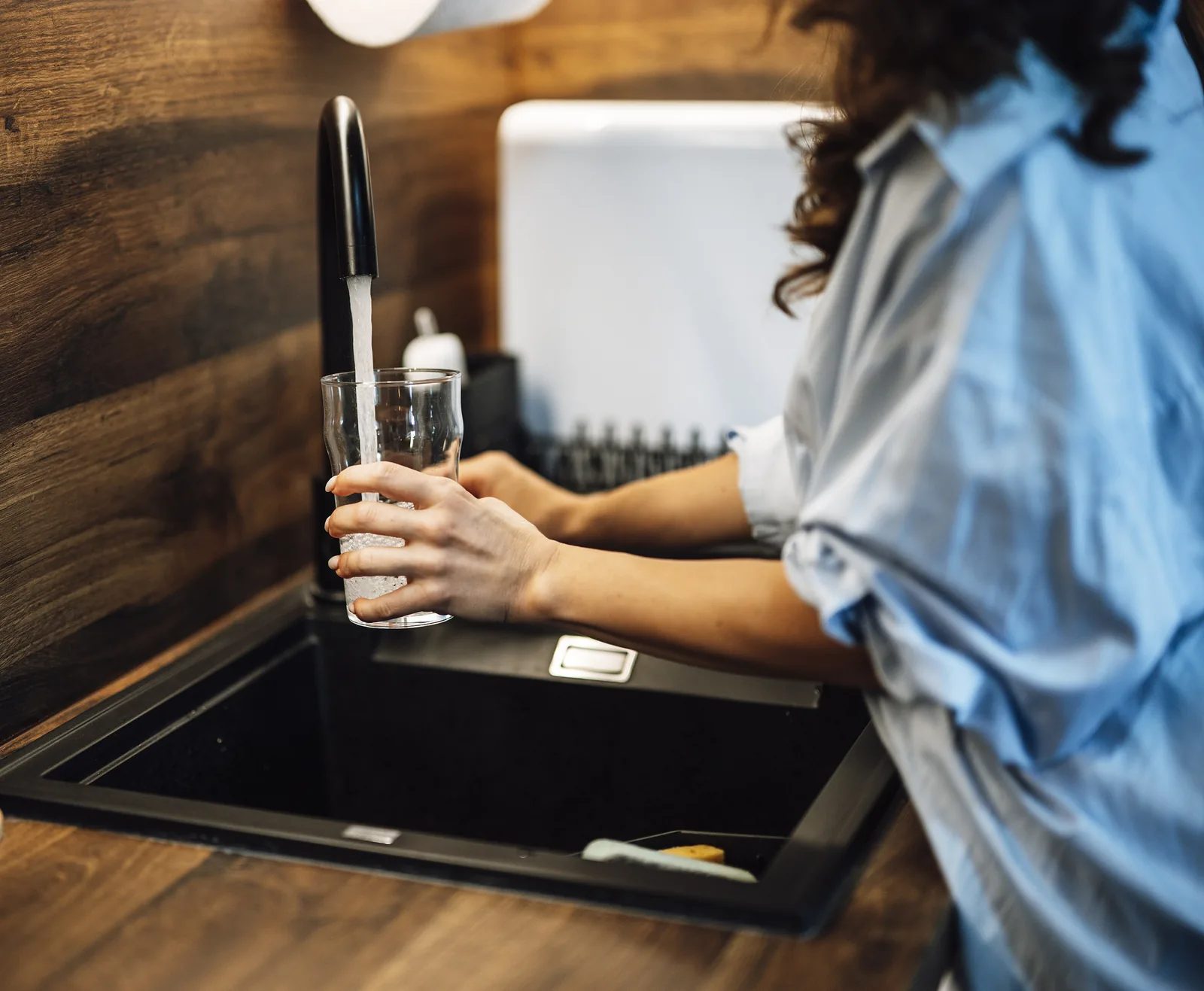
Figure 1. Filling a clear glass at a kitchen tap. A clean, clear glass is the simplest diagnostic tool for discoloured water: held against a white sheet or a white sink in good light, it shows colour, cloudiness, particles and whether they settle or clear. (Photo: Shixart1985, Wikimedia Commons, CC BY 2.0)
The white glass test
Fill the glass from the cold tap and hold it against white paper in good light. Note the colour and any particles.
Repeat from the hot tap, letting it run for a few seconds first.
Compare the first water from the tap with water after running it for a few minutes (for reference, two to five minutes for a normal house). If the colour clears quickly, the cause is probably close to the tap; if it stays, it is further upstream.
The standing test: air or sediment?
Put the glass down and watch it for a few minutes.
Milky white water that clears from the bottom upwards is almost always tiny air bubbles. They rise and escape, so the bottom of the glass clears first. It is common after the supply has been off or the tank has run dry (see the separate guide on air in water pipes).
Cloudiness that settles to the bottom as a fine layer of sand, silt or rust particles is sediment. Note its colour: sandy brown points to silt from the mains or cistern; orange-red flakes point to rust.
Evenly yellow or brown water that does not settle may contain very fine rust, iron or organic matter. Keep a sample in a closed bottle.
Clear water that turns orange or brown after standing in the glass for some time is typical of well water containing dissolved iron, which oxidises when it meets air. This needs a laboratory test (Step 9).
The smell test
The smell may come from the sink drain, not the water. Fill the glass, take it to another room, swirl and smell it there, for hot and cold.
If the glass smells clean away from the sink, the smell is probably from the drain or trap, not the water (Step 8).
If only the hot water smells of rotten eggs, think water heater (Step 6).
If both hot and cold smell musty or earthy, think tank or cistern (Step 4) or the source itself.
Step 3: Check the city mains supply
Many houses have one tap fed directly from the mains before the cistern or pump. If there is none, use the nearest point after the meter.
Run that tap and do the glass test.
Ask the neighbours and check whether there has been work on the street main, a supply outage or a burst pipe recently.
If the mains water is discoloured, the problem is not inside the house. Flush that tap until the water runs clear, then flush the rest of the system. If it does not clear in a reasonable time, or keeps coming back, contact the water supplier and give them the address, the time and a description or photo.
After an outage, advise clients to let dirty incoming water run to waste from the mains tap until clear before the tank refills, otherwise the dirt ends up in the cistern and tank.
Step 4: Check the cistern and the rooftop tank
Underground cistern (bể ngầm)
Look in from above with a torch. Do not climb into a cistern: enclosed tanks can have poor air and need confined-space precautions.
Look for:
A loose, broken or missing cover, gaps around pipes, or a cover below ground level where rainwater or surface water can run in. Muddy water after rain is a strong sign.
Cracks or damp patches in the walls near drains or a septic tank.
Thick sediment on the bottom, and a pump suction line lying close to it.
If surface, drain or flood water may have entered, tell the client not to drink the water and arrange repair, cleaning and a water test before normal use.
Rooftop tank
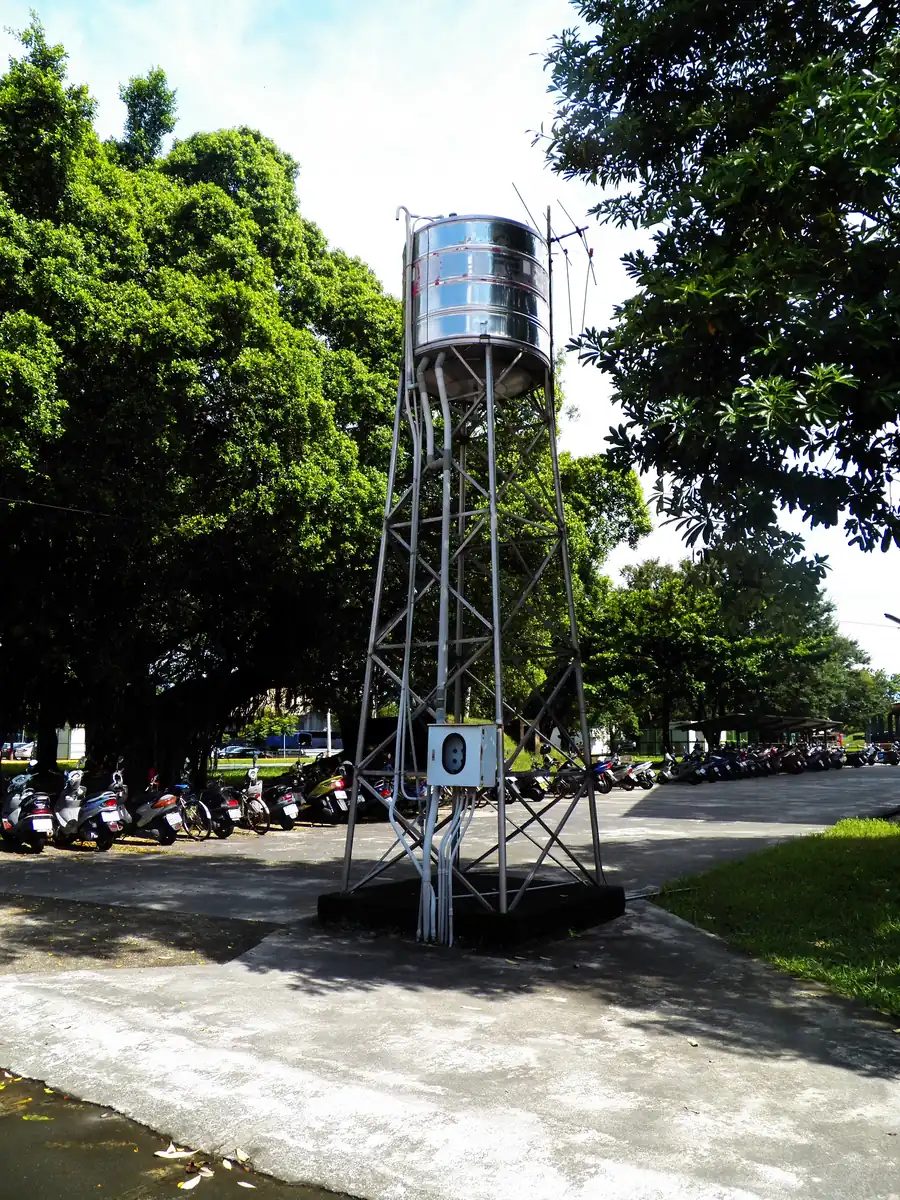
Figure 2. A small stainless steel water tank on a tall steel stand, with white pipes running down the frame past a small grey box. Stainless tanks like this, on a roof or a raised stand, are common in Vietnam. Check the lid, the bottom for sediment, the weld seams and fittings for rust stains, and how close the outlet is to the bottom. (Photo: 玄史生, Wikimedia Commons, CC BY-SA 3.0)
Use a safe ladder with someone holding it and keep away from roof edges. Check:
The lid: missing or loose lids let in dust, leaves, insects and birds. A tight lid and a screened vent are the first fix.
Sediment: when the water level drops very low, or when the tank refills fast, sediment on the bottom is stirred up and goes into the house. Ask whether the brown water appears after the tank ran dry.
Algae or slime: green or slimy deposits suggest light is getting in (for example through a translucent tank or a gap in the lid) and the tank needs cleaning and sealing.
Rust: stainless steel tanks resist rust well, but rust stains can appear at weld seams, steel fittings, bolts or where the surface has been damaged. Old painted steel tanks can rust through the coating. Rust inside the tank is a reason to plan a repair or replacement, not just cleaning.
If storage is the source, the fix is cleaning the tank and cistern, repairing lids and cracks, and possibly a sediment pre-filter; see our separate guides on tank cleaning and whole-house sediment pre-filters.
Step 5: Look for rusty galvanised steel pipe
Older houses often still have galvanised steel pipe (ống kẽm) somewhere: the riser to the tank, the main pipe from it, or hidden metres in a wall. Over the years the zinc coating wears away and the steel rusts from the inside.
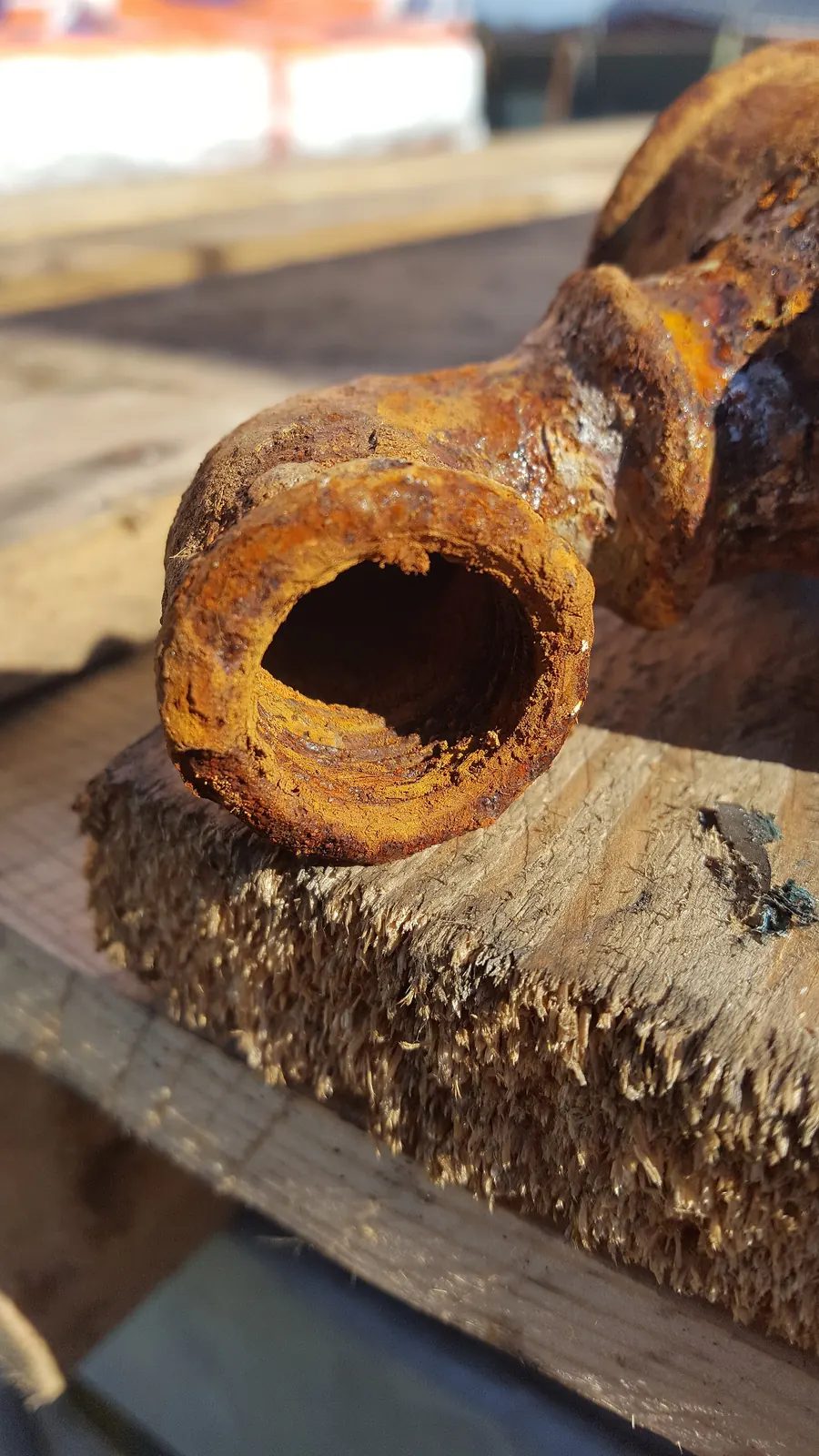
Figure 3. An old, heavily rusted steel pipe fitting, with rust deposits built up inside the bore. Rust that grows inside old steel pipe narrows the bore and breaks off as orange-brown flakes, which is why water from these pipes is often brown on the first draw and pressure falls over the years. (Photo: Hartog88, Wikimedia Commons, CC BY-SA 4.0)
Typical signs
Brown or orange water mainly on the first draw after the water has been standing, clearing after a short run.
Orange flakes in aerators, shower heads and the bottom of the glass.
Falling pressure over the years at some taps.
Rust stains or weeping at threaded joints of grey metal pipe.
How to confirm
Look at exposed pipe at the tank, pump, meter and under sinks. Grey threaded metal pipe is likely galvanised steel; PPR, uPVC and HDPE are plastic, joined by fusion, glue or compression fittings.
Compare taps: if water from a branch that is fed by new PPR is clear while a branch fed through old steel is brown, the steel is the source.
If you remove a section during other work, look inside. A narrowed, rough, orange interior like Figure 3 confirms it.
Choosing the fix
Flushing and filters only treat the symptom; the rust will keep coming. The lasting fix is to replace the galvanised sections with PPR (or another approved plastic pipe), starting with the sections that carry all the water, such as the main pipe from the tank. Where new PPR meets steel that must stay for now, use proper threaded transition fittings and support the joint.
Step 6: Check the water heater (hot side only)
If the problem is only on the hot side, suspect the water heater: in Vietnam usually an electric storage heater (bình nóng lạnh), an instant heater or a solar heater.
Safety first
Before draining or flushing a storage heater, switch it off at its breaker or isolator (230 V/50 Hz) and confirm it is off. Let the water cool, close the cold supply and open a hot tap before draining. Never switch it back on until it is completely full again, or the element can be damaged. Electrical covers, elements and thermostats are for a qualified electrician or the maker's service team.
Typical heater problems
Brown or rusty hot water: in a steel storage tank, the protective anode may be used up and the tank may be corroding. If brown water comes from the hot side only and the heater is old, the inner tank may be near the end of its life.
Sediment or white grit: scale and sediment collect at the bottom of storage tanks and come out as grit or cloudy water.
Rotten-egg smell on the hot side only: a common cause is a reaction between certain bacteria in the water and the magnesium anode inside the tank, which produces hydrogen sulphide gas, especially when the heater stands unused or runs at a low temperature. The cold water does not smell.
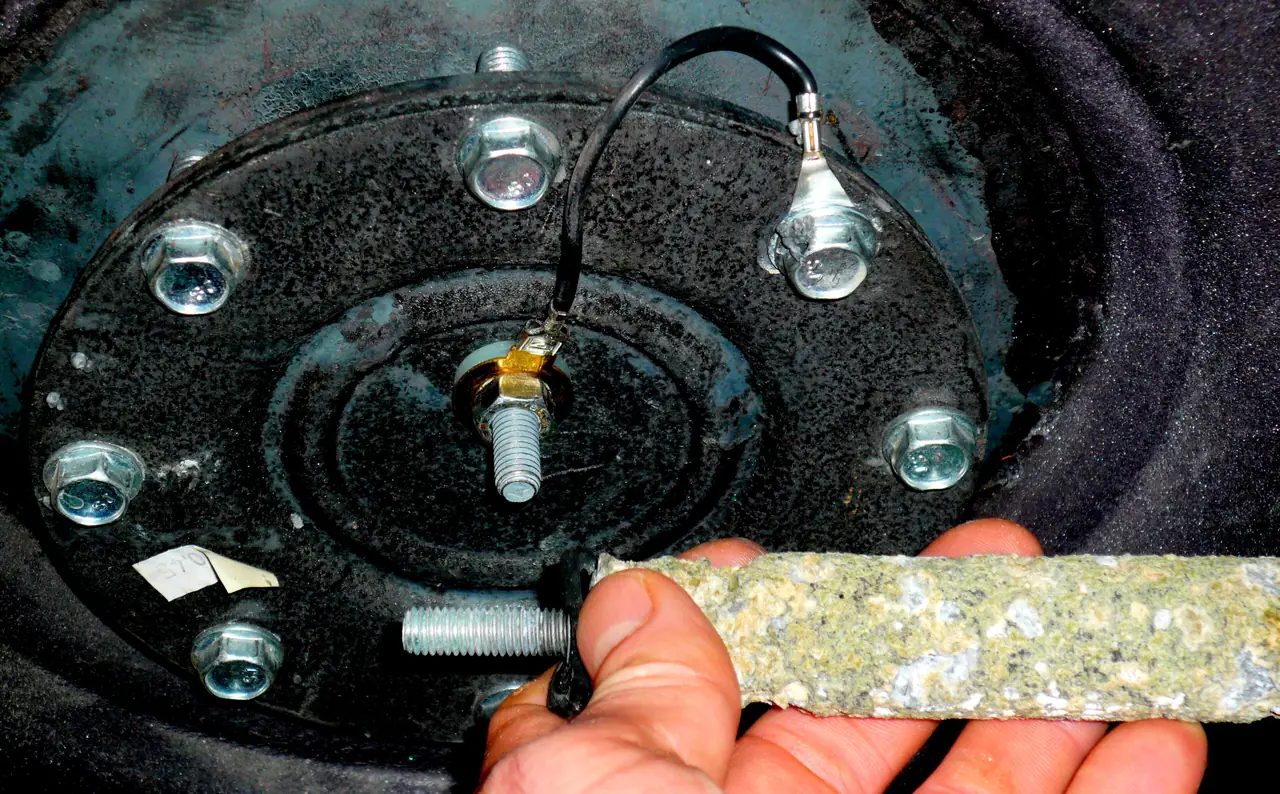
Figure 4. A used magnesium anode held in front of the bolted flange (cover plate) of a storage water heater. The rod is crusted and partly eaten away, which is what a sacrificial anode is designed to do. A heavily used anode should be replaced as the heater maker specifies. (Photo: Dr. Peter Klamser, Wikimedia Commons, CC BY-SA 3.0)
Choosing the fix
Drain and flush the heater following the maker's manual.
Inspect the anode at the intervals the maker gives, and replace it if it is heavily used. For a persistent smell, ask the maker or their service partner whether a different anode type is approved for that model. Do not simply remove the anode: the tank needs it for corrosion protection, and removing it may void the warranty.
Follow the maker's instructions for any thermostat setting or disinfection; very hot water can scald.
If the inner tank is rusting through, plan a replacement rather than repeated repairs.
Instant heaters have no storage tank; if only they are fitted and hot water smells, look upstream.
Step 7: New pipe, hose and fitting smells
After new work, clients may notice a plastic or rubbery smell for a few days, especially after water has stood overnight.
Flush each tap thoroughly after installation and again after a few days.
Check that hoses, filter housings and fittings are intended for drinking water. Cheap hoses of unknown material often cause rubber smells and black flecks.
Black, rubbery particles at one tap usually come from a perished hose or washer; replace the part.
If a smell from new pipework does not fade after flushing over several days, stop using the water for drinking and check the products with the supplier.
Step 8: Do not confuse a drain smell with a water smell
A common false alarm: "the water smells of sewage". Often the smell rises from the drain while the tap runs.
Do the smell test away from the sink (Step 2). If the glass smells clean, look at the trap, the overflow channel and the drain.
Typical causes are a dry trap, a corrugated hose without a proper trap, a blocked vent or a dirty overflow channel.
Clean the overflow and trap and fix the trap arrangement; sewer smells have their own guides.
Step 9: Well water: iron, manganese and the need for a lab test
Well water often looks clear when pumped but turns yellow or brown on standing, leaves orange stains, or leaves black deposits. Iron and manganese are frequent causes; well water can also smell of rotten eggs or earth.
You cannot judge well water by eye. Advise the client to:
Have the water tested by an accredited laboratory, following its sampling instructions, before choosing treatment.
Choose the treatment with a water treatment specialist based on the results, not on colour.
Re-test after treatment and after any flooding of the well.
Do not tell the client a specific iron or manganese value is "safe" or "unsafe" from memory; the lab report and the applicable regulations decide that.
Reference table: symptoms, likely causes and fixes
Symptom | Likely cause | Quick check | Fix |
|---|---|---|---|
Milky white water, clears from the bottom up | Air in the water | Standing test in a clear glass | Bleed air from pipes; check pump suction and tank level (see air-in-pipes guide) |
Brown water at all taps after street works or an outage | Disturbed deposits in the mains | Glass test at the first tap after the meter; ask neighbours | Flush from the mains tap until clear before refilling tanks; contact the supplier if it persists |
Brown or sandy water after the tank ran dry or refilled | Sediment stirred up in the tank or cistern | Look at the tank bottom; compare with mains tap | Clean the tank and cistern; consider a sediment pre-filter |
Muddy or smelly water after rain or flooding | Surface water entering the cistern or well | Inspect the cover, cracks and drains nearby | Do not drink; repair, clean and disinfect, then test the water |
Green slime, musty smell from cold taps | Algae or biofilm in the tank | Look inside the tank and at the lid | Clean, seal the lid and block light |
Orange-brown water on first draw, then clears | Rusty galvanised steel pipe | Compare taps on old and new pipe branches | Replace galvanised sections with PPR |
Brown water from hot taps only | Corroding storage heater tank, used anode | Glass test hot vs cold; age of heater | Power off, drain and inspect; replace anode or heater per maker |
Rotten-egg smell from hot taps only | Bacteria reacting with the heater anode | Smell test hot vs cold away from the sink | Flush heater; ask maker about anode type and procedure |
Plastic or rubbery smell after new work | New pipe, hoses or fittings | Is it worse after standing overnight? | Flush; replace non-drinking-water hoses |
Black rubbery flecks at one tap | Perished hose or washer | Inspect the hose and aerator | Replace the hose or washer |
Water turns orange after standing (well) | Dissolved iron | Glass left to stand for some time | Laboratory test, then treatment chosen by a specialist |
"Sewage" smell only at the sink | Drain or trap, not the water | Smell the glass in another room | Fix the trap, overflow or vent |
Practical examples
Example 1: Brown water after a supply outage
Every tap in a town house ran brown, hot and cold, the morning after street pipe works. The yard tap fed directly from the mains ran brown for a few minutes, then clear, but the rooftop tank had refilled with the dirty water. The plumber flushed the mains tap, drained the tank through its drain valve, refilled it and flushed each tap. No filter or parts were needed.
Example 2: The bathroom that only ran brown in the morning
In an old house, the kitchen (re-piped in PPR) was fine, but the upstairs bathroom, fed by a galvanised riser, gave orange water for the first seconds every morning and had weak pressure. The plumber replaced the riser and bathroom branch with PPR instead of adding a filter; the first draw became clear and the pressure improved.
Example 3: Rotten eggs from the shower
After a two-week trip, a family's hot water smelled of rotten eggs; the cold was fine. The plumber switched the storage heater off at its breaker, drained and flushed it per the manual, and found the anode heavily used. The maker's service partner fitted a model-approved anode.
Common mistakes
Selling a filter or purifier before finding the source.
Testing only at the affected tap and never at the mains or the tank.
Confusing air (clears from the bottom up) with sediment (settles).
Blaming the water for a smell that comes from the drain.
Removing a water heater anode to stop a smell.
Draining a storage heater with the power still on.
Giving the client "safe" or "unsafe" verdicts on water quality without a lab test.
Safety checklist
Advise the household not to drink or cook with water that looks, smells or tastes unusual until the cause is known.
Switch off and isolate water heaters and pumps (230 V/50 Hz) before draining or opening them; leave electrical work to a qualified electrician.
Never switch a storage heater back on before it is completely full of water.
Let hot water cool before draining; warn about scalding.
Do not enter a cistern or tank; inspect from outside with a torch.
Use a safe ladder and keep away from roof edges when checking rooftop tanks.
Treat any sign of flood water, drain water or sewage entering the supply as urgent: stop use, report it and arrange a water test.
Contact the water supplier when the problem starts at the mains.
Use only parts intended for drinking water.
Frequently Asked Questions
Why is my tap water milky white?
Usually it is tiny air bubbles. Fill a clear glass and let it stand: if it clears from the bottom upwards within a few minutes, it is air, which often appears after the supply has been off or the tank has run dry.
Why is the water brown only in the morning?
Water that has stood overnight in old galvanised steel pipe or in a storage heater picks up rust. If it clears after a short run, look for old steel pipe or check the water heater.
Why does only the hot water smell of rotten eggs?
A common cause is a reaction between bacteria in the water and the magnesium anode in a storage heater. Switch the heater off, flush it as the maker describes and ask the maker about the anode; do not remove the anode.
Will a filter fix brown water?
A sediment pre-filter can catch particles from the mains or the tank, but it does not fix the cause. If rust comes from old pipes or a corroding heater, replace the pipe or service the heater.
Is discoloured water safe to drink?
This guide cannot say. Until the cause is known and the water is clear, use bottled water for drinking and cooking, and ask the supplier or an accredited laboratory for advice.
Practice Exercises
Question list. Write five questions for a client who says "the water has gone brown" and what each answer tells you.
Glass test. Using two glasses, compare water from a tap after it has stood overnight and after five minutes of running. Record colour, particles and whether anything settles or clears.
System sketch. Draw the water supply of a town house with a mains tap, cistern, pump, rooftop tank and storage heater. Mark where you would take a sample for each test and in what order.
Client language. For five rows of the reference table, write one plain sentence explaining the cause and fix to a client.
Safe heater flush. Using a real heater manual, write a checklist for draining a storage heater, from switching off the power to refilling before switching on.
Case study. A client on well water has orange stains and wants to buy a purifier. Explain in a short reply why a laboratory test comes first.