When an electricity meter seems to be running fast, in most cases the meter is still accurate and something in the house is simply using more power than before. To be sure, switch off the main breaker and see whether the pulse LED on the electronic meter keeps blinking, then test the meter with an appliance of known power. If the meter keeps counting with every load switched off, or it is more than 5% off in a known-load test, ask the power company to test it — and never open the meter or touch its seal yourself.
This lesson helps electricians answer "is the meter wrong, or are we using more?" with measurements. The examples are set in Vietnam: 220 V, 50 Hz supply, meters owned and sealed by the state utility (EVN), prices in Vietnamese dong (VND).
By the end of this lesson, you will be able to:
- Convert the kWh on a bill into kWh per day and an average continuous power, so you know how big the increase really is.
- Run the "everything off but the meter still counts" test and read the result correctly.
- Check a meter's error with a known load and express it as a percentage.
- Split the installation circuit by circuit and measure leakage with a clamp meter around both L and N to find the power-hungry appliance.
- Work out a tiered electricity bill from kWh and know how to ask the power company in Vietnam to test a meter.
Want to handle "my bill suddenly doubled" call-outs with confidence and real numbers? Fault isolation, current and leakage measurement, and customer reports are practised and graded in the NAMBIN course Residential Electrician Level 2 – Qualified Electrician.
Electricity meter running fast: is it really wrong, or are you using more?
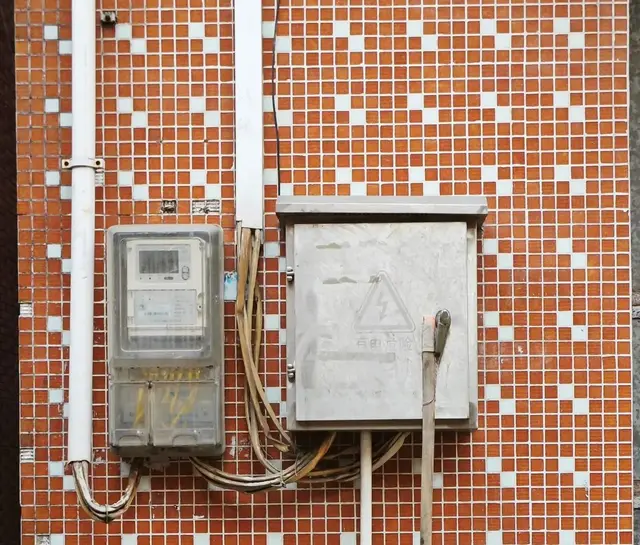
An electronic meter has no spinning disc that wears out like the old electromechanical meters, so it rarely "speeds up" silently. When the bill rises, the cause is usually one of three things: the number of days in the billing period, tiered pricing, or an appliance in the house. Figure 1 shows a typical electronic meter: a digital display shows the kWh reading, and a pulse LED blinks in proportion to the energy passing through.
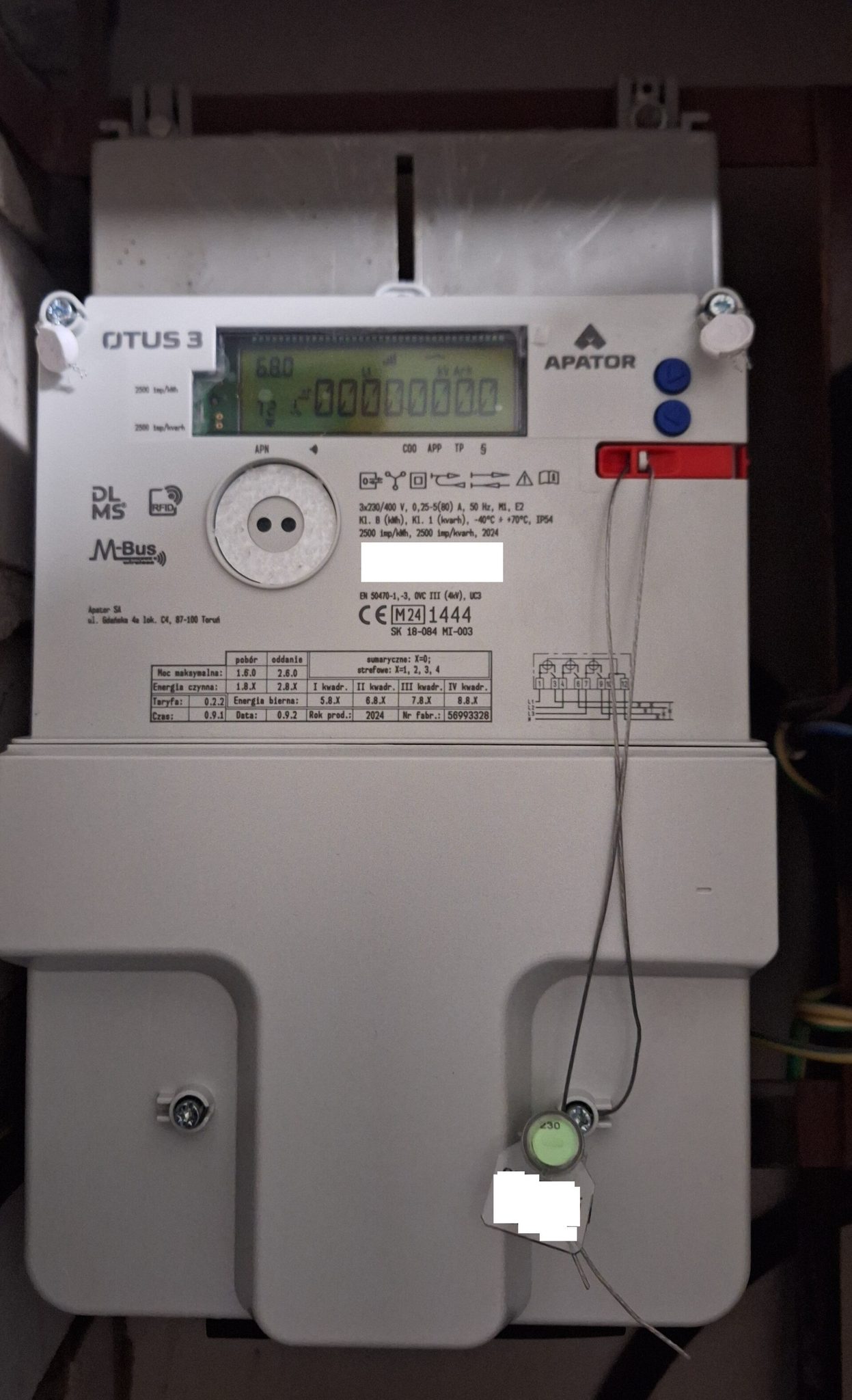
Photo: Rakoon / Wikimedia Commons, CC0
Read the bill as kWh per day
Compare kWh, not money. From the last two bills, note the readings and the days in each period, then divide kWh by days. A 33-day period is already almost 18% higher than a 28-day one with identical use.
Turn the increase into a continuous power
Divide the extra kWh per day by 24 hours and you get the average extra power running day and night. For example, an increase of 4.33 kWh per day is about 180 W running around the clock. That tells you what to look for: 180 W is a fridge that never stops or a pump running a few extra hours, not a few LED bulbs.
When should you suspect the meter?
Only when there is concrete evidence: the meter keeps counting with all loads off, the reading on the bill is higher than the reading you see on the meter on the same day, or a known-load test is clearly off. Otherwise, look for the appliance first.
Everything switched off but the meter still counts: the first test
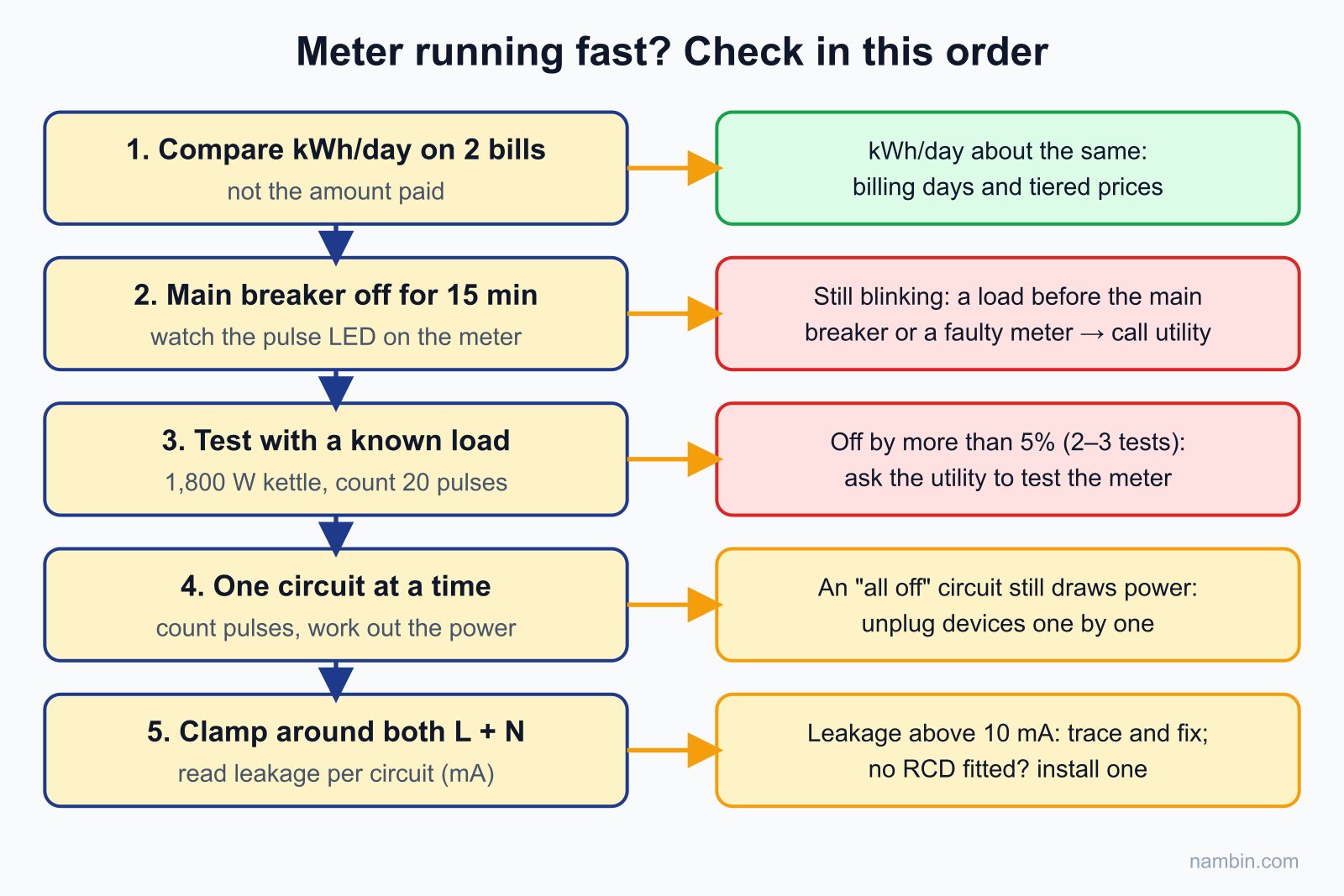
This is the quickest test. It takes 15 minutes and needs no tools. Figure 2 summarises the whole five-step procedure in this lesson; this test is step 2.
How to do it
- Read and photograph the kWh reading on the meter, noting the time.
- Switch off the main breaker inside the house (the device just after the meter, on your side).
- Watch the pulse LED for at least 15 minutes. On an electronic meter it should go off completely or stay steadily lit, not blink.
- If it keeps blinking, record a 1–2 minute video as evidence, then read the display again.
What does a blinking LED mean?
Either a load is still connected between the meter and the main breaker, or the meter is faulty. Common cases: a gate light, well pump or outbuilding wired straight after the meter; a neighbour tapping the cable after your meter (common in rental rows and houses sharing a wall); or the cable to the house leaking through a damp wall or metal roof. Only follow the visible cabling on your side; from the meter outwards belongs to the power company.
What if the LED goes off?
The meter does not count without a load — good news. Move on to step 3 to check its accuracy under load, then step 4 to find the appliance that is using the power.
Checking meter error with a known load
A known load is a purely resistive appliance with steady power: an electric kettle, or a water heater while it is heating. You measure its real power with a multimeter and a clamp meter, then compare it with the power the meter "sees" through its pulse LED.
The meter constant and the pulse formula
The meter face shows a constant such as "1600 imp/kWh" (imp = impulses): 1,600 blinks equal 1 kWh. Every meter can have a different value, so read it on the meter you are testing. The formula is P (kW) = 3600 × n ÷ (C × t), where n is the number of pulses counted, C is the constant and t is the time in seconds. Count at least 10–20 pulses to reduce the error of timing by hand.
Test procedure
- Switch off and unplug every appliance in the house; confirm the pulse LED is almost still.
- Plug in a full electric kettle and switch it on.
- Measure the voltage at the socket with a multimeter; clamp the meter around one conductor (the live wire of that circuit, or use an L–N line splitter) to read the load current. Real power P = U × I.
- At the same time, time how long the meter takes to blink 20 times, and calculate P with the formula.
- Error = (meter P − measured P) ÷ measured P × 100%. Repeat 2–3 times.
How to read the result
Domestic single-phase electronic meters are typically accuracy class 1 or 2 (permitted error of about ±1–2% under reference conditions). An electrician's clamp meter and multimeter also carry a few percent of error, plus the timing error. So a difference under 3% means the meter is fine; only a difference above 5%, repeated several times, gives grounds to ask the power company for a meter test. To measure voltage safely, see the lesson using a multimeter as an electrician.
| Test result | Meaning | Next step |
|---|---|---|
| Main breaker off, LED goes out | The meter does not run on its own | Do the known-load test |
| Main breaker off, LED still blinks | A load after the meter, or a faulty meter | Trace the cabling on your side; if nothing is found, call the power company |
| Known load off by less than 3% | Within the electrician's measurement error | Split the circuits to find the appliance |
| Known load off by 3–5% | Not conclusive yet | Repeat with another load and time it for longer |
| Known load off by more than 5%, repeatedly | Grounds to suspect the meter | Ask the power company to test the meter |
How to check for current leakage at home and split the circuits
Once you know the meter is right, the job is to find where the energy goes. Do two things in parallel: work out the power of each circuit from the pulse LED, and measure leakage with a clamp meter. Figure 3 shows an AC clamp meter, the main tool for this step.
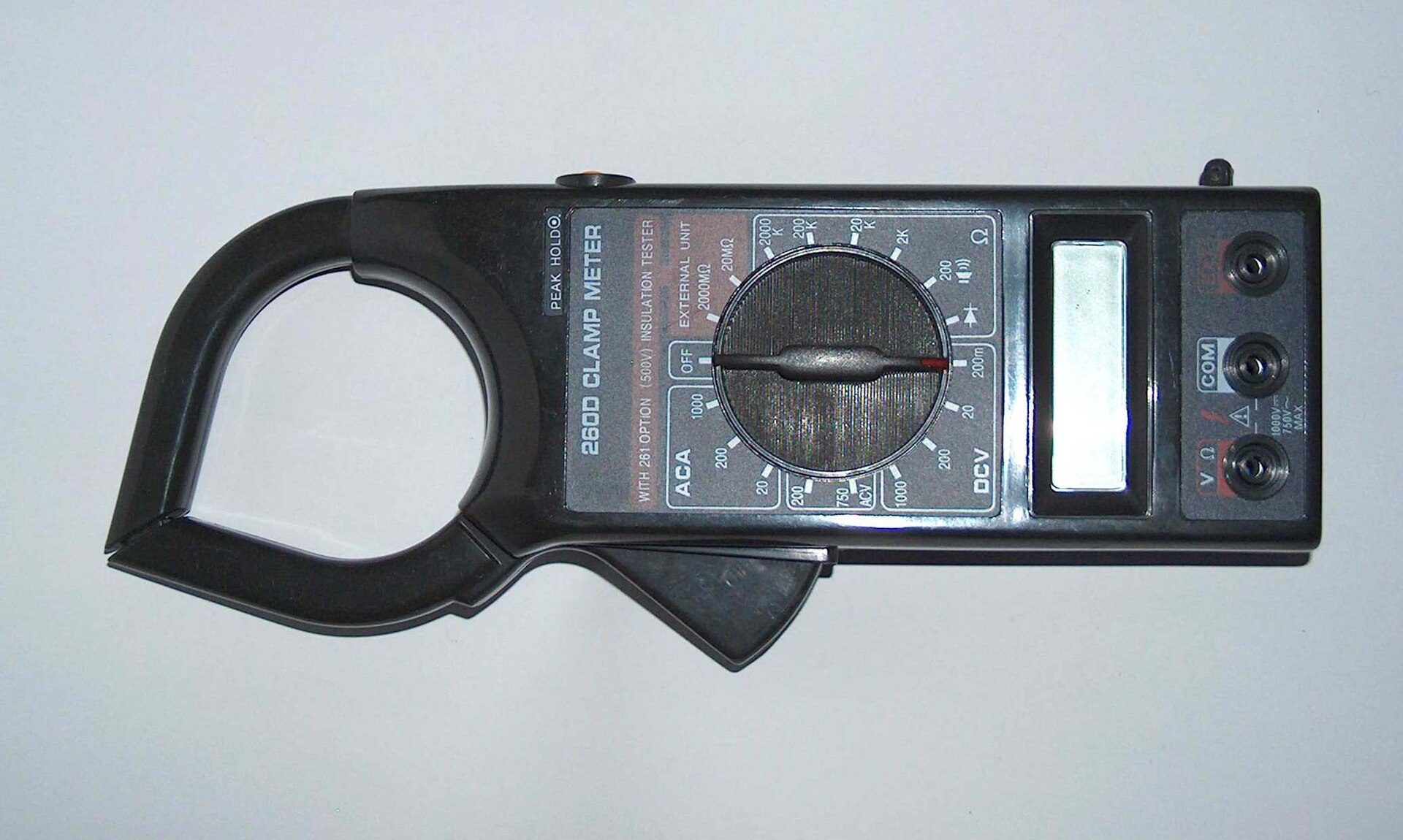
Photo: No machine-readable author provided. Redecke~commonswiki assumed (based on copyright claims). / Wikimedia Commons, Public domain
Splitting circuits with the pulse LED
Switch off the appliances and all circuit breakers. Switch on one circuit at a time, count pulses for 1–2 minutes and work out the power. A circuit that is "all off" yet draws a few hundred watts is the one to investigate.
Measuring leakage: clamp both L and N
Clamp around both the live (L) and neutral (N) conductors of one circuit. The outgoing and returning currents cancel out, and what remains is the current leaking to earth. You need a clamp meter with a milliamp range (a leakage clamp meter); an ordinary clamp meter will just show 0.00 A and cannot help. A few mA per circuit is normal because of the filter capacitors in electronic appliances; above 10 mA, unplug devices one by one to narrow it down.
How much money does leakage cost?
Less than most people think: a continuous 30 mA leak is only about 220 × 0.03 = 6.6 W, or about 4.8 kWh a month. Leakage is first a safety problem, not a money problem. If the house has an RCD that keeps tripping, also read RCD keeps tripping: 6 causes and how to find the leaking appliance.
⚠ Safety: Measuring current with a clamp meter is done on a live circuit — clamp only around insulated conductors, use a clamp meter rated at least CAT III 300 V, keep your hands dry, stand on a dry floor and never touch busbars or exposed terminals in the board. Do not open the meter box, do not cut or break the lead seal, and do not connect any wire on the supply side of the meter: in Vietnam that equipment belongs to the power company, and interfering with it can lead to fines and back-billing. Anyone not trained in electrical safety should only do the main-breaker test and count pulses; leave the measuring to an electrician.
Power-hungry appliances behind a sudden jump in the bill
The culprit is usually a high-power appliance running extra hours because its automatic cut-off has failed. The table below is a reference calculation for a 220 V supply; running hours are examples, and a real house must be measured.
| Appliance | Power | Normal use | When faulty or misused | Extra kWh per month |
|---|---|---|---|---|
| Electric water heater | 2,500 W | Heats about 1 hour a day (75 kWh) | Faulty thermostat, scale build-up, left on 24/7: heats 1 extra hour a day | +75 |
| Pump to rooftop tank | 750 W | About 1 hour a day (22.5 kWh) | Stuck float valve or pressure switch: runs 3 extra hours a day | +67.5 |
| Fridge | 150 W | Compressor runs about 10 hours a day (45 kWh) | Leaking door gasket, heavy frost: runs almost 24 hours | +63 |
| 1 HP air conditioner | About 900 W | 8 hours a day (216 kWh) | Dirty filter, low refrigerant: runs about 30% longer | +65 |
| Continuous 30 mA leakage | 6.6 W | — | Leaks all month | +4.8 |
Electric water heater
A failed thermostat makes the heater keep heating without cutting out; scale on the element makes it heat for longer. Test it by counting pulses when nobody is using hot water: if the tank is already hot but the meter still blinks fast, the heater has a problem. If people also feel a tingle from the tap, see water heater leaking electricity: how to test it and when to replace.
Pumps and fridges
A pump running when no tap is open usually means a stuck float valve in the rooftop tank (water spills from the overflow), a failed pressure switch or a leaking pipe. A fridge with a damaged gasket runs constantly, with condensation and thick frost. Close a sheet of paper in the door: if it slides out easily, the gasket leaks.
How to calculate a tiered electricity bill from kWh
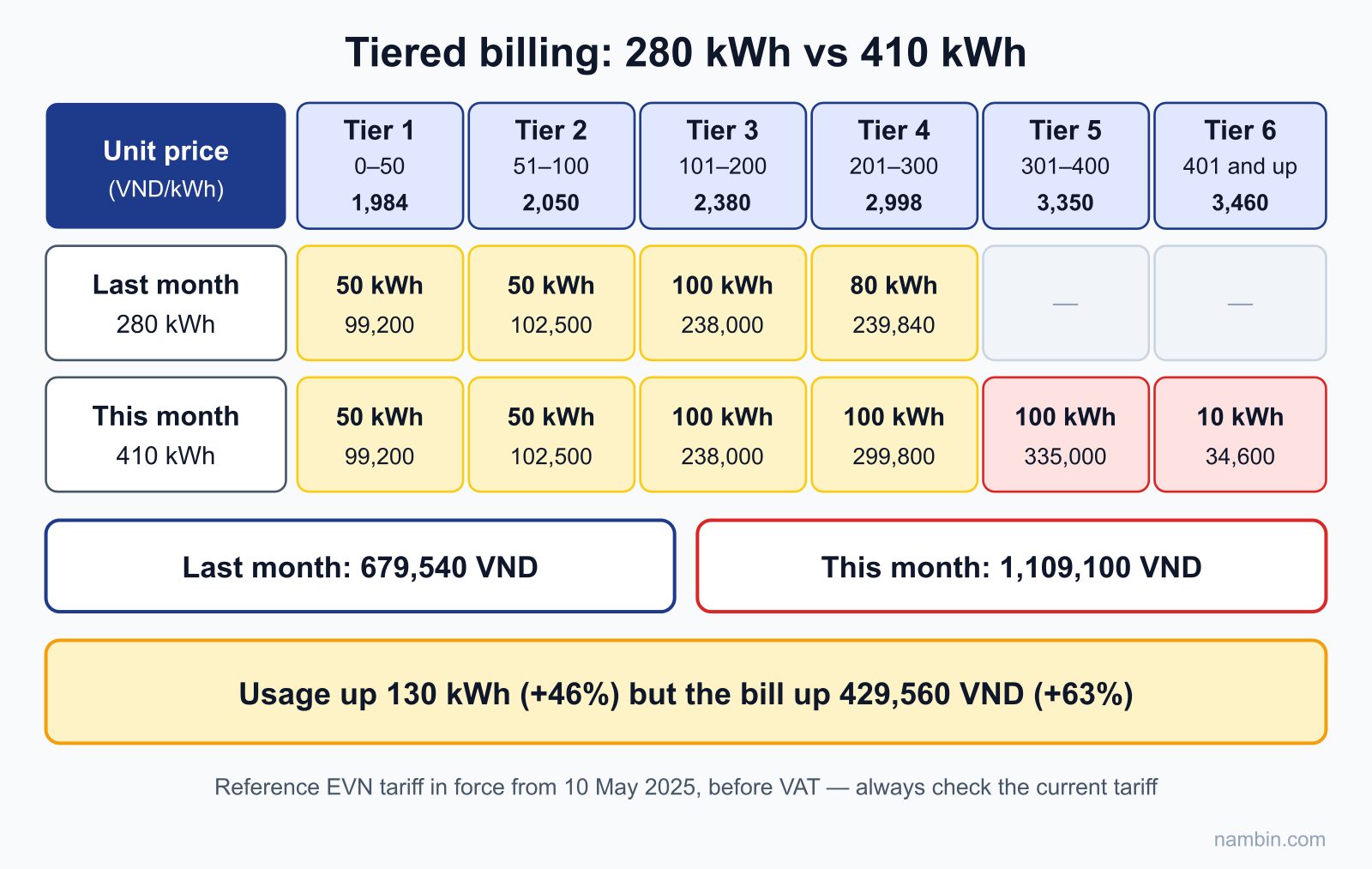
Household electricity in Vietnam is priced in tiers: each block of kWh has its own unit price, and the higher blocks cost more. That is why the bill rises faster than the kWh. Figure 4 works through two months of 280 kWh and 410 kWh.
Reference tariff
The table below shows the tiered household prices in the EVN tariff in force from 10 May 2025, before value-added tax (VAT). Electricity prices in Vietnam are adjusted from time to time, so these figures are only a reference for learning the method; when advising a customer, check the current tariff on the EVN customer-service website or app.
| Tier | Monthly usage | Reference unit price (VND/kWh, before VAT) |
|---|---|---|
| 1 | 0–50 kWh | 1,984 |
| 2 | 51–100 kWh | 2,050 |
| 3 | 101–200 kWh | 2,380 |
| 4 | 201–300 kWh | 2,998 |
| 5 | 301–400 kWh | 3,350 |
| 6 | 401 kWh and above | 3,460 |
Working through the tiers
Fill the kWh into each tier from the bottom up, multiply by the unit price and add up. For 410 kWh: 50 × 1,984 = 99,200; 50 × 2,050 = 102,500; 100 × 2,380 = 238,000; 100 × 2,998 = 299,800; 100 × 3,350 = 335,000; 10 × 3,460 = 34,600. Total 1,109,100 VND, plus VAT at the rate in force. For 280 kWh: 99,200 + 102,500 + 238,000 + 80 × 2,998 (= 239,840) = 679,540 VND.
What it means when advising customers
Each kWh saved at the top of the bill is the most expensive one, so fixes pay off most in homes using over 300 kWh a month. This explains "usage rose a little, the bill rose a lot".
Worked example: a two-storey townhouse up 130 kWh
A two-storey townhouse in Binh Duong, four people: last month 280 kWh, this month 410 kWh, both over 30 days. The owner suspects the meter. The house has a 150 W fridge, a 750 W pump to the rooftop tank, a 2,500 W water heater and one 1 HP air conditioner; the board has a 30 mA RCBO for the bathroom circuit.
Steps 1–3: ruling out the meter
- kWh per day: 280 ÷ 30 ≈ 9.33; 410 ÷ 30 ≈ 13.67 → an increase of about 4.33 kWh a day, equivalent to about 180 W running continuously.
- Main breaker off for 15 minutes: the pulse LED goes out completely and the reading does not change → the meter does not run on its own.
- Kettle test: U = 225 V, I = 8.0 A → measured P = 1,800 W. The 1600 imp/kWh meter blinks 20 times in 24.8 seconds → P = 3600 × 20 ÷ (1600 × 24.8) ≈ 1.815 kW. Error ≈ (1,815 − 1,800) ÷ 1,800 ≈ +0.8% → the meter is accurate.
Steps 4–5: finding the appliances
- Kitchen circuit (only the fridge left on): the LED blinks about once every 15 seconds → 3600 ÷ (1600 × 15) = 0.15 kW. Watched for an hour, the compressor never stops; a corner of the door gasket is torn. The fridge runs almost 24 hours instead of about 10: an extra 14 × 150 = 2.1 kWh a day.
- Rooftop circuit: nobody is using water but the pump is running, and the LED blinks about once every 3 seconds → 0.75 kW. The float valve in the rooftop tank is stuck and water is spilling from the overflow. The owner confirms the pump has recently been running about 3 extra hours a day: 3 × 0.75 = 2.25 kWh a day.
- Clamp around both L + N: each circuit leaks 2–5 mA, under 10 mA in total (about 2 W) → leakage is not the cause.
Conclusion and report
Total extra use: 2.1 + 2.25 = 4.35 kWh a day × 30 = about 130 kWh a month — matching the increase on the bill. Replace the fridge gasket and the float valve. Using Figure 4, if next month drops back to about 280 kWh, the bill falls by about 1,109,100 − 679,540 = 429,560 VND (about US$17 at roughly 26,000 VND per US dollar), before VAT. Give the customer a one-page report: a table of measurements per circuit, photos of the gasket and the float valve, and the meter test with the conclusion "meter accurate".
When you suspect the meter: asking the power company to test it
In Vietnam, the meter belongs to the power company; it is calibrated and sealed before installation. Figure 5 shows the kind of sealing wire used on meters and other equipment that must not be opened without authorisation. An intact seal is what makes a test result valid for both sides.

Photo: Dmitry G / Wikimedia Commons, CC BY-SA 3.0
Prepare your evidence
- Photos of the meter reading with date and time, compared with the reading on the bill.
- A video of the pulse LED with the main breaker off (if the meter runs on its own).
- Results of 2–3 known-load tests: U, I, pulse count, time and error.
- A photo of the calibration label on the meter (showing its validity period).
The procedure in Vietnam
Call the customer-service hotline printed on the bill, use the power company's app or website, or visit the district power office to request a meter check. Staff check on site, may fit a replacement and take the old meter for testing; every step goes into a report you sign. Under current regulations in Vietnam, if the meter error exceeds the permitted limit, the power company replaces it and recalculates the bill; if the meter passes, the person who requested the test may have to pay the testing fee — ask clearly before you go ahead.
What electricians should and should not do
Work only after the main breaker: measure, repair, report. Never "adjust the meter", open its box or wire around it — these are offences in Vietnam.
Common mistakes when checking a fast-running meter
1. Comparing money instead of kWh
Sign: concluding "the meter runs fast" just because the bill went up. Cause: forgetting the days in the billing period and tiered prices. Fix: always convert to kWh per day first.
2. Counting too few pulses
Sign: each test gives an error that differs by 5–10%. Cause: counting only 2–3 pulses, so the timing error is large. Fix: count 20 pulses or more, test 2–3 times and take the average.
3. Clamping the wrong conductors when measuring leakage
Sign: a "leak" of several amps. Cause: clamping only one conductor, so you read load current, or clamping L of one circuit with N of another. Fix: clamp both L and N of the same circuit, with a clamp meter that has a mA range.
Practice exercise and self-assessment
The task: last period's bill was 220 kWh over 31 days, this period 300 kWh over 30 days. The meter is 3200 imp/kWh; testing the water heater gives 220 V × 11.0 A, and the meter blinks 20 times in 9.9 seconds.
- Work out kWh per day for both periods (≈ 7.10 and 10.00) and the average extra power (about 2.9 kWh a day ≈ 120 W). Pass if you are within 5 W.
- Work out the meter's P (3600 × 20 ÷ (3200 × 9.9) ≈ 2.27 kW), the measured P (2,420 W) and the error (about −6%). Pass if you conclude correctly: repeat 2–3 times, and if it is still more than 5% off, request a meter test — note that this meter is running slow, not fast.
- Work out the bill for 300 kWh using the reference table (99,200 + 102,500 + 238,000 + 299,800 = 739,500 VND, before VAT). Pass if every tier is correct.
- State three things you must never do to a meter. Not yet passed if "never break the seal" is missing.
Frequently asked questions
Does an electricity meter running fast mean the meter is broken?
Rarely. Electronic meters seldom drift towards running fast. Switch off the main breaker to see whether it still blinks, and do a known-load test; in most cases the cause is an appliance in the house running extra hours.
Everything is switched off but the meter still counts — what should I do?
Record a video, then follow the visible cabling on your side for any load wired straight after the meter. If nothing turns up, call the power company; never open the meter box.
Why did my electricity bill jump when we use power as usual?
Usually a longer billing period, tiered pricing, or an appliance that has lost its automatic cut-off (water heater, pump, fridge gasket). Convert to kWh per day, then split the circuits.
What is the simplest way to check for current leakage at home?
If the house has an RCD, press its TEST button regularly and notice whether it trips on its own. An electrician uses a leakage clamp meter around both L and N of each circuit; above 10 mA, narrow it down appliance by appliance.
Is there a fee to have the meter tested?
There may be. In Vietnam, if the meter passes, the person who requested the test usually pays the testing fee; if it is outside the permitted error, the power company replaces it and recalculates the bill. Ask your local power company first.
Summary and next step
Remember the order: compare kWh per day → switch off the main breaker to see whether the meter runs on its own → known-load test → switch on one circuit at a time and count pulses → clamp L + N to measure leakage. Only suspect the meter when the numbers say so; everything involving the meter and its seal is the power company's job. This is a practical lesson in the step Troubleshooting common electrical faults; the next step in the pathway is Safety check and wiring exam. If your job starts with a tripping breaker, also see circuit breaker keeps tripping: a 6-step procedure to find the real cause.
Want to learn properly how to take on diagnostic jobs and report to customers with real numbers? Current and leakage measurement, circuit splitting, fault repair and handover reports are taught step by step in the NAMBIN course Residential Electrician Level 2 – Qualified Electrician, with graded practical tasks and a certificate on completion.