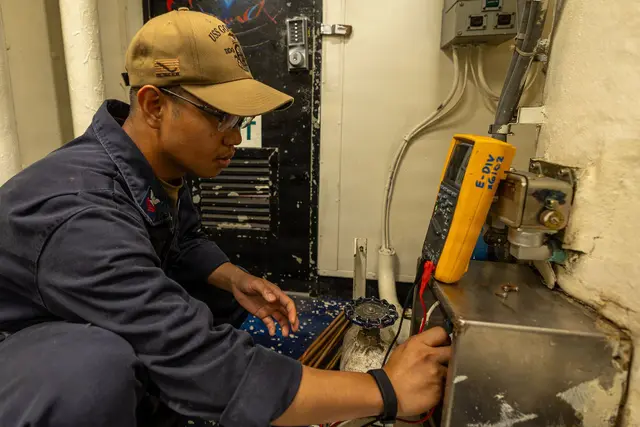
A residual current device (RCD) that keeps tripping almost always means current is escaping to earth somewhere — through a water heater element, a pump, a junction box soaked by rain — or that a neutral conductor is wired along the wrong path. The device is doing its job; the electrician's job is to find the leaking circuit and appliance by isolating circuits one at a time and testing insulation, not to fit a new breaker or "bypass" it to stop the tripping.
This lesson covers only residual current devices (RCDs: RCCBs, RCBOs and the older ELCBs; in Vietnam they are commonly called "anti-shock breakers"). A standard breaker tripping from overload or short circuit is covered in the lesson Breaker keeps tripping: a 6-step procedure to find the real cause.
By the end of this lesson, you will be able to:
- Tell within 2 minutes whether an RCD is tripping from earth leakage or from overload or short circuit.
- List the 6 most common causes and guess the most likely one from when it trips (in rain, when the water heater is switched on, at night…).
- Isolate circuits correctly, including separating neutral conductors, to narrow down the leaking circuit.
- Carry out a 500V insulation test on each circuit, read the result against the 1 MΩ threshold and estimate the leakage current.
- Repair and sign off: re-test, press TEST and write a report for the homeowner.
Want hands-on guidance while testing and tracing leaks? The procedure for narrowing down faults, insulation testing and writing fault reports is practised and graded in the Residential Electrician Level 2 – Electrician course.
Why an RCD trips: understand it before you fix it
An RCD compares the current flowing out on the live conductor (L) with the current returning on the neutral (N). When the difference — called the residual current IΔn — reaches the threshold, it disconnects the supply. A 30 mA device does not care how many amps the house draws; it only cares how many milliamps are taking another path. How to wire and test the device is covered in the lesson How to wire an RCD in a home.
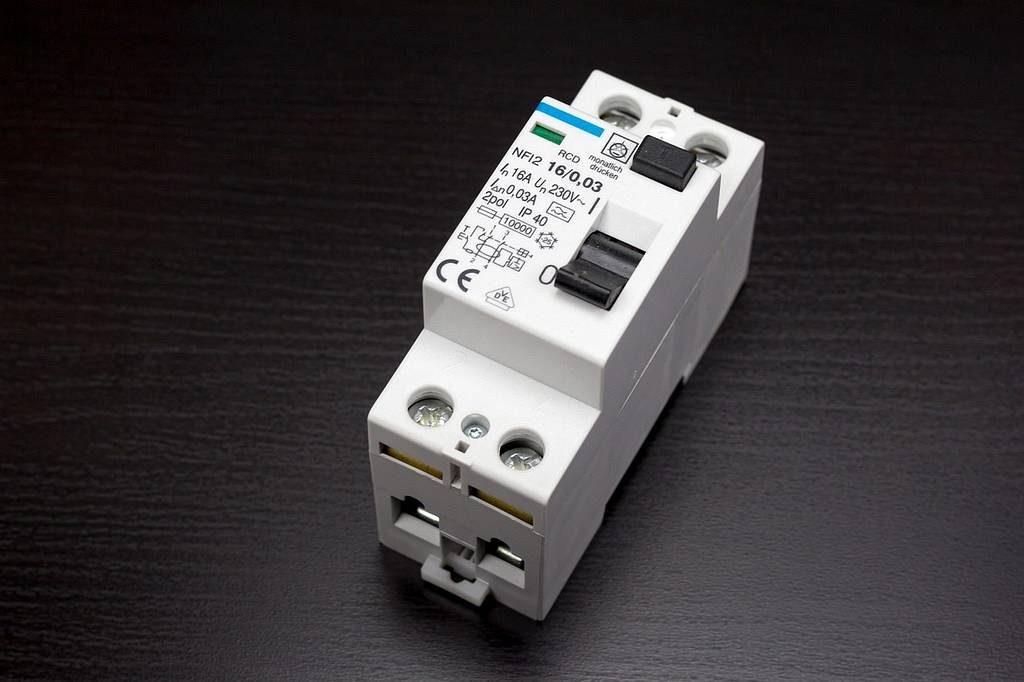
Photo: Diermaier / Wikimedia Commons, CC0
Rated at 30 mA, but it may trip from 15 mA
Under IEC 61008/61009, a 30 mA device must not trip below 15 mA of leakage and must trip by 30 mA. Between 15 and 30 mA it depends on the individual unit. A house where it "sometimes trips and sometimes doesn't" usually has leakage hovering in this zone; a damper day or one more appliance switched on pushes it over.
Background leakage: the "legitimate" leakage every home has
TVs, computers, inverter air conditioners and LED drivers have interference-suppression capacitors connected to the earth conductor, and each leaks about 0.25–1 mA in normal operation. Added together this is called background leakage. Common practice is to keep background leakage below about 30% of the threshold, i.e. about 9 mA for a 30 mA device.
Tripping from leakage versus overload or short circuit
- An RCCB (leakage protection only) tripping = definitely leakage or a neutral fault, because it has no overcurrent protection.
- RCBO: many models have a flag that shows when they tripped on leakage. Without a flag, look at the load: a circuit with only a 2500W water heater (11.4 A) on a C16 RCBO that still trips is almost certainly leakage.
- If it trips when the air conditioner, induction hob and electric kettle are switched on together, go back to the overload lesson.
6 reasons an RCD keeps tripping
Figure 2 summarises the 6 causes in order of how often they occur, with the typical time of tripping so you can make a guess before opening the board. The first three are genuine leakage; the last three come from wiring, circuit layout or the protective device itself.
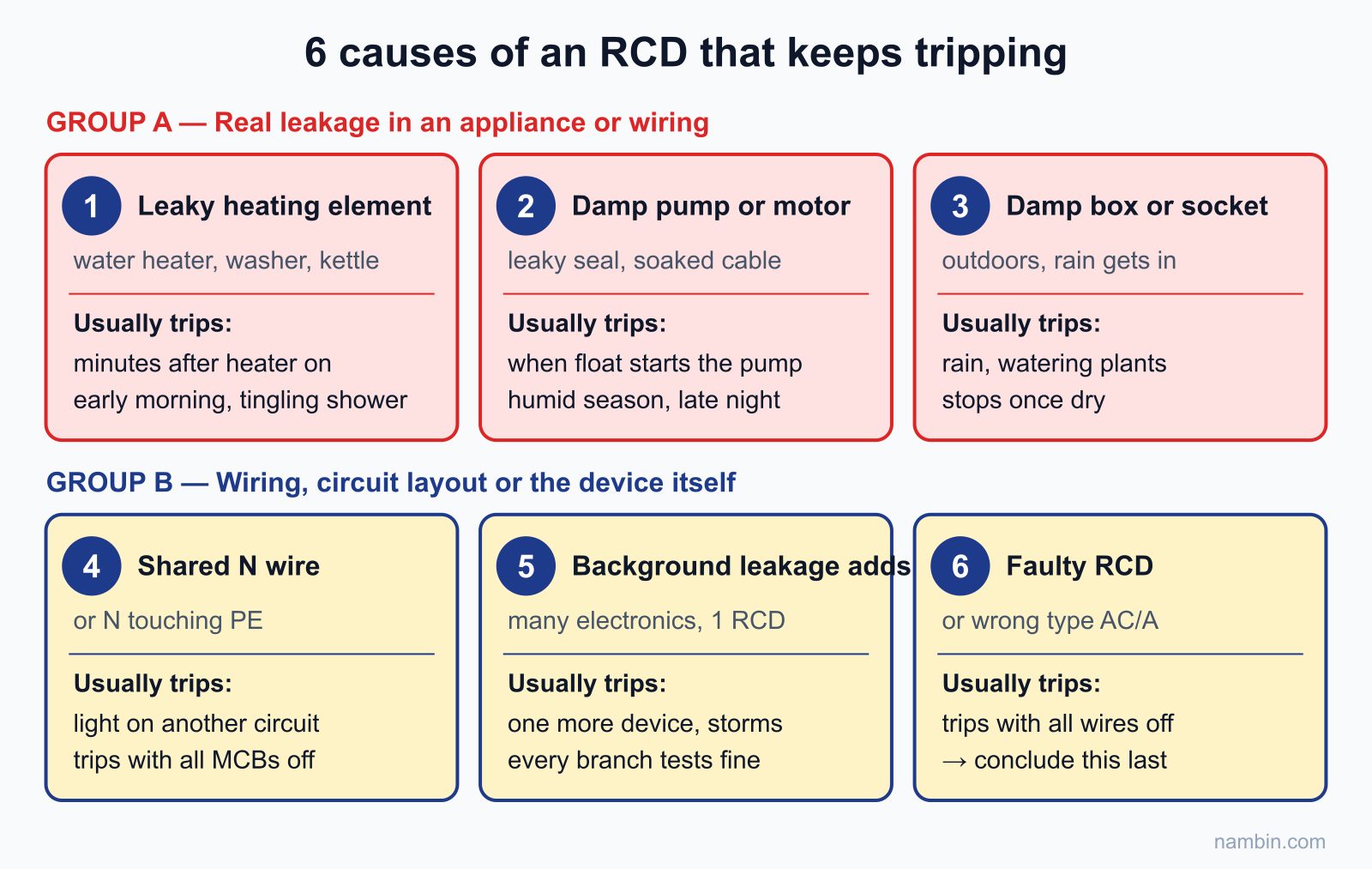
1. A leaking heating element: water heater, washing machine, kettle, hob
A heating element is a resistance wire inside a metal tube, packed with insulating powder. With age, a cracked sheath or powder that absorbs moisture lets the insulation degrade, and leakage current flows through the water and the tank to the earth conductor. Signs: the RCD trips seconds to minutes after the water heater is switched on, especially in the morning after cooling overnight; a slight tingle from the shower head. This is the number-one cause when a customer says "the RCD trips when I turn on the water heater".
2. Pumps and motors in damp places
Pumps next to underground tanks, on open rooftops, washing machines on balconies. A leaking seal lets water into the motor, the windings get damp, the power cable is chewed by rats or sits in water. Signs: it trips exactly when the float switch starts the pump, or during the rainy and humid season, or late at night (when the pump runs automatically).
3. Junction boxes, sockets and outdoor lights taking in water
Junction boxes under corrugated metal roofs, sockets in the yard, gate lights, outdoor wall lights, wall conduits that let in damp. Rainwater collecting in a box creates a leakage path from live to the metal casing or to a wet wall. Signs: the RCD often trips when it rains or when plants are watered, then stops by itself after a few dry days.
4. A shared neutral, or neutral touching earth
The neutral of one circuit returns through the RCD of another circuit, or the neutral is connected to the earth terminal at a socket. Signs: it trips when an appliance on another circuit is switched on; it tripped from the day it was installed. How to fix each wiring fault is covered in the lesson How to wire an RCD.
5. Background leakage adding up under a single main RCD
One 30 mA RCCB carries the whole house: 3 inverter air conditioners, 2 refrigerators, a computer, a TV, dozens of LED lights. No appliance is faulty, but background leakage already totals 12–15 mA. Signs: random tripping when one more appliance is switched on, during thunderstorms or when the grid is unstable; insulation tests on every circuit look fine. The fix is to split the circuits, not to hunt for a "faulty appliance".
6. The RCD itself is faulty or the wrong type
Old devices, damp units or those that have taken lightning surges may trip at 10–12 mA. A type AC device used for washing machines or inverter induction hobs may nuisance-trip, or fail to trip when needed. Only conclude this cause after ruling out the other 5 and testing with an RCD tester.
Read the tripping pattern to narrow things down before opening the board
Questioning the homeowner carefully before picking up any tools is the fastest method. The table below matches what the customer says to the suspected cause and the first check to make.
| Customer describes | First suspect | First check |
|---|---|---|
| Trips when it rains or when plants are watered, stops once dry | Cause 3: junction boxes, sockets, outdoor lights | Switch off circuits with outdoor equipment; open the boxes on the roof and at the gate |
| Trips a few minutes after the water heater is switched on | Cause 1: leaking heating element | Disconnect the heater, insulation-test the element to the tank |
| Trips exactly when the pump runs, often at night | Cause 2: pump or pump cable | Disconnect the pump, insulation-test the windings to the casing |
| Trips when lights or a fan on another circuit are switched on | Cause 4: shared neutral | Separate each circuit's neutral at the neutral bar |
| Random tripping, every test is good, lots of electronics in the house | Cause 5: accumulated background leakage | Measure leakage with a mA clamp meter on the main PE conductor |
| Will not reset even with all outgoing wires disconnected | Cause 6: faulty device | Try a replacement of the same rating, test with an RCD tester |
Questions to ask the homeowner
When did it start, and what was installed or repaired just before (a new water heater, a new yard socket)? When does it trip? Has anyone felt a tingle touching the shower head or the washing machine casing? Does the board have one main RCD, or an RCBO for each circuit?
Trips instantly or after a while: one more clue
If it trips again the moment you reset it, there is a large leak or a permanent neutral fault. If it holds for minutes or hours before tripping, the leak depends on temperature, humidity or an operating cycle (the element heats up, the pump runs on its float) — this kind is hard to catch and needs an insulation test.
How to find an earth leak by isolating circuits
Isolating circuits means switching them on one at a time to see which one trips the RCD — essential when one RCCB feeds several MCBs (miniature circuit breakers), as in Figure 3. If every circuit has its own RCBO, you already know which circuit it is and can move straight to isolating appliances.
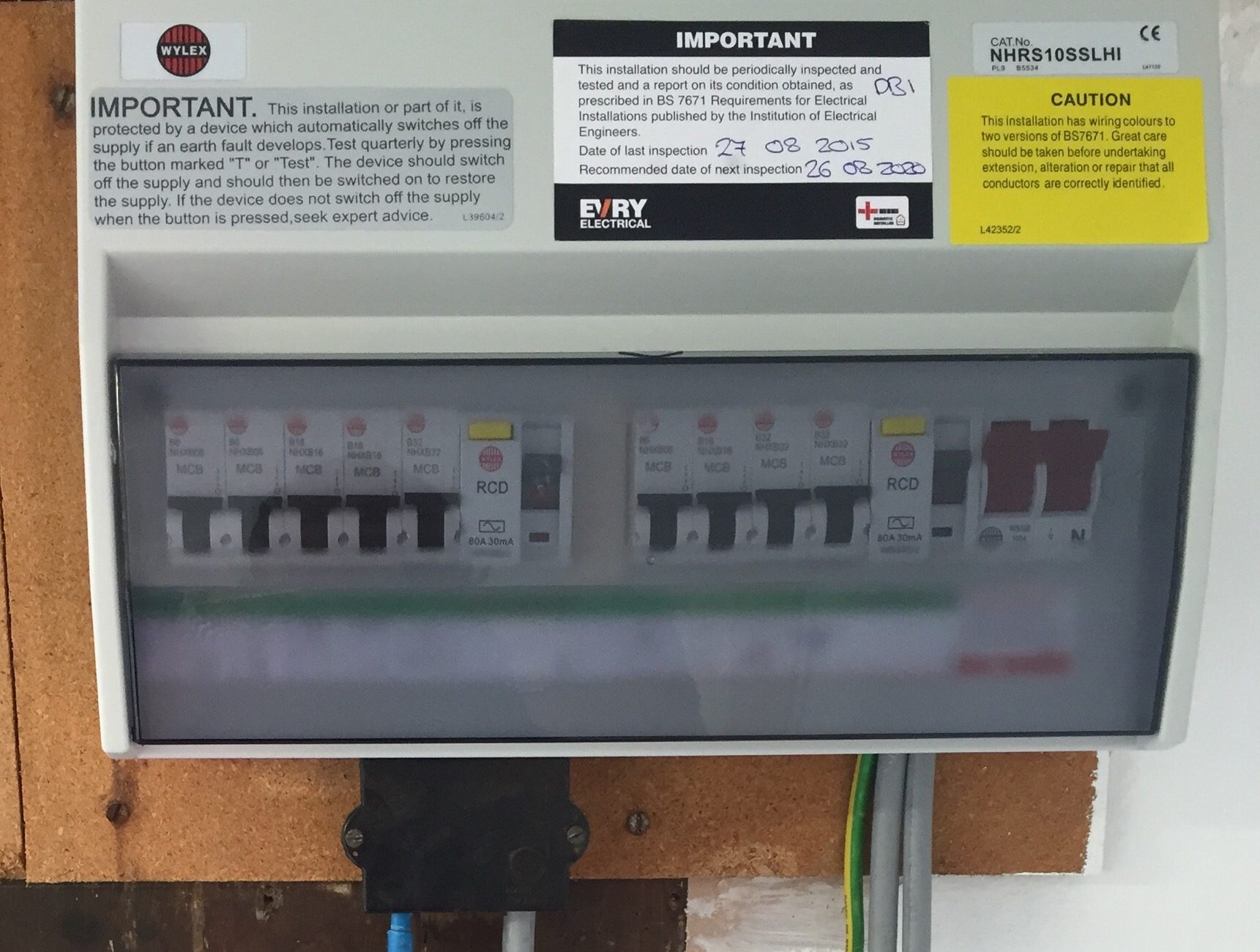
Photo: Evry Electrical / Wikimedia Commons, CC BY 4.0
Tools you need
A voltage tester pen, a multimeter, an insulation resistance tester (a "megger", 500V DC range), a clamp meter with a mA leakage range if available, insulated screwdrivers, a lock and a "Work in progress — do not switch on" sign, and a notebook for readings.
Steps for isolating circuits
- Switch off all the circuit MCBs downstream of the RCD, then reset the RCD. If it holds: the fault is in the circuits, go to step 2. If it still trips: go to step 4.
- Switch on the MCBs one at a time, waiting a few minutes each time and switching on the main appliances on that circuit (water heater, pump). Note any circuit that causes a trip, switch it off and carry on with the rest — there may be two leaking circuits.
- If no single circuit trips it on its own, but switching them all on does: think of cause 5 (accumulated background leakage).
- Still trips with all MCBs off: do not jump to "the device is faulty". A single-pole MCB only disconnects the live; the neutrals of every circuit are still connected through the RCD. A circuit with neutral touching earth will still trip it even with its MCB off. Isolate the main supply, disconnect the neutral wires from the group's neutral bar one at a time, resetting after each one — the wire whose removal stops the tripping identifies the circuit.
- Only if it still trips with every wire disconnected should you suspect the device itself (cause 6).
Within the leaking circuit: isolate each appliance
Isolate the supply, unplug or disconnect each appliance (heater, pump) from its terminal block, then switch the circuit on again. If removing an appliance stops the tripping, that appliance is leaking; if it still trips with everything removed, the leak is in the cable, a junction box or a socket — an insulation test is needed.
Safety when tracing leaks: Only disconnect or connect wires or open junction boxes after switching off the main breaker, locking it, hanging a sign and re-testing with the tester pen. Everything upstream of the main breaker and the meter is always live — that belongs to the power utility. Never stand barefoot on a wet floor, and never touch a heater or pump casing to "see if it tingles". If you are not trained in insulation testing, ask a qualified electrician to do it. Never bypass or remove an RCD "for now": the current going astray today could go through a person tomorrow.
Insulation testing to find the leaking appliance
A multimeter measures with only a few volts, so a leaking element or damp cable often still shows "no continuity". An insulation tester applies 500V DC, so it reveals weak insulation. Figure 4 shows an analogue model.
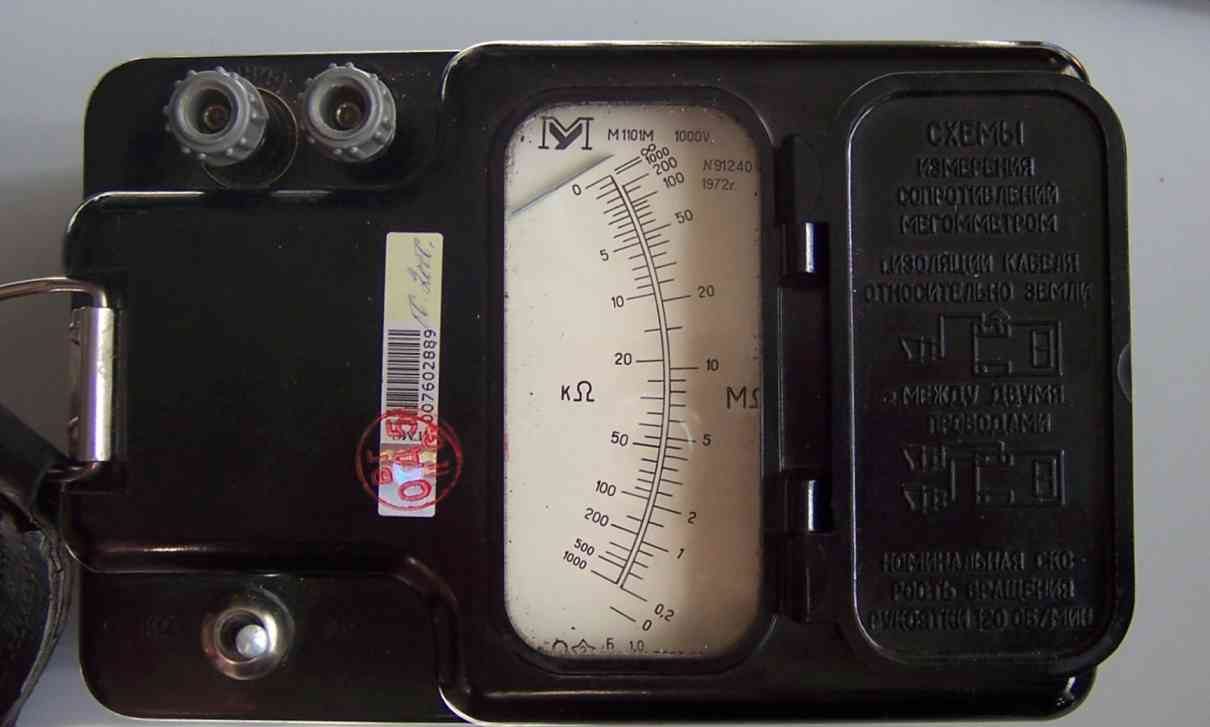
Photo: Сергин Владимир Александрович / Wikimedia Commons, Public domain
How to insulation-test one circuit
- Isolate, lock off, re-test. Switch off the circuit MCB, disconnect the circuit's L and N from the MCB and the neutral bar.
- Unplug all electronic equipment from the sockets and disconnect LED drivers and electronic switches from the circuit — 500V DC can damage them, and their filter capacitors distort the reading.
- Test L–PE, then N–PE, holding the test button for about 1 minute each time until the reading settles. Also test L–N once all loads are removed.
- After testing, short the probes to PE for a few seconds to discharge the cable before touching it.
Reading the result: 1 MΩ is the minimum
For low-voltage household circuits tested at 500V, the minimum is 1 MΩ or more (IEC 60364-6). New cable usually reads hundreds of MΩ. You can estimate the leakage current with Ohm's law: I = 220 V ÷ R.
| L–PE reading | Leakage ≈ 220 ÷ R | Assessment |
|---|---|---|
| Above 100 MΩ | Below 0.0022 mA | Good, cable and appliances as new |
| 2 MΩ | 0.11 mA | Pass, but monitor (often an ageing element) |
| 1 MΩ | 0.22 mA | Just at the threshold, find the cause |
| 0.1 MΩ (100 kΩ) | 2.2 mA | Fail, damp or damaged insulation somewhere |
| 0.01 MΩ (10 kΩ) | 22 mA | Severe leak, enough to trip a 30 mA device when added to background leakage |
Why does it "test above 1 MΩ everywhere but still trip"? Most background leakage comes from the filter capacitors of electronic equipment — the insulation tester cannot see this because you unplugged those appliances.
Testing a water heater element and pump windings
Water heater: disconnect the two wires to the element and test between one end of the element and the tank. A good element reads tens of MΩ or more; below 1 MΩ, replace it or call the warranty service. Single-phase pump: test from the winding terminal to the pump casing; a pump that has taken in water often reads only tens to hundreds of kΩ. If the pump has an electronic dry-run protection board, disconnect it before testing.
A leakage clamp meter: seeing what the insulation tester misses
A mA-range clamp meter clamped around both L and N of a circuit shows that circuit's leakage while the load is running, including leakage through filter capacitors; clamped around the main PE conductor, it shows total leakage to earth. This is done live, so only trained electricians should do it, with a clamp meter of the right safety category, and without removing any extra covers over live parts.
Worked example: a 3-storey tube house whose RCD trips every time it rains
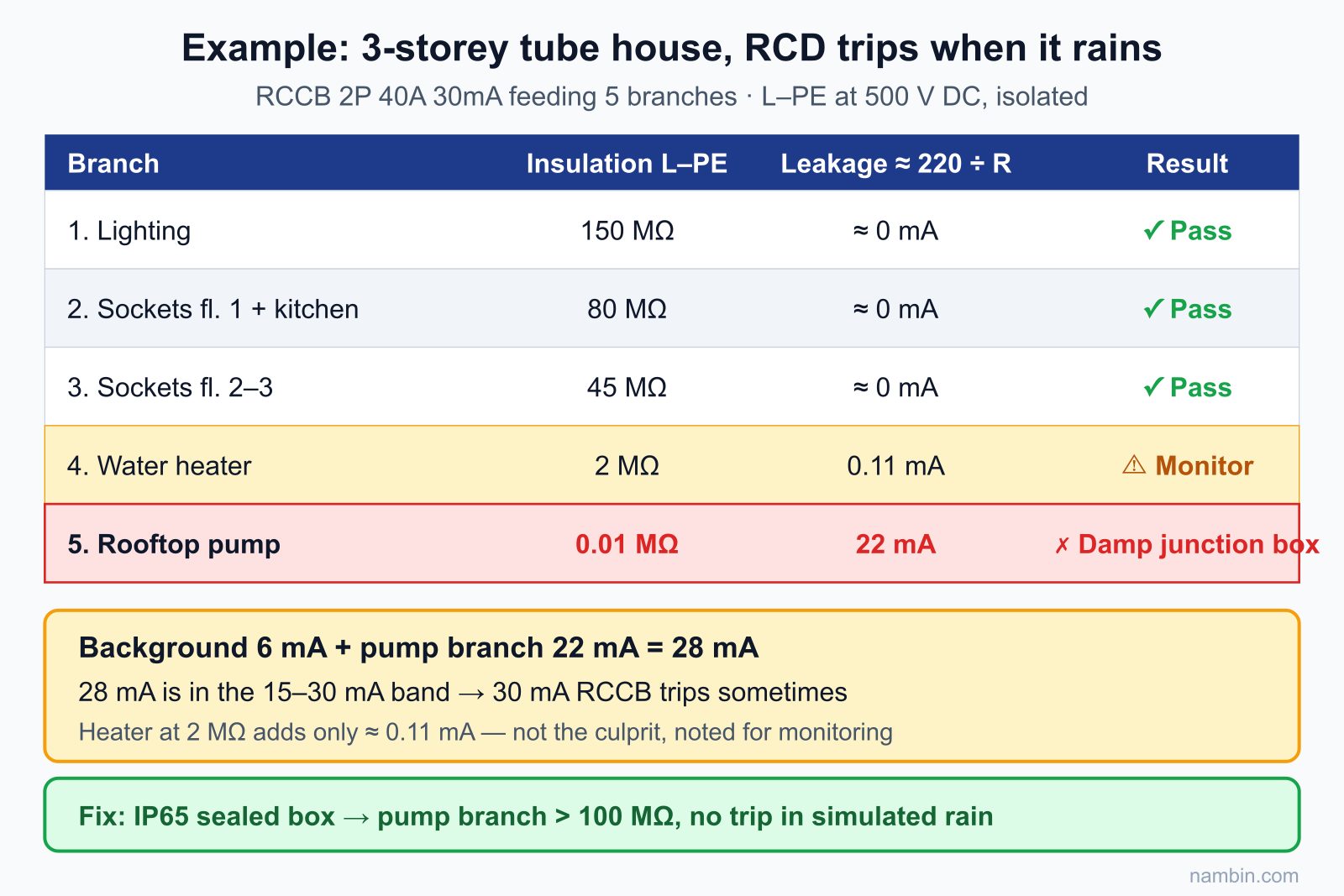
Situation: a 3-storey tube house (a narrow terraced house typical of Vietnamese cities) on the outskirts of a city; the board has a 63A main MCB followed by one 2-pole 40A 30mA RCCB feeding 5 circuit MCBs. The homeowner says that for two weeks, whenever it rains at night, the power is off in the morning; the RCD resets for a while and then trips again; in dry weather it is fine. Nobody has felt a tingle. Figure 5 summarises the whole job.
Questioning the customer and isolating circuits
Tripping in the rain points first to cause 3. Switch off all 5 MCBs and reset the RCCB — it holds. Switch on one at a time: lighting, ground-floor and kitchen sockets, 2nd–3rd floor sockets, water heater — no trip. Switch on the rooftop pump MCB and wait for the float to start the pump: about 2 minutes later the RCCB trips. That day the air was still damp after rain.
Insulation testing and calculation
Isolate, lock off, re-test, disconnect each circuit and test L–PE at 500V: lighting 150 MΩ, ground-floor and kitchen sockets 80 MΩ, 2nd–3rd floor sockets 45 MΩ, water heater 2 MΩ, pump 0.01 MΩ. Disconnecting at the junction box next to the pump and testing the pump windings alone gives 60 MΩ — the pump is fine; the cable from the board to the junction box gives 120 MΩ. So the leak is in the plastic junction box on the roof: opening it reveals standing water, and the taped joints have turned green with algae.
Calculation: 220 V ÷ 10 kΩ ≈ 22 mA through the damp junction box. Background leakage measured with a clamp meter on the main PE conductor with everything else running (refrigerator, 2 inverter air conditioners, TV, LED lights): about 6 mA. Total 22 + 6 = 28 mA — inside the 15–30 mA zone, exactly the "sometimes trips, sometimes doesn't" pattern. The water heater at 2 MΩ contributes only about 0.11 mA; it is not the culprit, but it goes in the report to be monitored.
Repair, re-test and handover
- Replace it with a gasketed waterproof junction box (IP65), cable glands at the conduit entries, insulated connectors instead of tape, and a "drip loop" in the cable before it enters the box. Re-test the pump circuit: above 100 MΩ.
- Recommend moving the pump and water heater onto their own 30 mA RCBOs, so that next time a leak only cuts power to one circuit.
- Press TEST — the RCCB trips immediately; run the pump for 15 minutes and spray water around the junction box to simulate rain — no trip. Write a report with before-and-after readings, the materials replaced and a monthly TEST schedule.
Fixing each cause and preventing repeat tripping
Finding the leak is only half the job.
Leaking appliances: replace the part, do not "put up with it"
Element below 1 MΩ: replace the element or claim the warranty. Pump that has taken in water: rewind or replace it, fix the seal, add a cover. Do not move a leaking heater or pump onto an ordinary MCB "so it stops tripping" — that is exactly a bypass.
Cables, junction boxes and outdoor equipment: block the water path
Outdoor junction boxes with gaskets, with conduits entering from below; yard sockets with covers; outdoor lights with the correct IP rating. Concealed cables that have been taking in water for years usually need that section rewired.
Split the circuits when background leakage is high
Each 30 mA RCD should only carry a small group: separate RCBOs for the water heater, pump and washing machine; a separate RCCB or RCBO for each floor's sockets. Inverter appliances should use type A devices. Do not put two 30 mA devices in series; a main RCD (if used) should be a 100–300 mA time-delayed (type S) device.
Common mistakes electricians make when tracing leaks
- Replacing the RCD straight away: the new device trips too, and the customer loses money and trust.
- Only switching off MCBs and forgetting the neutrals: wrongly concluding "the breaker is faulty".
- Insulation testing with electronics still plugged in: damaged power supplies and falsely low readings.
- Testing in dry weather for a fault that only appears in rain: the readings look good but the fault is still there — arrange to re-test after rain.
Frequently asked questions
Why does my RCD trip when it rains?
Rainwater gets into junction boxes, sockets, outdoor lights or cable conduits, degrading the insulation so the leakage current rises above the threshold. Isolate the circuits with outdoor equipment first, insulation-test while still damp, and replace junction boxes with gasketed waterproof ones.
The RCD trips when I switch on the water heater — can I keep using it?
You should not. The element is almost certainly leaking, and continued use risks an electric shock in the shower. Switch off the supply and insulation-test the element as described above.
What is the fastest way to find an earth leak in a house?
Ask when it trips, isolate each circuit (including neutrals), disconnect each appliance on the leaking circuit, then insulation-test each cable section and junction box at 500V.
My RCD keeps tripping even with nothing switched on — is it faulty?
Not necessarily. A circuit with its neutral touching earth will still trip it even with the MCB off. Only if it still will not reset with every outgoing wire disconnected can you conclude the device is faulty.
Should I replace a 30 mA RCD with a 100 mA one so it trips less?
No. 100 mA is not sensitive enough to protect people in a bathroom. Find the leak and split the circuits so that each 30 mA device carries fewer circuits.
Practice exercises and self-assessment
Exercises
- Under the guidance of a qualified electrician, on a practice board with a 30 mA RCCB feeding 3 MCBs: the instructor fits a 10 kΩ resistor from L to PE on one circuit (with the power off while fitting). You isolate the circuits, find the right one and explain with numbers why it trips.
- Repeat exercise 1 with the resistor from N to PE. Show why it still trips with all MCBs off, and find the circuit by disconnecting neutrals.
- A house has 8 mA of background leakage measured on the main PE conductor, and one circuit insulation-tests at 20 kΩ. Calculate the total leakage and say whether a 30 mA RCCB will definitely trip.
Pass / not yet criteria
- Pass when every disconnection, connection and insulation test is done after isolating, locking off, hanging a sign and re-testing; skipping the re-test is not yet.
- Exercise 1 passes when you find the right circuit and calculate 220 ÷ 10 kΩ ≈ 22 mA.
- Exercise 2 passes when you explain that a single-pole MCB does not disconnect the neutral, and find the circuit by disconnecting neutrals.
- Exercise 3 passes with 220 ÷ 20 kΩ = 11 mA, total 19 mA — inside the 15–30 mA zone, so it may or may not trip; the leaking circuit must be fixed rather than "wait and see".
Continue with guidance: to have your circuit isolation, insulation testing and fault reports graded like a qualified electrician, join the Residential Electrician Level 2 – Electrician course.
Next step in the roadmap (Safety check & circuit installation test): you will take the mandatory safety test and fully install a sample circuit within a time limit — the insulation testing and TEST-button check from this lesson will be graded directly.