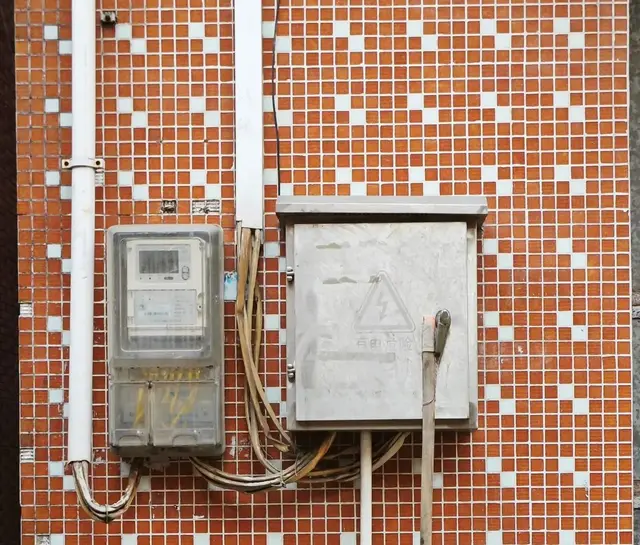
“This month’s electricity bill has doubled, but we’re using everything the same as before.” “Could the house have a current leak?” “Or is the meter running wrong?” Electricians get calls like these all the time, especially in the hot season. The client usually already has a conclusion in mind, and it is easy for the electrician to be pulled along with it. The right approach is to follow the numbers: read the kWh, test the meter with all loads switched off, measure each circuit, and only then draw a conclusion.
This lesson is an extension of the “Troubleshooting common electrical faults” step. It reuses the measuring skills from the “Multimeter & voltage tester pen” step and the knowledge of RCBOs and earthing from the distribution board step. By the end of this lesson, you will be able to: (1) read the bill and the meter readings to find the real increase; (2) test the meter with the load disconnected and know when to hand over to the power company; (3) trace current leakage and measure the power of each circuit to find the appliance that is eating electricity; (4) report to the client with figures, not guesses.
Three things to understand before you go and check
Compare kWh, not money
Residential electricity prices in Vietnam use tiered pricing: the more you use, the higher the unit price for the portion above each tier. So the bill can rise faster than the number of kWh. Ask the client for the last two or three bills, and the bill for the same period last year if available, and copy down the previous reading, the new reading and the number of days in the billing period. Divide the kWh by the number of days to get daily consumption — only this figure can be compared between months with different numbers of days.
Energy is power multiplied by time
Energy (kWh) = power (kW) × hours of operation. A 10 W LED bulb left on for a whole month (720 hours) uses 7.2 kWh. A 2,500 W water heater heating for one extra hour a day uses 75 kWh a month. That is why high-power appliances running extra hours are usually the culprit, much more often than current leakage.
Leakage is a safety problem first, a bill problem second
Leakage current wastes electricity, but more importantly it can cause electric shock and fire. A 30 mA residual current device trips when leakage reaches its threshold; at 30 mA, the power consumed is only about 220 × 0.03 = 6.6 W. If the house has a working RCBO or ELCB that has not tripped, a large leak through that path is unlikely. If the house has no residual current protection, leakage can be much larger without anyone noticing — which is a good reason to recommend installing one.
Tools and preparation
Tools
Multimeter, voltage tester pen, torch, notebook and a stopwatch (phone).
Clamp meter; better still, a leakage clamp meter with mA resolution.
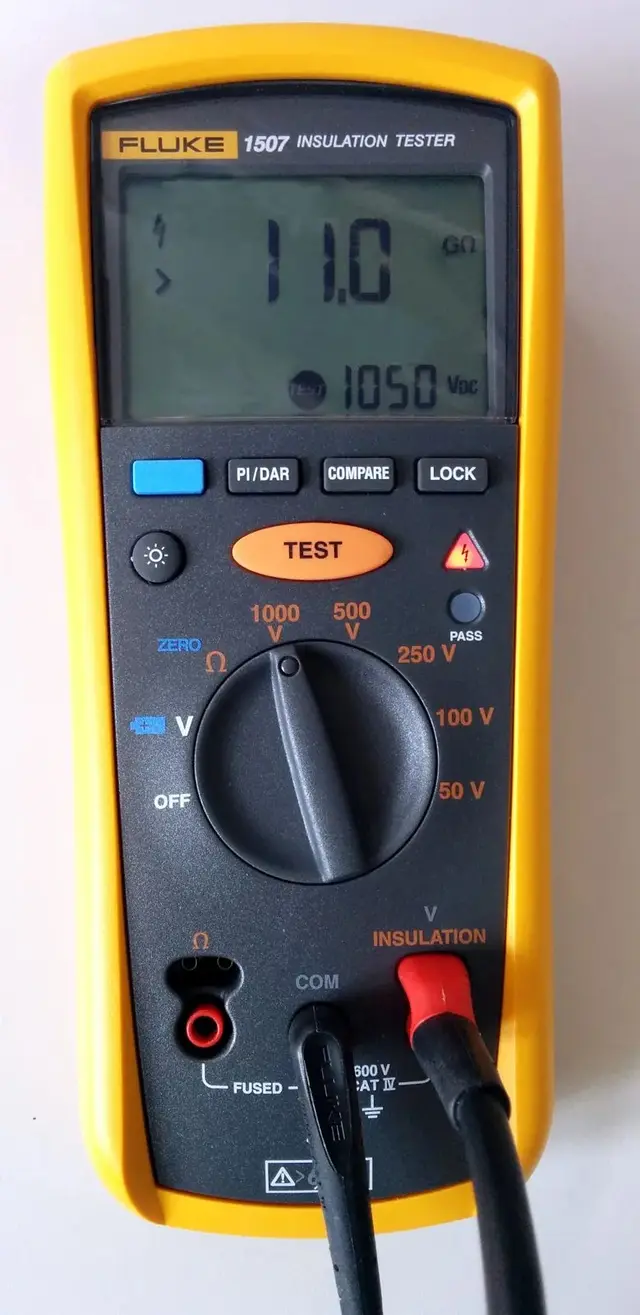
An insulation resistance tester (megohmmeter) if available, on the 500 V DC range for 220 V circuits.
A plug-in power meter socket (showing W and kWh) to measure plug-in appliances.
Insulated gloves and lockout tags for the circuit breakers (MCBs).
Questions to ask the client by phone
How many kWh (not how much money) were used this month and last month? Was the billing period longer than usual?
Recently, have more people moved in, have you added appliances, has it been hotter, have you used the air conditioner more?
Has any appliance recently been repaired or installed (water heater, pump, air conditioner)?
Has anyone felt a tingle when touching a tap, the washing machine casing or the water heater? If so, tell the client to switch off that appliance’s breaker for now and not use hot water until it has been checked.
Does the distribution board have residual current protection, and does it often trip?
The 7-step checking procedure
Read the bill and calculate kWh per day. Copy the readings and number of days and calculate kWh/day for each month. If kWh/day has not changed much but the bill has gone up, explain the tiered pricing and the billing period length to the client before doing anything else.
Compare with the actual meter reading. Read the figure currently displayed on the meter and compare it with the new reading on the bill and the number of days since that reading was taken. Photograph the meter with the time. Do not open the cover and do not touch the seals.
Test the meter with the entire load disconnected. Switch off the main breaker after the meter (inside the house). Watch the pulse LED or the reading for at least 10–15 minutes. If the pulse LED still blinks steadily or the reading still increases when every load in the house has been disconnected, record it, take a video and advise the client to contact the power company. Your work on the meter stops here.
Test with all appliances off but breakers on. Switch the main breaker and circuit breakers back on, but switch off and unplug every appliance the client agrees to turn off (the fridge can be unplugged for a short time). Watch the meter for 30–60 minutes. If the pulse LED still blinks, there is a load or a leak somewhere.
Switch on one circuit at a time and calculate power from the pulse LED. Switch off all circuit breakers, switch them on one by one and count the pulses. Estimate the power with the formula P (kW) = 3600 × n ÷ (C × t), where n is the number of pulses counted, C is the meter constant (imp/kWh) and t is the time in seconds. Record the result for each circuit in a table.
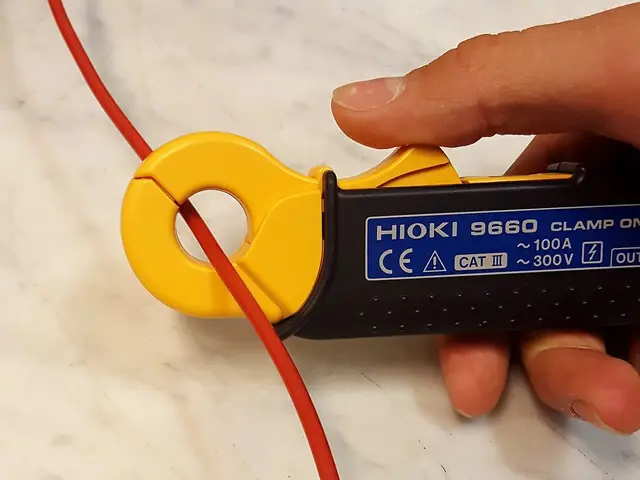
Measure the leakage current on each circuit. With a leakage clamp meter, clamp both the line and neutral conductors of one circuit together: the load currents cancel out and what remains is the leakage current. You can also measure the main earth conductor. Any circuit leaking a few tens of mA or more needs further narrowing down by unplugging appliances one at a time. Once the circuit is de-energized and the electronic devices have been disconnected, measure the insulation resistance with a 500 V DC megohmmeter between line/neutral and earth.
Check suspect appliances and conclude. Use the power meter socket or a clamp meter to measure the current of each appliance. Calculate kWh/day from the actual running hours, add them up and compare with the kWh/day on the bill.
Safety: Do not open the meter, do not cut the seals and do not make any connections before the meter — that belongs to the power company. Leakage measurement with a clamp meter is done on a live circuit, so you must use a clamp meter with a suitable safety category and keep your hands off any exposed conductive parts. Insulation resistance tests must only be done on a de-energized circuit with electronic devices removed (circuit boards, LED lights, sockets with USB ports), because the test voltage can damage them.
Tips for counting pulses quickly
With an electronic meter, time the interval between two blinks: if there are t seconds between two pulses, then P (kW) = 3600 ÷ (C × t).
With an electromechanical meter, the constant is given in revolutions/kWh; count the disc revolutions (using the red mark) and use the same formula.
With a small load, pulses are very sparse — count over a longer period to reduce the error.
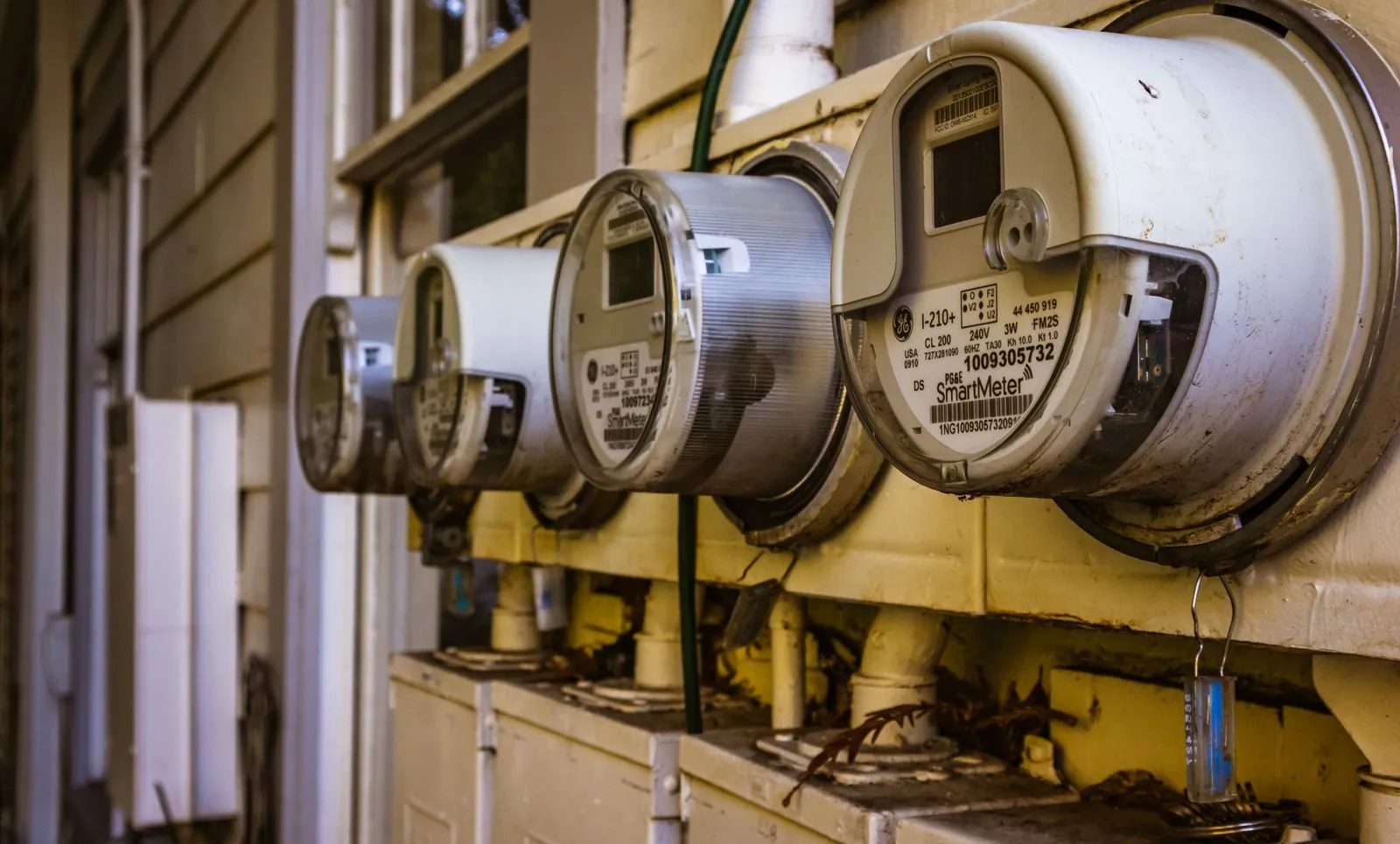
Figure 1. Face of an electronic energy meter: the display shows the kWh reading and the pulse LED is lit next to the printed text “10000 imp/kWh”. This constant is the key to calculating the power currently being drawn from the number of LED blinks. (Photo: Gegik, CC BY-SA 3.0, Wikimedia Commons)
Conversion table for power, leakage current and energy
The table below is a common reference for 220 V/50 Hz circuits, based on simple multiplication and assuming the device runs continuously for 720 hours a month (unless stated otherwise). Real appliances run in cycles, so the energy is usually lower.
Case | Power | Estimated energy |
|---|---|---|
Continuous 10 mA leakage | About 2.2 W | About 1.6 kWh/month |
Continuous 30 mA leakage | About 6.6 W | About 4.8 kWh/month |
Continuous 0.5 A leakage (very dangerous) | About 110 W | About 79 kWh/month |
100 W base load always on (modem, cameras, average fridge…) | 100 W | About 72 kWh/month |
2,500 W water heater heating 1 extra hour/day | 2,500 W | About 75 kWh/month |
750 W pump that fails to cut out, running 2 extra hours/day | 750 W | About 45 kWh/month |
Insulation resistance at a 500 V DC test | — | Common minimum acceptable value of about 1 MΩ for low-voltage circuits (per IEC 60364-6) |
Note: the figures above are illustrative calculations, not measurements from a specific house. The insulation resistance threshold is a minimum; new, dry circuits usually measure much higher. A low reading, or one that falls over time, is a sign that needs investigating.
Worked case: a 3-storey townhouse with kWh up about 40%
Situation
The client sends two bills: last month 310 kWh over 30 days, this month 450 kWh over 31 days. The family says they have not bought any new appliances. The house has a 2,500 W water heater on the 3rd floor, a pump feeding the roof tank and two air conditioners. The distribution board has a 30 mA main RCBO that has never tripped.
Narrowing down and calculating
Daily consumption: 310 ÷ 30 ≈ 10.3 kWh; 450 ÷ 31 ≈ 14.5 kWh — an increase of about 4.2 kWh per day, which on average means an extra 175 W or so running day and night. The 30 mA RCBO has not tripped, so leakage to earth is below 30 mA, i.e. below about 6.6 W — it cannot explain 175 W.
You switch off the main breaker: the pulse LED stays completely off for 15 minutes. The meter shows no sign of running with no load. With every appliance off except the fridge and modem, the pulse LED (1000 imp/kWh) blinks about every 36 seconds: P = 3600 ÷ (1000 × 36) = 0.1 kW = 100 W — reasonable for a running fridge plus a modem.
Switching on one circuit at a time: the 3rd-floor circuit suddenly makes the LED blink about every 1.4 seconds, i.e. P ≈ 3600 ÷ (1000 × 1.4) ≈ 2.6 kW. Nobody is using hot water, but the water heater is heating. After 40 minutes, the heater is still heating and the water from the drain valve is very hot.
Solution and re-check
Switch off the water heater and inspect it: the thermostat does not cut out at the set temperature, and the heater only stops when the overheat safety cut-out operates. In addition, the family had dropped the habit of switching the heater off after showering. You tell the client that the thermostat must be replaced with the correct type specified by the manufacturer and the safety valve checked; after that, you measure again: the heater heats for about 25 minutes and then cuts out by itself. Leakage on the 3rd-floor circuit after the repair: below a few mA. You ask the client to read the meter every evening for a week to confirm that kWh/day has returned to about 10–11.
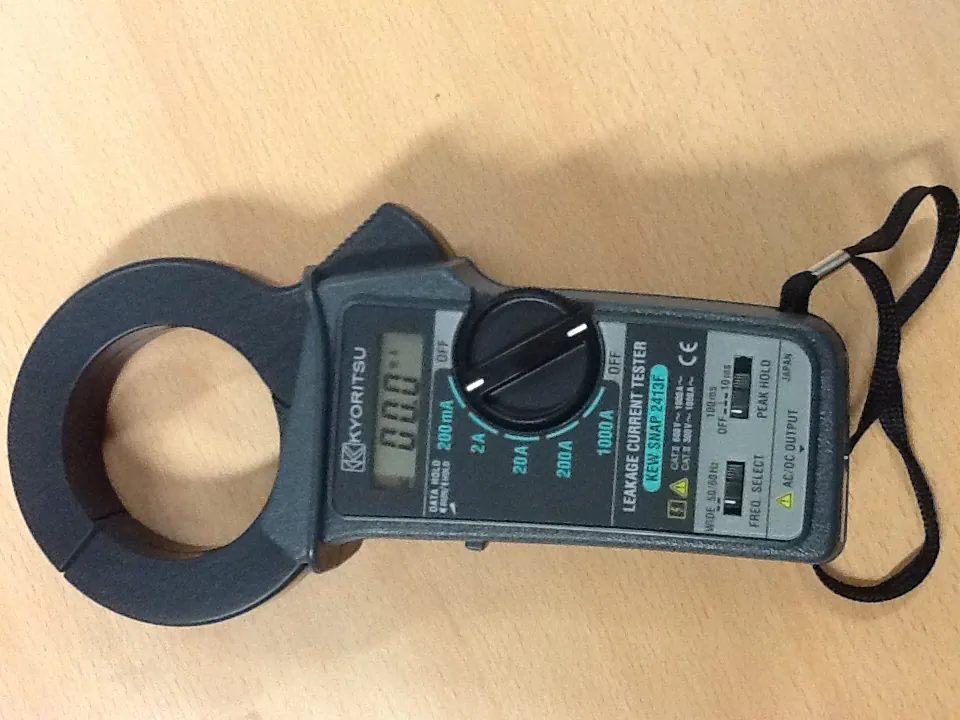
Figure 2. A row of electromechanical energy meters mounted on an outside wall. With an electromechanical meter, count the disc revolutions using the revolutions/kWh constant printed on the face; if the disc keeps turning after you switch off the main breaker after the meter, it is a matter for the power company.
Common culprits
Water heater
A faulty thermostat, a temperature setting that is too high, being left on 24/7, or heavy scale build-up that makes heating take longer. A water heater leaking current into the water is especially dangerous — if anyone feels a tingle while showering, switch off the heater immediately and check the earthing and shock protection.
Pump that does not cut out
A faulty float switch or pressure switch, a stuck non-return valve or a leaking pipe makes the pump run continuously or cycle on and off constantly. This often comes with signs such as the roof tank overflowing or the pump running at night.
Fridges and freezers
A leaking door seal, a dusty condenser coil or being placed against a hot wall makes the compressor run almost continuously. Measure the power with a power meter socket over 24 hours to get the real kWh/day.
Air conditioners
Dirty filters, low refrigerant, a temperature setting that is too low, or a room with open doors. The electrician only measures and reports; recharging refrigerant and cleaning coils is the job of a refrigeration technician.
Genuine current leakage
Old wiring soaked with water inside walls, outdoor sockets, garden lights, and washing machines and water heaters with metal casings. A leakage clamp meter and a megohmmeter help identify the faulty circuit.
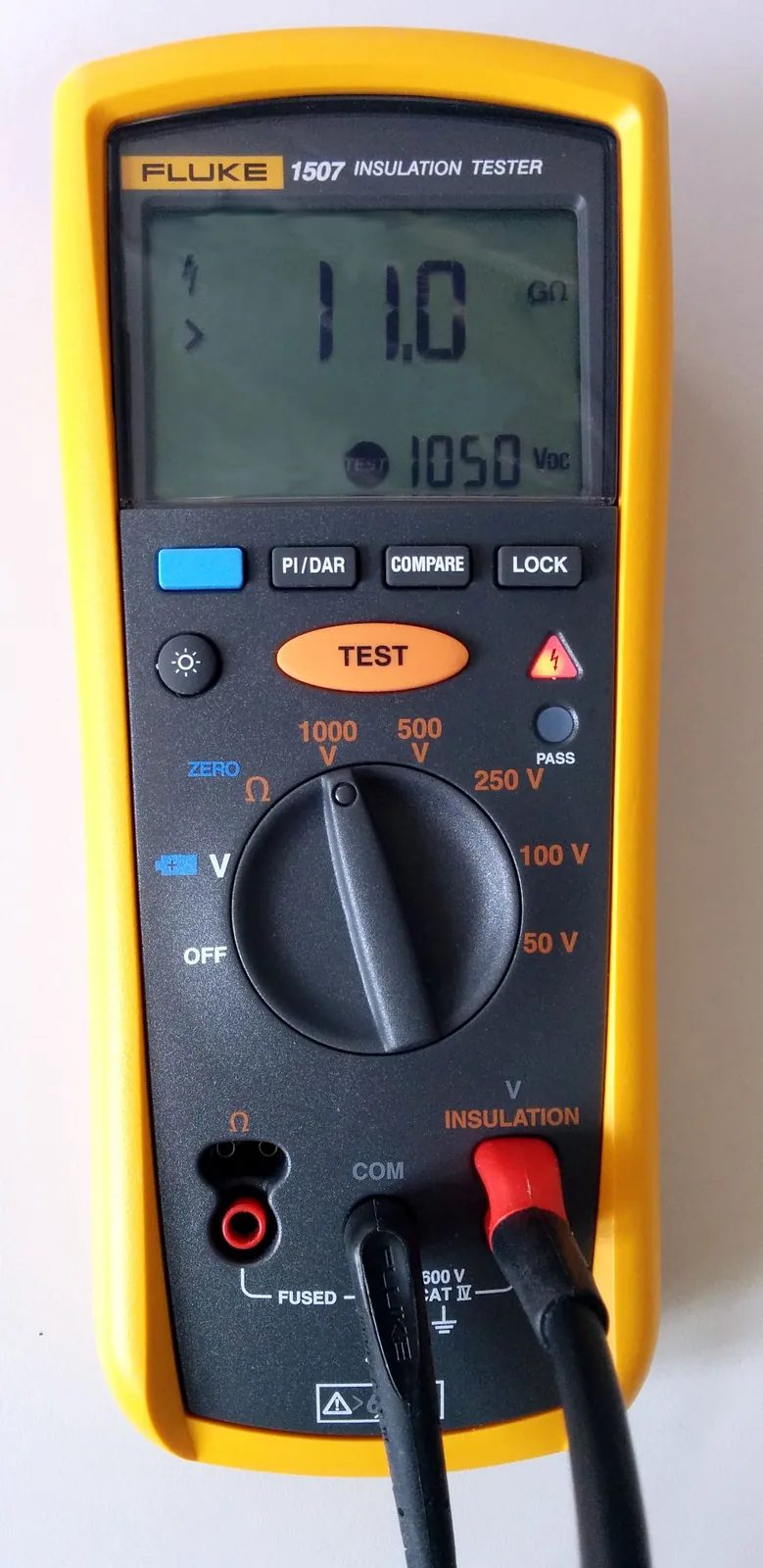
Figure 3. A leakage clamp meter with jaws large enough to clamp the line and neutral conductors of one circuit at the same time; the reading with both conductors clamped is the leakage current of that circuit. (Photo: balurbala, CC BY-SA 3.0, Wikimedia Commons)
Common mistakes
Comparing money instead of kWh — symptom — concluding “it has doubled” when kWh has risen by only a few tens of percent. Cause — ignoring tiered pricing and the length of the billing period. Fix — always calculate kWh/day.
Concluding there is leakage too early — symptom — rewiring the whole house without the bill going down. Cause — not measuring the power of each circuit. Fix — measure first, conclude later.
Tampering with the meter — symptom — opening the cover, cutting the lead seal. Cause — wanting to “check to be sure”. Fix — only observe from outside and hand every suspicion over to the power company.
The megohmmeter damaging devices — symptom — LED lights or circuit boards die after testing. Cause — testing insulation without first removing electronic devices. Fix — de-energize, remove devices, then test.
Counting pulses for too short a time — symptom — calculated power varies widely between measurements. Cause — small load, sparse pulses, only one or two pulses counted. Fix — count over a longer period and take an average.
Ignoring signs of electric shock — symptom — the client mentions tingling hands but the electrician only worries about the bill. Cause — focusing on the client’s request. Fix — deal with safety first: disconnect the suspect circuit, check the earthing and residual current protection.
When to stop and call the responsible authority: the meter still runs after you have switched off the main breaker after the meter; the seals or meter box show signs of tampering; you suspect someone is illegally tapping power before the meter; the cable from the pole to the meter is hot, melting or sparking. Record it with photos and video and advise the client to contact the customer service hotline of the regional power company (for example, customers in northern Vietnam served by EVNNPC can call 19006769). In apartment buildings, also inform the building management.
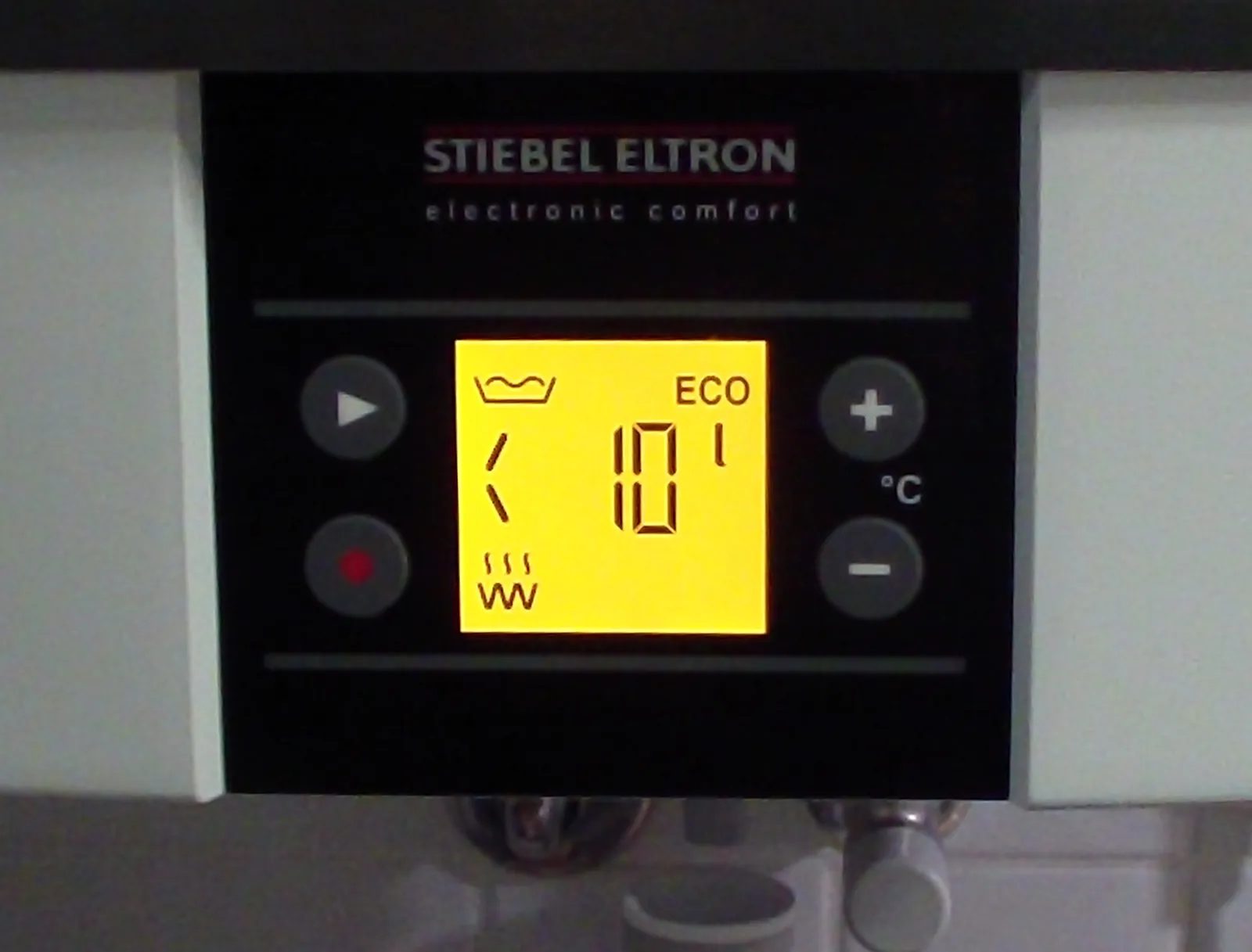
Figure 4. A handheld insulation resistance tester. Only test when the circuit has been de-energized and electronic devices have been removed from it. (Photo: wdwd, CC BY-SA 4.0, Wikimedia Commons)
Reporting to the client
Make a simple table: circuit or appliance name, measured power, estimated running hours per day, kWh/day. Add them up and compare with the kWh/day from the bill. Record the result of the no-load meter test and the leakage measurement for each circuit. Recommend actions in order: safety first, savings second.
Sample report wording:
“I switched off the main breaker for 15 minutes and the meter stood still, so the meter is not running by itself. Leakage on every circuit is below a few mA, so that is not the cause. The increase of about 4 kWh per day comes from the 3rd-floor water heater: its thermostat was faulty, so it kept heating without cutting out. After the replacement, it cuts out after about 25 minutes. Please read the meter every evening for a week; if kWh/day is still high, I will come back and check further.”
Inspection fees and the prices of replacement parts vary by region and over time; quote the inspection fee to the client first, and quote the repair separately once the cause has been found.
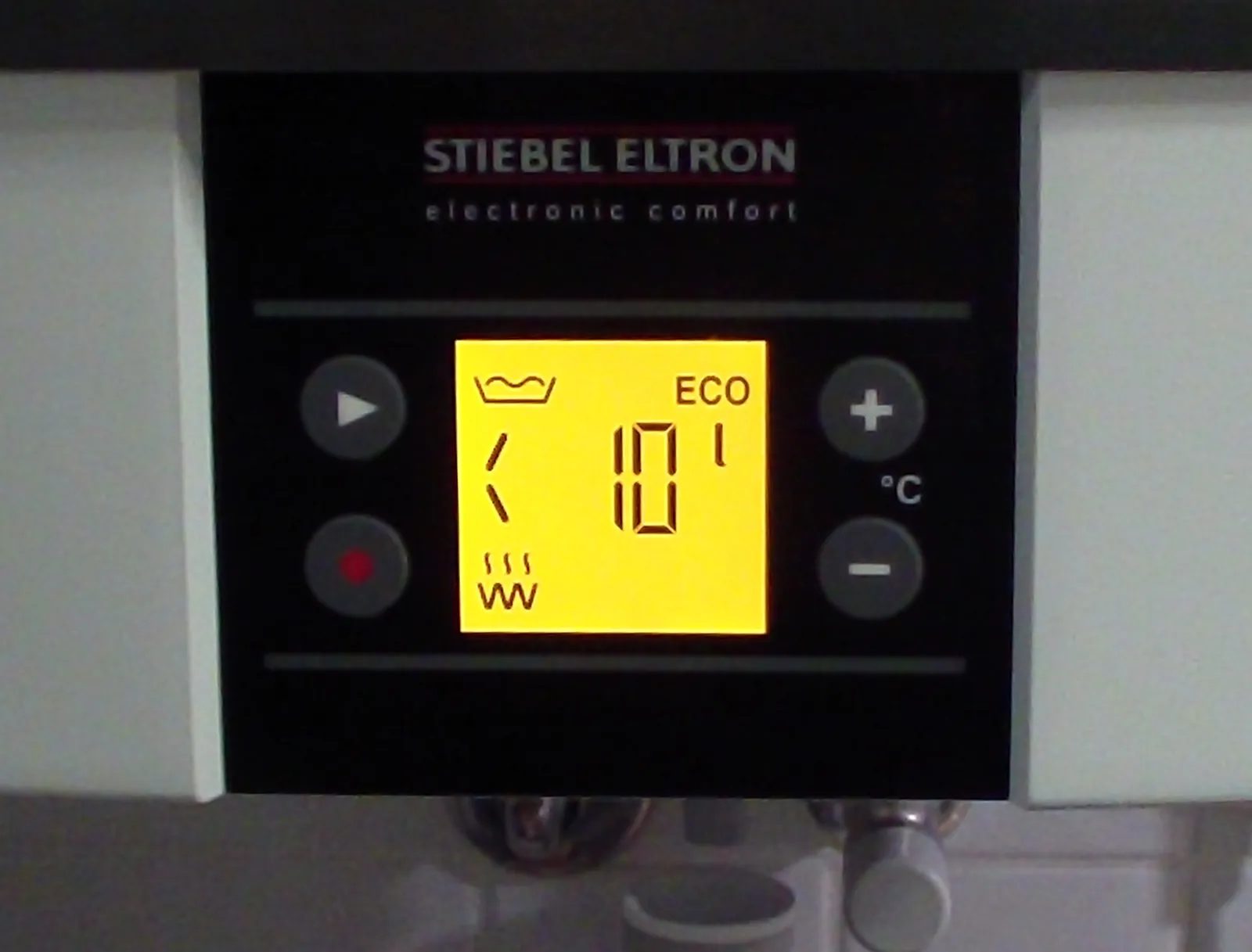
Figure 5. Water heater control panel with a temperature display and ECO mode. In your report, note the set temperature together with the power and running hours of each circuit to show the client which appliance is using the most electricity. (Photo: Pittigrilli, CC BY-SA 4.0, Wikimedia Commons)
Frequently asked questions
Can a small current leak double the electricity bill?
Not necessarily, and usually not. A 30 mA leak at 220 V is only about 6.6 W, or about 4.8 kWh per month if it leaks continuously. A sharp rise in the bill is usually caused by a high-power appliance running more hours, or by a very large leak — a dangerous level that must be dealt with immediately.
What should I do if the meter keeps running after the main breaker is switched off?
Do not open or tamper with the meter and its seals yourself. Record the time and reading, take a video, and then contact the customer service hotline of the regional power company to have it inspected.
Can I remove the meter myself to check it?
No. The meter and its seals are managed by the power company. The electrician only works from the main breaker after the meter into the house.
Why does the bill rise more than the number of kWh?
Because residential electricity is priced in tiers: kWh that move into a higher tier have a higher unit price. So compare kWh between months, not the amount of money.
What tools do I need to trace current leakage?
At a minimum, a multimeter and a clamp meter. A leakage clamp meter (mA resolution) and an insulation resistance tester make narrowing down the fault much faster and more accurate.
Practice exercises
Take any two electricity bills, calculate kWh/day and explain the difference.
On a training board with an electronic meter, plug in a 100 W load and a 1,000 W load; count the pulses, calculate the power and compare it with the rating labels.
Use a leakage clamp meter on a circuit with a normal load, then on a circuit with a resistor simulating a leak (prepared by the instructor, protected by an RCBO).
Measure the insulation resistance of a de-energized length of cable and record the result.
Make a kWh/day table for every appliance in your own home.
Self-assessment criteria — you pass when you:
Calculate kWh/day correctly and can explain the effect of tiered pricing.
Calculate power from the pulse LED to within a few tens of percent of the rating label.
State the limits correctly: do not touch the meter, and hand over to the power company when the meter runs with no load.
Measure leakage current and insulation resistance under the correct safety conditions.
Report to the client with a table of figures and a clear conclusion.
After this lesson, move on to the “Safety checks & wiring practical exam” step, where you will test insulation and residual current protection as a mandatory part of commissioning.