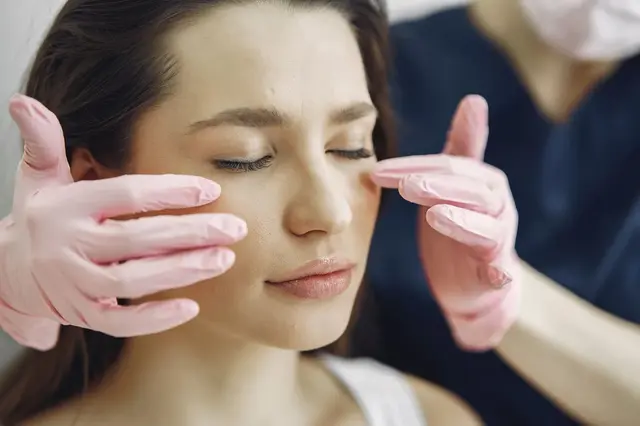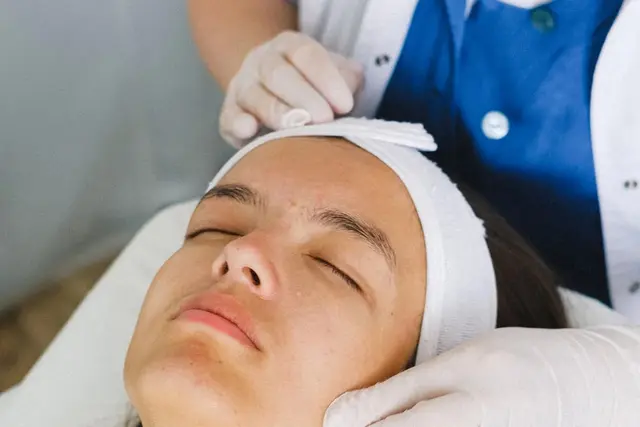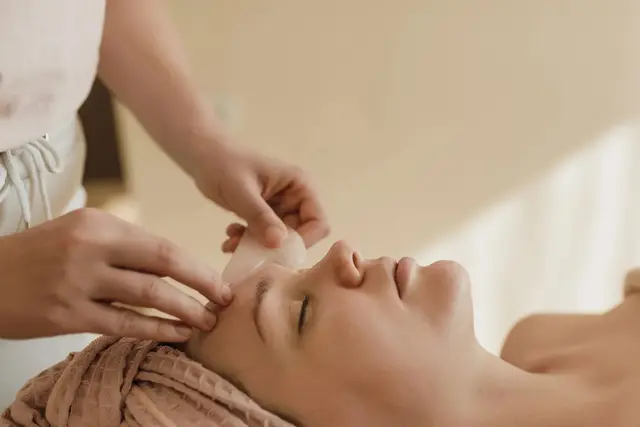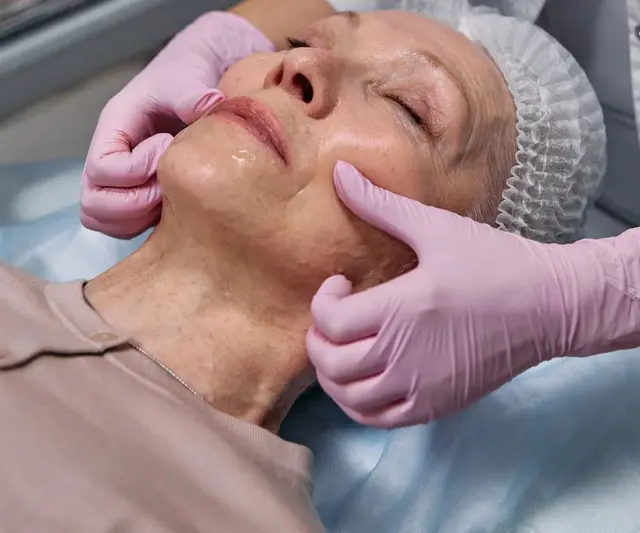
The reliable way to identify a client's skin type in a spa is to combine three sources: ask the client (how oily, tight or reactive the skin feels), run a blotting-paper test on 5 zones of the face while the skin is still bare, then cleanse and analyse the skin under a magnifying lamp to see pores, shine, flaking and small blood vessels. No single tool, not even an expensive skin scanner, gives the right answer if you skip the questions and the step-by-step observation. This lesson is written the way a senior therapist coaches a trainee, with a worked example of a 20-minute skin analysis.
By the end of this lesson, you will be able to:
- Explain in plain words how the stratum corneum, the basal layer and the skin barrier relate to what you see during an analysis.
- Run a 5-zone blotting test, score each zone 0-2 and place the client in the oily, dry, combination or normal group.
- Analyse the skin under a magnifying lamp in a fixed order of 7 zones and record at least 5 signs using descriptive words, not diagnoses.
- Fill in a client record with all 6 sections, asking the right questions about allergies, current medicines and recent procedures.
- Recognise the signs that mean stopping and advising the client to see a dermatologist.
Training as a skincare specialist? Skin analysis and skin types are step 2 of the roadmap, right after hygiene, sterility and legal limits, and before cosmetic ingredients and the facial routine. See the 8-step skincare specialist roadmap to learn in the right order.
What are you actually looking at during a skin analysis?
Under a magnifying lamp you only see the surface: the stratum corneum, pore openings, oil, pigment and small blood vessels showing through thin skin. Understanding the structure underneath helps you read what you see instead of guessing; this lesson covers only what you need for the analysis.
The epidermis: four layers, one direction
The epidermis is the outermost layer of the skin and has no blood vessels. From the bottom up it has the basal layer, the spinous layer, the granular layer and the stratum corneum (see Figure 1). Cells are produced in the basal layer, pushed upwards, flatten, lose their nucleus, become the horny layer and finally shed. In young adults this journey usually takes about 4 weeks and slows down with age. Pigment cells (melanocytes) also sit in the basal layer, so the dark patches you see on a face usually come from pigment deep below the surface and cannot be scrubbed away.
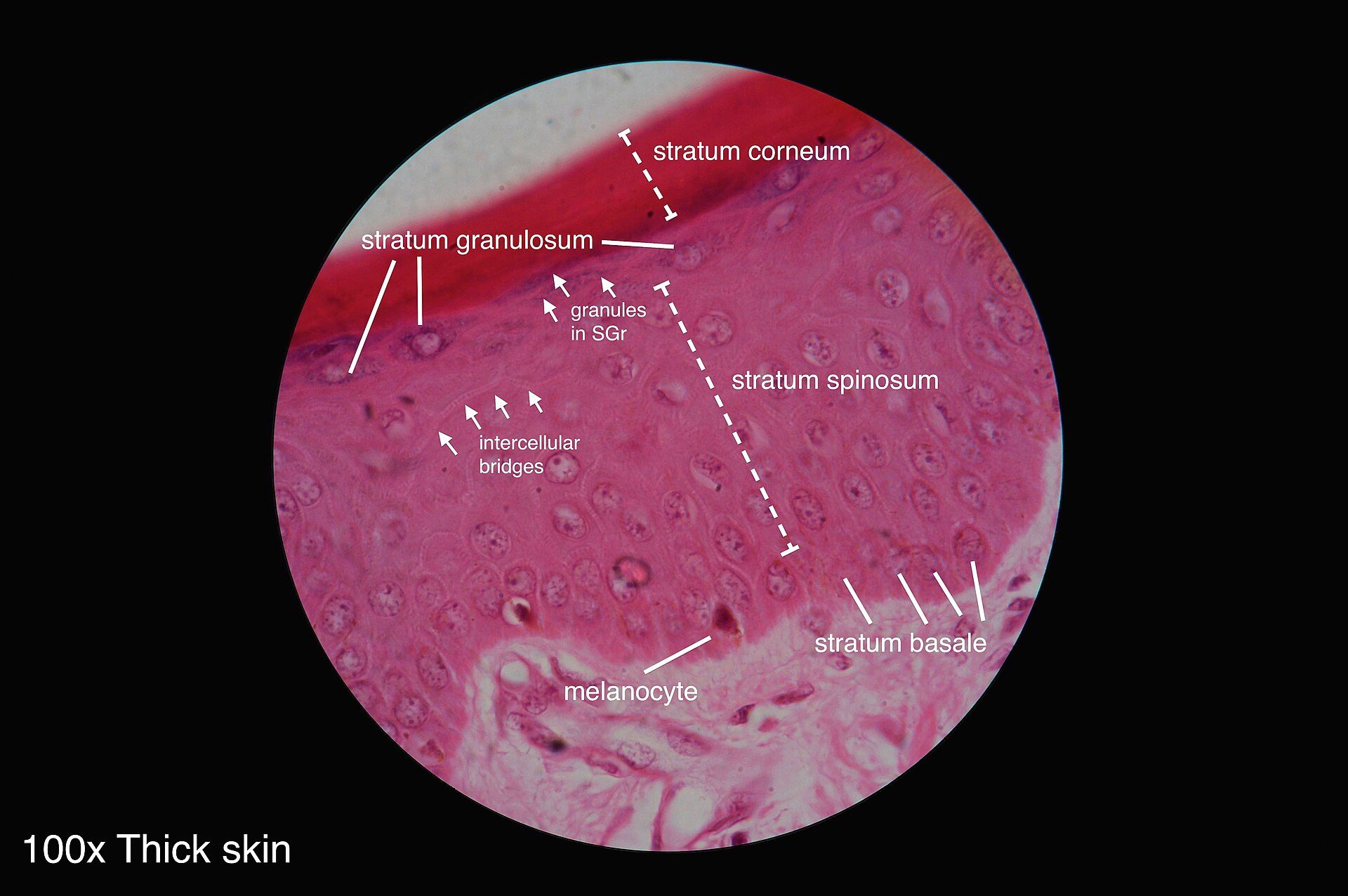
Photo: Athikhun.suw / Wikimedia Commons, CC BY-SA 4.0
The skin barrier: what you assess with your eyes and hands
The skin barrier sits mainly in the stratum corneum: horny cells stacked like bricks, with lipids (ceramides, cholesterol, fatty acids) between them like mortar, keeping water in and irritants out. You cannot measure the barrier, but you can see its signs: smooth skin that reflects light evenly is fine; tiny white flakes, a tight, cling-film shine and redness that appears quickly on touch mean the barrier is weak.
Sebaceous glands and pores: where "oily skin" comes from
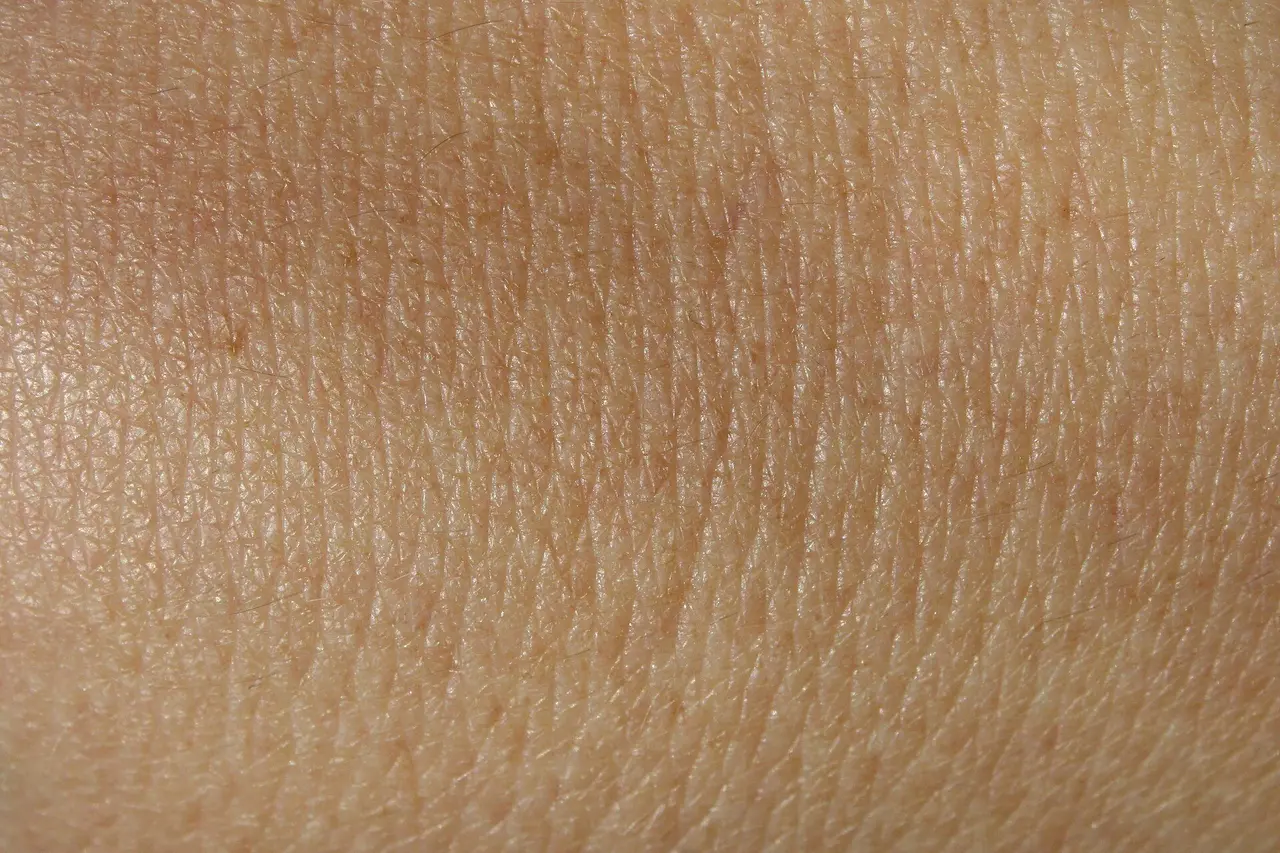
Sebaceous glands sit in the dermis and release oil into the opening of the hair follicle, which we call a pore. The forehead, nose and chin (the T-zone) have more sebaceous glands than the cheeks, so this is where oil and enlarged pores show most. The amount of oil changes with genetics, hormones, age and weather, so write the date of the analysis on the record.
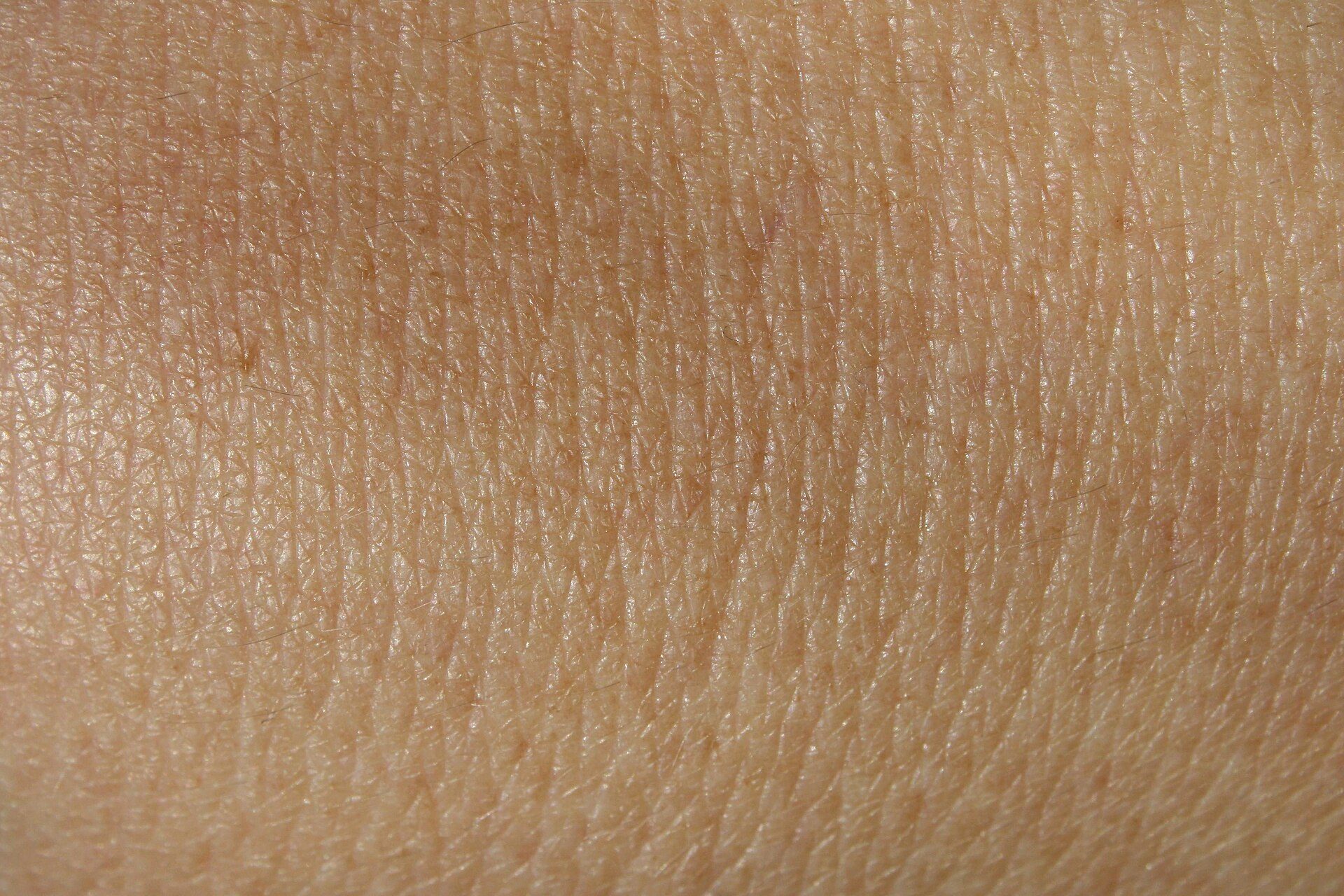
Photo: Anonymous Unknown author / Wikimedia Commons, CC0
Skin type versus skin condition: separate them before you write
Newcomers often write "oily, acne, dry, dull" in a single "skin type" box. Skin type and skin condition are two separate columns on the record.
Four basic skin types plus a sensitive tendency
Skin type is fairly stable and depends mainly on the sebaceous glands and the person's constitution: oily, dry, combination and normal. Sensitivity is a tendency that comes on top of the type, not a replacement for it: a client can be "oily, sensitive" or "dry, sensitive". You record both.
| Skin type | What clients usually say | Blotting paper | Under the magnifying lamp |
|---|---|---|---|
| Oily | Greasy after 2-3 hours, make-up slides off, frequent closed comedones | Clear oil marks on both the T-zone and the cheeks | Enlarged pores, shiny surface, many blackheads |
| Dry | Tight after washing, flaky, rarely shiny | Almost no oil on any zone | Small pores, tiny white flakes, visible fine lines |
| Combination | Shiny nose and forehead but dry or normal cheeks | Oil on the T-zone, little or none on the cheeks | Enlarged pores concentrated on the nose, forehead and chin |
| Normal | Rarely uncomfortable, not too shiny, not tight | Light oil on the nose or none | Even surface, small to medium pores |
| Sensitive tendency | Burning or stinging with new products, flushes in sun or heat | Not used to identify it | Redness spreading quickly on touch, small visible capillaries on the cheeks and sides of the nose |
Skin condition changes over time
Skin condition is what is happening right now and can change within a few weeks: dehydration, comedones, dullness, redness from irritation, peeling. A common example: oily skin that is also dehydrated because the client sits in air conditioning all day and over-cleanses. If you only write "oily", the next step can easily pick products that dry the skin out even more.
Phototype: one more useful line
Many spas also record the phototype on the Fitzpatrick scale (types I to VI): whether the skin burns or tans easily. Vietnamese clients are commonly type III-IV, rarely burning but tanning easily and prone to dark marks after acne. Just ask "In the sun, do you usually turn red and sore, or go darker?" and note the answer.
Analysis tools: magnifying lamp, UV lamp and skin scanner
Tools only help you see more clearly; they do not replace asking the client and must not be used to diagnose disease.
The magnifying lamp: the therapist's main tool
A magnifying lamp is a magnifying lens with a ring light on a folding arm (Figure 3). Spa lenses are usually 3-5 dioptres, which means roughly 1.75-2.25x magnification. Move the lens until the skin is in focus, usually about 15-30 cm from the face, with white light shining straight down. Cover the client's eyes with damp cotton pads or eye shields, because lying under a bright lamp for long is very glaring.
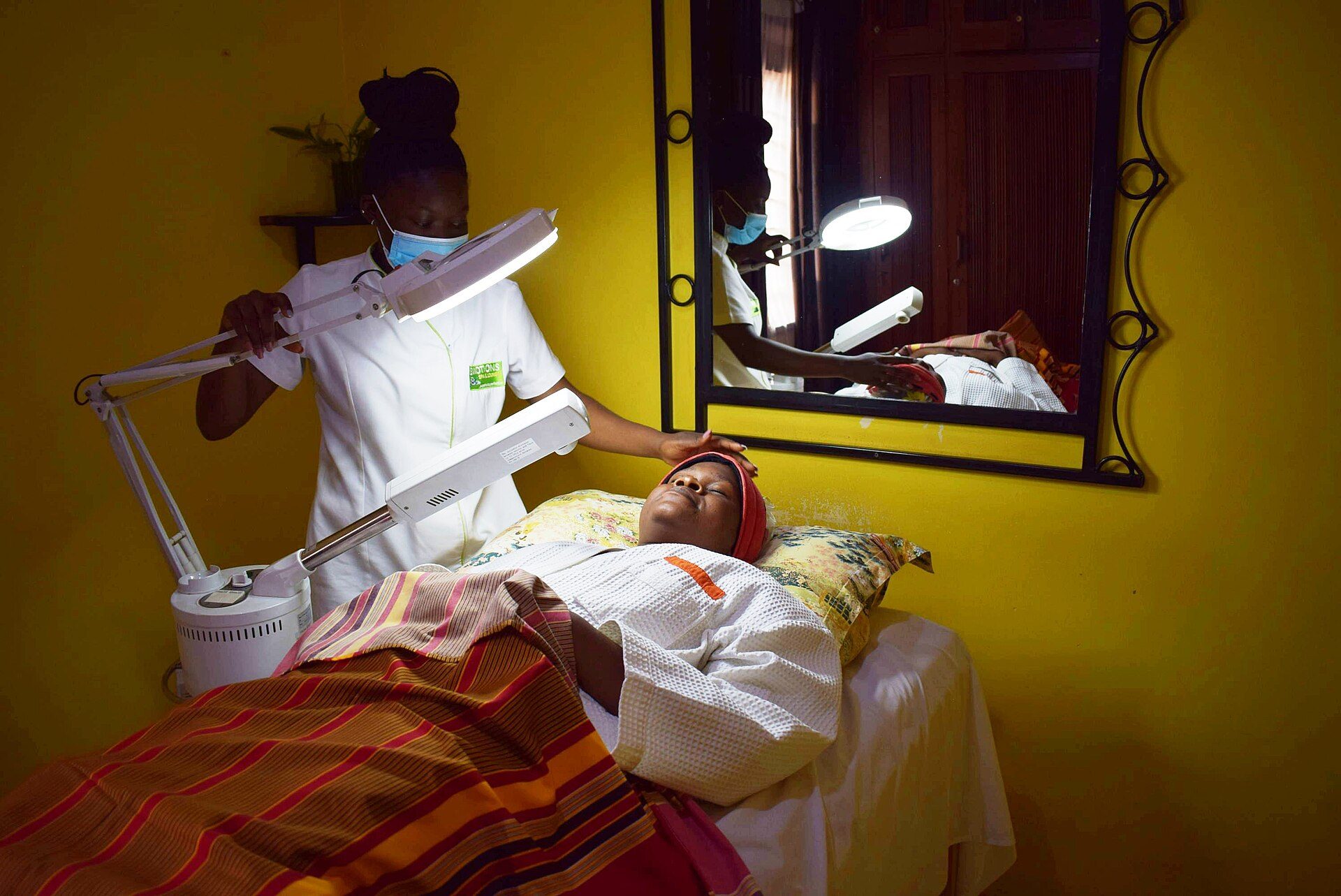
Photo: Alvinategyeka / Wikimedia Commons, CC BY-SA 4.0
The UV (Wood's) lamp: an aid, not a verdict
A Wood's lamp is a long-wave ultraviolet lamp used in a dark room (Figure 4); in clinics, dermatologists use it to support diagnosis. In a spa it only helps you see oily areas more clearly (orange fluorescent dots in the pores) and uneven pigment. The colours shown differ between lamps; read the manufacturer's guide and never rely on a colour to tell a client "you have a fungal infection" or "you have melasma".
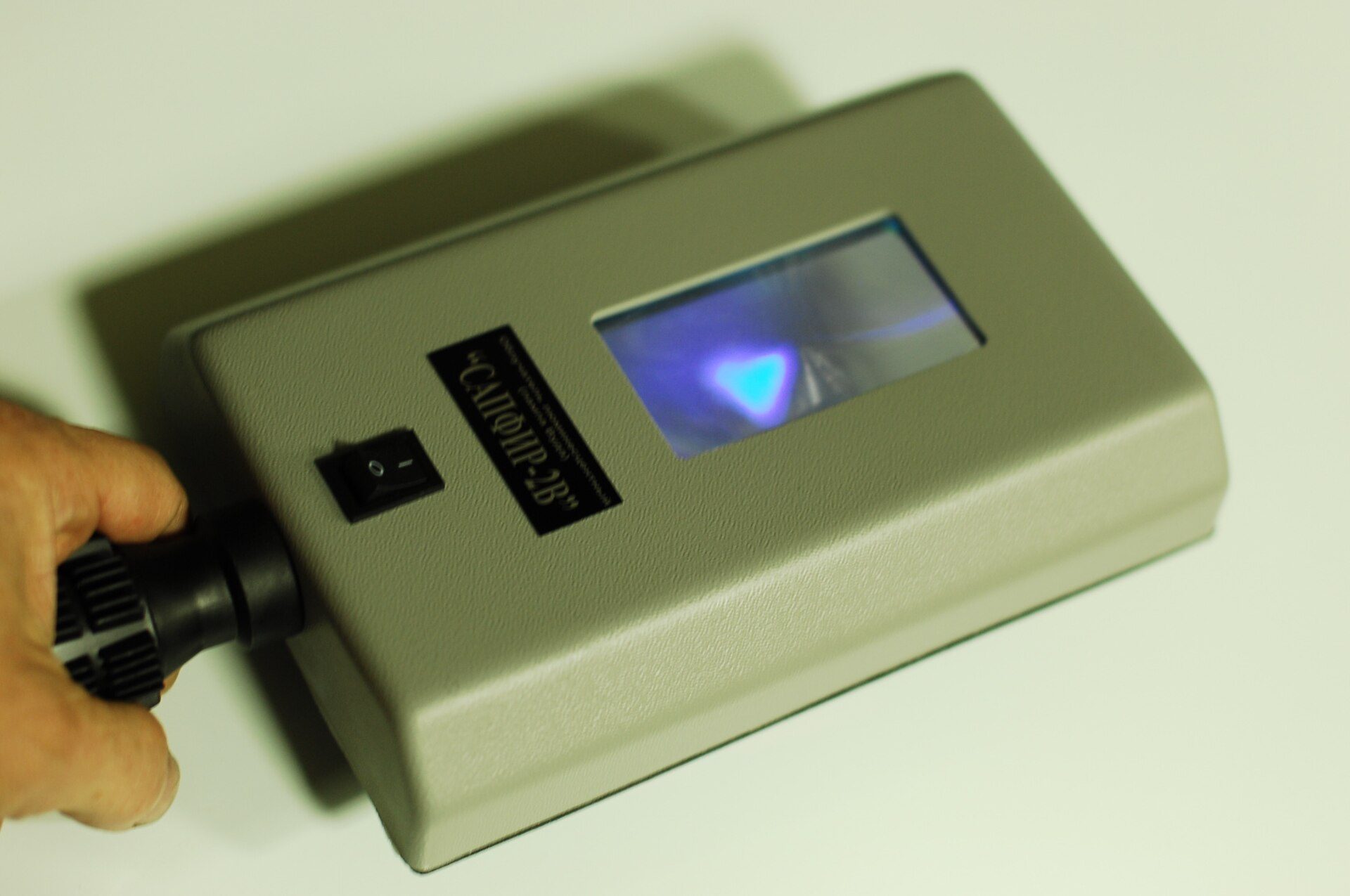
Photo: Seawind60 / Wikimedia Commons, CC BY-SA 4.0
Camera scanners with scoring software
Skin scanners photograph the face under several kinds of light and produce "scores" for hydration, oil, pores and pigment spots. The numbers depend on lighting, distance, timing and each brand's algorithm, so two machines give different results. The right use is comparing before and after a treatment course on the same machine under the same conditions; never print the results to scare a client into buying a package.
⚠ Lamp safety: never shine a UV lamp into the client's eyes or your own, cover the client's eyes before switching it on, and use it briefly zone by zone. Never leave a magnifying lens in direct sunlight: it can focus the sun's rays and set towels or bed linen on fire. Check the lamp's cable and plug before each shift; if the cable is frayed or the light flickers, tell your manager and do not repair it yourself.
A 6-step skin analysis in 20 minutes
Order matters more than tools. If you cleanse the face before the oil test, the result will almost always be "dry". If you analyse right after steaming, the red, damp skin will mislead you.
Before the client lies down
- When booking, ask the client not to wear make-up or apply creams for 1-2 hours before arriving.
- Hair wrap, cotton pads, blotting papers, the client record, and a magnifying lamp with the lens wiped with alcohol.
- Wash your hands and wear a mask, following the hygiene rules from step 1.
Six steps in order
- Ask and fill in the record (about 6 minutes): reason for the visit, how the skin behaves during the day, current products, allergies, medicines, illnesses, recent procedures (details in the client record section below).
- Look with the naked eye (2 minutes): under white light, look at the whole face from about 50 cm: shine, even or patchy colour, red areas, inflamed spots.
- Blotting test on 5 zones (2 minutes): press a blotting paper gently for about 5 seconds on the forehead, nose, chin, left cheek and right cheek; place the papers on the record in the matching positions. Skip this step if the client has applied cream or make-up, and write "could not test".
- Remove make-up and cleanse gently (4 minutes): mild products, no scrubbing; pat dry with a clean towel and wait for any redness from wiping to fade.
- Magnifying lamp on 7 zones (4 minutes): forehead, between the brows, nose and sides of the nose, left cheek, right cheek, chin, jawline. For each zone note pores, comedones, flakes, capillaries and pigment.
- Write the conclusion and explain it to the client (2 minutes): skin type, skin condition, what you will do today, and any advice to see a doctor.
Total time: 6 + 2 + 2 + 4 + 4 + 2 = 20 minutes. For a returning client with an existing record, step 1 can shrink to 2-3 minutes to ask what has changed, but never drop the questions about medicines and new procedures.
Scoring the blotting test
Score each zone 0 (no oil), 1 (light, a few dots) or 2 (clear, the paper turns translucent in patches). The three T-zone areas give a maximum of 6 points, the two cheeks a maximum of 4, for a total of 10. The convention below is one many senior therapists use so that trainees work consistently; it is not a medical standard: T-zone 4 or more with cheeks no more than 1 points to combination skin; a total of 8 or more with cheeks 2 or more points to oily skin; a total of 2 or less with a tight feeling and flakes under the lamp points to dry skin; anything else points to normal skin. The paper is only one source, so cross-check it with the client's account and the lamp.
The client record: 6 sections and the mandatory questions
The client record is where you write your findings and the proof that you asked enough before touching the skin. For the general spa health form, see spa client consultation and health forms; below is the part specific to facial care.
Six sections of a skin analysis record
- Details and reason for the visit: name, age, occupation, what the client wants to improve (in the client's own words).
- Skincare habits: products used daily, any exfoliants or strong actives.
- Allergy history: cosmetics, fragrance, essential oils, latex gloves, nut oils; reactions experienced before.
- Medicines and health: oral and topical medicines in use; pregnancy or breastfeeding; conditions diagnosed by a doctor.
- Analysis results: blotting scores for 5 zones, notes for 7 zones under the lamp, skin type, skin condition, phototype.
- Decision and signature: what is done today, what is not done and why, any advice to see a doctor; the client signs to confirm.
Questions about medicines: be specific
Asking "Are you taking any medicine?" usually gets a "no". Ask specifically:
- "Are you taking any acne tablets prescribed by a doctor?" Oral isotretinoin makes skin dry and easily damaged; doctors usually advise avoiding exfoliation, waxing and abrasive procedures while taking it and for a period after stopping.
- "Are you applying any medicine or cream for acne or pigmentation?" Topical retinoids (tretinoin, adapalene) or long-term corticosteroid creams make the skin easily irritated.
- "Are you taking blood thinners, antibiotics or anything your doctor told you to keep out of the sun with?" Blood thinners make bruising easier; some medicines make skin sensitive to light.
- "In the past 4 weeks, have you had laser, a peel, injections or microneedling anywhere?"
If the client cannot remember the name, ask for a photo of the box. You do not judge the medicine or suggest stopping it; you only record it, choose a gentler approach or postpone the service, and when unsure advise the client to ask the prescribing doctor.
Describe, do not diagnose
Write "brown patches on both cheekbones, edges not clear" instead of "melasma"; "red scaly patch on the side of the nose" instead of "seborrhoeic dermatitis"; "6 mm mole on the right cheek, client says it has grown" instead of "malignant mole". Keep records locked away, and never photograph a client's face without consent.
Worked example: Lan, 34, office worker
Lan works in an office in Ho Chi Minh City and sits in air conditioning 9 hours a day. She books her first facial and says "my skin is really oily, please clean all the oil off". She arrives at 4 pm without make-up; she applied sunscreen in the morning but washed her face at noon and has not reapplied.
Questions and blotting test
The questions reveal that she uses a very foamy cleanser 3 times a day; in the afternoon her nose and forehead are shiny, but her cheeks feel tight after washing. She once had itching and a rash from a scented moisturiser. She is applying a cream a dermatologist prescribed for acne on her chin but cannot remember its name. Blotting results:
| Zone | Blotting score (0-2) | Under the magnifying lamp |
|---|---|---|
| Forehead | 2 | Medium pores, shiny surface |
| Nose | 2 | Enlarged pores, many blackheads |
| Chin | 1 | A few whiteheads, 2 slightly swollen red spots |
| Left cheek | 0 | Tiny white flakes, visible skin lines |
| Right cheek | 0 | Tiny white flakes, a few small capillaries |
| Total | 5/10 | T-zone: 2 + 2 + 1 = 5/6; cheeks: 0 + 0 = 0/4 |
Conclusion on the record
The T-zone scores 5 (4 or more) and the cheeks 0 (no more than 1), so the skin type is recorded as "combination", not "oily" as the client believed. Skin condition: "dehydrated cheeks, blackheads on the nose, 2 swollen red spots on the chin, using a prescribed cream". Phototype IV, based on the client's answer "rarely burns, tans easily". Allergy: "rash with a fragranced cream in the past".
Decision and what to say
Today: gentle cleansing, no exfoliation, no extractions, nothing on the chin area, fragrance-free products only. Ask the client to send a photo of the cream's tube before the next visit, and decide then about extracting the blackheads on the nose. Sample words: "Your nose and forehead produce oil, but your cheeks are dehydrated, so I won't use products that dry out the whole face. Your chin is being treated with a cream from your doctor, so I'll leave it alone; if the red spots get more painful, please check back with your doctor."
When to stop the analysis and advise a doctor's visit
Your job is to describe and advise a medical check, not to name diseases or promise cures. You learned the limits of spa work in what can a skincare spa legally do.
⚠ Stop, do not work on that area, and advise the client to see a dermatologist when you see: a mole that is new, changing colour, growing fast, irregular at the edge or bleeding; a sore or crust that has not healed for several weeks; dense or painful red inflamed acne, pustules or cysts; clusters of small blisters around the lips or nose; thick, scaly, very itchy red patches; skin that is swollen, hot, painful or oozing. If the client's lips or eyelids swell or they have trouble breathing after a product is applied: stop at once, call your manager and call emergency services (115 in Vietnam).
Saying it without alarming the client
Say what you see and what to do: "You mentioned this mole has grown recently, so I won't work on this area; please see a dermatologist for peace of mind." Write the advice and the date on the record.
Common mistakes in skin analysis and how to fix them
Analysing over sunscreen or make-up
Sign: the blotting paper picks up oil evenly across the face and the skin looks unusually smooth because the cream covers the pores. Fix: write "could not test with paper", remove the make-up thoroughly before analysing, and retest next time on bare skin.
Analysing right after steaming or hard wiping
Sign: both cheeks are red and you wrongly write "sensitive skin", when it is only temporary vessel dilation from heat and friction. Fix: analyse before steaming, and wait a few minutes after wiping for the flush to fade.
Trusting only the client or the machine score
Sign: the record says "oily" only because the client said so, or "very poor skin" based on a machine score. Fix: always cross-check all 3 sources (client's account, blotting paper, magnifying lamp); record machine scores with the machine's name only for later comparison.
Frequently asked questions
How many facial skin types are there?
Skincare professionals usually use 4 basic skin types: oily, dry, combination and normal; sensitivity is a tendency on top of these. Skin conditions such as dehydration, comedones and dullness are recorded separately because they change over time.
How do I tell oily skin from combination skin?
Do a 5-zone blotting test on bare skin: oil concentrated on the forehead, nose and chin with dry or normal cheeks means combination skin; clear oil on both cheeks as well means oily skin. Cross-check with what the client says about their skin in the afternoon and with what you see under the lamp.
Are skin scanners accurate?
Skin scanners are useful for comparing before and after a treatment course on the same machine under the same lighting. Scores differ between brands and with the time of the analysis, so do not use them as the only conclusion or to diagnose anything.
Can a spa skin analysis detect melasma or skin disease?
A spa analysis can only spot unusual signs so that you can advise the client to see a doctor. Melasma, dermatitis, fungal infections and suspicious moles must be diagnosed by a dermatologist. The therapist records descriptive notes and does not name diseases.
Practice exercises and self-assessment
- Analyse the skin of 5 acquaintances of different ages and jobs, following the 6 steps, with one record each including the 5-zone blotting scores and notes for 7 zones.
- Role-play with a classmate: a client has a mole on the cheek that has recently grown; give the advice to see a doctor within 30 seconds.
- Rewrite 5 diagnostic phrases ("you have melasma", "you have folliculitis"...) as descriptive notes suitable for a client record.
Self-assessment criteria
- Pass: the record has all 6 sections, skin type and skin condition are in separate boxes, and the blotting scores add up.
- Pass: you asked all 4 questions about medicines and procedures, and recorded allergies even when the answer was "none".
- Pass: no diagnostic terms on the record; any sign needing a doctor is recorded with the advice you gave.
- Not yet: blotting after cleansing, analysing after steaming, concluding only from the client's words or a machine score, or skipping the medicine questions.
Once you can read a client's skin and fill in the record correctly, move on to the next roadmap step: Cosmetic ingredients & sun protection, where you learn about niacinamide, BHA, AHA, cosmetic-strength retinol, vitamin C and ceramides, and how to choose them based on the skin type and condition on the record. When you reach the extraction step, today's analysis record is what tells you which spots may be extracted; see also comedone extraction done right: a 10-step sterile spa procedure.
Keep learning skincare: after skin analysis and skin types come cosmetic ingredients, sun protection, facials by skin type, sterile extractions and non-invasive skincare devices. See the 8-step skincare specialist roadmap.