PPR pipes rated PN10, PN16 and PN20 differ in nominal pressure and wall thickness. At the same outside diameter, PN10 has the thinnest wall, holds about 10 bar at 20°C and should only carry cold water; PN16 is thicker and suits cold water under higher pressure (after a pump); PN20 is the thickest, holds about 20 bar at 20°C and is the grade used for hot water from an electric water heater or a solar water heater. Pick the wrong one and the pipe still works for a few years, then swells and leaks inside the wall — and the repair costs many times the small difference in material price. This lesson shows you how to read the markings, choose the right grade for each run and spot poor-quality pipe right at the shop counter.
By the end of this lesson, you will be able to:
- Explain what PN, S and SDR printed on a PPR pipe mean, and why hot water lowers the pressure a pipe can take.
- Look up the wall thickness of 20, 25 and 32 mm PN10/PN16/PN20 pipe and check it with calipers.
- Draw up a pipe selection table for a house: main supply, pump discharge, cold branches, hot runs.
- Tell genuine pipe from poor pipe by the print line, wall thickness and the weight of a pipe length.
- Estimate the pipe material cost for a townhouse and explain to the owner why "saving money" on the hot runs is a bad idea.
Learning the plumbing trade? See NAMBIN's 8-step roadmap for residential plumbers — this lesson belongs to the first step, "Pipe materials, tools & site cleanliness". When you need to size pipes and pick a pump for a whole house, also use the pump and pipe calculator.
What is PN? The three numbers printed on a PPR pipe
PPR (properly written PP-R) is pipe made of polypropylene random copolymer. It is joined by heat fusion (socket welding), so each joint becomes one solid piece with no glue. If you are not yet sure when to use PPR versus uPVC or HDPE, first read the lesson PPR, uPVC and HDPE pipe: which one for which water line (in Vietnamese). Here we focus only on PPR and its pressure classes.
PN — nominal pressure
PN (Pressure Nominal) is the nominal working pressure in bar, for water at 20°C and a design life of 50 years. PN10 ≈ 10 bar, PN16 ≈ 16 bar, PN20 ≈ 20 bar. One bar is roughly the pressure of a 10 m column of water. City mains water reaching the meter is usually only 1–3 bar, and a household booster pump delivers 2–4 bar — so for cold water, PN10 is more than enough.
S and SDR — the ratio of diameter to wall
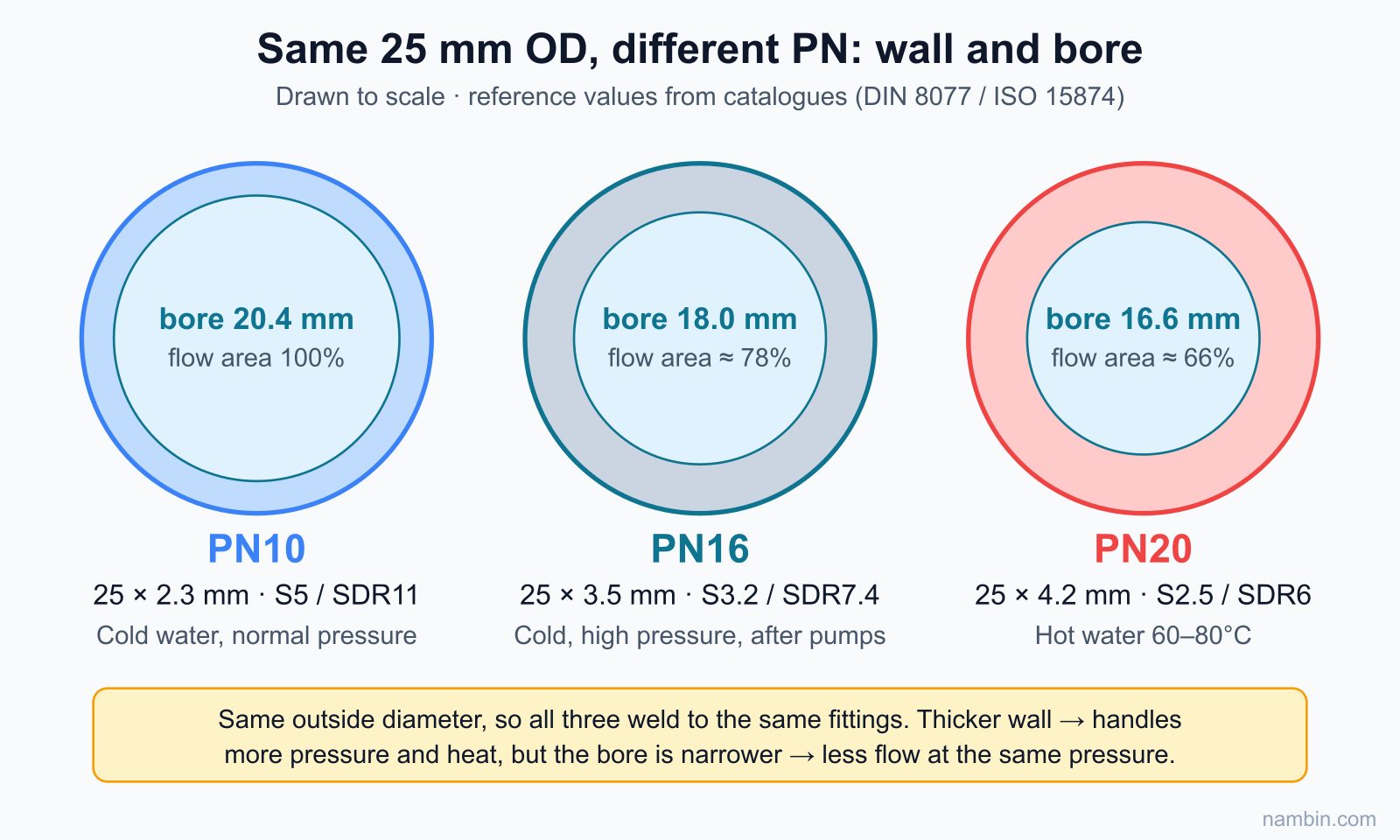
SDR = outside diameter ÷ wall thickness. The thicker the wall, the smaller the SDR. By common PPR catalogue practice, PN10 corresponds to SDR11 (S5), PN16 to SDR7.4 (S3.2) and PN20 to SDR6 (S2.5). So once you know the diameter and the PN you can work out the wall yourself: a 25 mm PN20 pipe has a wall of about 25 ÷ 6 ≈ 4.2 mm.
Why does the bore differ at the same size?
Every PN grade of a given size has the same outside diameter, so they share the same fittings and welding sockets. The extra wall thickness goes inward, which means a PN20 pipe has a narrower bore than PN10. Figure 1 draws three 25 mm pipes to scale: the flow area inside the PN20 pipe is only about 66% of the PN10 pipe.
Wall thickness of 20, 25 and 32 mm PPR pipe (for reference)
The table follows common catalogue values from manufacturers producing PPR pipe to DIN 8077/8078 or ISO 15874. Some brands make 20 mm PN10 pipe with a 2.3 mm wall instead of 1.9 mm; always check the catalogue of the brand you buy.
| Outside diameter | PN10 (SDR11) | PN16 (SDR7.4) | PN20 (SDR6) | Bore PN10 → PN20 |
|---|---|---|---|---|
| 20 mm | 1.9 mm (some brands 2.3) | 2.8 mm | 3.4 mm | 16.2 → 13.2 mm |
| 25 mm | 2.3 mm | 3.5 mm | 4.2 mm | 20.4 → 16.6 mm |
| 32 mm | 2.9 mm | 4.4 mm | 5.4 mm | 26.2 → 21.2 mm |
These figures are for reference. The allowed wall tolerance is usually a few tenths of a millimetre on the plus side — a real pipe may be slightly thicker than the printed value, but it must never be thinner.
How to measure the wall correctly
- Cut one end square with a pipe cutter (not a saw — a saw leaves a ragged face and a wrong reading).
- Use calipers to measure the wall at 4 evenly spaced points around the cut face.
- Take the smallest reading and compare it with the printed value. Obvious off-centre walls (3.6 mm on one side, 4.6 mm on the other) mean poorly extruded pipe.
What does a narrower bore change?
Flow is roughly proportional to bore area. A 15–20 m cold line to a high floor in 20 mm PN20 gives clearly weaker taps than 20 mm PN10. That is why thicker is not always better: long cold runs should use PN10 or a larger size, and PN20 should be kept for hot runs.
Temperature and service life: why hot water needs PN20
PPR plastic softens as it heats up. The PN figure is only true at 20°C; the hotter the water, the lower the allowed pressure. The table below gives rounded values from manufacturers' pressure–temperature charts (50-year life, domestic water), just for comparison — for reference only.
| Continuous water temperature | PN10 | PN16 | PN20 |
|---|---|---|---|
| 20°C (cold water) | ≈ 10 bar | ≈ 16 bar | ≈ 20 bar |
| 40°C | ≈ 7 bar | ≈ 11 bar | ≈ 14 bar |
| 60°C | ≈ 5 bar | ≈ 8 bar | ≈ 10 bar |
| 70°C | ≈ 4 bar | ≈ 6 bar | ≈ 8 bar |
| 80°C and above | Do not use | Not recommended | Usable, noticeably shorter life |
Reading the table with an example
An electric water heater is set to 70°C and a booster pump pushes 3.5 bar. At 70°C a PN10 pipe holds only about 4 bar — almost no margin left. Every time a tap is closed quickly, water hammer (a sudden pressure spike) goes over the limit; after 2–5 years the pipe swells and hairline cracks appear at the welded joints. A PN20 pipe at 70°C still holds about 8 bar, more than twice the pump pressure — which is why plumbers choose PN20 for every hot run.
What "50 years of service life" really means
The 50 years is the design life at the temperature and pressure listed in the chart. A PN10 cold pipe at 25–30°C easily exceeds it; a PN10 pipe placed by mistake on a 60–70°C hot run may last only a few years.
Sunlight and thermal expansion
PPR does not resist ultraviolet light: left in the sun, it turns chalky, brittle and cracks, like the pipes in Figure 2. Rooftop pipe must be insulated, painted or run in covered trunking. PPR also expands about 0.15 mm per metre for every 1°C: a 10 m hot run warming from 25 to 75°C grows by about 10 × 50 × 0.15 = 75 mm. Long exposed hot runs should use aluminium-core or glass-fibre-core PPR (which expands far less) and leave expansion loops.
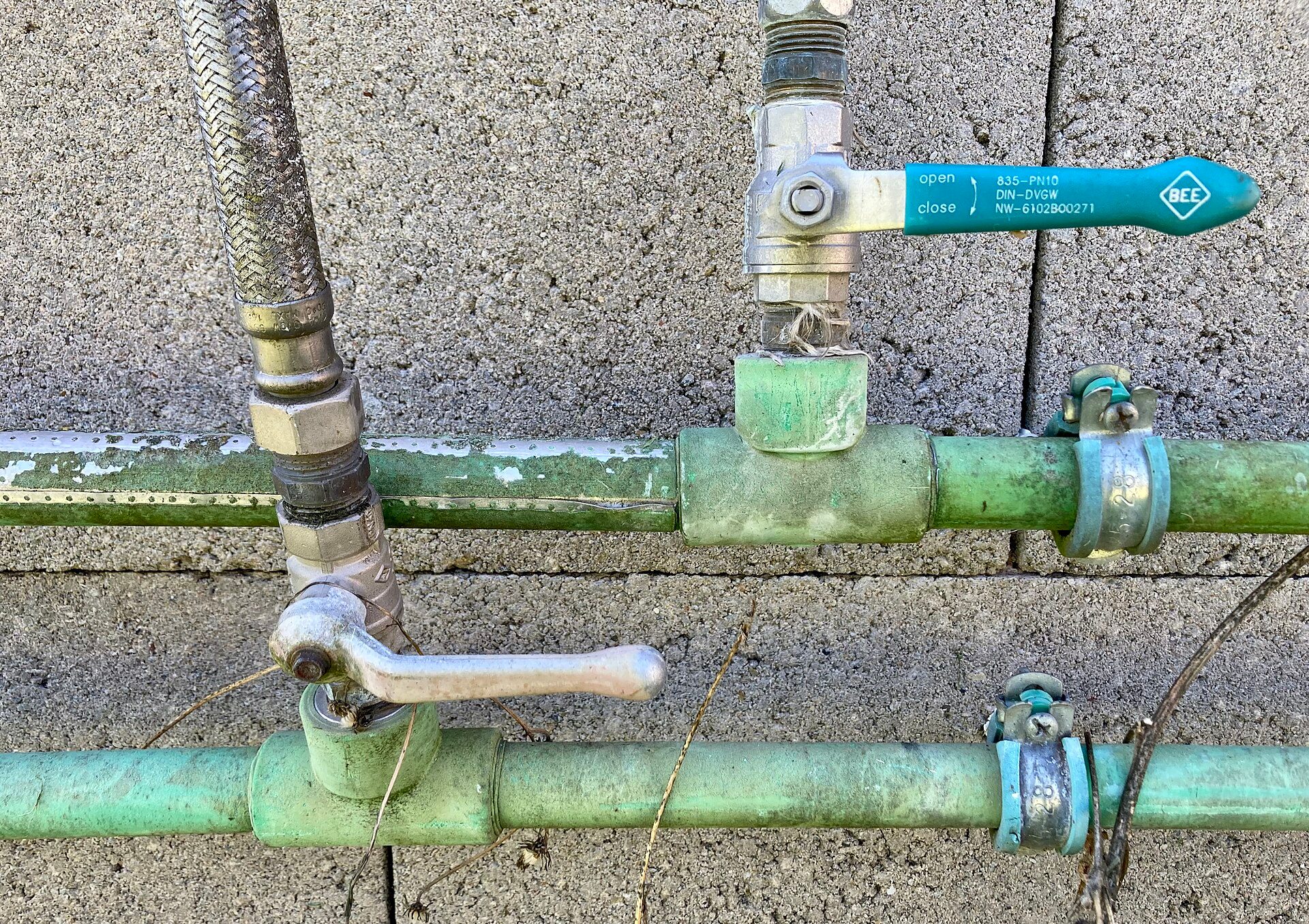
Photo: Kai Kemmann / Wikimedia Commons, CC BY-SA 4.0
Choosing PPR pipe for each run in a house
The short rule: PN10 for cold, PN16 for high-pressure cold, PN20 for hot; the size depends on how many fixtures are downstream. The table shows a common choice for a 2–4 storey Vietnamese townhouse with a rooftop tank and a pump (for reference).
| Pipe run | Usual size (mm) | PN grade | Notes |
|---|---|---|---|
| Main supply: water meter → underground tank/storage tank | 25–32 | PN10 | Mains pressure 1–3 bar; if a pump draws directly, follow the pump inlet size |
| Pump discharge up to the rooftop tank | 25 (32 for large houses) | PN16 | Takes water hammer when the float switch cuts the pump |
| Cold riser from the rooftop tank down to each floor | 32 (25 for small houses) | PN10 | Wide bore so the top floors still get enough water |
| After a booster pump (3–4 bar) | 25 | PN16 | A booster keeps a constant pressure higher than the roof tank |
| Cold branches to bathrooms and kitchen | 25 floor branch, 20 to fixtures | PN10 | 1/2" female-threaded stub-outs for angle valves and taps |
| Hot water from an electric water heater | 20 (25 for a shared riser) | PN20 | Water at 60–75°C |
| Hot water from a solar water heater | 25 riser, 20 branches | PN20 | Can exceed 80°C in summer; the rooftop section must be shaded |
What are 20 mm and 25 mm PPR pipes used for?
20 mm feeds each fixture (washbasin, toilet, shower, kitchen tap), because angle valves and taps have 1/2" threads and connect with 20 × 1/2" female-threaded elbows or tees. 25 mm serves a shared floor branch, a bathroom with 3–4 fixtures, or the riser of a small house. 32 mm is for the riser of a 3–4 storey house or a house with many bathrooms. To size exactly by number of fixtures and building height, use the pump and pipe calculator.
Hot water from electric and solar water heaters
A wall-mounted electric water heater is usually set to 60–75°C and the pipe run inside the bathroom is short: use 20 mm PN20 from the heater outlet to the shower and washbasin. A rooftop solar water heater (Figure 3) differs in two ways: in summer the water can exceed 80°C when the family is away, and the rooftop section of pipe sits in direct sun. So the whole hot run must be PN20 and the rooftop section wrapped in UV-resistant insulation; many plumbers also connect the section closest to the tank outlet with a stainless braided hose or metal pipe, following the heater maker's instructions.
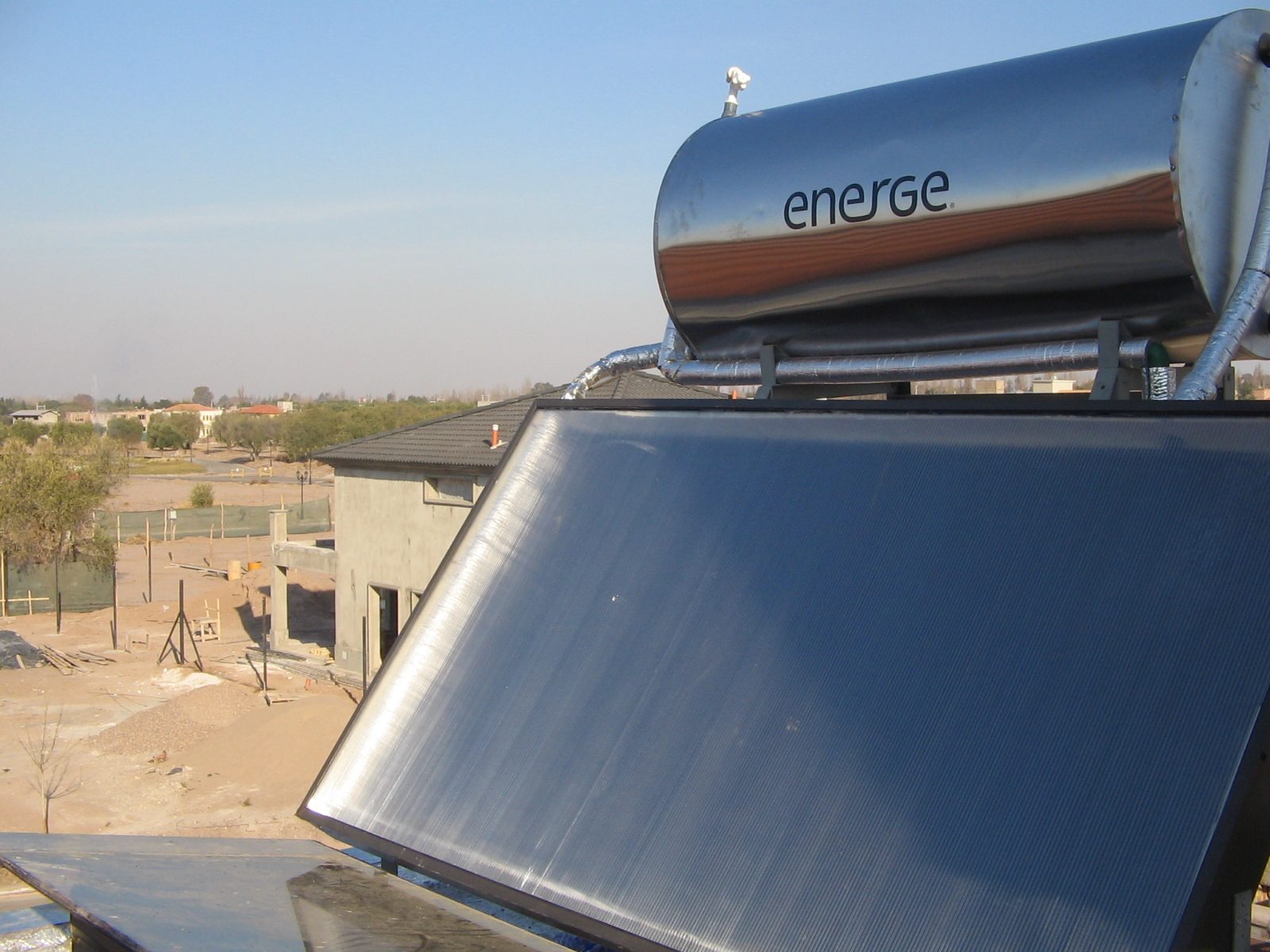
Photo: Cachogaray / Wikimedia Commons, CC BY-SA 4.0
Worked example: choosing and pricing pipe for a 3-storey townhouse
A 3-storey townhouse with a roof room, 3 bathrooms and 1 kitchen. A 1,500-litre tank on the roof, filled by a pump from an underground tank. Hot water comes from a 180-litre solar water heater on the roof, supplying all 3 bathrooms and the kitchen. Prices below are average reference unit prices for 2026 in Vietnamese dong (VND), varying by brand and region; the lengths are an illustration.
Step 1: split the runs and choose the pipe grade
| Run | Pipe | Metres | Unit price (VND/m) | Amount (VND) |
|---|---|---|---|---|
| Pump discharge to the roof | 25 PN16 | 16 | 42,000 | 672,000 |
| Cold riser from the roof tank | 32 PN10 | 14 | 50,000 | 700,000 |
| Cold floor branches | 25 PN10 | 18 | 32,000 | 576,000 |
| Cold branches to fixtures | 20 PN10 | 30 | 20,000 | 600,000 |
| Hot riser from the solar heater | 25 PN20 | 14 | 52,000 | 728,000 |
| Hot branches to fixtures | 20 PN20 | 24 | 32,000 | 768,000 |
| Total pipe | 116 | 4,044,000 |
Check the sums: length 16 + 14 + 18 + 30 + 14 + 24 = 116 m; money 672,000 + 700,000 + 576,000 + 600,000 + 728,000 + 768,000 = 4,044,000 VND (roughly USD 155), not including fittings, valves, insulation and labour.
Step 2: compare two wrong ways of "saving money"
- Using PN10 for the whole hot run: 14 m × 32,000 + 24 m × 20,000 = 448,000 + 480,000 = 928,000 VND, instead of 728,000 + 768,000 = 1,496,000 VND. You save 568,000 VND — but a single leak inside the wall means breaking the wall, re-welding and re-tiling, which usually costs several million dong plus a few days without water.
- Using PN20 everywhere "to be safe": switching the cold runs (16 + 14 + 18 + 30 m) to PN20 costs about 1.3 million VND more, and the narrower bore weakens the flow on the top floors. You pay more for a worse result.
Step 3: check the pressures again
The roof tank is about 12 m above the ground floor → static pressure of about 1.2 bar at the ground-floor taps: PN10 has a huge margin. The pump discharge sees 2–3 bar while running plus water hammer when it stops — PN16 has a safe margin. The hot run sees the same 1.2 bar from the roof tank but at 70–80°C: PN20 still holds about 5–8 bar, plenty of margin. The conclusion written into the quote: "Cold pipe PN10, pump discharge PN16, hot pipe PN20 — standard practice, no needless extra cost".
Telling genuine PPR pipe from fakes by the print line
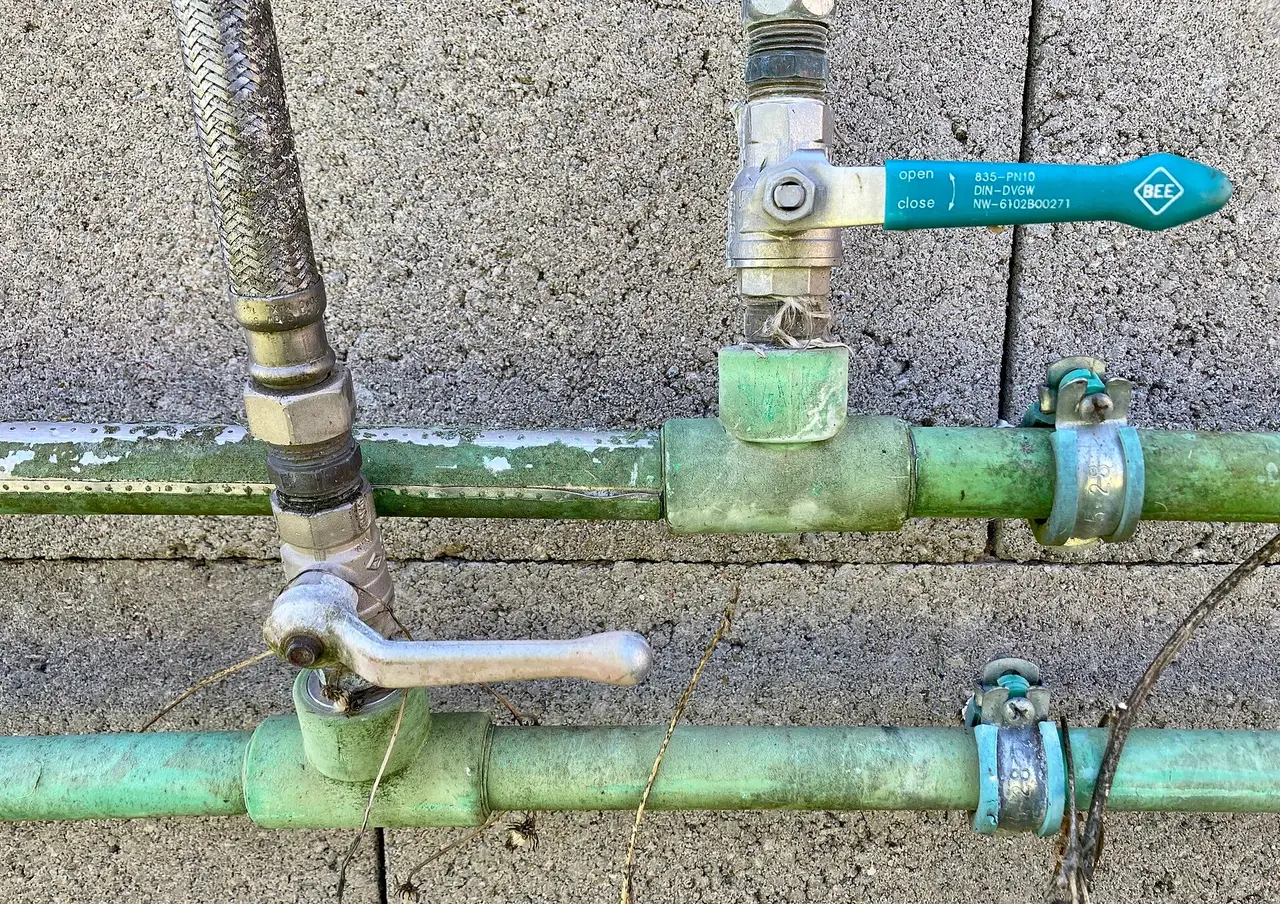
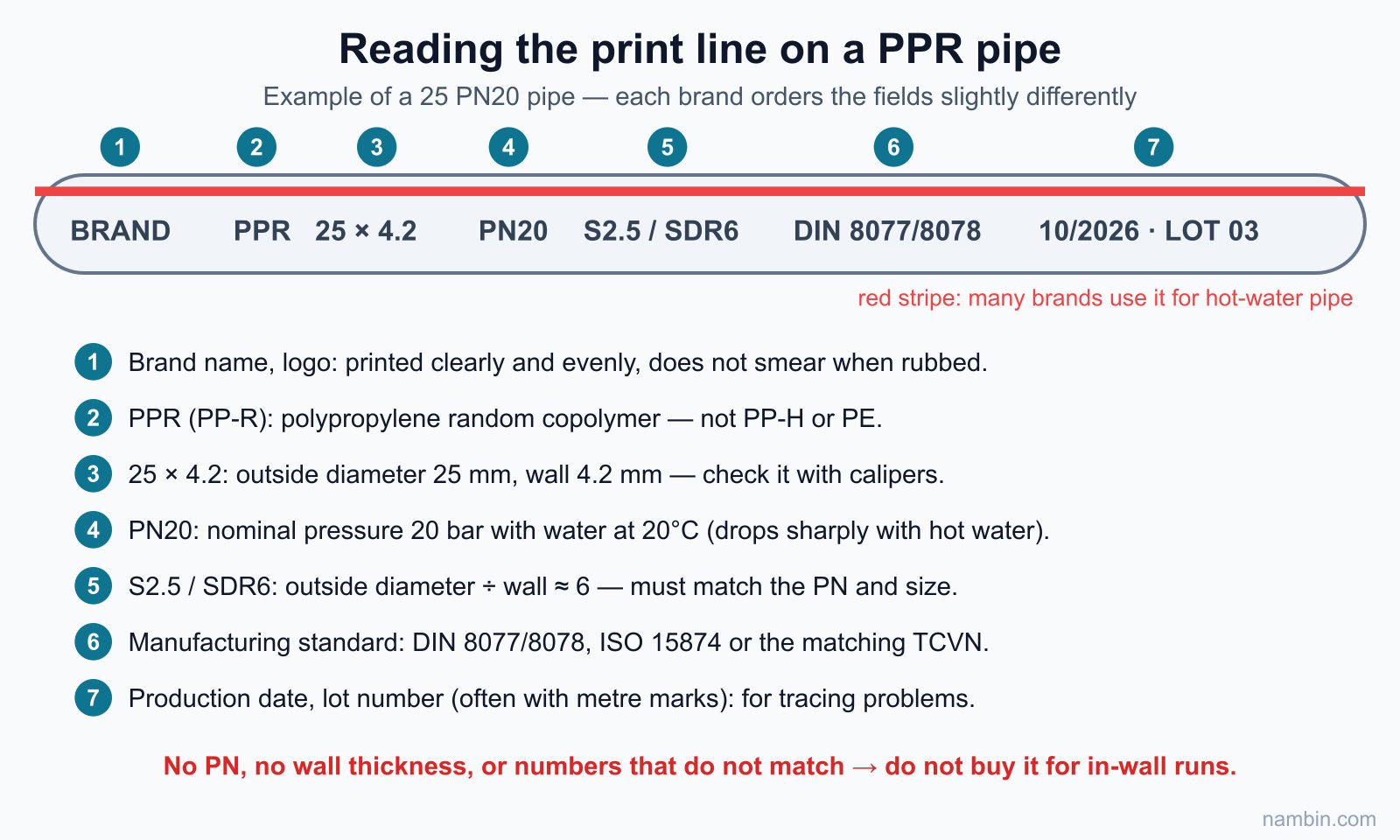
Poor pipe is often mixed with recycled plastic, thinner than printed, or labelled "PN20" while as thin as PN10. Read the print line, measure the wall and weigh the pipe. Figure 4 explains each part of the print line on a 25 mm PN20 pipe.
What the print line must include
- Brand name and the material "PPR" or "PP-R".
- Size as "diameter × wall", for example 25 × 4.2.
- Pressure class PN and/or S, SDR — these numbers must agree: 25 × 4.2 goes with PN20/SDR6, never with PN10.
- Manufacturing standard (DIN 8077/8078, ISO 15874 or the matching TCVN, the Vietnamese national standard), production date and lot number.
Four quick tests at the shop
- Rub the print: it should be sharp, even and repeated at regular intervals along the pipe; smudged or patchy printing is a bad sign.
- Measure the wall: borrow calipers and measure the pipe end against the table above.
- Look at the cut face: the plastic should be solid, smooth and evenly coloured; air bubbles, streaks or black specks mean recycled material.
- Weigh the pipe: PP weighs about 0.9 g/cm³, so a 4 m length of 25 mm PN20 weighs about 1 kg and 25 mm PN10 about 0.6 kg. A "PN20" length almost as light as PN10 is thin-walled pipe with a false label.
Pipe colour and coloured stripes
PPR pipe in Vietnam comes in white, green or grey depending on the brand. Many brands print a red stripe on hot-water pipe and a blue stripe on cold, but this is not a universal rule — always read the PN, do not choose by colour. When running pipe inside walls (Figure 5), mark hot and cold runs with a marker before plastering so the next tradesperson does not drill into them.
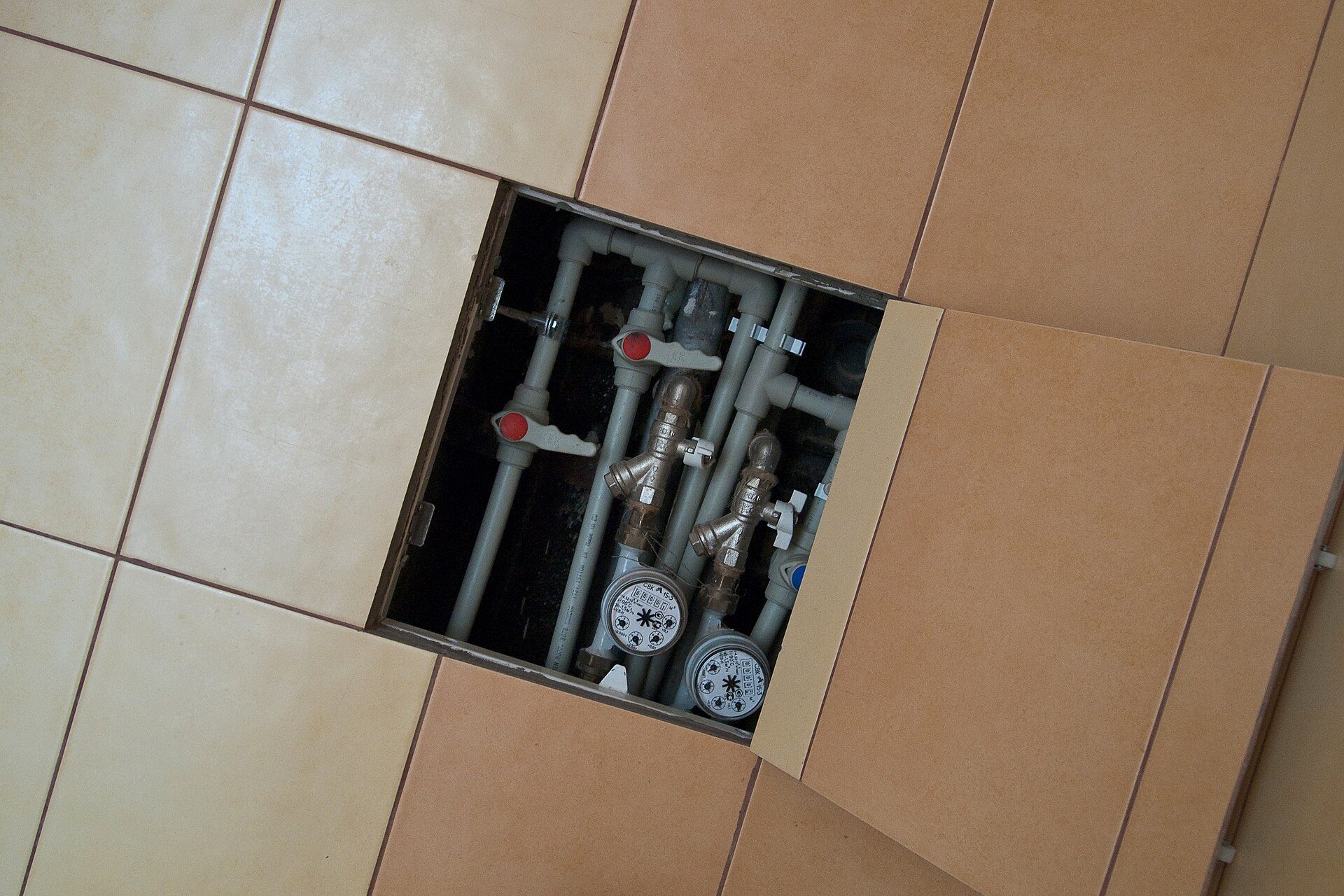
Photo: Vyacheslav Argenberg / Wikimedia Commons, CC BY 4.0
Reference prices for PN10, PN16 and PN20 PPR pipe in 2026
The prices below are approximate retail prices per metre for pipe from popular domestic brands, for reference in 2026; they vary by brand, region and dealer discount. Pipe is usually sold in 4 m lengths.
| Size (mm) | PN10 (VND/m) | PN16 (VND/m) | PN20 (VND/m) |
|---|---|---|---|
| 20 | 15,000 – 25,000 | 20,000 – 32,000 | 25,000 – 40,000 |
| 25 | 25,000 – 40,000 | 32,000 – 50,000 | 40,000 – 65,000 |
| 32 | 40,000 – 60,000 | 50,000 – 80,000 | 65,000 – 100,000 |
When the price is suspiciously low
A "PN20" pipe priced like PN10 of the same size is almost certainly thin-walled or recycled. Buy from dealers who issue invoices, ask for a warranty card and keep a printed offcut for comparison if problems arise.
Cutting, welding and pressure testing: what changes between PN grades?
All three grades of one size share the same cutter and welding sockets, with a few points to watch.
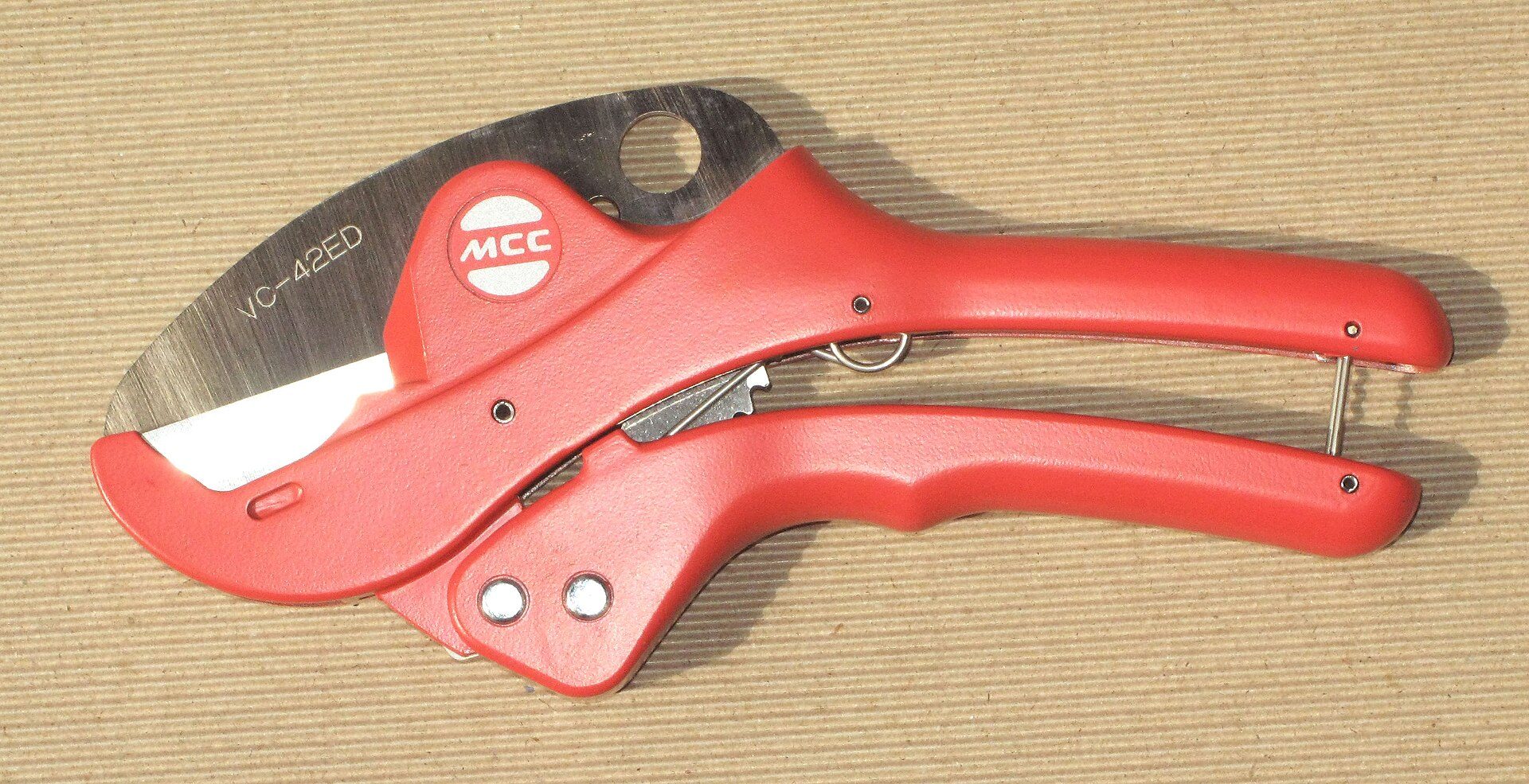
Photo: M338 / Wikimedia Commons, Public domain
Cutting
A ratchet cutter (Figure 6) cuts cleanly up to 32–42 mm. PN20 has a thick wall: squeeze slowly and evenly so the pipe end does not go oval and the cut stays square.
Welding
The heating socket runs at about 260°C for every PN grade; heating time depends on size (about 5 seconds for 20 mm, 7 seconds for 25 mm and 8 seconds for 32 mm in common charts). The thick PN20 wall tolerates being pushed in exactly to the mark, while thin-walled PN10 can easily have its bore pinched if pushed in too far. Step-by-step details and the 6 most common mistakes are in the lesson welding PPR pipe the right way (in Vietnamese).
Pressure testing
After running the pipe, you must pressure test before plastering the walls. In houses the test pressure is usually 1.5 times the working pressure (6–10 bar is common) for about 30 minutes, and the gauge must not drop noticeably. Test with cold water; for PN20 hot runs, you can test again once hot water is flowing. The full procedure is in the lesson installing hot and cold supply lines and pressure testing before plastering (in Vietnamese).
Safety warning: a PPR welding iron runs at about 260°C — keep it on its stand, unplug it whenever you put it down, and keep children away. Hot water at 60–80°C from a heater or solar water heater causes severe burns: before cutting or repairing a hot run, switch off the water heater's circuit breaker, close the valve and drain the line until it cools. Never use PN10 pipe on a hot run, not even for a "short temporary section".
Common mistakes when choosing PPR pipe
Using PN10 for hot water
Signs: after 1–5 years the hot pipe swells, splits lengthwise or leaks around the welded joints, and the wall shows damp stains. Cause: PN10 at 60–70°C only holds about 4–5 bar. Fix: replace the whole hot run with PN20, do not patch it section by section.
Using PN20 for long cold runs
Signs: the top floor has weak flow even though the tank is full. Cause: narrow bore, and the roof tank only gives 0.3–1 bar on the floor just below the roof. Fix: use PN10 for the cold riser and go up a size (25 to 32); if more pressure is needed, install a booster pump.
Choosing by colour instead of reading the PN
Signs: a "red stripe" pipe printed PN10. Fix: always read the print line and measure the wall (Figure 4).
Leaving PPR pipe exposed to the sun on the roof
Signs: the pipe fades, turns brittle and cracks after a few years, as in Figure 2. Cause: ultraviolet light. Fix: wrap it in insulation with a UV-resistant layer, run it in trunking, or use pipe made for outdoor use.
Frequently asked questions
What is the difference between PPR PN10 and PN20 pipe?
They have the same outside diameter, but the PN20 wall is almost twice as thick as PN10 (25 mm size: 4.2 mm versus 2.3 mm), so it handles higher pressure and temperature. PN10 is for cold water, PN20 is for hot water.
Which PPR pipe should be used for hot water?
Use PN20 for every hot run from an electric water heater or a solar water heater. Long exposed hot runs or runs on the roof should use aluminium-core or glass-fibre-core PPR and be wrapped in insulation.
What are 20 mm and 25 mm PPR pipes used for?
20 mm for the final branch to each fixture; 25 mm for a floor branch, one bathroom or a small house riser; 32 mm for the riser of a 3–4 storey house.
When should PN16 pipe be used?
For high-pressure cold water: the pump discharge line up to the roof tank, runs after a booster pump, and tall buildings with high static pressure. PN16 is not recommended for hot water that regularly exceeds 60°C.
Can PN10 pipe be welded to fittings made for PN20?
Yes, because fusion fittings are sized by outside diameter and are usually made as thick as PN20 or thicker. On hot runs the pipe must be PN20, and threaded fittings (brass inserts moulded into plastic) should be the kind clearly marked for hot water.
Practice exercises and self-assessment
- Go to a plumbing supply shop and photograph the print line on three 25 mm pipes of different PN grades; write down the 7 pieces of information shown in Figure 4.
- Measure the wall of each pipe at 4 points with calipers and compare with the table in this lesson.
- Draw up a pipe selection table for the house you live in (or a 2-storey house with 2 bathrooms and a 30-litre electric water heater in each): run – size – PN – metres – amount, and add up the total.
- Explain out loud to a "homeowner" (a friend or relative), in 2 minutes, why PN10 should not be used for hot water.
Self-assessment criteria
- Pass: you read the PN, size and SDR correctly and can point out when the numbers do not match; your measured wall thickness is correctly compared with the table.
- Pass: your selection table has PN20 for hot runs, PN16 for the pump discharge and PN10 for cold branches; the sums of metres and money add up.
- Not yet: you choose pipe by colour, use PN10 on any hot section, or cannot explain why PN20 is not used for every cold run.
Choosing the right pipe is the core of the step Pipe materials, tools & site cleanliness. The next step on the roadmap is Cutting and welding PPR pipe & gluing uPVC pipe — where you turn the pipe you chose into joints that stay tight for 50 years. When you reach fixture installation, review how to connect hot and cold water to a tap in the lesson how to replace a hot and cold washbasin tap at home (in Vietnamese), and how to connect a heater with its safety valve in the lesson installing a pump, rooftop tank and electric water heater (in Vietnamese).
Want to learn the plumbing trade properly? Follow NAMBIN's 8-step roadmap for residential plumbers to know what to learn first and what comes next — from choosing pipe and welding PPR to pressure testing and taking on jobs. When a client asks "what pipe size and which pump does my house need?", open the pump and pipe calculator and answer right there on site.