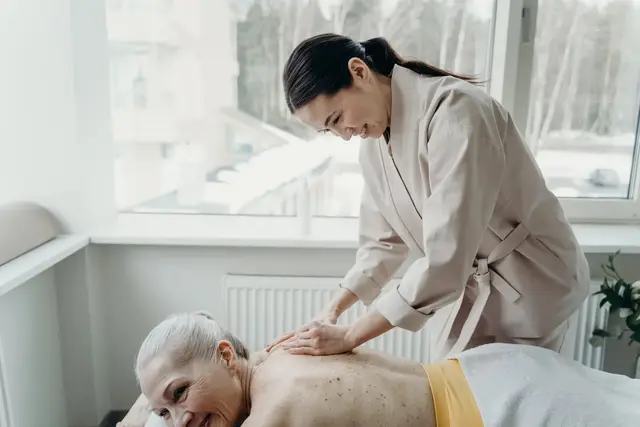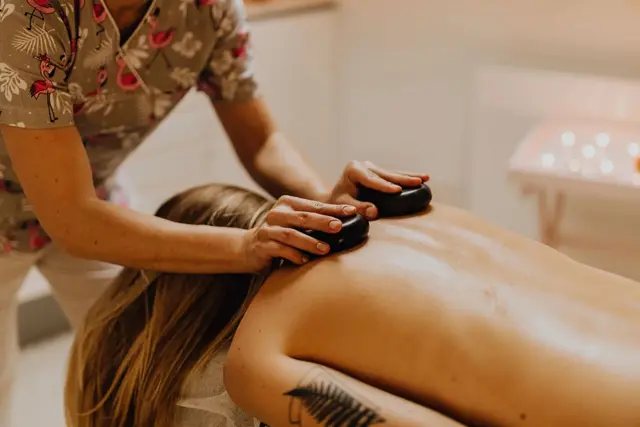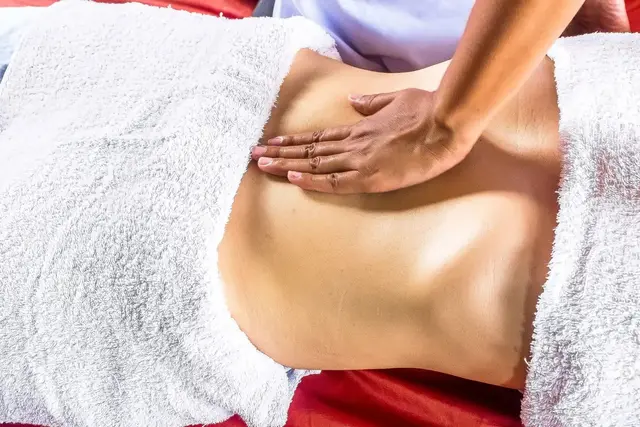
Hot stone massage is a body massage that uses basalt stones heated in hot water, usually to about 50–55°C, both placed still on large muscle groups and held in the hands to glide with oil, so muscles relax faster than with the hands alone. The technique is not hard; the hard part is controlling heat. A stone that is too hot, or left too long in one place, burns the client, and many burns happen to clients with reduced sensation who never complain. This lesson is written the way a senior therapist coaches an apprentice: choosing stones, heating and measuring, testing each stone, a 75-minute routine, contraindications and first aid when something goes wrong.
By the end of this lesson, you will be able to:
- Prepare a stone set and heater, measure the water with a thermometer and keep it within the range your spa has set.
- Test every stone on your own arm and then on the client before placing it, place still stones over a towel and move them on time.
- Screen for contraindications with the health form and know when to switch to a regular massage or ask the client to check with a doctor.
- Deliver a full 75-minute routine with timings that add up, and clean the stones after every client.
- Give correct first aid for redness or a minor burn, record the incident and know when the client must see a doctor.
Learning spa therapy properly? Hot stone massage builds on the 60-minute body massage in step 3 of the roadmap, after skin knowledge, contraindications and treatment room hygiene. See the spa therapist roadmap to learn in the right order.
What is hot stone massage, and why basalt?
In this treatment the stone is a "third hand" that carries heat. Heat widens the blood vessels near the skin and softens muscle, so the therapist can use lighter pressure while the client still feels it deeply. Stones also save the therapist's wrists, because there is less constant hard pressing.
Basalt holds heat well
Spa stones are usually basalt, a dark grey volcanic rock that is fine-grained and heavy in the hand (Figure 1). Basalt is dense, so it stores heat and releases it slowly; a stone fresh from the water stays warm for several minutes. Spa stones are ground round and smooth with no sharp edges, and slightly flat so they do not roll off the back.
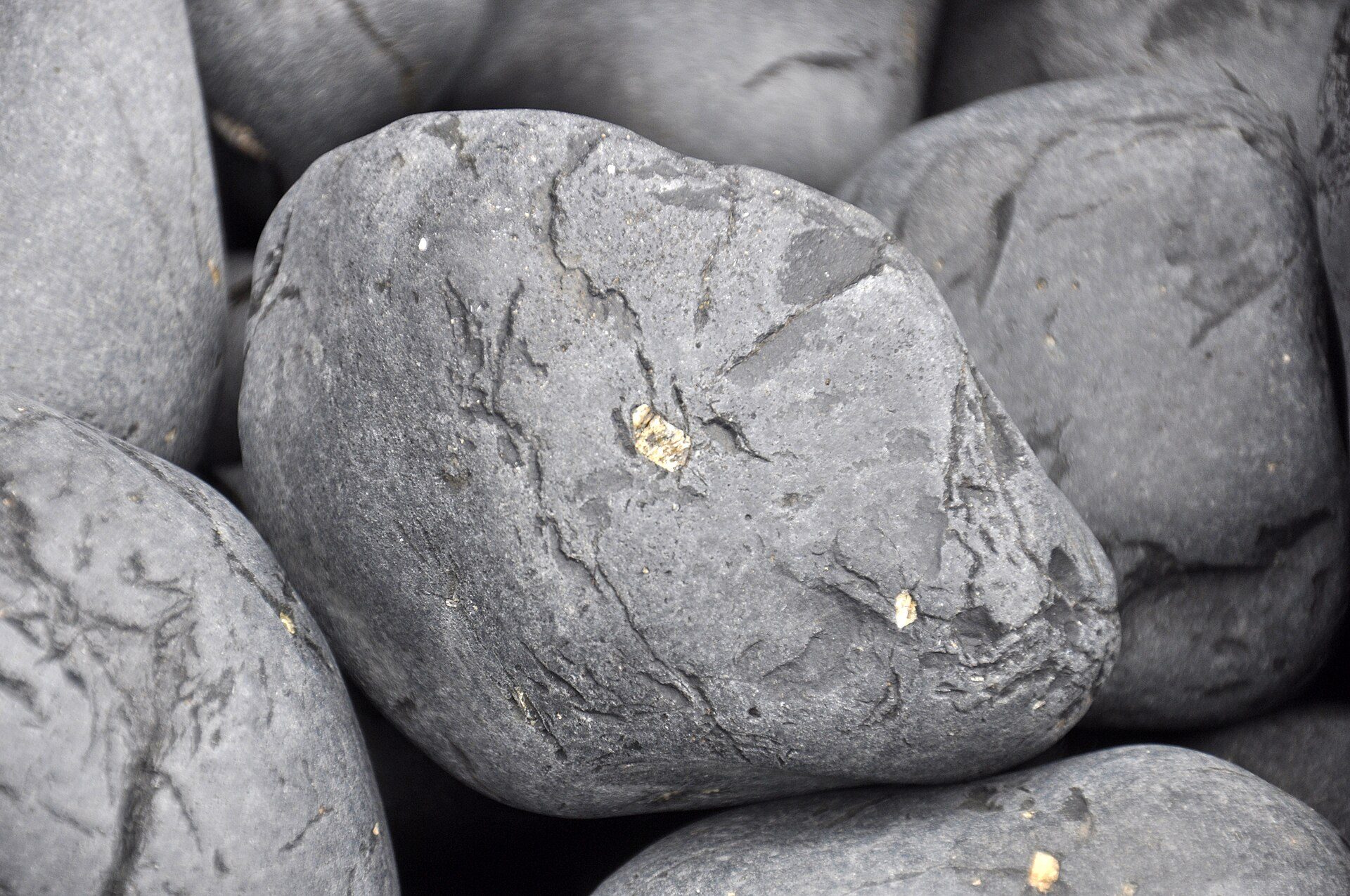
Photo: James St. John / Wikimedia Commons, CC BY 2.0
What a stone set contains
- Large flat stones (about 10–15 cm): placed still along both sides of the spine, or on the abdomen over a towel when the client lies face up.
- Medium stones (about 6–9 cm): held in the palm to glide with oil, one in each hand.
- Small stones (about 2–4 cm): between the toes or in the client's palms.
- Cold stones (often white marble): some spas alternate them, but beginners should master hot stones first.
A spa set is usually about 40–60 stones, so there is always a fresh stone ready when the one in use cools down.
How it differs from a regular body massage
The basic strokes are still gliding, kneading and friction, as in the lesson on the 60-minute relaxing body massage. The difference: holding a stone, you feel the muscle less, and there is an extra hazard, heat. So only learn hot stones once you can run a full regular body routine smoothly.
Stone temperature: the numbers and how to control them
Temperature is the most important part of this lesson. Many hot stone training materials set the water at about 50–55°C for gliding stones. Your spa may set a different figure, but the principle is the same: there is a number, there is a thermometer and someone is responsible for checking it.
The heater and the thermometer
A stone heater is a stainless steel pot with a thermostat, filled with water to cover the stones and placed on a trolley next to the couch (Figure 2). The dial is only an estimate, and some heaters are off by a few degrees. Use a digital probe thermometer in the water to read the real temperature at the start of each shift and before each client. A heater needs about 30–60 minutes to heat evenly, depending on its size and the amount of water.
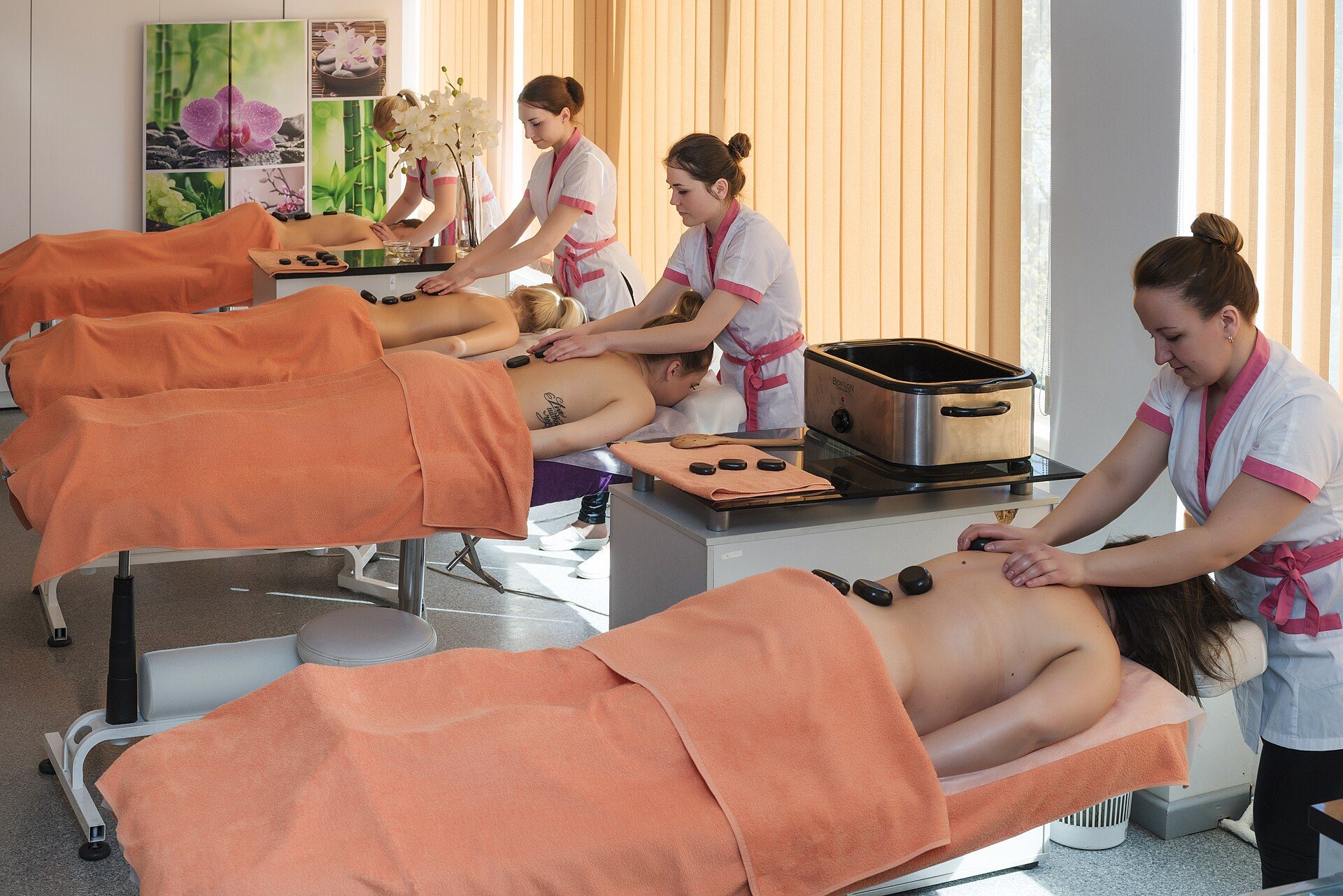
Photo: RigaSKK / Wikimedia Commons, CC BY-SA 4.0
Reference temperature table
| Item | Reference temperature / time | Safety note |
|---|---|---|
| Water for gliding stones | About 50–55°C | Measure with a thermometer; do not rely on the dial |
| Still stones on the back | Remove, dry, let cool another 1–2 minutes | Always place over a thin towel or sheet |
| Time a still stone stays in one place | Usually 3–5 minutes, then check and move | If the client says hot, lift it at once |
| Water above the spa's limit | Above about 60°C | Do not use; add cool water and measure again |
| Test on the therapist | Hold on the inner forearm about 5 seconds | Therapists' hands get used to heat, so also test on the client |
These figures are common training references, not a legal standard. Each spa should write its own figures into its standard procedure and read the heater maker's instructions.
Heating methods you must not use
- Microwave, oven or gas stove: stones heat unevenly with very hot spots inside and can crack.
- Rice cooker or electric kettle: no thermostat at 50–55°C, and the water easily boils.
- Dry heating (not in water): the stone surface gets far too hot without your hand noticing.
Contraindications and screening
Hot stones add contraindications on top of a regular massage because they involve heat and skin sensation. Go through the health form as in the lesson on skin structure and contraindications, then ask specifically about heat.
Do not use hot stones; offer another service
- Diabetes with nerve complications, numbness in hands or feet, or any condition that reduces skin sensation: the client cannot feel heat to warn you.
- Fever, illness, acute inflammation, open wounds, rashes, sunburn, recent strong exfoliation, peel or laser.
- A fresh injury (sprain, bruise) that is still swollen and warm: heat makes swelling worse.
- Pregnancy: many spas do not offer hot stones; never place stones on the abdomen or lower back.
- Alcohol just consumed, or a client who is exhausted, drowsy or hard to communicate with.
Ask the client to check with a doctor first
- Heart disease, uncontrolled high blood pressure, a past stroke.
- Blood thinners or medicines that affect sensation or temperature control.
- Cancer treatment, lymphoedema, a flare-up of a chronic skin condition.
- Older clients with thin skin: if you proceed, lower the heat and skip still stones.
Where not to place stones
Never on the spine (place them either side), varicose veins, the back of the knee, new tattoos, raised moles or fresh scars. On the face and front of the neck use only small stones, lower heat and short contact.
This is screening knowledge for a therapist and does not replace a doctor's advice. When in doubt, choose a regular massage and record the reason in the client file.
Step-by-step hot stone procedure
Before the appointment
- Check the stones: no cracks or chips; remove cracked stones, which can break and harbour bacteria.
- Fill with clean water to cover the stones and switch the heater on about 45 minutes ahead; line the bottom with a towel if the maker says so.
- Measure with the thermometer and log it (time, temperature, who checked).
- Prepare a towel-lined tray, a dry towel for wiping stones, massage oil, three large towels, and heat-resistant gloves or a slotted spoon.
Testing and placing still stones
- Lift stones out with the spoon, never with bare hands in the pot; dry them.
- Hold the stone on your inner forearm for about 5 seconds. If it stings, it is too hot; let it cool.
- Touch the stone lightly to the client's calf or back and ask: "Does this feel comfortable, a bit hot, or too hot?"
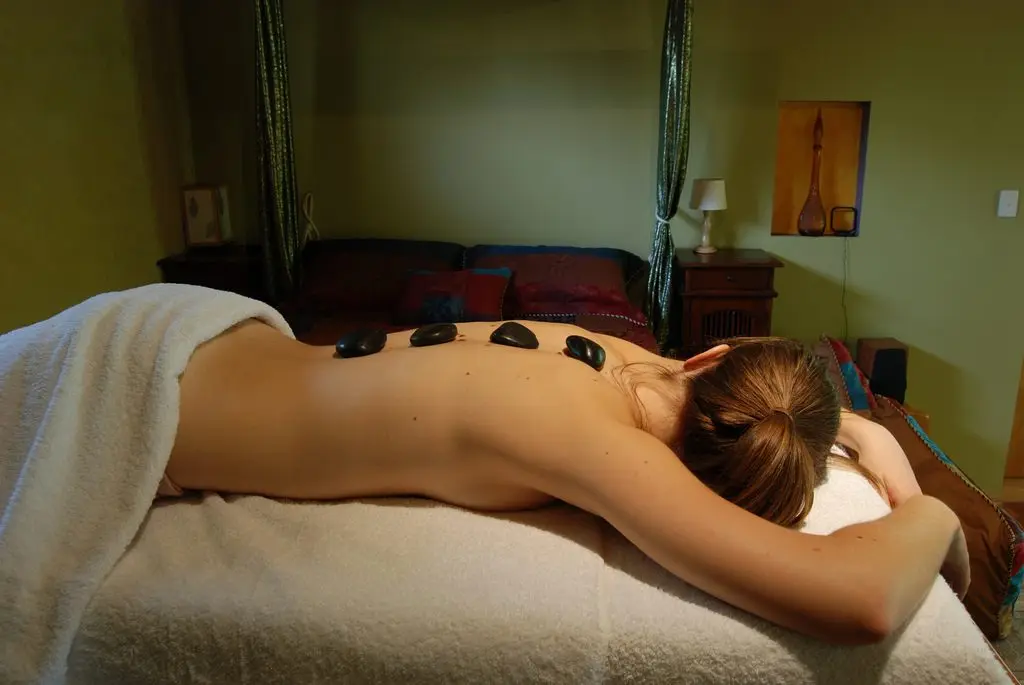
- Cover the back with a thin towel or sheet and place large stones along both sides of the spine, never on the spine itself (Figure 3).
- Set a timer; after about 3–5 minutes lift the stones and check the skin: an even light pink is fine, patches of deep red mean stop.
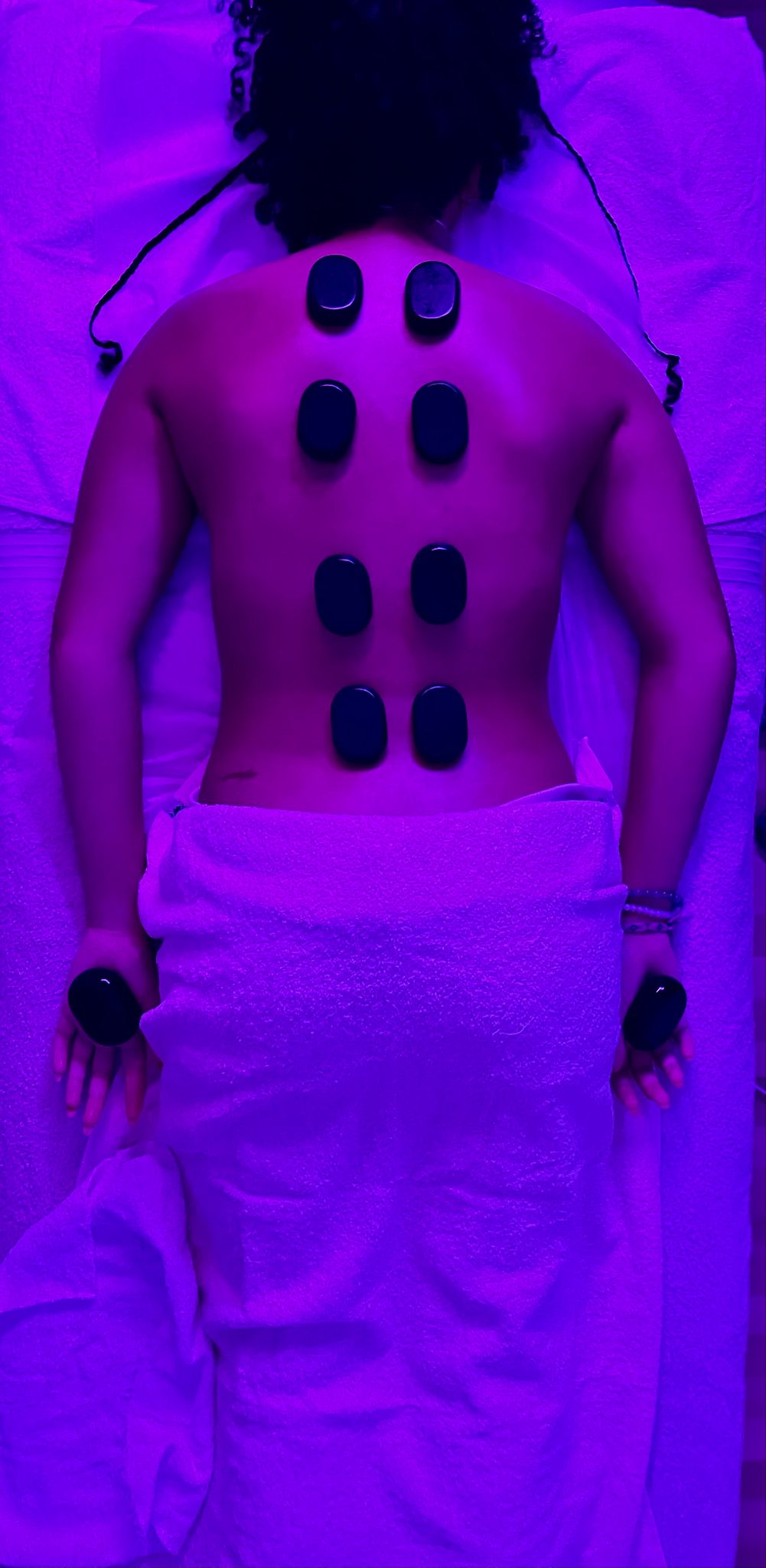
Photo: Maximl020 / Wikimedia Commons, CC BY-SA 4.0
Gliding with stones and oil
Oil the area, hold a medium stone in each hand with your palm wrapped around it, so your hand is the "buffer" that controls the heat. Glide long strokes along the muscle with the stone always moving; a stone that stops is pouring heat into one spot. When the stone cools to hand temperature, return it to the pot and take a fresh one, testing it on your forearm every time.
Finishing the session
Remove all stones, wipe off excess oil, check every area where stones were placed, help the client sit up slowly and offer water. Record the water temperature, the client's feedback and any red areas.
Worked example: a 75-minute hot stone session for an office worker
The client is a 38-year-old woman who works in an office, with a tired back and shoulders, no underlying conditions, no regular medication, and no previous hot stone treatment. The health form is clear and she signs the consent. The heater goes on at 13:15, reads 53°C at 13:55, and the client arrives at 14:00.
Time plan
| Stage | Main work | Minutes |
|---|---|---|
| Welcome | Review the health form, explain the heat sensation, agree how to say "hot" | 5 |
| Heat test | Stone on the therapist's forearm, then on the client's calf | 3 |
| Back (face down) | Still stones over a towel, stone glides along back and shoulder muscles | 30 |
| Back of legs | Stone glides on calves and thighs; avoid the back of the knee | 12 |
| Turning over | Keep the towel draped, check back skin after removing stones | 2 |
| Front of legs and arms | Small stones in the palms, glides on shins and arms | 15 |
| Neck, shoulders, head | Small stones, lower heat, slow strokes | 8 |
| Total | 75 | |
Check: 5 + 3 + 30 + 12 + 2 + 15 + 8 = 75 minutes. The session ends at 15:15; add 15 minutes to clean up and wash the stones, and the couch is ready for the next client at 15:30.
Notes during the session
- Minute 4 of the back work, the client says "a bit hot" on the left shoulder: lift the stone, leave it on the tray for 1 more minute, replace it, and she reports it is comfortable.
- Skin check when turning: even light pink on both sides, no deep red patches, no blisters.
- Client file: water 53°C, still stones 4 minutes per round, left shoulder more heat-sensitive, place the left shoulder stone later next time.
A booking you must decline
The same day, a 56-year-old man books hot stones. His form says he has had diabetes for years and often has numb toes. The receptionist and therapist explain that hot stones are not suitable because he may not feel heat in his feet, offer a light regular body massage instead, and suggest he ask his doctor if he wants heat therapy. Explained tactfully and without judgement, most clients understand and stay.
Burn safety, electrical safety and first aid
Safety warning: Never use stones without measuring the water, never place a still stone directly on skin without testing, never leave a stone still longer than the set time, and never put stones under the client (a client lying on a stone can get a deep burn because they cannot move away). The heater is an electrical appliance full of water: plug it into an earthed socket protected by a residual current device (RCD), keep the cord dry, unplug before emptying or refilling, and set it firmly on the trolley away from walkways. For a burn: cool it under clean running cool water for about 20 minutes, do not put ice directly on it, do not apply toothpaste or grease, do not break blisters, and cover with clean gauze. If the burn is larger than the palm, on the face, genitals or a joint, has large blisters, looks white or feels numb, or the client is elderly or has health conditions, take them to a doctor at once or call 115 (Vietnam's emergency number).
Early signs to stop
- Deep red patches in the shape of a stone, or redness that does not fade after a few minutes.
- The client flinches, holds their breath or says it stings, even if they then say "it's fine".
- The client feels faint, nauseous or has a racing heart: stop, let them lie on their side, give water and watch them; if they do not improve, call for medical help.
Recording incidents
Record every unusual redness: time, location, water temperature at the time, how long the stone stayed still, what first aid you gave and who witnessed it. The incident log helps the spa find the cause (a heater running hot, a therapist forgetting the timer) and shows that you handled it correctly.
Cleaning and storing stones
After every client
- Put used stones in a separate tray; never return oily stones to the clean water.
- Wash them in warm soapy water with a soft brush and rinse.
- Disinfect following your spa's procedure and product, with the contact time on the label, then rinse again.
- Dry them and return them to the pot or tray by size.
End of day and periodic care
Unplug, empty the pot and dry it so scale does not build up. Leave the stones to dry on a towel. Check regularly for cracks and chips and remove damaged stones. Some spas rub a thin coat of oil on the stones from time to time to keep their colour; follow what your trainer recommends.
Reference costs
A set of about 40–60 basalt stones plus a spa stone heater typically costs around 2,500,000 to 8,000,000 VND (about 100–320 USD) depending on size and brand; a 60–90 minute hot stone treatment at a spa in Vietnam is about 300,000–900,000 VND (2026 reference, varies by region and spa level).
Common mistakes of new therapists
Trusting the dial on the heater
Sign: some days the stones are warm, other days clients complain of heat. Cause: no thermometer, a heater that runs off, or low water that makes the stones hotter. Fix: measure at the start of the shift and before every client, log it, keep the water covering the stones.
Stopping a stone while gliding
Sign: a stone-shaped red mark where you paused to talk or reach for oil. Cause: your hand stopped but the stone stayed on the skin. Fix: when you need to pause, lift the stone off the skin or put it back on the tray.
Forgetting the timer on still stones
Sign: deep red skin when you lift the stones, and the client says "it stung a bit earlier but I thought that was normal". Cause: many clients are shy about speaking up. Fix: use a vibrating timer and tell the client at the start, "If it feels hot, tell me and I'll lift it straight away."
Treating a client who should not be treated
Sign: a quick glance at the form, and a client with reduced sensation is accepted. Fix: always reread the form before the session and ask directly, "Do you have any numbness in your hands or feet, or take any medicine regularly?"
Frequently asked questions
What temperature is safe for hot stone massage?
Many training materials use heater water of about 50–55°C for gliding stones, with still stones cooled a little more and placed over a towel. The final safe figure is the one your spa sets, measured with a thermometer and always tested on the client's skin.
What are the benefits of hot stone massage?
Clients usually feel deeply relaxed, muscles soften faster and the therapist can use lighter pressure. It is a relaxation service, not a medical treatment; do not advertise it as curing back pain or joint disease.
Can pregnant clients have hot stone massage?
Many spas do not offer hot stones during pregnancy. If your spa has a pregnancy service, follow its own procedure, never place stones on the abdomen or lower back, and the client should ask her obstetrician first.
How often should someone have a hot stone massage?
There is no single figure. Many clients have one every few weeks, alternating with regular massage. Ask about health again before every session, because a client's condition can change.
How long does it take to learn hot stone massage?
Once your regular body massage is solid, learners typically need a few sessions on stone handling and many more supervised practice hours, especially heat testing and handling incidents, before treating clients alone.
Practice tasks and self-assessment
- Switch on the heater and measure the water every 10 minutes for 1 hour; compare with the dial to see how far it is off.
- Practise gliding with stones on a classmate for 30 minutes: the stone always moving, swapped when cool, tested on your forearm every time.
- Role-play reception and client: tactfully decline a diabetic client with numb feet and offer an alternative service.
- Write a 90-minute hot stone time plan using the table above; the minutes must add up.
Self-assessment criteria
- Pass: a thermometer reading before every client; still stones always over a towel and on a timer.
- Pass: after the session the client's skin is only evenly light pink, with no deep red patches or blisters.
- Pass: you can name at least 5 contraindications and 3 burn first-aid steps.
- Not yet: heating stones in a microwave, testing heat only on your own hand, leaving a stone still while chatting, or skipping the health form.
Photo: Daniela / Wikimedia Commons, CC BY 2.0
Once body massage and hot stones are solid, you complete the apprentice foundation and move on to the next roadmap step: Basic facial care, where you learn skin analysis, double cleansing, exfoliation and masks for each skin type.
Keep learning spa therapy: after body massage come facials, client consultation, full treatments and spa devices. See the spa therapist roadmap.