Walk into an electrical supplies shop and a helper will come across dozens of types of wire with puzzling codes: CV 2.5, VCmd 2x1.5, CVV 3x4, CXV 4x16. Choosing the wrong type of wire does not just make the job look bad, it is also dangerous: flat twin flexible cord run inside a wall has thin insulation and is easily damaged; solid single-core wire used as the supply lead of a portable appliance will have its conductor snap after a few months. This lesson helps you read a wire's name as easily as reading a menu, and recognise wire colours so you know which is the line, neutral and earth conductor.
By the end of this lesson, you will be able to:
- Read the codes of common wires and cables in Vietnam: conductor material, insulation material, sheath, number of cores and cross-section.
- Tell solid conductors from flexible ones, and single wires from multi-core cables, and choose the right type for each installation location.
- Identify conductors by the IEC 60445 colour code as adopted in TCVN (Vietnamese national standards): brown, black and grey for line; blue for neutral; green-yellow for earth.
- Check wire quality on site: actual cross-section, insulation thickness and the printing on the sheath.
- Re-mark wire colours correctly when you are forced to use a wire of the wrong colour.
How an electrical wire is built
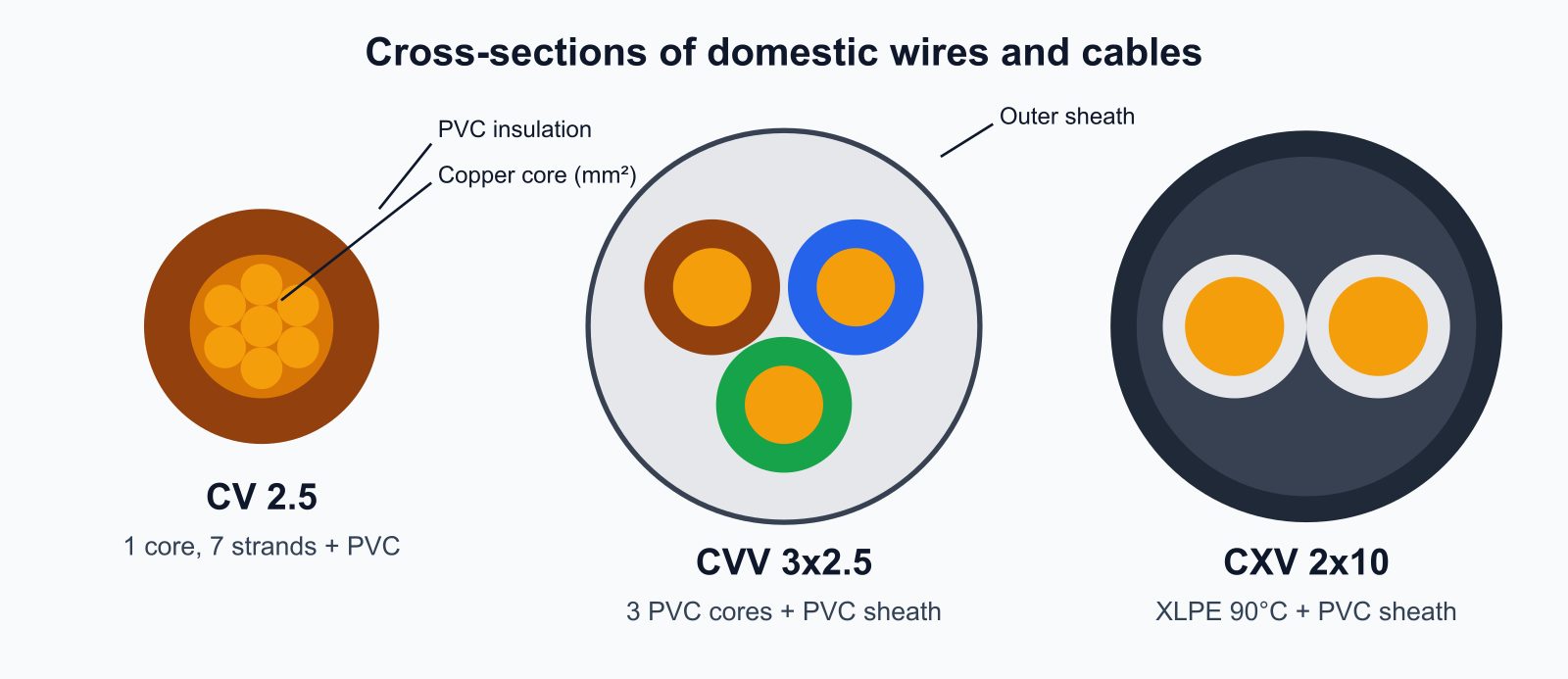
Every low-voltage wire and cable has the same basic layers:
- Conductor: usually copper (Cu), sometimes aluminium (Al) for large outdoor cables. The conductor can be a single solid strand (rigid) or many fine strands twisted together (flexible).
- Insulation: covers each core, usually PVC (polyvinyl chloride, operating temperature 70°C) or XLPE (cross-linked polyethylene, rated for 90°C).
- Protective sheath: multi-core cables, or cables that must withstand mechanical stress, have an extra outer PVC sheath. Underground cables may also have steel armour.
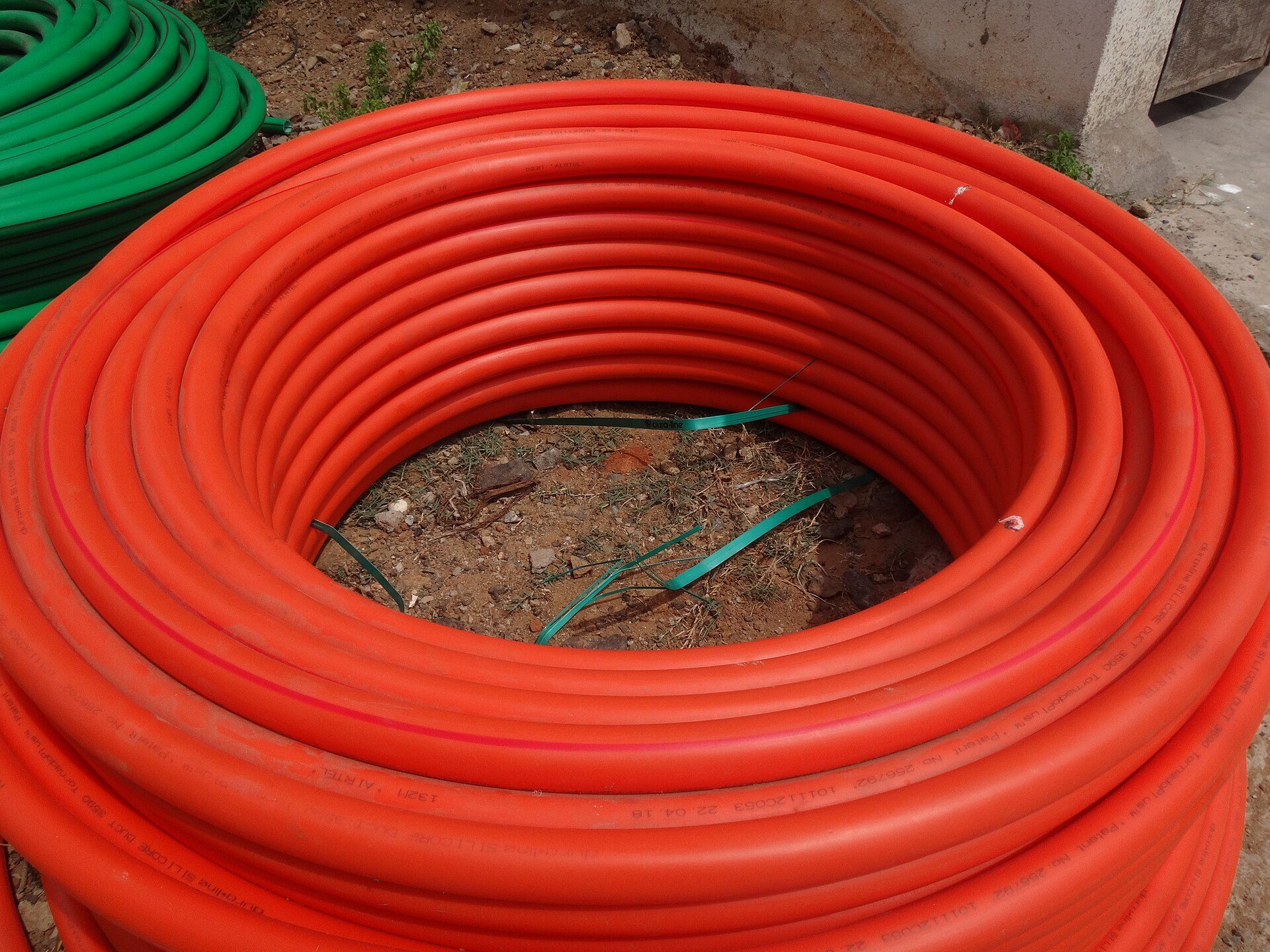
Photo: Gausanchennai / Wikimedia Commons, CC BY-SA 4.0

A wire's cross-section, measured in mm², is the cross-sectional area of the copper, not the diameter of the wire including its insulation. A 2.5 mm² solid wire has a copper diameter of about 1.78 mm. This is the figure that determines how much current the wire can carry.
Reading common wire codes
Vietnamese manufacturers use fairly consistent abbreviations. C usually means copper, V means PVC (vinyl), X means XLPE, m means flexible ("mềm"), d means flat twin ("dẹt"), and o means oval (flat-round).
| Code | Construction | Where it is used | Notes |
|---|---|---|---|
| CV (Cu/PVC) | One stranded copper conductor, PVC insulated | In conduit inside walls, inside distribution boards | The most common type for homes |
| VC | One solid copper conductor, PVC insulated | In conduit, fixed wiring | Stiff, hard to pull through runs with many bends |
| VCmd | Two flexible cores, PVC insulated, flat and joined together | Supply cords for desk lamps and small appliances | Not for running inside walls, not for heavy loads |
| VCmo | Two flexible cores with an oval PVC outer sheath | Extension leads, surface wiring indoors | Has a protective outer sheath |
| CVV | Several copper cores, PVC insulation, PVC sheath | Supply cables to distribution boards and pumps, surface-run or in trunking | Available in 2, 3 and 4 cores |
| CXV | Several copper cores, XLPE insulation, PVC sheath | Main cable from the meter into the house, large cables | Rated for 90°C, carries more current than CVV of the same size |
| DSTA, DATA | Cable with steel or aluminium tape armour | Direct burial underground | Resists rodent damage and impact |
Reading examples: "CXV 2x10 – 0.6/1kV" is a copper cable with XLPE insulation and PVC sheath, 2 cores, 10 mm² each, voltage rating 0.6/1kV. "CV 2.5" is a single PVC-insulated copper wire with a 2.5 mm² cross-section. "VCmd 2x0.75" is a flat twin flexible cord with 2 cores of 0.75 mm² each.
Solid or flexible conductor
Solid wire is easy to clamp into terminals, does not "splay" into loose strands, and is cheaper, but it is stiff, hard to bend, and breaks if it is bent back and forth many times. Stranded wire (CV) is more flexible and easier to pull through conduit, and is the popular choice for homes. Very flexible wire (many fine strands, marked "m") is used for the supply cords of portable appliances and withstands continuous bending.
When connecting stranded wire to a screw terminal or a circuit breaker, you should crimp on a bootlace ferrule so the strands do not splay and are not cut by the screw. The next lesson explains this in detail.
Common cross-sections and current-carrying capacity
The table below gives reference values for PVC-insulated copper wire in conduit inside a wall, at an ambient temperature of about 30°C, one circuit with two loaded conductors, in line with TCVN 9207:2012 and IEC 60364-5-52. Level 2 teaches how to apply correction factors when several circuits share a conduit, when temperatures are high or when runs are long.
| Cross-section | Approximate current capacity | Usual breaker | Typical application |
|---|---|---|---|
| 1.5 mm² | about 17A | 10A | Lighting circuits |
| 2.5 mm² | about 24A | 16–20A | Ordinary socket circuits |
| 4 mm² | about 32A | 25A | Water heaters, large air conditioners, kitchen circuits |
| 6 mm² | about 41A | 32A | Double induction hobs, small riser feeders |
| 10 mm² | about 57A | 40–50A | Main feeder for an apartment or small townhouse |
TCVN 9207:2012 for dwellings and public buildings specifies minimum copper cross-sections for lighting and socket circuits; in everyday practice, electricians use at least 1.5 mm² for lighting and 2.5 mm² for sockets.
Wire colour code
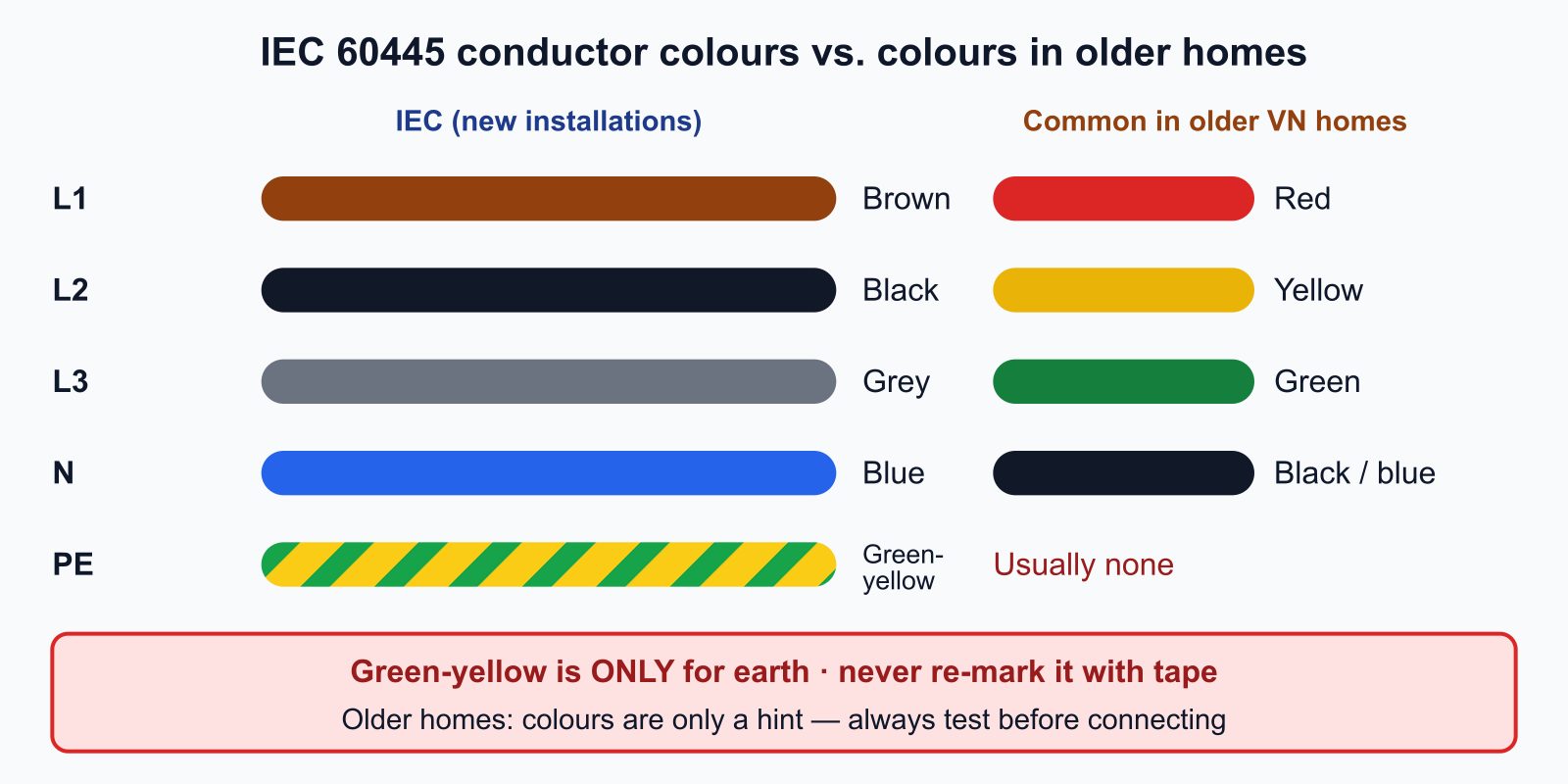
Wire colours let every electrician, including whoever repairs the installation later, know at once what each wire is without having to test everything from scratch. The international standard IEC 60445, adopted in Vietnam through the corresponding TCVN, specifies:
| Conductor | IEC colour | Notes |
|---|---|---|
| Single-phase line (L) | Brown (black or red in many Vietnamese installations) | Single phase: brown or red are commonly used |
| Three-phase L1 – L2 – L3 | Brown – Black – Grey | Many older Vietnamese installations use Red – Yellow – Green |
| Neutral (N) | Blue (light blue) | Older installations often used black |
| Protective earth (PE) | Green-yellow stripes | Only ever used for earth, never for anything else |
| PEN (combined PE and N) | Green-yellow with blue marking at the ends | Found only in TN-C systems, upstream of the separation point |
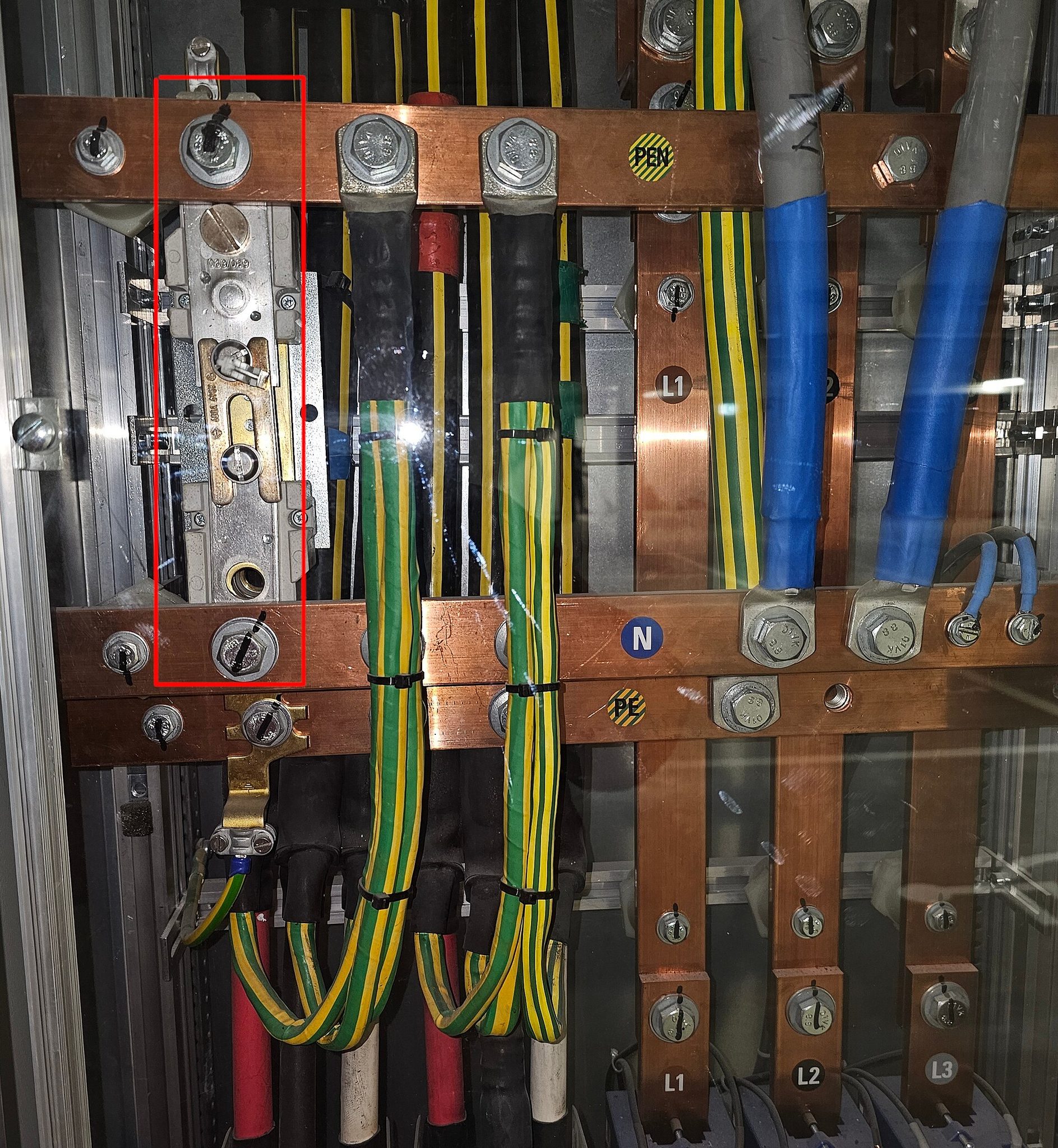
Photo: Audriusa / Wikimedia Commons, CC BY 4.0

The reality in older houses
In a great many older houses in Vietnam, electricians used red for line, black or blue for neutral, had no earth conductor at all, or even used the same colour for both wires. Some houses use green-yellow wire as a line conductor because "there was some left on the reel". So when doing repairs: wire colour is only a hint, measurement is the truth. Always test to identify line, neutral and earth before connecting.
When you have to use a wire of the wrong colour
If only one colour of wire is available, for example a two-core black–red CVV cable on a circuit that needs earth but has too few cores, or a blue wire used as the switched line going to a switch, re-mark it at both ends with coloured tape or coloured heat-shrink sleeving: brown or red for line, blue for neutral. Green-yellow wire, however, must never be taped over to turn it into a line or neutral, and no other wire may ever be marked as green-yellow.
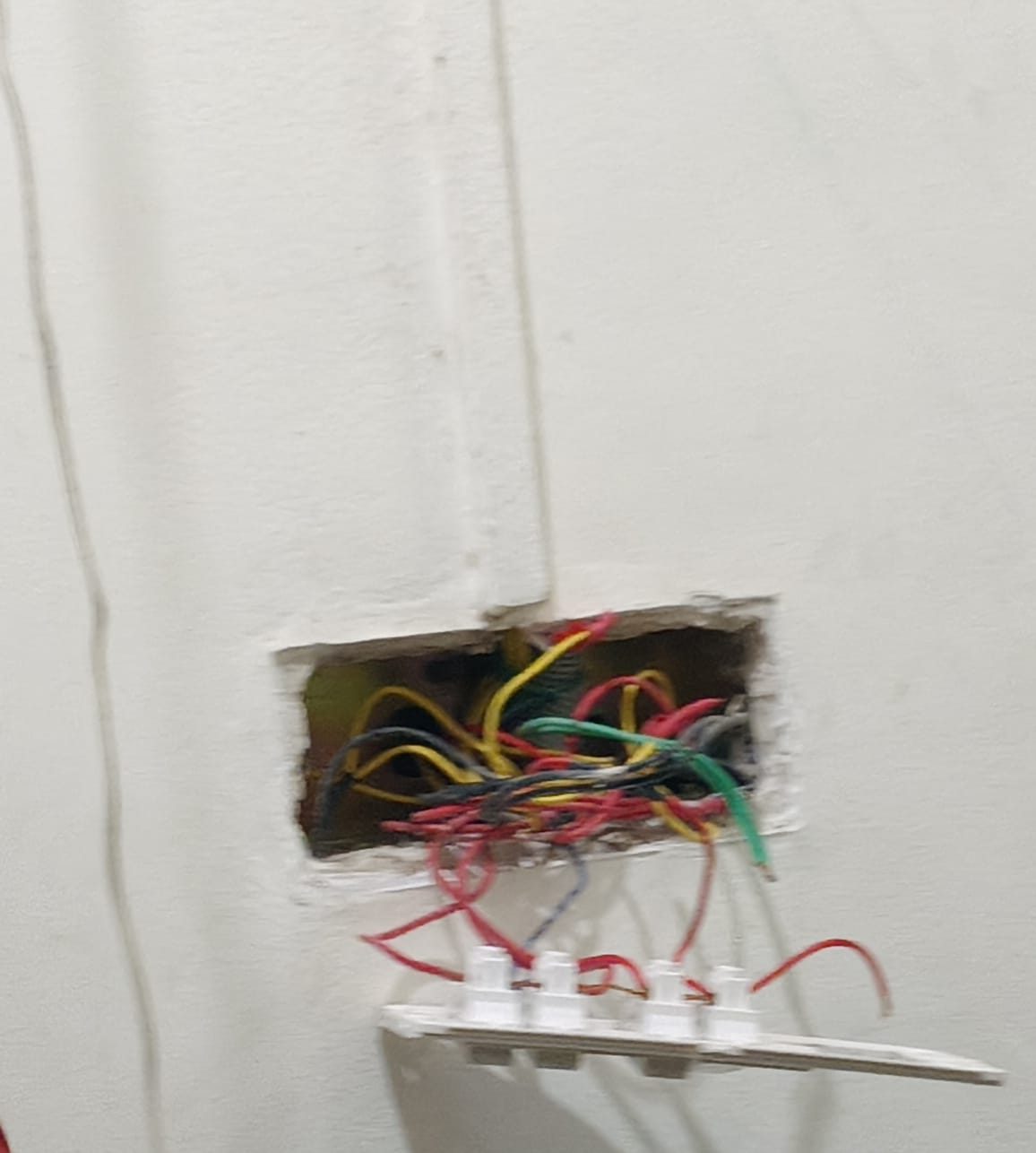
Photo: ShriniwasGajare / Wikimedia Commons, CC BY-SA 4.0

Checking wire quality on site
The market contains poor-quality wire: undersized cross-section, impure copper, thin insulation. A few quick checks:
- Read the printing on the sheath: genuine wire is clearly printed with the manufacturer's name, code, cross-section, voltage rating and standard (TCVN 6610 for PVC wire, TCVN 5935 for XLPE cable), repeated every metre.
- Count the strands and measure the diameter: use a vernier caliper to measure the diameter of a copper strand, count the strands and calculate the cross-section. CV 2.5 mm² wire usually has 7 strands of about 0.67 mm.
- Weigh the reel: a 100 m reel of CV 2.5 mm² wire weighs about 2.8–3 kg. A noticeably lighter reel is short of copper.
- Copper colour: pure copper is a bright orange-red; impure copper or copper-clad aluminium looks pale or silvery when cut.
- Insulation thickness and flexibility: insulation that is too thin, brittle or cracks easily when bent is a sign of poor recycled plastic.
Warning: Undersized wire is a silent cause of many house fires: the breaker is chosen according to the cross-section printed on the label, but the real wire is smaller, so it overheats before the breaker can trip. Buy wire from reputable suppliers, keep the invoice and check the wire before installation.
Receiving and storing wire on site
Wire is an expensive material, and wire whose insulation is damaged before installation is the source of many leakage faults later on. When receiving and storing wire, the helper should:
- Check it on delivery: the reel label (manufacturer, type, cross-section, length, standard) must match the purchase order and the design. Cut off a short test piece, count the strands or measure the conductor diameter to check the real cross-section.
- Store it somewhere dry and covered: sunlight ages PVC insulation and makes it brittle; rain gets moisture into the wire ends.
- Never drag a reel across concrete or steel: the insulation gets scratched and thinned in places you cannot see.
- Unreel it properly: put the reel on a spindle or roll it to pay out the wire; do not pull wire from the middle of the coil, because it twists, kinks and breaks.
- Seal the ends of unconnected wires with tape to keep out moisture and mortar dust.
- Record the amount of wire used for each circuit: these figures help the lead electrician prepare accurate estimates for the next job (Level 4).
Common mistakes
| Mistake | Consequence | Correct practice |
|---|---|---|
| Running VCmd flat twin cord inside walls | Thin insulation, overheating, hard to replace, risk of short circuit | Use CV wire in conduit |
| Using green-yellow wire as a line conductor | The next person assumes it is earth, touches it and gets a shock | Green-yellow is only for PE |
| Confusing diameter with cross-section | Buying wire smaller than required | Read the mm² marking on the sheath |
| Trusting wire colours in an old house | Line and neutral connected the wrong way round | Test before connecting |
| Connecting stranded wire to a screw without a ferrule | Splayed strands, loose connection, overheating | Crimp on a bootlace ferrule |
Pass criteria for this lesson
- Correctly read out the full name of 6 types of wire given by the lead electrician (for example CV 4, CVV 3x2.5, CXV 2x16, VCmd 2x1.5, VCmo 2x2.5, VC 1.5).
- Choose the right type of wire for 5 locations: a concealed lighting circuit, a socket circuit, the supply cord of a standing fan, the cable from the meter into the house, and an underground cable out to the gate.
- State the correct IEC colours for L1, L2, L3, N and PE, and the rule for green-yellow wire.
- Check a sample of CV 2.5 mm² wire: read the printing, count the strands, measure the strand diameter and conclude whether it passes or not.
- Correctly re-mark the colour at both ends of a wrong-coloured wire.
Frequently asked questions
Can aluminium wire be used inside a house?
Aluminium conducts less well than copper and needs about 1.6 times the cross-section for the same current; aluminium connections oxidise easily and loosen over time, and when joined to copper they suffer galvanic corrosion. In homes, use copper wire. Aluminium cable is normally found only on the utility's distribution lines.
Does every socket need its own earth wire?
Every socket circuit needs a PE conductor running together with the line and neutral to each socket, connected back to the earth bar in the distribution board. The lesson on sockets and earthing at the end of Level 1 covers this in detail.
Which is better, CV or VC wire?
Neither is better in absolute terms. Solid VC is cheap and easy to terminate; stranded CV is flexible, easier to pull through conduit and copes better with vibration. CV is the most common choice in homes today.
Further reading
Details on choosing cross-sections by load and the matching breakers: Choosing wire sizes and circuit breakers.