Saturday afternoon, a woman in her thirties is given a mask the spa has just started stocking. Five minutes later she complains of burning; the trainee therapist thinks "it must be sensitive skin" and applies more soothing cream on top. Ten minutes later the client's eyelids are swelling and her voice is hoarse. Luckily the shift supervisor walks past, recognises the signs of a severe reaction and calls 115 (the Vietnamese emergency number). Most incidents in a spa are minor, so therapists easily underestimate them; a few minutes of hesitation can turn a small problem into an emergency. This lesson teaches you to tell mild from severe and to do the right thing in the first few minutes.
By the end of this lesson, you will be able to:
- Distinguish skin irritation from contact allergy by the time of onset, the location and how it develops.
- Carry out a patch test correctly: site, amount, reading times, how to instruct the client and how to record it.
- Give first aid for a thermal burn with cool water for the full 20 minutes, and know when a burn needs medical attention.
- Rinse the eye when a product or chemical splashes into it, for the right length of time and in the right position.
- Manage a client who feels faint, faints, has low blood sugar, or whose blood pressure drops on sitting up after steam.
- Recognise the signs of anaphylaxis and call 115 immediately, without waiting.
- Write an incident report with complete information and check the room's first-aid cabinet.
Professional boundary: The therapist gives first aid, not medical treatment. You do not diagnose, and you do not give the client your own or the spa's medicines, including antihistamines. Examination, diagnosis and prescribing belong to licensed medical facilities (Law on Medical Examination and Treatment No. 15/2023/QH15). Your job: remove the hazard, give safe first aid, call the right person, and record everything fully.
Irritation and allergy: two different reactions
When a client says "I'm allergic to this product", it is usually irritation. Being able to tell them apart helps you know how to handle it and what to advise the client for next time.
Irritant contact dermatitis is direct damage to the skin because a product is too strong for the skin at that moment: high-concentration exfoliating acids, alcohol, undiluted essential oils, hard scrubbing, leaving products on too long, steam that is too hot. Anyone can be affected if the dose is strong enough; skin that has just been exfoliated, shaved, sunburnt or is being treated with retinoids tolerates far less.
Allergic contact dermatitis is when that person's own immune system has "memorised" a substance (fragrance, preservative, dye, natural rubber latex in gloves) and reacts every time it meets it again, even in very small amounts. The reaction usually comes late, after one to three days.
The third type is rare but the most dangerous: an immediate whole-body allergic reaction, arriving within minutes, which can become anaphylaxis. That is why the health form always asks about any history of severe allergy to food, medicines, insect stings or latex.
| Feature | Irritant contact reaction | Allergic contact reaction | Immediate reaction, suspected anaphylaxis |
|---|---|---|---|
| Onset | A few minutes to a few hours | Usually after 24–72 hours | A few minutes to about 2 hours |
| Sensation | Burning, stinging, tightness | Intense itching | Itching, flushing, feeling unwell all over |
| Location | Exactly where the product was applied, clear edges | Application area, may spread around it | Spreads all over the body; swollen lips and eyelids |
| Who is affected | Anyone, if the product is strong enough | Only people already sensitised to that substance | Only sensitised people; may get worse each time |
| The therapist's job | Stop, rinse off, apply cool compresses, record | Record, advise the client to see a dermatologist | Call 115 immediately, monitor closely |
An easy rule to remember: look beyond the area you are working on. Redness and burning exactly where the product went is a skin matter; additional symptoms at the lips, eyes, throat or breathing make it a whole-body matter.
Patch testing done properly
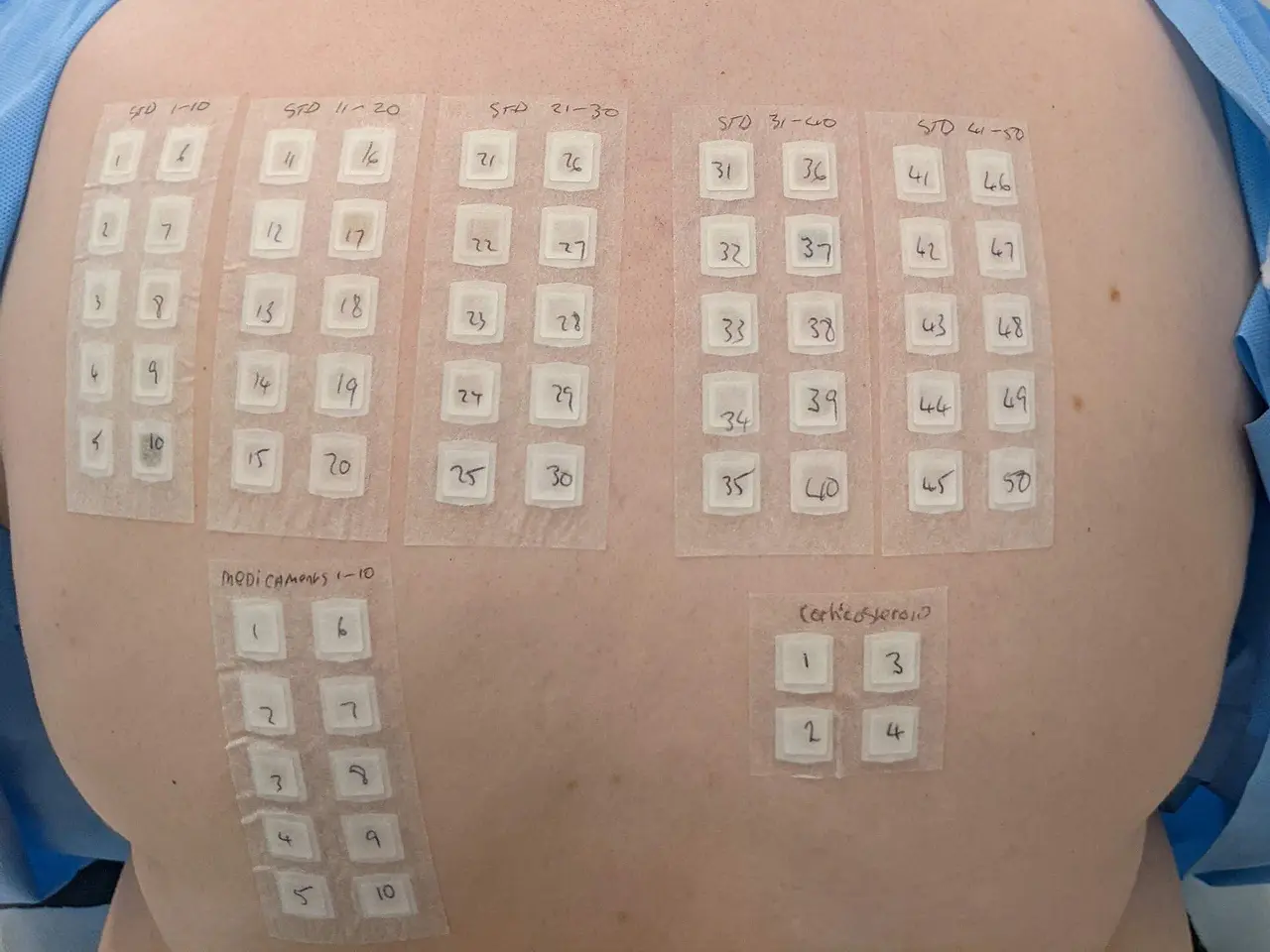
A patch test means applying a small amount of product to a small, discreet area of skin and observing it before using it on the whole face or body. "Patch testing" with a standard series of patches to find the allergen is a medical test carried out in a dermatology clinic; the spa only tests the actual product that will be used.
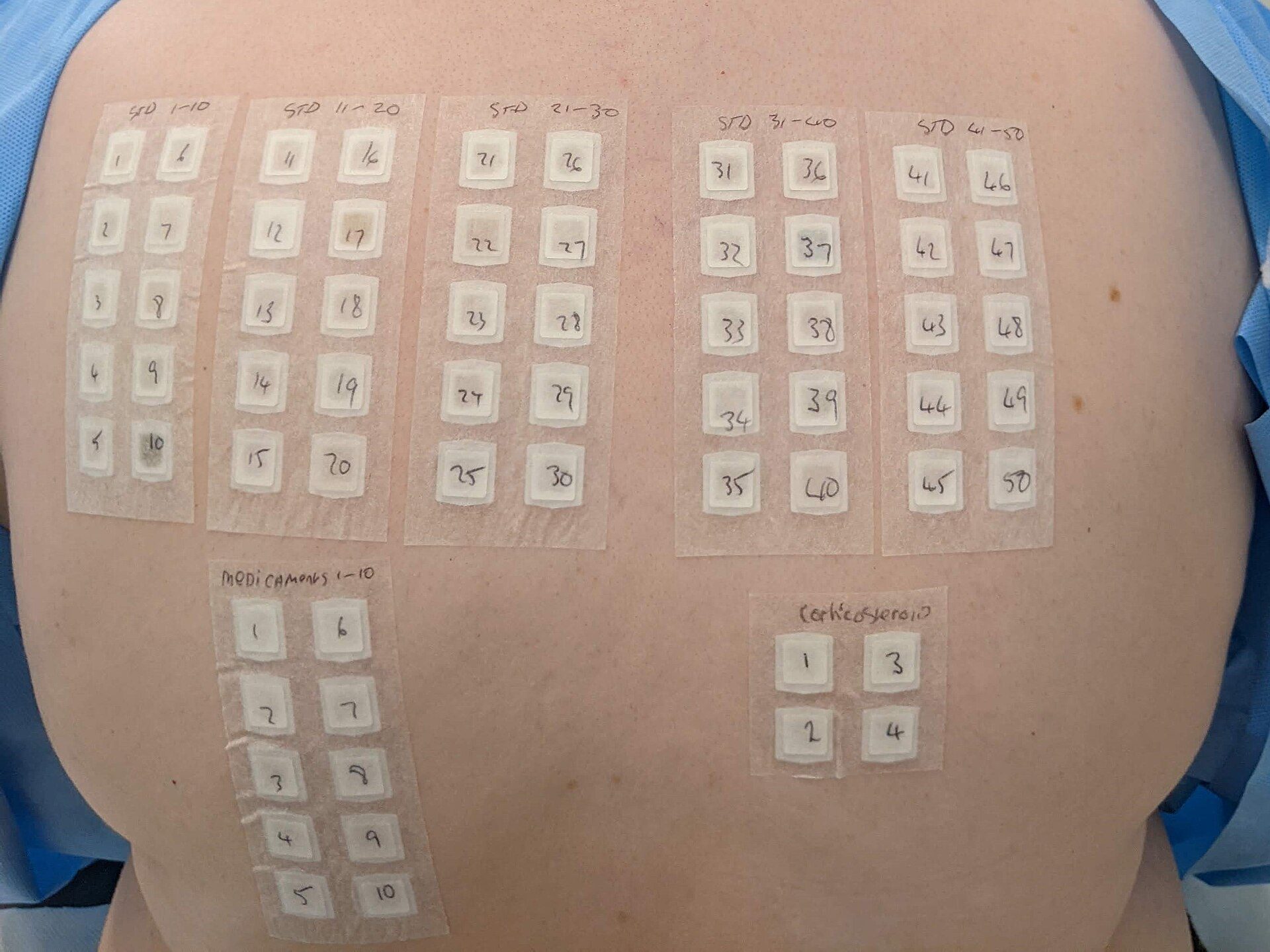
Photo: Smirkybec / Wikimedia Commons, CC BY 4.0

When a test is needed
When a client is using a product with strong active ingredients, essential oils or fragrance for the first time; when the client has a history of cosmetic allergy, eczema or sensitive skin; when the manufacturer states that a test is required (hair dye, lash and brow tint, eyelash-extension adhesive); when a product's formula or supplier changes.
Patch test steps
- Re-check the history on the form: what the allergy is, how they reacted, current medication. If the client has ever had anaphylaxis, tell the manager before doing anything.
- Choose the site: the inner forearm (near the elbow) or behind the ear; intact skin, not freshly shaved.
- Cleanse the test site with water and pat dry; do not wipe with alcohol, because alcohol itself causes stinging.
- Apply a small amount, about the size of a pea, over an area about the size of a coin, in exactly the form that will be used (mixed, if it will be mixed during the treatment), taken out with a clean spatula.
- Record it: product name, batch number, site, time applied, who applied it.
- First reading after about 30 minutes while the client is still at the spa: burning, redness, a rash or itching at the site is an immediate reaction; rinse it off and do not use the product.
- Ask the client to monitor it themselves for up to 48 hours (or the time stated by the manufacturer): do not wash the test site unless it burns or itches; if it becomes red, itchy or swollen, rinse it off with water, take a photo and inform the spa.
- Record the result before the treatment: if negative, carry out the treatment but still monitor closely during the first session; if positive, change the product and write "do not use" clearly on the card.
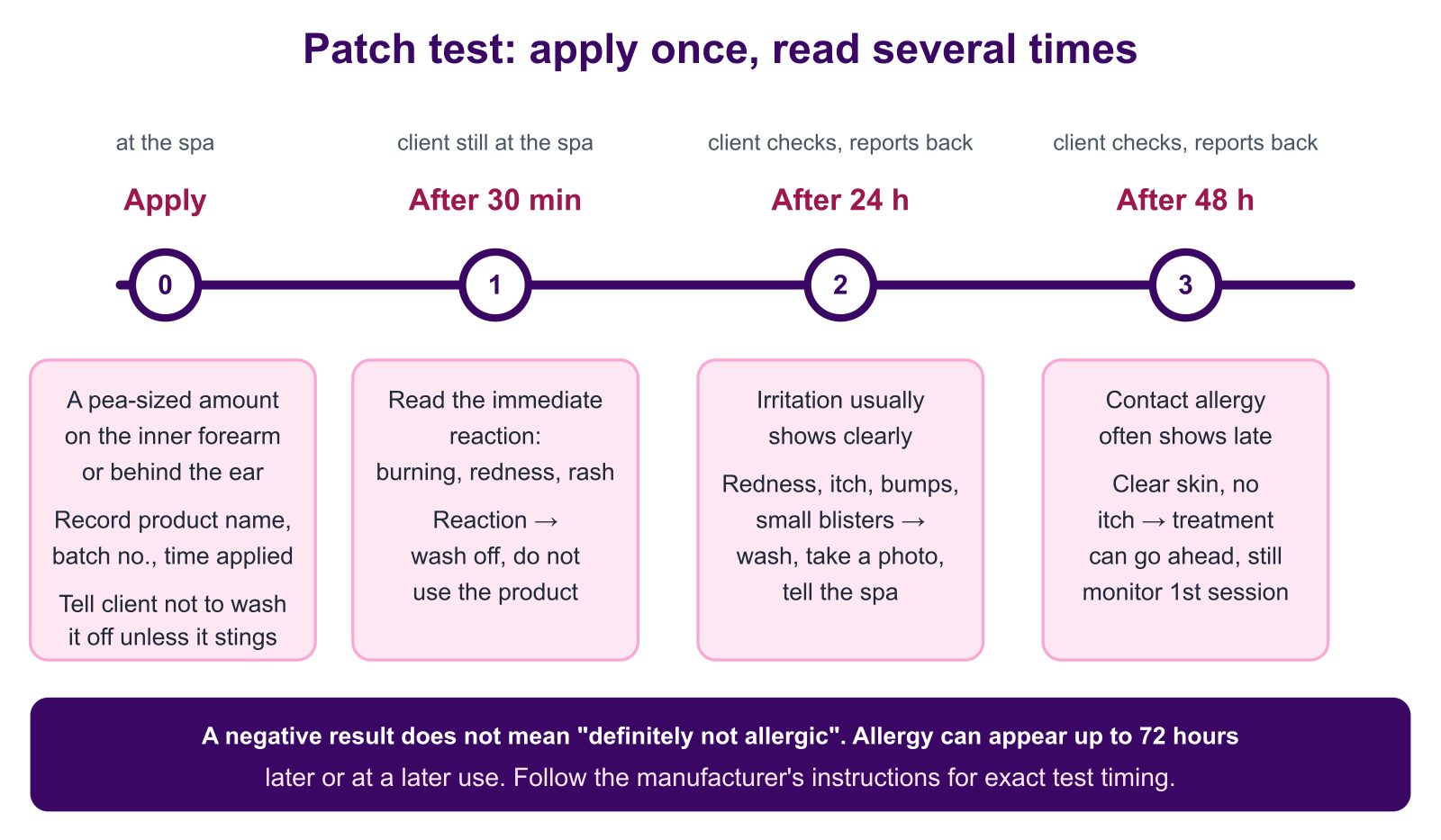
Limitations: a negative result only says "this time, in this area, no reaction has been seen". Facial skin, especially around the eyes, is thinner than the forearm; freshly exfoliated skin reacts more strongly; and an allergy can develop after many uses. In the first session, keep asking the client how it feels and be ready to rinse off immediately.
When the client's skin reacts during the session
- Stop the step you are doing and tell the client calmly: "I'm going to stop and check your skin."
- Rinse off the product with plenty of cool, clean water; with clay masks and peel-off (modelling) masks, gently remove them first and then rinse. Do not rub.
- Look beyond the skin area: ask the client whether they have difficulty breathing, a tight throat or dizziness; look at the lips and eyelids. If there are any whole-body signs, move immediately to the anaphylaxis section below.
- If there is only local redness and burning: apply a clean cool towel for 10–15 minutes, and do not apply any further product, including "soothing" creams.
- Tell the shift supervisor, and complete the record card and the incident report: product, batch number, skin area, time, signs, action taken. Photograph the skin area if the client agrees.
- Advise the client: no make-up and no active ingredients until the redness has gone; if redness and burning do not ease after a few hours, blisters form, or swelling increases, see a dermatologist and take the product name along.
Anaphylaxis: recognise it early and call 115 immediately
Anaphylaxis is a severe, whole-body allergic reaction that develops very rapidly and can block the airway or cause blood pressure to collapse. In the spa, the cause may be cosmetics, essential oils, latex gloves, snacks offered to the client (nuts, honey) or medication the client has just taken.
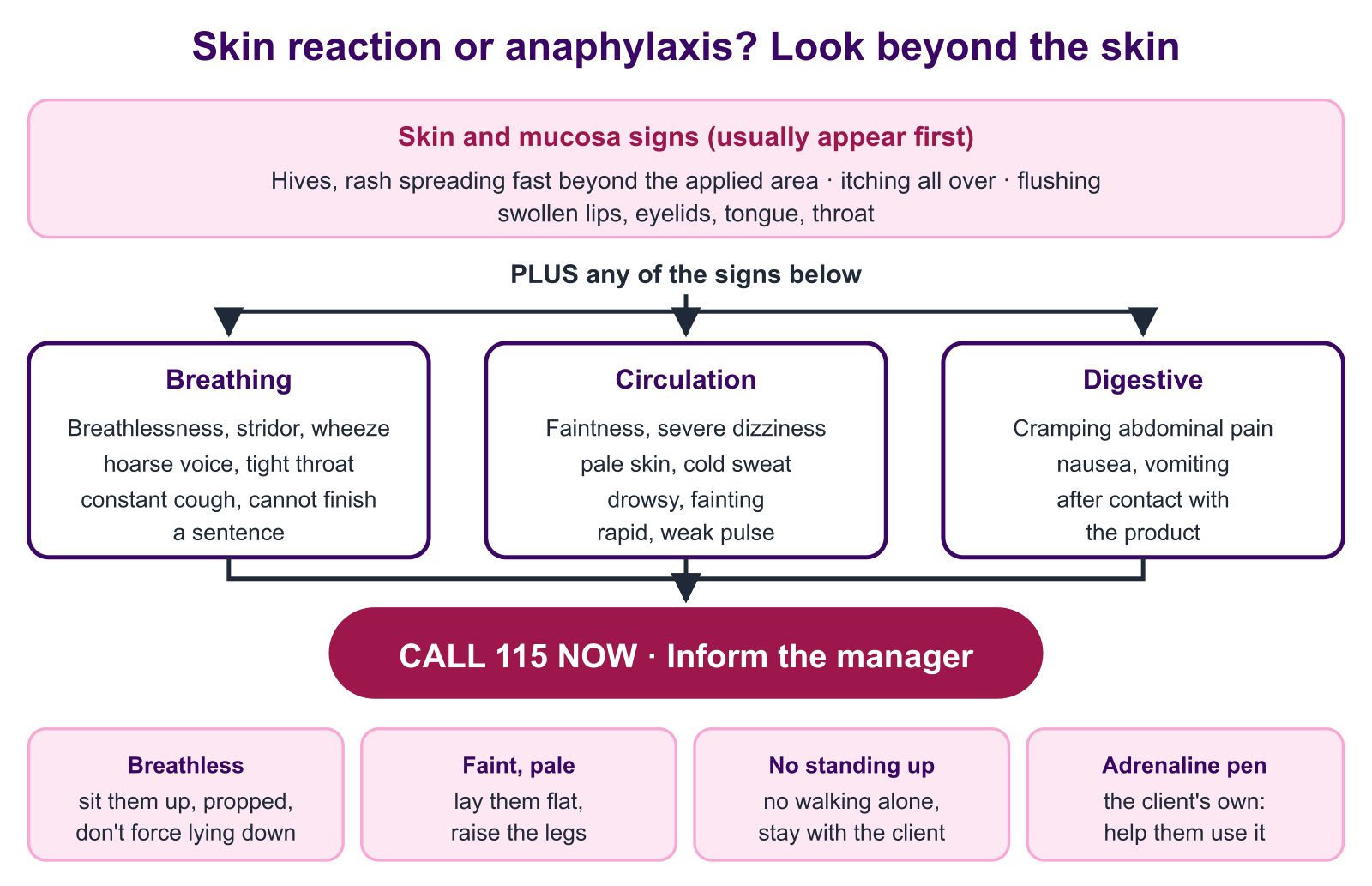
What to do, in order
- Stop all treatment and remove the product in contact with the skin (rinse off the mask, remove latex gloves if they are suspected).
- Call 115 immediately, or ask a colleague to call while you stay with the client. State clearly: the spa's address, "suspected anaphylaxis", the client's age and the current signs. Do not take the client to hospital yourself on a motorbike.
- Tell the manager, and send someone to the door to meet the ambulance.
- Position the client: if breathless, sit them up supported; if faint, pale or drowsy, lay them flat with legs raised; a pregnant client lies on her left side. Do not let the client stand up or walk to the toilet by themselves, because a sudden change of position can make the drop in blood pressure worse.
- If the client has an adrenaline auto-injector prescribed by a doctor for them personally: help the client take out the pen and use it according to the instructions printed on it, or as directed by the 115 operator. The spa does not stock or inject medication for clients.
- Monitor continuously until the ambulance crew arrives: whether the client is alert or drowsy, and how they are breathing. If the client is unresponsive, not breathing or breathing abnormally, follow the 115 operator's instructions (chest compressions if you have been trained).
Do not wait to "see if it gets better". Anaphylaxis can appear to improve and then become severe again a few hours later, so the client still needs to be assessed by medical staff.
Thermal burns: cool water for the full 20 minutes
Burns in the spa come from hot towels not wrung out enough, hot stones left still in one spot, wax that is too hot, sudden hot water during hair washing, or a steamer placed too close. Prevention: test the temperature on the inside of your own wrist first, and ask the client after a few seconds. Clients with diabetes, older clients, numb areas of skin and freshly exfoliated skin sense heat poorly and burn more easily.
The most important action is to cool the burn under gently running cool water for 20 minutes. The skin continues to "cook" after the heat source is removed; cool water draws out the heat, reduces the depth of the burn and reduces pain. The client usually stops feeling the burning after a few minutes, but stopping early wastes the benefit. Starting late, within the first few hours, is still helpful.
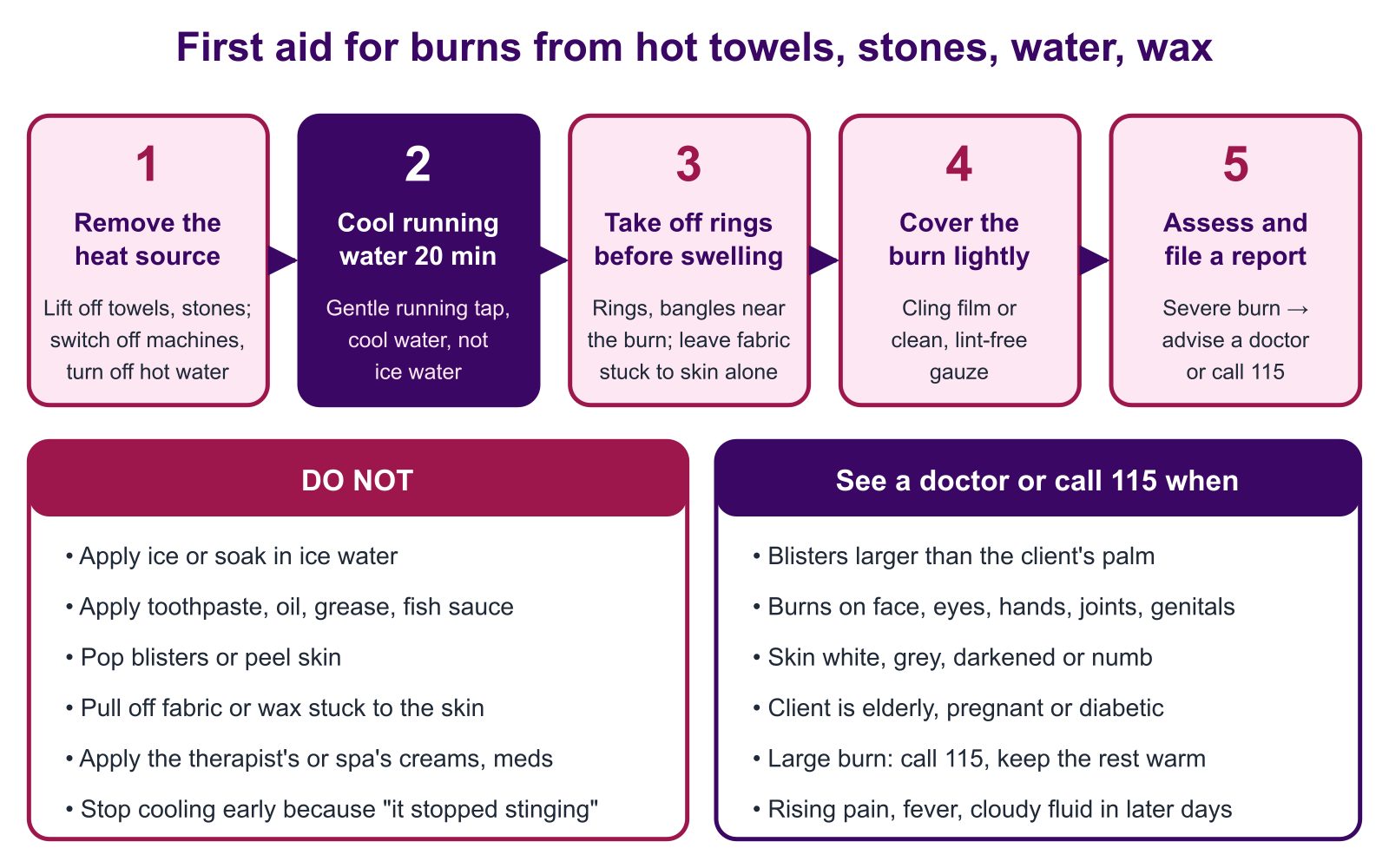
- Remove the heat source: lift off the towel or stone; switch off the machine; turn off the hot water.
- Run cool water (ordinary tap water) gently over the burn for 20 minutes. On the face, if you cannot run water over it, use clean towels soaked in cool water, changing them continuously. Do not use ice water or ice packs: excessive cold constricts the blood vessels and causes further damage.
- Remove rings and bracelets near the burn before it swells. Leave any fabric or wax that is stuck firmly to the skin in place; do not pull it off.
- Cover loosely with cling film laid on lightly (not wrapped tightly) or clean, lint-free gauze. Do not apply toothpaste, oil, grease, fish sauce, egg white or the spa's creams; do not burst blisters.
- Assess: if it is only red, small and not blistered, monitor it and advise keeping it clean. Blisters larger than the client's palm, burns on the face, hands, joints or genital area, or skin that is white or has lost sensation: advise seeing a doctor immediately; for extensive burns, call 115 and keep the rest of the body warm.
Products or chemicals splashed into the eye
Masks, cleansers, exfoliating solutions, lash tint and disinfectant chemicals can all get into the eye. The principle is to rinse immediately, rinse a lot, rinse for a long time: rinse with gently running clean water for at least 15–20 minutes, longer if the product label says the substance is corrosive.
- Tell the client not to rub the eye; remove contact lenses if they come out easily.
- Have the client tilt their head towards the affected eye so that the water runs from the inner corner to the outer corner of the eye, and not across into the unaffected eye.
- Use a clean finger to hold the eyelids gently open, and ask the client to roll their eye up, down and to both sides while you rinse.
- Use gently running clean tap water or sterile saline; do not add anything, and do not put in other eye drops.
- After rinsing: if the eye is still painful, red, blurred or sensitive to light, or the substance was a disinfectant, acid or alkali, take the client for an eye examination immediately, bringing the product bottle or a photo of the label so that the doctor knows its ingredients.
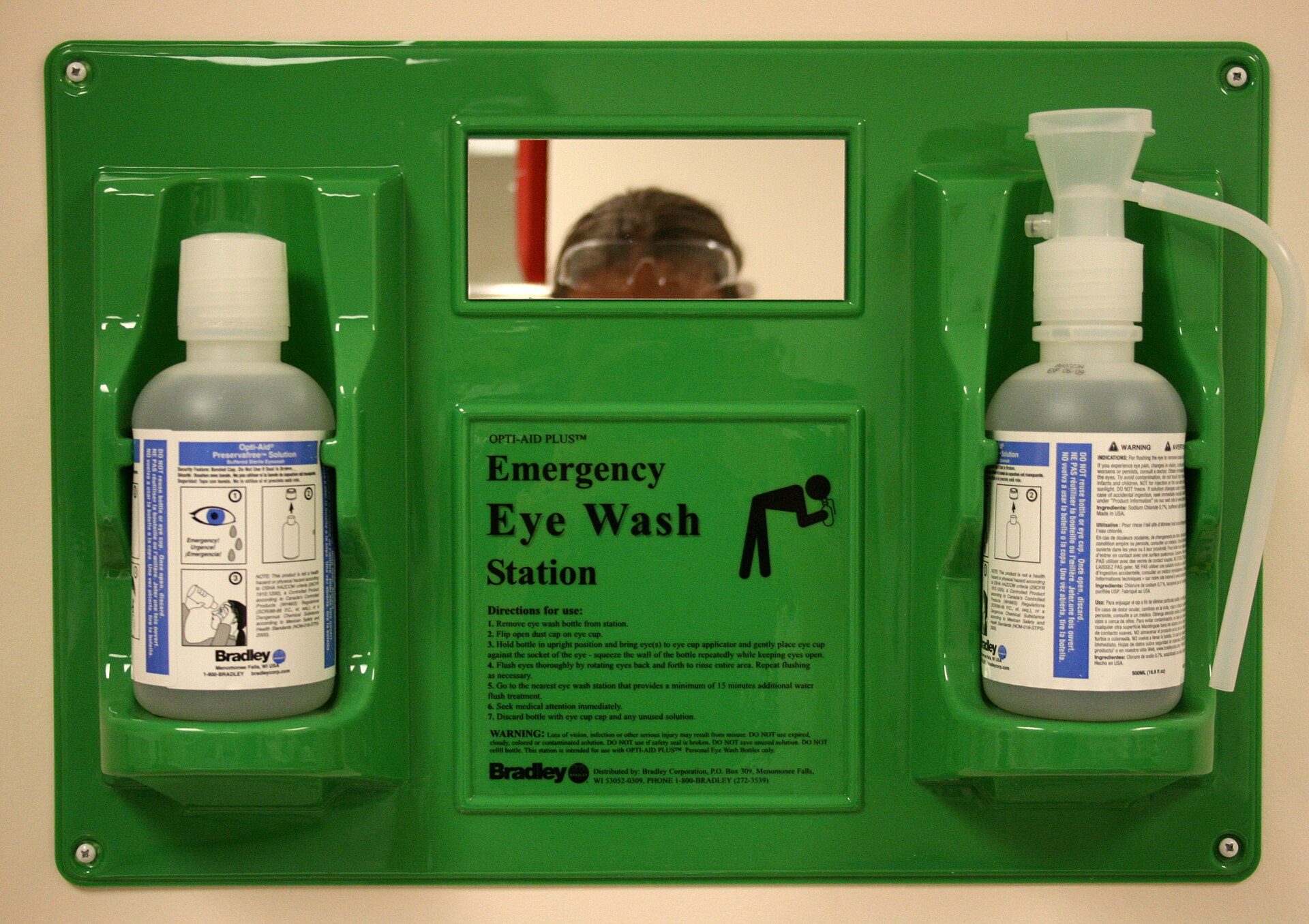
Photo: Ildar Sagdejev ( Specious ) / Wikimedia Commons, CC BY-SA 3.0

A therapist who gets chemicals splashed into their own eye while mixing solutions does the same as above and calls a colleague for help; wear safety glasses when mixing concentrated chemicals to prevent this in the first place.
Feeling faint, fainting, low blood sugar and blood pressure drops after steam
Steam, hot baths and hot stones dilate the blood vessels in the skin, and the client sweats and loses fluid. After lying down for a long time and sitting up quickly, the blood does not reach the brain fast enough and blood pressure drops on changing position: the client sees spots, everything goes dark, they feel sick, and sometimes they faint. A client who has not eaten also risks low blood sugar: trembling hands, sweating, gnawing hunger, drowsiness.
Prevention
- Ask whether the client has eaten; if they are hungry, offer a light snack before steam (after asking about food allergies).
- Steam time and temperature follow the spa's policy and the machine manufacturer's instructions; for first-time, older and low-blood-pressure clients, keep it shorter and milder. Offer water after steam.
- Help the client up in stages: roll onto their side, push up with their arms to sit, sit on the edge of the couch for 1–2 minutes with feet on the floor, ask whether they feel dizzy, and only then stand. The therapist stands beside them, hands ready to support.
When the client feels faint or faints
- If the client feels faint while sitting or standing: have them lie down immediately in a safe place, supporting them so that they do not fall and hit their head.
- Lay them flat with legs raised about 30 cm on a pillow or rolled towel; loosen the robe or wrap; ventilate the room and switch off the steamer.
- A person who faints usually comes round within a few dozen seconds once lying down. If the client does not come round after about one minute, or has chest pain, difficulty breathing, convulsions, a drooping mouth, weakness on one side, or hit their head when falling: call 115.
- If the client is unresponsive but breathing normally: place them in the recovery position (on their side, with an arm and leg as supports, head tilted slightly back to keep the airway open) and call 115. If unresponsive and not breathing, or only gasping: call 115 and follow the operator's instructions.
- If the client is alert, can talk and swallow, and low blood sugar is suspected (has not eaten, has diabetes, is trembling, sweating): give half a glass of fruit juice or sugary water, or a few sweets; if they are not better after about 15 minutes, call 115. Never give food or drink to a person who is drowsy or unresponsive, as they may choke.
- Once the client has recovered: let them lie for another 10–15 minutes, sit up in stages, and do not let the client drive home straight away.
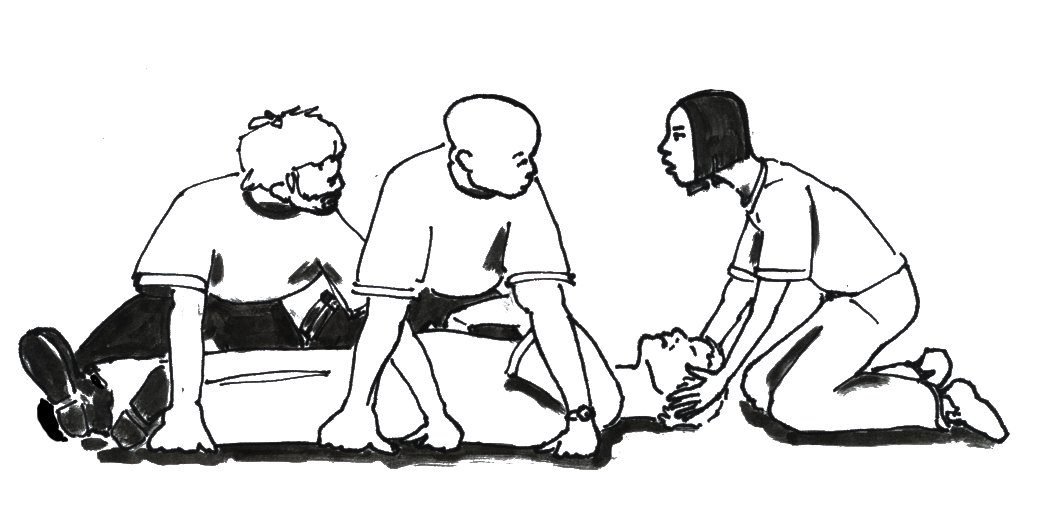
Photo: Image created by Rama / Wikimedia Commons, CC BY-SA 3.0 fr

Writing an incident report
Every incident, however minor, is recorded on the report form during the same shift. The report is not for blaming anyone: it helps the spa identify products, machines or procedures that cause repeated incidents, helps the doctor if the client seeks medical care, and protects you if there is a complaint.
| Item | What to record | Example |
|---|---|---|
| Time and place | Date, hour and minute, room | 14:25, room 3 |
| Client | Name, record number; relevant history on the form | Form says "sensitive skin, no previous allergies" |
| Service and product | Step in progress, product name, batch number, equipment | Clay mask, batch printed on the base of the tub |
| Course of events | Signs the client reported and you saw, in time order | 14:20 burning on left cheek; 14:25 both cheeks red, no lip swelling |
| Action taken | Each first-aid step, the time and who did it | Rinsed with cool water, cool compress 15 minutes, told shift supervisor 14:27 |
| Outcome and referral | Condition when the client left the spa; whether 115 was called or a medical check advised | 15:00 redness reduced, advised dermatology check if it does not clear |
| Signatures | Therapist, shift supervisor; client if they agree |
Record what you could see ("both cheeks red, no lip swelling"), not conclusions ("mild allergy"). Do not promise compensation yourself or say "it's the product's fault"; that is for the manager to deal with. The next day, call to ask how the client is, and add the outcome to the report.
The spa's first-aid cabinet
The first-aid cabinet is kept somewhere every member of staff knows, is not locked during the shift, has a contents list stuck on the door, and has a named person who checks it every month.
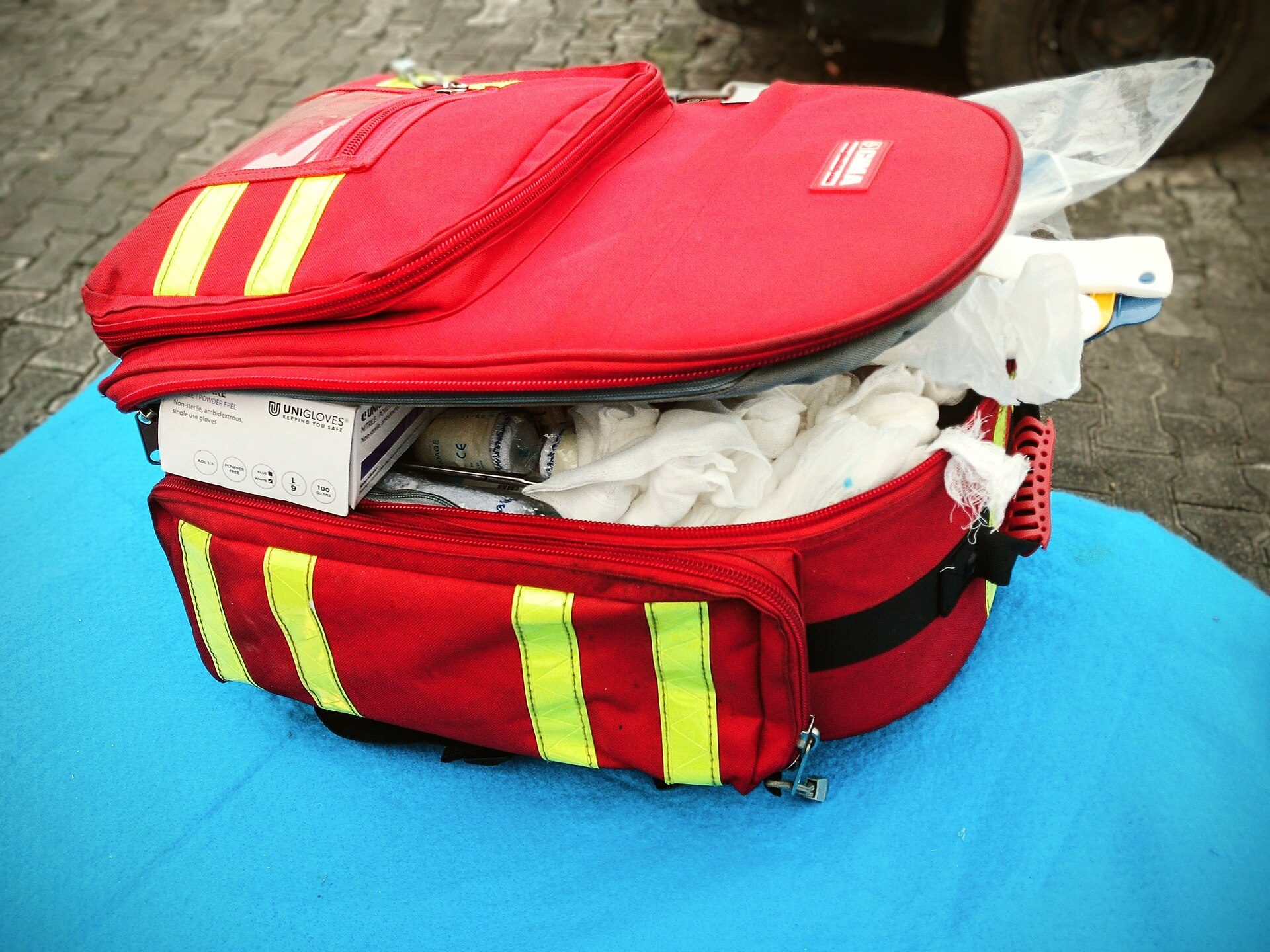
Photo: ABORISADEADETONA / Wikimedia Commons, CC0

| Group | Minimum supplies | Used for |
|---|---|---|
| Wounds and burns | Sterile gauze in several sizes, roller bandages, medical tape, cling film, blunt-ended scissors | Covering a burn after cooling, scratches, cuts |
| Rinsing | Bottles of sterile saline, a clean eye-wash cup or bottle | Products or chemicals in the eye, rinsing wounds |
| Protection | Latex-free (nitrile) gloves, face masks, bags for blood-contaminated waste | Contact with blood, body fluid, vomit |
| Support | Cold packs (wrapped in a towel when used), a thin blanket, sugar or sweets, drinking water | Knocks and bumps, keeping the client warm, low blood sugar while the client is still alert |
| Information | The number 115, the manager's number and the spa's address written out; incident report forms; a pen | Calling for emergency help quickly, recording incidents immediately |
Do not keep prescription medicines in the cabinet for clients to use; staff personal medicines are kept separately. Restock used items immediately, and write the date of each check on the sheet on the cabinet door.
Common mistakes
| Mistake | Why it is dangerous or wrong | The right way |
|---|---|---|
| Client feels burning; you apply soothing cream and carry on | Irritated skin receives yet another substance; it masks signs that are getting worse | Stop, rinse off with cool water, apply a cool compress, apply nothing else |
| Giving the client your own antihistamine | Not the therapist's job; the client may be allergic, have drug interactions, or the signs of anaphylaxis may be masked | Give first aid, call 115 if there are severe signs, advise seeing a doctor |
| Waiting to "see if it gets better" when the client's lips swell or voice goes hoarse | Anaphylaxis progresses within minutes and can block the airway | Call 115 immediately, position the client, stay with them |
| Patch testing for 5 minutes and then treating the whole face | Does not catch delayed reactions at 24–72 hours | Test before the treatment session, read at 30 minutes and monitor for 48 hours |
| Putting ice on a burn, or running water for only 2–3 minutes | Ice causes further damage; a short rinse does not draw out enough heat | Gently running cool water for the full 20 minutes |
| Helping the client stand up straight after steam | Blood pressure drops on changing position; the client faints and falls | Sit on the edge of the couch for 1–2 minutes, ask about dizziness, stand beside to support |
| Giving sugary water to a drowsy client | May be inhaled into the airway | Only give food or drink when the client is alert and can swallow |
Pass criteria for this lesson
The instructor assesses you with questions and role-play scenarios. You pass when you:
- State 3 correct differences between irritant and allergic contact reactions (timing, sensation, who is affected).
- Carry out a patch test on a classmate's forearm with all 8/8 steps, recording product name, batch number, site and time; and correctly instruct the client on the 30-minute and 48-hour checkpoints.
- Name the signs of suspected anaphylaxis in all 4 groups (skin and mucosa, respiratory, circulatory, digestive) and, in a sample scenario, call 115 within 1 minute, giving the address, the signs and the client's age.
- Simulated burn first aid: run cool water for the full 20 minutes (timed by the instructor), remove jewellery, cover loosely with cling film; name all 4 situations that need medical attention.
- Simulated eye rinsing: head tilted to the correct side, water running from the inner corner to the outer corner, and correctly state the time of at least 15–20 minutes.
- Help a client up after steam in all 3 stages (roll to the side, sit on the edge of the couch for 1–2 minutes, stand with support); manage a faint client: lie them down, raise the legs about 30 cm, and state correctly when to call 115.
- Write a sample incident report with all 7 items within 10 minutes; check the first-aid cabinet against the list and point out any missing or expired items.
Frequently asked questions
The client has used this product many times before; do they still need a test?
An allergy can develop after many uses, and formulas can change. If the manufacturer requires a test every time (common with dyes), follow the label. With ordinary products, ask at every session whether there was any itching or redness last time; if there was, test again or change the product.
Does a product labelled "natural, gentle" need testing?
Yes. Essential oils, plant extracts, honey and nuts are common allergens. Cosmetics legally on the market must have a product notification receipt under Circular 06/2011/TT-BYT on cosmetics management, but that notification does not replace testing on the client's skin.
Should a therapist take a first-aid course?
Very much so. Chest compressions, the recovery position and dealing with choking only become second nature when practised on a manikin with an instructor. Ask your manager about basic first-aid courses run by the Red Cross Society or a hospital.
Further reading
Three situations covering allergy, dizziness and complaints, and the green – amber – red levels, are in Spa safety and service skills check. How to ask about allergy history on the form is in Spa client consultation and the health form.