The client sits down and says straight away: "My skin is oily, give me an oil-control treatment". Ten minutes into the skin analysis, you see that the client's cheeks feel tight, have tiny flakes and turn slightly red when touched, while the T-zone is shiny. If you had taken the client at their word, you would have chosen a strong oil-stripping cleanser and a clay mask, and the next day the client would come back with red, burning cheeks. Correct skin analysis is the step that decides the whole facial, and it is the skill that separates a senior therapist from a trainee.
At Level 1 you learned skin structure and the foundation facial routine. This lesson teaches you to look, touch, ask and record systematically, so that every client has a skin analysis form that can be used in later sessions.
By the end of this lesson, you will be able to:
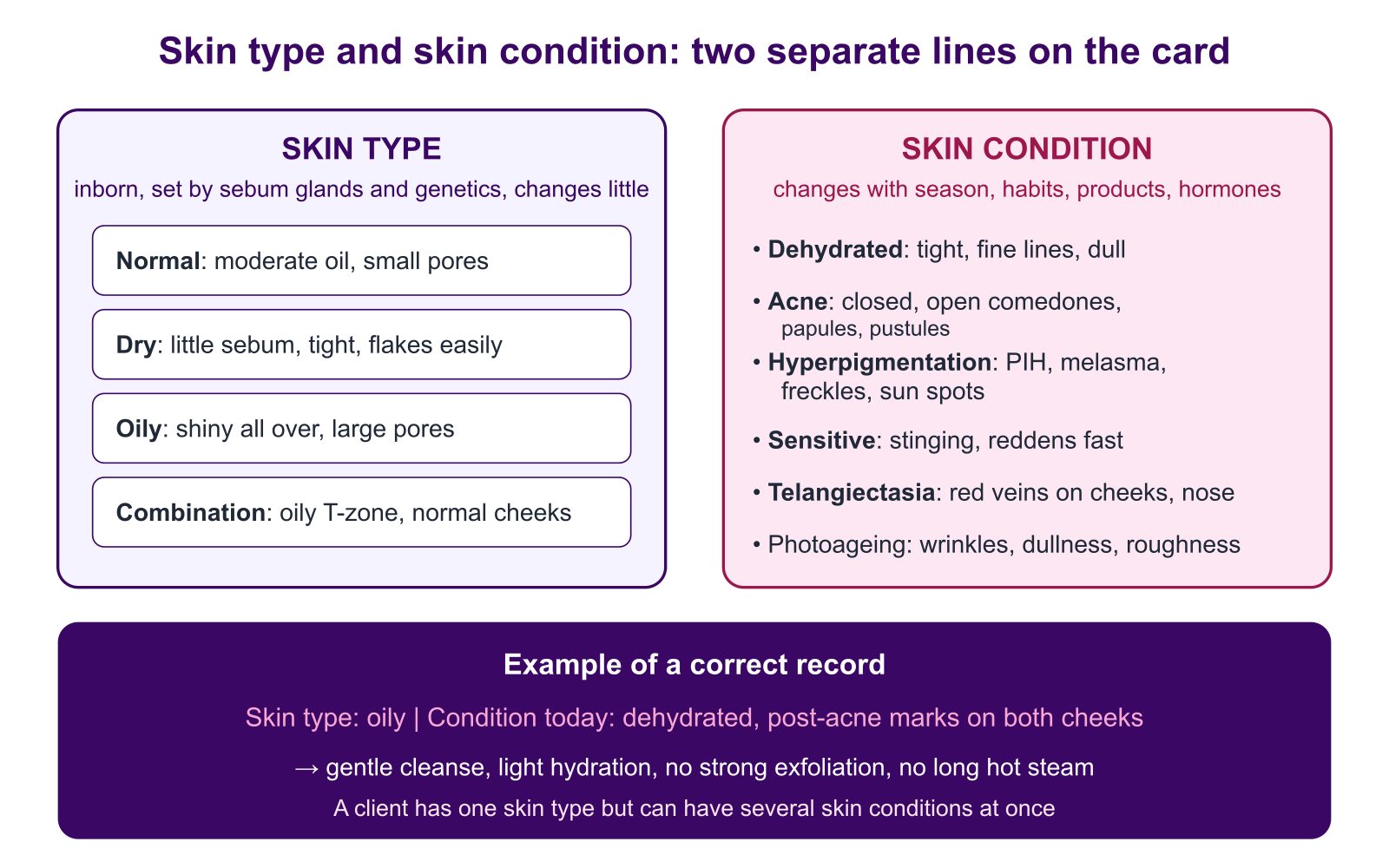
- Distinguish skin type (inherited, changes little) from skin condition (changes over time) and record them on two separate lines of the form.
- Place the client on the Fitzpatrick scale using questions about how their skin reacts to the sun, and use the result to predict the risk of redness and burning and of post-inflammatory hyperpigmentation.
- Carry out the 8-step skin analysis procedure in about 10–15 minutes using natural light, a magnifying lamp and a skin scanner (if available), and know the limits of the machine.
- Fill in the skin analysis form completely, photograph the skin only when the client has given written consent, and store the photos correctly.
- Recognise moles and lesions that need referral to a dermatologist using the ABCDE rule, and tell the client without alarming them.
Skin type and skin condition: two different things
The most common mistake in consultation is lumping them together: "dry skin", "acne skin" and "sensitive skin" are spoken of as if they were the same kind of label. In fact there are two layers of information:
- Skin type is determined mainly by the amount of sebum and by genetics, and changes little over many years: normal, dry, oily, combination. With age and hormones, the skin type may gradually shift (for example oilier at puberty, drier after menopause), but it does not change over a single season.
- Skin condition is what is happening on the skin right now, changing with the season, climate, products, habits, hormones and stress: dehydration, acne, hyperpigmentation, sensitivity, broken capillaries, sun damage (photo-ageing).
A client has one skin type but can have several conditions at the same time. A familiar example in Vietnam: oily skin that is dehydrated (from washing the face too often and sitting in air conditioning all day), with post-acne marks. Oily, dehydrated skin is still shiny but feels tight to the touch, has fine flakes, and stings easily when products are applied.
Signs of each condition
| Condition | What you see and feel | Effect on the treatment |
|---|---|---|
| Dehydration | Dull skin, fine lines when gently pinched, tightness after cleansing, tiny flakes; can occur even in oily skin | Gentle cleansing, hydration; no strong exfoliation, no long oil-absorbing masks |
| Acne | Closed comedones (small white bumps), open comedones (blackheads), red papules, pustules; deep, painful cystic acne | The spa only cleanses and supports; for extensive inflamed acne or cystic acne, advise the client to see a dermatologist |
| Hyperpigmentation | Post-inflammatory marks (brown marks where old spots were), melasma (symmetrical brown patches on the cheeks and forehead), freckles, brown sun spots | Avoid friction and strong heat; always remind the client about sun protection; never promise to "cure melasma for good" |
| Sensitivity | Reddens quickly when touched, stings when products are applied, often itchy; the client says "everything I use burns" | Fewer steps, fewer products, no fragrance; patch test before any new product |
| Broken capillaries | Fine red threads on the sides of the nose and the cheeks; redness increases with heat | No long hot steaming, no rubbing, no hot compresses on that area; if redness spreads widely or persists, advise the client to see a doctor |
The Fitzpatrick scale: how the skin reacts to the sun
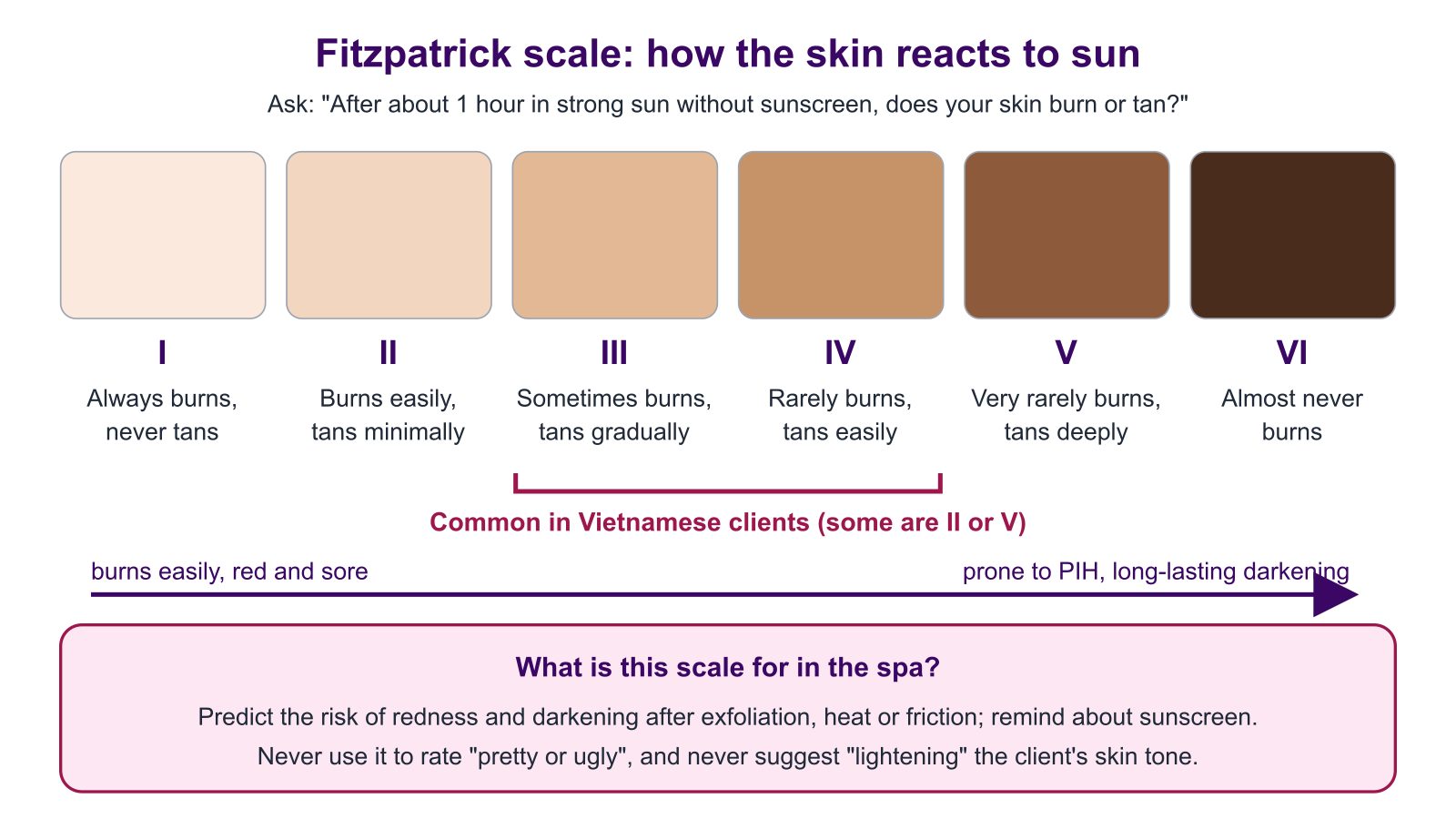
The Fitzpatrick scale divides skin into 6 groups (I to VI) based on how the skin reacts to the sun: whether it burns easily (red and sore) or tans easily (turns brown). It is a tool for predicting risk, not a scale of "light – dark" or "beautiful – ugly".
| Group | Reaction to the sun | Notes for the therapist |
|---|---|---|
| I | Always burns, never tans | Very prone to redness and burning after exfoliation or heat |
| II | Burns easily, tans very little | Prone to redness and burning; advise thorough sun protection |
| III | Sometimes burns, tans gradually and evenly | At risk of both redness and burning and dark marks |
| IV | Rarely burns, tans easily | Prone to post-inflammatory hyperpigmentation and long-lasting darkening after friction |
| V | Very rarely burns, tans deeply | Post-inflammatory hyperpigmentation occurs very easily and is slow to fade |
| VI | Almost never burns | Ask carefully about post-inflammatory hyperpigmentation and keloid scars |
How to ask: "If you go out in strong sun for about 1 hour without sunscreen, does your skin usually go red and sore, or does it tan brown? After a spot, do your marks fade quickly or take a long time?". Combine the answers with the colour of skin that is rarely exposed to the sun (the inner arm) to assign a group.
How to use the result: lower groups (I–II) burn and redden easily, so be gentle with heat and exfoliation; higher groups (IV–VI) develop dark marks after any irritation, so avoid strong friction, avoid coarse grain scrubs, and perform extraction very gently or not at all. For every group, remind the client about sun protection. Do not use this scale to suggest that the client should "lighten their tone" or have "whitening baths".
Skin analysis tools and the limits of each
There are three "eyes" you use, and each one sees something different:
- Natural light: sit near a window, out of direct sunlight. You see the true skin colour, evenness of tone, shine, and differences between the two sides of the face. Yellow room lighting and cold white lighting both distort colour.
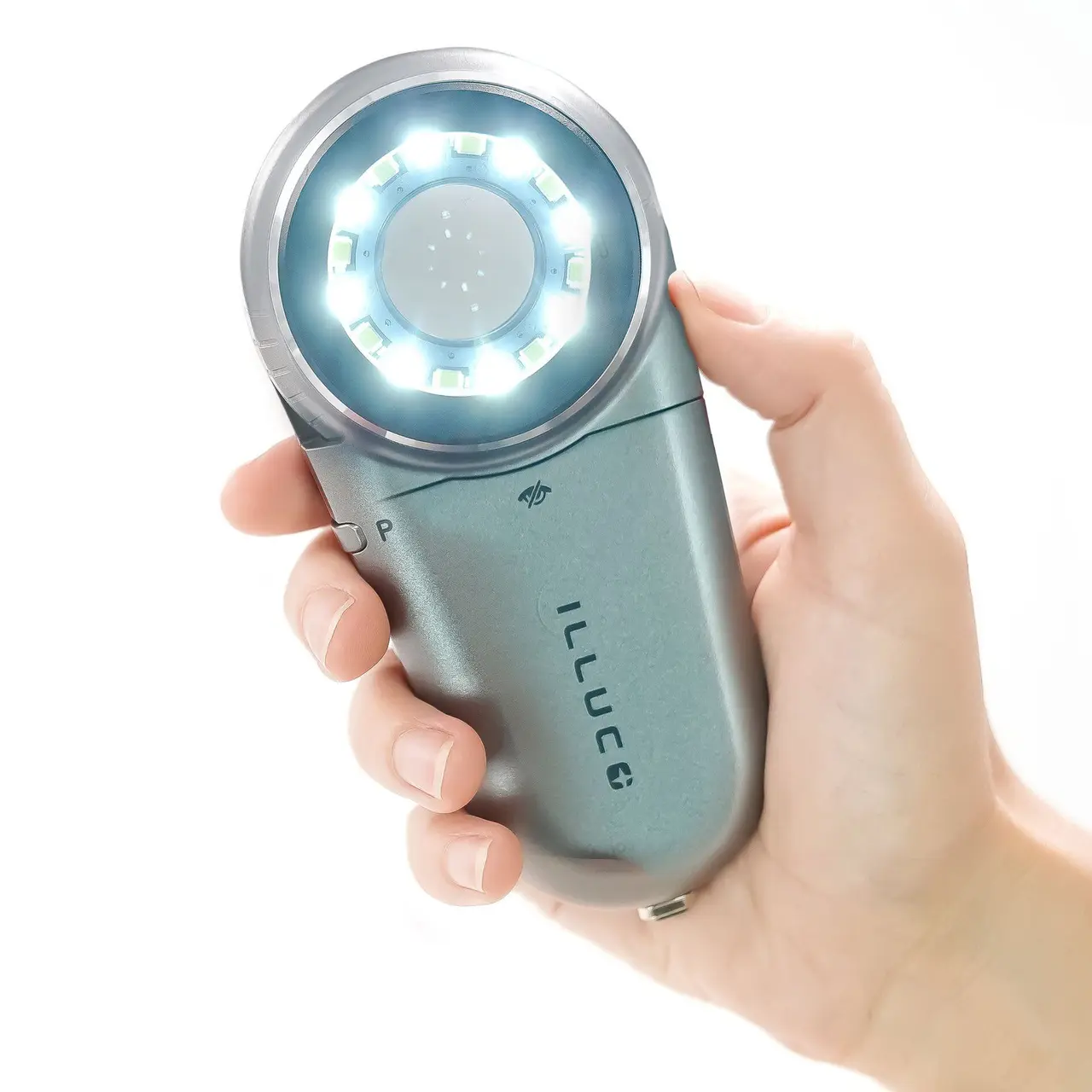
- Magnifying lamp (a magnifier with a ring light): magnifies several times, clearly showing pores, comedones, flakes and capillaries. It does not show the overall picture; it is easy to "over-examine" and comment on every pore, which makes the client self-conscious.
- Skin scanner: some are handheld magnifying scanners, others take photos in several light modes (normal light, polarised light, UV) and produce "scores" for moisture, oil and pigmentation. Some spas use a Wood's lamp (UV lamp); when shone in a dark room, different areas glow in different colours.
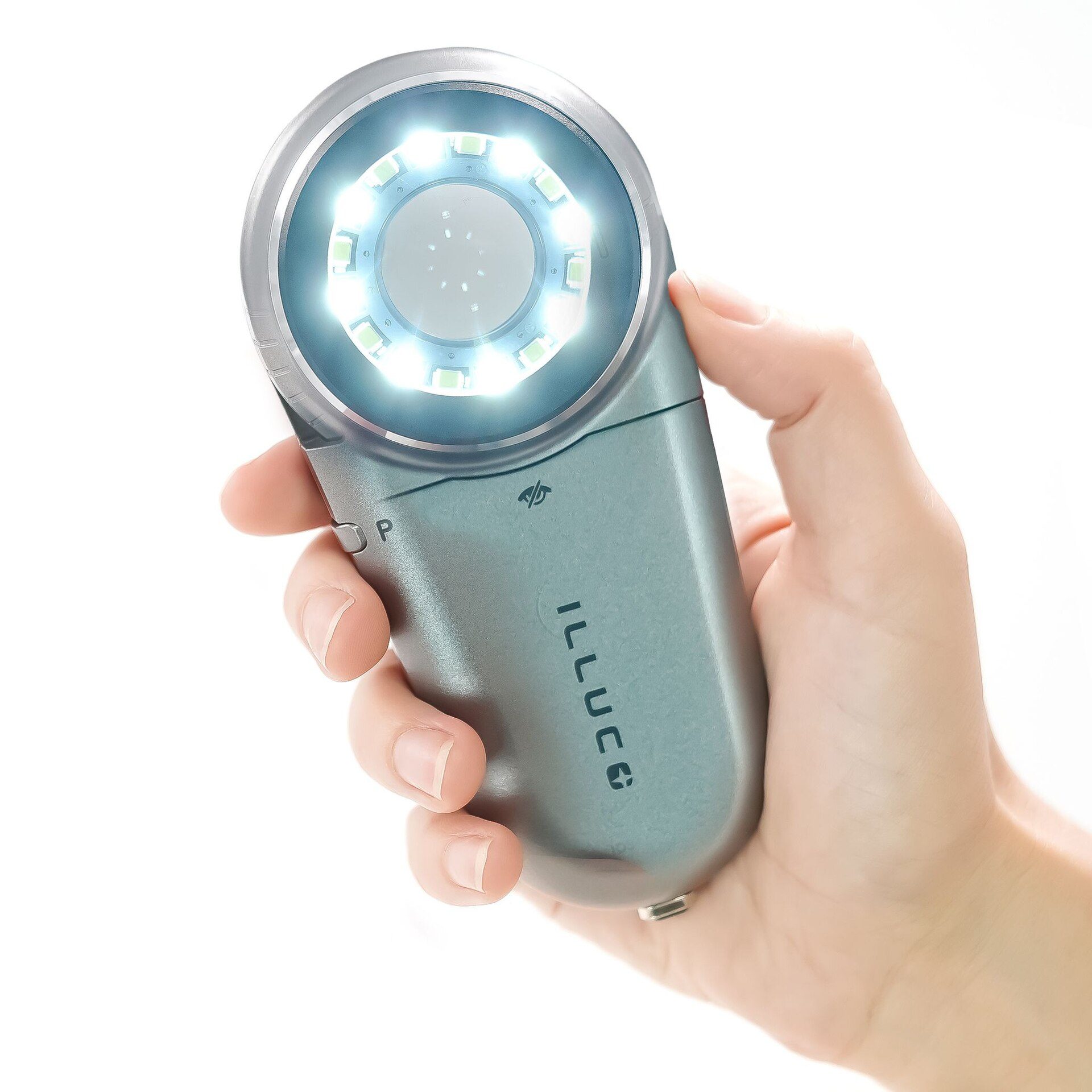
Photo: Abessemans94 / Wikimedia Commons, CC BY-SA 4.0

The limits of the skin scanner must be stated clearly, to yourself and to the client:
- Machine readings (moisture 42, pigmentation 68…) depend on the lighting, distance, whether the skin has just been cleansed, and each brand's settings. Two machines from different brands give different numbers. Use them to compare before and after on the same machine under the same conditions, not as laboratory test results.
- The machine does not diagnose disease. A "pigmentation under the skin" image is not a diagnosis of melasma; an area that glows under a Wood's lamp does not by itself indicate any disease. Diagnosis is the doctor's job.
- Never use scanner images to frighten clients ("your skin is full of bacteria", "your melasma is very deep") in order to sell treatment programmes. That is unethical consultation and may breach advertising regulations.
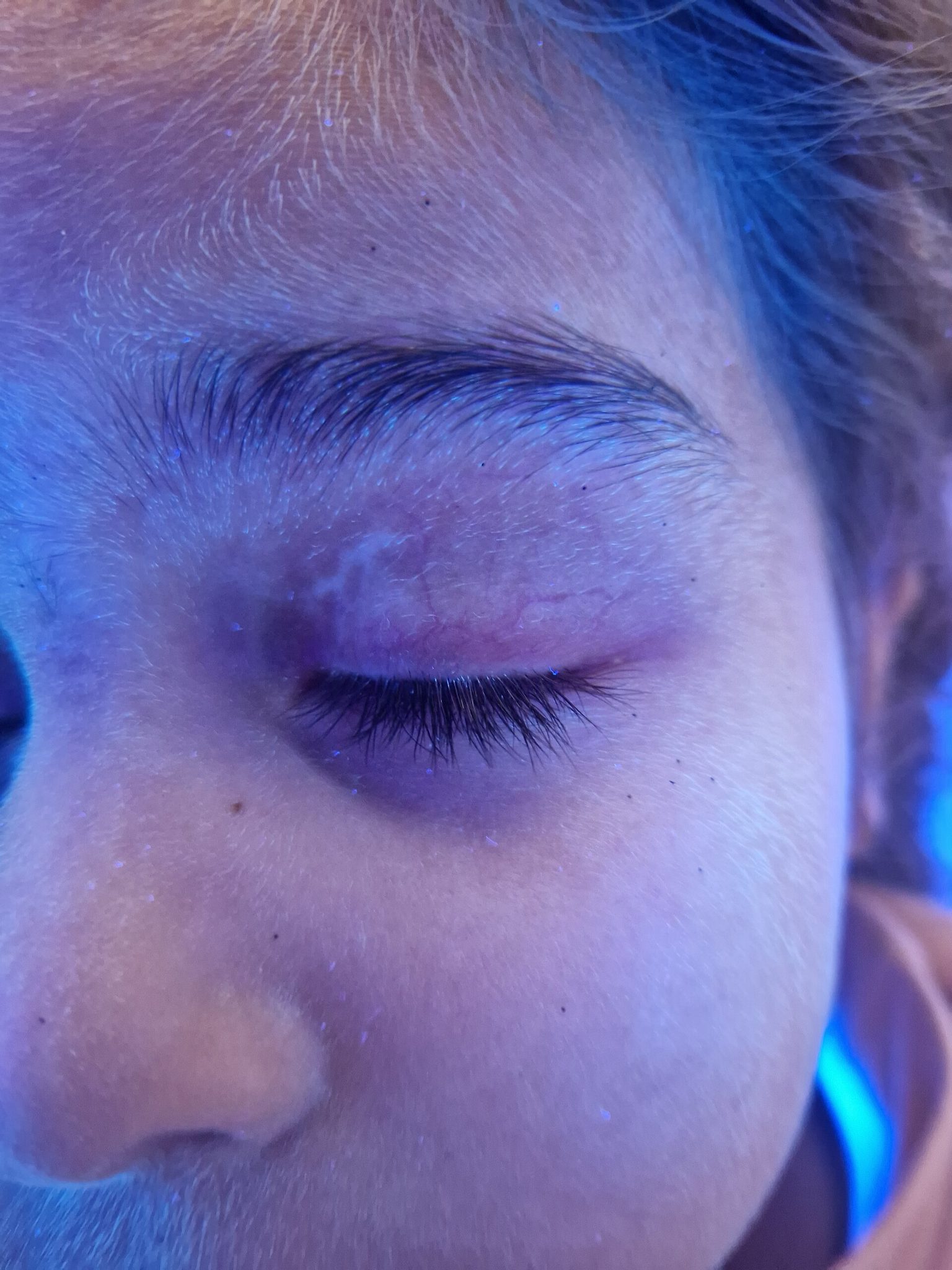
Photo: Sedef94 / Wikimedia Commons, CC BY-SA 4.0

The 8-step skin analysis procedure
The usual total time is about 10–15 minutes, carried out at the first session and briefly repeated at each later session.
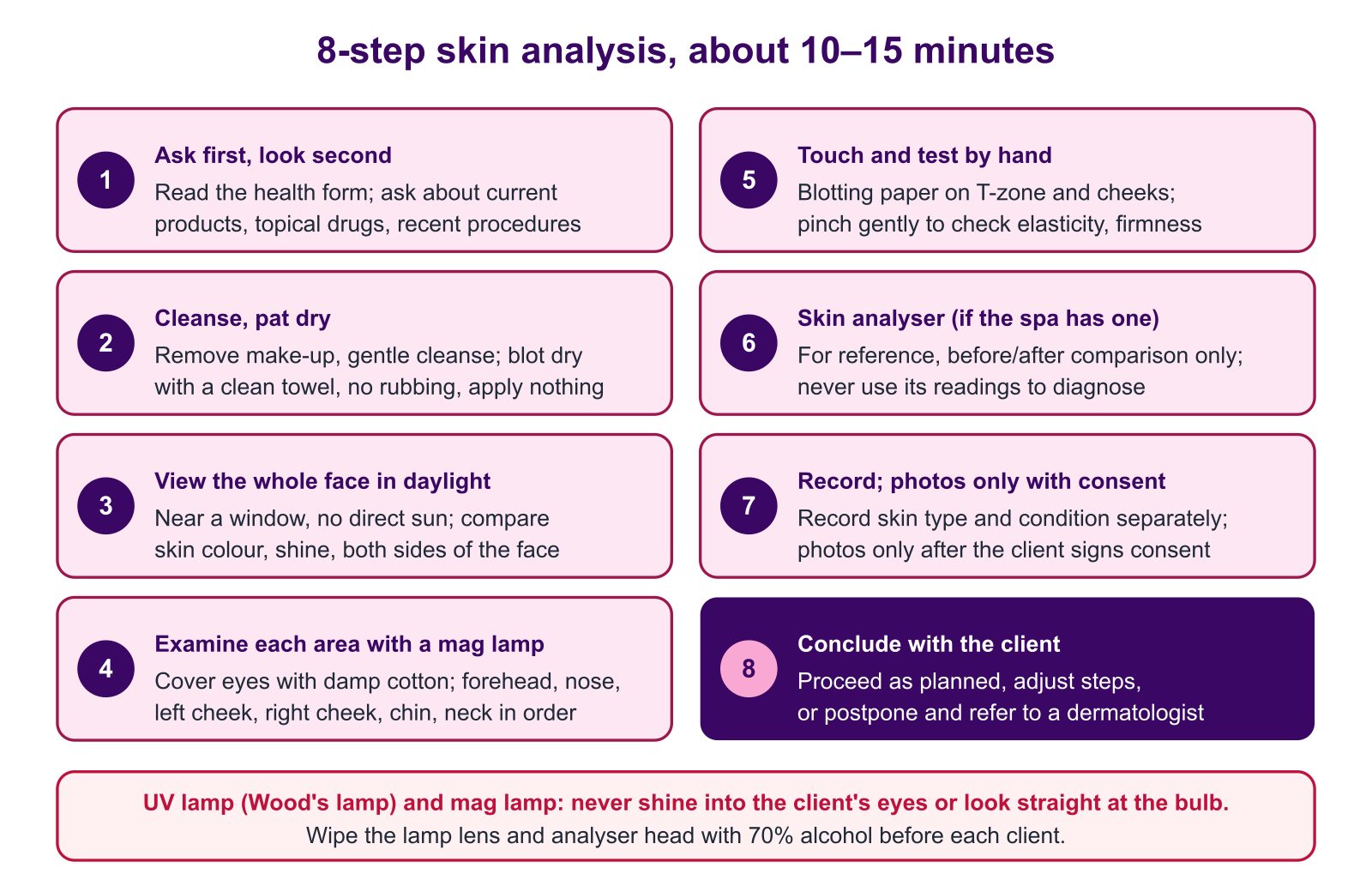
- Ask first, look afterwards. Read the health questionnaire; ask about the products used morning and evening, topical or oral medication (especially retinoids, isotretinoin, corticosteroids), recent procedures (peels, laser, injections), cosmetic allergies, and time spent in the sun.
- Cleanse and pat dry. Remove make-up, cleanse gently and pat dry with a clean towel. Wait a few minutes for the skin to return to normal; straight after cleansing, the skin can appear falsely tight or red.
- Look at the whole face in natural light. Compare skin colour, evenness of tone, shine and both sides of the face; look at the neck too.
- Examine each area with the magnifying lamp in a fixed order: forehead, nose, left cheek, right cheek, chin, neck. Cover the client's eyes with damp cotton pads. Following a fixed order means no area is missed.
- Touch and test with clean hands. Place blotting paper on the T-zone and the cheeks for about 1–2 minutes to compare the amount of oil; pinch gently to check elasticity and fine lines; run your fingers over the skin to check smoothness and roughness.
- Skin scanner (if the spa has one). Take images at the same distance and in the same mode as specified, so they can be compared at the next session.
- Record on the form, photograph if consent is given. Record skin type and condition separately; mark locations on the face diagram.
- Conclude with the client: proceed as planned, adjust steps, postpone, or advise the client to see a dermatologist. Use plain language and be non-judgemental.
How to speak during the analysis: describe neutrally and focus on solutions. Instead of "your pores are huge", say "your nose area produces more oil than your cheeks, so today I'll cleanse this area thoroughly". Never comment on age, weight or skin colour.
Skin analysis form template
The skin analysis form goes together with the health questionnaire and consent form you already have. The template below is the minimum framework; the spa can print it as a single A4 page with a face diagram for marking locations.
| Item | What to record | Example |
|---|---|---|
| Session details | Date, time, therapist, session number within the treatment programme | 12/11, 15:00, therapist Lan, session 1/6 |
| Skincare habits | Morning and evening products; sun protection; exfoliation frequency | Foaming cleanser twice a day, no sunscreen |
| Recent medication and procedures | Retinoids, acne medication, corticosteroids; peels, laser, injections within the last 3–6 months | Applying adapalene in the evening for the past 2 months |
| Skin type | Normal / dry / oily / combination | Combination (oily T-zone) |
| Fitzpatrick | I–VI, with the client's answers | IV: rarely burns, tans easily, marks slow to fade |
| Condition today | Dehydration, acne (type, location), hyperpigmentation, sensitivity, broken capillaries | Dehydration on both cheeks; closed comedones on the forehead; post-acne marks on the right cheek |
| Areas to avoid | Moles, unusual lesions, inflamed areas | 3 mm brown mole below the left eye, regular border, unchanged |
| Conclusion and plan | Steps to perform, steps left out, products chosen | Gentle cleansing, no grain exfoliation, no hot steam, hydrating mask |
| Referral to a doctor | Yes or no, reason, whether the client has been advised | No |
| Photos | Client consents to photos: yes / no; number of photos; where stored | Yes, 3 photos, stored in the client's file on the spa's device |
| Signatures | Therapist and client | Two signatures at the bottom of the form |
A form is only useful if it is read again. At the start of every later session, the therapist opens the previous form, asks the client how their skin has changed and continues recording, rather than starting a new form from scratch.
Photographing the skin: only with the client's consent
Photos of the face are sensitive personal data that can identify the client. Rules:
- Obtain written consent before taking photos, stating clearly the purpose (tracking before and after in the client's file), where they are stored, and who may view them. Consent to use photos for advertising is a separate box, set to "no" by default; the client has the right to refuse and still receive normal service.
- Take photos with the spa's camera or phone, never with the therapist's personal phone. Never send photos through personal chat groups.
- Take photos at the same angle, same distance and same lighting, against a plain background; the client wears no make-up; only the face and neck, and the eyes can be covered if they are not needed.
- If the client wants the photos deleted, delete them and record this on the form.
When to refer to a dermatologist
The spa only performs non-invasive care. Under the Law on Medical Examination and Treatment No. 15/2023/QH15, diagnosing and treating skin disease is the job of licensed medical establishments. A good therapist is not someone who "knows everything", but someone who recognises when it is time to stop.
The ABCDE rule for moles
During skin analysis, or during a body massage, if you see a mole with any of the following signs, record it and advise the client to see a dermatologist soon:
- A – Asymmetry: if you divide the mole in half, the two halves do not match.
- B – Border: the border is ragged, notched, or blurs into the surrounding skin.
- C – Colour: several colours within the same mole (brown, black, red, white, blue).
- D – Diameter: larger than about 6 mm (the size of a pencil eraser), or growing.
- E – Evolving: changing in size, colour or shape, or newly itching, bleeding or crusting.
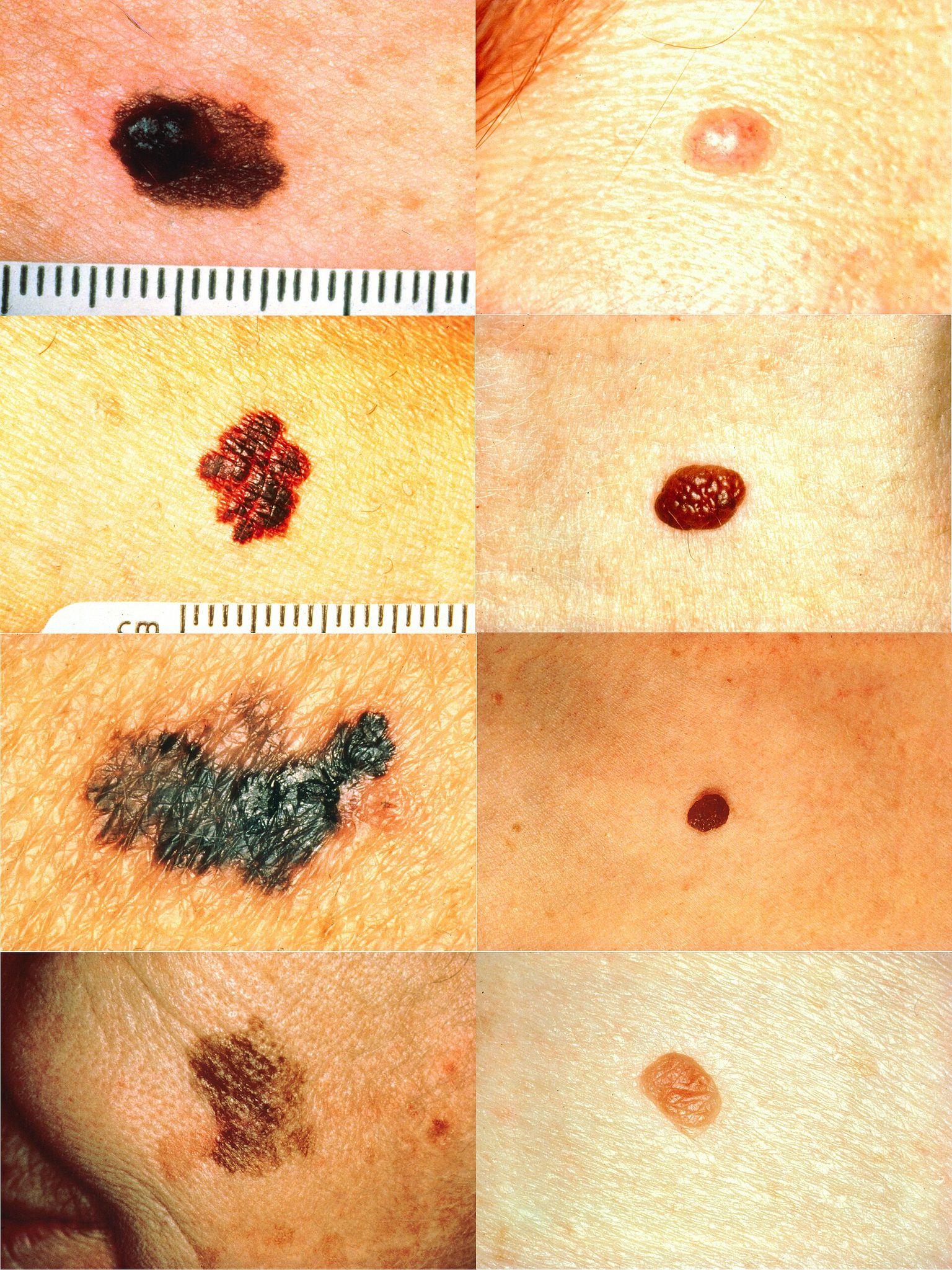
Photo: Unknown creator; six images merged by User:Stevenfruitsmaak / Wikimedia Commons, Public domain

Other lesions that need referral
- Ulcers or erosions that are slow to heal (more than about 2–4 weeks) and bleed easily.
- Scaly red patches, shiny bumps, newly appearing hard lumps that grow quickly.
- Extensive inflamed acne, deep cystic acne, acne that leaves scars; skin rashes or itching that spreads widely after using cosmetics.
- Skin that is red, spotty, thin and has broken capillaries after long-term use of unregulated mixed creams ("kem tron") or topical medication containing corticosteroids.
- Clustered blisters, suspected fungal or bacterial infections, herpes (cold sores) on the lips.
How to tell the client: stay calm and do not diagnose. "I can see this mole has a slightly irregular border, and you mentioned it has been getting bigger recently. I'm not a doctor so I can't draw any conclusion, but you should see a dermatologist for peace of mind. Today I'll avoid this area." Record on the form: date, location, description, and that the client was advised. Do not continue the service on that area.
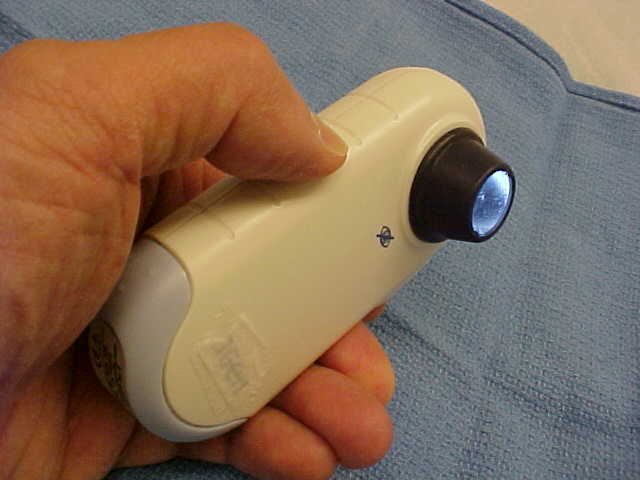
Photo: Northerncedar ( talk ) / Wikimedia Commons, Public domain

Common mistakes
| Mistake | Why it is wrong or dangerous | The correct way |
|---|---|---|
| Immediately believing the client's "my skin is oily" | Missing dehydration and sensitivity; choosing the wrong product causes irritation | Ask, then carry out all 8 analysis steps, and record skin type and condition separately |
| Analysing straight after washing the face with hot water | The skin looks falsely red and tight; wrong assessment | Cleanse with cool water, pat dry, wait a few minutes |
| Using scanner scores as a diagnosis | The machine does not diagnose disease; it easily turns into fear-based consultation | Use only to compare before and after under the same conditions |
| Shining UV light straight into the client's eyes | Harmful to the eyes | Cover the eyes with damp cotton pads or protective goggles, and never look straight at the bulb |
| Photographing the client with a personal phone | Leaks personal data, loses trust and may violate privacy rights | Obtain written consent, use the spa's device, store in the client's file |
| Saying "this mole is malignant" | Therapists must not diagnose; the client panics | Describe what you see, advise a dermatology appointment, avoid that area |
| Heavy-handed extraction on Fitzpatrick IV–V skin | Post-inflammatory hyperpigmentation that is slow to fade | Extract very gently or not at all; prioritise gentle cleansing |
Pass criteria for this lesson
- Give correct definitions of skin type and skin condition; for 5 sample skin photos, record the correct skin type and at least 1 condition for each photo, correct for 4/5 photos or more.
- Name all 6 Fitzpatrick groups by their reaction to the sun; ask the correct questions and assign a group for 3 models in front of the instructor.
- Carry out all 8 steps of the skin analysis procedure in the correct order within 15 minutes, covering the client's eyes when using lamps and wiping the scanner head with 70% alcohol.
- Complete all 11 items of the skin analysis form for 1 model, without leaving the "Areas to avoid" and "Referral to a doctor" boxes blank.
- State the 5 letters of the ABCDE rule and at least 3 other lesions that need referral to a doctor; role-play telling a client about an abnormal mole in 1 minute without using diagnostic words.
- State at least 3 rules for photographing the skin, including "written consent before taking photos".
Frequently asked questions
Can oily skin be dehydrated?
Yes, and it is very common. Oil is sebum, and water is the moisture in the horny layer; they are two different things. Oily skin that is washed too thoroughly, treated with strong oil-absorbing products and exposed to a lot of air conditioning easily becomes "oily yet tight". Record on the form: skin type oily, condition dehydrated.
Can a spa without a skin scanner still analyse skin correctly?
Yes. Natural light, a magnifying lamp, blotting paper, clean hands and the right questions are enough for most decisions in the spa. The scanner mainly helps with storing images and making comparisons.
What if the client does not want to say what medication they are taking?
Explain briefly: some topical and oral medications make the skin thin and sensitive, so you need to know in order to choose safe steps. If the client still does not say, choose the gentlest routine (gentle cleansing, hydration, no exfoliation, no heat) and record "client did not provide information" on the form.
How often should the skin be analysed again?
Take a quick look again before every session. Carry out a full analysis and update the form at the first session, about every 4–6 sessions, when the season changes, or when the client reports that their skin has changed, they have changed products or started a new medication.