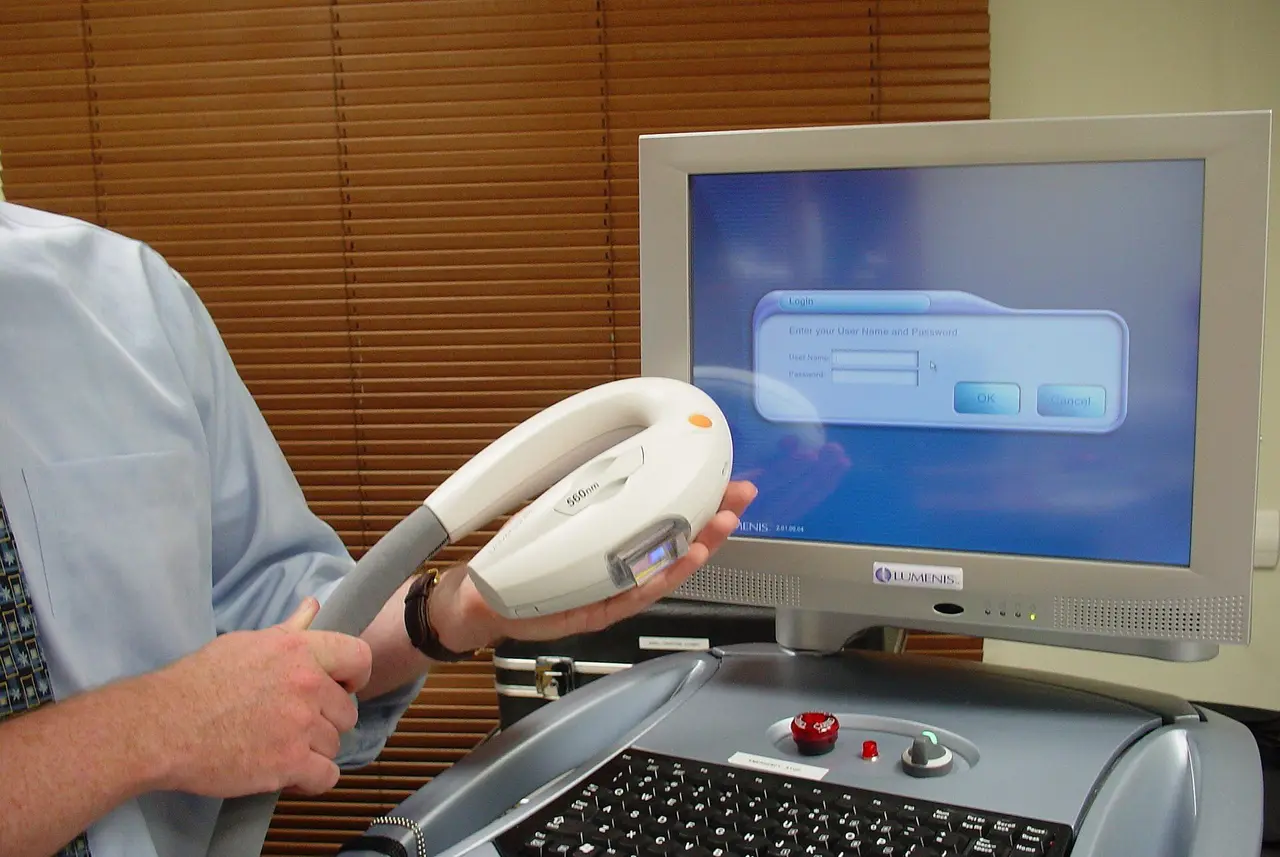
Online you will easily find price lists such as "permanent IPL hair removal", "painless laser rejuvenation", "biological LED light cures acne in 7 days". Clients come to the spa and ask: "Do you do laser here?" Many places buy IPL or laser machines, put them in a spa room and hand them to therapists after a few training sessions. The usual consequences are burns in stripes matching the shape of the handpiece, long-lasting patchy darkening, patches of lost skin colour and, most dangerous of all, eye injury from not wearing the right type of eyewear.
This lesson does not teach you to fire a laser. It teaches you to understand the three groups of light-based equipment well enough to tell them apart, know the risks, protect your own and the client's eyes, do correctly the part of the work the spa is allowed to do (low-level LED skin care following the manufacturer's instructions), and know how to say "this has to be referred to a doctor". You learned skin analysis and the Fitzpatrick classification at Level 2; that knowledge is used again here.
By the end of this lesson, you will be able to:
- Explain in simple words how light acts on the skin, and why darker skin carries a higher risk.
- Distinguish LED, IPL and laser by light source, energy level, purpose and who is permitted to use them.
- List all the main risks: burns, hyperpigmentation, hypopigmentation, eye injury, and reactions in people taking photosensitising medicines.
- Choose and check eye protection for the client and the therapist exactly as the manufacturer requires.
- Carry out a safe LED skin-care session in 8 steps, and advise referral to a doctor when a client needs laser or IPL treatment.
How light acts on the skin
Light is energy that travels as waves. Each colour of light has its own wavelength, measured in nanometres (nm). Visible light lies at around 400–700 nm: blue at the short end, red at the long end. Longer than red is infrared, which the eye cannot see. In general, the longer the wavelength, the deeper light penetrates the skin.
Light only has an effect when it is absorbed. The skin contains three main "light absorbers" (called chromophores):
- Melanin: the pigment that gives colour to skin and hair, found in the epidermis and the hair follicles.
- Haemoglobin: the red pigment in blood, found in the blood vessels of the dermis.
- Water: present throughout all tissues.
When a substance absorbs light strongly enough, the energy turns into heat. Treatment lasers and IPL are based on this principle: the wavelength is chosen so that heat concentrates in the right target (a hair, a pigment spot, a blood vessel) in a very short time, with little harm to the surrounding tissue. This is called selective photothermolysis. It sounds simple, but doing it correctly requires an accurate diagnosis of the lesion and the right choice of settings, and that is the doctor's job.
Why Vietnamese skin needs extra caution
Melanin in the epidermis also absorbs light. The darker the skin (Fitzpatrick III–V, common in Vietnamese people), the more "unintended" energy the epidermis absorbs, making burns and subsequent pigmentation disorders more likely. Skin that has just been in the sun, or tanned skin, behaves the same way. This is why settings that "work fine" on light skin can burn darker skin.
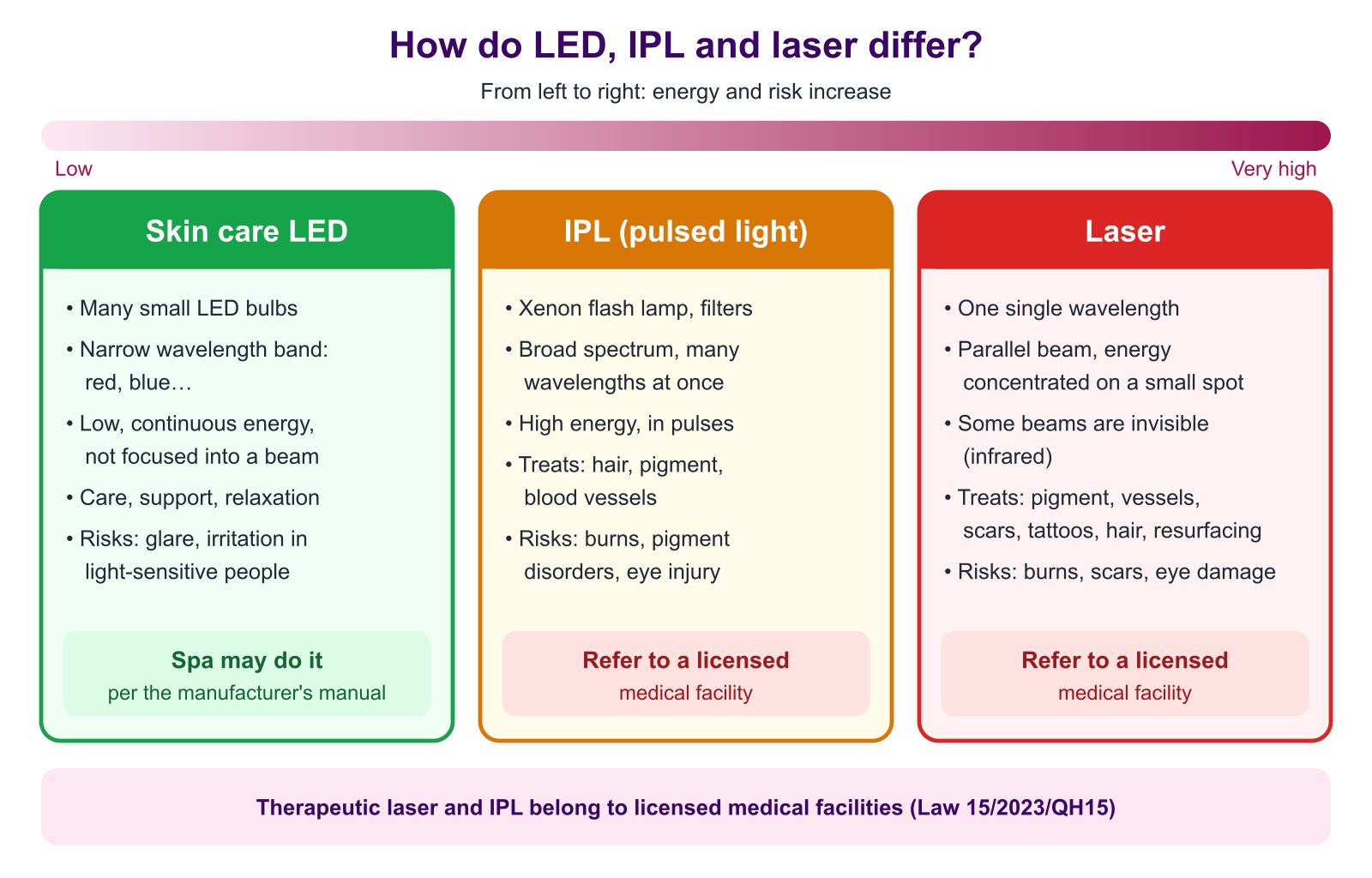
Telling LED, IPL and laser apart
LED skin-care lights
LEDs (light-emitting diodes) are small lamps that emit light in a relatively narrow wavelength band, for example red, blue, yellow and near-infrared. LED machines used in skin care are usually a light panel or canopy positioned at a distance from the client's face, or an LED mask. The power is low, the light is not focused into a beam and there are no high-energy pulses, so they are not intended to heat or destroy tissue.
Manufacturers usually present red light for soothing care and blue light for oily, blemish-prone skin. The evidence on effectiveness varies by machine and by study. Therapists should say only what is accurate: "supports skin care, helps you relax" – not "treats acne", "removes dark marks" or "regenerates collagen".
IPL (intense pulsed light)
IPL uses a flash lamp (xenon lamp) that emits broad-spectrum light, many wavelengths at once, passed through a filter to cut out the shorter wavelengths. Each press delivers a very powerful flash of light for a very short time, through a handpiece held against the skin. IPL is not a laser, but the energy of each pulse is enough to heat hairs, pigment spots and blood vessels. Because the spectrum is broad, IPL also easily heats the melanin in the epidermis, so the risk of burns and pigmentation disorders is high, especially on darker skin.
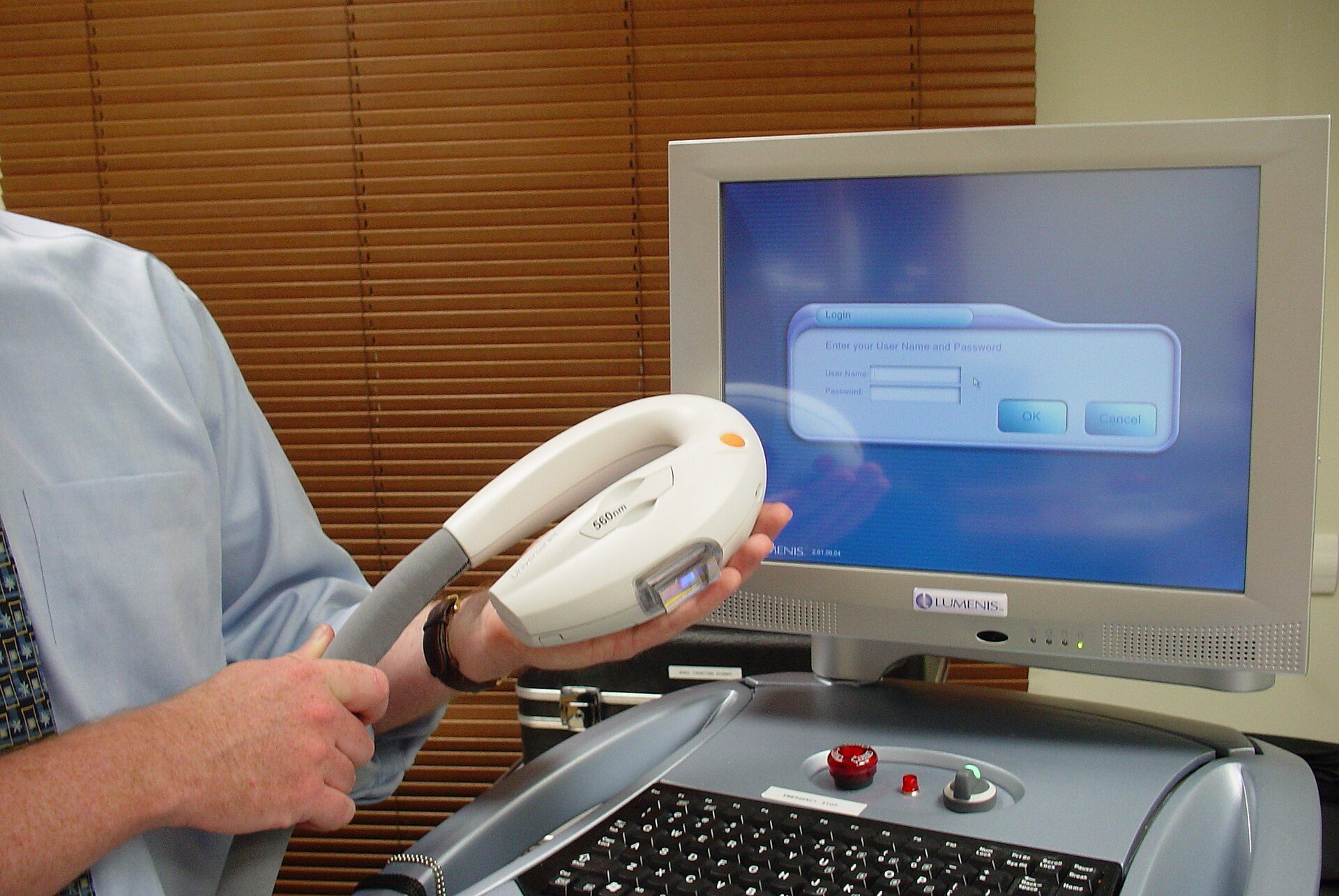
Photo: Dr. Peter Crouch / Wikimedia Commons, Public domain

Laser
A laser emits light of a single wavelength, with parallel, in-phase beams, so the energy is concentrated very highly onto a small spot. Each type of laser has its own wavelength, chosen for a specific target: some target pigment, some target blood vessels, some target water to ablate the skin or create micro-injuries. Some lasers emit in the infrared range: the eye cannot see the beam, yet the beam still damages the eye. Lasers used in aesthetics usually belong to the highest hazard class in laser safety classification; even a beam reflected from a shiny surface can injure the eye.
| Criterion | LED skin-care light | IPL | Laser |
|---|---|---|---|
| Light source | Many small LED lamps | Xenon flash lamp, filter | Laser source inside the machine |
| Wavelength | Narrow band (red, blue…) | Broad spectrum, many wavelengths | One single wavelength |
| Energy | Low, continuous, unfocused | High, pulsed | Very high, concentrated on a small spot |
| Purpose | Care, support, relaxation | Treatment: hair, pigment, blood vessels | Treatment: pigment, blood vessels, scars, tattoos, hair, ablation |
| Main risks | Glare, irritation in light-sensitive people | Burns, pigmentation disorders, eye injury | Burns, scars, pigmentation disorders, permanent eye injury |
| Where performed | Spa, following the manufacturer's instructions | Licensed medical examination and treatment establishment | Licensed medical examination and treatment establishment |
Risks of using light on the skin
Even if your spa only uses LED, you still need to know the risks of IPL and laser, because clients will come to you after having treatments elsewhere, and you are the first person to see the complications.
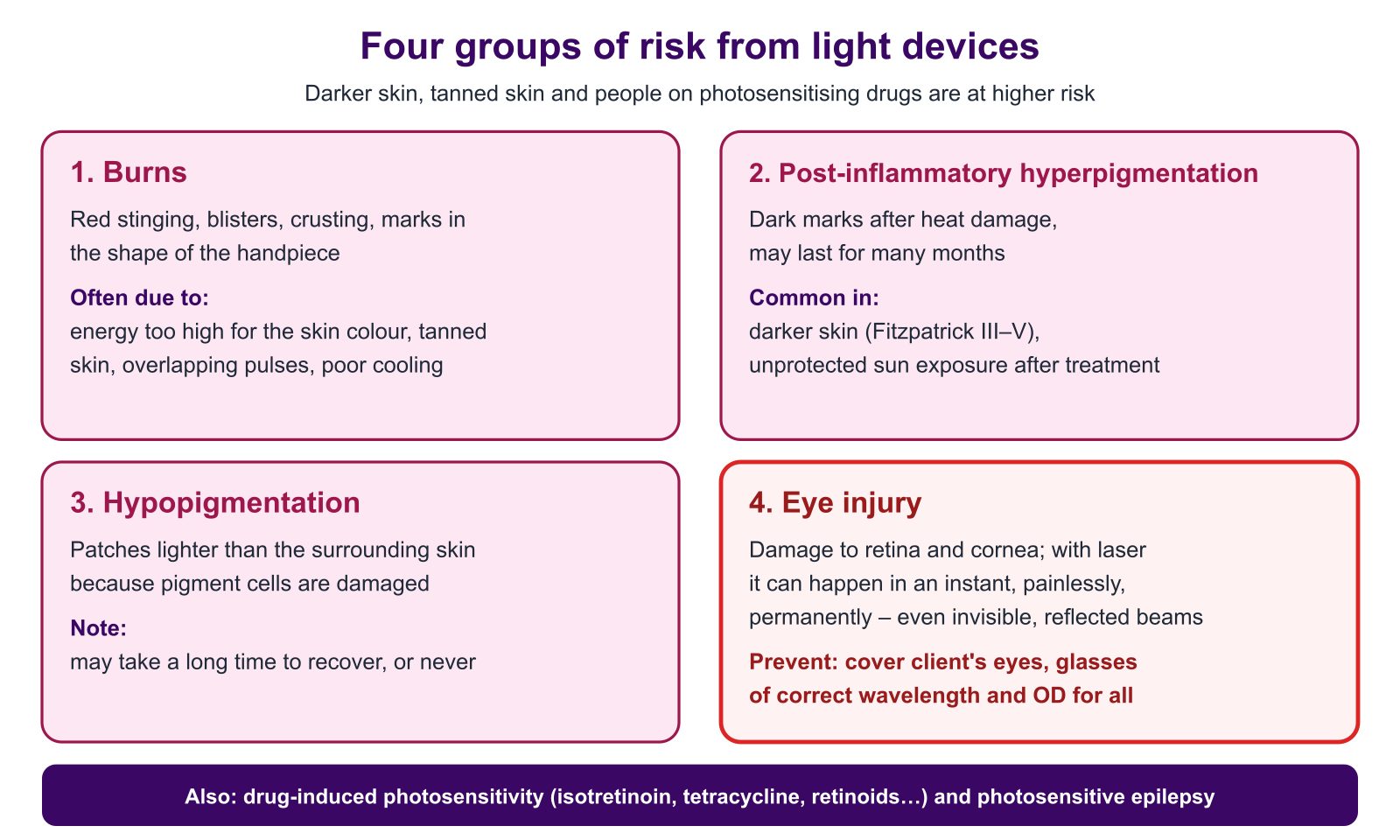
- Burns: red, stinging skin, blisters, crusting, often in stripes or squares exactly matching the handpiece shape. Common causes: energy too high for the skin colour, tanned skin, overlapping pulses, too little cooling gel, an overheated handpiece.
- Post-inflammatory hyperpigmentation: darkened skin after heat injury, common in darker skin, which can last for many months. Clients who go into the sun unprotected after a procedure darken more easily.
- Hypopigmentation: patches of skin paler than the surrounding area because the pigment cells have been damaged; recovery can be slow, or may not happen at all.
- Eye injury: strong light entering the eye can damage the retina and cornea. With lasers, injury can happen in a split second, painlessly, and permanently. The area around the eyes, the eyebrows and the eyelids are especially dangerous zones.
- Reactions in light-sensitive people: some medicines make the skin sensitive to light (for example isotretinoin, some tetracycline-group antibiotics, some diuretics, topical retinoids), as do some diseases such as lupus, and people with epilepsy can be triggered by flashing light.
When a client arrives with a complication from elsewhere
A client has just had "laser" or "IPL" elsewhere and the skin is red and stinging, blistered, darkened or depigmented: do not perform any service on that area, not even a mask or LED. Apply a gentle cool compress if the client is stinging, and advise the client to return to the establishment that did the treatment or to see a dermatologist. Record what you observe on the client card. Do not criticise the previous provider; talk only about what needs to be done next to keep the client safe.
Eye protection for the client and the therapist
Eye protection is a rule without exceptions for all light-based equipment, including LED. The principles:
- The correct type, as specified by the manufacturer. Each machine states clearly which eye protection is required. For lasers, safety eyewear must be marked with the wavelength range and an OD (optical density) suited to the machine's wavelength. Eyewear for the wrong wavelength is as good as none. Fashion sunglasses are not safety eyewear.
- Client: wears close-fitting eye shields or client safety goggles as the machine instructions require, with eyes closed throughout the session. For LED, the specialist eye covers supplied with the machine can be used; damp cotton pads are usually not enough to block strong light.
- Therapist and anyone else in the room: wear suitable eyewear while the machine is emitting light, and never look directly into the lamp or the handpiece.
- Check eyewear before each shift: no scratches, no cracks, strap in good condition, wavelength and OD markings still legible. Replace damaged eyewear.
- Room: for lasers, the door has a warning sign, reflective shiny surfaces are minimised, and nobody not involved enters while the machine is running. These are requirements in a medical setting; you need to know them so you can recognise an unsafe place.
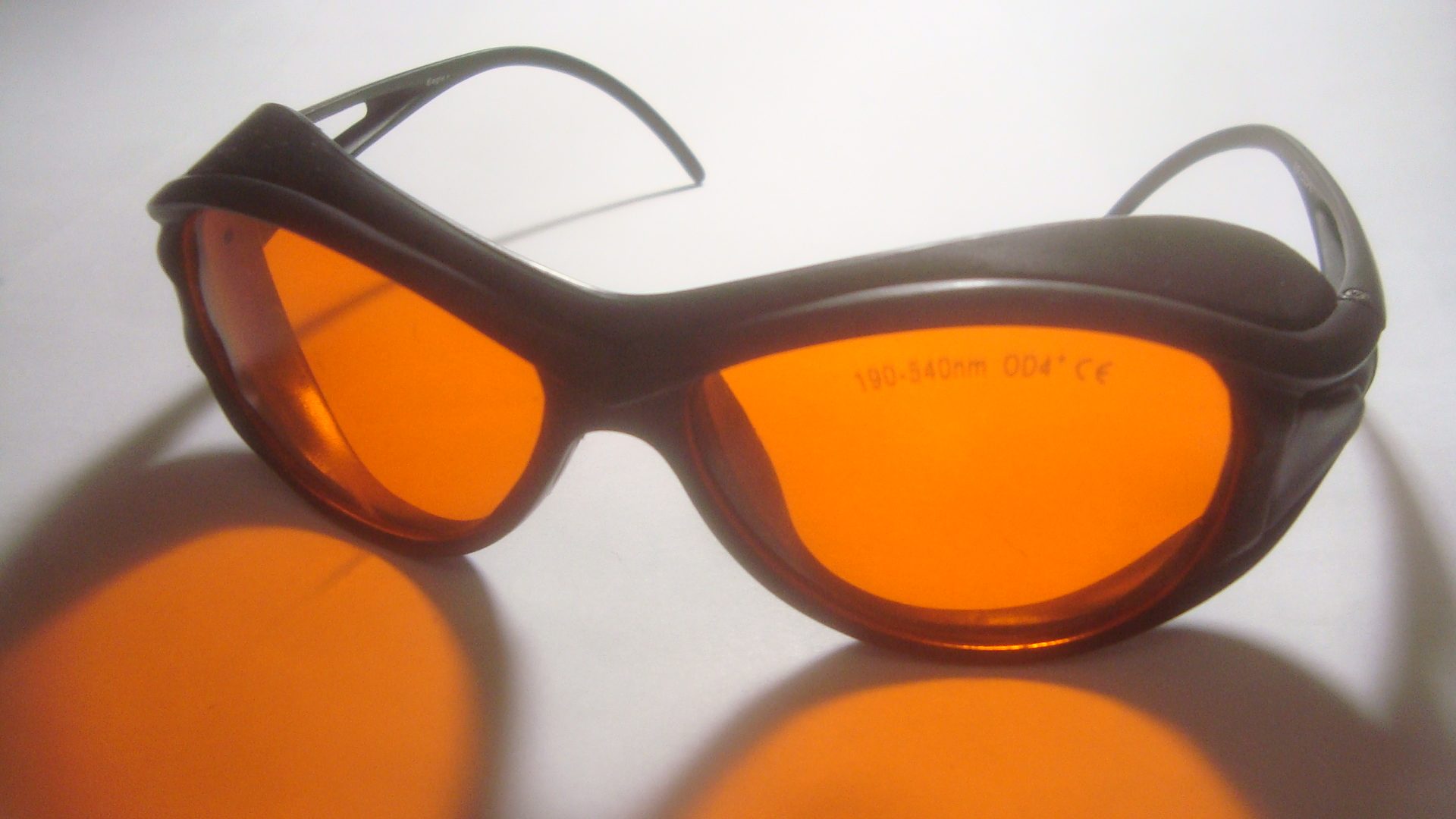
Photo: Карма2 / Wikimedia Commons, CC BY-SA 4.0

What the spa may do, and what must be referred to a doctor
The spa only provides non-invasive care. Lasers and IPL are high-energy devices used to act deliberately on tissue: heating, destroying hair follicles, pigment and blood vessels, ablating skin. When used for treatment (treating melasma, freckles, blood vessels, scars, tattoo removal, hair removal, high-energy rejuvenation), this falls within the scope of licensed practitioners and licensed medical examination and treatment establishments under the Law on Medical Examination and Treatment No. 15/2023/QH15. The spa does not do it itself – even if it has bought the machine, and even if the client agrees to sign a consent form.
| The spa may do (trained therapist) | Must be referred to a doctor / licensed medical establishment |
|---|---|
| Low-level LED skin care, with the manufacturer's settings and times | All laser procedures: treating melasma, freckles, age spots, tattoo removal, scar removal, ablative laser, fractional laser |
| Using LED as a relaxing step in a facial treatment | IPL treatment: pigment, blood vessels, thread veins; hair removal by IPL or laser |
| Contraindication screening, covering the eyes, recording on the client card | Diagnosing pigmented lesions (melasma, freckles, abnormal moles), severe inflamed acne, rosacea, skin disease |
| Advice on sun protection and home care at cosmetic level | Managing complications after laser or IPL: burns, blisters, darkening, loss of pigment |
| Recognising when a client needs a medical examination and advising them | Clients wanting "rejuvenation", "skin tightening" or "acne treatment" with high-energy devices |
When you are not sure which group a machine or a service belongs to, treat it as belonging to the must-refer group, tell the manager, and read the manufacturer's documentation carefully: if the machine is registered as a medical device, or the manual requires the user to be a healthcare professional, it is not a spa machine.
What to say to the client
The client asks: "Do you do laser for melasma?" You answer: "Laser for melasma is a procedure that must be assessed by a dermatologist and performed at a licensed medical establishment. Here we only do skin care and LED at skin-care level. Would you like me to suggest you see a dermatologist first?" Short, truthful, no criticism, no promises.
Procedure for a safe LED skin-care session
This is the part of the work you are allowed to do. Even though LED is low energy, carry out every step, because the most common errors are small things: forgetting to cover the eyes, not asking about current medicines, leaving the light on too long.
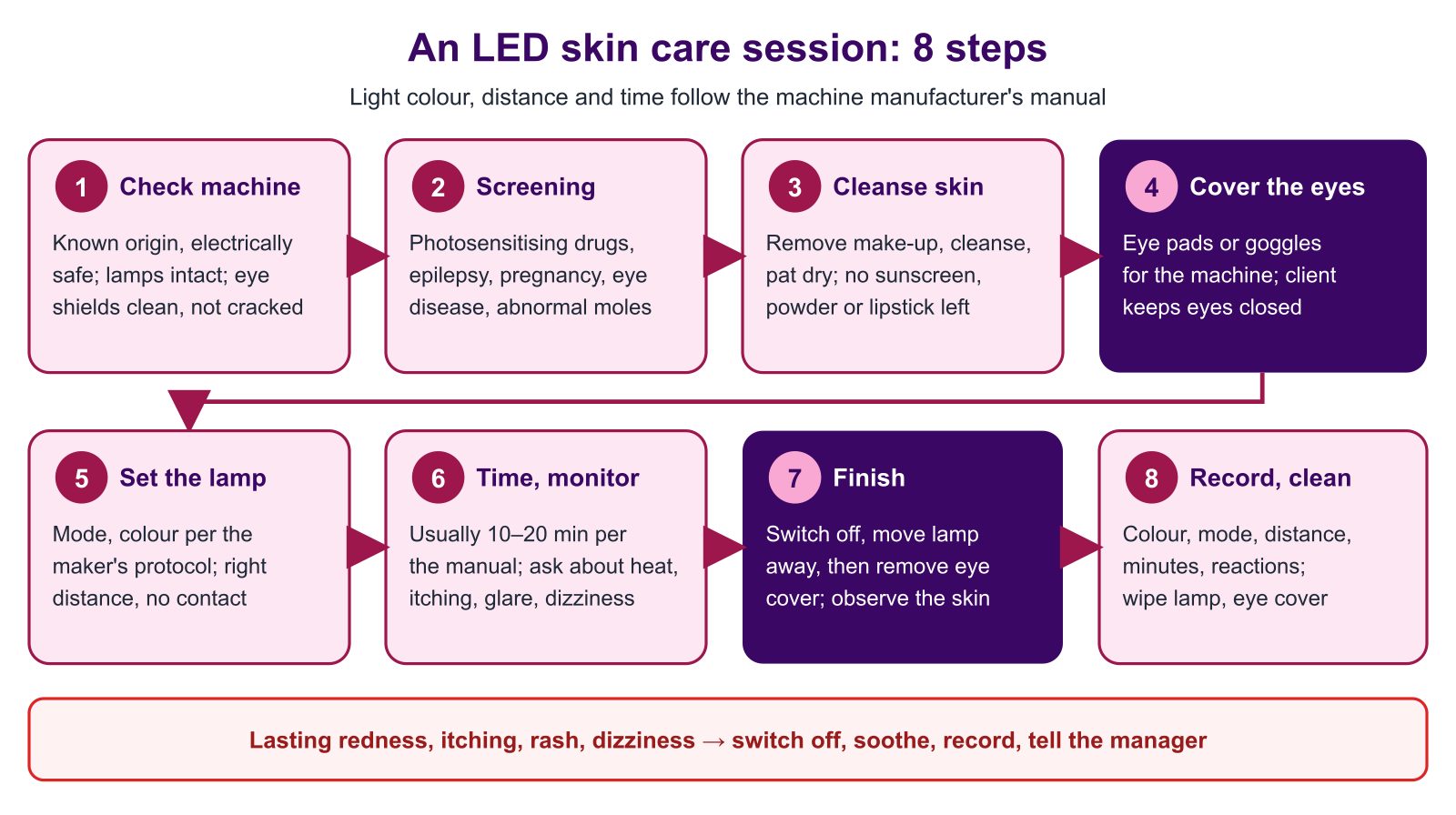
- Check the machine and eye covers. The machine has a known origin and a Vietnamese manual, and has passed the start-of-shift electrical safety check as in the previous lesson. No broken lamps, no patchy dead LEDs; eye covers are clean and uncracked.
- Screen. Ask using the questionnaire and again verbally: is the client taking any medicines, especially isotretinoin, antibiotics or topical retinoids; any photosensitive skin condition, lupus, epilepsy, eye disease; pregnancy; any changing moles or slow-healing sores; any recent laser, IPL or peel anywhere.
- Cleanse the skin. Remove make-up, cleanse and pat dry. Leave no sunscreen, lipstick or powder on the area to be treated.
- Cover the client's eyes. Fit eye shields or the specialist goggles for the machine, and ask the client to keep their eyes closed throughout. The therapist wears eyewear if the manual requires it.
- Set up the light. Choose the mode and light colour according to the manufacturer's protocol for the skin type you have analysed. Position the lamp at the distance stated in the manual; the lamp must not touch the skin or rest on the client's face.
- Time and monitor. A session usually lasts around 10–20 minutes; use the exact figure in the manual. The therapist stays in the room or close by, and after a few minutes asks the client whether they feel any heat, itching, glare or dizziness.
- Finish in the correct order. Switch off the lamp, move it away, and only then remove the client's eye covers. Observe the skin: a brief light pinkness is common; persistent redness, itching or a rash should be recorded, soothed and reported to the manager.
- Record and clean. Record light colour, mode, distance, time and reaction. Wipe the lamp surface and the eye covers with a solution the manufacturer allows, and leave to dry.
Do not use LED when
- The client has epilepsy, especially epilepsy sensitive to flashing light.
- The client is taking photosensitising medicines or has a photosensitive skin condition, without a doctor's advice.
- The client is pregnant: the spa chooses the safe option, postponing or asking a doctor's advice.
- There is a lesion suspicious of skin cancer, or a mole changing in colour or size: do not treat, advise a medical examination.
- The skin is damaged, has just had a high-energy procedure, or is sunburnt.
- The client has an eye disease or recent eye surgery: ask a doctor's advice first.
Common mistakes with light-based equipment
| Mistake | Why it is dangerous/wrong | The correct way |
|---|---|---|
| The spa buys its own IPL or laser for "hair removal" or "melasma treatment" | Outside the spa's scope; risk of burns, scars, pigmentation disorders, eye injury | Use LED skin care only; refer laser and IPL treatment to a licensed medical establishment |
| Not covering the client's eyes during LED, using damp cotton instead of eye covers | Strong light causes glare and discomfort and may harm the eyes with long exposure | Use eye shields or the specialist goggles for the machine; the client keeps eyes closed throughout |
| Wearing safety eyewear for the wrong wavelength, or sunglasses | Does not block the beam; the eye is still injured | Eyewear must be marked with a wavelength range and OD matching the machine |
| Not asking about current medicines | People on photosensitising medicines easily develop redness, stinging and rashes | Ask on the questionnaire and again verbally at every session |
| Leaving the LED on longer than instructed "for better results" | No basis for it; increases the risk of irritation and dryness | Time exactly according to the manual |
| Using LED on an area just burnt by laser elsewhere | Further stimulates damaged skin and masks the complication | Do nothing more; apply a gentle cool compress and advise a medical examination |
| Advertising "LED cures acne", "permanent IPL" | A false promise that may breach the Advertising Law 2012 | Say "supports skin care", and state the limits clearly |
Pass criteria for this lesson
You pass this lesson when you can do the following in front of your instructor:
- Correctly distinguish LED, IPL and laser by 5 criteria (light source, wavelength, energy, purpose, where performed) in no more than 3 minutes.
- List all 5/5 risk groups (burns, hyperpigmentation, hypopigmentation, eye injury, photosensitivity reactions) and explain why darker skin is more prone to complications.
- Read the label on a pair of safety goggles and state correctly the wavelength range, the OD, and whether those goggles can be used with the machine your instructor specifies.
- Correctly sort 8/8 scenarios given by the instructor into the two columns "the spa may do" and "must be referred to a doctor".
- Carry out all 8/8 steps of an LED session on a model, in the correct order: eyes covered before the lamp is switched on, timed according to the manual, lamp switched off before the eye covers are removed.
- Screen a role-play client and identify 100% of the planted contraindications (photosensitising medicine, epilepsy, pregnancy, abnormal mole).
- Deliver the referral advice to a client asking about laser for melasma in no more than 30 seconds, without promises and without criticism.
Frequently asked questions
Mini IPL hair-removal devices are sold online for home use – why can't the spa use them?
Home devices are designed by the manufacturer with low power for one person to use on themselves, according to the manufacturer's instructions. A spa uses a machine on many clients, usually a more powerful one, and sells it as a hair-removal service – that is, a treatment action on the hair follicle. That activity falls within the scope of licensed medical establishments. The spa should not turn a home device into a service.
Can LED light cause melasma or skin cancer?
LED skin-care lamps emit visible light and near-infrared, not ultraviolet like sunbeds. Used according to the manufacturer's instructions, the energy level is low. Even so, people whose skin is prone to hyperpigmentation and people taking photosensitising medicines still need caution, and anyone with an abnormal mole must have it examined first.
A client has just had laser at a hospital and wants a mask and LED at the spa to help it heal faster?
Ask the client what the doctor advised and follow that advice exactly. If the doctor has not clearly allowed it, only offer relaxation services that do not touch the lasered area. Do not apply LED on your own initiative, and do not apply products to skin that is still healing.
Is it acceptable if a doctor comes to the spa by the hour to do laser?
The condition for a place to perform laser or treatment IPL is an operating licence as a medical examination and treatment establishment, plus practitioners with the appropriate scope under the Law on Medical Examination and Treatment 15/2023/QH15 – not simply "having a doctor come in". This is a matter for the owner to arrange with the health authorities; therapists do not take part in operating the machine.